
If you’re searching for the best fat tire electric bikes, you already know these aren’t your average e-bikes. Fat tire e-bikes open up terrain that regular bikes simply can’t handle — deep sand, loose gravel, snow-packed trails, and rutted dirt roads all become fair game when you’re rolling on 4-inch-wide rubber. But here’s the thing: not all fat tire e-bikes are created equal, and the difference between a great one and a mediocre one can mean the difference between an exhilarating ride and a frustrating one.
We’ve tested dozens of fat tire e-bikes over the years, putting them through real-world conditions across all kinds of terrain. From budget-friendly commuters to premium mid-drive trail crushers, this guide breaks down the absolute best fat tire electric bikes for 2026 — ranked by performance, value, tech, and ride quality. Whether you’re a weekend warrior, a daily commuter, or someone who just wants one bike that can do it all, we’ve got you covered.
Best Fat Tire E-Bikes for 2026
- Aventon Aventure MBest Price at Aventon
- Velotric Nomad 2xBest Price at Velotric
- Ride1Up Vorsa FTBest Price at Ride1Up
- Aventon Aventure 3Best Price at Aventon
- Monarc MarkerBest Price at Aventon
- Ride1Up Portola 02Best Price at Aventon
- Lectric XP4Best Price at Lectric
- Velotric Nomad 2Best Price at Velotric
- Mokwheel OnyxBest Price at Mokwheel
- Heybike Ranger 3.0Best Price at Heybike
Best Fat Tire Electric Bikes, Compared:
 Aventon Aventure M Review, Mid-Drive Power Meets 4G Tech | 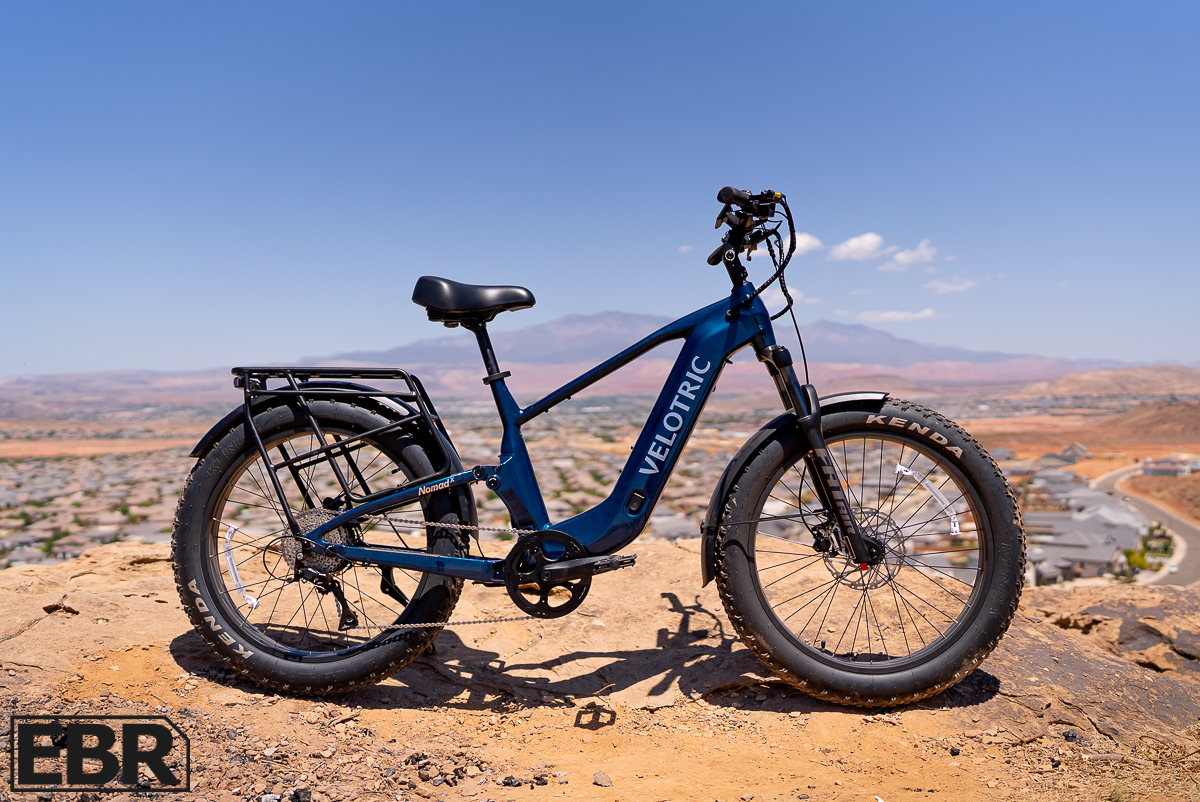 Velotric Nomad 2X Review: A Full-Suspension e-Bike Built To Do More | 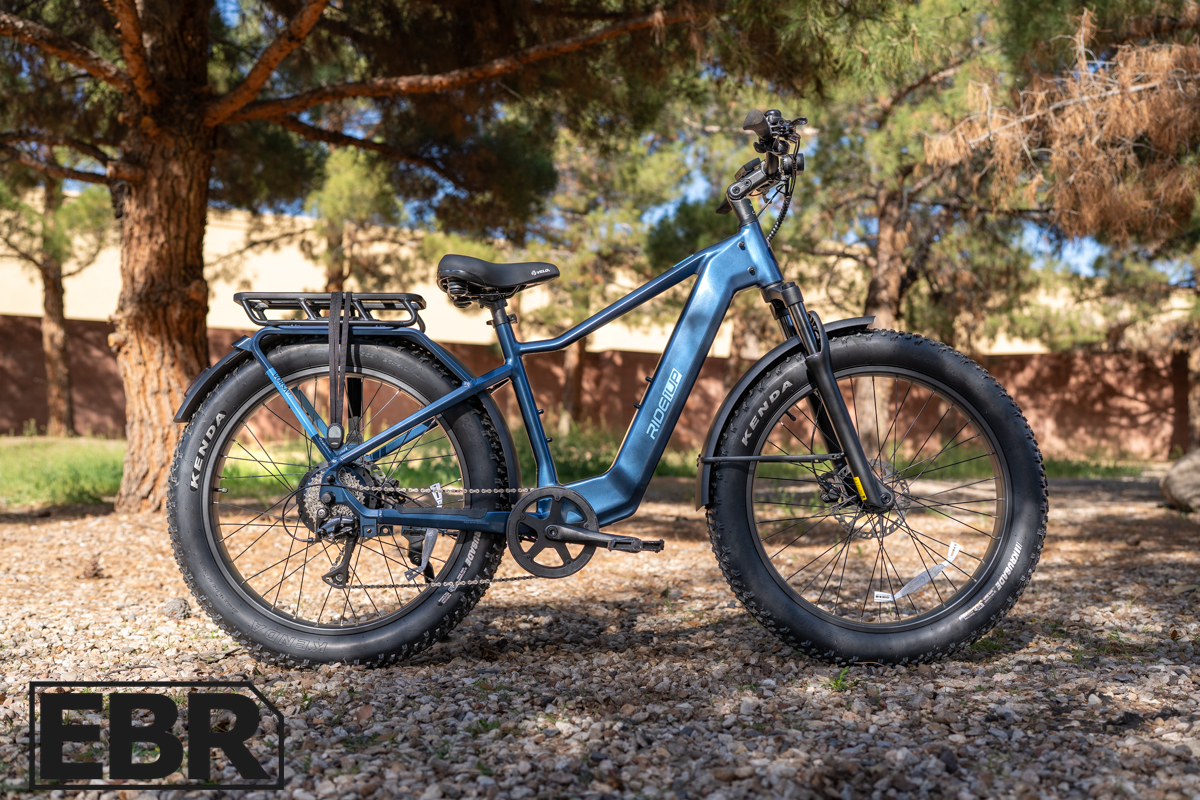 Ride1Up Vorsa FT Review – The Do-It-All Rig Goes Wide | 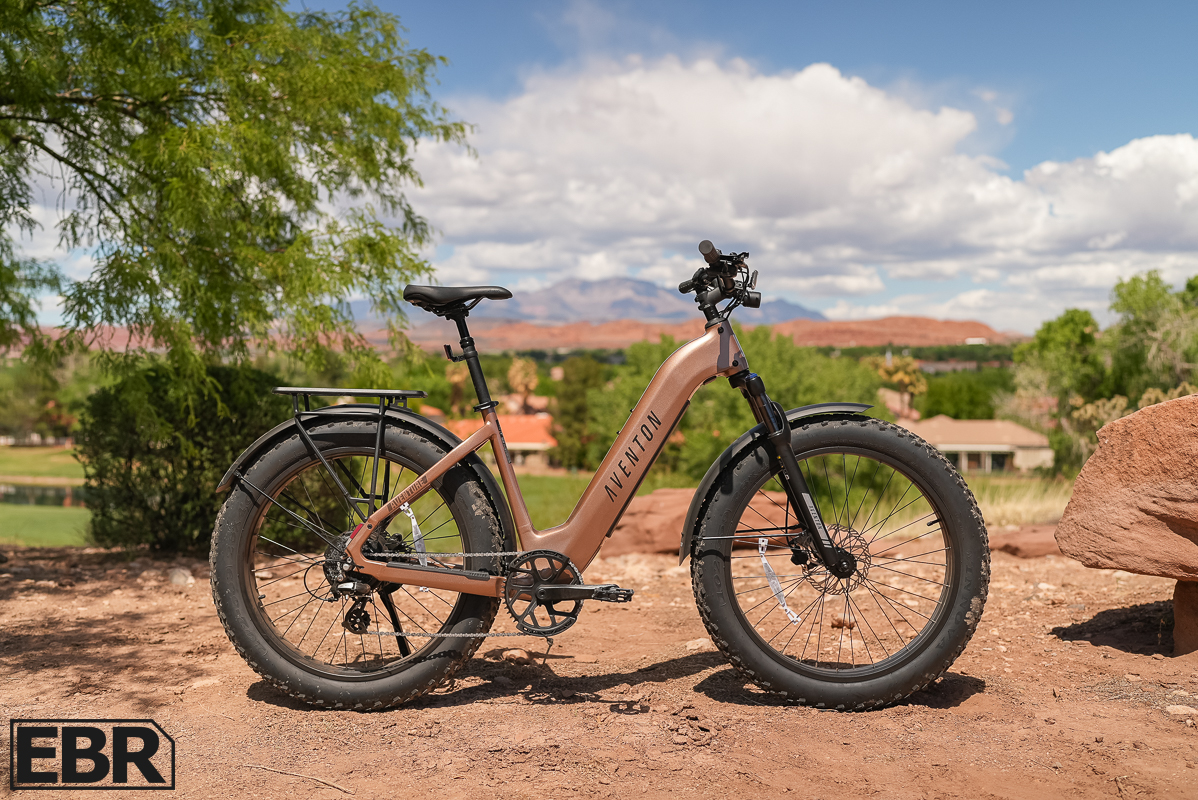 Aventon Aventure 3 Review – Back With a New Look and New Tech | 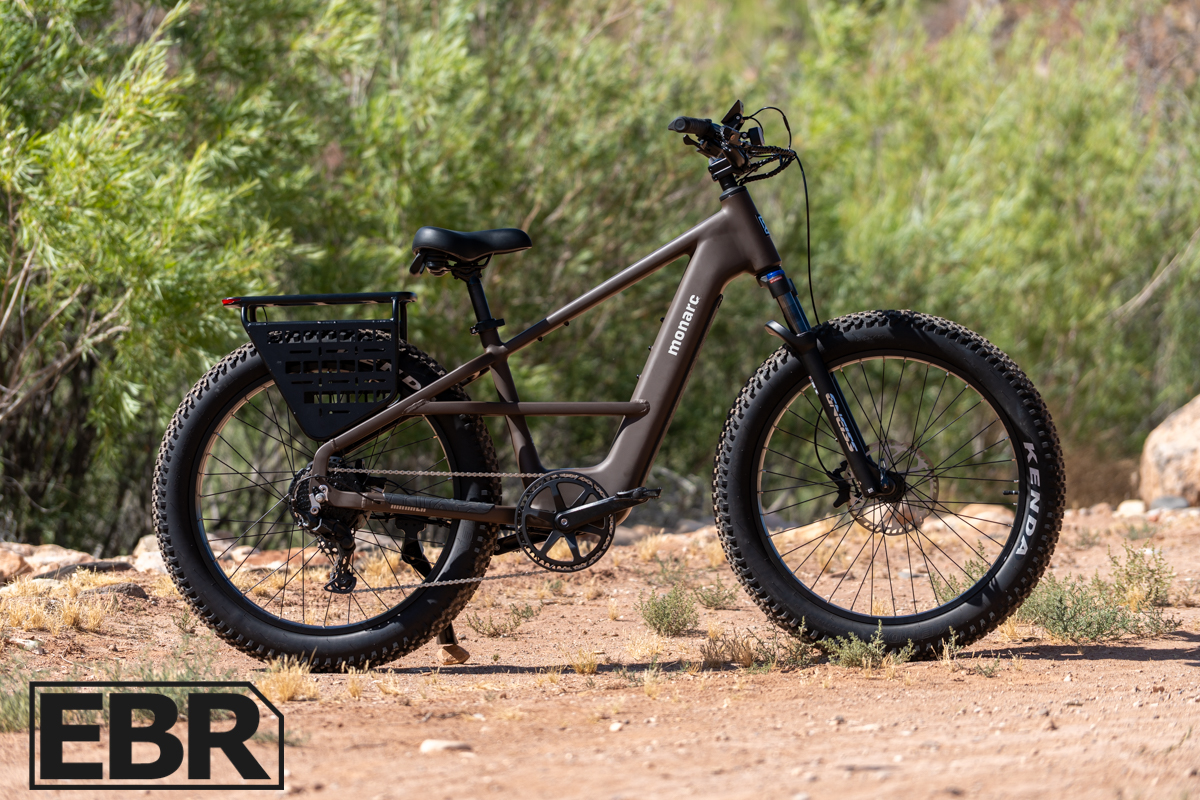 Monarc Marker Review: A Premium Fat Tire E-Bike At A Value Price | 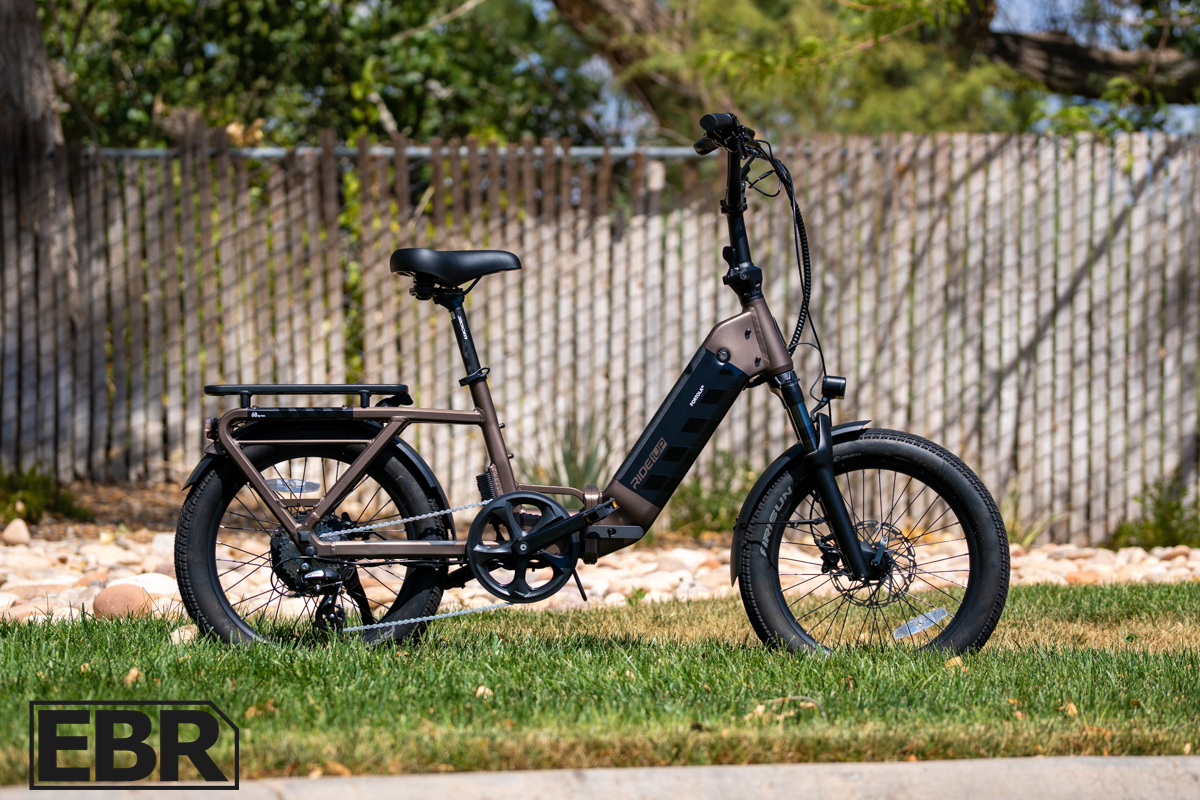 Ride1Up Portola 02 Review: A Top Rated Folding Fat Tire E-Bike at $1,095 |  Lectric XP4 750 Watt Motor Review – Solid Upgrades, More Power | 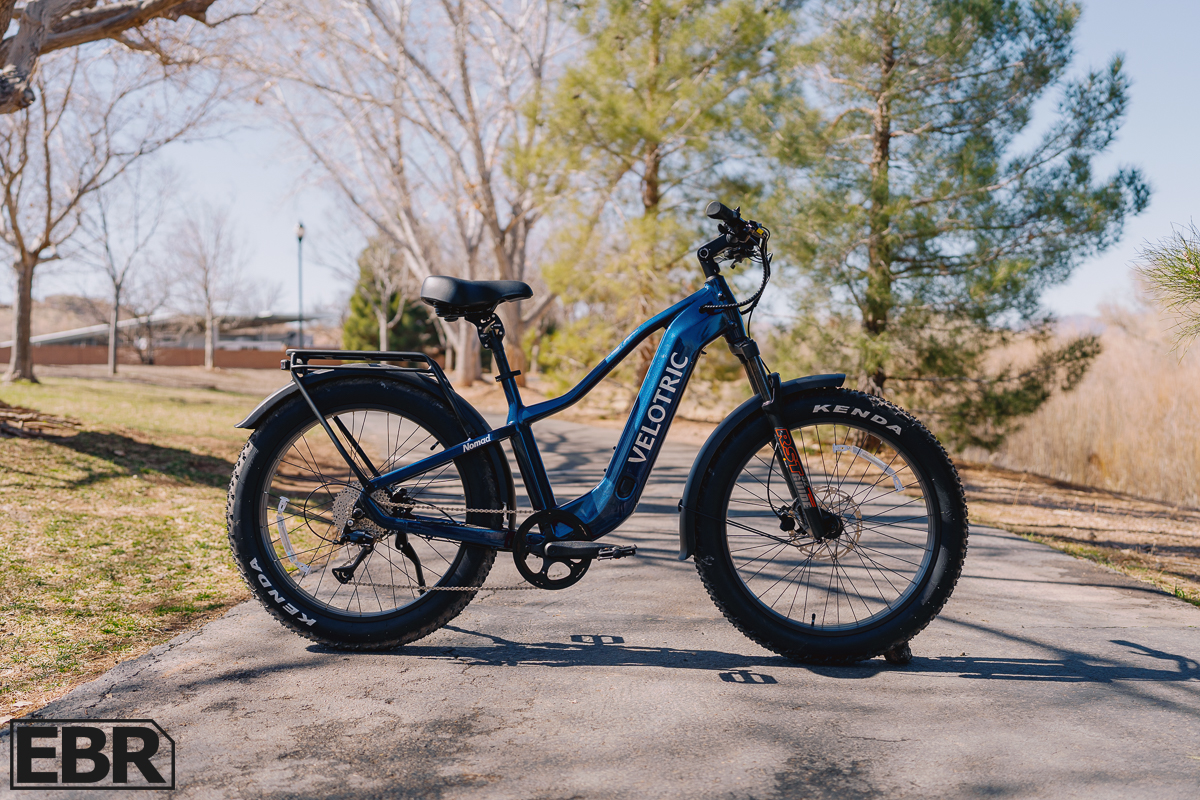 Velotric Nomad 2 Review: A Plush Powerhouse | 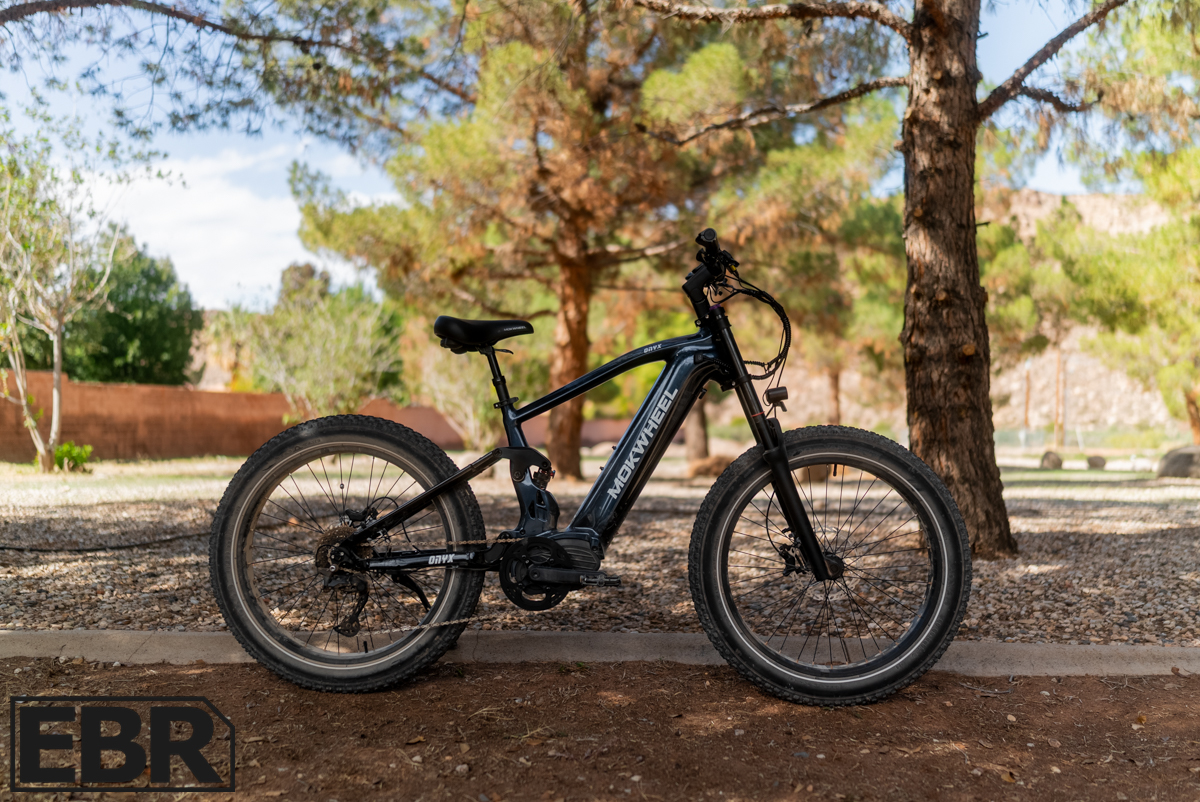 Mokwheel Onyx Review: Mid-Drive Muscle Meets Fat Tire Capability | 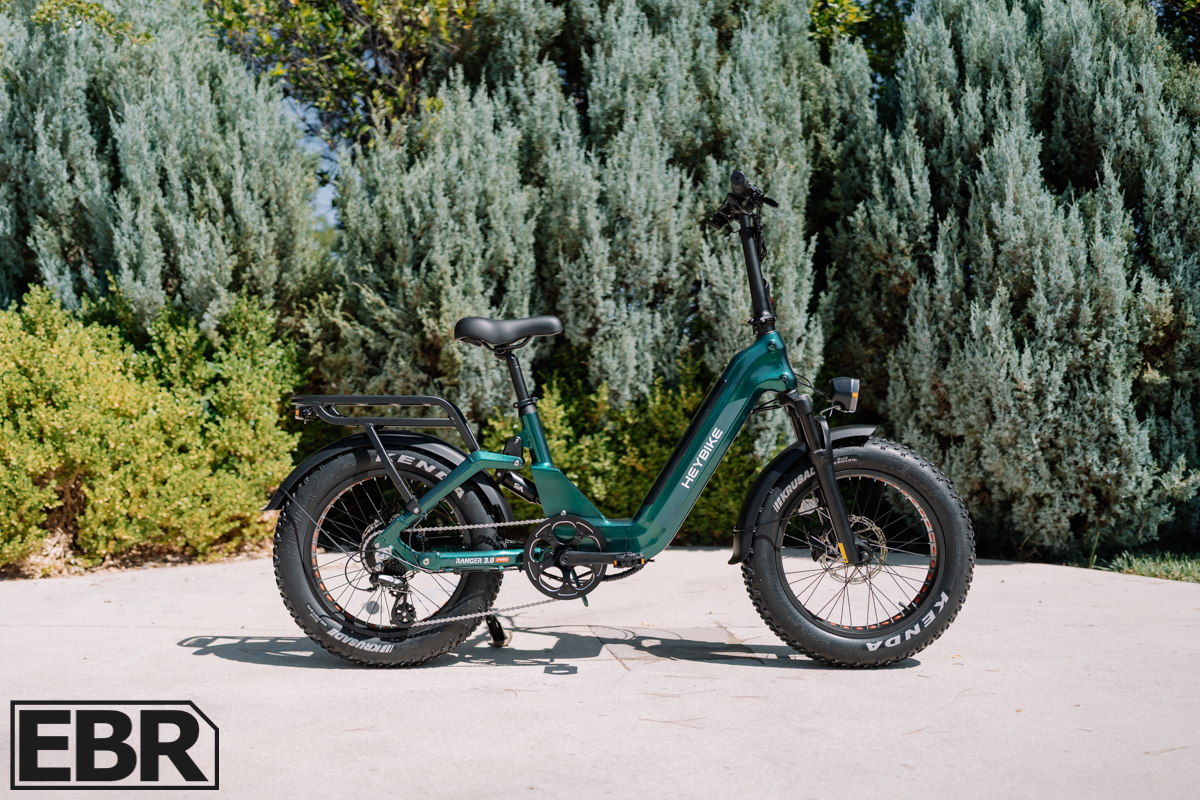 Heybike Ranger 3.0 Pro Review: A Comfy Folder With Full Suspension | |
| Price | $2,899 | $2399 | $1,695 | $1,999 | $1,999 | $1,095 as tested (standard frame, 15Ah); $895 to $1,095 across configurations | $1,299 | $1,999 | $3,288 | $1499 |
|---|---|---|---|---|---|---|---|---|---|---|
| Star Rating | ||||||||||
| Bottom Line | The A100 motor cranks out 100Nm of torque with a natural, bike-like feel that's way better than typical rear hub systems. Climbing hills becomes effortless with power delivery that feels intuitive instead of robotic. | The Nomad 2X’s full air suspension, with 120mm front and 80mm rear travel, is a game-changer for a $2,399 eBike, offering a plush, tunable ride. Unlike the Nomad 2’s coil springs, it’s lighter, quieter, and adjustable for trails or commutes. Weight-to-pressure charts make setup easy, delivering premium comfort at a mid-range price. | Despite the refresh with a larger footprint, the 95Nm AKM motor doesn't flinch at hill climbs and according to Ride1Up, is their ‘Best hill-climbing motor’. Also equipped with motor tuning torque and amperage profiles and paired to a switchable cadence or torque sensor giving riders custom power profiles with on demand riding styles. | The Aventon Aventure 3 introduces a gravity-cast aluminum frame with improved geometry, enhancing rigidity and handling for a refined fat tire eBike experience. | Two batteries, no upcharge. The Monarc Marker ships with two full-power 720Wh batteries at $1,999. I expected Monarc to offer a lot of value for the price with components but did not expect to see a free second battery come standard. The battery is the most expensive part to an e-bike, so Monarc is coming out swinging with this one. | The bike looks incredibly sharp. I love the new color options, and the new frame design. The frame doesn't just look good, but it's very strong and rigid - enough to where the bike doesn't feel like a folding bike. I've always loved how the Portola rides more like a bicycle than a folding fat tire e-bike - and the new 02 and Lite versions ride even better than before! | Lectric made substantial upgrades on the new Lectric XP4, including offering a version powered by a 750 Watt motor. | The 280mm-wide saddle, dual-spring suspension seatpost, and 100mm RST fork team up for a seriously smooth ride that handles rough terrain well. I took it over a gravel road with 3-4” rocks, and it absorbed the jolts cleanly, though the 75-pound weight is noticeable when you’re off the bike and moving it around. | Mid-drive TruckRun motor with 1300W peak power and 210Nm of torque paired with a 941Wh battery that gives exceptional range and serious climbing power. Our testing showed 105 miles in lighter assist modes, well above Mokwheel's advertised 60-80 mile estimate, and that torque means one of the best steep climb performances we've seen in this bike segment, all while proving the efficiency advantage of mid-drive systems over hub motors. | The Ranger 3.0 Pro’s full suspension, with a 65mm front fork and adjustable air shock, delivers a smooth ride across city streets and light trails. Adjusting the air shock for my weight made a noticeable difference in comfort, soaking up bumps without losing stability on flat pavement. |
| Check Price | Check Price | Check Price | Check Price | Check Price | Check Price | Check Price | Check Price | Check Price | Check Price | |
| Product | Aventon Aventure M Review, Mid-Drive Power Meets 4G Tech | Velotric Nomad 2X Review: A Full-Suspension e-Bike Built To Do More | Ride1Up Vorsa FT Review – The Do-It-All Rig Goes Wide | Aventon Aventure 3 Review – Back With a New Look and New Tech | Monarc Marker Review: A Premium Fat Tire E-Bike At A Value Price | Ride1Up Portola 02 Review: A Top Rated Folding Fat Tire E-Bike at $1,095 | Lectric XP4 750 Watt Motor Review – Solid Upgrades, More Power | Velotric Nomad 2 Review: A Plush Powerhouse | Mokwheel Onyx Review: Mid-Drive Muscle Meets Fat Tire Capability | Heybike Ranger 3.0 Pro Review: A Comfy Folder With Full Suspension |
| Ride Quality | 8.5 | 8 | 8 | 8 | 7.5 | 7.5 | 8 | 8 | 6.5 | |
| Components | 8.5 | 8 | 8 | 9 | 7 | 7.5 | 7.5 | 7.5 | 7 | |
| Screen/App | 9.0 | 9 | 9 | 8 | 7 | 6.5 | 9 | 7 | 7.5 | |
| Range | 9.0 | 8 | 7.5 | 7 | 6.5 | 7.5 | 7 | 9.5 | 7.5 | |
| Hill Climbing | 7.5 | 8 | 7.5 | 7 | 7 | 9.5 | 8.5 | 9 | 7.5 | |
| Overall Score | 90 | 88 | 88 | 89 | 85 | 91 | 87 | 87 | 75 | |
| Electric Bike Class | Class 1 | Class 1, 2 and 3 | Class 1, 2, 3 and ‘Off Road’ mode | Class 2/3 | Class 1 / 2 / 3 (switchable via display) | Ships Class 2, selectable Class 1 / 2 / 3 | Class 2 | Class 3 | California Class 3 | Class 3 | Class 2, Class 3 and Unrestricted | Class 3 |
| Motor Nominal Output | 250W | 750W | 750W | 750W | 750W | 750W | 750W | 750W | 750W | 750W |
| Motor Torque | 100 Nm | 105Nm | 95 Nm | 80Nm | 85Nm | 90Nm | 85Nm | 90Nm | 210Nm | 80Nm |
| Battery Watt Hours | 733Wh | 801.6 Wh | 720Wh | 733Wh | 720Wh per battery (two batteries included) | 720Wh (15Ah) or 480Wh (10Ah) | 17.5A | 705.6Wh | 941Wh | 720Wh |
| Top Speed | 28 MPH | 28 MPH | 28Mph | 28 MPH | 28 mph (Class 3) | 28 mph pedal assist in Class 3; 20 mph on throttle | 28 MPH | 28 MPH | 28 MPH | 28 MPH |
| Suggest Use | Recreation | Recreation | Recreation, Commuting | Recreation | Recreational, trail, commuting, adventure | Commuting, errands, cargo hauling, RV and camping travel, town riding, dirt roads and double track | Recreation | Recreational, Commuting | Recreation., Off-Road, Exploring, Hunting, Camping | Recreation, Commuting |
| Total Weight |
| 80 lbs |
| 78 lbs | ~85 lbs (including slime in tires) | 70.92 lbs measured complete with 15Ah battery, rack, and fenders | 61 lbs (without battery) | 82 lbs | 89 lbs | 75 lbs |
| Warranty | 2-Year Warranty | 2-Year Warranty | 1-Year WARRANTY | 2 Year Warranty | 5 years (motor, controller, display, frame); battery warranted to 500 cycles | 1-Year Warranty | 2-Year Warranty | 2-Year Warranty | 2-Year Warranty | |
| Frame Colors | Basalt Grey, Camouflage Green and Pacific Blue |
|
| Stealth Black, Matcha Green, Cobalt Blue and Java Bronze | Taconite (Black), Cedar (Brown), Greenway (Green), Birchwood (White) | Bronze, Gray, White, Blue | Tempest Grey, Stratus White, Raindrop Blue, and Pine Green |
|
| Ruby Red, Sapphire Blue and Emerald Green. Limited Edition Miami Sunset |
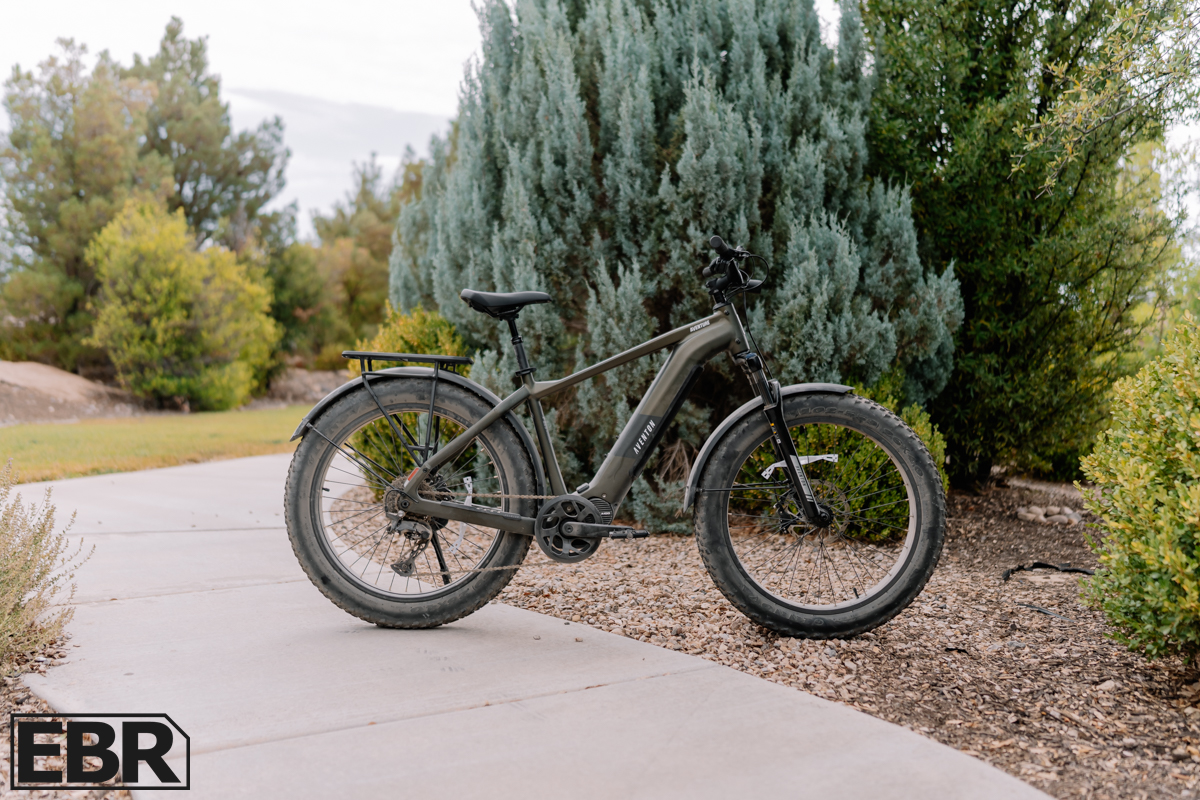
Aventon Aventure M
The Aventon Aventure M takes our award for best mid-drive fat tire ebike, and man, what a journey this bike line has been. The Aventure has been a crowd favorite since the fat tire craze kicked off with the original Aventure way back when it rolled with a basic cadence sensor and cable-actuated mechanical disc brakes – we’re talking old school here. Through the Aventure.2, we watched Aventon dial things in with torque sensors and hydraulic brakes, learning from years of rider feedback. Now with the Aventure M, they’ve thrown all that knowledge into what might be their masterpiece.
The game-changer here is that legendary A100 mid drive motor that first shocked the industry when Aventon dropped it on the Ramblas eMTB – being the first to pack 100Nm of torque into a mid drive unit. Slapping that beast onto a fat tire platform was pure genius because it makes those hefty 26×4 tires feel way lighter and transforms the bike’s handling from sluggish to surprisingly playful. You get that perfect mid drive feel where the power comes through the drivetrain naturally, making climbs feel effortless and the whole ride more connected.
But Aventon didn’t stop there – they absolutely threw the kitchen sink at the Aventure M and it shows. We’re talking electronic shifting with smart power reduction during shifts to keep your drivetrain happy, beefy 4-piston SRAM DB4 brakes with a massive 200mm rotor up front and 180mm in the rear, plus an 80mm front fork to smooth out the trails. The real tech flex is the Aventon Control Unit (ACU) that’s loaded with goodies: integrated 4G data SIM for tracking even when you’re nowhere near the bike, geo-fencing, a remote mechanical wheel lock, and real-time GPS tracking. The Aventon app ties it all together with advanced tuning options, social sharing, and ride tracking that’ll make your data-nerd friends jealous. This is what happens when a company listens to riders and isn’t afraid to push boundaries.
Check out the full write-up in our Aventon Aventure M Review.
Velotric Nomad 2x
The Velotric Nomad 2X absolutely dominates the full suspension fat tire category, and this beast is built like a tank with the soul of a mountain goat. We’re talking true full suspension here – a beefy 120mm front fork paired with an 80mm air shock in the rear that’ll soak up everything from root-filled trails to rocky descents. Rolling on massive 26×4-inch fat tires with a ridiculous 560-pound payload capacity, this thing can haul you, your gear, and whatever else you throw at it without breaking a sweat. The motor is an absolute monster too, pushing up to 1,400W peak power (750W nominal) with a crushing 105Nm of torque that’ll pull you up walls.
What makes the Nomad 2X really special is how Velotric dialed in the ride quality and versatility. That famous Velotric comfort saddle keeps you happy on long rides, while the SensorSwap tech lets you flip between cadence and torque sensors on the fly – perfect for adapting your ride style to the terrain or your mood. Somehow, despite all that power and capability, this beast still delivered over 70 miles of range in Eco mode, and you’ve got Class 3 speeds ready to unleash when you need them.
The color options are pretty sick too. The Obsidian finish is straight-up gorgeous – it’s black with rainbow glitter that catches the light at certain angles, looking absolutely killer. For the hunters out there, the camo version is perfect for your needs, especially with the included “stealth mode” that uses a green light (invisible to game animals), limits motor speed, and noise to keep you undetected in the field. With that massive payload capacity, you can haul out your big game without a problem. There’s also a clean royal blue option if you want something more traditional. Curious about this model? Dive into our Velotric Nomad 2X Review for all the details.
Ride1Up Vorsa FT
The Ride1Up Vorsa FT takes the brand’s SUV-style Vorsa and gives it 26×4-inch Kenda Krusade tires. For someone who wants one bike for grocery runs, commuting, and weekend trails, that makes sense. Off-road, the tires chew through loose gravel and deep sand without much fuss, and the width helps the bike float over obstacles. The 100mm suspension fork helps too, and the ride stays smooth whether I’m on pavement or off it.
My first question was whether the bigger tires would dull the motor because they added nearly 40% more rotational mass, so I expected to feel it, but I really didn’t! The 750W AKM rear hub motor puts out 95Nm of torque, making acceleration feel quick, which helps handle hills swiftly. The torque and cadence switching display system helped me lock in what I wanted, when I wanted. I’d go with torque mode when I wanted to feather the power and stretch the range, and cadence mode during times when I needed immediate help getting over something steep.
The range test was hard to ignore. Ride1Up estimates 30 to 60 miles, and we got 87 miles in Eco and about 40 miles in Turbo. Tire pressure changes things quite a bit. Around 5 to 15 PSI gives you more traction on softer terrain but hurts efficiency. On pavement, 25 to 30 PSI can get you back into that range.
It also has a 150 lb rear rack, Apple Find My, adjustable motor tuning, and Class 1, 2, 3, and Off-Road modes. Honestly, “Vorsatility” fits — this e-bike has it and can do it all! For all the specific details, check out our full Ride1Up Vorsa FT Review.

Aventon Aventure 3
The best fat tire e-bike overall award goes to the Aventon Aventure 3 and for good reason. The Aventure 3 nails the fundamentals while still packing in some seriously impressive tech upgrades. With a new gravity cast 6061 aluminum frame, the new Aventure 3 not only has a more responsive ride, but cleaner lines with fewer weld marks. The 750W motor and torque sensor give smooth and natural pedal assistance while the battery efficiency gave me over 60 miles range from a single charge.
At $1,999, you’re getting all the expected usual suspects like hydraulic disc brakes, lock-on grips and those beefy 26×4″ tires, but also a plusher ride off-road thanks to the front suspension fork and suspension seat post.
Factor in Aventon’s new Aventon Control Unit (ACU) and its suite of associated security and tech features like geofencing, unusual activity alarm and remote wheel locking, the Aventure 3 has a nice head start among its peers when it comes to security. Dollar for dollar, it’s just hard to beat the Aventon Aventure 3 when you factor in all you get for the price and quality of the bike’s build. For all the specific details, check out our full Aventon Aventure 3 Review.
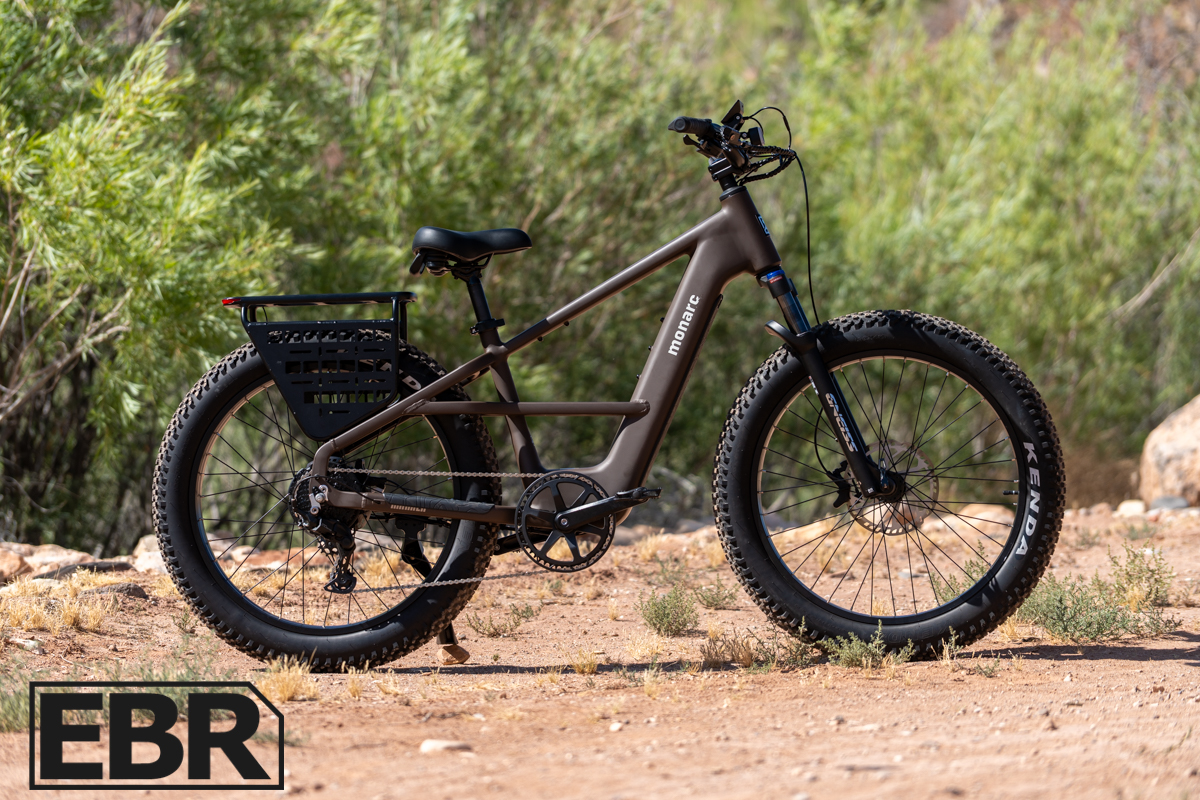
Monarc Marker
At about 85 lbs, you’ll feel the Monarc Marker when loading it onto a rack or into a truck bed, but once you’re riding it, it doesn’t feel sluggish or overly heavy. It feels stable and balanced, and I felt confident on it. What surprised me the most was the 80mm reverse-arch fork design. I hit rocky, loose sections and even a small jump, and it tracked well, absorbed impacts cleanly, and kept the front end planted. It’s the best fork I’ve seen on a 26×4 fat-tire e-bike.
The 750W Bafang rear hub motor peaks at 1,638W with 85Nm of torque. It feels smooth, quiet, and powerful, and the 30A controller delivers stronger acceleration. You can switch between torque and cadence sensing from the display and tune the motor in Sport and Boost modes. Monarc also used a CAN bus system.
The Marker comes with two 720Wh batteries, both included. We got 32 miles in max assist from one battery despite high winds, while the Eco test wasn’t finished before launch. You can also set a charging limit from the display.
At $1,999, you get a Shimano Cues 9-speed drivetrain, four-piston Talon P4 hydraulic brakes with a 203mm front and 180mm rear rotor, a 60 lb rear rack, fenders, and integrated lights with turn signals. The 3.5-inch touchscreen can warn you when tire pressure is low, a feature I think more brands should adopt. A cool accessory also being offered is a free smart helmet, which lets you connect to your phone to make phone calls or listen to music. The Marker possibly offers the best bang for your buck of any fat-tire e-bike on the market today. Monarc came out swinging. Read the full Monarc Marker Review for all the details.
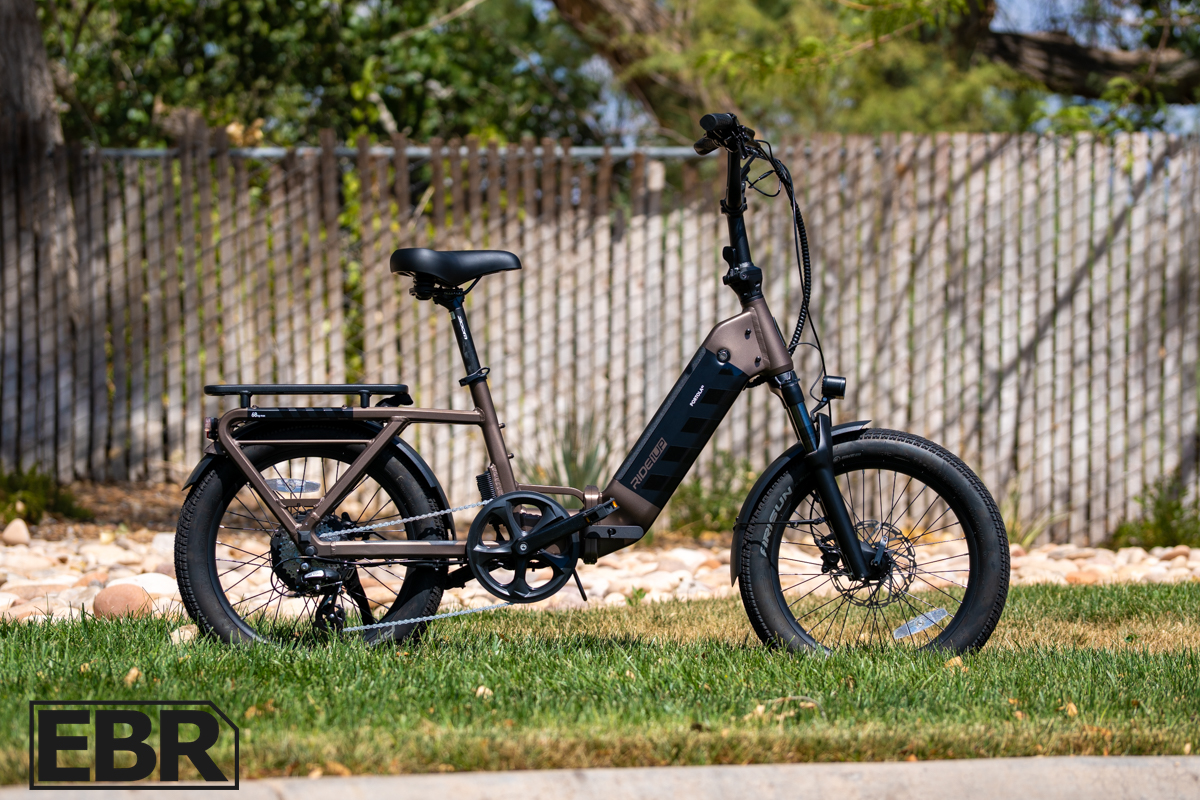
Ride1Up Portola 02
If you want a folding e-bike for pavement, but also the occasional dirt roads and double track, the Ride1Up Portola 02 fits that kind of riding. Its 20×3-inch Arisum tires are made for pavement and light dirt, and I actually prefer a 3-inch tire to a 4-inch one because you avoid the heavy, bogged down feel. One thing I always check on a folder is whether it feels floppy enough to make me nervous at 28 mph. This one didn’t. The frame felt rigid, the clamp was solid, and there was hardly any flex at speed.
The 750W AKM rear hub motor puts out 90Nm of torque and is quieter, more powerful, and smoother than the original Portola. You can switch between torque and cadence sensing, and I personally prefer torque mode because I can manage my speed without changing assist levels as often. If you’d rather spin the cranks and let the motor do more of the work, cadence mode is there too. If making it super easy to pedal gets you out on a bike, that’s a win.
I got 49.85 miles from the 720Wh battery in minimum assist and shy of 30 miles at full power. At 28 mph, I still wasn’t ghost pedaling with the Shimano Altus 8 speed drivetrain. The brakes held up too. I did repeated hard stops with the hydraulic setup and thick 2.3mm, 180mm rotors and never got any fade or sponginess.
The 3.5-inch display lets you tune each assist level, switch sensor modes, change classes, and turn on Apple Find My without an app. There’s also a locking strap that keeps the bike closed when folded, something I think every folding e-bike should adopt. At $1,095 with the 15Ah battery, I expected Ride1Up to cut corners, but I don’t see where they cheaped out. Read the full Ride1Up Portola 02 Review for all the details.
Lectric XP4
The Lectric XP4 is a well-made machine with terrific value and nearly endless utility, it’s tailor-made for life on the road. This thing comes equipped with all-terrain tires and a front suspension fork that’ll handle everything from smooth campground paths to rocky trails, so you can cruise around town or explore off the beaten path without breaking a sweat.
Plus, Lectric ships these babies with Slime tire sealant pre-installed – because nobody wants to deal with flat tires when you’re miles from civilization. When it’s time to pack up camp, the XP4 folds down compact enough to fit in your truck bed, car trunk, or RV storage compartment.
Lectric really listened to their customers and delivered some killer upgrades with the XP4. Gone are the days of that annoying physical key that had to stay inserted while riding – they’ve switched to keyless operation that everyone’s been asking for. And the far reach of previous models? Gone. You get a stem with a better angle making riding much more comfortable and stable-feeling.
The frame got a sleeker redesign that looks way more modern, and they partnered with Star Union to create their custom “602” hydraulic disc brakes (a nod to Lectric’s Phoenix area code, which is pretty cool). These brakes seriously punch above their weight class with excellent stopping power and smooth modulation that’ll give you confidence on any terrain.
Here’s the biggest flex of all: during peak tariffs and economic uncertainty, Lectric dropped their best XP version yet with the most upgrades ever, all while keeping that legendary $999 price point that made them the best-selling ebike in North America. But now with the gen 4 model, you’ve got options too. For $300 more, you can get the bigger motor with more battery (840Wh, up from the base model’s 500Wh pack).
But for that base $999, you’re getting serious value with torque sensor, the new frame design, those sweet hydraulic brakes, a color LCD display, and up to 65 miles of range. That’s how you keep the adventure rolling without breaking the bank. Check out all the details in our full Lectric XP4 Review.
Velotric Nomad 2
Velotric’s Nomad 2 is a refined option that offers solid all-around fat bike performance. Conceptually, it’s more relaxed and cruiser-y than some models as evidenced by a very luxurious and plush platform. The saddle, fork, tires, suspension seat post and adjustable stem are all included with making the rider feel at ease in mind.
Some riders prefer the natural and powerful thrill of a torque sensor, while some like easy access to power for the thrill or to make life easier on aging joints. Why not both? On the Nomad 2 you don’t have to choose as you can easily swap the sensor function in either the display settings or the app.
Speaking of the app, it’s a nice experience too. It comes with ride tracking, the ability to choose your power level and receive OTA updates so your motor will age well. Security is nice to have and the included Apple Find My gives you the ability to track the bike’s location so long as it comes within range of Bluetooth.
It’s a versatile bike with practical touches. Commuters will like the included lights, turn signals, fenders and the MIK-HD rear rack making accessory swapping an easy time. It’s a bike that has comfort, style, and features galore, and it’s a little more affordable than the 2X for those who don’t need the integrated shock. Check out all the details in our full Velotric Nomad 2 Review.
Mokwheel Onyx
It’s rare to see brands doing full-suspension fat tire bikes, and it’s rare to find one with a dual-crown fork and a substantial mid-drive motor. And by rare, we mean this is the only one we know of.
The Mokwheel Onyx is tripling down on many of the fat tire hallmarks with a massive amount of motor power, and tons of suspension. The dual crown fork works nicely, has a definite vibe, and pairs well with Mokwheel’s leakage and rear shock. It’s got the occasional spring sound coil provides on the rebound, but it’s heavier-duty than your average fat bike fork, that’s for sure!
This bike tested well with range up to 100 miles in low power levels, and has the makeup to power up hills well. The TruckRun motor can charge confidently up steep grades.
As a Mokwheel product, it can pair with an inverter and solar panel to provide power to other devices and then be recharged via the sun. Great bring-alongs for the next time you find yourself in the backwoods for a couple days.
The 4-piston brakes with larger 203mm rotors that are 2.3mm thick are exactly the counter balance you want for a hefty and powerful bike making this a practical overall setup.
This is one of the more unique options we’ve encountered and largely delivers on the promise of the tantalizing specs. For all you need to know, check out the Mokwheel Onyx Review.
Heybike Ranger 3.0
At 5’11”, I had no trouble getting on the Ranger 3.0 Pro thanks to the low step-frame. For commuters that need versatility on city streets or leisure park rides, this setup is spot on for you. This 20×4-inch fat tire folder with a 440 lb capacity, feels more like a comfy cruiser than an aggressive performer. A lot of that comes from the full suspension. The 65mm fork and adjustable rear air shock softened the edge of curbs, speed bumps, and light gravel, keeping those impacts away from my lower back.
The 750W rear hub motor peaks at 1,200W with 80Nm of torque. Pedaling felt mostly natural, though the torque sensor has a few small surges that could use some smoothing out. Still, I flattened inclines on throttle alone without much drama. The app lets you fine-tune the motor response at each assist level or cap the throttle.
Heybike says the 720Wh battery can go up to 90 miles. That seems optimistic to me. We got 52 miles in minimum assist and 27 at max. The Shimano 8-speed drive gave me a good spread of gears from flats to hills, and the hydraulic brakes use 2-piston calipers with thick 2.3, 180mm rotors. Stopping is strong and consistent.
The NFC card is a slick touch. Tap it to lock or unlock the bike, or you can set a four-digit PIN. You also get a rear rack, fenders, headlight, brake light, and turn signals. At $1,499, the Ranger 3.0 Pro nails the comfort game for folding fat tire e-bikes. For everything you need to know, check out the full Heybike Ranger 3.0 Review.
Things to Consider When Picking a Fat Tire e-Bike
Fat-tire e-bikes are built for versatility, but choosing the right one starts with two key questions: what kind of riding will you realistically do, and what’s your budget? Dreaming of epic snow-packed backroads is fun, but if most of your riding will be local trails, sandy stretches, or even daily commutes, that’s where you should focus. Narrow down your use case first—commuting, off-road adventures, or soft terrain like snow and sand—and you’ll already eliminate a ton of options.
Once you’ve got that nailed down, set your budget. Entry-level fat-tire e-bikes start around $1,400 and work well for casual riders or light-duty use. If you’re looking to tackle tougher terrain or want higher performance, mid-range bikes around $2,000-$3,000 are a solid choice. For hardcore riders needing premium components, expect to spend closer to $4,000 or more.
With those two things figured out, you can start filtering for the features that matter most. Suspension is a great example—if you’re riding mostly on smooth surfaces, a rigid fork will do the trick. Rough trails or rocky terrain? Front suspension will add comfort. Full suspension is only worth it if you’re tackling technical trails regularly.
Motors and batteries come next. If you’re dealing with hills, loose terrain, or hauling gear, a mid-drive motor with solid torque is your best bet. For flatter terrain or casual rides, a hub motor will save you some cash. Battery size depends on your ride distance and terrain, but 500Wh is a good starting point, with 700Wh or more for long or power-draining rides.
Lastly, don’t forget frame geometry and weight capacity. A relaxed geometry suits longer, more casual rides, while aggressive setups are better for technical trails. Check the bike’s weight capacity and frame size to make sure it’s a good fit for your body and gear. Once you’ve dialed in your needs, you’ll have a fat-tire e-bike that fits your riding style, budget, and terrain without overpaying for features you don’t need.
Fat-Tire E-Bike FAQ: What You Need to Know Before Buying
What’s the difference between a fat-tire e-bike, a mid-fat tire, and a regular e-bike?
The classic fat-tire e-bikes have wider tires (typically 4-5 inches) that provide better traction, stability, and float on soft or uneven terrain like snow, sand, or mud. A mid-fat bike is just a term that describes bikes with larger tires than a normal bike, but smaller than the standard 4 inches, usually they come in sizes around 2.6 to 3.5 inches. Basically, fatter tires make the bike feel more stable and generally feel much more confident going over rough terrain as opposed to a thinner tire.
Can a Fat-Tire E-Bike Legally Ride on Streets?
Yes, fat-tire e-bikes can legally ride on streets, but regulations vary based on the bike’s classification and local laws. In the U.S., e-bikes are commonly categorized into three classes:
Class 1: Pedal-assist only, with motor assistance up to 20 mph. Generally permitted on streets, bike lanes, and multi-use paths.
Class 2: Equipped with a throttle, allowing motor-powered assistance up to 20 mph without pedaling. Typically allowed on streets and bike lanes; access to multi-use paths may vary by jurisdiction.
Class 3: Pedal-assist only, with motor assistance up to 28 mph. Usually allowed on streets and bike lanes but often restricted from multi-use paths and trails.
It’s important to note that these classifications can differ by state and locality. For instance, some areas may have specific restrictions on where Class 2 and Class 3 e-bikes can operate. Additionally, certain trails or parks may prohibit e-bikes altogether.
Are fat-tire e-bikes harder to pedal?
Yes and no. The overall heavier weight coupled with well…fat tires create more rolling resistance, making them slightly harder to pedal without assistance. However, the electric motor compensates, making the ride feel smooth and manageable, even in tougher conditions.
Do I need suspension on a fat-tire e-bike?
It depends on where you’re riding. The tires themselves absorb a lot of shock, so for smooth terrain like snow, sand, or pavement, a rigid fork is fine. If you’re hitting rocky or uneven trails, front suspension or even full suspension adds comfort and control.
How far can I ride on a single charge?
Range depends on battery size (measured in watt-hours, or Wh), motor efficiency, and terrain. A 500Wh battery typically gets 25-40 miles, while a 700Wh battery can extend that to 50+ miles. Riding in sand, snow, or on hilly terrain drains the battery faster.
Are fat-tire e-bikes heavy?
Yes, they’re generally heavier than regular e-bikes due to the larger tires, reinforced frames, and powerful components. Most fat-tire e-bikes weigh between 60-80 pounds, so they’re not the easiest to carry or transport without a proper rack.
Can I ride a fat-tire e-bike in snow or sand?
That’s what they’re made for! The wide tires provide excellent float and traction on soft surfaces. Pair them with a motor that has good torque and a battery that can handle power-draining conditions, and you’re set.
Are fat-tire e-bikes good for beginners?
They can be! The wide tires provide stability and balance, making them easier to handle than narrower-tire bikes. Just be aware of the added weight and make sure to practice before tackling challenging terrain. Also, some brands let the user set speed and power limits to help them adapt at lower speeds before bumping things up a notch.
Do fat-tire e-bikes work in all weather conditions?
Yes, they’re great for all-weather use. The wider tires improve grip on wet, snowy, or muddy surfaces. However, keep an eye on your battery in extreme cold—it can reduce range significantly.
What should I look for in a fat-tire e-bike for commuting?
If commuting, prioritize lighter models, smoother tread patterns, and features like fenders, racks, and integrated lights. A motor with decent torque is still useful for inclines or hauling gear.
Are fat-tire e-bikes expensive?
Fat-tire e-bikes range in price from $1,000 for entry-level models to over $5,000 for high-end setups. Mid-range options around $2,000-$3,000 offer a good balance of quality and performance.

