

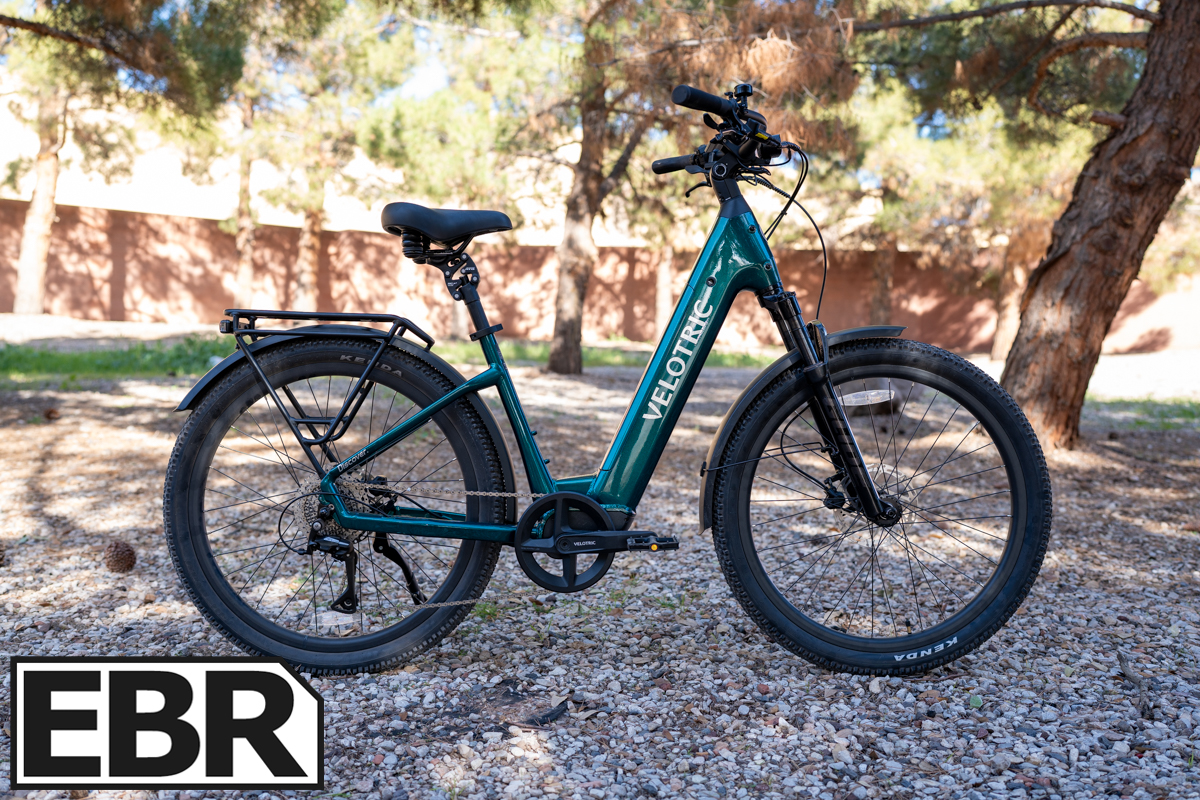
The Discover 3 sits alongside the new Discover M as Velotric’s refreshed lineup for 2026, but where the M goes after experienced riders with its mid-drive system, the Discover 3 sticks with what’s worked for years: a powerful rear hub motor and straightforward operation. It’s the third iteration of Velotric’s most popular model, and this time around they’ve bumped the specs, refined the comfort features, and added some genuinely useful tech without overcomplicating things. At $1,999, it’s also $500 less than the M.
The Discover 3 keeps the same step-through frame as the M but swaps the mid-drive for a 750-watt internal-rotor hub motor that peaks at 1100 watts with 75Nm of torque. That’s paired with a 730Wh battery, a Shimano 8-speed drivetrain, and the same adjustable air suspension fork up front. The bike comes in five colors now instead of two, so there’s actually some variety to choose from.
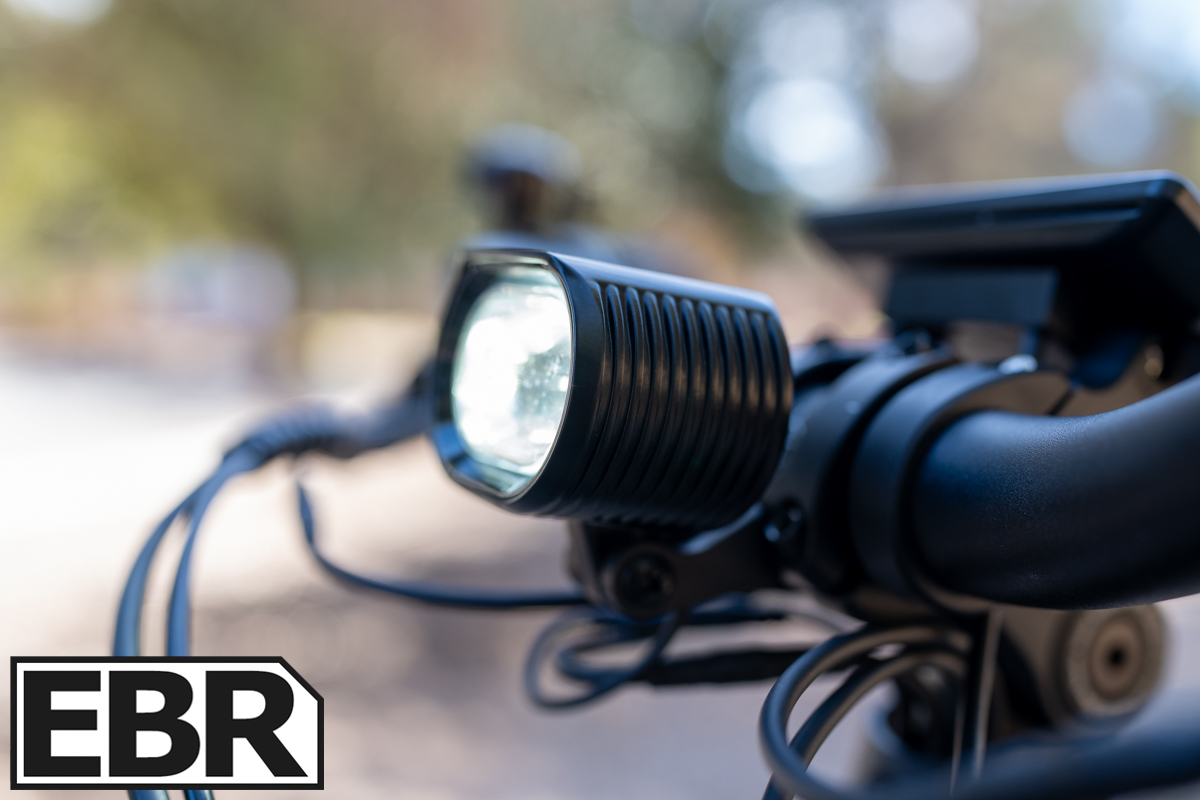
What’s new this time includes the smart riding mode recommendation feature, SensorSwap for toggling between torque and cadence sensing, NFC unlocking, Apple and Android Find My integration, and a brighter headlight that Velotric says is 24% brighter and 50% wider than the Discover 2. It’s a solid set of upgrades that make the bike easier to use without adding complexity where it’s not needed.
My Experience Riding The Velotric Discover 3 E-Bike
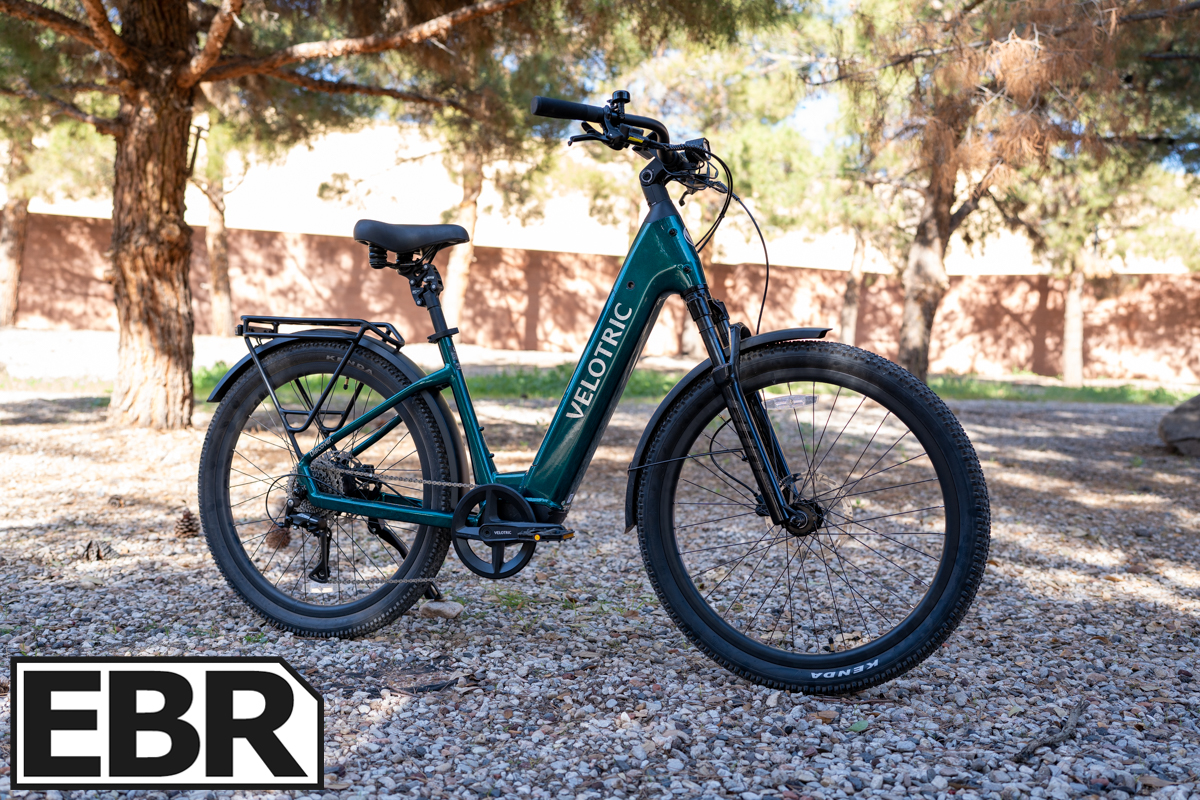
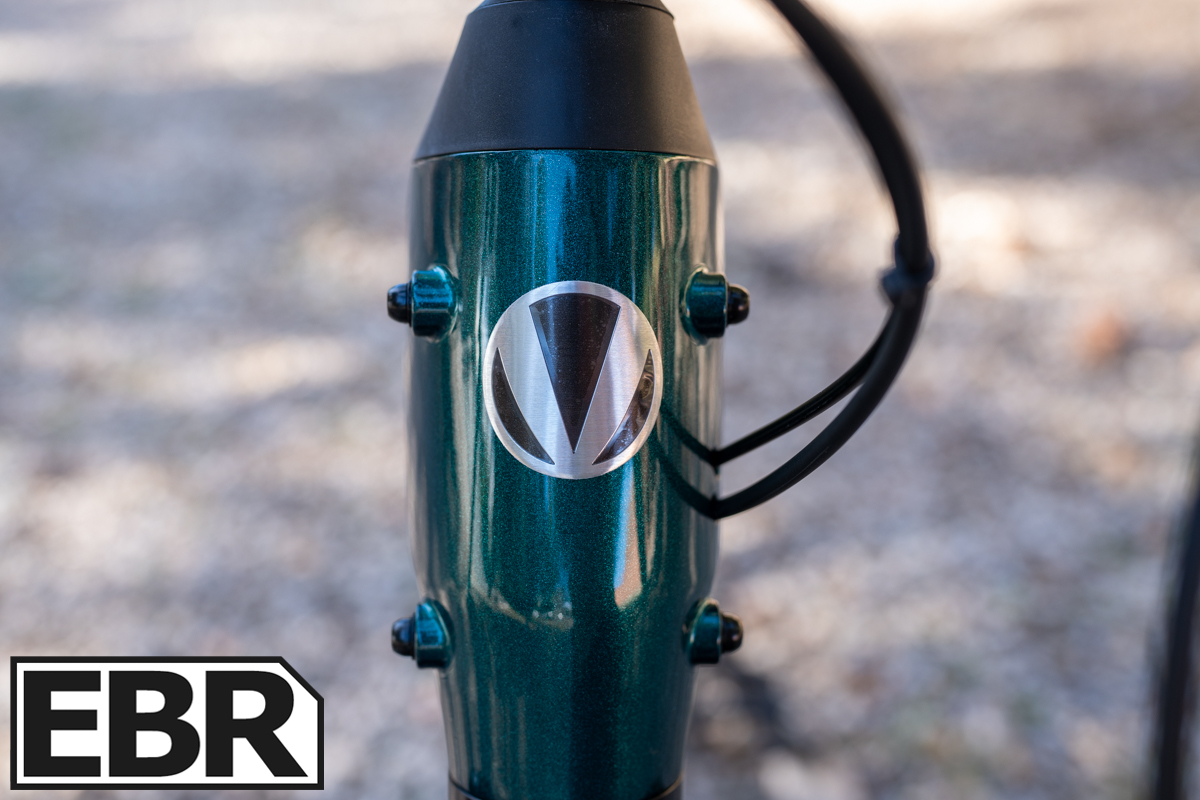
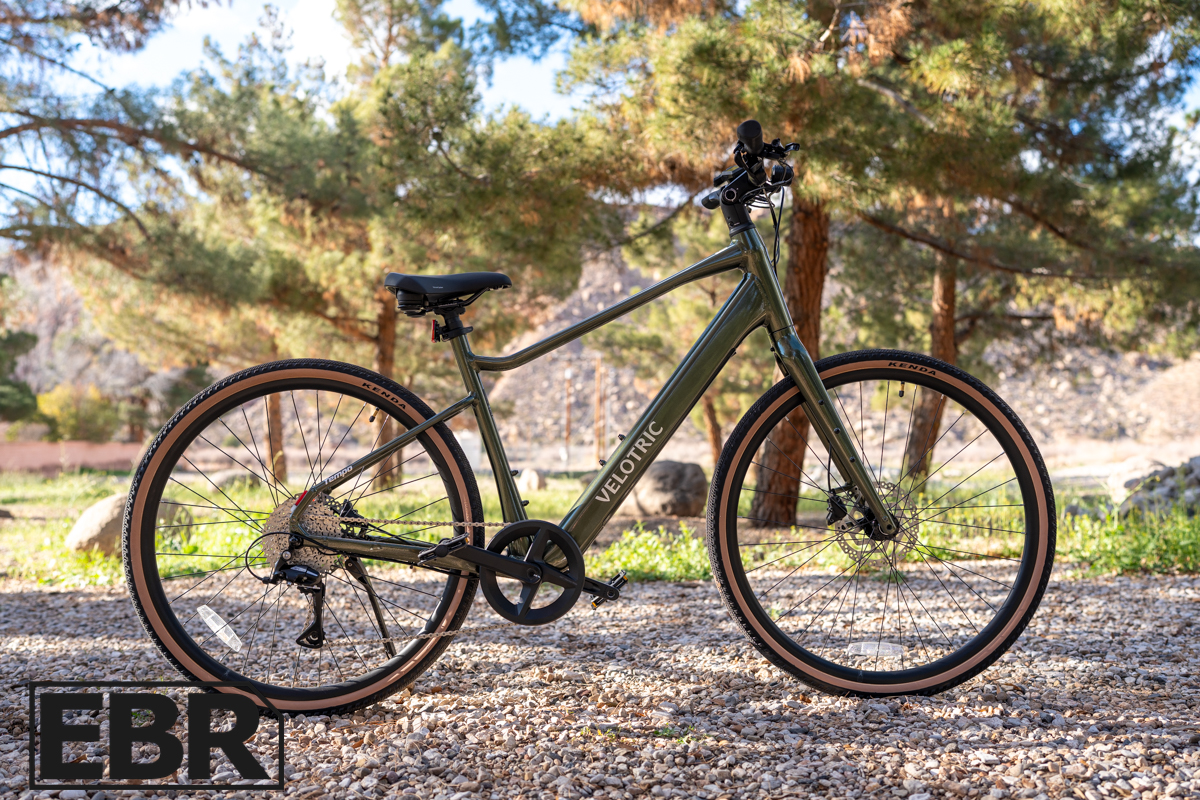
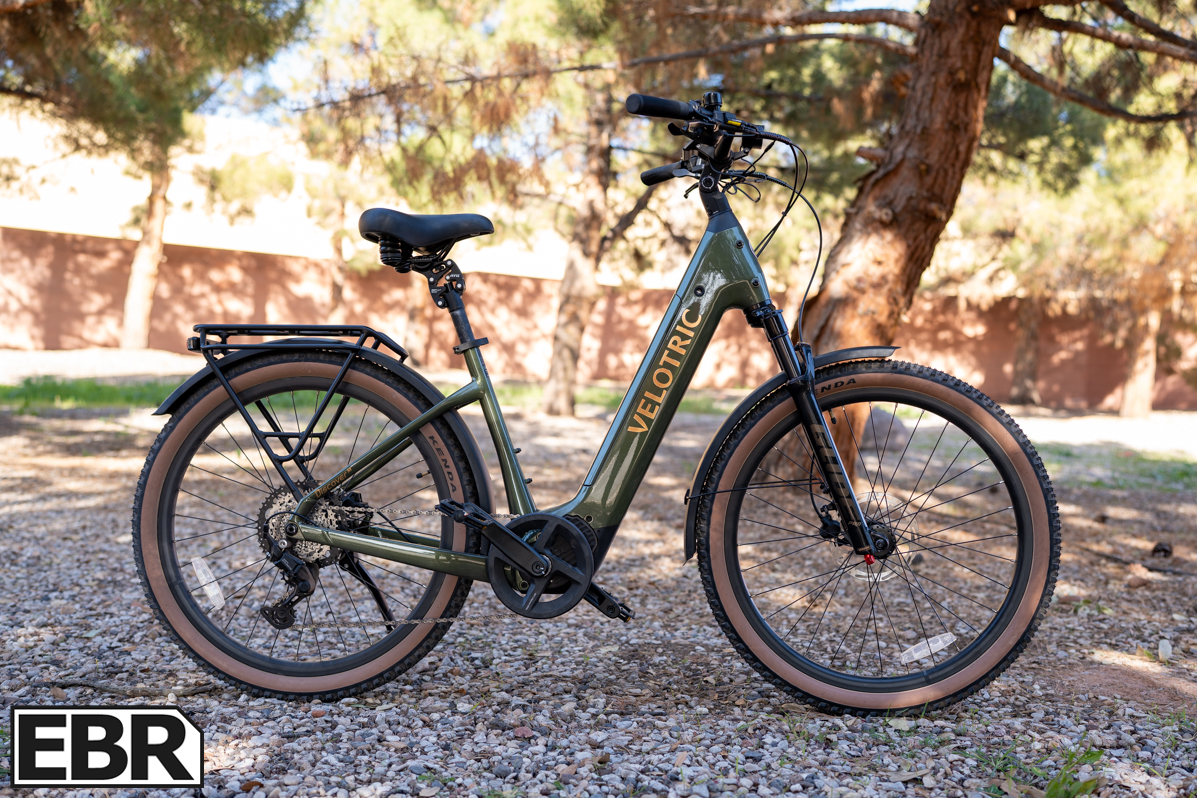
The Emerald Green they sent me for testing looks fantastic. It’s got a glossy finish with metallic flake in the clearcoat that catches sunlight just right. Velotric also offers Lemans Blue as another new option, plus the returning colors like Cherry Crimson, Mint, and Stone Gray. With five colors to choose from, you should have no trouble finding something you like. The hydroformed aluminum frame has that low 16-inch step-over height that makes getting on and off effortless, even if you’re carrying bags or wearing bulky clothes.
The riding position is a big part of why the Discover series has such a loyal following. It’s the combination of frame geometry, swept-back handlebars, platform grips, and that ComfortMax saddle that adds up to an incredibly relaxed setup. Most of your weight sits on the saddle rather than leaning forward onto your hands and wrists. You’re not aggravating your neck, shoulders, or back like you would on a more aggressive bike. You just sit there comfortably and ride.
Before you even start pedaling, the Discover 3 gives you options. First is the choice between cadence or torque sensing, which is nice since most bikes only offer one or the other. You also get the Experience setting where you pick your power delivery profile: Smooth, Balanced, or Turbo. Once you’ve picked your profile, there’s the class options. The Discover 3 can run in Class 1, 2, 3, or Custom mode, which means you can adapt the bike to literally any local or state law, or just crank everything to max and have full 28 mph speeds in both throttle and pedal assist. Velotric’s approach is to give you more than you need and let you figure out what you want. I prefer this over bikes that just meet the minimum requirements for one or two class types.
Once you’re riding, the motor feels really good. It’s not loud, it’s smooth in torque sensor mode, and it still has that instant power delivery if you want it. It’s customizable in the same way everything else on this bike is. Want it laid back and chill? Set Experience to Smooth and drop the pedal assist to Eco. Want it aggressive? Crank it to Turbo and go. The motor is quiet and smooth while still having all the power you’d want in a cruiser. It gets up to speed quickly on flats and has plenty of muscle for hills.
I ran a few tests on a local steep hill and found that throttle alone can struggle a bit on really steep inclines, but throw in a few pedal strokes to help the motor out and you can climb steep grades at around 20 mph with minimal effort. That’s exactly what you want from a bike like this. Teamwork between you and the motor makes everything easier.
The 8-speed Shimano Acera drivetrain does its job and gives you a decent gear range for varied terrain. Shifting is smooth and consistent with the trigger shifters, and there’s a little window on the shifter showing what gear you’re in. It’s not fancy, but it works well and doesn’t require much thought.
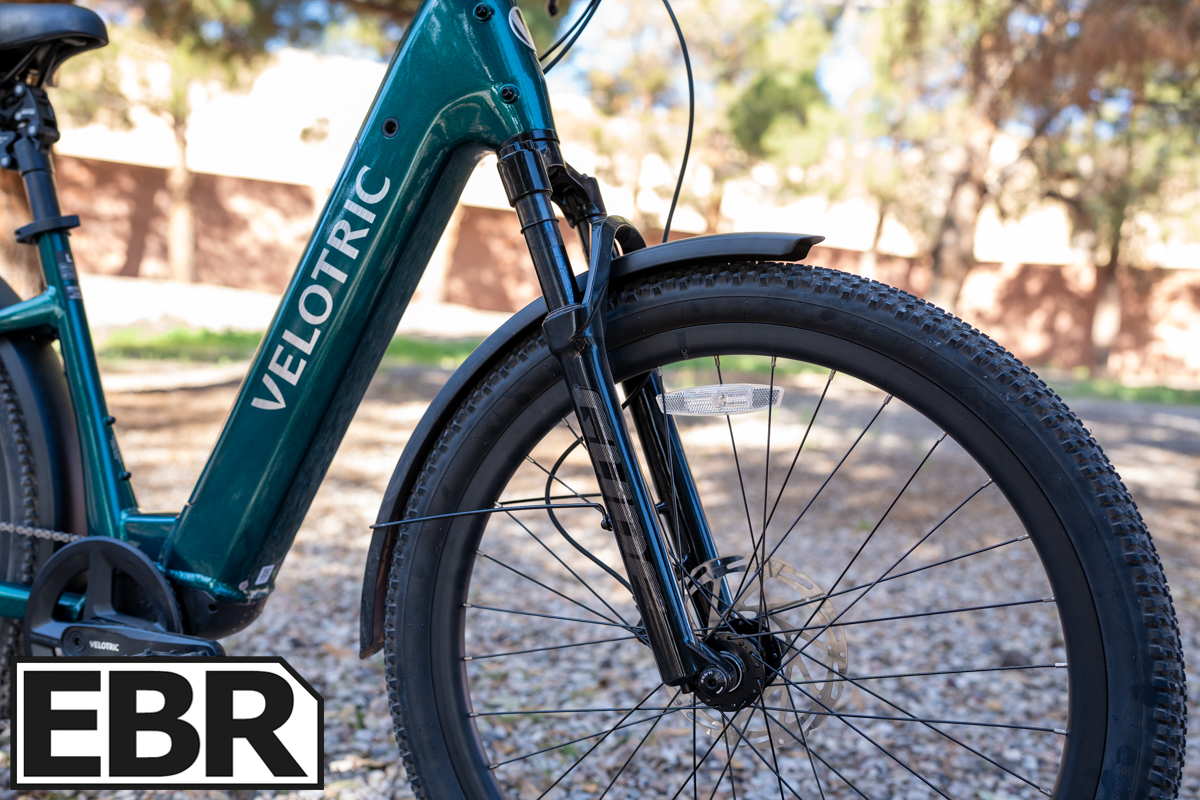
The air fork was a pleasant surprise. Velotric ditched their legacy of shipping coil forks and went with an adjustable air fork this time. It might seem like a small thing, but I’ll take an air fork over a coil fork any day. It’s not just about the plusher ride feel. It’s adjustable based on your body weight for the correct compression and rebound, where coil forks are just what they are and you have to adapt to them. There’s a handy chart on the fork’s stanchions that pairs your body weight with the correct air pressure, which you adjust via the Schrader valve on top.
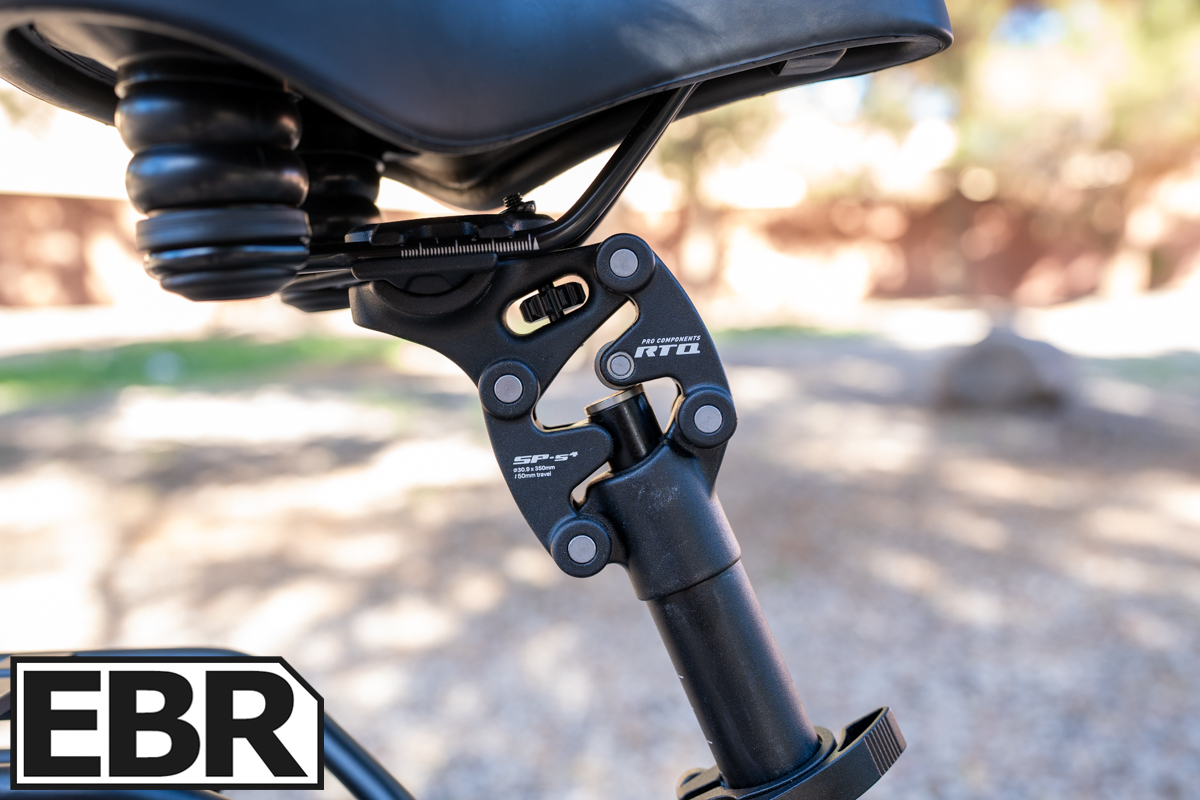
The ComfortMax setup is where Velotric really earns its reputation. The ComfortMax saddle has dual layers of breathable foam with spring supports. It’s wide enough for comfort but not so wide that pedaling feels awkward. Pair that with the air fork, the suspension seatpost with 50mm of travel, and the relaxed upright geometry, then dial it all in with the adjustable stem. It’s genuinely hard to beat the comfort of a Velotric, and the Discover 3 is no exception. I did several long rides and never walked away with the usual stiffness or soreness.
Overall, the bike just delivers on what it sets out to do. No games, fair price, and a very comfortable ride with power on tap when you need it and all the customization options you could want. It’s a serious contender if you’re looking for your next e-bike.
Range
Estimated Range (from Velotric):
- Up to 80 miles range
Real World Range Test Results:
- Minimum Assistance Range Test (Eco Mode): 87 miles
- Maximum Assistance Range Test (Turbo Mode): 38 miles
Velotric claims 80 miles on pedal assist for the Discover 3, which as always comes with the usual asterisks about ideal conditions. I wanted to see what actually happens in real-world use, so I ran two tests: one in Eco mode (minimum assistance) and one in Turbo mode (maximum assistance). Both tests were done on local bike paths with stops for traffic and pedestrians, and I climbed roughly 2,200 feet of elevation over the course of both runs. At 185 pounds, I’m not exactly a lightweight test case either.
The Eco mode test delivered 87 miles before the battery gave up. That’s actually better than Velotric’s claim, which is rare. The Turbo mode test got 38 miles of full-blast riding before tapping out. For context, most manufacturer range estimates are based on closed courses with no stops, minimal elevation, and lightweight riders. The fact that I beat their estimate in Eco and still got nearly 40 miles in Turbo with real-world hills and stops is impressive.
What this means practically is that the Discover 3 has legitimate all-week range if you’re commuting. Ride to work and back a few times, run errands on the weekend, and you’re still probably fine without charging every night. Even if you prefer higher assist levels, you’re looking at multiple days between charges for most people. Range anxiety just isn’t a thing with this bike unless you’re doing marathon rides daily.
The 730Wh battery is doing the heavy lifting here, and it shows. For commuters or anyone who stresses about running out of juice mid-ride, the Discover 3 delivers the kind of range that actually matters in daily use.
Power (Motor & Battery)
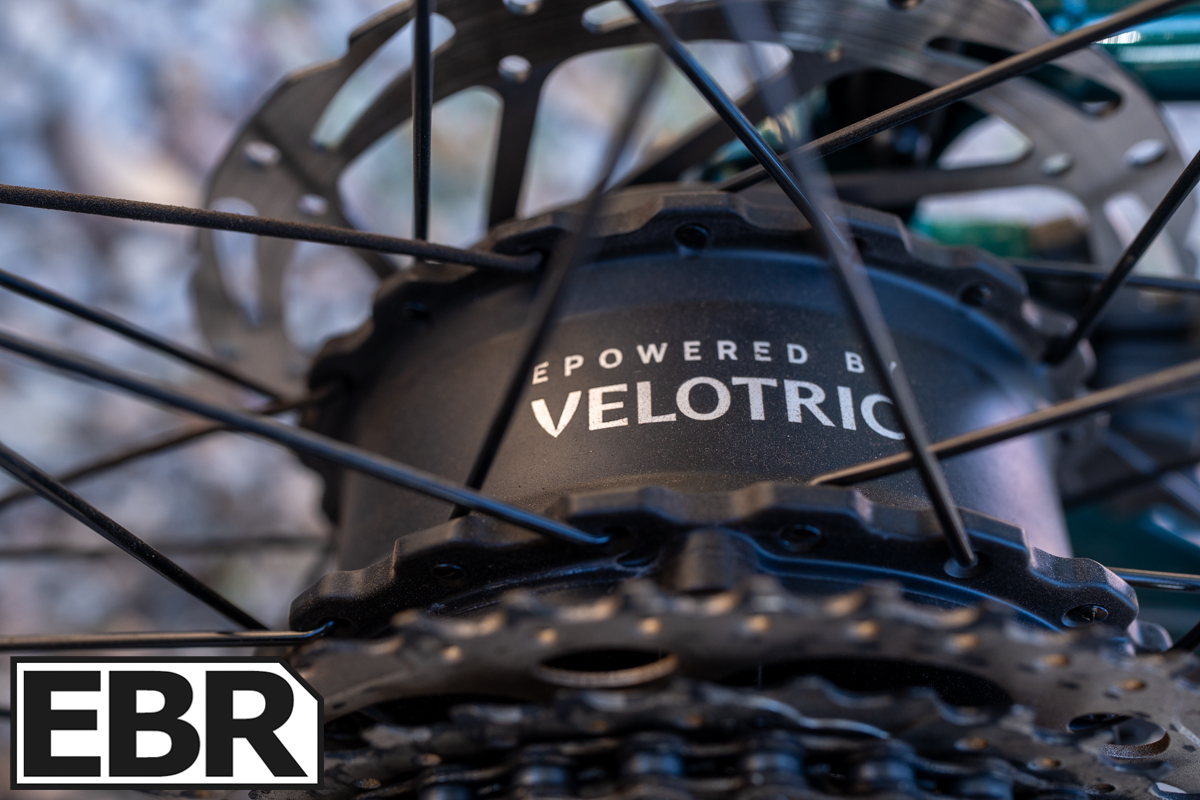
The Discover 3 runs a 750-watt rear hub motor with an internal-rotor design that Velotric says is quieter than traditional hub motors. Peak power hits 1100 watts, and it puts down 75Nm of torque. Those numbers are lower than the M’s mid-drive on paper, but hub motors work differently. All that power goes straight to the rear wheel without running through the drivetrain, which makes for strong, immediate acceleration and less wear on components like chains and cassettes.
In terms of motor sound, there is a bit of noise under heavy load, but it’s a low hum rather than the high-pitched whine you get from cheaper systems. Power delivery is smooth and predictable. When you twist the throttle or start pedaling with assist on, the motor responds immediately without the lag or jerkiness that plagued earlier hub motor designs. It’s not as natural-feeling as the M’s mid-drive, but it’s also more straightforward. You ask for power, you get power.
The 730Wh battery uses Samsung or LG 21700 cells and is UL 2271 certified, same as the M. It’s IPX7 rated, so it can handle being submerged in a meter of water for 30 minutes, which is overkill for any realistic riding scenario. The whole bike is IPX6 rated, meaning you can blast it with a pressure washer without worrying about damaging anything. Charging is handled by a 3-amp fast charger, and there’s a USB-C port on the display for keeping your phone topped up.
One advantage of the hub motor setup is simplicity. There’s no drivetrain stress to worry about, no need for reinforced chains, and maintenance is straightforward. The motor is basically sealed and requires zero attention. If you get a flat tire, the rear wheel comes off without dealing with a motor in the way like you would on the M. For people who just want a bike that works without fussing over components, the hub motor makes a lot of sense.
The motor can overheat on sustained climbs, and the display will show a temperature warning when that happens. Yellow means it’s warming up, orange-red means it’s about to dial back power to protect itself. In my testing, I only saw the warning on long, steep climbs where I was asking for maximum assist the whole way. For normal riding, even in hilly areas, it’s a non-issue.
Components
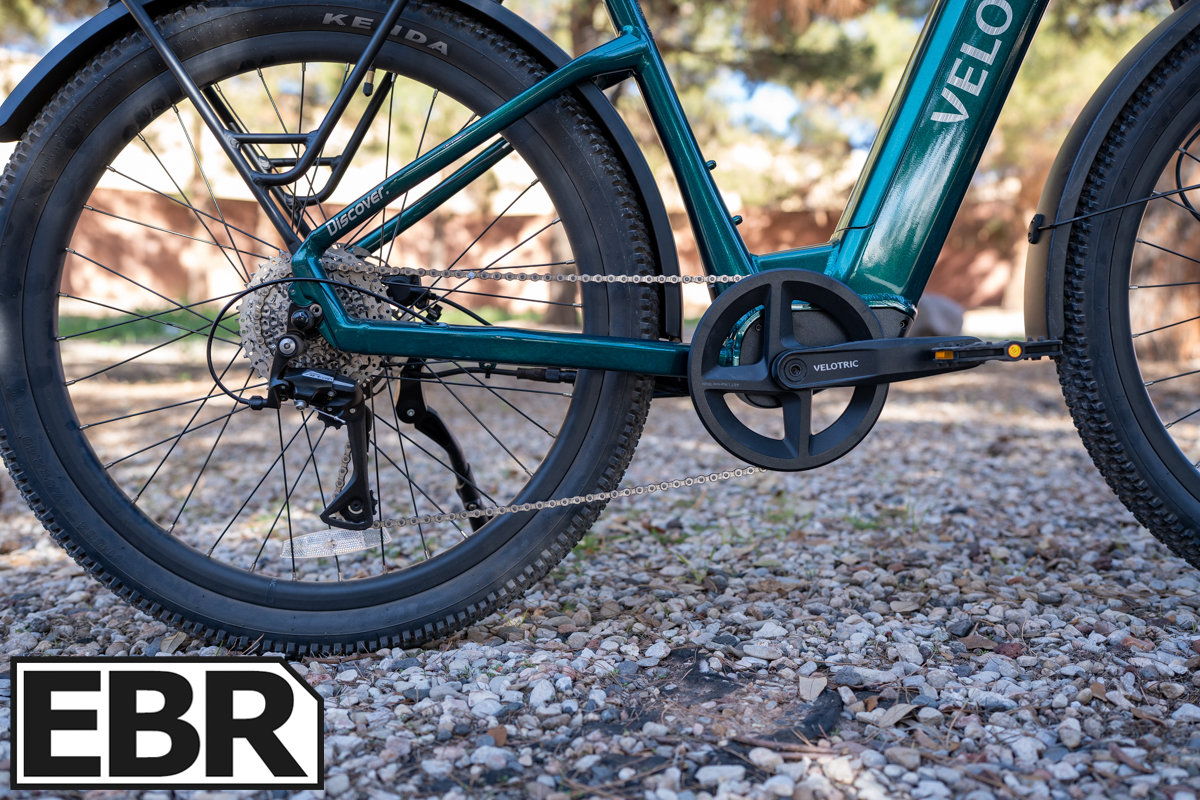
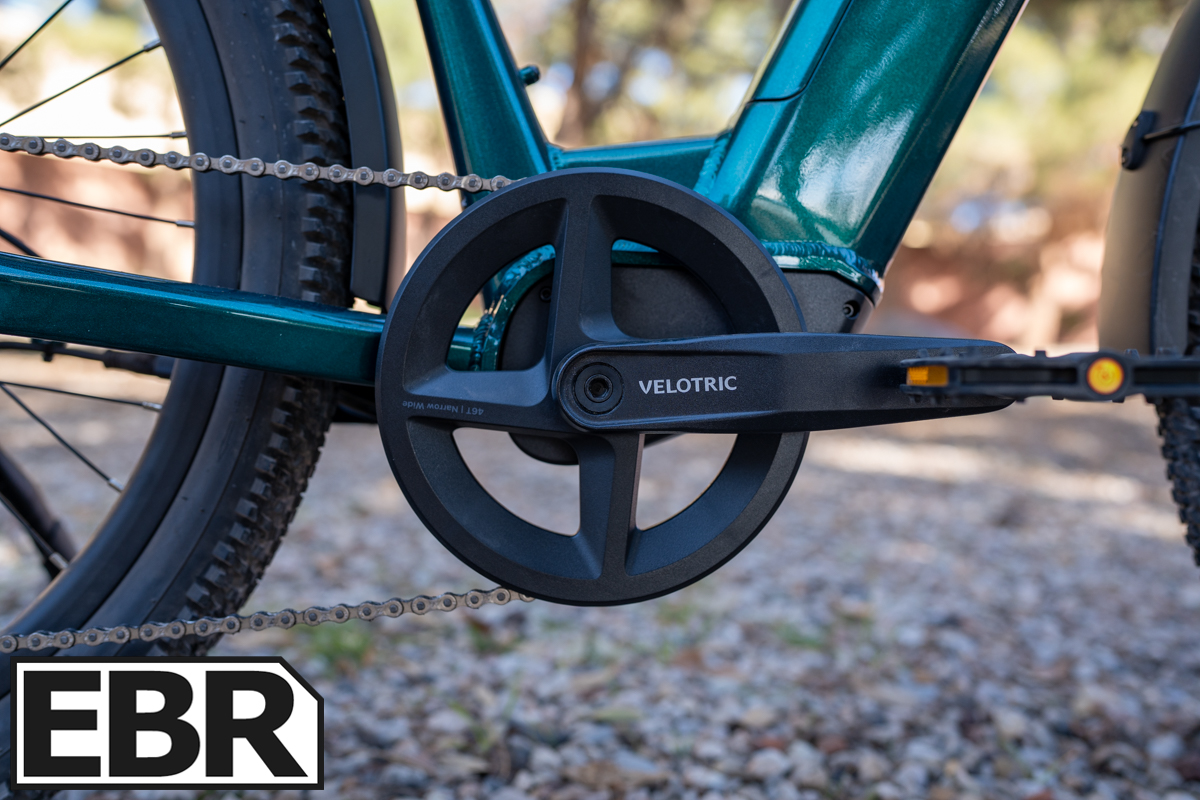
The Discover 3 keeps things practical with a Shimano 8-speed drivetrain running an 11-40T cassette paired to a 46T chainring. The range is still wide enough for most riding where you’ve got low gears for climbs and high gears for cruising at speed. Since this is a hub motor setup, the drivetrain doesn’t take the same beating as a mid-drive, so the standard 8-speed holds up just fine without needing reinforced chains or beefier components.
Braking is the same Tektro hydraulic disc brakes as the M, with 2-Piston calipers, 180mm rotors, and motor cutoff sensors in the levers. It’s reliable, low-maintenance, and does the job without any unneeded fuss.
The comfort setup is nearly identical to the M. You get an 80mm air suspension fork with lockout and adjustable rebound, though the stanchions are 32mm instead of the M’s 34mm. It’s still adjustable with a shock pump, so you can tune it to your weight. Out back there’s the optional suspension seatpost and that famous Velotric branded ComfortMax 230x70mm dual-layer foam saddle that’s actually comfortable for long rides. The upright geometry, swept-back bars, ergonomic grips, and low step-through frame all carry over from the M. Velotric clearly figured out what works and just kept it.
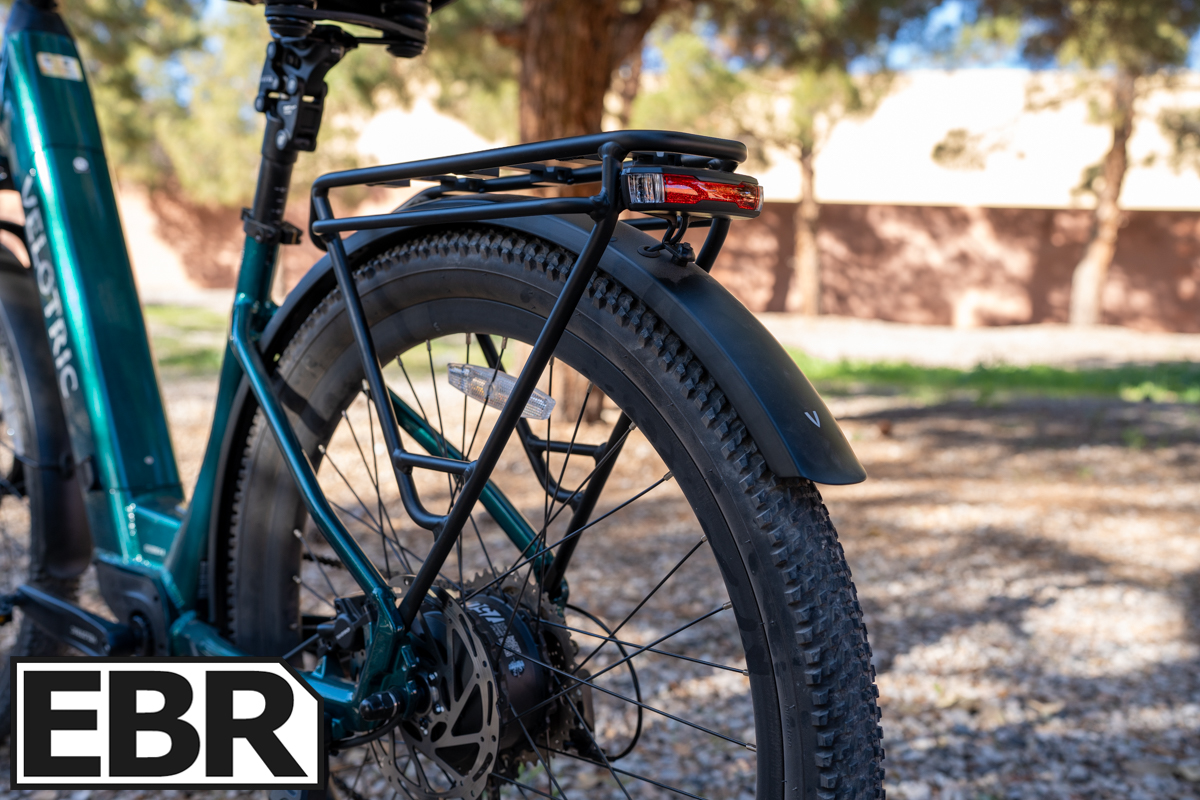
Tires are the same Kenda 27.5×2.4″ puncture-resistant rubber on aluminum rims with a Novatec thru-axle front hub. You also get full-coverage aluminum fenders, a MIK HD-compatible rear rack rated for 66 pounds, and an aluminum kickstand. The handlebars are 680mm for regular size or 700mm for large, and the adjustable stem lets you dial in your preferred riding position. Frame fit is identical to the M with regular handling 5’2″ to 5’11” and large covering 5’9″ to 6’7″, dropping a few inches if you swap out the suspension seatpost.
It’s a straightforward parts list that keeps with the comfort factor this model is known for, which makes sense for a bike aimed at people who just want to ride without worrying about components.
Screen / User Interface / App
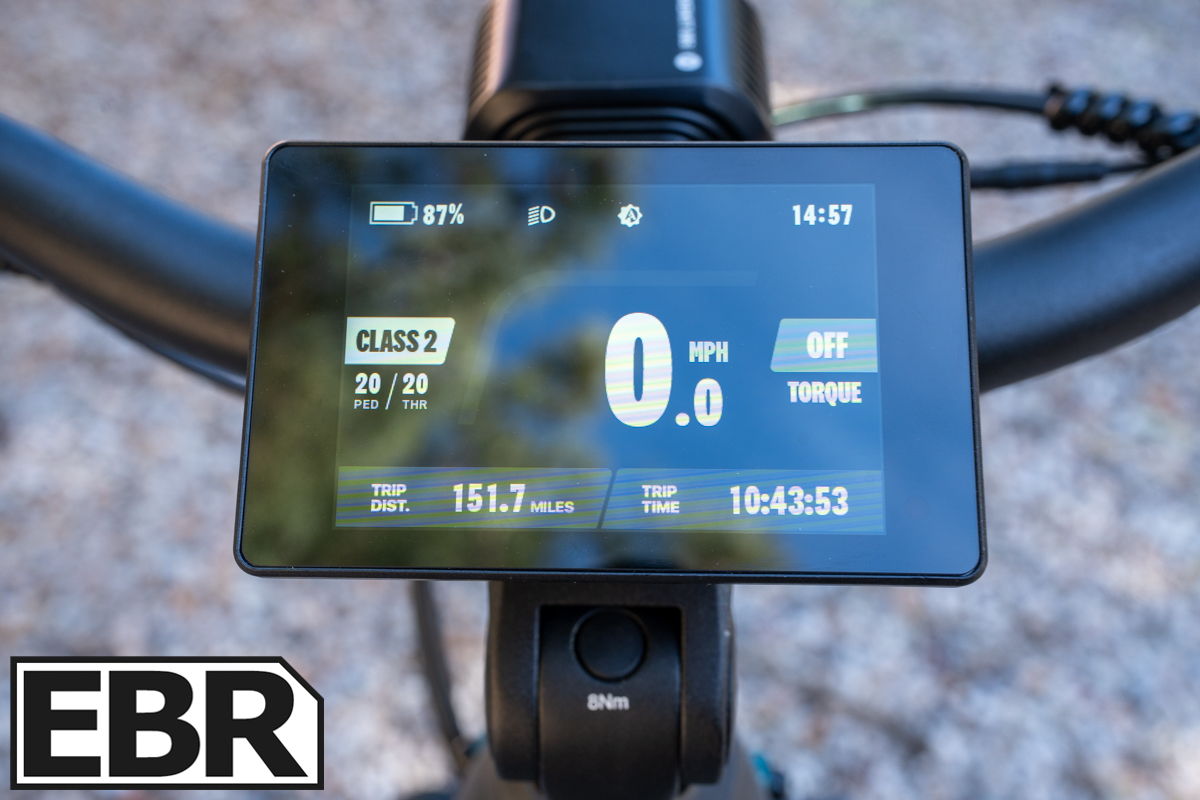
The Discover 3 uses the same 3.5-inch full-color display as the M, and it’s genuinely readable in direct sunlight. It’s angle-adjustable to cut down on glare, and it shows all the basics: speed, battery level, assist mode, range estimate, and motor temperature. There’s Bluetooth for connecting to the Velotric app, NFC for keyless unlocking with a tap of your phone or card, and a USB-C port for charging your phone while you ride.
The app is where you get control over how the bike behaves. You can switch between Class 1, 2, and 3 modes with a tap, adjust speed limits from 12 to 28 mph independently for pedal assist and throttle, and fine-tune motor output percentages for each assist level. There’s also the Smart Riding Mode Recommendation feature, which asks you questions about your height, weight, and how you plan to ride, then suggests optimal settings. It’s actually useful for people new to e-bikes who don’t want to dig through menus trying to figure out what PAS level they should be using.
For more experienced riders, there’s Ride Tuning mode where you can manually adjust everything. You can set different power outputs for each PAS level, change how aggressive the throttle response is, and basically dial in the bike to match exactly how you want it to behave. It’s the same level of customization you get on the M, just accessed through a slightly different menu structure.
SensorSwap works the same way as the M. You can toggle between torque and cadence sensing through the app, the display menu, or by holding the M button while riding. Torque sensing gives you proportional power based on how hard you’re pedaling, which feels more natural and intuitive. Cadence sensing delivers consistent power as long as you’re pedaling at a steady rate, which is better for relaxed cruising or maintaining speed on flat ground. Being able to switch on the fly is genuinely handy.
The bike also integrates with Apple Find My and Android Find My networks, so if it gets stolen or you forget where you parked it, you can track it through your phone. Combined with NFC unlocking, there’s a decent security setup here, though you still need a proper lock.
Cruise control is built in too. Set your speed, let go of the throttle, and the bike maintains it until you hit the brakes. It’s nice for long, flat stretches where you just want to zone out and not think about speed control.
Velotric Discover 3 Model Options
The Discover 3 comes in two frame sizes with the same fit ranges as the M. Regular handles 5’2″ to 5’11”, Large covers 5’9″ to 6’7″, and both drop about three inches if you swap out the suspension seatpost for a rigid one. The 396mm step-through height is the same across both sizes, making it easy to mount and dismount regardless of mobility.
Where the Discover 3 really differentiates itself is color options. You get five choices: Emerald Green, Lemans Blue, Cherry Crimson, Stone Gray, and Mint. That’s way more variety than the M’s two options, so if you care about standing out or matching a specific aesthetic, the 3 gives you actual choices.
Velotric includes the same roster of accessories in the box as the M. Full-coverage aluminum fenders front and rear, a MIK HD-compatible rear rack rated for 66 pounds, an aluminum kickstand, and a 3-amp fast charger. That’s easily a couple hundred dollars worth of stuff you’d otherwise have to buy separately. The frame also has mounting bosses on the seat tube and mounting points on the front head tube, so you can add your own front rack or basket if you want to haul more cargo. The bike’s total payload capacity is 440 pounds, which is plenty for most people and their gear.
The two-year warranty covers the frame, motor, battery, and components, same as the M. As for additional Discover 3-specific accessories, nothing has been mentioned yet pre-launch beyond the usual suspects like phone mounts and extra batteries that work across Velotric’s lineup. The MIK-compatible rack means you’ve got access to the whole MIK ecosystem of bags and panniers that click directly on without straps.
Is The Velotric Discover 3 Worth Buying?
The Discover 3 is a solid comfort cruiser that does exactly what it’s supposed to do without any fuss. At $1,999, you’re getting a strong hub motor, legitimate range that actually matches the claims, and enough customization to dial it however you want. The comfort setup works, the air fork is a real upgrade, and all the color options means you’ve got choices.
If you want the most refined pedaling feel, get the Discover M. But if you’re new to e-bikes or just want something simple, powerful, and comfortable that you don’t have to think about, the Discover 3 delivers. Range is legit, power is smooth, and the whole thing just works. For the price and what’s included, it’s one of the better values in the comfort e-bike space right now.
Pros
- The Discover 3 now offers Ride Tuning of the motors power from either the display or the Velotric App.
- The Discover comes in Class 1, 2 and 3 plus custom modes all switchable from the cockpit with the tap of a single button.
- Two new colors (5 total) of Emerald Green and Lemans Blue while keeping the classic colors we loved of the past like Cherry Crimson, Stone Grey and Mint New Colors
- SensorSwap gives riders both a Torque and Cadence sensor allowing them to use either one at the push of a button.
- The Velotric App gives Ride Tracking, Motor tuning and has automatic OTA Updates for easy updates and improvements to your ride.
- The Discover 3 comes equipped to conceal an Apple Air Tag for GPS tracking via Apples ‘Find My’ tech.
- The 60mm, 60-degree Adjustable Stem helps dial in a proper fit and more comfortable ride.
- In the cockpit there is a USB Type -C charging port on the control pad top charge your devices while riding if needed
Cons
- While the ‘Experience Mode’ settings may impact the ride, the resulting ride on the bike has very little noticeable difference to me.




Reader Interactions