

I’ll admit, and I should probably say this upfront, I’m a bit biased in this review. The Ride1Up Roadster is one of my favorite e-bikes to date after riding hundreds, and it’s my go-to recommendation for most folks who aren’t trying to MTB or don’t need a fat tire and just want a smooth, great looking, reliable, quiet ebike. At $1,395, I feel like it punches well above its weight class and has the look and feel of a bike from a bigger brand with a steeper price tag. It’s clear the folks at Ride1Up ride bikes, and it really shines through with rides like the CF Racer1 and this, the Roadster V3.
For context, I previously reviewed the High-Step Roadster V3, so this gives me a good comparison point. But, spoiler alert, I was hooked back then, you can read my full writeup here: Roadster V3 HS review.
But, since then a few changes have been made in terms of what arrives at your door.
So, this time around, I’m testing the Low-Step frame with the 9-speed microShift Advent drivetrain. The Low-Step comes with some nice geometry tweaks: a 23″ standover height for easy mounting, a shorter 42-inch wheelbase that keeps things nimble, and a 15.9″ reach that’s the most compact of the three frame options.
The spec sheet includes tubeless compatible 700x45c tires (my unit shipped with Pirelli Cinturato, though you might get Schwalbe G-One RS or Continental Terra Trail depending on availability), Tektro hydraulic disc brakes, and that excellent MIVICE motor with Intui-Drive torque sensor that I’ve raved about before. After putting solid miles on this Low-Step configuration, here’s what stands out and where there’s still room to grow.
My Experience Riding The Ride1Up Roadster v3 ST E-Bike
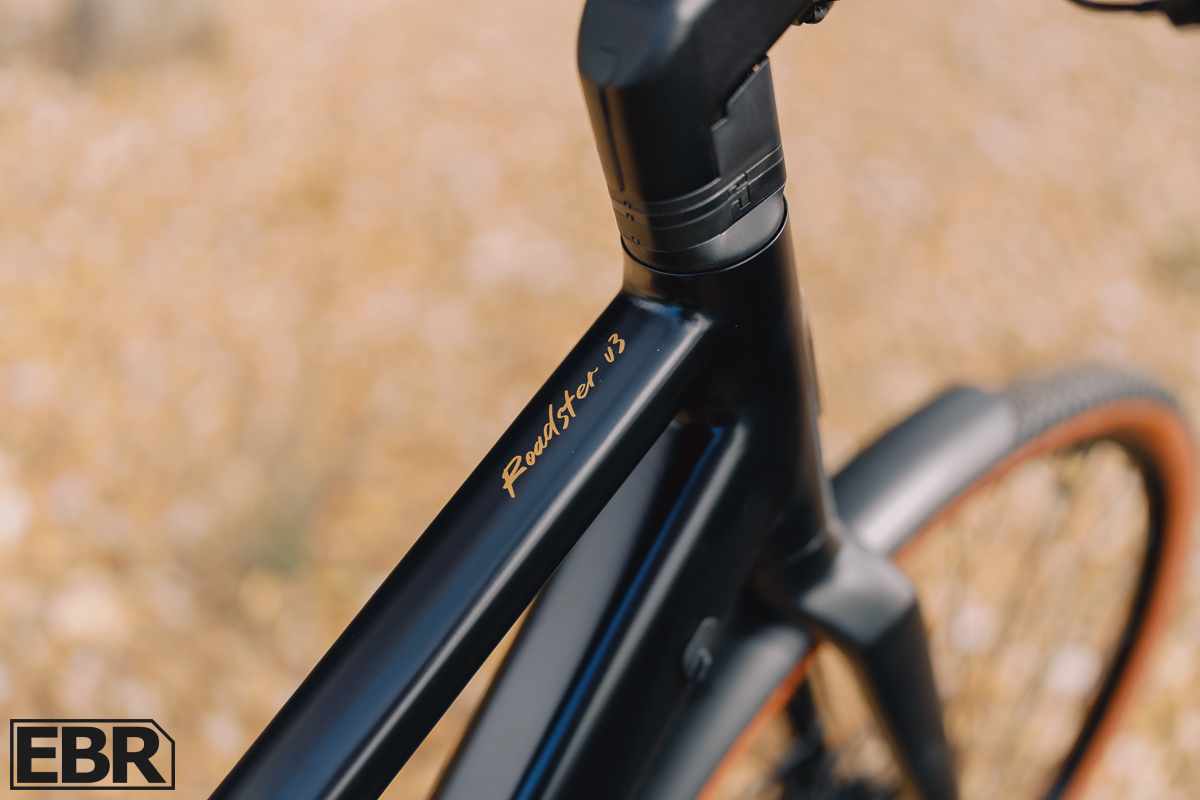
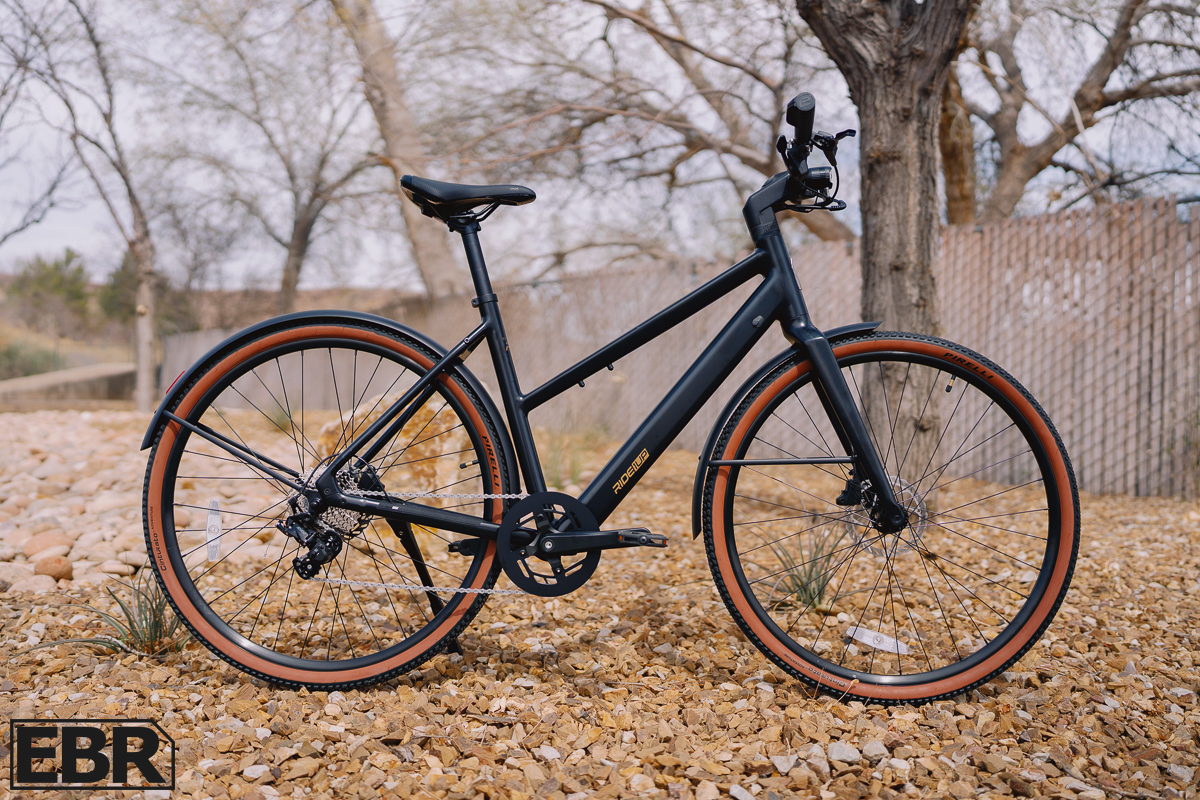
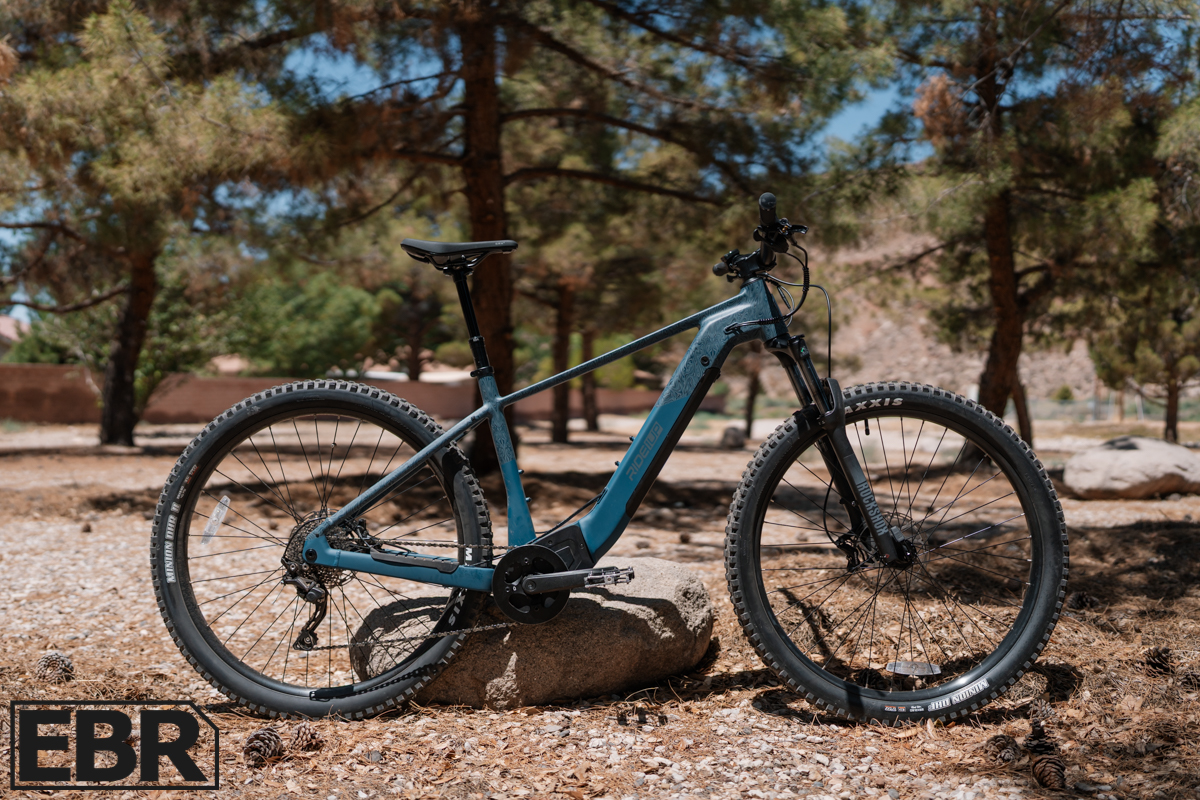
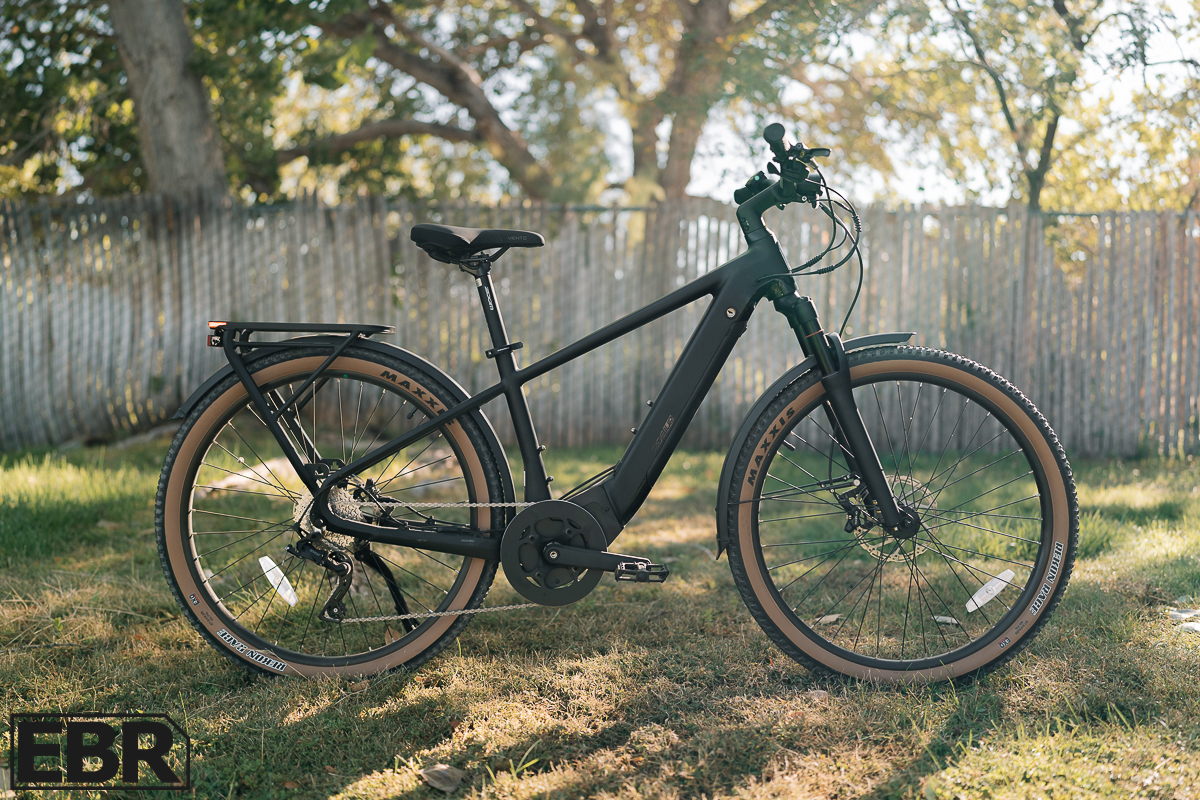
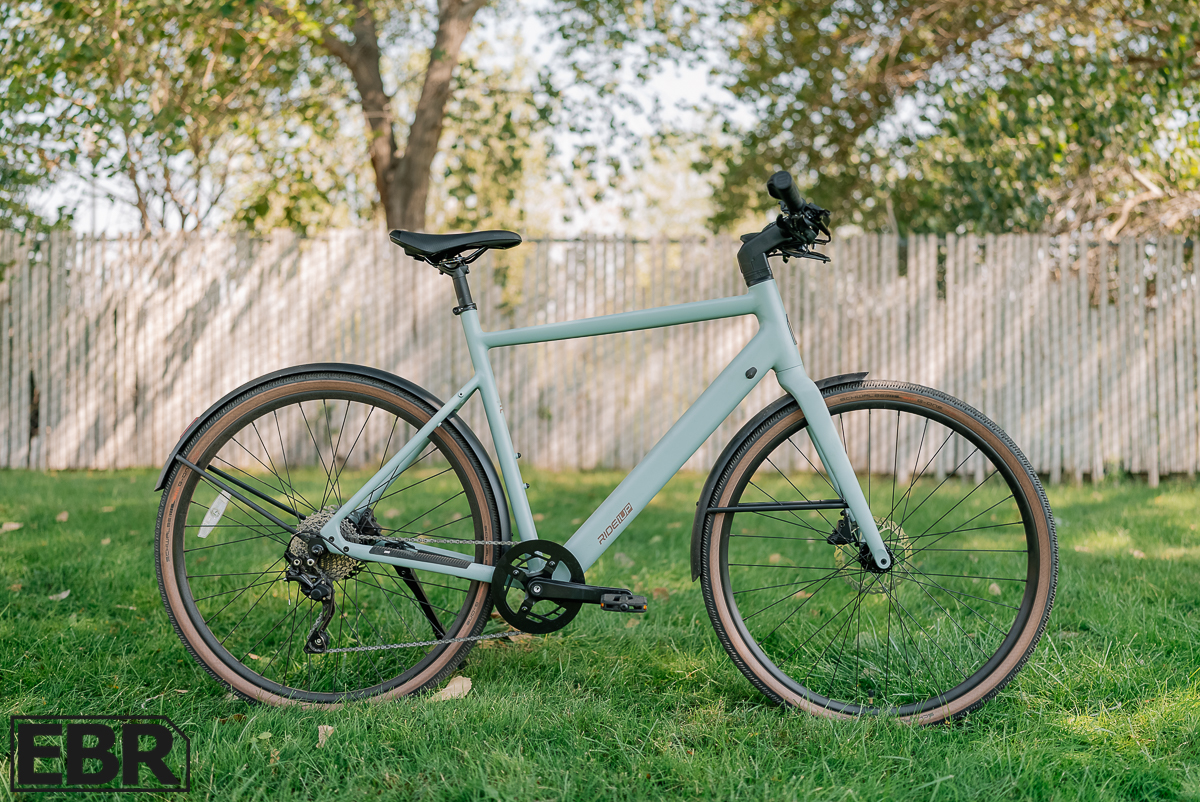
Every ride experience on any bike starts with its curb appeal. I mean, that’s half the battle these days: “Does my bike look cool?” The Roadster V3 looks great, from its slick internally routed cables through the headset to the sleek frame tubing. It doesn’t even look like an ebike unless you take a deeper look.
The low-step frame option Ride1Up sent me was painted in their ‘Onyx Black’, a matte finish (or a very subtle gloss that appears almost matte), and I think that paired with its minimal branding is just a recipe for a great-looking bike. But that’s just my taste. If you don’t like this, they also offer the V3 in a ‘Mint’ green and a ‘White Gold’ variation available only in the suspension version.
The riding position on the Roadster V3 is a hybrid setup where you’re leaning forward just a bit on the flat handlebar and comfy ergonomic rubber grips. You have a good view of the road ahead but you’re not bent over so far that your neck & back complain.
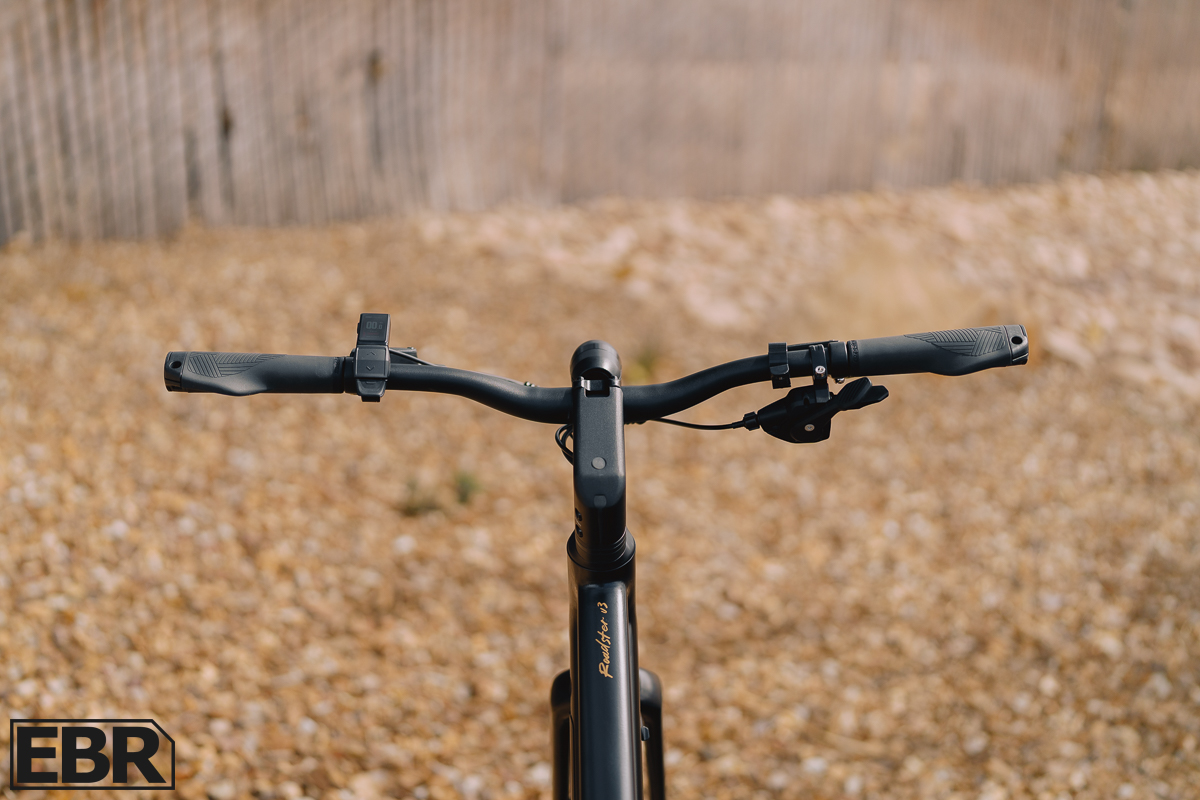
The cockpit is clean and simple with everything you’d expect: brakes, shifters, a throttle, headlight, and a display to manage the bike’s pedal assist. The Low-Step frame deserves some attention here.
Unlike traditional step-through designs that completely lack a top tube and can feel flexy, this one has a diagonal tube running from the head tube down to the seat tube. At 5’11”, I’m at the upper end of the Low-Step’s height range (5’2″ to 5’11”), and the fit worked well. The 23″ standover height made getting on and off easy, which is the whole point of this frame style.
The geometry keeps the ride handling playful. With a 71-degree head tube angle and a shorter 42-inch wheelbase (about 1.25″ shorter than the regular high-step), the bike feels snappy and quick to react when you need it. The 15.9″ reach is the shortest of the three frame options, compared to 16.5″ on the regular and 17.1″ on the large. The handling stayed responsive, no flex issues despite the lower standover design.
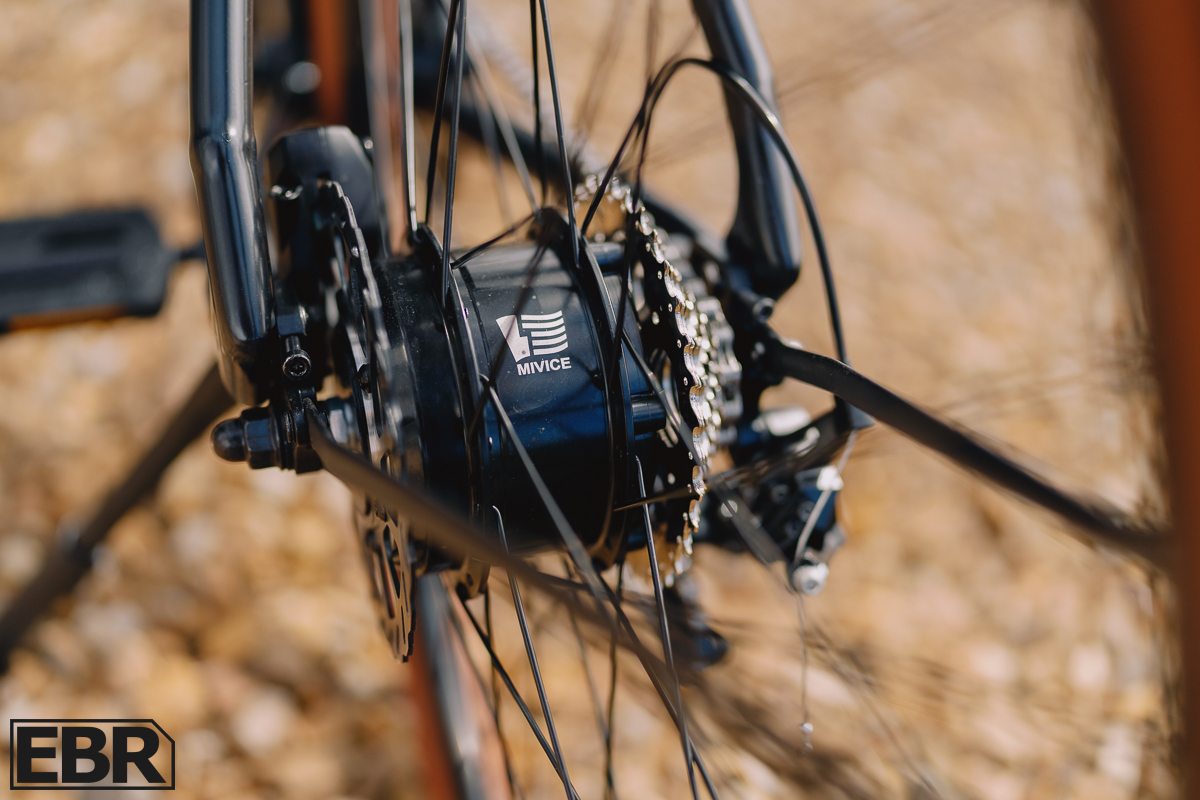
The Roadster V3 has pedal assist up to 28 mph and a throttle that’s limited to the 20 mph speed cap it ships with and switching is very fast and easy in the display. The 500W rear hub motor delivers a subtle but confident level of pedal assist that feels intuitive to your pedaling cadence and effort, thanks to the ‘Intui-Drive’ torque sensor where your effort dictates the level of power you get.
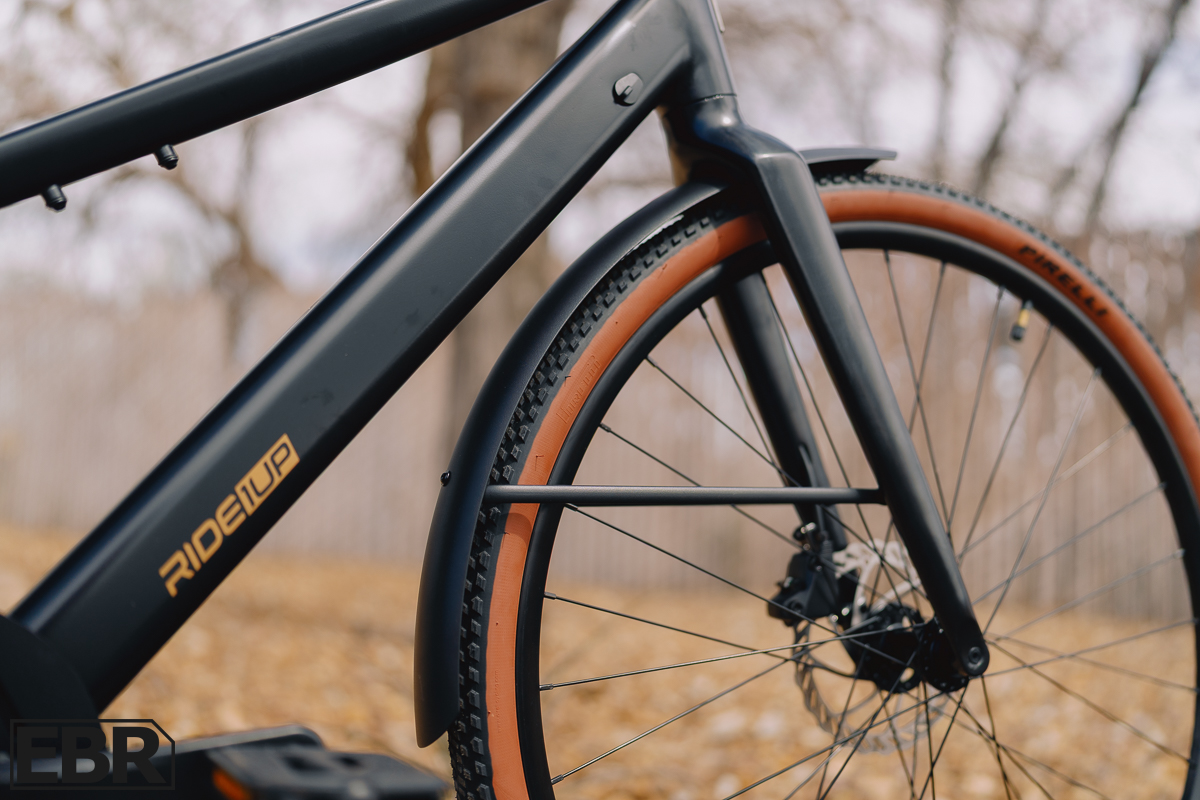
The Pirelli Cinturato tires on my test unit are proper gravel tires, a step up from basic commuter rubber. They have decent tread for mixed surfaces while still rolling smoothly on pavement. The frame is rigid, but the quality tire casing helps smooth out road chatter. These tires roll quietly and quickly, and the gumwall sidewalls look good too. Both the tires and wheels can be set up tubeless, though you’ll need to account for the Schrader valve hole.
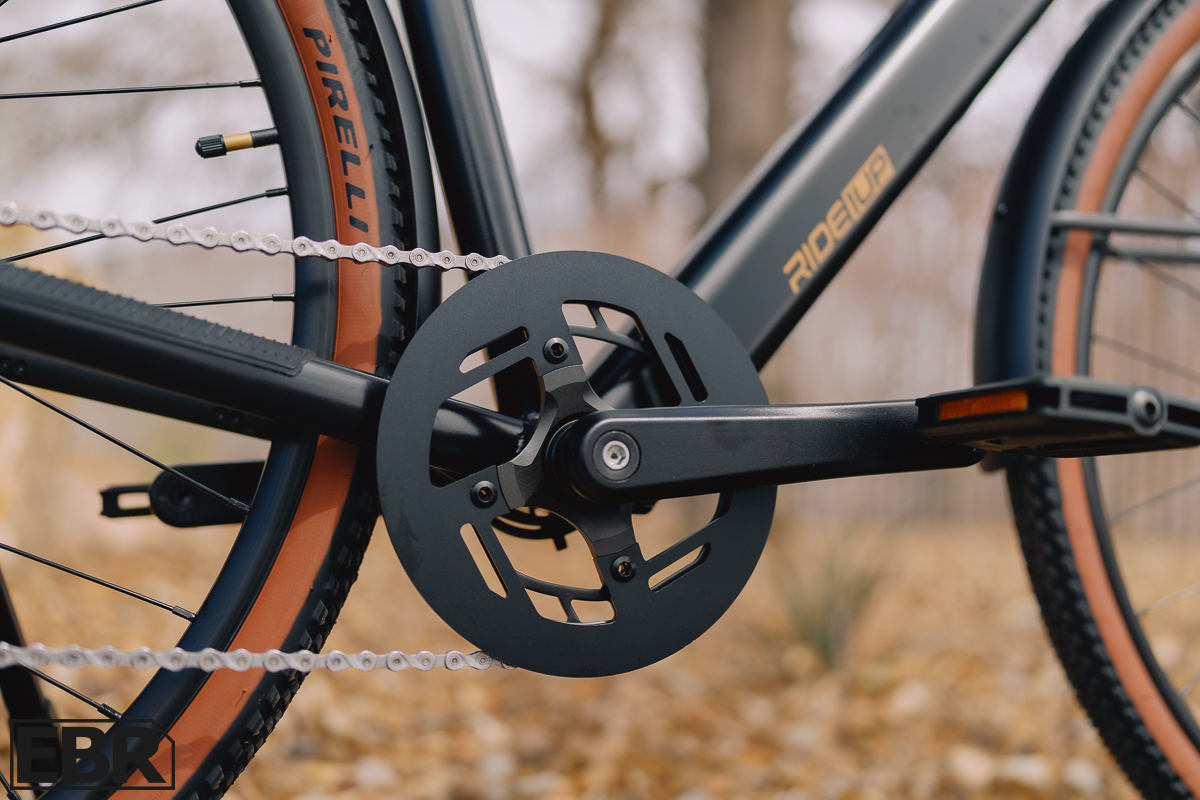
The microShift Advent drivetrain was a solid choice for the V3. The 44t chainring paired with the 11-36t cassette gives you a decent range for city riding and moderate hills. The shifts are clean and the derailleur engages precisely at each gear. It’s not quite as refined as the Shimano Deore from the previous model year, but it gets the job done without complaint and keeps costs down.
All in all, the ride on the Roadster V3 is smooth and fast, packaged up in a 44-pound frame that’s easy to maneuver and manageable to lift when needed.
And while it’s not talked about enough, one of my favorite parts of the V3 (and most lightweight ebikes) is the ability to keep on pedaling the bike even if you ran out of juice, and that’s an underrated perk of this bike. In-fact, many of my rides started with no assistance and you really don’t notice unless you start at the base of a hill.
Speaking of, let’s talk about that range of the Roadster V3…
Range
Estimated Range (from Ride1Up):
- 20 – 40 miles
Real World Range Test Results:
- Eco Mode Results: 48 miles
- Boost Mode Results: 17 miles
The Ride1Up Roadster V3 runs a 360Wh battery paired with a 500W rear hub motor, using what Ride1Up calls their ‘Intui-Drive’ torque sensor. On paper, the company estimates 20 to 40 miles depending on factors like rider weight, speed, and riding style, pretty typical for an e-bike in this class. Real-world conditions often tell a different story, so we wanted to see how this translated on actual rides.
The Roadster V3 has four riding modes: Eco, Tour, Sport, and Boost. Each one progressively increases power delivery at the cost of faster battery drain. In Eco mode, you can cruise on lighter assist and stretch the battery life. Boost mode provides maximum power for quicker acceleration and steep hills but drains the battery faster.
For the test, we rode primarily in Eco mode, keeping an average speed around 13 mph to maximize range while staying consistent and realistic. We managed to get 48 miles on a single charge, which beat Ride1Up’s upper range estimate. In a separate test using higher assist levels, we got 17 miles, which shows how much PAS level affects battery life. Your results will vary based on your weight, terrain, and how much you lean on the motor.
The ‘Intui-Drive’ torque sensor likely helps with efficiency. While I can’t speak to the specific internals, I can say the power delivery felt smooth and natural throughout my rides. This kind of subtle assist is where a good torque sensor shines, giving you just enough help when needed without feeling heavy-handed or overly mechanical.
Power (Motor & Battery)
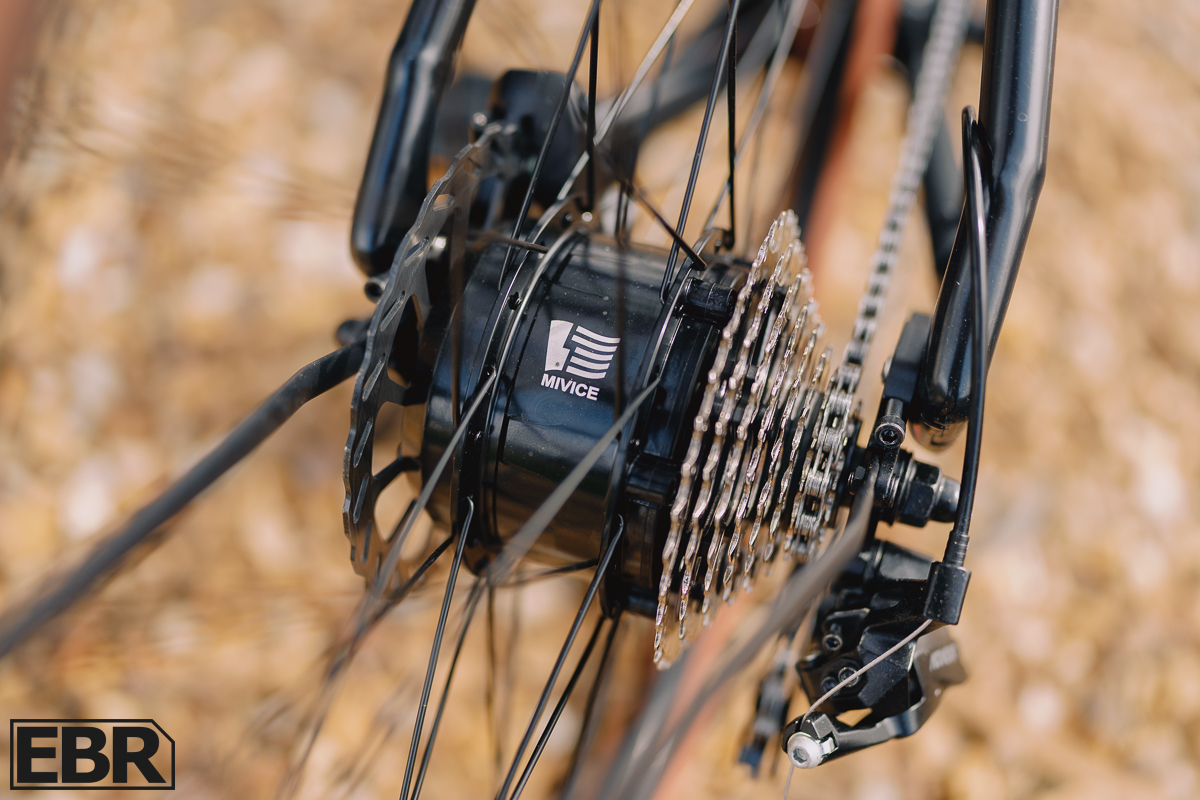
At 44 pounds, the 500W nominal rear hub motor paired with the 36V 10Ah battery strikes a balance between practical and capable. With 50 Nm of torque available, it gives enough punch for daily commutes or quick trips around town, especially given the bike’s relatively light weight.
The motor’s assist caps out at 20 mph when using only the throttle, which works for most rides where speed limits and traffic are factors. If you want to push things further, the pedal assist will carry you up to 28 mph with some effort on your end. This makes the Roadster V3 versatile, letting you adjust your speed based on your route, whether you’re cruising or trying to cover ground quickly.
What stands out in this setup is the ‘Intui-Drive’ torque sensor paired with the MIVICE motor. It doesn’t feel like the motor is doing all the work for you. Instead, it enhances your own effort, making it feel like you’ve suddenly gotten fitter. Whether you’re in Eco mode to conserve battery or switching to Boost for a quicker ride, the power delivery is responsive without feeling abrupt or unnatural.
The 360Wh battery isn’t the largest on the market, but it pairs well with the bike’s efficient motor and lightweight design. For most riders, this setup can handle daily commutes, errands, and longer weekend rides without range anxiety. The water-resistant MIVICE controller means you’re not left worrying if you hit a puddle or get caught in rain on your way to work.
Components
For an e-bike priced at $1,295, the Ride1Up Roadster V3 offers solid componentry that competes well in this price range. Available in two drivetrain options (9-speed microShift Advent or single-speed Dayco Power carbon belt drive), each setup caters to different riders while keeping the bike lightweight and practical for commuting.
The 9-speed version comes with a microShift Advent drivetrain, a reasonable choice at this price point. microShift Advent is known for being reliable and budget-friendly. The 44-tooth chainring paired with an 11-36t cassette offers a solid range of gearing for city commuting and moderate climbs.
The gear ratios work well for most environments, giving you enough low-end for hills and plenty of high-end for cruising on flats. The chain is rated for higher torque, which matters on e-bikes since they put more stress on drivetrains compared to regular bikes. This setup should hold up fine to daily use.
The single-speed version uses a Dayco Power carbon belt drive with a 64t chainring and 20t freewheel. Belt drives are low-maintenance and provide a clean, quiet ride, making this option good for riders who want simplicity and don’t want to deal with gears or chain lube.
The belt drive works well if you live somewhere flat or don’t mind putting in extra effort on inclines. While the single-speed doesn’t offer the same versatility as the 9-speed, the lack of moving parts means less upkeep and fewer potential issues, which is a win for daily commuters.
One note: the suspension fork model (which uses a Trama 35mm fork with 12x100mm thru-axle) only comes with the 9-speed microShift setup, not the belt drive option.
For the price, both options are solid choices. Ride1Up has done well to offer two distinct drivetrains that work for different types of riders. Whether you go with the 9-speed or the belt drive, you’re getting a well thought out e-bike with components that perform above what you’d expect at this price.
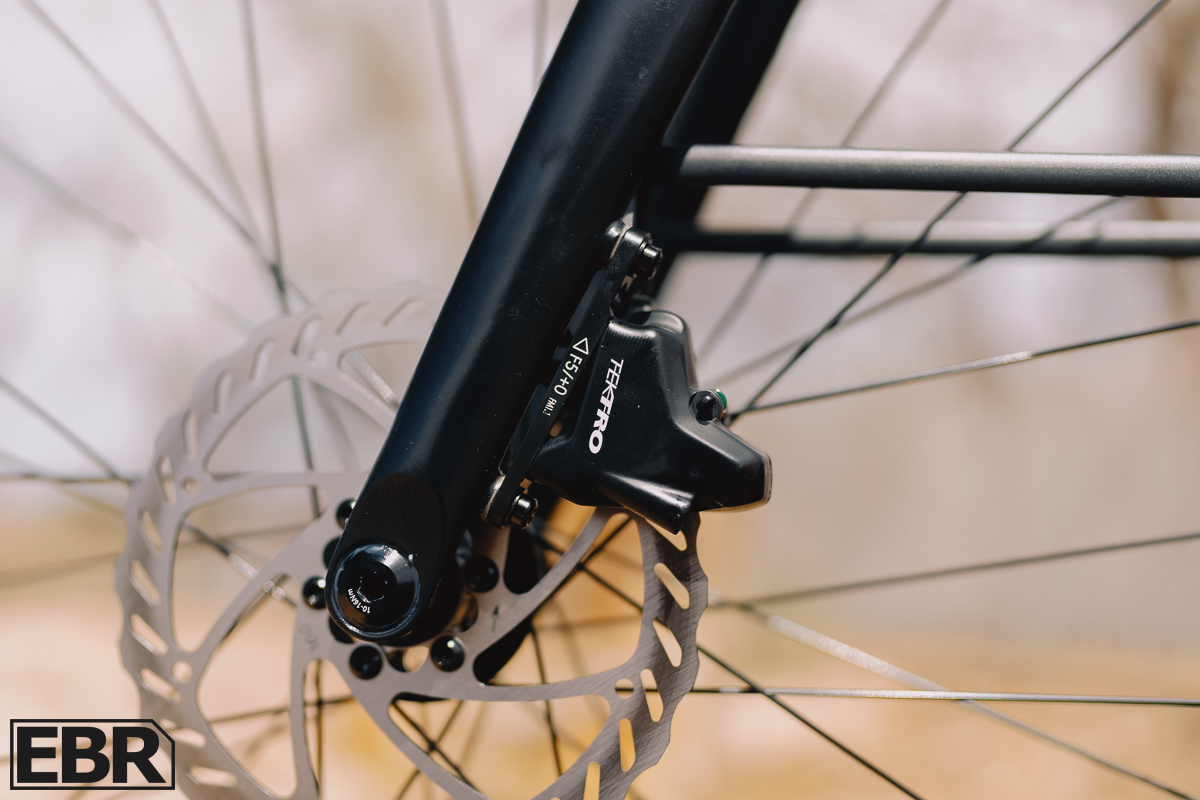
Both drivetrain versions of the Roadster V3 come with Tektro hydraulic disc brakes with 160mm rotors. While not the largest rotors out there, they provide adequate stopping power for a lightweight, city-focused e-bike. The 2-piston calipers give reliable braking, even in wet conditions, and the hydraulic system offers smooth and consistent feel at the lever.
The flat alloy handlebars at 680mm wide provide a stable and comfortable riding position, helped by the 15-degree rise stem. The cockpit setup is simple but effective, giving you good control for navigating urban streets or dodging traffic. The lock-on Ergo grips by Ergotech add comfort, and the overall cable routing (most of which is internal) keeps the bike looking clean and reduces the chance of snags.
The Selle Vivo saddle provides a decent level of comfort, though it might feel a bit firm for longer rides. The version I was sent doesn’t have any suspension (but, you can opt for the suspension fork model), and its rigid frame fits with the overall minimalist and lightweight design.
Screen / User Interface / App
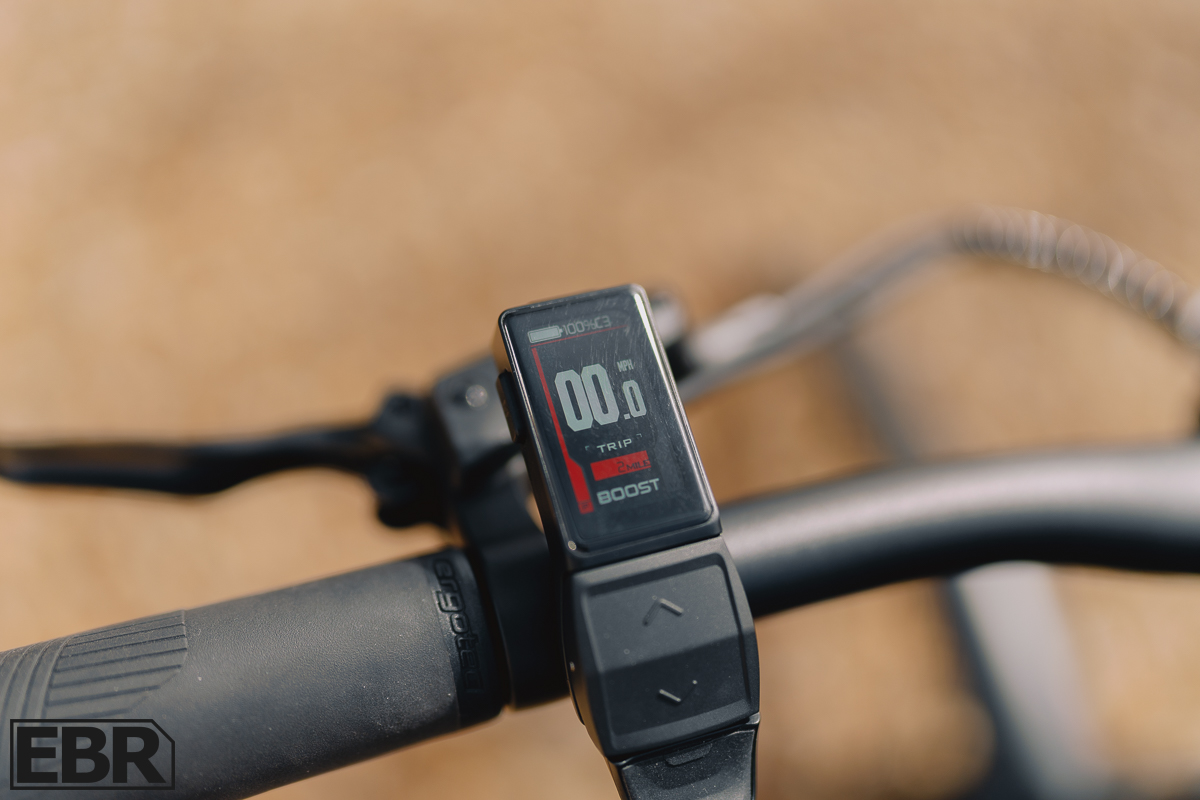
The Ride1Up Roadster V3 uses the Velofox DM09 display, a compact 1.4-inch screen that packs all the essential data for your rides. Despite its small size, the high-contrast LCD is easy to read even in direct sunlight. The screen shows real-time speed, pedal assist levels, trip distance, and odometer in a clean layout that doesn’t overwhelm you with unnecessary information.
The DM09 display is minimalistic but includes more features than you might expect at this price. Pedal assist level can be quickly adjusted using the UP and DOWN buttons, giving you control over how much motor power you want at any time.
The display can toggle between different speed and mileage modes, including real-time speed, average speed, maximum speed, trip distance, and odometer readings. A press of the M button lets you cycle through these modes, giving you access to the data you need without complicated menus.
For night or low-light rides, the integrated lights can be activated by holding the UP button for 2 seconds. There’s also a walking assist mode that lets you push the bike at 4 mph with a press of the DOWN button.
The display is user-friendly but also allows for deeper tweaking via the settings menu. By holding the M button, you can dive into customizable settings, from increasing the top assist speed to adjusting screen brightness and more.
The small footprint of the DM09 fits well with the Roadster V3’s overall minimalist design, keeping the cockpit clean. Despite its size, it doesn’t skimp on functionality or readability, making it a solid companion for casual rides and daily commutes.
Ride1Up Roadster v3 ST Model Options
The Ride1Up Roadster V3 comes in three frame styles: Low-Step, Regular High-Step, and Large High-Step.
The Low-Step model accommodates riders from 5’2″ to 5’11”. Unlike traditional step-through frames that completely eliminate the top tube, this design uses a diagonal tube from the head tube down to the seat tube, which maintains frame stiffness while still offering easy mounting and dismounting. The 23″ standover height, 71-degree head tube angle, and 42-inch wheelbase keep the bike feeling responsive. The 15.9″ reach is the shortest of the three frame options.
The Regular High-Step fits riders from 5’5″ to 5’9″, with a 16.5″ reach. The Large High-Step is designed for riders between 5’9″ and 6’4″, with a 17.1″ reach and longer wheelbase for taller riders.
For colors, the Roadster V3 is available in Onyx Black and Mint across all frame styles. Both options have a matte finish that gives the bike a clean, understated look. If you opt for the suspension fork model (which uses a Trama 35mm fork with 12x100mm thru-axle), it’s only available in White Gold.
Each frame, regardless of style or size, supports a max payload of 300 lbs, making it capable of carrying extra gear or heavier riders.
The final choice in customizing your Roadster V3 is the drivetrain. You can choose between the microShift Advent 9-speed or the single-speed Dayco Power carbon belt drive. Both configurations are available across all rigid frame options. The suspension model only comes with the 9-speed setup.
Ride1Up also offers accessories including pannier bags, the Connect+ Rear Rack, and a phone holder, all designed to boost the practicality of your Roadster V3 for commuting or running errands.
Is The Ride1Up Roadster v3 ST Worth Buying?
The Ride1Up Roadster lineup has been a fan favorite for years, and it’s easy to see why. With its lightweight build, clean design, and minimalist approach, the Roadster V3 builds on that foundation with a noticeable bump in specs that make it the most capable version yet. Its combination of clean looks, responsive torque-sensing motor, and approachable price point make it a solid choice for riders wanting a practical e-bike for commuting or some weekend fun.
That said, there are a couple areas where the Roadster V3 could improve. More mounting points for accessories or gear would be welcome, especially on the fork legs. Additionally, the battery removal process could be more user-friendly. The release tab isn’t as intuitive as you’d expect, and there’s potential to nick the paint if you’re not careful during the process.
These are minor complaints when looking at the bigger picture. The Roadster V3 delivers practicality, solid range, and class 3 speeds, all powered by a 500W motor with 50Nm of torque. And it does so in a compact 44-pound package that works for nearly any rider, whether you’re commuting daily or enjoying weekend rides. It’s a well-rounded e-bike that continues to hold up its reputation as a solid commuter choice.
Pros
- The 500W motor delivers 50 Nm of torque, offering enough power for climbs and acceleration
- Ride1Up’s ‘Intui-Drive’ torque sensor paired with the MIVICE motor provides smooth, natural power delivery
- Riders can choose between a low-maintenance single-speed Dayco Power carbon belt drive or a 9-speed microShift Advent drivetrain
- Available in Low-Step, Regular High-Step, or Large High-Step frames, accommodating a variety of rider heights and styles
- Optional suspension fork model with Trama 35mm fork for riders wanting front travel
- The 360Wh battery provided 48 miles of range in Eco mode testing, beating the brand’s estimates
- Ships with quality 700x45c tires (Pirelli Cinturato, Schwalbe G-One RS, or Continental Terra Trail depending on availability), all tubeless compatible
- Clean, minimalist design that delivers good performance at a competitive price
Cons
- Removing and replacing the battery can risk chipping the paint if you’re not cautious, as the locking lever requires careful handling
- Additional mounting points along the frame or fork would be helpful for extra gear storage or outfitting the bike for gravel riding





Reader Interactions