

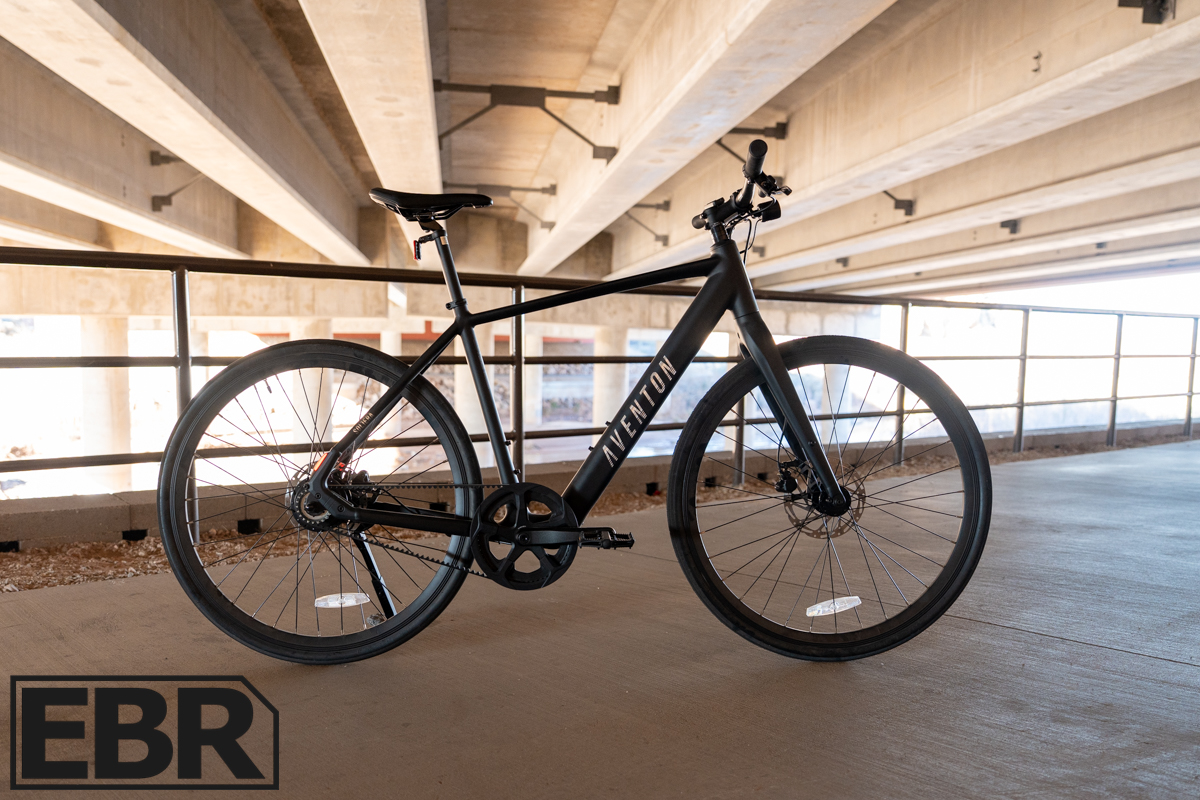
Aventon’s been quietly iterating on their urban commuter formula for a while now, and with the Soltera 3 ADV, they’ve landed on something genuinely interesting. This is the fourth generation of their lightweight city bike, and it’s clear they’ve been paying attention to what works, and more importantly, what doesn’t need to be there in the first place.
At 37 pounds, the Soltera 3 ADV is now 20% lighter than its predecessor, making it one of the lightest e-bikes you can buy without emptying your bank account. But weight loss isn’t the headline here. The real story is what Aventon swapped out to get there, and whether those choices make sense for the kind of riding most people actually do. So, let’s take a ride and find out in this Aventon Solterra 3 review.
My Experience Riding The Aventon Solterra E-Bike
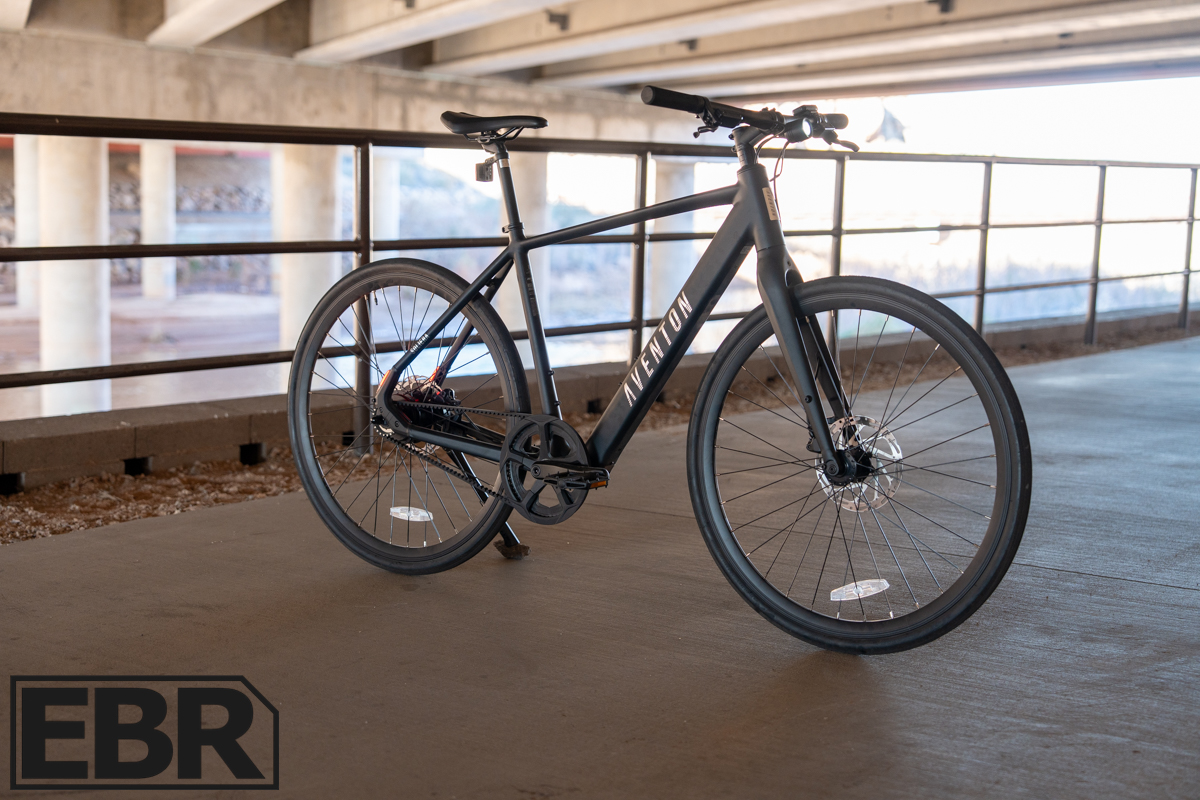
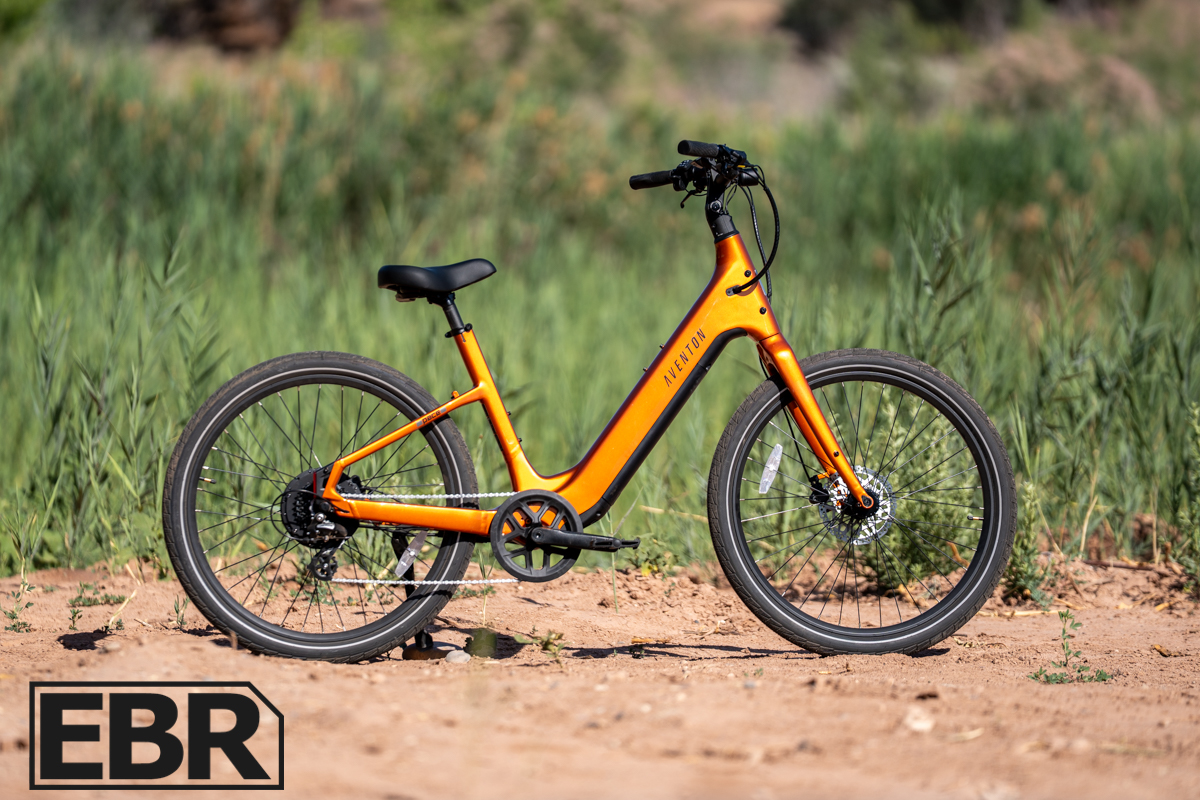
First impressions matter, and the Soltera 3 ADV has that sleek city streetfighter vibe locked down. The matte black finish with the flat bar gives it this aggressive, flat-bar gravel bike aesthetic that just works. It looks fast standing still, which is always a good sign.
Fit and Position
One thing I really appreciated: Aventon offers four frame sizes instead of the usual “one size fits most” approach with a million adjustment points. Having proper frame sizing options means you’re not trying to Frankenstein your way to a good fit, you just pick the right size and you’re 90% of the way there. I ended up on the medium, and it felt dialed from the first ride.
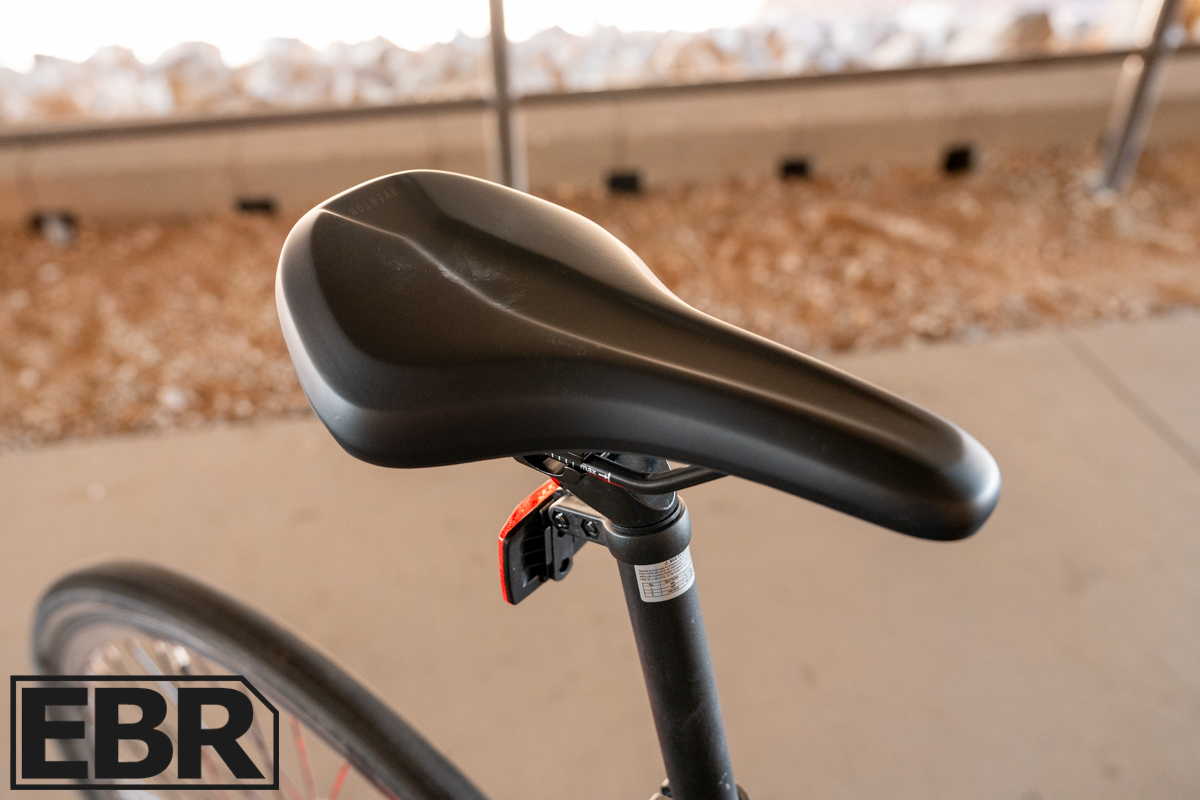
The riding position is decidedly forward-leaning. Your weight is split between your sit bones on the saddle and your wrists on the lock-on grips, with that fixed 70mm stem keeping you in an aggressive stance. If you’re expecting an upright, cruiser-style position where you can wave to neighbors with both hands, this isn’t it. For that, check out the Pace 4, wider tires, wider saddle, swept-back bars, the whole comfort-first package.
But personally? I love the aggressive position on the Soltera 3. It got me daydreaming about throwing drop bars and carbon wheels on this thing and turning it into the ultimate e-gravel build. The only problem: tire clearance. Those 38c tires fill up most of the available space, so my gravel dreams stayed dreams.
Aventon, if you’re listening: you crushed it with the Ramblas. Now give us a performance-focused e-gravel bike with this frame DNA. Will they listen to me? Probably not. But throwing it into the universe feels right.
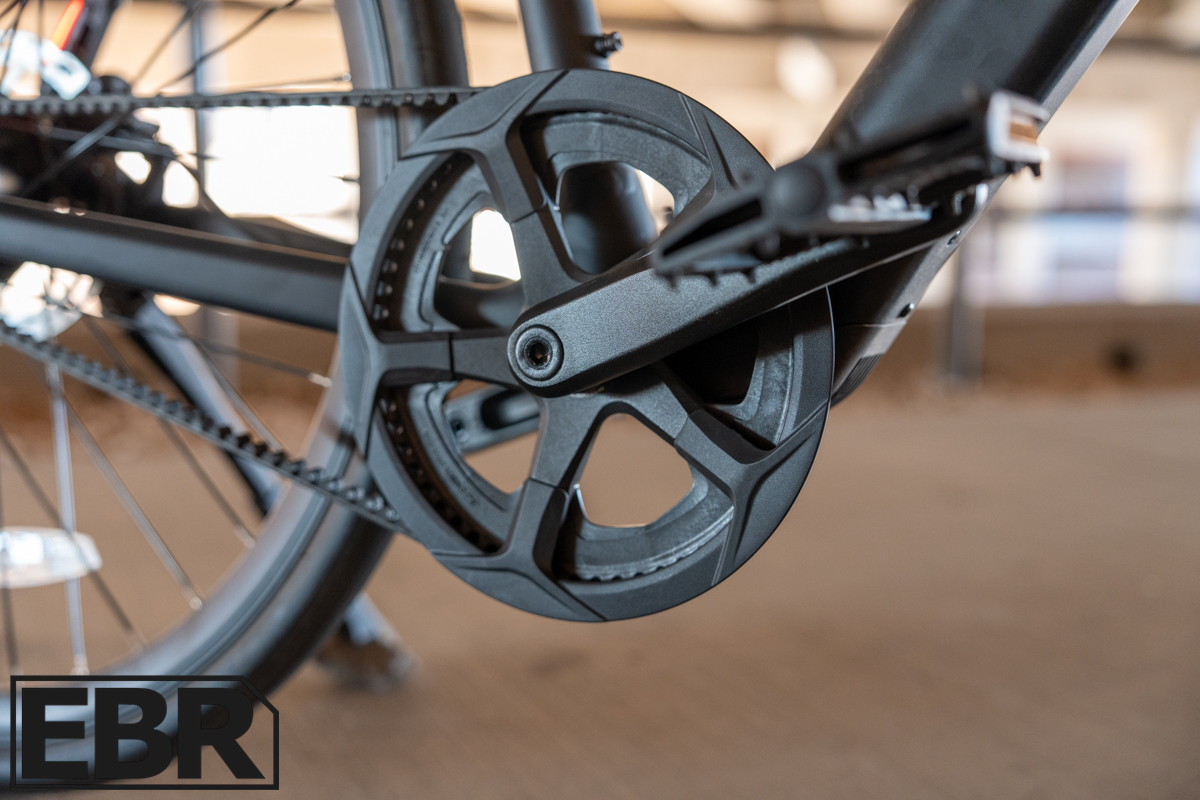
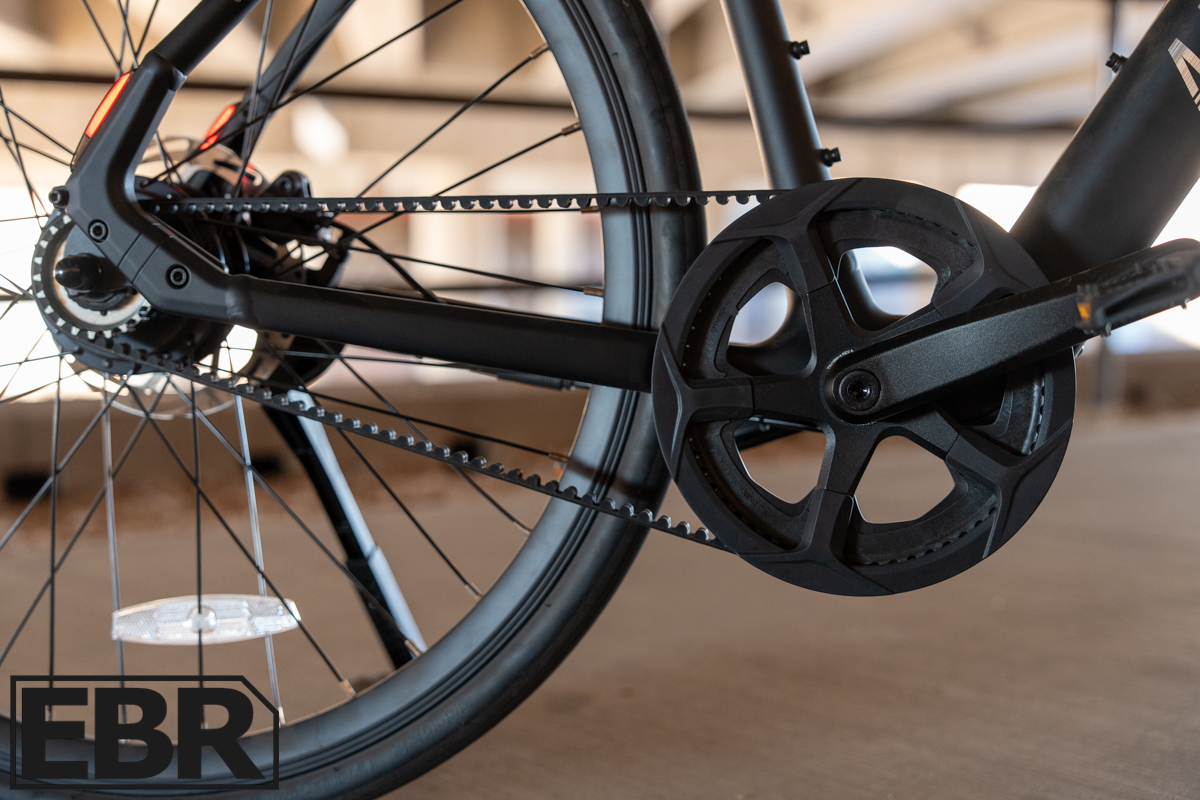
Gravel daydreams aside, let’s talk about that single-speed setup. The 60T chainring paired with a 22T freewheel sits in a nice middle ground. It makes you work a bit to get up to speed, you’re definitely earning your momentum, but once you’re rolling, it’s easy to hold that pace. On flats, I found myself cruising comfortably in both Eco and Sport modes (the three assist levels are Eco, Sport, and Turbo). When climbs got steeper, a bump in assist and the occasional stand-up-and-pedal moment got me over the top without too much drama.
Around town, the gearing works. It’s not a bailout setup where you can spin effortlessly at 5 mph, but it’s not a track bike either. It rewards rhythm and momentum, which honestly makes the ride more engaging.
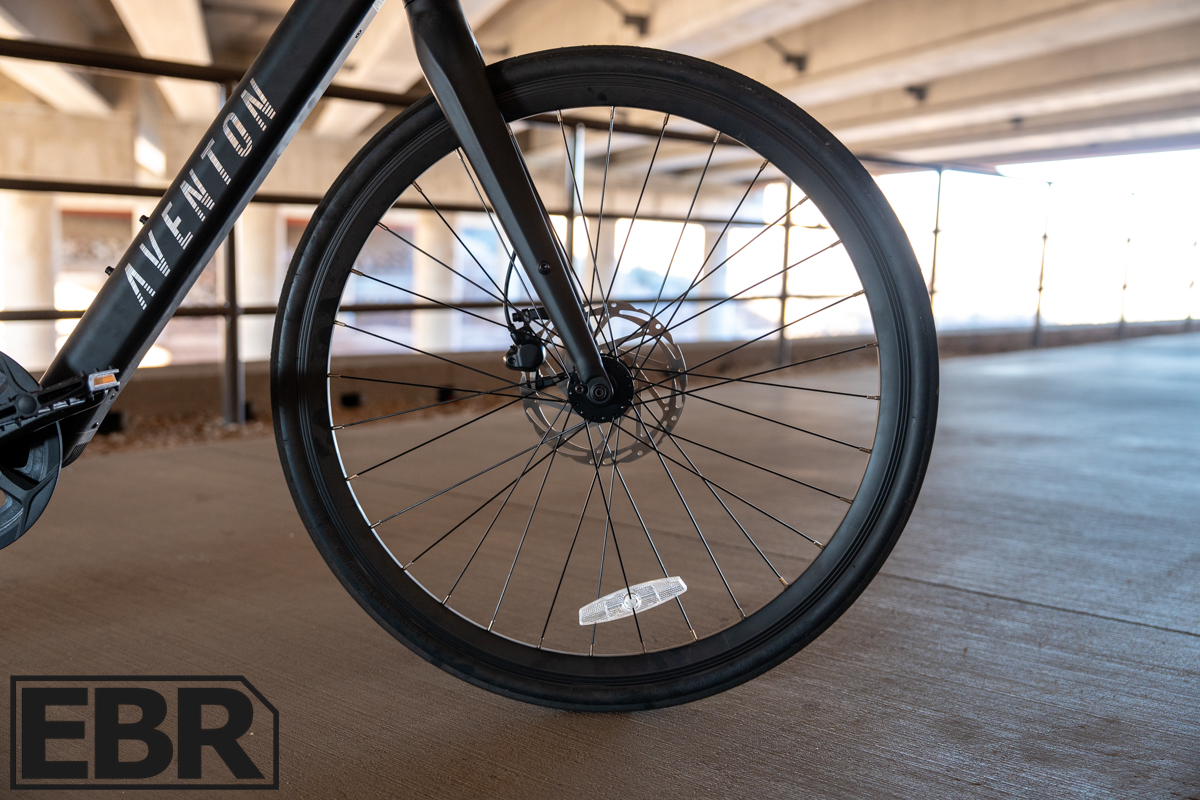
The 700x38c tires are a solid choice, I’m always happy to see a proper 700c setup rather than the chunky 20-inch wheels you find on some e-bikes. The 38c width is noticeably cushier than the 30-32c you’d find on a road bike, which matters when you’re hitting potholes and cracked pavement. That said, I wish there was clearance for at least 40mm tires, ideally 45mm. The frame is just tight enough that you’re maxed out at 38c, which limits how rough you can get with terrain choices.
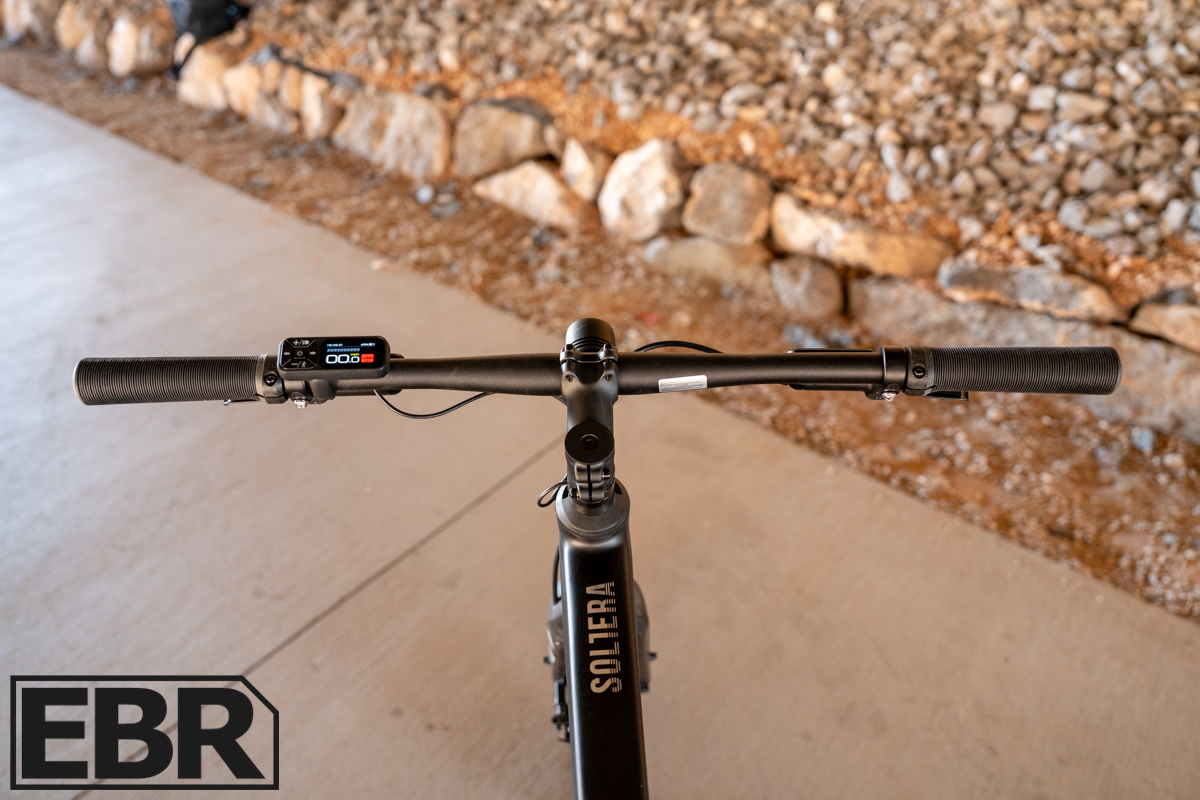
I did a late-evening range test, which gave me a chance to really use the headlight. It’s impressively adjustable, tilt it down for a narrow, short-range view, or angle it up and you get this wide, bright spread that genuinely lights up the road ahead. It’s one of those details that doesn’t sound exciting until you’re actually using it in the dark, and then you realize how well-thought-out it is.
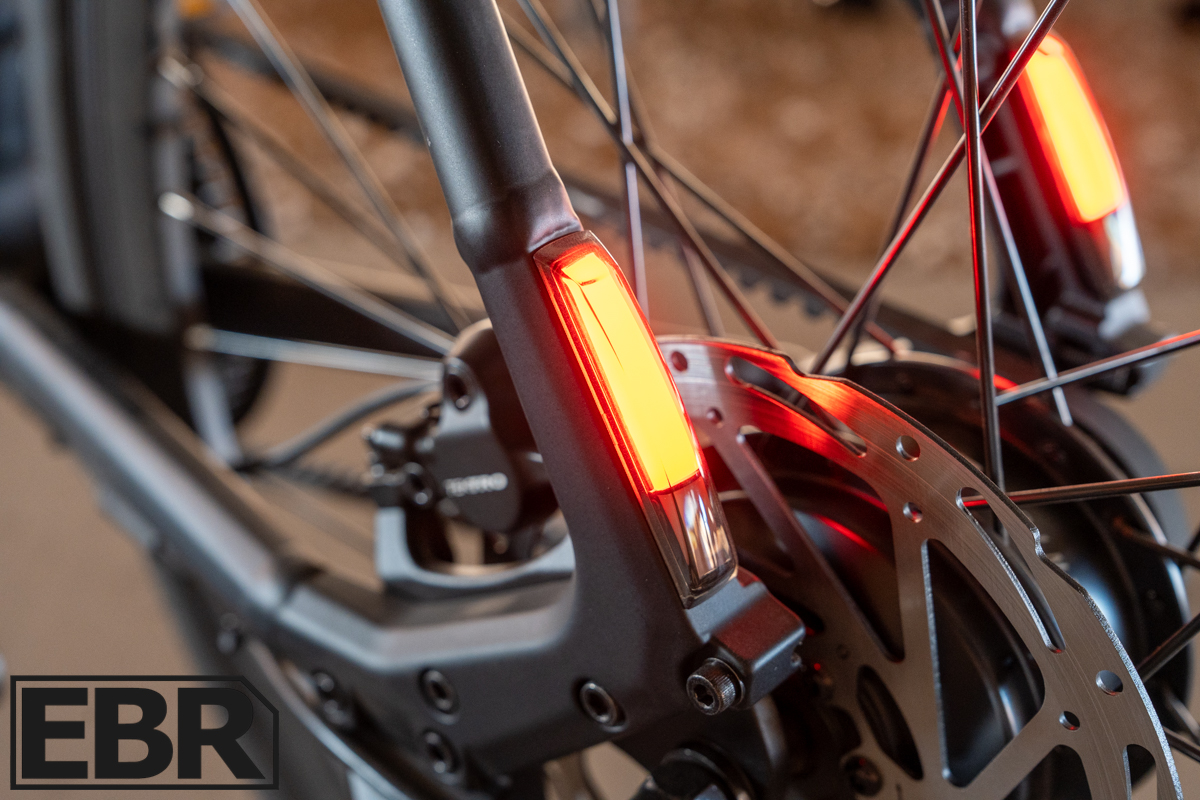
The integrated turn signals are still cool, Aventon was one of the first brands to do in-frame signals, and others are finally catching on. I just wish they doubled as brake lights, but no brake indicators on this model. Minor gripe.
The BC147 display is compact and gets the job done. It’s a bright, color LCD screen with all the essential info at a glance. I paired it with the Aventon app, grabbed some over-the-air updates, and started messing with the motor tuning. Stock Turbo mode was already peppy, but there’s room to bump it up even more if you want. Maxed out? It’s legitimately fast. Of course, more juice means faster battery drain, but at least you have the option.
Pro tip: if you’re worried about the small font on the BC147, just use the app in display mode. Your phone becomes a bigger, easier-to-read screen, and you can flip it between portrait and landscape depending on your preference.
Between the lack of a throttle, the belt-drive simplicity, and that 37-pound weight, this bike fits perfectly into the life of someone navigating apartment stairs, weaving through city streets, or cruising college campuses. It’s light enough to actually carry, and it doesn’t feel like a burden when the motor’s off.
If you’re the type who wants a throttle, 30 mph speeds, and an 80-pound e-bike with a La-Z-Boy saddle, this isn’t your bike. But if you love the look and feel of sleek, analog bikes and just want a little motor assistance when you need it, without all the maintenance baggage, the Soltera 3 ADV deserves a spot on your shortlist.
Range
Estimated Range (from Aventon):
- Up to 70 miles
Real World Range Test Results:
- Real-Word Testing on Eco Mode: 56 miles
- Real-Word Testing on Turbo Mode: 24 miles
In range testing we put Aventoins claimed ‘up to 70 mile’ to the test locally in leads than ideal conditions. Using our local bike path system, we covered two different range tests, the first on Turbo mode using the highest level of assistance, and then after a recharge, a second range test but this time on Eco mode giving us the least amount of assistance the Solterra 3 offers.
Rider weight was about 190lbs and the course is not flat, over the course of both range tests, we ascended over 1400ft of elevation which certainly impacts a range test. But, these are real world conditions for real world results.
In the first test, the Solterra was able to cover 24 miles spanning about an hour and a half, using the full-blast Turbo mode, meaning we were holding the 20MPH max speed of the bike for an ‘all-out’ pressure test of the bikes capabilities.
After a night of rest and a recharge, I took out the Solterra 3 the next day for another range test, this time on Eco mode. In this second test the ride spanned right at 4 hours (3:57) and I was able to hit 56 miles before the battery tapped out. It’s worth noting, on the range test, the battery was at about 4% charge remaining and the assistance at that point had trailed off to the point I didn’t feel any assistance, so with 4% remaining, I called it a day.
Stepping back, getting 4 hours of non-stop riding (plus using the bike’s built-in LED headlight as my ride went into the evening) and still covering nearly 60 miles is a solid feat for a 37lb e-bike with a 367Wh battery.
Whether you are using it for fun, for fitness or just for your daily commute, this mileage should get most folks to and from their destination for a few days before ever needing a recharge.
Power (Motor & Battery)
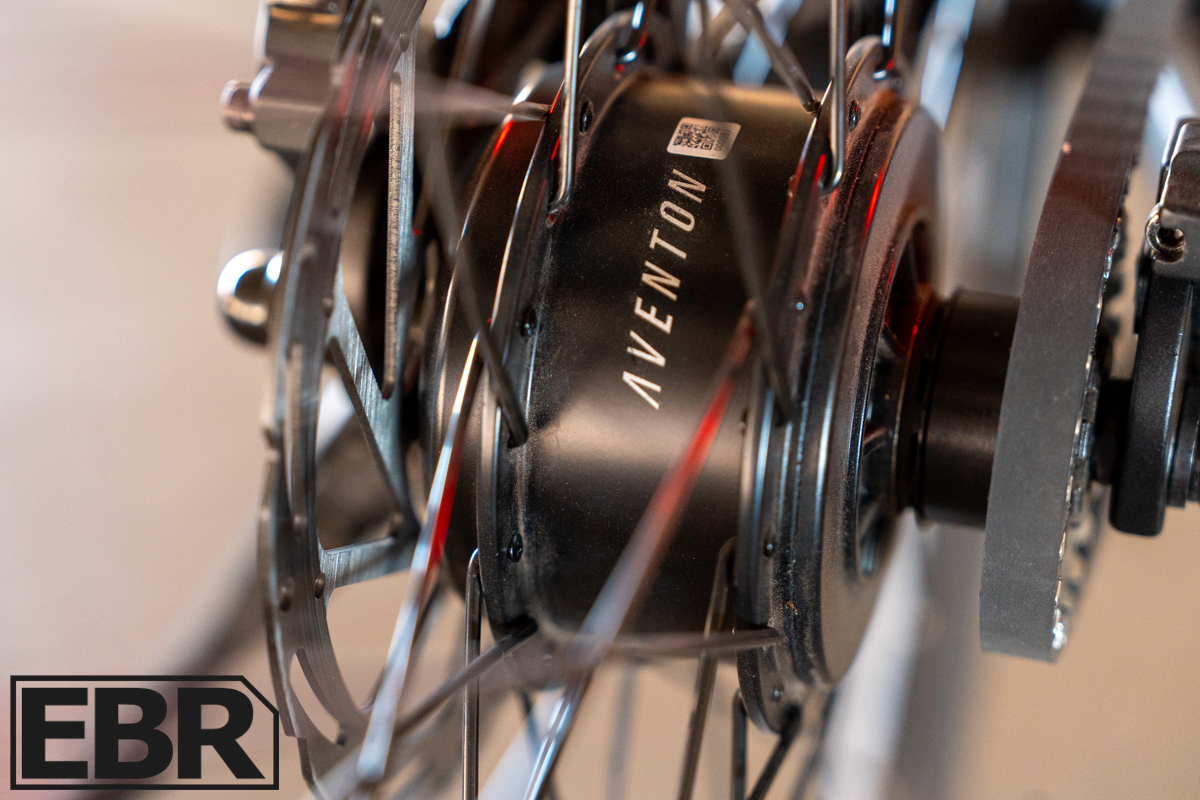
On paper, the Soltera 3 ADV’s power specs look modest. It’s a 250W nominal motor with 500W peak output and 40Nm of torque running on a 36V system. Sure, those numbers seem low compared to the beefier motors on heavier e-bikes, but context matters. This is a lightweight, fitness-focused bike with a big chainring that’s easy to maintain at speed once you get rolling. The power delivery is tuned for efficiency and natural feel, not brute force.
Here’s the thing: when done right, a smaller motor on a lighter bike can actually outperform a bigger motor on a heavier one. Case in point, I ran the Soltera 3 ADV through the same local hill climb test I use for all e-bikes, and it beat the previous Soltera 2.5 (which had a larger 48V motor) by 3 seconds. That’s a big nod of praise to Aventon for delivering better performance with less weight and a smaller motor. The torque sensor deserves credit here too, it feels really nice, with subtle yet effective power delivery that makes the ride easier without feeling artificial or jerky.
The motor is impressively quiet. Between the belt drive, the 700c tires, and this smooth motor, the entire ride is just quiet and serene in a way that most e-bikes aren’t. You get three pedal assist modes, Eco, Sport, and Turbo, and all of them are well-calibrated. Eco stretches your range, Sport is the sweet spot for daily riding, and Turbo has legitimate punch. As mentioned earlier, you can also do motor tuning through the app to adjust power delivery to your preference.
The battery is fully integrated into the frame, a 36V, 9.94Ah unit for 367Wh total capacity. It’s not removable for daily charging like some e-bikes, but it’s not permanently sealed in either. If you need a replacement or servicing, a tech can pull it out; it’s just not shipping with keys for easy grab-and-go removal. The battery is TUV certified to UL 2271 standards, which is important for safety and compliance. The bike comes with a 4A fast charger, and with that smaller battery capacity, you’re back up and running in just a couple of hours. It’s a smart setup for a bike this light and efficient.
Components
Aventon claims “up to 70 miles” of range, so naturally, I had to put that number through the wringer. Using our local bike path system, I ran two separate range tests under less-than-ideal conditions, meaning hills, real rider weight, and no babying the throttle.
For the test, with helmet on, we had an average weight of a 190-pound rider, and across both runs the course was not flat as is often the case with range tests and we covered 1,400+ feet of elevation gain across both tests. Not flat. Not easy. Real world.
I wanted to see what happens when you just pin it. Turbo mode cranked to max, holding the bike’s 20 mph speed limit as much as possible. This was an all-out pressure test to find the floor. Result: 24 miles over about an hour and a half before the battery gave up. Not bad for sustained maximum effort, but clearly not how you’d ride this thing day-to-day unless you enjoy visiting charging outlets.
After a full recharge and a night’s rest, I took the Soltera 3 out for round two, this time in Eco mode, the lowest assistance level available. This ride stretched to just under 4 hours (3:57, to be exact) and covered 56 miles before I called it. I did notice the battery still had about 4% charge left at that point, but the assistance had faded to the point where I wasn’t feeling any help, so I packed it in.
Stepping back, getting nearly 4 hours of continuous riding, including using the built-in LED headlight as the ride pushed into evening, and covering close to 60 miles is genuinely impressive for a 37-pound e-bike running a 367Wh battery. Whether you’re using this for fun, fitness, or the daily commute, that kind of mileage should get most riders to and from their destination for several days before needing a recharge.
Screen / User Interface / App
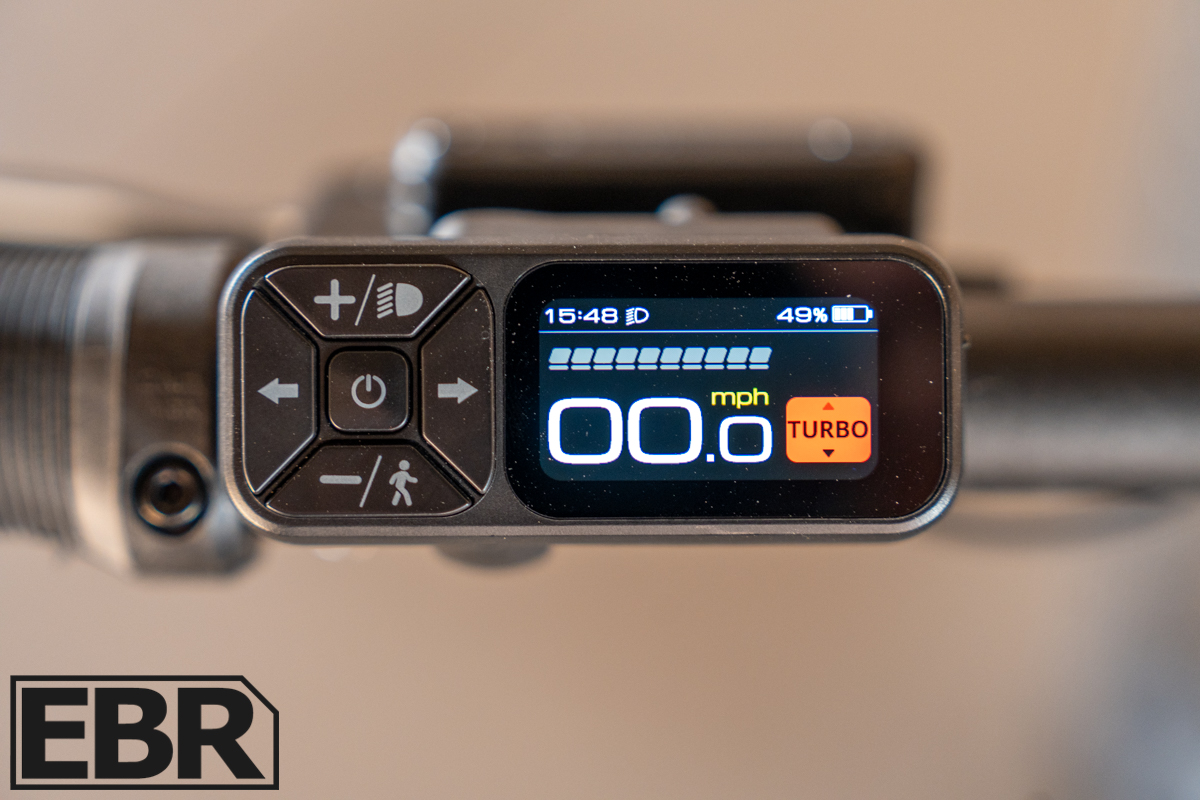
The Soltera 3 ADV runs Aventon’s BC147 display, a compact full-color unit that takes design cues from early 2000s MP3 players. The screen is bright, easy to read in direct sunlight, and displays all the essentials: speed, time, battery level, pedal assist mode, and riding stats.
Holding the ‘+’ button activates the lights, holding ‘-‘ engages walk mode (a gentle 3-4 mph push), and holding both opens additional settings for speed limits and display brightness. The screen is small, but it’s readable at a glance. If the font bothers you, the Aventon app solves that problem.
Pairing is painless, scan a QR code and you’re connected. Once paired, you can adjust the speed limit between 15 and 20 mph, tweak motor power and torque settings, and receive over-the-air firmware updates. I bumped up Turbo mode from its stock setting and found plenty of headroom.
The app also logs rides with GPS tracking, includes a social leaderboard for comparing stats with other Aventon riders, handles bike registration for warranty claims, and can locate nearby dealers or access support directly. It’s not revolutionary, but it’s well-integrated and useful. Using the app as a larger display screen (in portrait or landscape) is particularly helpful if you find the BC147 too small.
Aventon Solterra Model Options
The Soltera 3 ADV doesn’t overwhelm you with choices, which is kind of the point. The belt drive is the only drivetrain option, there’s no geared alternative, no “pick your components” configurator. You’re getting the single-speed Gates setup, and that’s it. If that doesn’t work for you, this isn’t your bike.
Aventon offers four frame sizes, Small, Medium, Large, and Extra Large, which is a big improvement over the usual “one size fits most” approach where you’re adjusting every component to compensate for a frame that’s not quite right. Having proper sizing options means you’re starting with a better foundation, and the rest of the fit adjustments are fine-tuning rather than damage control.
For colors, you get three options: Matte Midnight Black, Matte Storm Blue, and Sterling Silver. All three finishes lean into that minimalist, streetfighter aesthetic with no loud graphics or busy paint jobs, just clean lines and matte finishes. The Midnight Black is sleek and understated, the Storm Blue is a deeper, moodier shade that looks sharp in person, and the Sterling Silver offers a clean, modern look that’s less common than black.
Out of the box, the bike comes with a 4A fast charger, kickstand, and reflectors. It’s a straightforward package, no fenders, no rack. Those are extras if you want them. Speaking of extras, Aventon offers a solid lineup of add-ons to tailor the bike to your needs: a spare battery (expensive but extends your range significantly), a front rack for cargo-hauling, grip mirrors for better visibility, chain or foldable locks depending on your security needs, a phone mount for navigation or using the app as a larger display, a carbon bottle cage, and a bell because you should probably have one.
The accessories are reasonably priced and integrate well with the bike. If you’re commuting regularly, the front rack and a good lock are worth considering from the start.
Is The Aventon Solterra Worth Buying?
The Soltera 3 ADV is a bike that knows exactly what it wants to be. It’s not trying to do everything for everyone. It’s lightweight, low-maintenance, and laser-focused on urban riding with just enough motor assistance to make life easier without turning the experience into something entirely electric.
At 37 pounds with a belt drive and no throttle, it’s going to appeal to a specific type of rider, the kind who appreciates simplicity, who doesn’t want to fiddle with derailleurs or clean chains, and who sees the motor as a supplement rather than a replacement for pedaling. If you fit that description, the Soltera 3 ADV is one of the best options in its class.
Is it perfect? No. The single-speed setup limits versatility. The tight tire clearances keep you on pavement. The lack of a throttle means you’re always pedaling. But those aren’t oversights, they’re deliberate choices in service of a lighter, simpler, more reliable machine.
For city commuters, college students, apartment dwellers, or anyone who wants a bike that just works without constant maintenance, the Soltera 3 ADV delivers. It’s honest about what it is, and in a market full of bikes trying to be everything, that honesty is refreshing.
Pros
- 37lbs (Fully assembled) is easy to manage on a daily basis, from moving, lifting or taking up a flight of stairs to using any bike rack rather than needing some ‘e-bike rated’.
- A true Class 1 e-bike with speeds capped at 20mph making it an excellent e-bike for most national parks or areas with class restrictions to e-bikes.
- The Gates Carbon Belt Drive is no mess and essentially no maintenance, mated to a 60T chain ring and 22T rear freewheel makes for an easy speed of about 14 to 17 mph with relatively low effort to maintain.
- The Solterra 3 ADV is available in 3 matte finished colors of Black, Blue and Silver.
- Available in 4 frame sizes (SM-XL) that gives riders a more precise fit.
- Tekto Hydraulic Disc brakes make solid braking performance on a bike this light.
- The new 250W motor is virtually silent and the torque sensor is very smooth across all 3 levels of pedal assistance.
- Riders can use the Aventon App to tune the motor with custom power settings, register their bike, track and share rides, get maintenance notices, support and OTA updates.
Cons
- The battery cannot be removed for daily off-the-bike charging, however, it can be removed for service, repairs or replacement.
- While it doesn’t bother me (I love to pedal), some will be turned off by the lack of a throttle.




Reader Interactions