

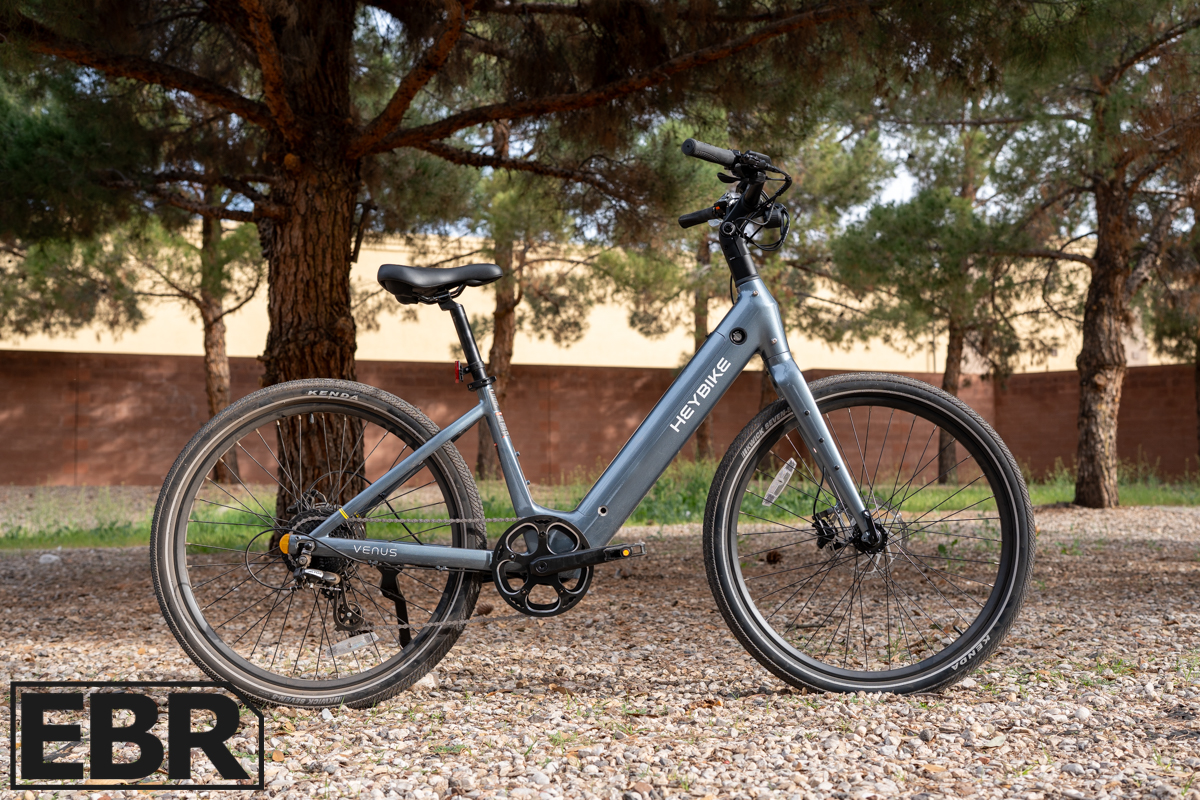
At 45 pounds without the battery and 50 with it, the Heybike Venus is one of the lighter step-through eBikes you can buy right now. That’s not marketing speak, it’s about 10-15 pounds less than most bikes in this category. The difference shows up when you’re hauling it up apartment stairs or sliding it into a car trunk for a weekend trip. Heybike borrowed the frameset from their European models, which explains the clean welds and tidy overall look.
The Venus is positioned as a dual-purpose bike: efficient enough for weekday commutes, comfortable enough for weekend rides. The $1,499 price puts it directly against bikes like the Aventon Pace 4 and Velotric Breeze, but Heybike is betting on a few specific features to stand out. There’s a dual-sensor pedal assist system (torque plus cadence) with a claimed 0.3-second response time, a 750W motor with 70 Nm of torque, and a 680Wh battery good for up to 85 miles in ideal conditions. The bike also gets app integration for tweaking PAS levels and throttle behavior independently, which is handy if you want different power profiles for different rides.
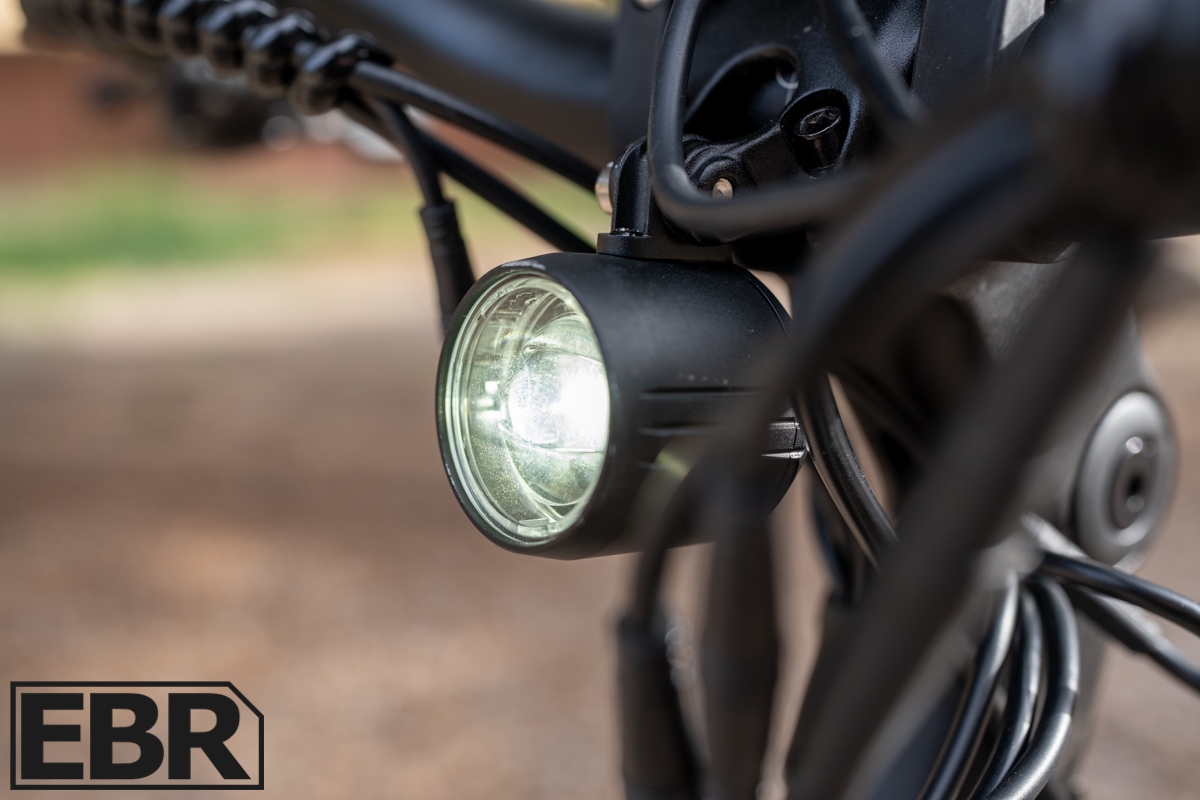
Available now, the Venus is sold in 3 different colors, Rose Gold, Pearl White, and Titanium Grey. The bike comes with a one-size frame that fits riders from 4’11” to 6’2″, front lights with a horn, frame-integrated rear turn signals, and hydraulic disc brakes. Optional accessories include racks, fenders, and various commuter or comfort packages that mount to built-in points on the frame. On paper, it looks like a well-thought-out package for someone who wants one bike that handles both getting to work and getting out of town. We’ll see how it rides once production units start shipping.
My Experience Riding The HeyBike Venus E-Bike
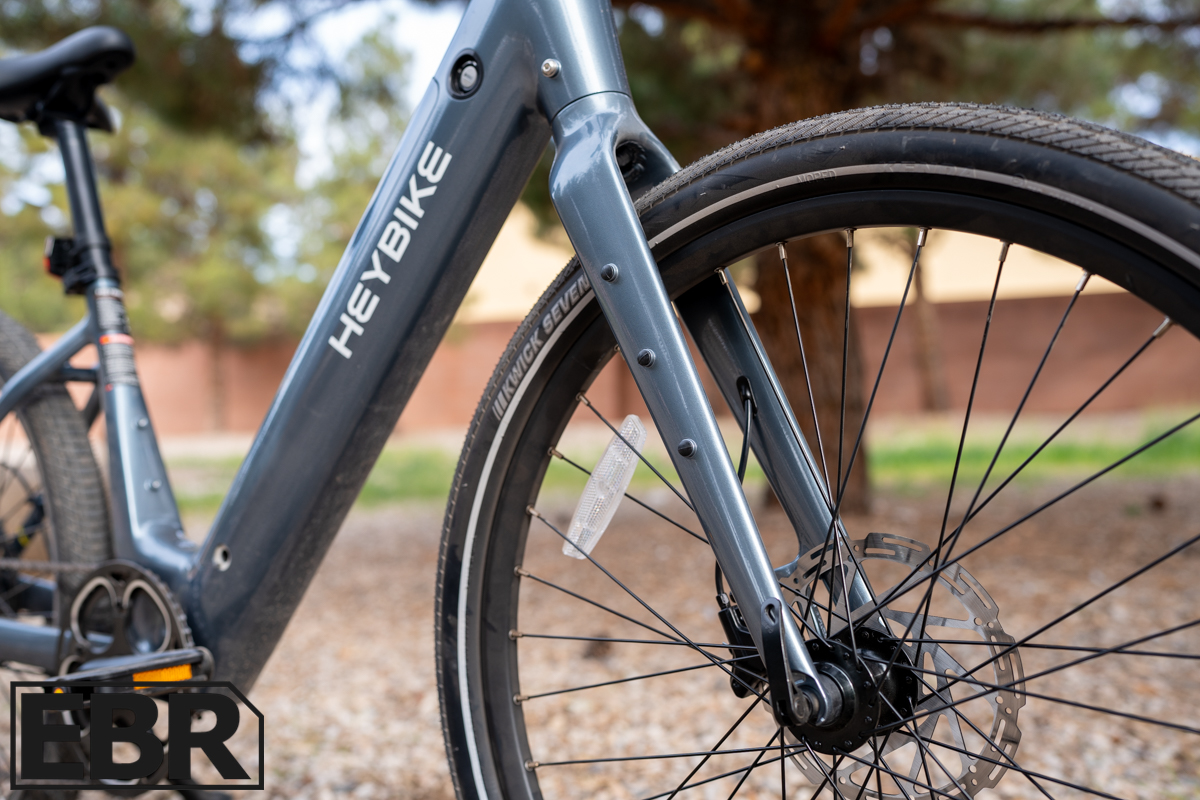
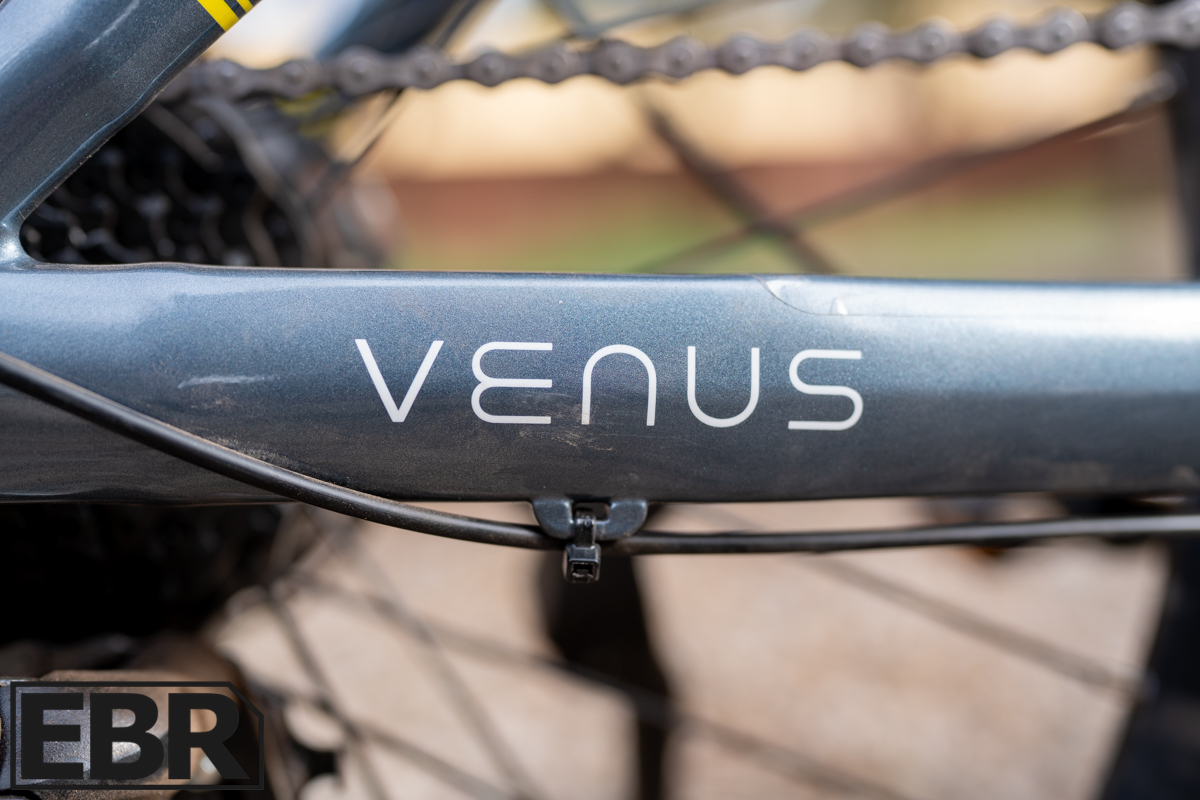
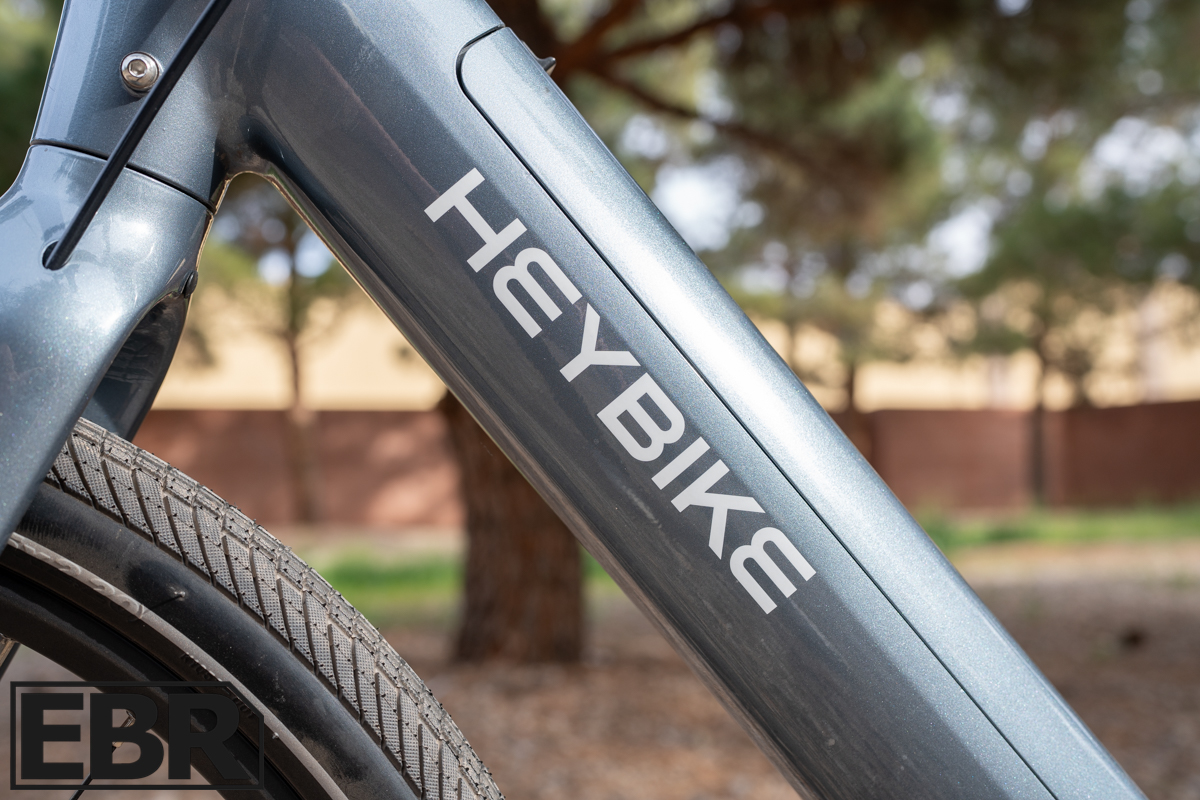
The new colors look great in person. My test bike came in Titanium Grey, but Heybike also offers Rose Gold and Pearl White, each with a subtle metallic flake and glossy finish that really pops when sunlight hits it. What caught my attention right away was the hydroformed frame. There are virtually no visible weld marks, and despite the step-through design, the frame feels stiff with no flexy or wandering sensation when you’re riding. It’s a noticeably cleaner look than most eBikes at this price point, and it handles the way you’d want it to.
The Venus is advertised as fitting riders from 4’11” to 6’2″, and at 5’11” I’m on the taller end of that range. The bike fit me well with a little room to spare, so I think that range is legitimate. The adjustable stem does a lot of work here. Without it, fitting that wide a spread of rider heights would be tough, but with the stem dialed in I had no complaints.
The step-through frame makes getting on and off simple, which matters more than you’d think if it’s been a while since you rode a bike regularly or if you have any balance concerns. No awkward leg swinging or tiptoe dancing at stoplights, you just step through and plant your feet flat on the ground.
When you’re riding, the geometry puts you in a relaxed, upright position. Your weight sits on the saddle, your hands rest naturally on the swept-back cruiser bars and lock-on ergonomic grips, and there’s no awkward leaning or reaching. It’s comfortable right away. The saddle is slightly wider than typical bike saddles and has good cushioning. Despite the extra width, it felt supportive on my sit bones even on longer rides, which isn’t always the case with comfort-oriented saddles that sometimes feel mushy or undefined.
I was curious how the 750W motor would perform on a bike this light. Turns out, really well. At 50 pounds, the Venus feels nimble, and the motor has the grunt to back it up with 70 Nm of torque and peak output around 1100W. The motor runs quietly and delivers power smoothly. That combination makes for a fun ride. Hills are easy, acceleration is there when you want it, and the bike feels very capable whether you’re navigating traffic or cruising on a bike path.
What’s new for Heybike is the dual-sensor system. The Venus has both a cadence sensor and a torque sensor, and you can switch between them mid-ride without stopping. Just hold the ‘M’ button on the left control pad with your thumb, and a small bicycle icon appears on the display when you’re in cadence mode. Press ‘M’ again and the icon disappears, putting you back in torque mode. I like this feature because if you’re new to e-bikes and don’t know which sensor type you prefer, you can try both and decide for yourself. Or you can switch depending on the ride. Cadence mode is snappier and more predictable for commuting, torque mode feels more natural for leisurely rides. Having both options is a nice touch.
The bike ships in Class 2 configuration, but switching to Class 3 is simple through the display menu or the Heybike app. Speaking of the app, you can customize motor power delivery, adjust settings, and receive over-the-air firmware updates without ever going to a bike shop. It’s a straightforward way to keep the bike current with the latest improvements or fixes.
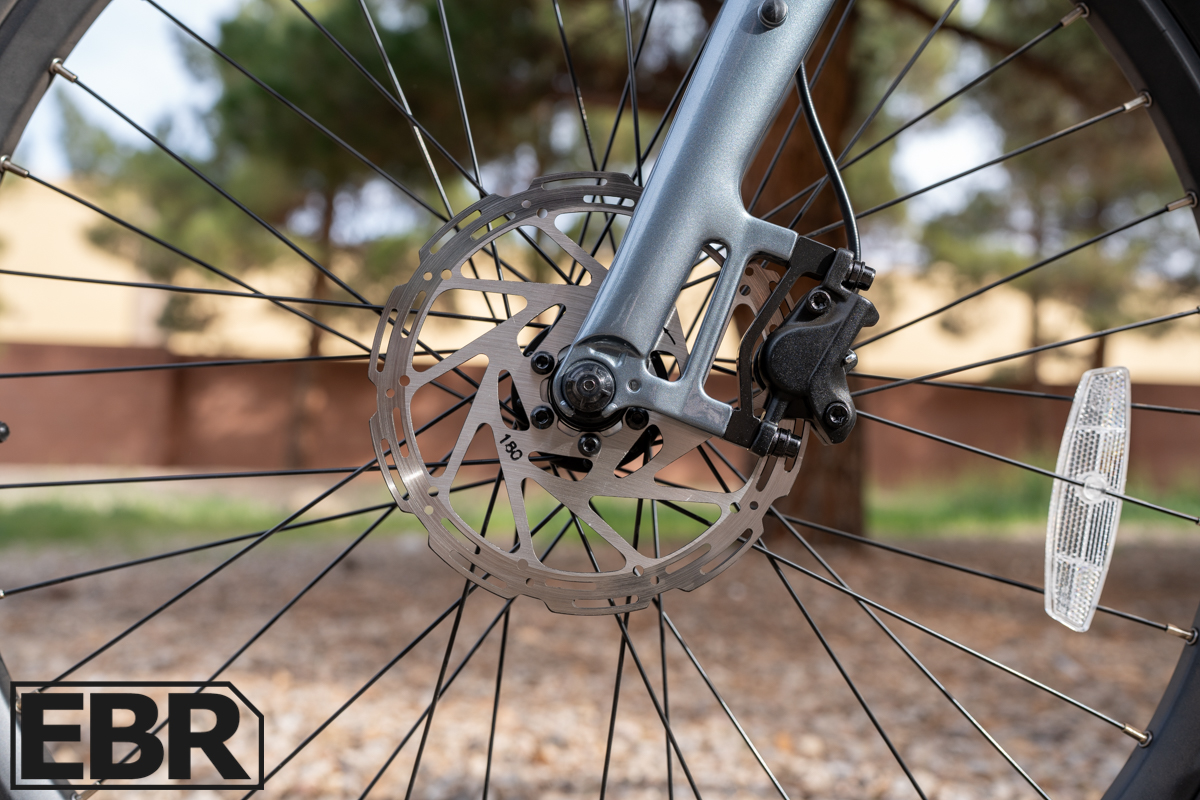
Braking is handled by hydraulic disc brakes, and at 50 pounds the Venus stops confidently. I did a few quick stops from over 20 mph during my test rides, and the bike never hesitated. The brakes have good modulation and plenty of power, which is what you want when you’re riding in mixed traffic or coming down a hill with some speed.
All in all, the Venus is a solid entry into the competitive city cruiser market. It has front-to-back LED lighting, new frame-integrated turn signals and taillights, the option to add fenders and a rear rack (both sold separately), and it comes in at a price that undercuts the competition by a few hundred dollars. It shows how far Heybike has come over the years, and that’s a good thing.
Range
Estimated Range (from HeyBike):
- Up to 85 Miles
(*Tested with a 155 lb rider using PAS 1)
Real World Range Test Results:
- MIN PAS Range Test: 83 miles
- MAX PAS Range Test: 32 miles
When it comes to range, Heybike advertises the Venus as capable of hitting up to 85 miles on a single charge. Of course, there’s always fine print, in this case, that impressive number was achieved on PAS Level 1 with a 155lb rider. Now, I was 155 lbs once upon a time, but that was back in middle school, and frankly, most adults I know aren’t tipping the scales at 155 lbs either.
So, the mission became clear, we needed to test the range with a bit more… Let’s call it “real-world” weight.
I come in at 185 lbs, which immediately adds 30 lbs to the equation, and our local bike paths aren’t exactly pancake-flat either, there are some mild elevation changes to contend with. So we set up two tests. So, we cranked it up to PAS 5 to see how far we could push Venus with that extra weight at maximum pedal assist.
So, how did the Heybike Venus actually perform? Well, in this max power test we managed to cover 32 miles of range and that spanned a couple hours and just over 600ft of elevation. Then, after a full recharge, we headed out the next day using only the minimum assistance in PAS 1 and covered a pretty impressive 83 miles on a single charge before the battery finally tapped out.
All-in-all, these are solid results and left us very pleased with the range capabilities on the HeyBike Venus.
Power (Motor & Battery)
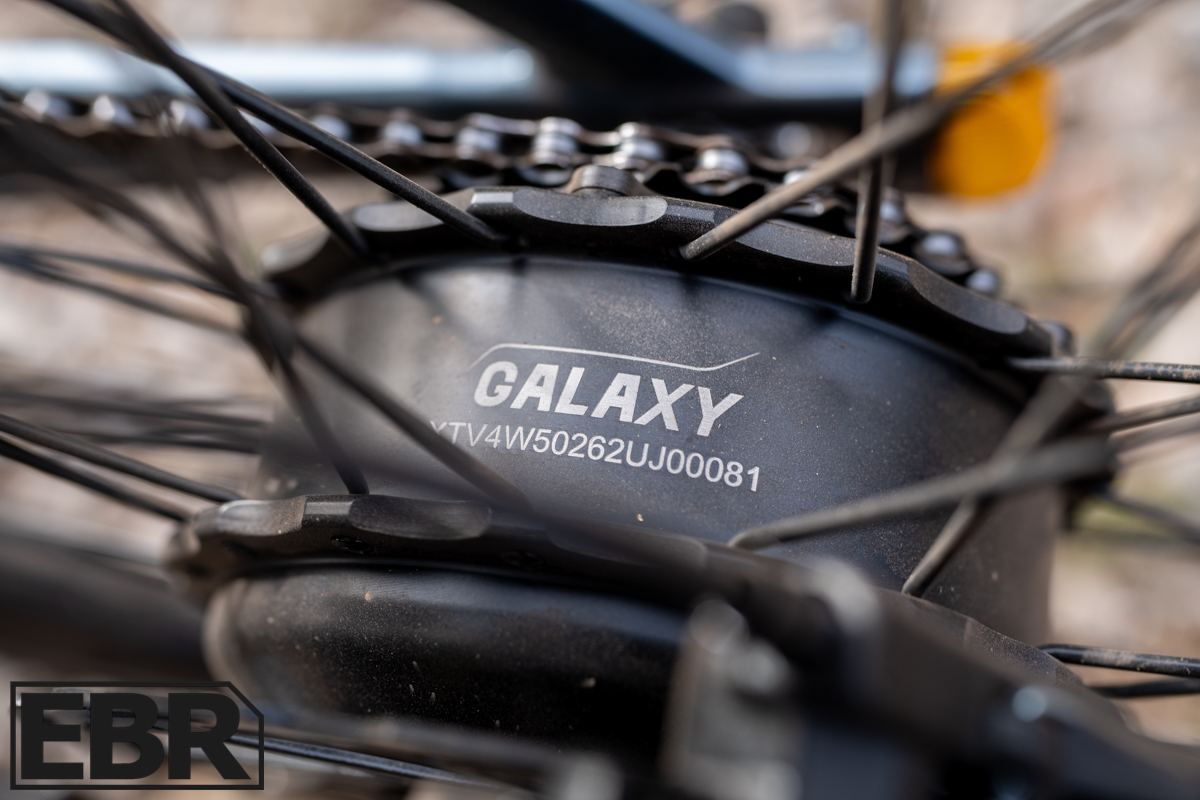
The Venus uses a 750W rear hub motor that Heybike calls the Galaxy eDrive System. It puts out 70 Nm of torque, which is solid for a hub motor in this class. That’s enough to get you moving quickly from a stop and handle moderate hills without much drama. The motor is designed to run quietly, which Heybike emphasizes throughout their materials. Hub motors are generally simpler and require less maintenance than mid-drive systems, and they let you shift gears while stopped, which is handy in urban riding.
What makes the Venus different from most bikes in this segment is the dual-sensor pedal assist system. You get both torque and cadence sensors, and you can switch between them on the fly by pressing the ‘M’ button on the handlebar control pad. An icon on the display confirms which mode you’re in, so there’s no guessing or digging through hidden menus while you’re riding.
Cadence mode gives you quick, consistent power based on how fast you’re pedaling, which works well for commuting when you want efficient, predictable assistance. Torque mode responds to how hard you’re pushing on the pedals, which feels more natural and gives you finer control. The torque sensor has a 0.3-second response time, which helps with acceleration in stop-and-go situations. For someone new to e-bikes or unsure which sensor type they prefer, having both available is useful. You can experiment as much as you want or just pick one and forget about it.
The battery is a 48V, 14Ah unit with 680Wh of capacity, and it’s UL 2271 certified. The whole bike is also UL 2849 certified, which matters for insurance, building storage rules, and general peace of mind. The battery is integrated into the downtube with a removable cover and a keyed lock. You can pop it out for charging indoors or leave it on the bike.
It ships with a 2A charger that has red and green LED indicators to show charging status and completion. A 2A charger is on the slower side, but it’s gentler on the battery and fine if you’re charging overnight.
Components
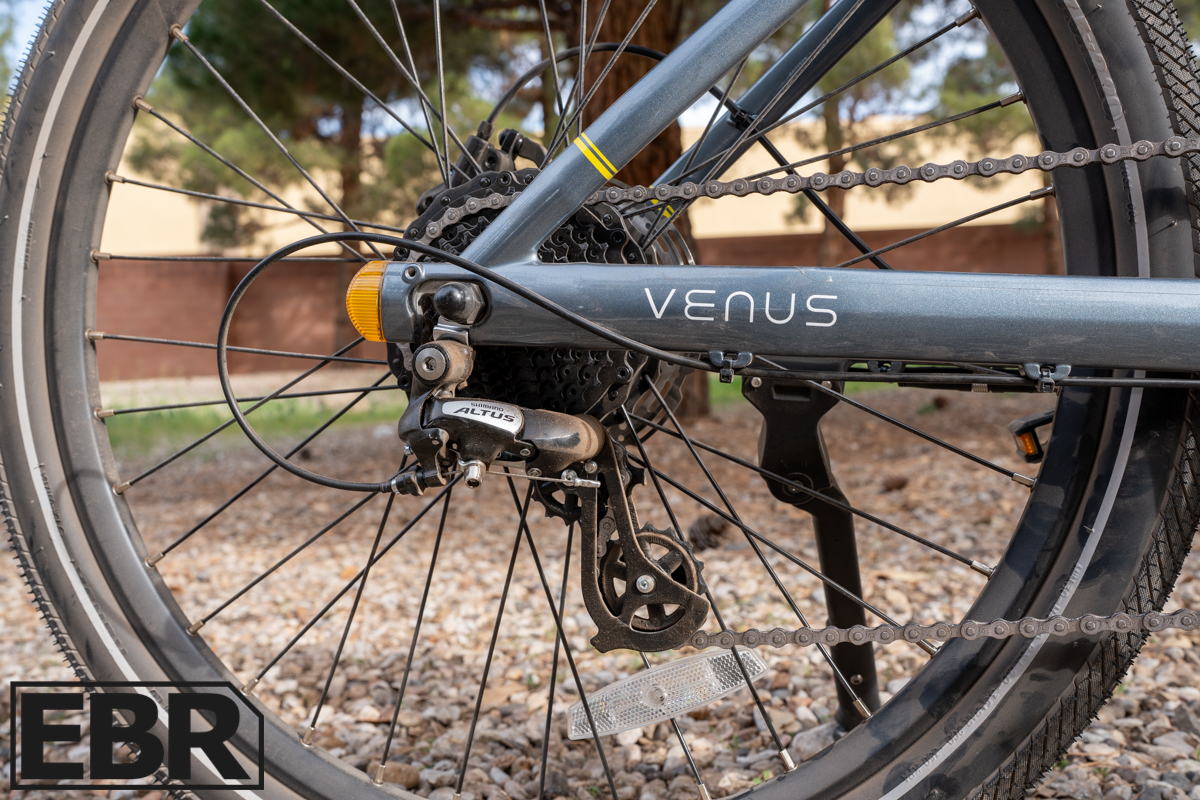
The Venus runs a Shimano Altus 8-speed drivetrain, hydraulic disc brakes and 27.5” commuter tires, which for a bike of this style and price point feels like a good setup.
The 48T chain ring and 11-32T cassette gear spread is wide enough to handle most situations, and Shimano Altus is reliable if not particularly fancy. What’s more interesting is the trigger shifter placement. Heybike mounted it under the handlebar instead of the typical top-mount position, and they claim it reduces shifting effort by 30%. I can’t verify that number yet, but the ergonomics make sense for an upright riding position where your wrists are already angled. The shifter also uses what Heybike calls a “refined” design that’s supposed to help you keep momentum when shifting under load, which matters more on an eBike than a regular bike since you’re carrying more weight and speed.
Braking is handled by hydraulic disc brakes with 180mm rotors front and rear. No brand specified in the specs, but hydraulic discs at this price point are a good sign. The 180mm rotor size is appropriate for a 50-pound bike that can hit 28 mph, and hydraulic systems give you better modulation than mechanical or cable-actuated discs. Given the target demographic here, confidence at the brake lever matters more than outright stopping power, though you’ll want both when you’re riding in traffic or coming down a hill with groceries on the rear rack.
Contact points are where the comfort focus shows up. The bike has a backswept handlebar paired with an adjustable stem that offers up to 90 degrees of angle adjustment. That’s a wide range, and it means you can dial in a more upright or slightly forward position depending on whether you’re commuting or cruising. The geometry includes a slightly forward bottom bracket that Heybike says improves leg extension and lowers the required seat height. The practical result is that most riders should be able to get their feet flat on the ground at stops without compromising pedaling efficiency, which is a real confidence booster in stop-and-go traffic.
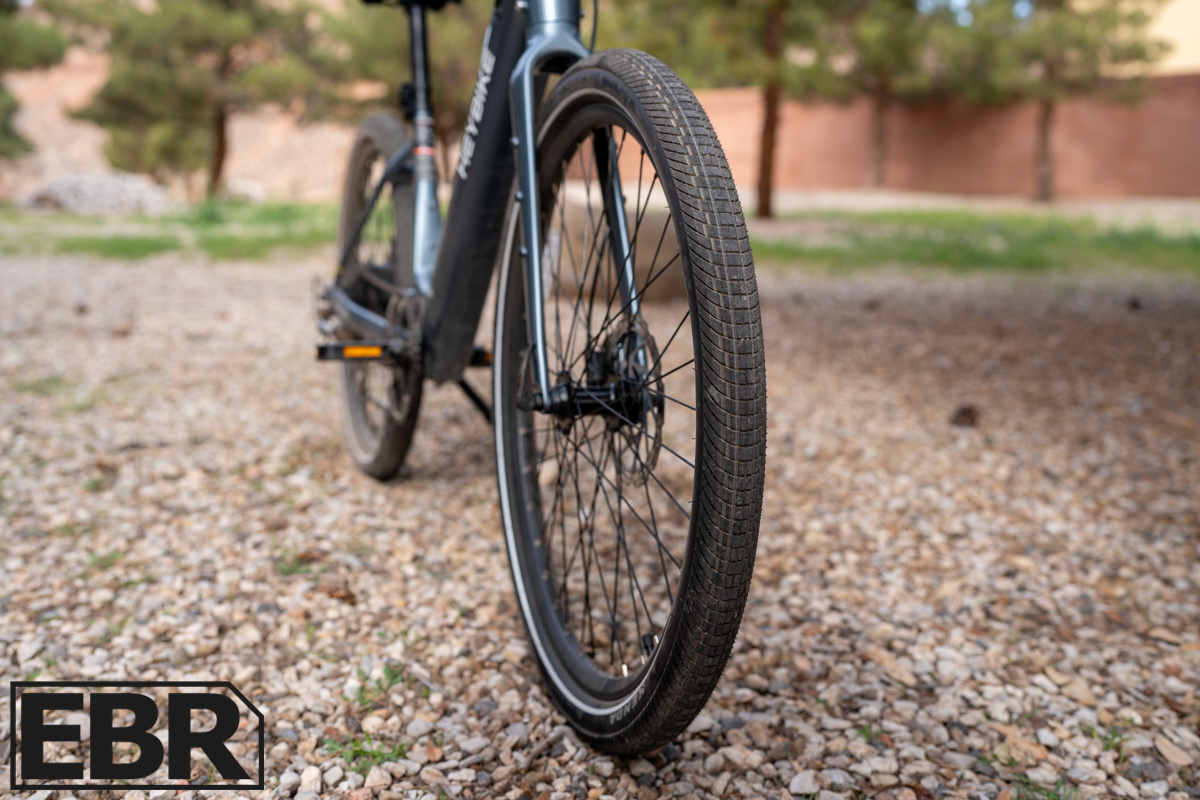
The Venus rolls on 27.5″ x 2.2″ Kenda tires. That’s a good middle ground for a dual-purpose bike. The 27.5″ diameter is smaller and more maneuverable than 29″ wheels, while the 2.2″ width gives you enough cushion for cracked pavement and light gravel without being sluggish on smooth roads. Kenda makes decent tires for the price, and the commuter tread pattern on these fits the bikes commuter/cruiser use case.
Screen / User Interface / App
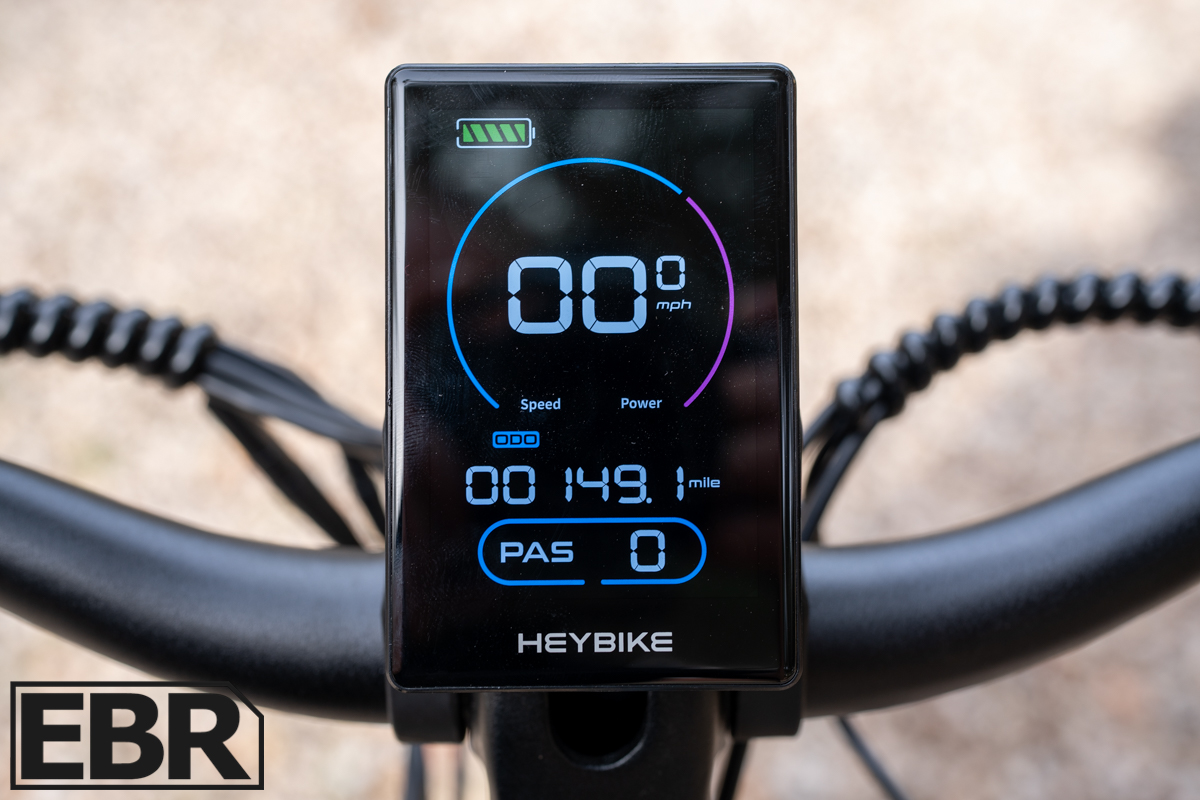
The HeyBike Venus has a LCD color display that sits front and center on the handlebar. On the main screen you have all the basics like your battery charge level, speed, power output, odometer and pedal assist level.
While there are some advanced settings in the display that can be altered, they are coded and require a manual to navigate. Fortunately all the same settings are in the HeyBike App which easily pairs and allows for all the same changes in a much easier way.
The HeyBike App is on both Apple and Android ecosystems and once you pair to the HeyBike App, you can tweak several settings on the bike like:
- Tune the Motor for Custom Power Levels
- Set Throttle speed control independent from the the pedal assist settings
- Save personalized power profiles across multiple profiles so each rider with access to the bike has their own custom settings.
- Choose between 3 or 5 levels of pedal assist.
- Conduct Over-The-Air updates to the bikes firmware for continued support from HeyBike as they improve the system over time based on rider feedback.
HeyBike Venus Model Options
The Venus comes in one configuration: a step-through frame in a single size that fits riders from 4’11” to 6’2″. That’s a pretty wide range, and the 90-degree adjustable stem does a lot of the work to make it happen. If you’re on the shorter or taller end of that spectrum, you’ll want to play with the stem angle to get the fit right, but most people in that range should be comfortable.
You get three color choices: Rose Gold, Titanium Grey, and Pearl White. All three come in a gloss finish with metallic flake paint that looks more premium than you’d expect at this price. The bike has integrated LED lighting front and back, and the rear turn signals are built into the seat stays instead of bolted on as an afterthought. It’s a small detail, but it makes the whole bike look cleaner.
Out of the box, the Venus comes with pedals, a 2A battery charger, keys for the battery lock, and a kickstand. That covers the basics to get you riding. If you want more, Heybike offers optional accessories like a suspension seatpost for extra comfort, a rear rack rated for 66 pounds, and fenders to keep road spray off your clothes. The rack and fenders aren’t included standard, so factor those into your budget if you’re planning to use the bike for errands or commuting in wet weather.
Finally, the Venus comes with a 2-year factory warranty, which is included in the price and gives you a little peace of mind. On top of that HeyBike has been rapidly growing their local dealer partners and now has over 1,000 shops nationwide for sales and service.
Is The HeyBike Venus Worth Buying?
For a competitor to the Aventon Pace 4 and the Velotric Breeze, this commuter/cruiser checks almost all of the same boxes, a few more and still manages to come in $400 cheaper. It’s a strong move by HeyBike.
You’re getting a lightweight e-bike that comes with both a torque and cadence sensor, you have app connectivity with over-the-air updates to the bikes systems and GPS ride tracking, all in a modern, sleek package that rides as smooth as it looks.
Would I like to see fenders on a city commuter bike? Sure, but adding those after the fact isn’t expensive or hard, and if that’s my only real complaint, they did a solid job overall. If you are in the market for a comfort-focused city commuter with some nice tech options, the HeyBike Venus should be on your shortlist to consider and see if it earns a spot at your place.
Pros
- At just 50 lbs, the Venus enters the ‘lightweight’ e-bike territory and makes daily life a bit easier to manage.
- Both Cadence and Torque sensors you can dynamically switch between to see what you like best – no need to force you into picking one or the other
- App connectivity with GPS ride Tracking, motor tuning and OTA Updates
- New sleek hydroformed aluminum ST frame with no visible welds and modern look
- Front to back lighting with turn signals to commuting visibility
Cons
- No Fenders as a standard accessory feels like a missed opportunity on a bike targeting commuters




Reader Interactions