

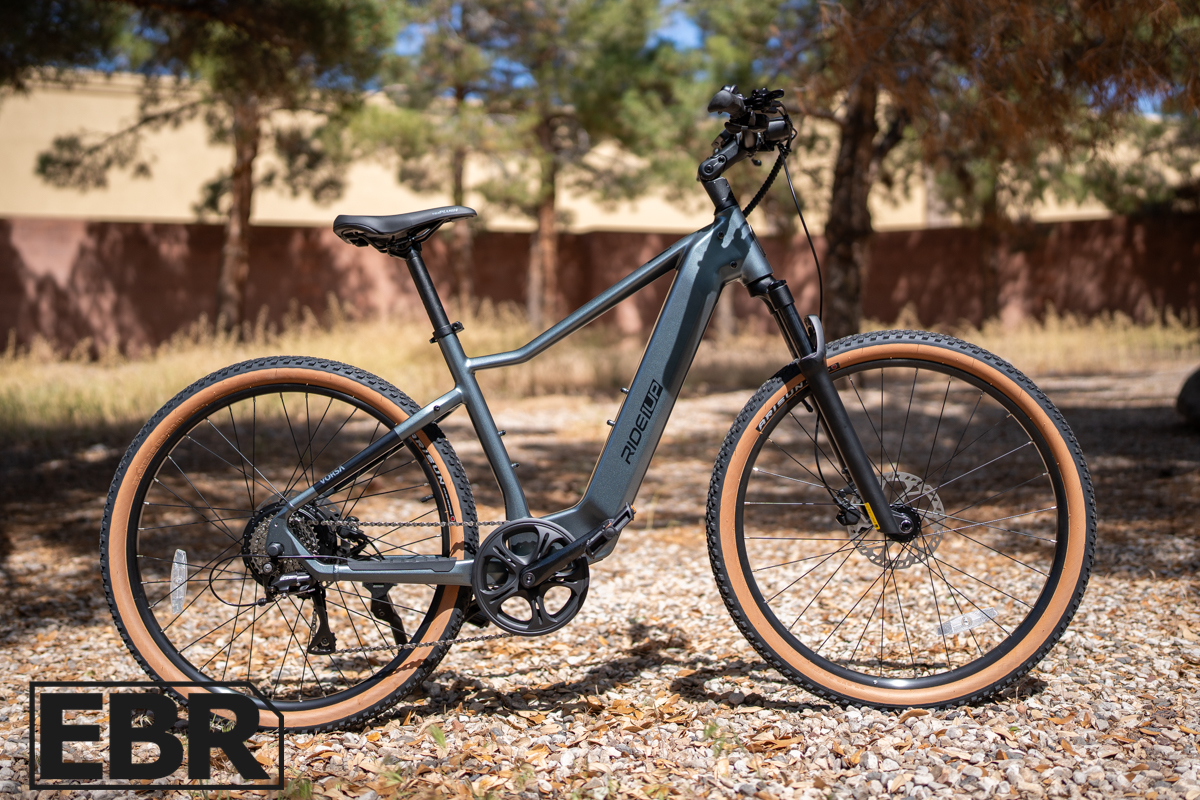
Ride1Up has been quietly building one of the most thoughtful product lineups in direct-to-consumer e-bikes, and the Vorsa platform is their most ambitious project yet: one frame, three distinctly different bikes. The original Vorsa is the SUV of the bunch – rugged, cargo-ready, built for hauling. The Vorsa FT takes it to fat-tire territory. And now we have the Vorsa Lite, which strips all of that away and asks a simpler question: what if you just built a really, really good everyday rider?
Short answer: they nailed it. The Vorsa Lite is one of the smoothest, most natural-feeling e-bikes I’ve ridden at this price point – and that comes down almost entirely to the motor, battery, and sensor system that Ride1Up has invested resources into. At $1,395, this bike delivers real-world range and ride quality that I genuinely did not expect walking in.
My Experience Riding the Ride1Up Vorsa Lite
Ride Quality Score: 7.5 / 10
Before I threw a leg over the Vorsa Lite, my biggest concern was geometry. When you build three bikes off a single frame, something usually gives – the reach gets a little off, the head tube angle doesn’t quite suit the intended use case, or the handling just feels like a compromise.
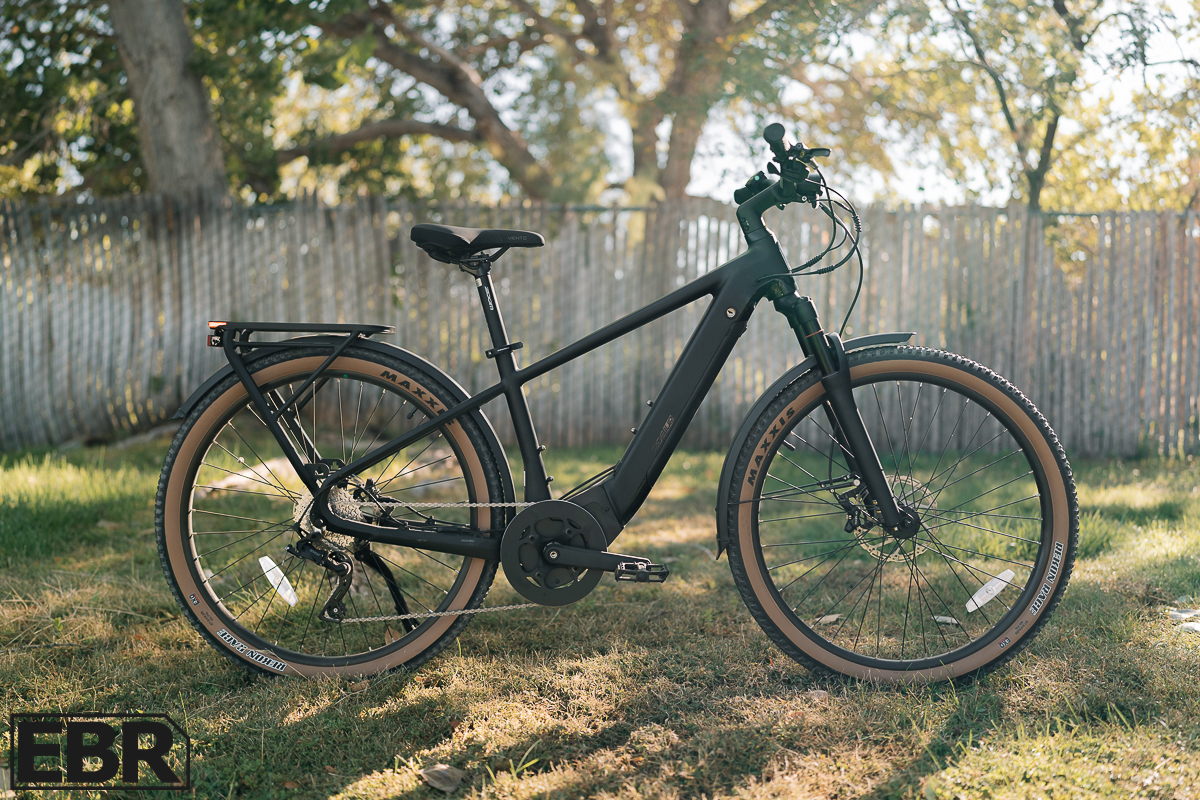
I shouldn’t have worried. Ride1Up nailed it. From the moment I got rolling, the Vorsa Lite felt exactly like a Class 3 commuter should feel – upright enough to be comfortable and maintain good visibility in traffic, but not so upright that it feels like a beach cruiser. The geometry just works on a subconscious level. You hop on, you start pedaling, and you go. No second-guessing, no weirdness. The head tube angle at 68 degrees is appropriate for an urban commuter, and the reach is dialed in for most riders without any heroic stem adjustments.
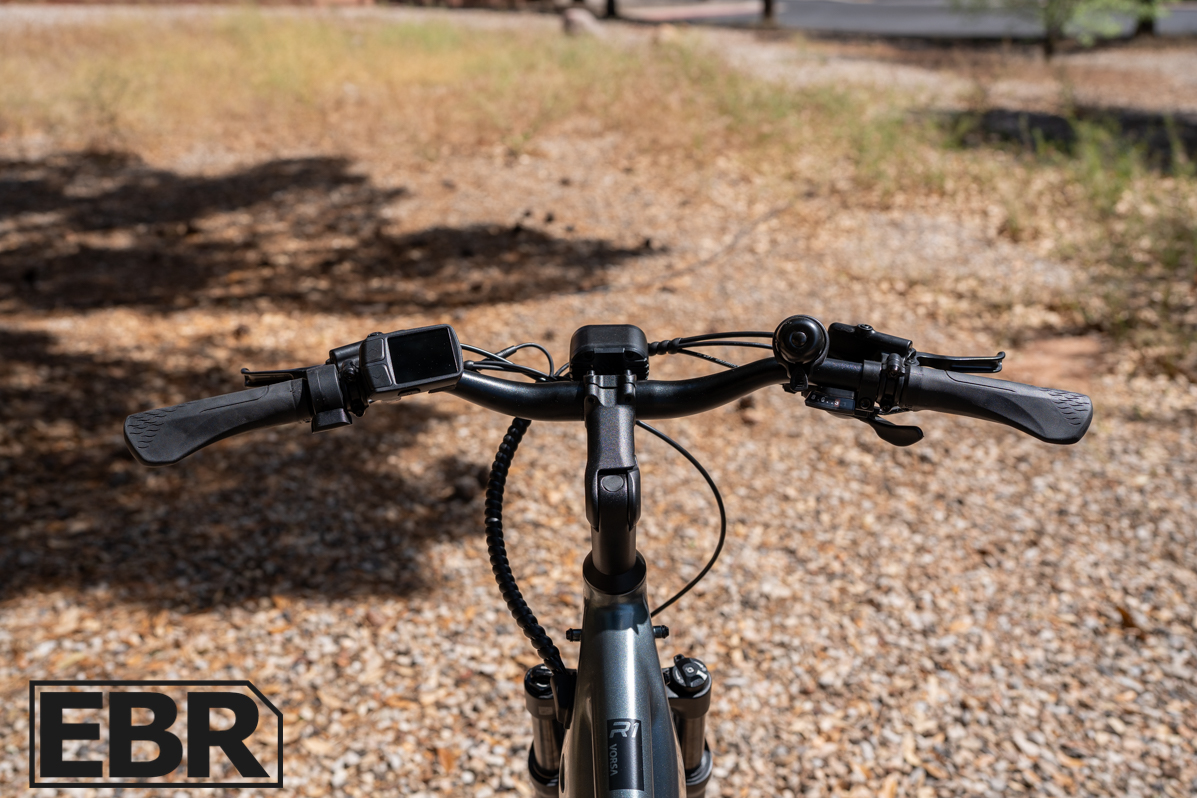
Speaking of the stem – this is one of my favorite things about the Lite’s cockpit setup. The 0-60 degree adjustable stem with a second secure locking point is genuinely versatile. I tested this with several different riders in our office and every single one of them was able to dial in their position without any fuss. That multi-point adjustment matters on a bike aimed at a wide audience of 5’1″ to 6’4″ riders. And if you want to swap the handlebars themselves, the 31.8mm bar clamp is a standard size – just know that longer cables may be a factor.
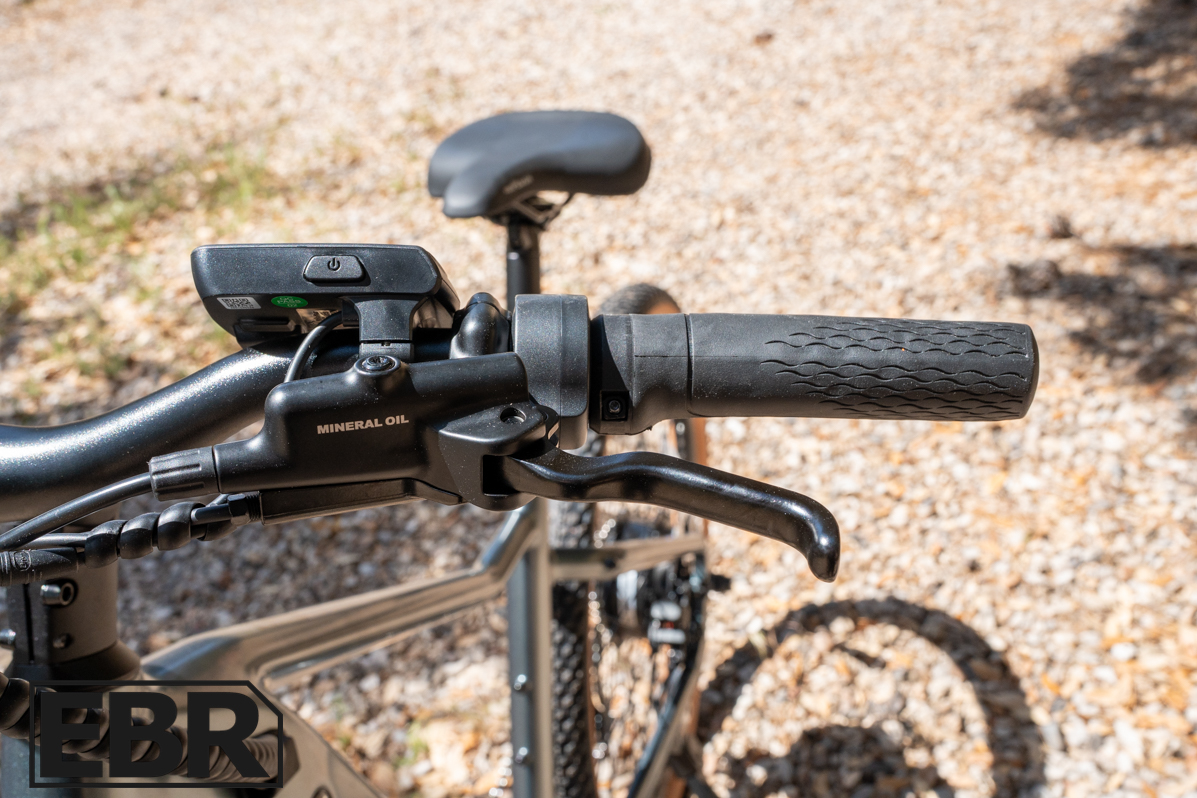
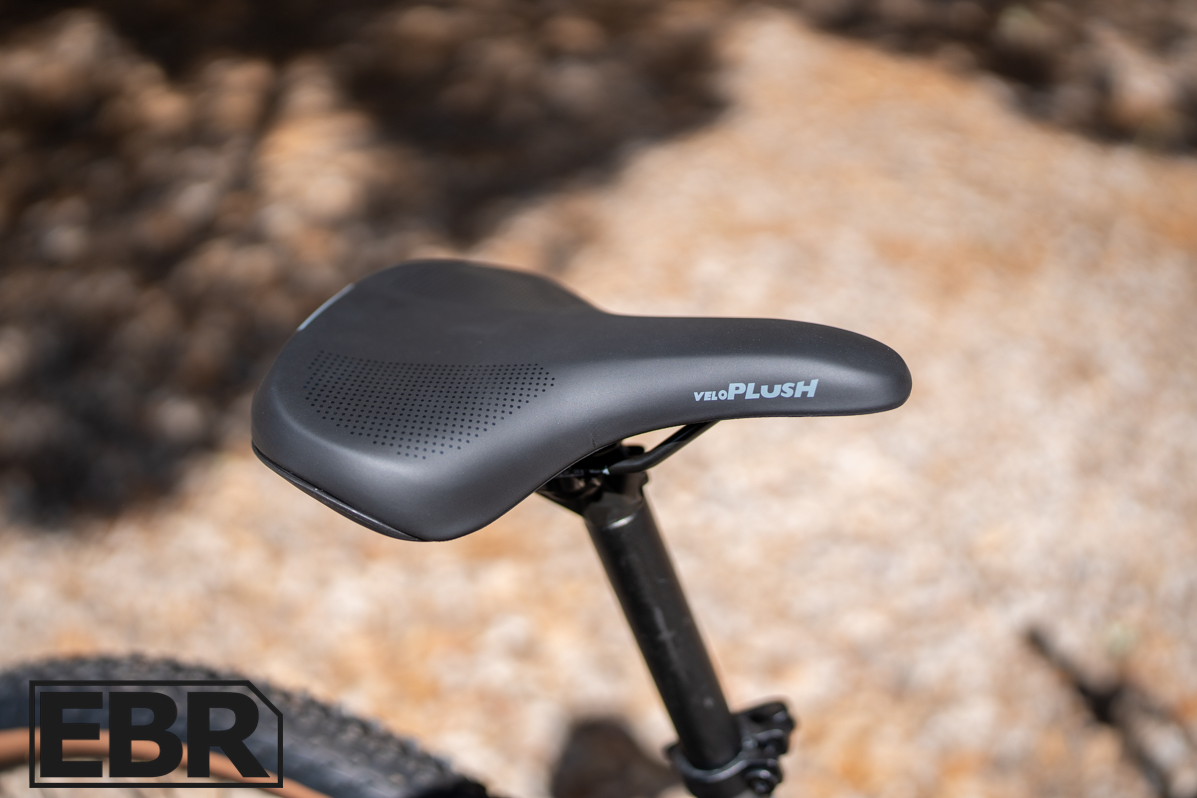
Comfort on the ride is really solid. The VELO saddle surprised me – I’m not particularly picky about saddles, but I’ll tell you when one is bad, and this one isn’t. There’s actually a hard plastic section at the rear that acts as a convenient grab point when you’re moving the bike around. The 680mm riser bars with the slight 10-degree sweep sit nicely in my hands, and the VELO ergonomic silicone grips do a good job supporting your palms on longer rides. As someone who has some wrist sensitivity from old injuries, I found the flat bar setup actually worked really well for me here.
 |
 |
Handling is nimble and confident. The 27.5″ wheels hit a nice middle ground – more stable and better rolling than a 26″ setup, but more nimble than a 29″ wheel. On the road, the bike feels light on its feet and responsive to input.
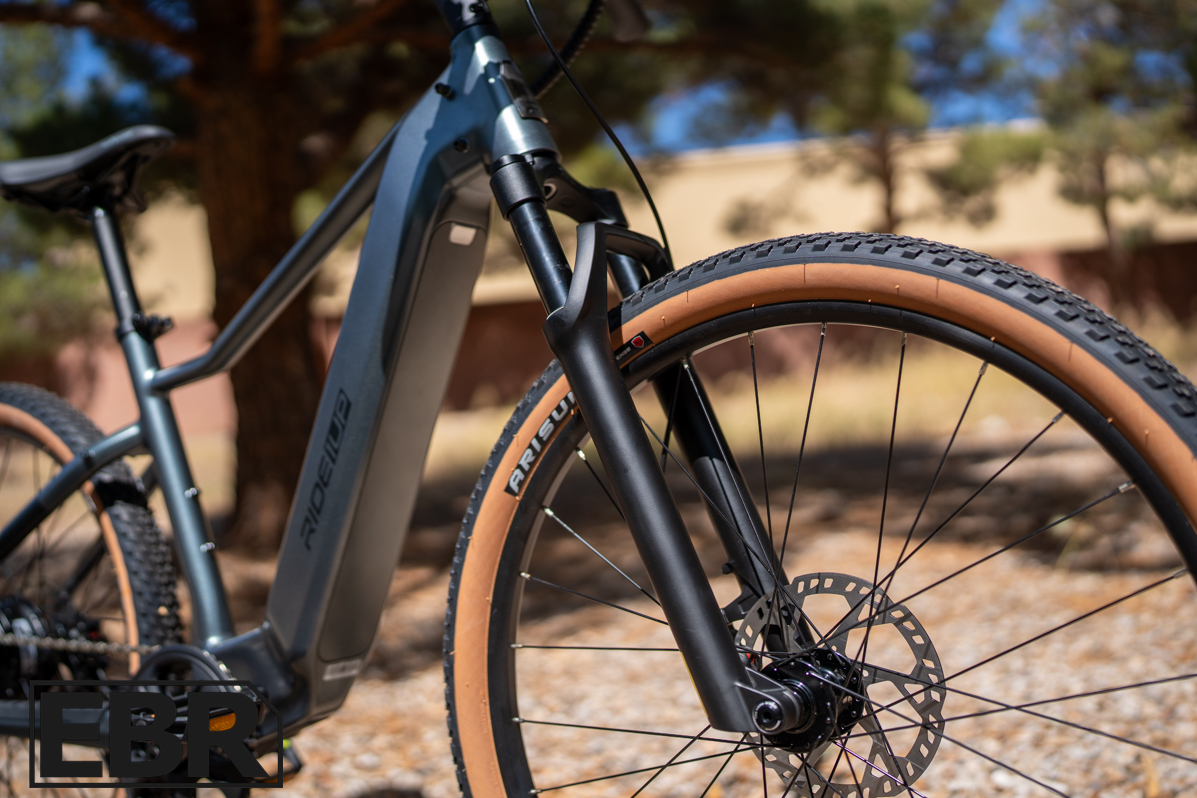
The 100mm coil fork with hydraulic lockout is about what you’d expect at this price point: it takes the edge off rough pavement and handles light trail use without complaint. I noticed it felt slightly more firm than some other entry-level forks, which is actually a good thing – it means riders over 180 lbs won’t immediately bottom out. Lockout works well, but I don’t think many people will use it since you don’t need the extra pedaling efficiency.
Power (Motor & Battery)
Power Score: 9.0 / 10
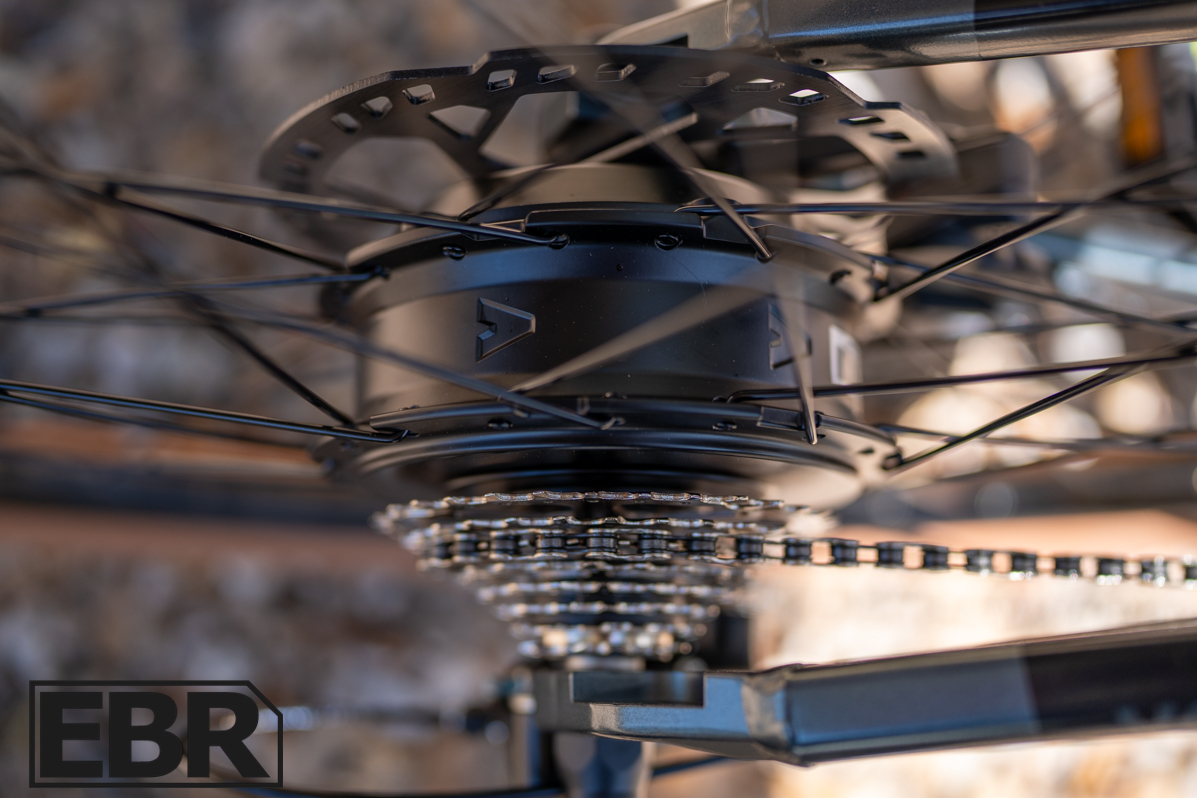
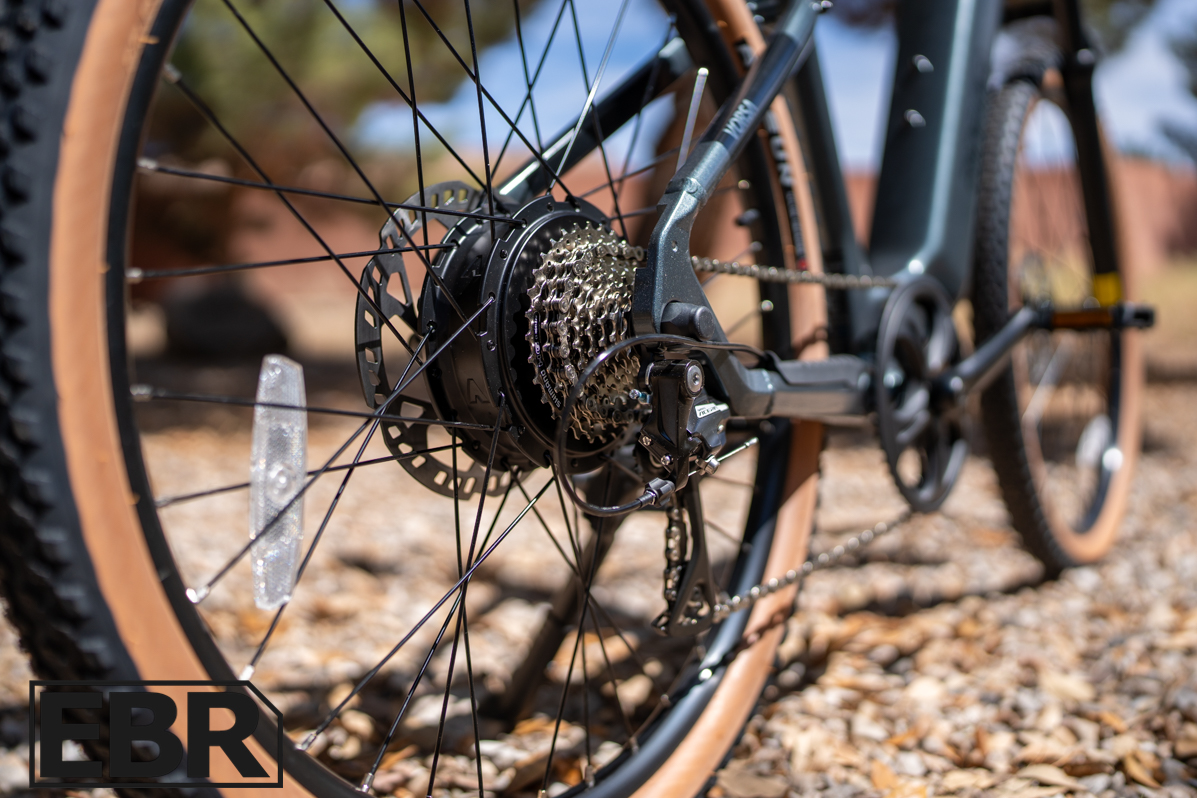
The heart of the Vorsa Lite is an AKM 750W rear hub motor producing 95Nm of torque, with a peak output of approximately 1,380W. From a spec perspective, this puts the motor squarely in the upper tier of hub motors we test, and for a Class 3 commuter, it is more than adequate. Ride1Up calls this their strongest hill-climbing motor, and the hill test backed that up.
But here’s what I really want to talk about – the Intui-Drive system. Ride1Up worked with MIVICE to develop a torque and cadence sensor combo that is one of the smoothest I’ve experienced on a hub motor at any price. The torque sensor responds to how hard you’re pedaling, not just whether you’re pedaling, and it scales motor output proportionally. The result is a riding experience that feels remarkably natural – of course not quite as much as a mid-drive motor does, but a good mid-drive motor would have pushed the cost of this bike to at least $2,000.
I would also point out that the motor power to rider input is on the more powerful side of the spectrum. As such, I think riders who prefer getting to work or riding around town without sweating or pushing into zones 3 or 4 while riding will appreciate how Ride1Up programmed the power output.
The controller is a 48V 25A water-resistant resin-potted 12 MOSFET MIVICE unit – and Ride1Up has implemented the Precise CanBus protocol, a technology originally developed by Bosch for the automotive industry, to enable real-time communication between the motor, battery, controller, display, and throttle. This means your battery readout is significantly more accurate than many ebikes in this price range. No more watching your percentage drop from 100 to 70 climbing one hill and bounce back to 90 at the top. Instead, you get smoother, more predictable readings across the board.
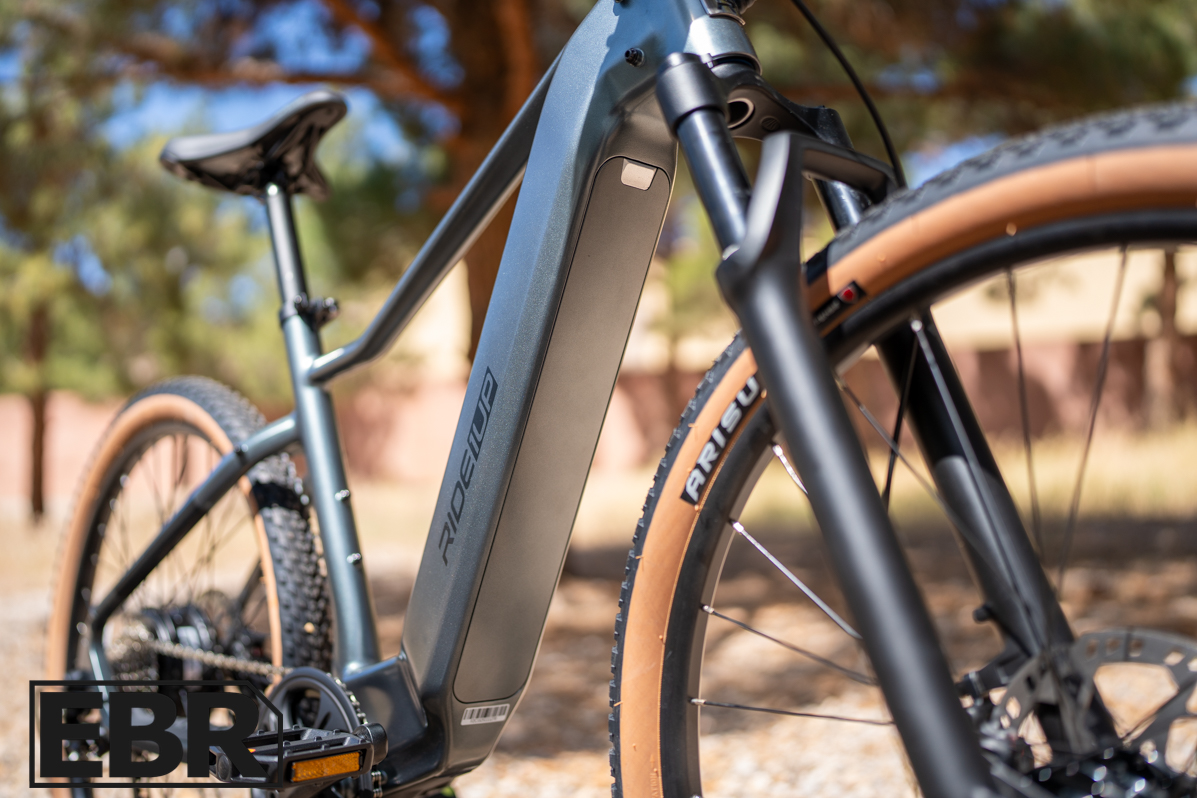
The battery is a 720Wh, 48V, 15Ah Samsung 50GB unit. It uses Samsung’s 21700 cells that were developed to improve longevity and lifespan of the battery. Because of that, the battery is rated to 1,000 full charge cycles (vs. the more typical 500 on lesser packs) at 80% capacity retention.
It’s UL 2271 certified by TUV. The battery is lockable and removable, weighs about 9 lbs on its own, and can be charged in place or taken inside. All of that together is what makes the Vorsa Lite feel so natural and smooth while riding – enough so where I could see some mid-drive-only riders consider a hub motor.
Range
Range Score: 9.5 / 10
Our range testers weren’t thrilled – they were out all day, and it happened to be pretty hot the week we range tested the Vorsa Lite.
I mean that as a compliment.
In real-world testing, we pedaled the Vorsa Lite 105 miles on ECO and just under 50 miles on MAX. For context, these weren’t 5 mph granny-pace results – while ECO mode doesn’t give you tons of assistance (I’d say ECO is on the lighter side of average), the bike still averaged around 12-13mph during the MIN power test.
Min Assist: 105 Miles
Max Assist: ~50 Miles
The math makes sense when you look at the specs: a 720Wh battery paired with a 750W nominal motor is a healthy ratio. The general rule of thumb is that motor wattage and battery watt hours should be roughly proportional. By that measure, the Vorsa Lite is well-balanced. The Precise CanBus protocol also contributes here by ensuring the controller isn’t wasting energy through imprecise communication between components, and it appears that the Samsung 21700 cells are very efficient.
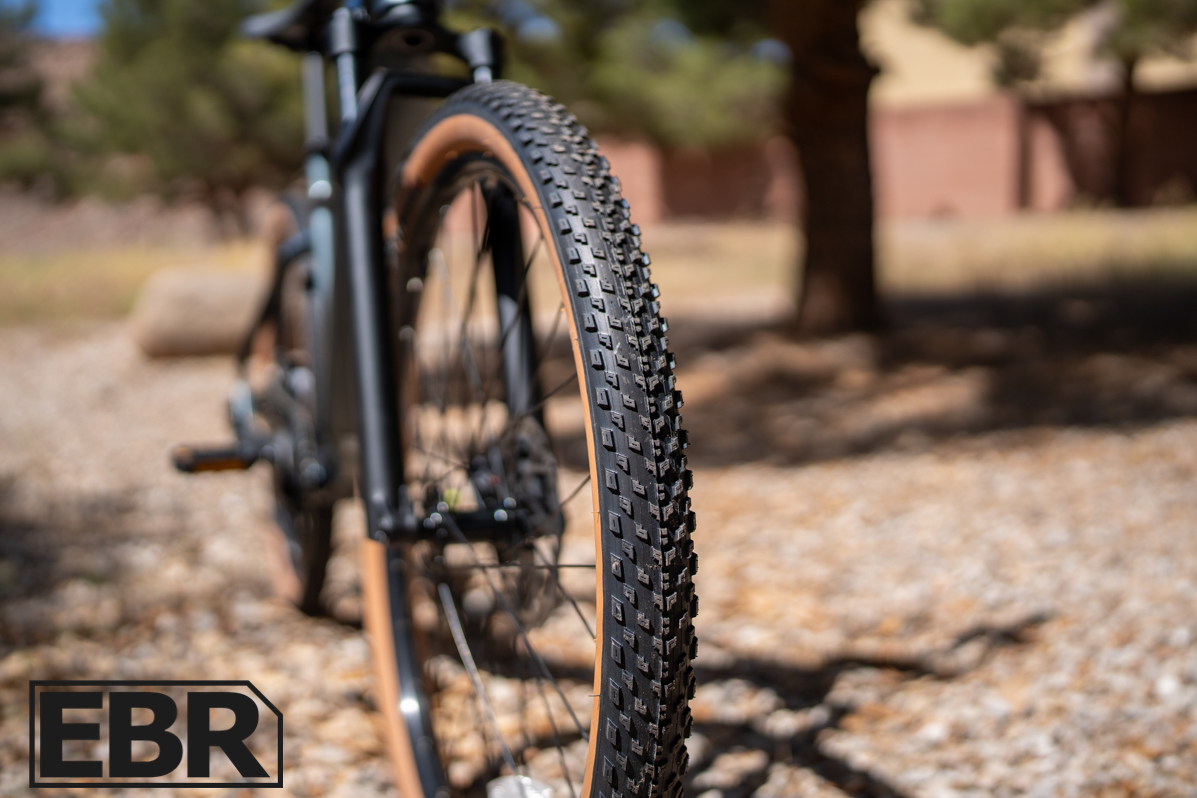
The 27.5 x 2.2″ tires are narrow enough to offer reasonably low rolling resistance on pavement – they’re not fat tires sucking down watts on every pedal stroke. Pair those tires and battery with a bike that weighs around 61 lbs and that’s how you get such good range.
Components
Components Score: 7.0 / 10
For a $1,395 bike, the Vorsa Lite’s component package is well-considered and appropriate to its mission. Ride1Up made smart choices throughout – there’s nothing here that embarrasses the bike, and a couple things that genuinely impressed us.
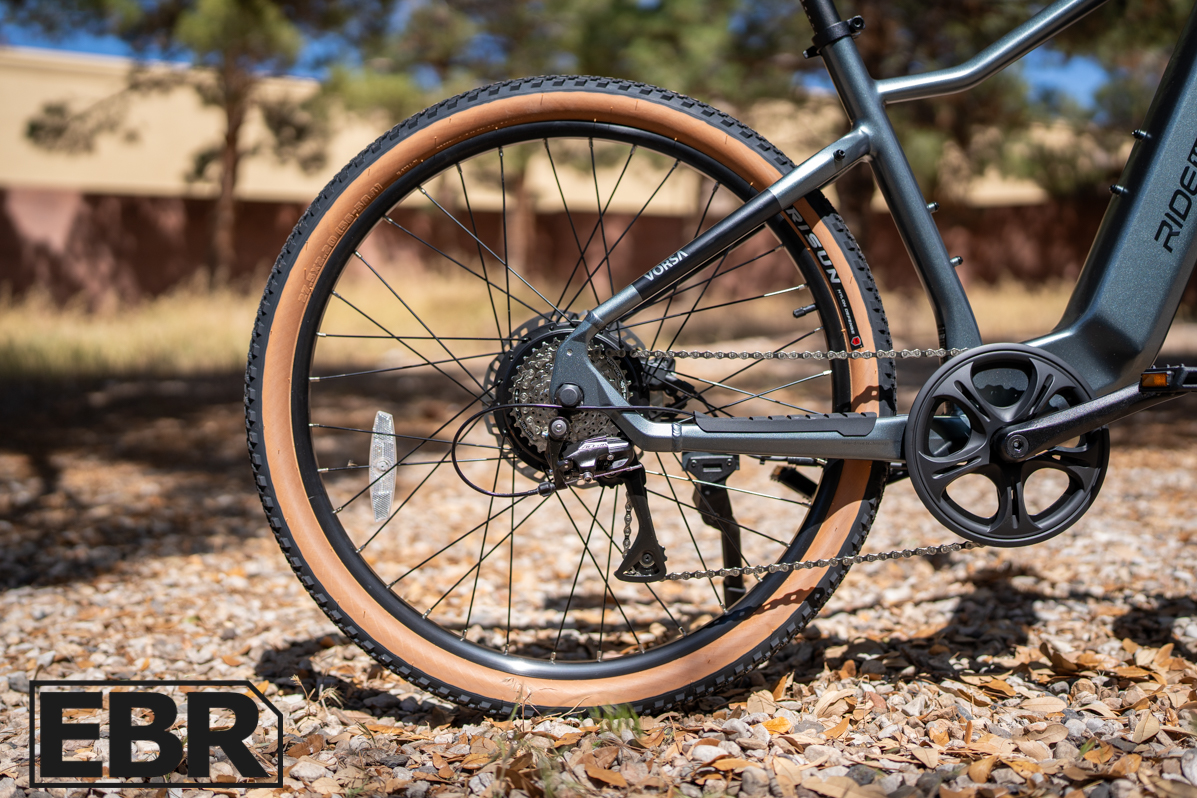
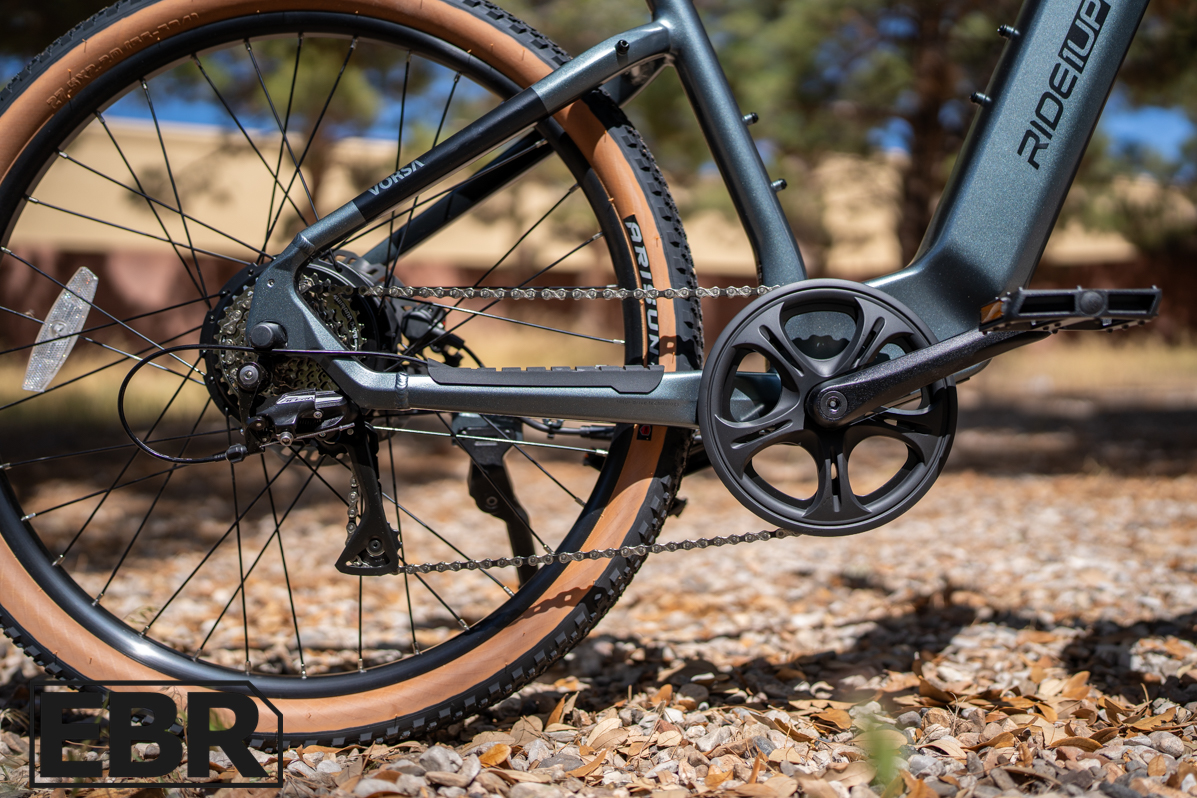
The drivetrain is built around a Shimano Acera 8-speed setup with an 11-32T cassette and a 48T front chainring. Acera is a solid spec for the price – it’s a good step up from Tourney, shifts cleanly, and can be serviced at virtually any bike shop in the country. The rapid-fire trigger shifters are a good call: lighter touch, more intuitive than thumb shifters, and you don’t have to raise your thumb awkwardly to downshift.
The 48T chainring is also a good choice for a Class 3 bike – in testing, I was comfortably in 7th or 8th gear at 28 mph with only minimal ghost pedaling. Sure, I’d love to see them step up to a Shimano Cues or similar 10-11 gear drivetrain, but I don’t think that’s possible without raising the price of the bike to over $1,500.
 |
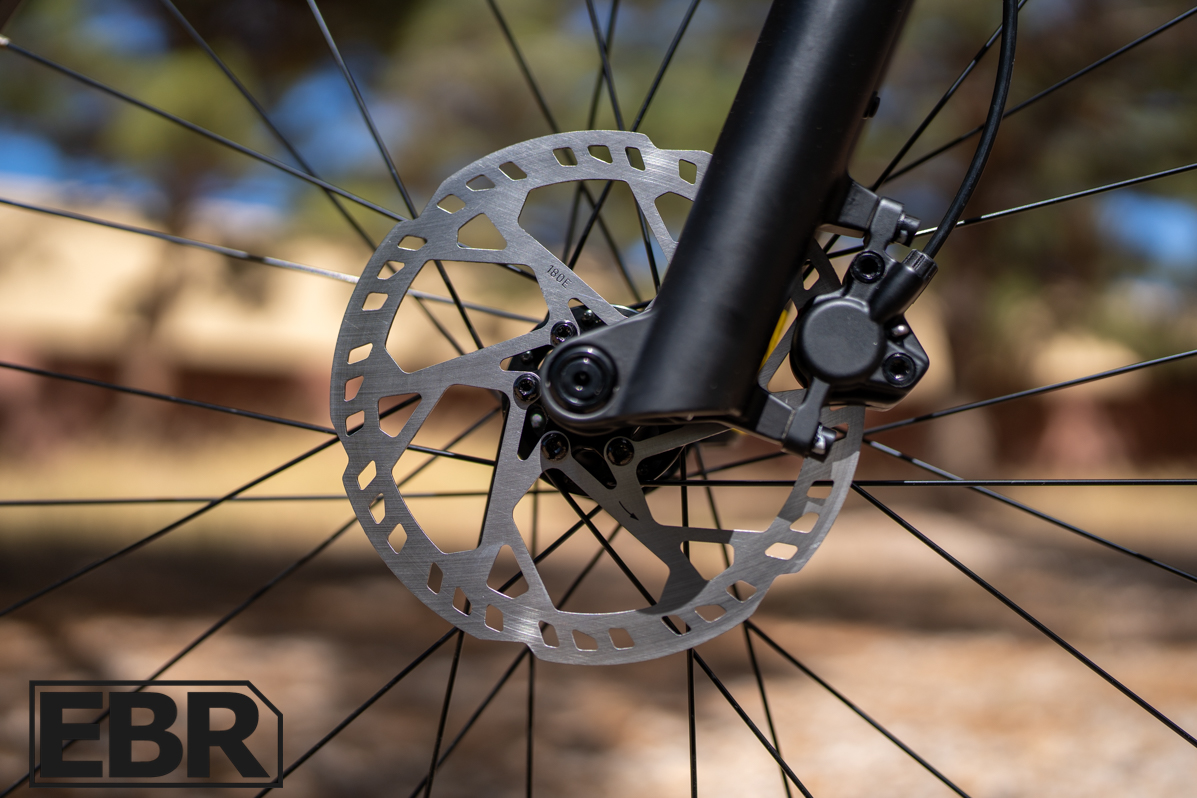 |
The brakes are Star Union hydraulic disc with electric motor cutoff – and if you’ve followed EBR over the past year, you know we’ve become decent fans of Star Union. They make quality stuff, the lever feel is excellent, and the motor cutoff integration is properly done.
The rotor sizing is where I have one note: the rear runs a 203mm rotor and the front runs 180mm, which is the reverse of the standard setup. The conventional wisdom – and the physics – favor the larger rotor on the front, where most of your stopping power comes from. In testing, I noticed the larger rear rotor tended to lock up the rear wheel slightly before the front engaged fully. It still stops really well, and I want to be clear that this is a small potato in a generally excellent setup. But since Ride1Up shares this frame across three bikes (and the standard Vorsa and Vorsa FT arguably need the 203mm rear for cargo confidence), this is the one place where the “three bikes, one frame” approach created a tiny compromise on the Lite.
The fork is a 100mm coil spring thru-axle unit with hydraulic lockout. It feels slightly more firm than some coil forks I’ve tested at this price, which I actually view as a positive – it means the bike handles a wider rider weight range without feeling too soft and bottoming out early. Preload adjustment is present but doesn’t do much, which is typical at this level. The lockout works properly, but I found myself only using lockout if I was transporting the bike in a rack.
 |
 |
Saddle, cockpit, and finish details are all well done. The VELO plush saddle is comfortable and has a nice rigid rear section for grabbing and moving the bike. The VELO ergonomic silicone grips have a palm flare that reduces wrist fatigue. The adjustable stem is one of the Lite’s most underrated features – a 0-60 degree range with dual locking points makes this bike fit-able for a very wide range of riders, and the adjustment is simple enough that most people will actually use it. Cable management is average – tidy enough, with cable wraps in the right places, but riders who want it cleaner will find some room to improve it.
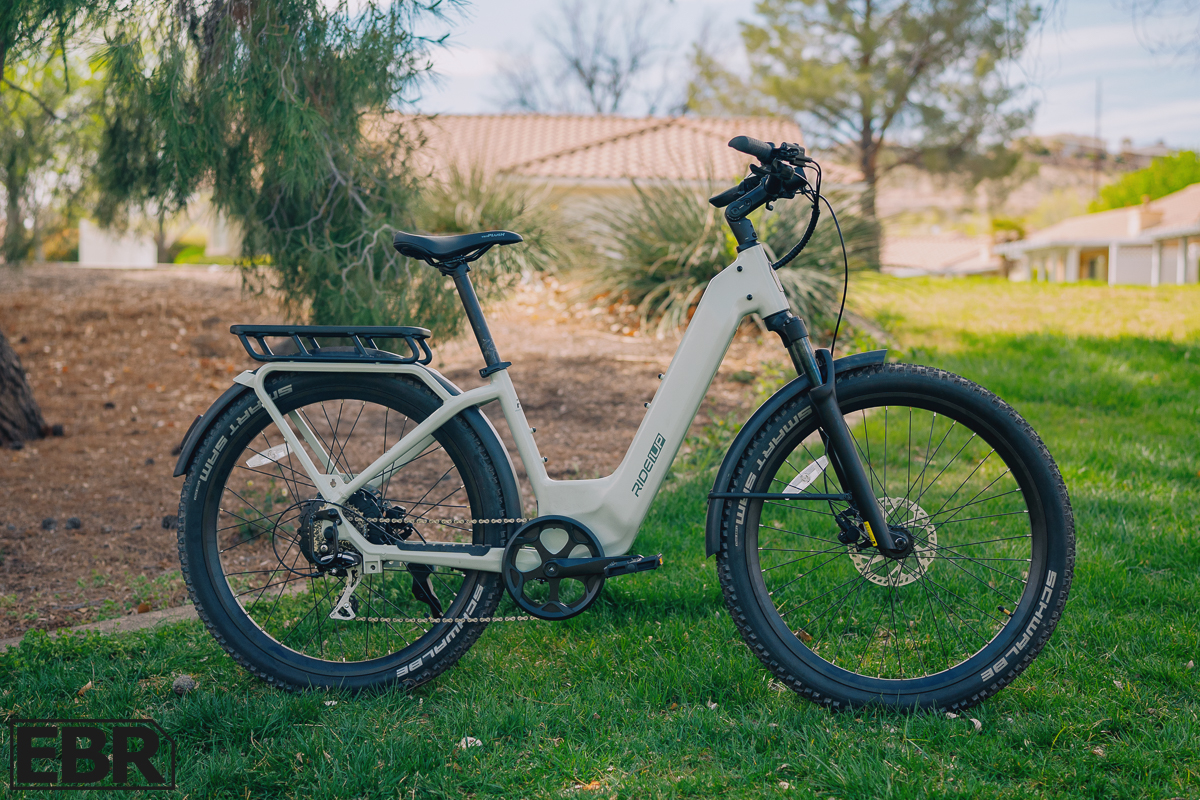
Worth noting what’s not here: no rear rack, no fenders, and no rear light as integrated accessories. Ride1Up made this trade deliberately to hit the Lite’s weight and price targets. For a rider who wants those things, the standard Vorsa is your bike. For a rider who doesn’t need them and wants something lighter and more agile, the Lite makes the right call.
Screen / User Interface / App
Screen / App Score: 6.5 / 10
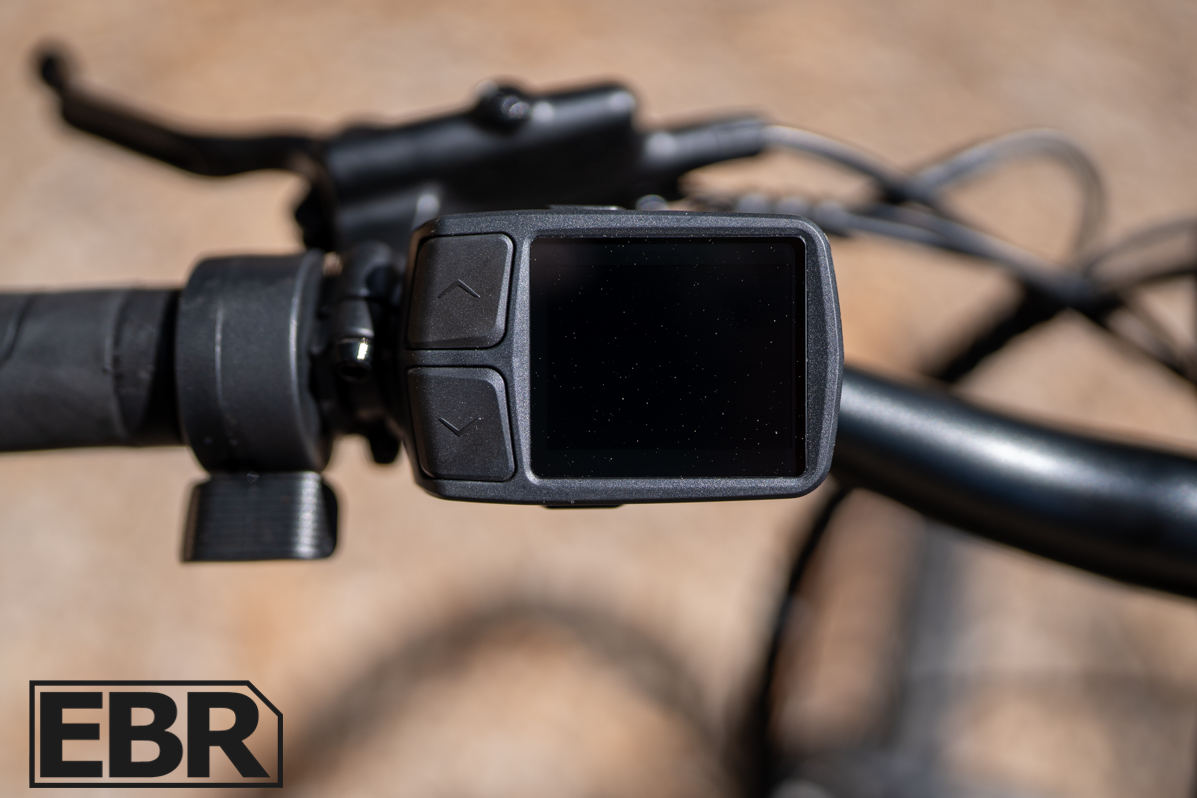
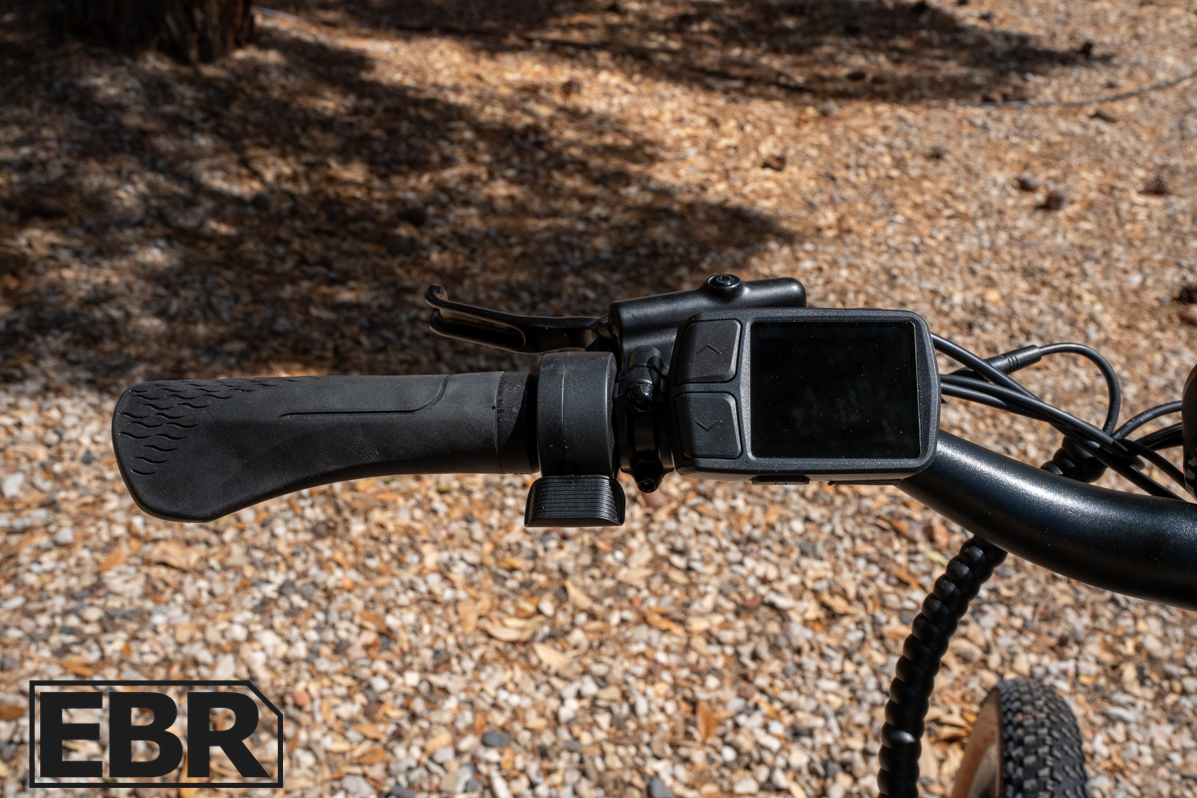
Ride1Up has put real thought into the display on the Vorsa Lite, and it shows. The color display is clean and readable, showing your speed, battery percentage, time, wattage output, assist level, and light status – all the data you actually want while riding. A second screen gives you trip data including total miles, average speed, and max speed. A third screen shows real-time power output per mode, which I genuinely find useful for understanding how the bike is delivering assist at different levels.
Where it gets more interesting is in the advanced settings. You can access per-level torque ratio and amp output adjustments – essentially, for each of the five assist levels, you can tune how aggressively the motor responds and how much power it delivers. This is meaningful customization for a $1,395 bike. Most riders won’t touch it, but the riders who want to dial in their ECO and Boost profiles for their specific route and fitness level will appreciate having it. Class switching is straightforward through the variety modes menu – Class 1, 2, or 3, cleanly labeled.
The Apple FindMy integration is a genuine value-add. Hold the bottom M button and the up button for 5 seconds, a pairing icon appears, and you add the bike to Apple FindMy like any other Apple accessory. For urban riders worried about theft, this is a meaningful feature at this price point. The bike also has USB-C charging out of the display for accessories. My one gripe: Android users are left out. There’s no equivalent tracking solution for non-Apple phones, and in 2025 that feels like a gap worth closing. I’d love to see Ride1Up address this in a future update.
The sensor mode switch – toggling between torque and cadence sensing – is accessible through the settings menu. Most riders will find the default torque mode to be the better experience, but it’s good to have the option. Overall, this display system is one of the better implementations I’ve seen under $1,500.
Bike Model Options
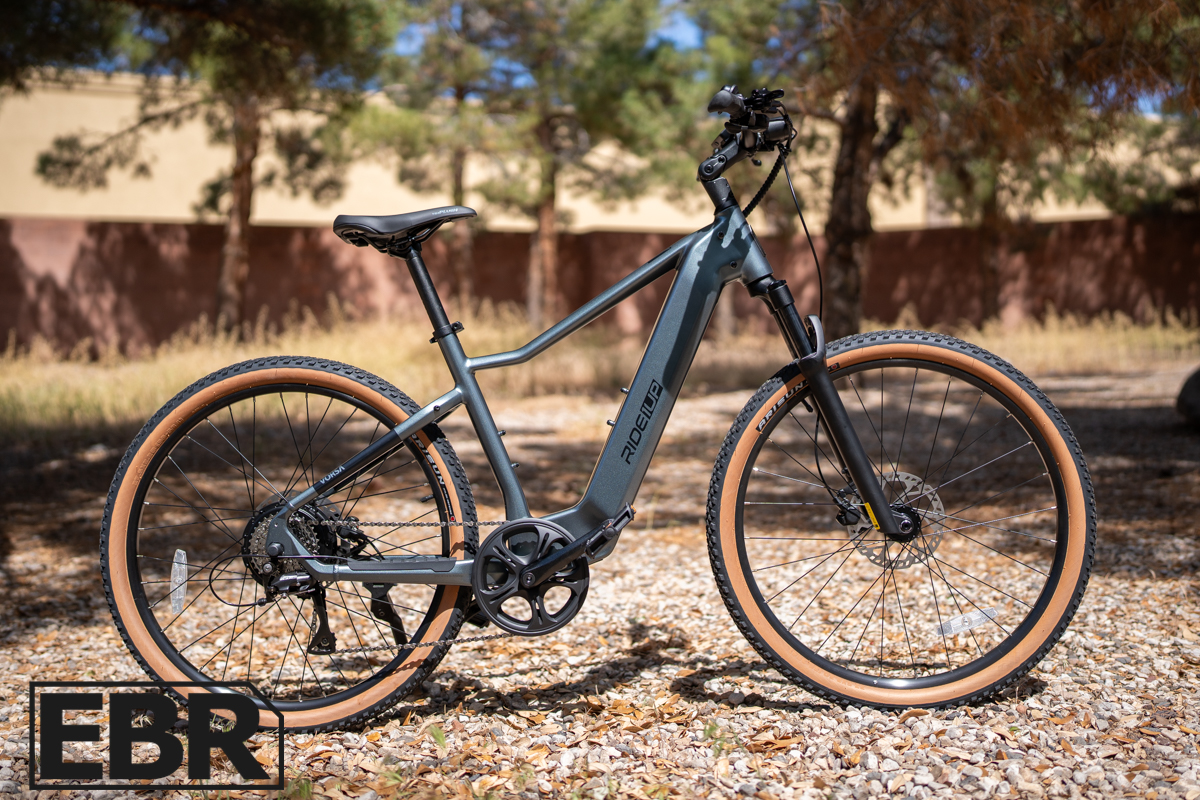
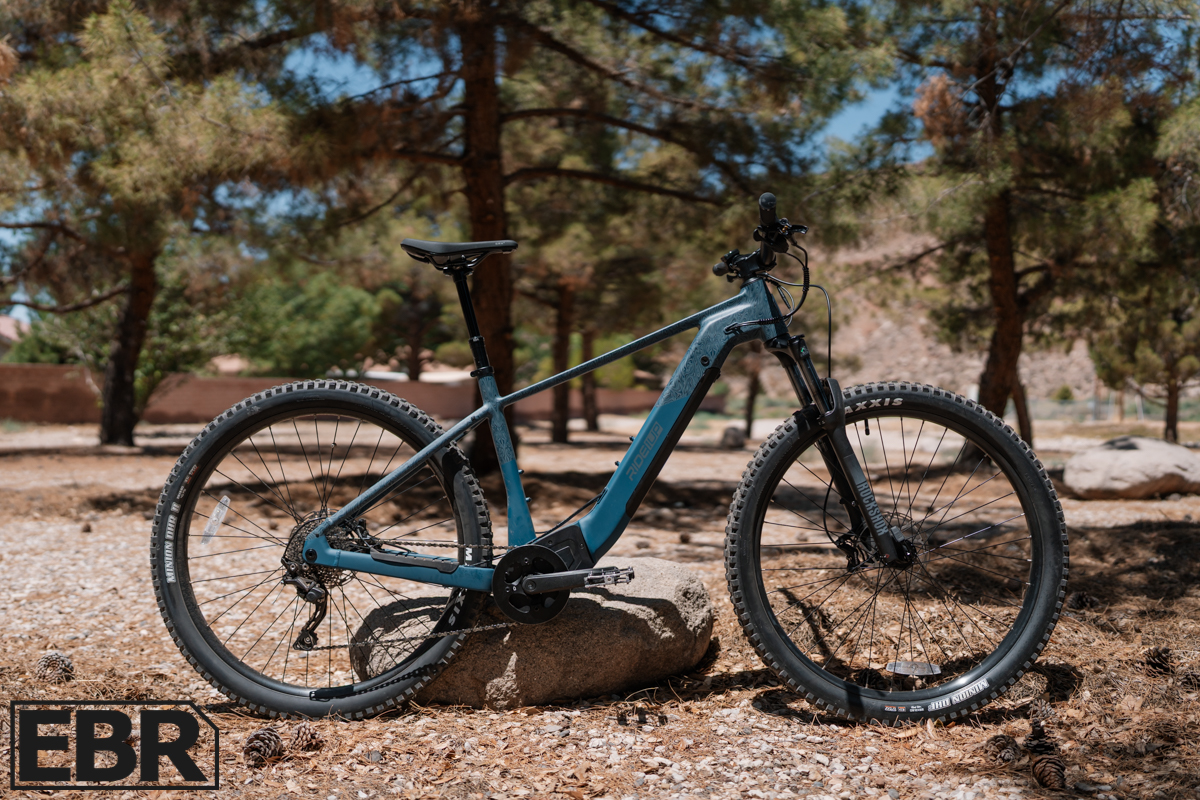
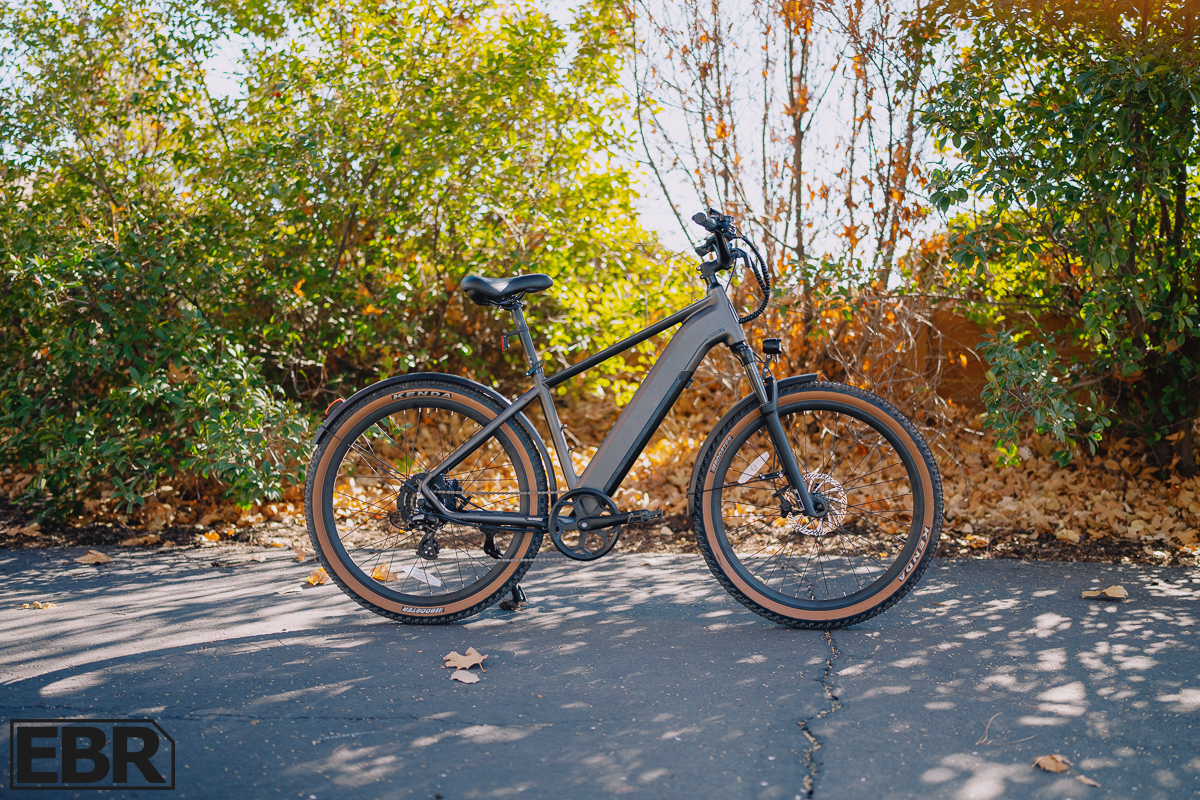
The Vorsa Lite comes in two frame styles: the XR (step-over / high-step), which fits riders from 5’5″ to 6’4″, and the ST (step-through), designed for riders from 5’1″ to 5’11”. Both weigh in at 61 lbs with the battery. Frame sizing between the two is similar – identical wheelbase at 43.5″ and 43.6″ respectively – with the main difference being standover height: the step-over sits at 31.37″ and the step-through at 18.66″, making the ST an excellent choice for riders who want quick, confident dismounts.
Color options are Glacier (a rich blue), Slate (gray), and Ivory (white) – all three are clean, understated colorways similar to past Ride1Up bikes. Nothing splashy, but all nice.
One thing to know before you buy: Ride1Up ships the Vorsa Lite in a slightly smaller box than industry average to keep costs down, which means more assembly than a typical DTC e-bike. You’ll be attaching the fork, stem, and handlebars yourself, in addition to the usual wheel and handlebar orientation. Ride1Up estimates 45-55 minutes; I’d budget 90 minutes if this is your first time. The good news is they have a great YouTube assembly series that walks you through every step, and the bike is mechanically straightforward once you get into it.
Is the Ride1Up Vorsa Lite Worth Buying?
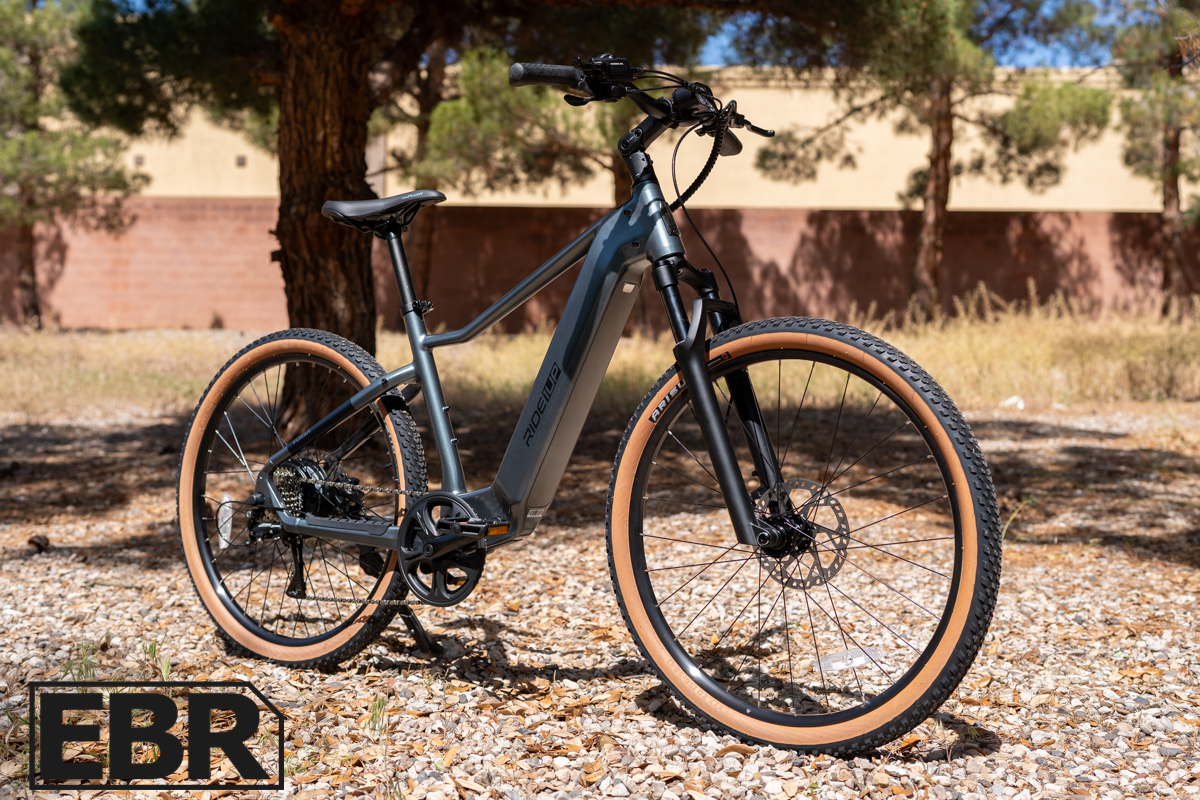
Yes – and I want to be direct about that. The Vorsa Lite isn’t a bike with a great story attached to an average ride. It’s a bike that actually rides better than it should on paper.
The Intui-Drive torque sensor system elevates what a $1,395 hub motor e-bike can feel like, the range results are exceptional for any price point, and Ride1Up’s ability to get the geometry right across three different bikes using one frame deserves more recognition than it gets.
This bike is built for the commuter who wants a clean, capable, Class 3 e-bike that feels like riding a real bike – not a motorized gadget. It’s for the person who’s been eyeing e-bikes for a while and wants something that will actually make them faster on their daily route without requiring a steep learning curve. It’s for the rider who doesn’t need cargo capacity baked in, and who’d rather have 12 fewer pounds of bike to maneuver around the apartment hallway or lift into a truck bed.
If you need the rack and fenders, or you want fat tires and a more rugged look, Ride1Up’s standard Vorsa and Vorsa FT are there for you at nearby price points. But if the Lite’s specification matches your riding life, I think you’ll be genuinely surprised by how much bike you get for $1,395. Two big thumbs up from me – one for that motor/battery/sensor combo that Ride1Up has clearly worked hard to get right, and one for pulling off three distinct bikes from a single frame without sacrificing the thing that matters most: how the bike actually rides.





Reader Interactions