
It’s pretty rare we find an ebike under $700 we feel comfortable recommending (the Lectric XP Lite is the only one coming to my mind, and it’s even $800 currently).
Most of what’s in that price range is sold on Amazon, comes from brands you’ve never heard of (good luck getting customer service), and ride poorly.
So when GoTrax sent over their F2, the second version of their popular folding e-bike priced at $699, our bar going in was simple: can we recommend this to someone we love and care about who’s on a shoestring budget?
After 100+ miles on the bike, I can say yes. The GoTrax F2 isn’t the most capable bike we’ve tested, but it is an honest, safe, well-built option for that person.
The headline story is the brakes. At $699, hydraulic disc brakes with 180mm rotors that actually perform well is not something you expect to see. Everything else on this bike is appropriately budget-level, and that’s fine. But the brakes are the component where corners get cut most often on cheap e-bikes, and GoTrax didn’t cut them here.
My Experience Riding the GoTrax F2
Ride Quality Score: 6 / 10
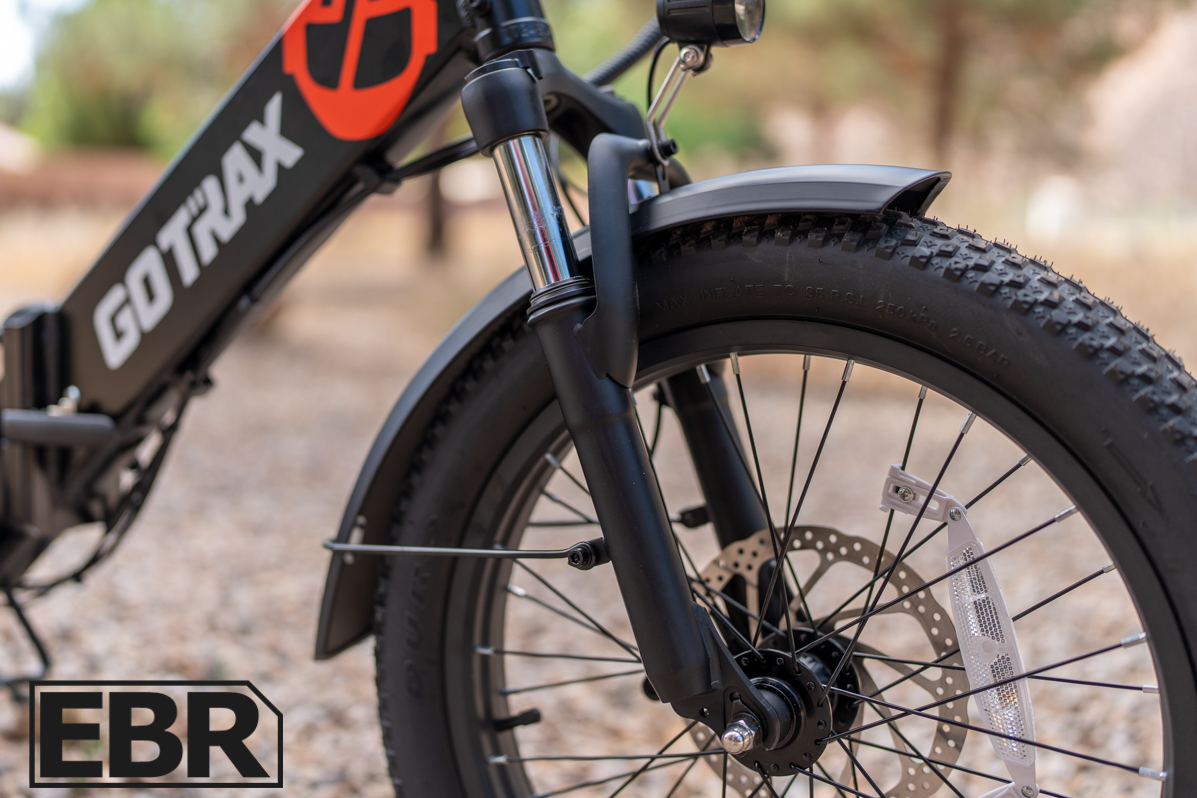
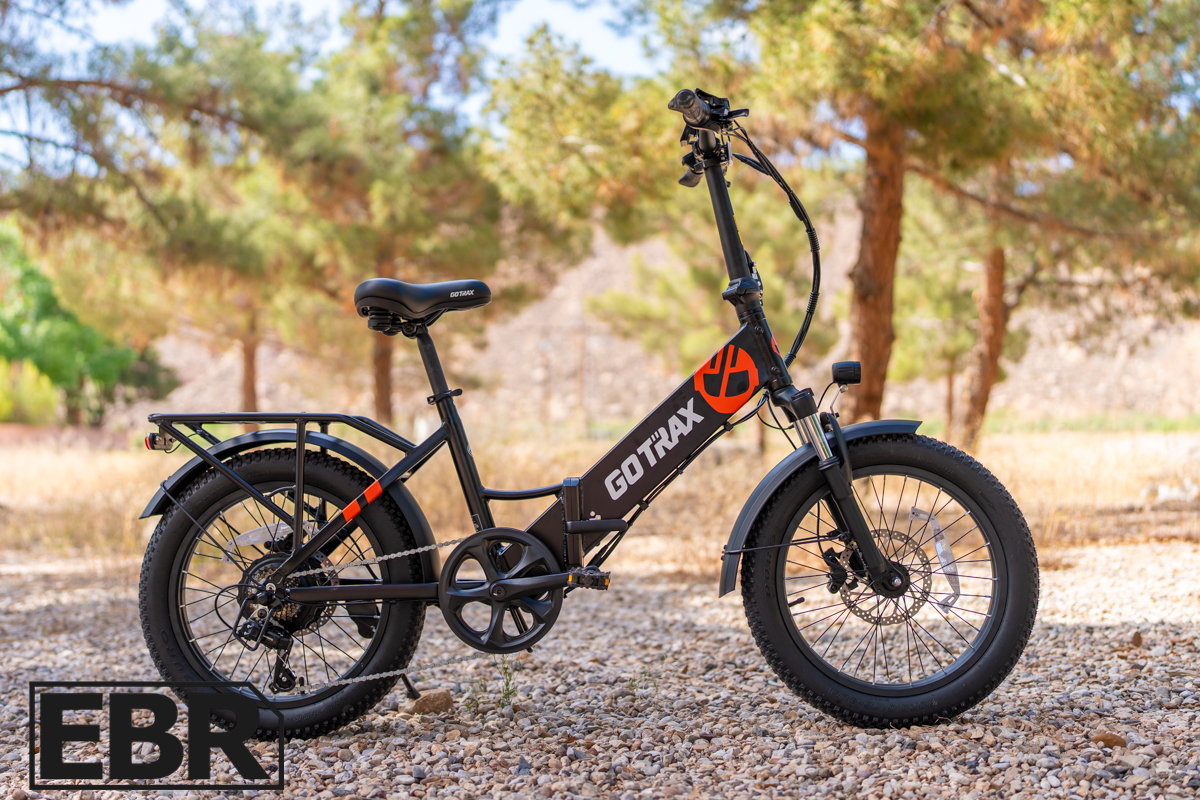
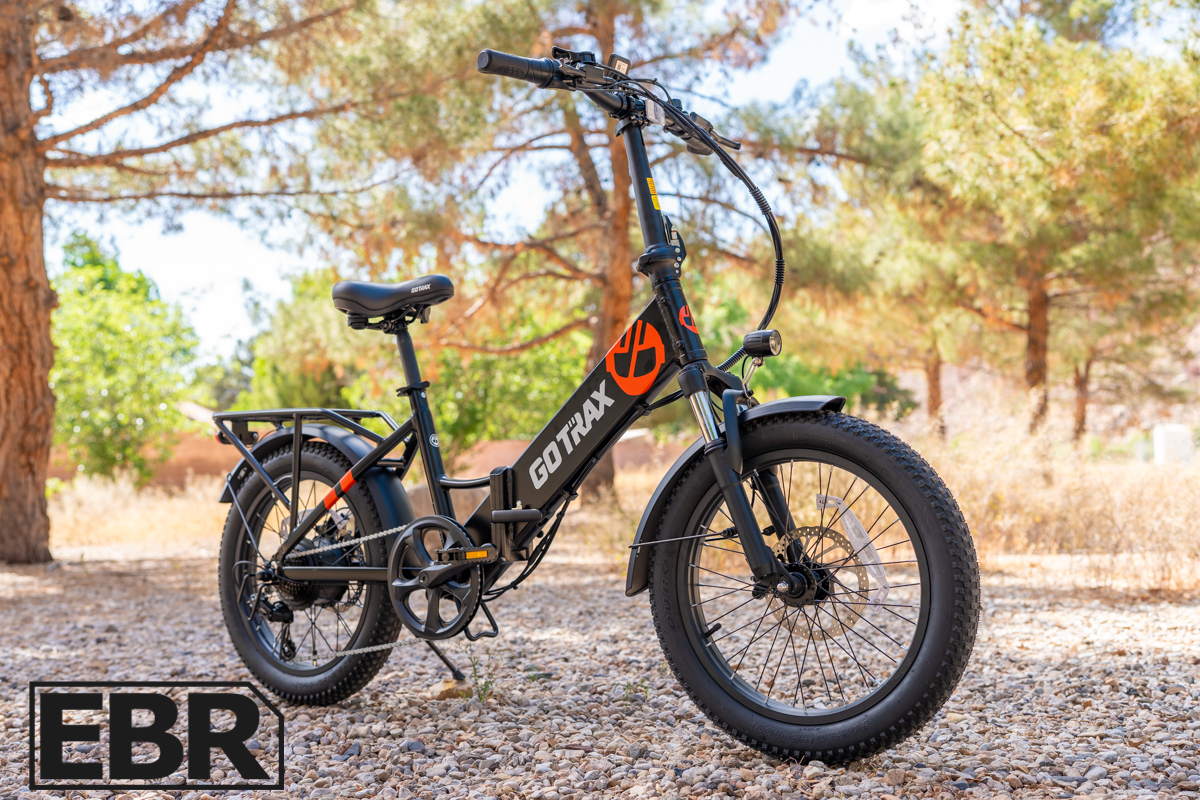
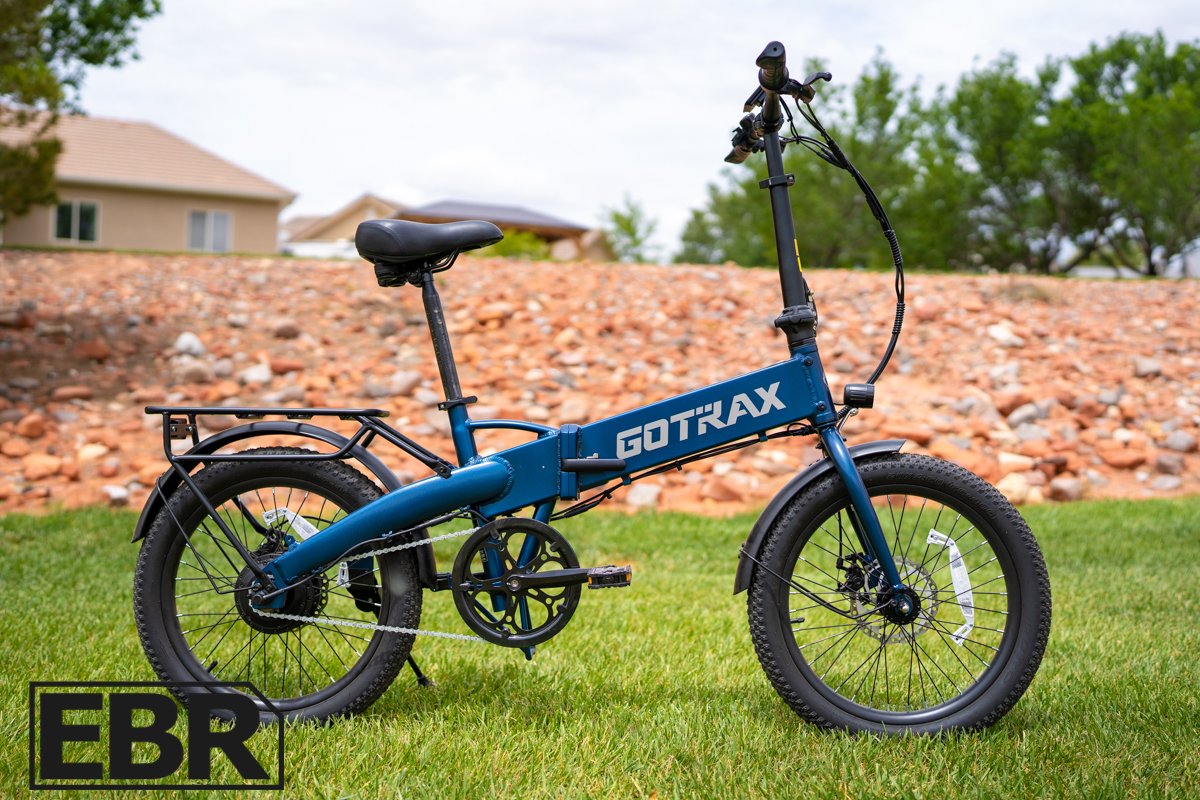
The F2 is a folding commuter with mid-fat tires. The geometry is upright and relaxed, the 20-inch by 3-inch semi-fat tires give it a low, stable feel, and the overall handling is better than I was expecting. Folders aren’t the stiffest bikes in the world; there’s always some flex at the fold joint, but the F2 manages this better than some pricier alternatives I’ve ridden.
Fit is one of the stronger points of this bike. GoTrax claims it fits riders from 5’3″ to 6’3″, and I actually believe them. I rode it at 5’11” and we had another rider in the office test it out at 6’3 who found it surprisingly comfortable. If you’re on the shorter side of average, the saddle drops down far enough that riders around 5’3″ or 5’4″ should be fine. The stem is adjustable in both height and angle, which gives the cockpit more flexibility than you’d typically get at this price.
There is one geometry note I’d call out: the steer tube on the fork cants slightly forward instead of running straight up and down. It’s subtle, but it does add a little extra reach and changes the handling feel slightly. Lectric addressed a similar issue on the XP4 by straightening out their stem assembly, and I think GoTrax could do the same here. It would improve the handling and make the bike feel a bit more balanced.
The front suspension fork offers 60mm of travel with a lockout and preload adjustment. The lockout works, though it’s a little louder than I’d expect from a quality fork, and the fork does take the edge off bumps once unlocked. The preload adjustment is effectively useless, but I wouldn’t expect anything more at this price point – keep in mind that an average mountain bike fork from Rockshox or Fox are going to cost more than this entire bike.
The rear has no suspension, so you’ll feel the choppiness back there when you’re off-road, especially combined with the abrupt motor engagement from the cadence sensor. But for a commuter and casual cruiser, it worked better than we expected, and was quite fun to ride around.
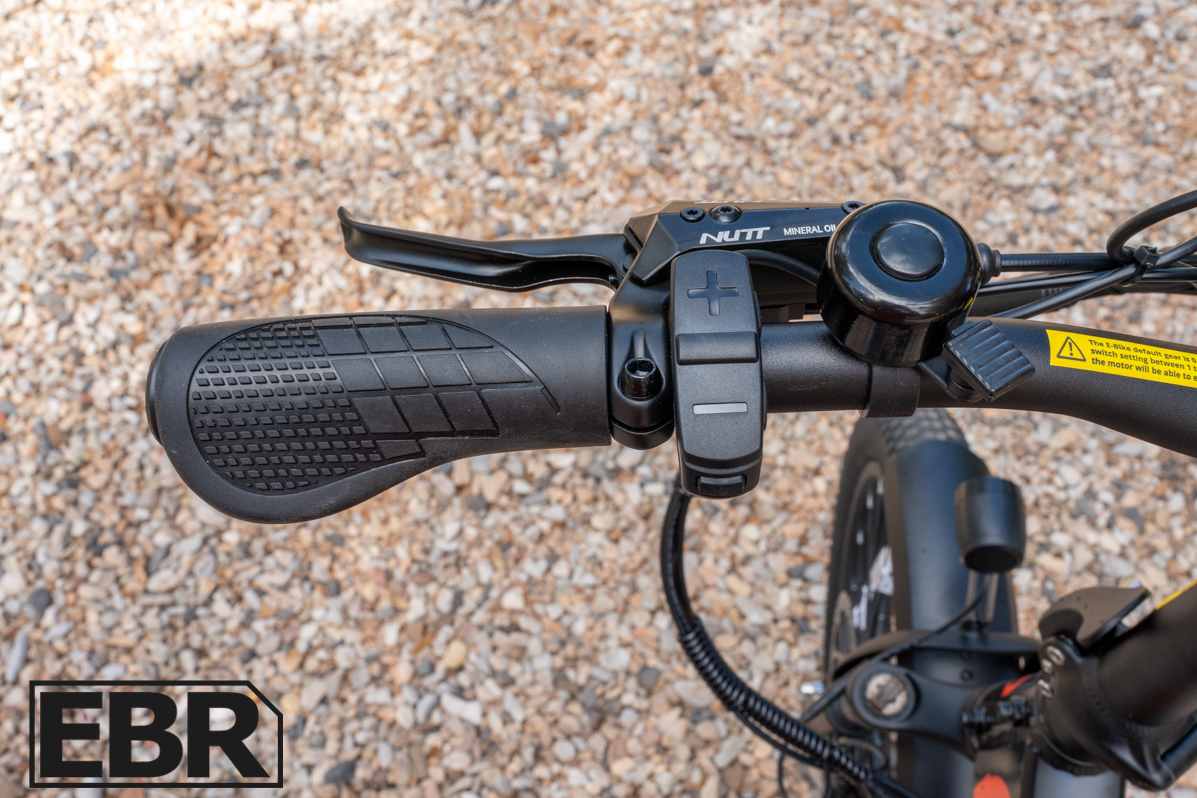
The cockpit is reasonably comfortable. The butterfly rubber grips are padded and feel decent in hand, though they don’t lock on, so they rotate slightly while riding. Finally, the bike requires a key to power on, which is one of those quirks I wish brands all would move away from ASAP (as in, 2 years ago!). It adds nothing to real security and just creates an annoyance, especially when loading the bike in and out of a car.
Power (Motor & Battery)
Power Score: 6 / 10
 |
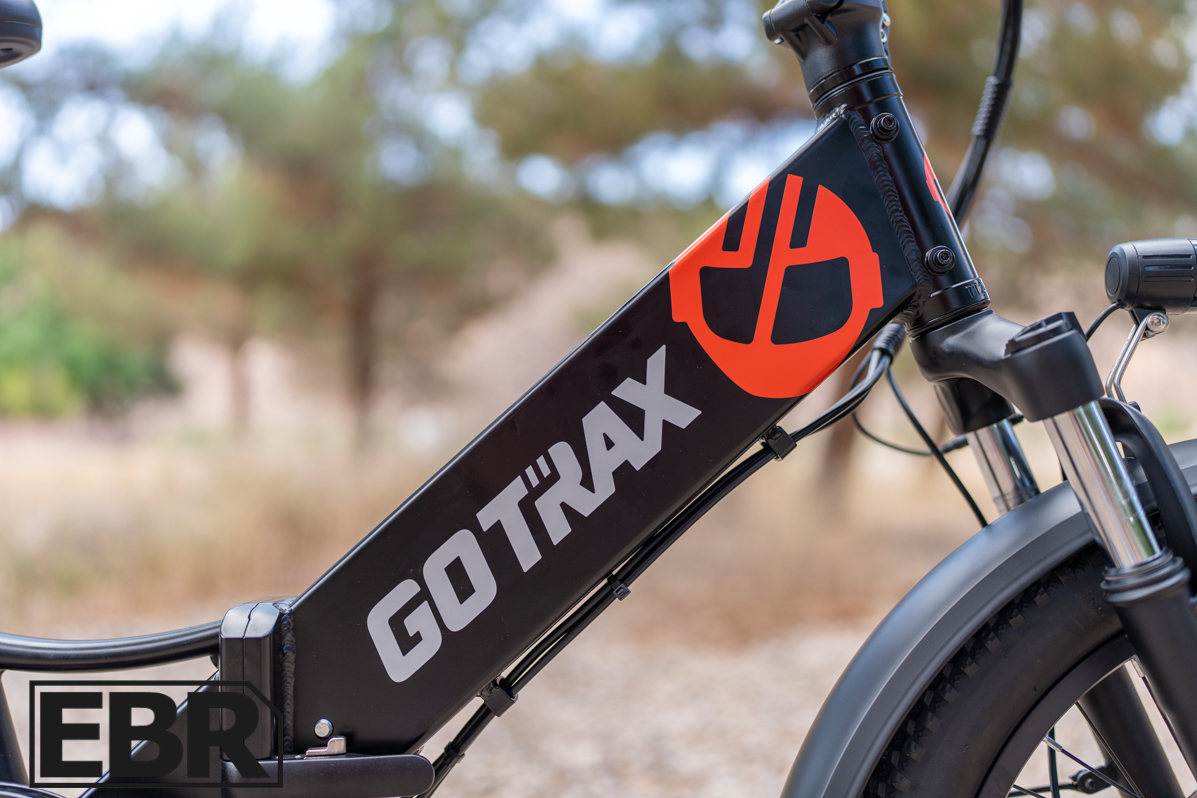 |
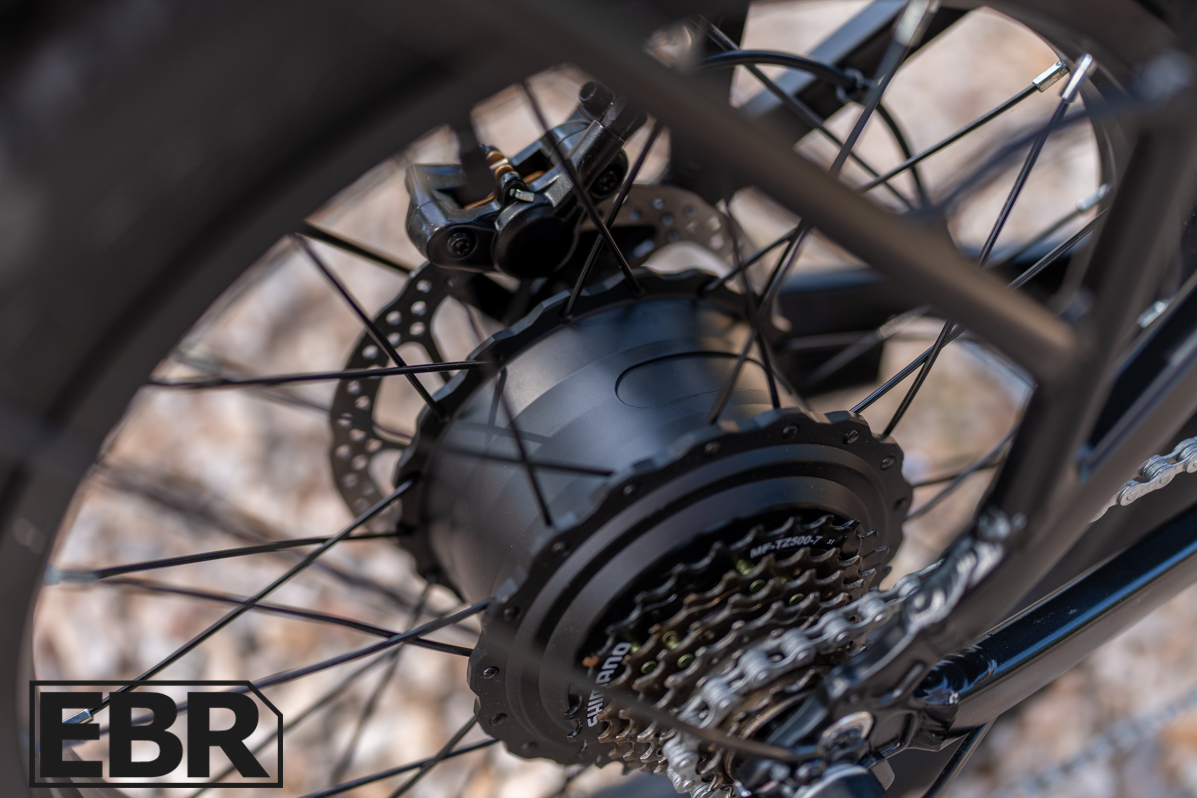
GoTrax specs the F2 with a 500W nominal rear hub motor. Peak wattage isn’t published by GoTrax, and I’ve reached out to get that figure; check back later for an update here. Based on performance in my hill test and speed tests, I’d estimate torque somewhere in the 50–60 Newton meter range, which is reasonable mid-range territory for a hub motor at this price.
On the throttle test from a stop, it took about 10 seconds to reach 20 mph in PAS 5, a reasonable result for a 500W motor. On the pedal test, 0 to 20 took around 10–11 seconds, with 25 mph coming in at 14–15 seconds. The motor performs better under pedal assist than pure throttle, which isn’t unusual. It’s not going to make anyone’s jaw drop, but it does the job.
The cadence sensor is where I have the most to say. It takes nearly a full pedal revolution to engage, which is on the slower end even for a cadence system. However, once it kicks in, it delivers full power up to the speed limit for that PAS level, then cuts off. There’s also about a half-second of overrun after you stop pedaling. Neither of these is surprising at $699, but it does mean you’ll find yourself leaning on the throttle more than you might expect just to get rolling from stops. Get used to the feel over a few rides and it becomes second nature.
The twist throttle itself has a slight delay built in: roughly a third of the way through the twist before full power engages. I somewhat appreciate this (I actually go back and forth between hating it and being ok with it) because it prevents accidental throttle engagement while shifting. That said, once it’s on, it’s fairly binary, with not a lot of modulation.
Overall, I found the ride quality of the Gotrax F2 to be a bit better than I expected. If I had to put it in dollar terms, I’d say about $200-$300 better. In other words, I would expect this bike to be priced around $800-$900.
Range / Battery
Range Score: 6 / 10
Min Assist: 23 Miles
Max Assist: 41–42 Miles
GoTrax claims up to 50 miles of range. In our real-world testing at 185 lbs, we got right around 23 miles at max assist and approximately 41–42 miles in ECO / PAS 1 settings. The brand’s 50-mile figure isn’t egregiously off. It’s achievable under ideal conditions with a lighter rider and mostly flat terrain, but the honest number for most people is going to land somewhere between 25 and 40 miles depending on how you ride.
The 499Wh battery is a solid match for the 500W motor. In fact, it’s right at the rule of thumb of battery Wh equaling motor watts. The semi-fat 3-inch tires add some rolling resistance compared to narrower commuter tires, and the cadence sensor’s all-or-nothing engagement style doesn’t help efficiency either; you tend to draw more power than a torque sensor system would at the same perceived effort level.
However, some riders like the more unnatural feel, as it makes the bike feel quick and powerful even though it’s not super refined.
One limitation to flag: the battery display uses a 5-bar indicator without a percentage readout. In practice, this means you’re working with roughly 20% increments, which makes range planning hard, especially in the last 20% of the battery when you most want to know how much you have left. If GoTrax could move to a percentage readout in a future version, we would love it.
Components
Components Score: 6.5 / 10
 |
 |
 |
 |
For a $699 bike, the component package on the F2 is well-done. I would say that GoTrax made the right trade-offs and put the money where it matters most.
Brakes: NUT hydraulic disc brakes with 180mm rotors front and rear and 1.85mm rotor thickness. I wasn’t expecting this on a $699 bike. These are mineral oil brakes, which means any bike shop can bleed and service them. In my brake test, I did repeated high-speed stops down a steep descent and saw zero brake fade. The lever feel is solid, the bite is confident, and I don’t think GoTrax needs to improve anything about the brakes on this bike. They’re the standout component by a clear margin.
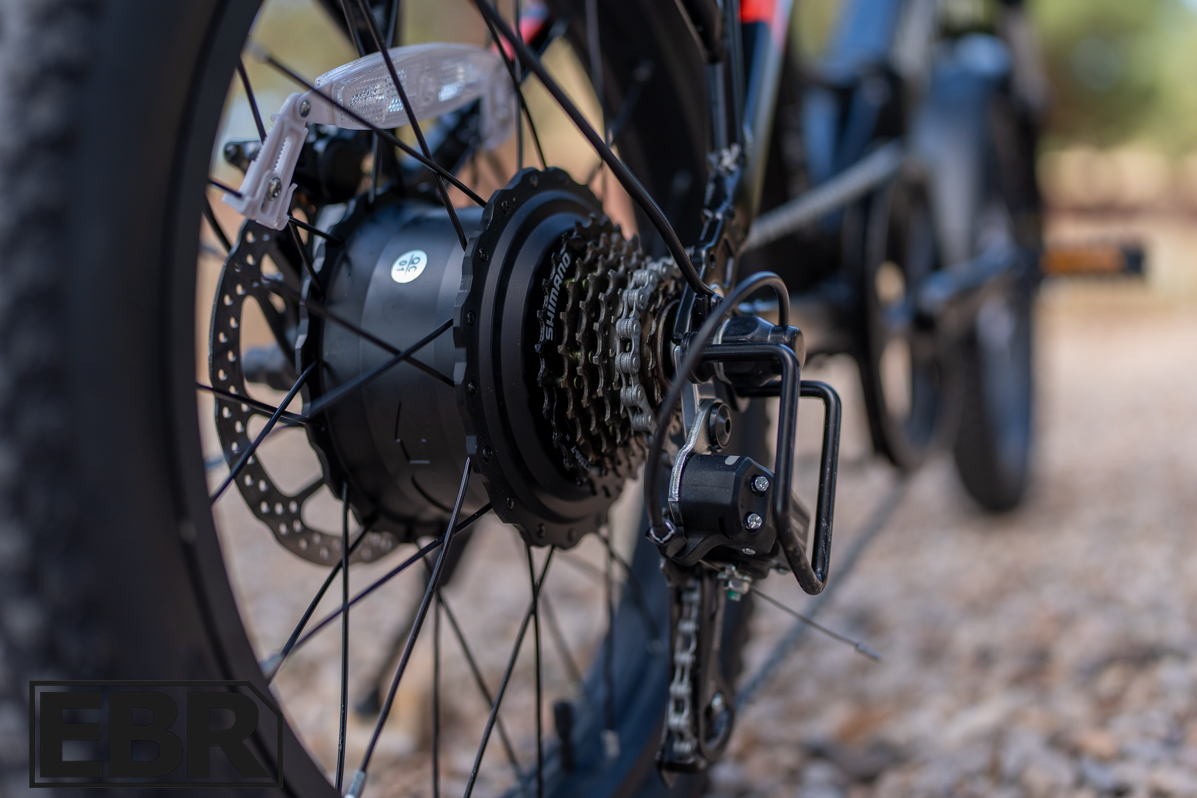
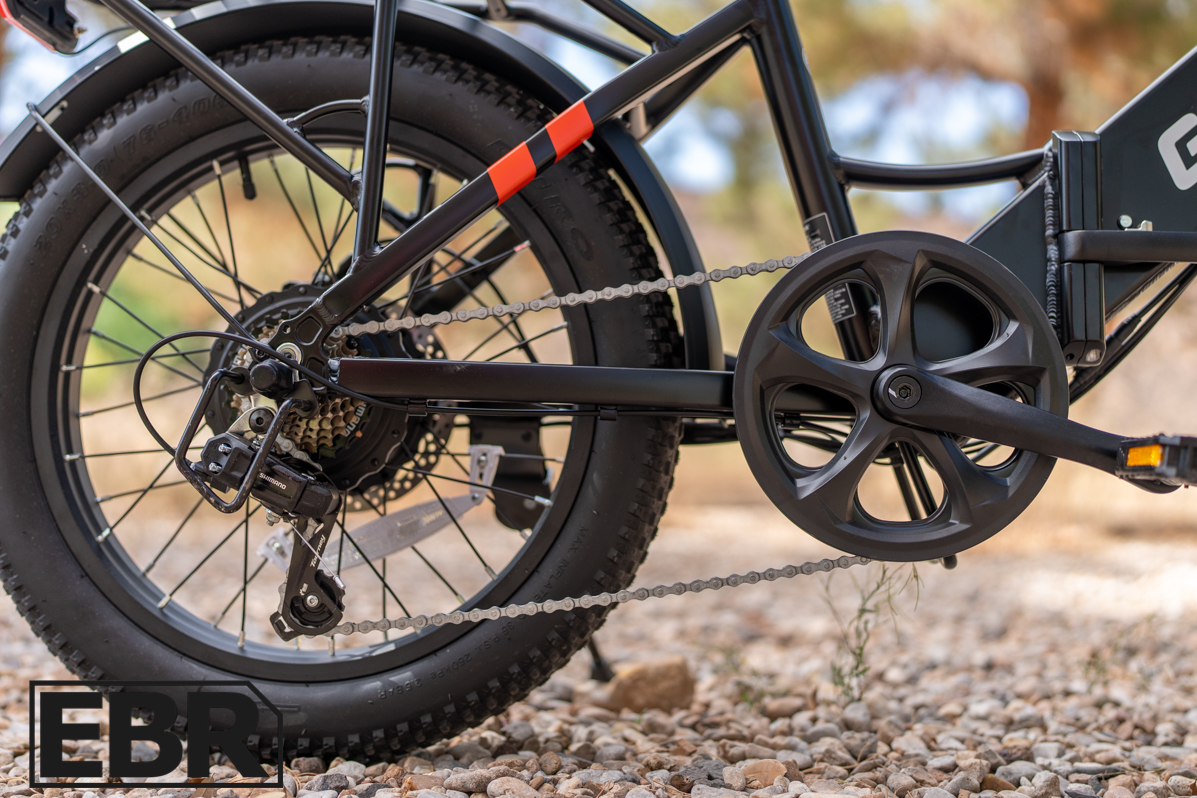
Drivetrain: Shimano Tourney 7-speed with a 12–28T cassette. While we typically aren’t fans of the tourney (it’s not the easiest shifter, and we don’t like pairing it with twist throttles). While the 7-speed setup is fine for most all typical use cases, I found myself in gears 5, 6, and 7 for most flat riding, and there’s a noticeable ghost pedaling feel at speeds above 17–18 mph. The gear range just runs out. I don’t think GoTrax can fully solve this within the price constraint, but even a slightly wider cassette spread would help.
Fork: 60mm travel with lockout and preload. The lockout works, the preload adjustment doesn’t really do much, and the fork is a bit stiff out of the box, though it loosened up with use. At this price, a coil fork with a functioning lockout is nice. It takes the edge off rough paths and light trails without adding complexity.
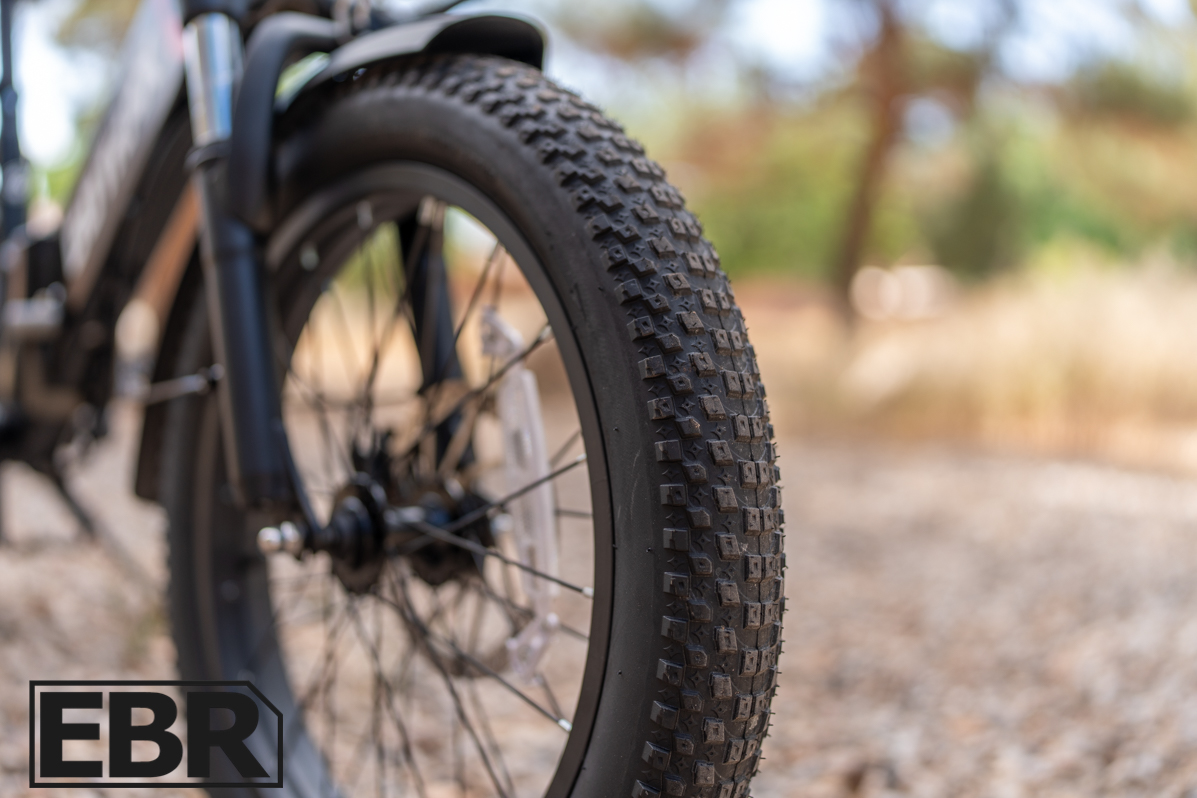
Tires: 20″ × 3″ semi-fat tires. The width gives the F2 a comfortable, stable feel, decent cushioning on rough pavement, and enough float for light gravel and dirt paths. Rolling resistance is higher than a narrower commuter tire, but the power of the motor easily overcomes that penalty.
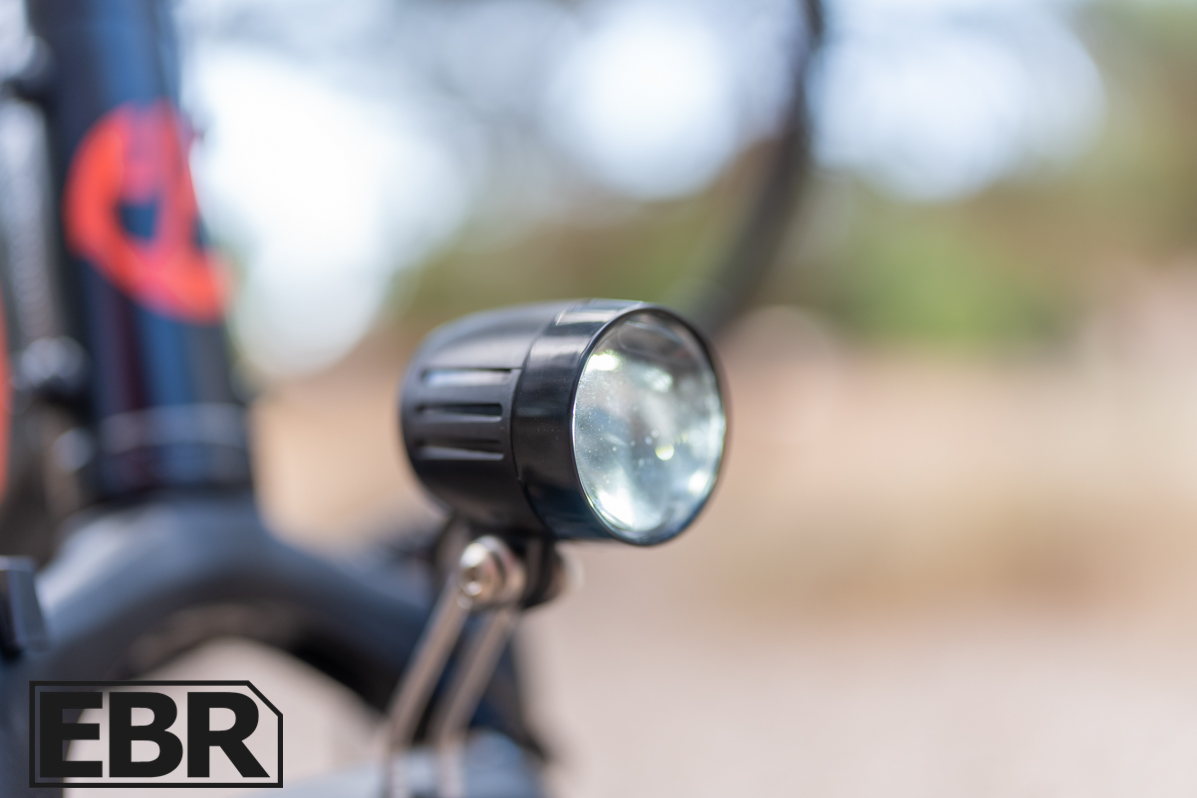
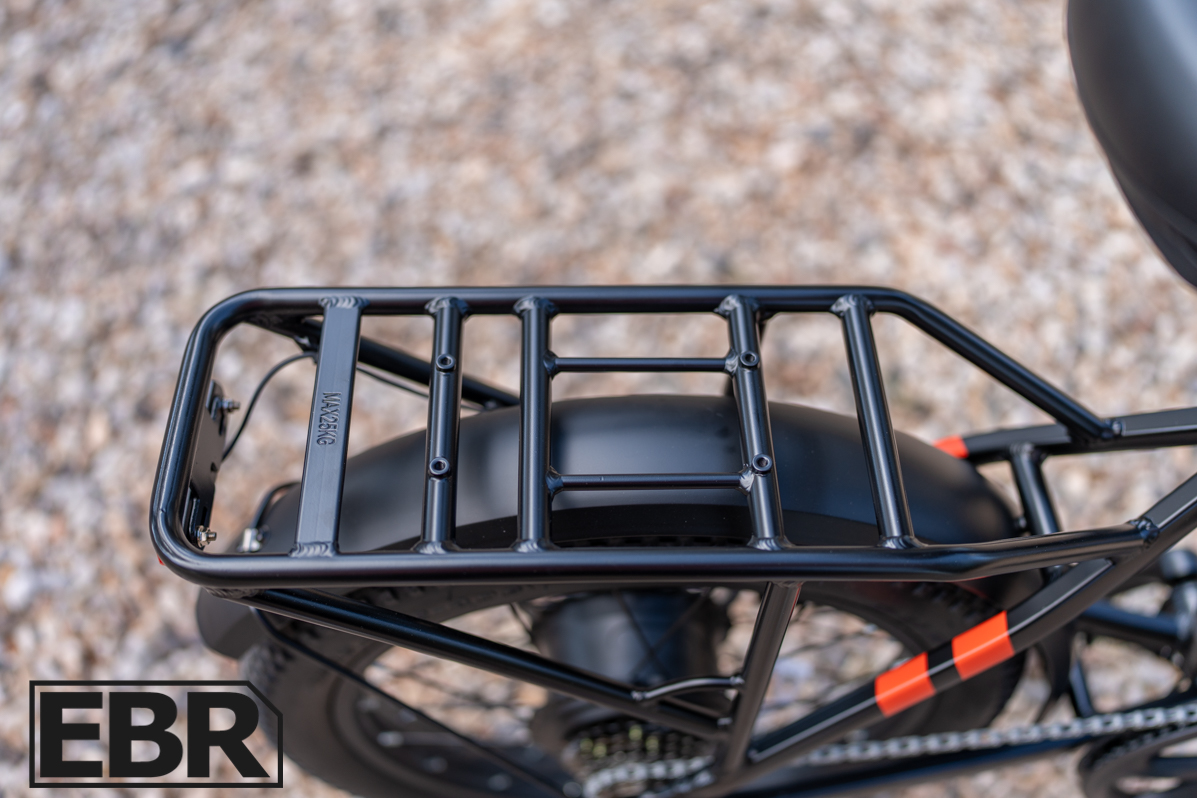
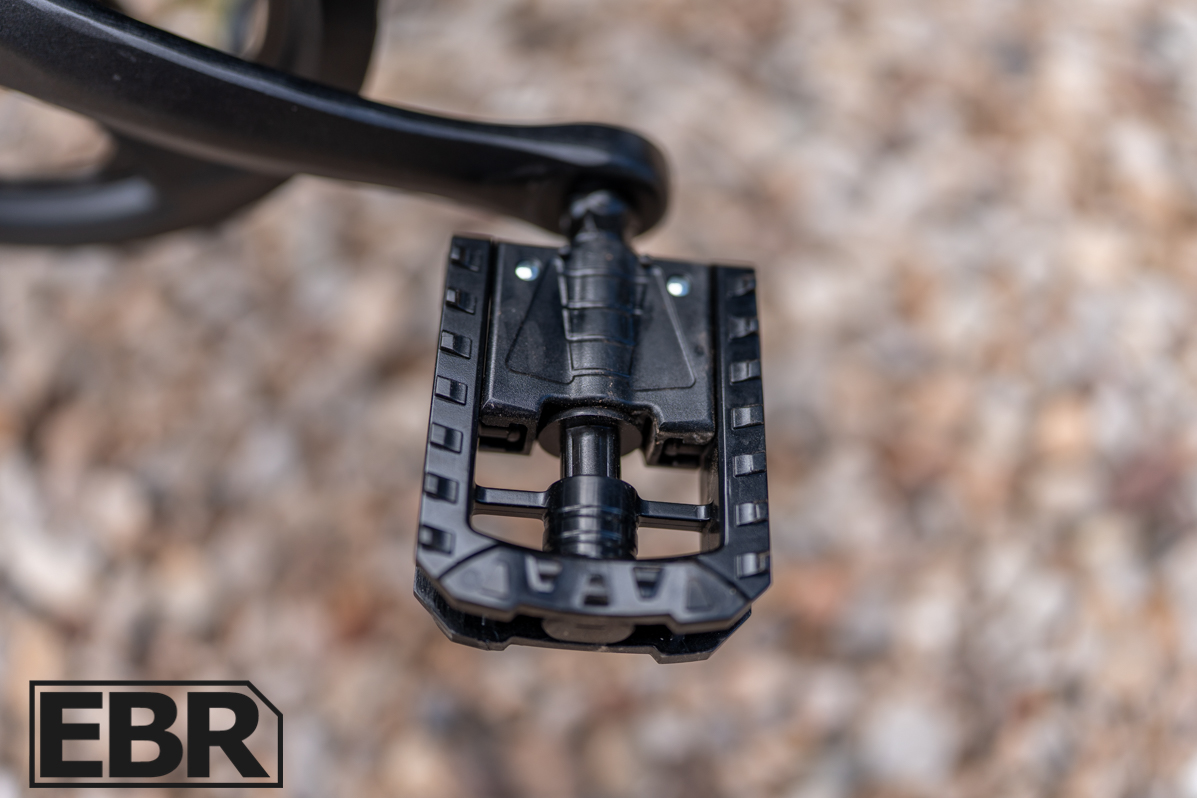
Accessories: The integrated rear rack with 55 lb capacity, front LED headlight, reactive rear brake light, bell, and folding pedals all come standard. This is a pretty complete accessory package. My only knock is the metal fenders. I’d prefer hard plastic, which handles road debris sound better, is lighter, and performs just as well. The key-based power-on system is also a frustration, and one that I thought brands had figured out a few years ago.
The frame is A6061 aluminum alloy, and the folding mechanism is right in-line with my expectations. The fold is reasonably stiff, folds in roughly 15–20 seconds once you have the process down, and the compact folded dimensions (22.5″ × 26.5″ × 37″) make it practical for car trunks, RV storage, and apartment living. One tip: use a bungee cord from the fork top to the rear rack to keep it from unfolding while you’re carrying it.
Screen / User Interface / App
Screen / App Score: 5.5 / 10
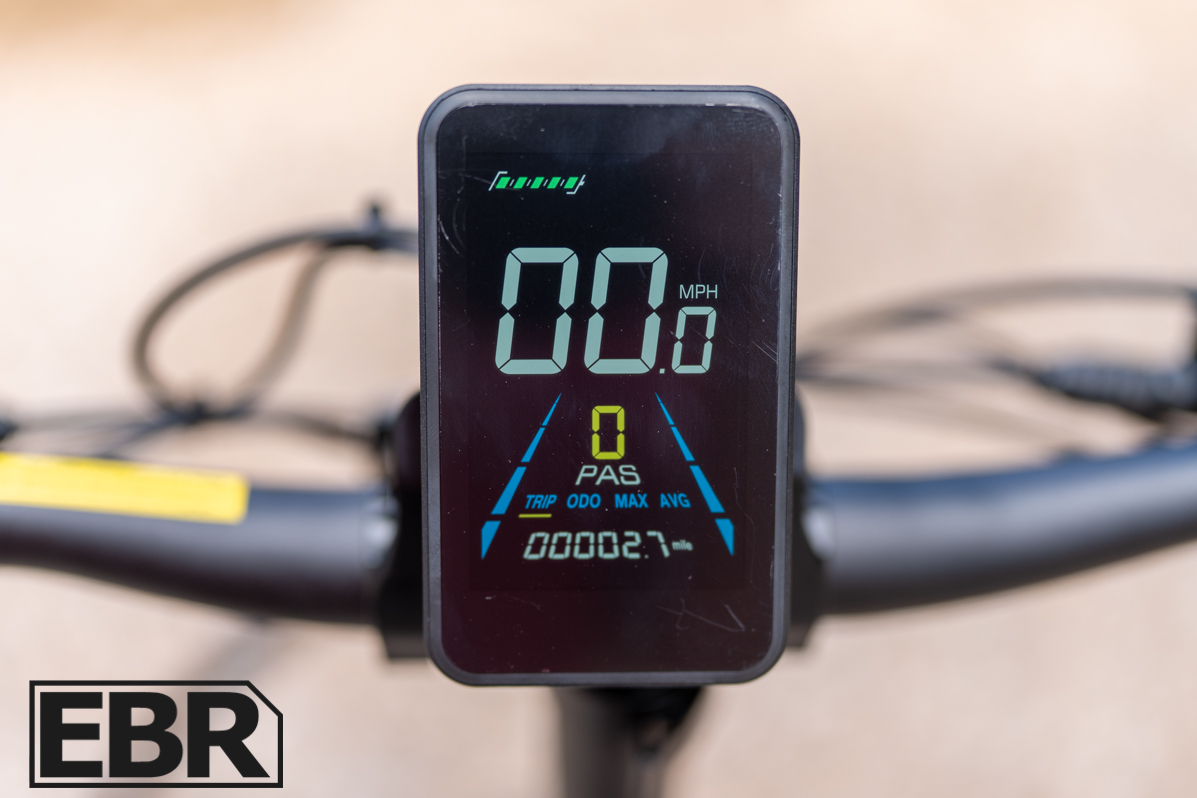
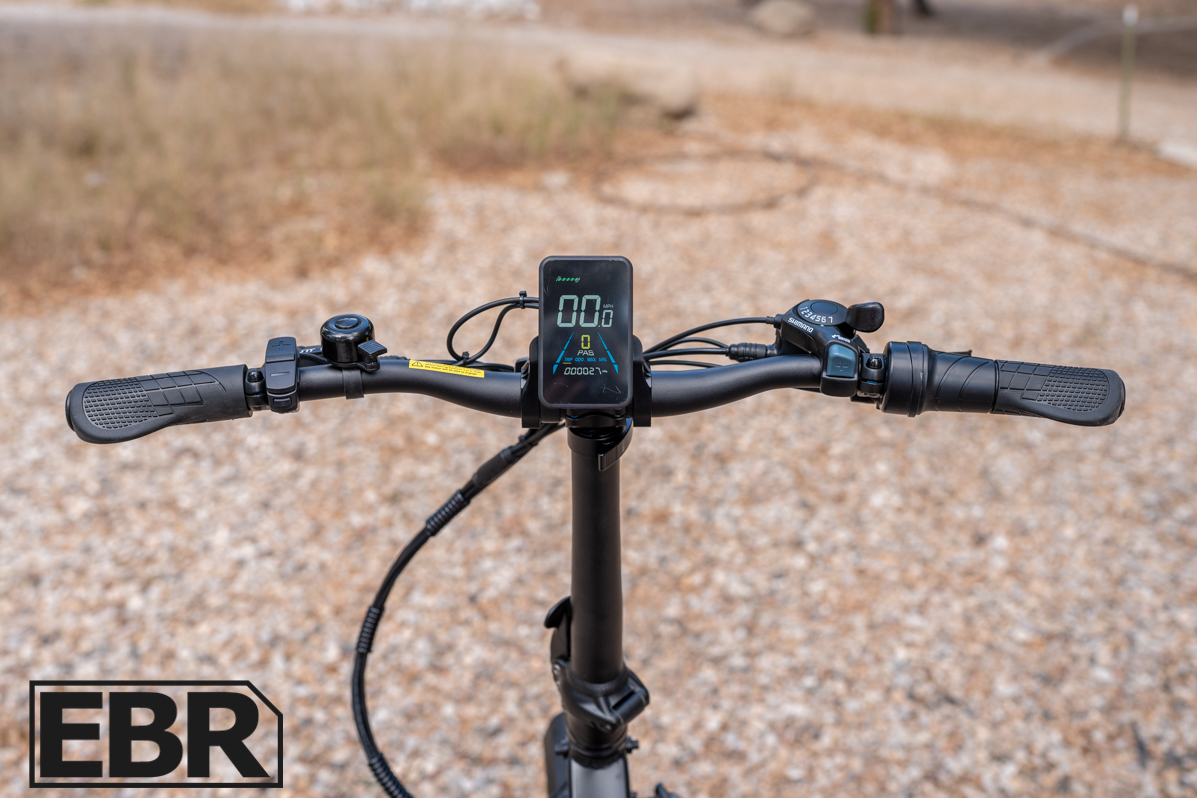
The F2 comes with a basic color LCD digital display positioned centrally on the handlebars and it’s easy to read without having to look down too much. You get your speed, battery indicator (5 bars), and current assist level at a glance.
As I’ve mentioned, I don’t love the 5-bar battery indicator, as it’s not super accurate. No, I don’t expect something better for this price – but I would love to see the industry as a whole move to accurate % readouts for even the least expensive bikes.
The display settings menu has some useful options. You can change between kilometers and miles, switch between Class 2 (20 mph limit) and Class 3 (25 mph limit) modes, adjust the number of PAS levels displayed (0–5 or 0–3), along with a few other options. Leave the wheel magnet count and password settings alone. I prefer riding the F2 in the 25 mph Class 3 setting and managing my own speed, as the pedal engagement feels more natural in the higher-speed setting.
Bike Model Options
GoTrax keeps the F2 lineup simple – the F2 is a one-size-fits-all frame designed to fit riders from 5’3″ to 6’3″. For some riders this is a limitation, but given that the adjustable saddle post and stem give the bike flexibility across a wide height range, it’s one I think most people can work around. We had riders from 5’4″ up to 6’3″ in the office on this bike, and everyone found a workable position.
I would love to see GoTrax offer a battery upgrade option. A 14Ah battery option would make the F2 much more compelling for longer commuters, and it wouldn’t require changing anything else about the bike. If you know you need more range than 40 miles in ECO mode provides, you might want to look at something with a larger battery.
Is the GoTrax F2 Worth Buying?
Short answer: yes – with context.
If you’re a commuter who needs something that folds into your car or apartment, an RV traveler who wants a fun errand runner, or someone who just hasn’t ridden a bike in a decade and wants to get back into it without spending $1,500 (or even $1,000) the GoTrax F2 is one of the few bikes under $700 I’d feel comfortable recommending.
GoTrax as a company also is a bit more trusting than other Amazon sellers. They’ve been around for quite a while now, and sell a lot of products other than e-bikes. While that’s not directly related to the quality of the F2, it does help improve your chances of getting customer service and parts down the road.




Reader Interactions