

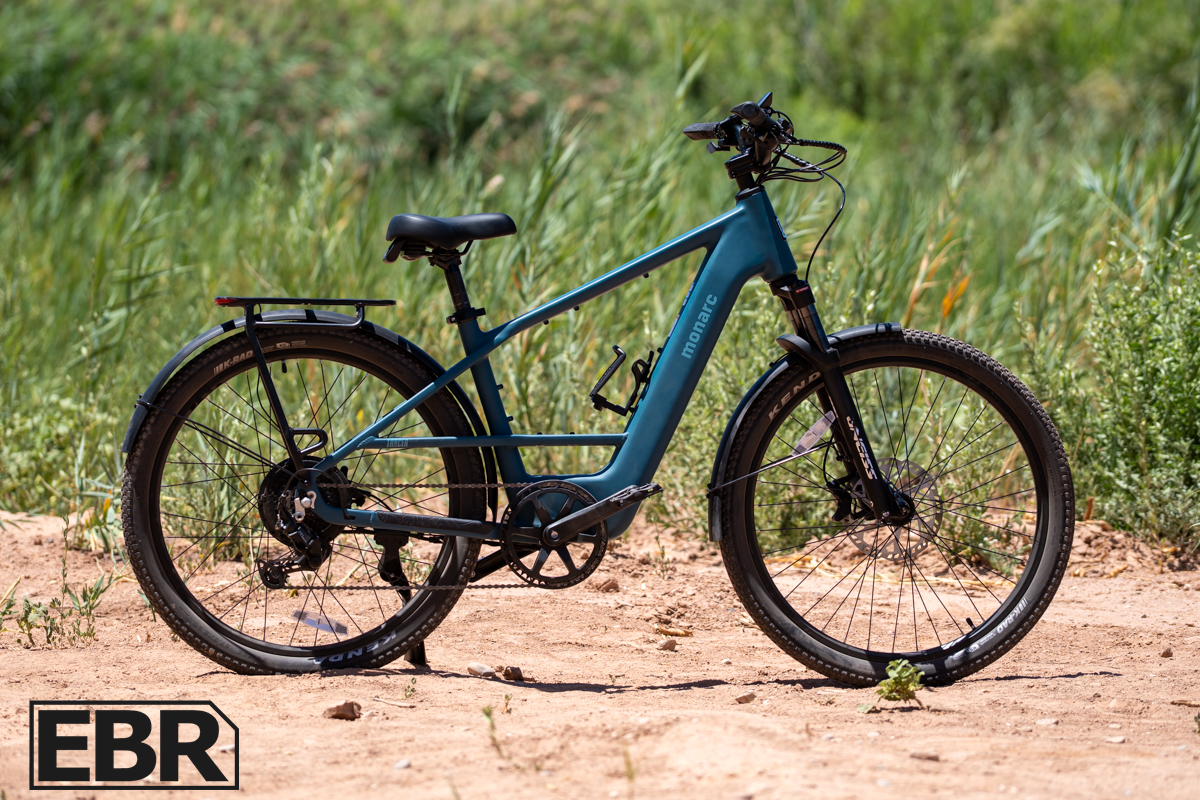
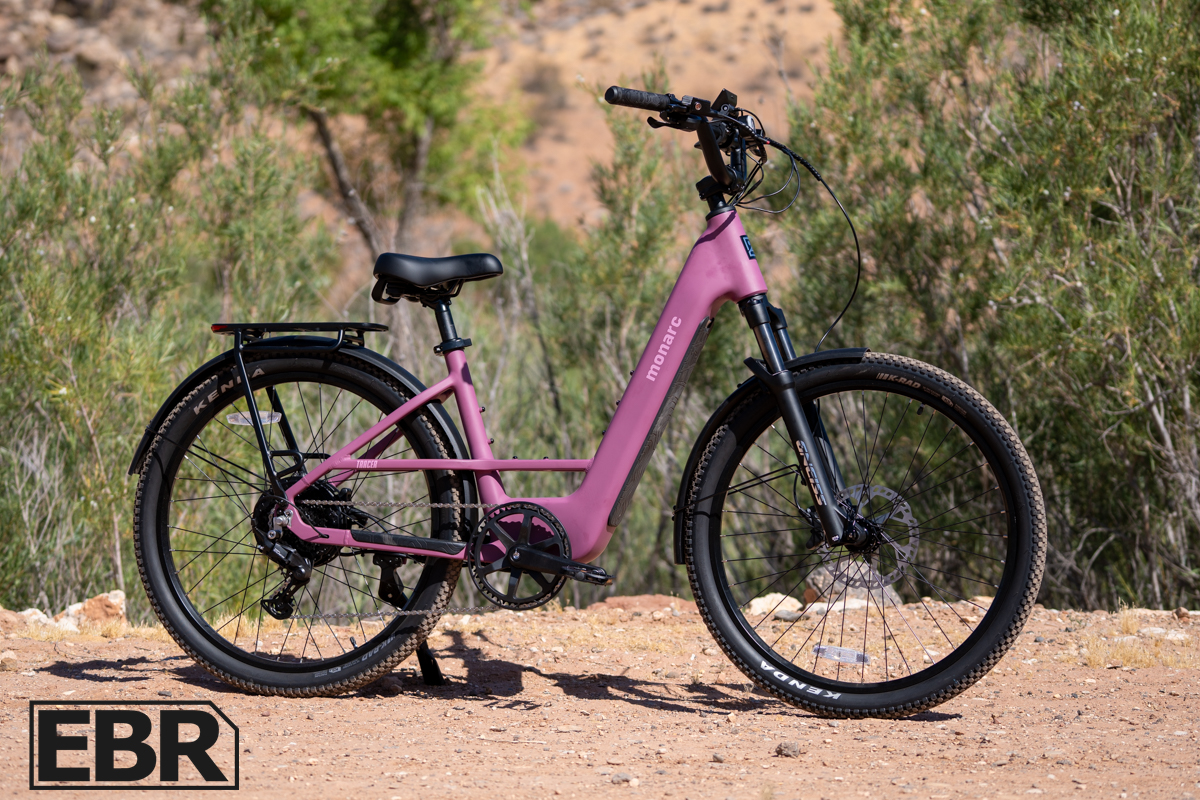
The Tracer is Monarc’s sub-$2,000 city commuter. On paper, the Tracer is one of the best specced bikes in this price range, with above average components in nearly every column. From the drivetrain (Shimano Cues 10-speed) and very capable reverse-arch front fork, to the fact that Monarc is shipping the bike with 2 (yes, TWO!) batteries at no extra costs, it’s pretty clear that Monarc is trying to win on value, quality, and price. Usually, you have to pick 2 of the three. However, with the backing and purchasing leverage of Lectric E-Bike’s ownership, Monarc maybe have just accomplished that goal.
The Tracer is one of, if not the best, specced commuter bikes under $2K to be released this year. It does have a few shortcomings, but overall is a fantastic bike for riders looking for a quality Class 3 commuter.
My Experience Riding the Bike
Ride Quality Score: 8 / 10
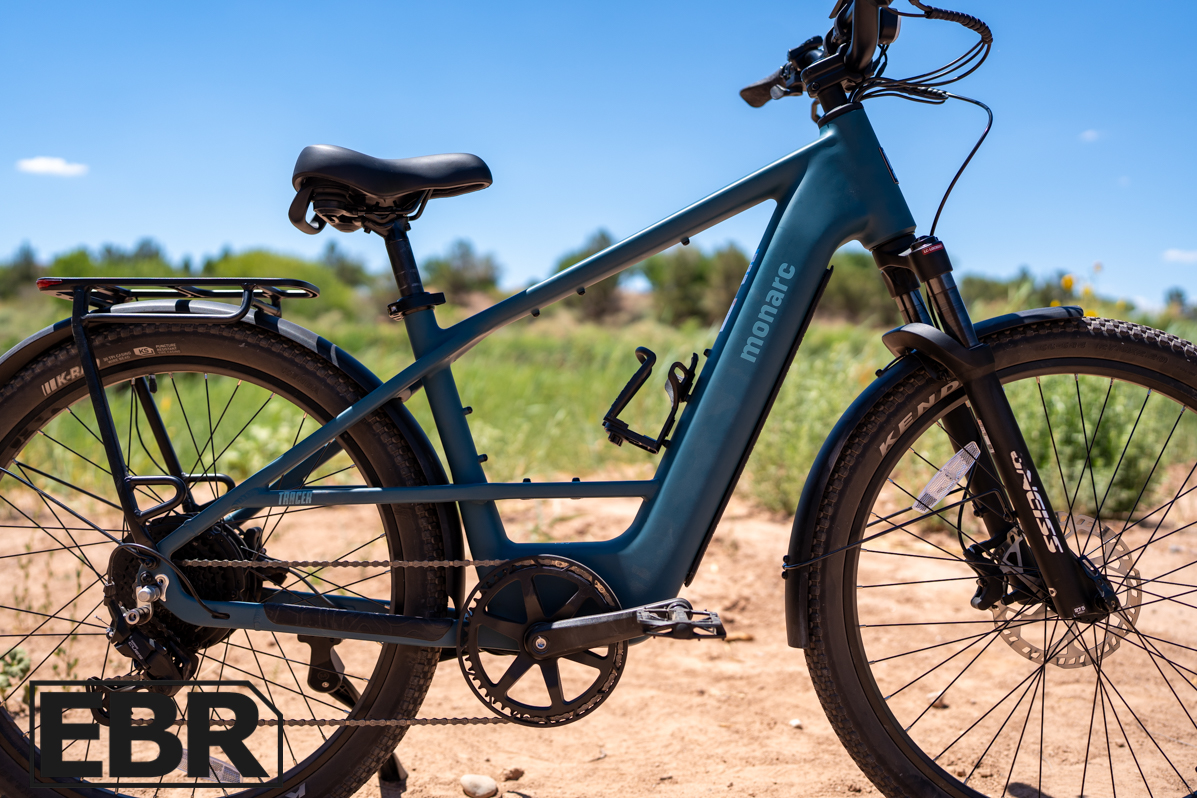
At 5’11” and 185 lbs, the Tracer felt like it was made for me. The Tracer only comes in one size, and attempts to fit riders from 5’4″ to 6’5″. Monarc nailed the geometry for the middle of that range. It rides like a medium-large bike; not overly aggressive, not painfully upright. The semi-forward position works well for both commuting and covering miles. Riders on the shorter end (under 5’3″) will find it slightly large; taller riders (above 6’1″) will feel the reach is a touch short.
One thing that contributes significantly to the handling feel is the fork. I’ve ridden a lot of bikes at this price point, and most of them have a fork you just kind of tolerate and always wish you had something better.
The Monarc Tracer’s Gneiss Reverse Arch fork is not one of those forks. With 34mm stanchions and a through-axle design, this fork is stiff, light, and responsive in a way you simply don’t expect from a $1,899 commuter. I called it one of the best spring forks I’ve ever tested at any price, and I stand by that.
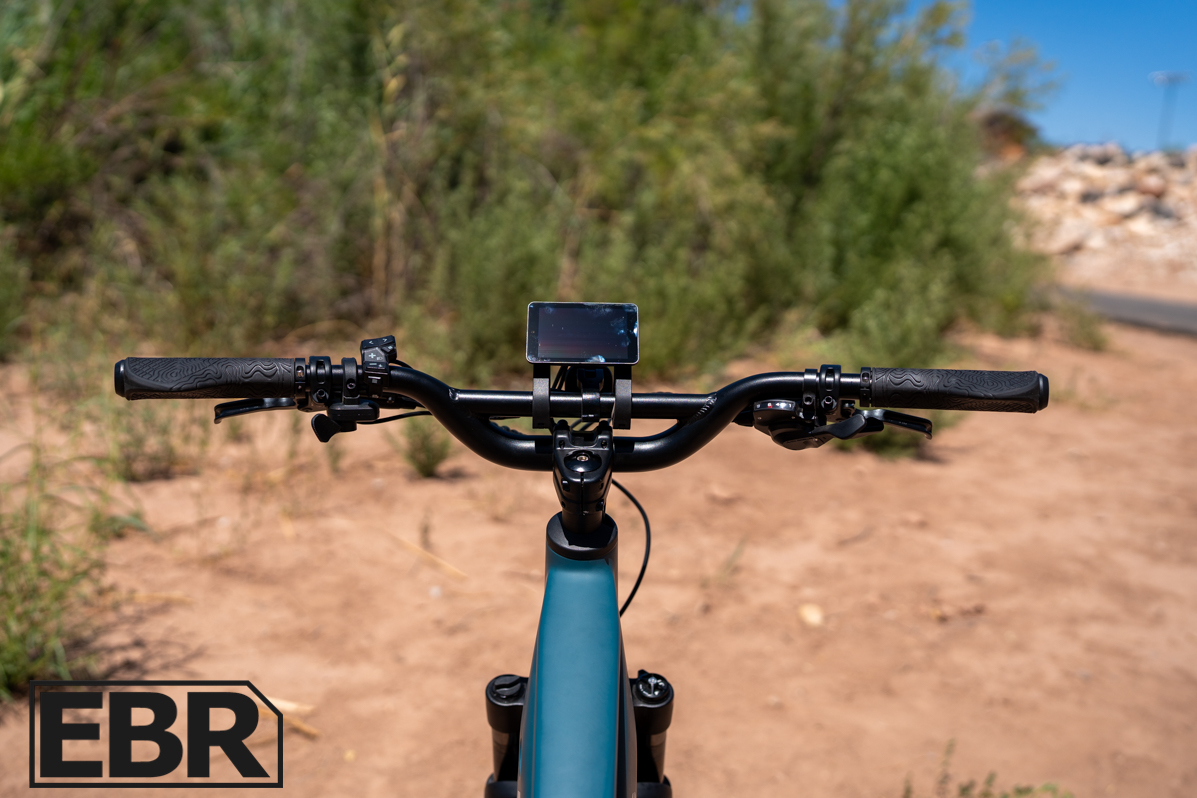
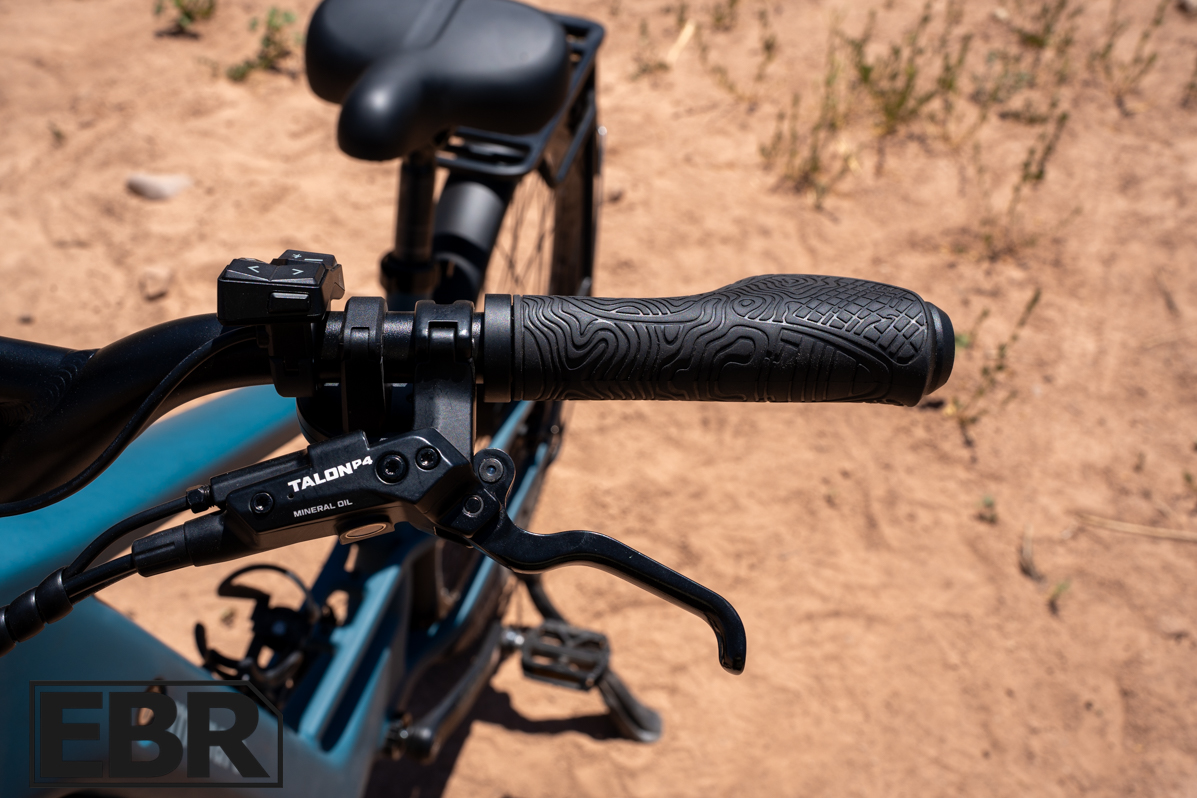
Handling-wise, the 27.5″ x 2.1″ Kenda tires contribute to a feel I’d describe as zippy and nimble. Having recently reviewed the Marker (Monarc’s fat tire version), the Tracer felt light, was quick to respond on trails, and easy to turn on corners. The handlebars on the step-over have a modest 10-15 degree sweep-back angle, keeping your wrists in a natural position without going full cruiser. The ergonomic lock-on grips are comfortable and look sharp.
The one area worth flagging for fit is the stem. It’s not adjustable. There’s no riser mechanism, no adjustable angle. For most riders in the 5’5″ to 6’1″ sweet spot, this won’t matter. But if you’re at 6’3″ with long arms, the reach will feel a touch short. The step-thru version has a much more pronounced swept-back handlebar with additional rise, giving it a more upright riding character. Both are well-executed for their intended rider.
Power (Motor & Battery)
Power Score: 9 / 10
 |
 |
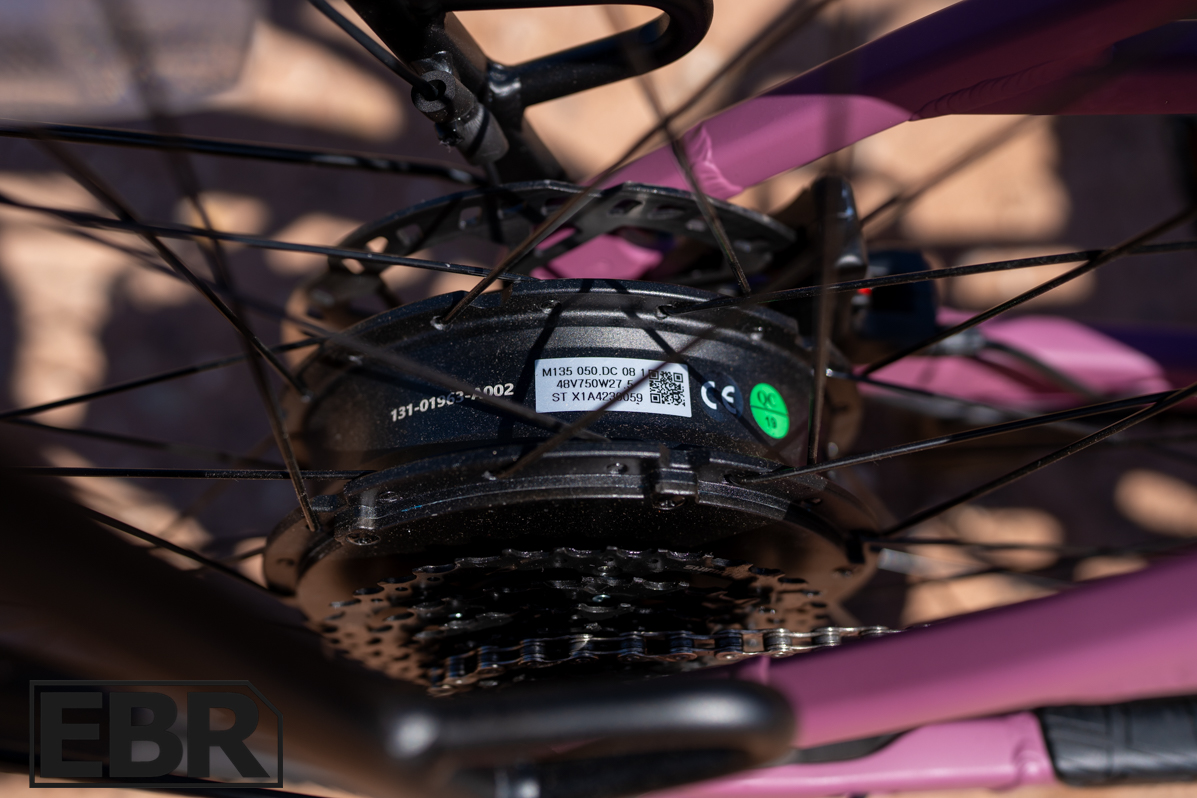
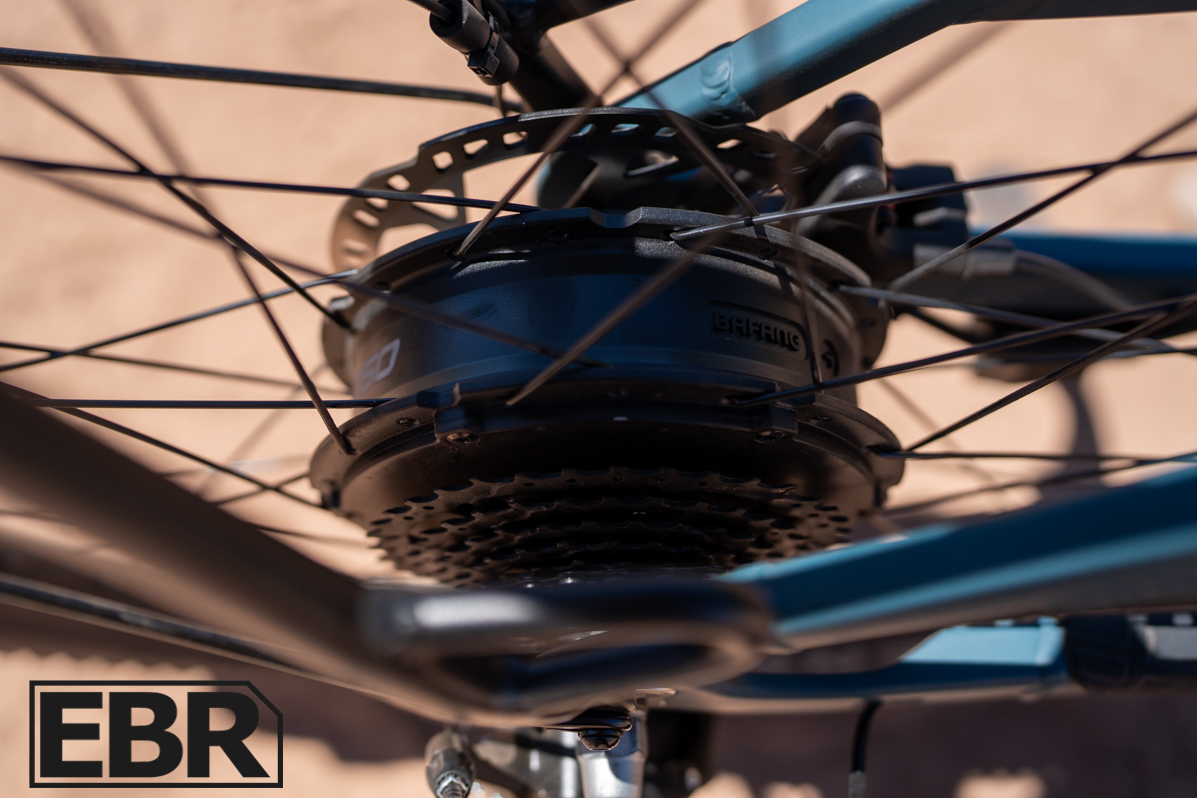
The heart of the Tracer is a 750W Bafang B750 rear hub motor – and it’s powerful. With a 1,638W peak output and 85Nm of torque, the Tracer raced up hills and was one of the fastest on our new hill test.
In my 0-to-20 mph throttle test, it took about 8 seconds to hit 20 mph without pedaling. In pedal-assist Class 3 mode, I was at 20 mph in roughly the same time and at 28 mph in about 10-11 seconds. Peppy is the word I keep coming back to.
The motor isn’t just powerful though – it’s also a very natural feeling. Bafang and Monarc did a great job integrating together all the electrical components. The 30-amp CAN protocol controller communicates in real-time with all the components, making the system’s power delivery incredibly smooth and predictable. There’s no surge when the motor engages, and no unnatural overrun when you stop. Pedaling is fluid and natural – more common on mid-drives than hub motors. The dual torque-and-cadence sensor setup contributes here; with the bike in torque mode, assist scales with how hard you’re actually pedaling.
The battery is a 48V, 15Ah unit – 720Wh. It’s also UL2271 certified, which matters more than ever given the fire safety conversations happening around cheap, uncertified batteries. Monarc includes a 5-amp fast charger as standard, a meaningful detail since most bikes at this price still ship with a 2A charger.
And then there’s the headline: every Tracer comes with two of these 720Wh batteries. At roughly $500 a battery on the open market, that’s effectively a $500 bonus wrapped into the purchase price. I have to be honest – this is one of the more aggressive value plays I’ve seen in the commuter category in a while.
Range / Battery
Range Score: 8.5 / 10
Min Assist: 67 Miles
Max Assist: 35 Miles
In our range test at max power (Class 3, Boost mode), the Tracer covered 35 miles before depleting the battery. On ECO mode (Cruise setting), we got 67 miles – a result that actually exceeded Monarc’s stated 60-mile estimate.
The 720Wh battery uses some of the better LG cells (MG 52). The MG 52 cells are known for being powerful, so I was impressed that Monarc was also to give the bike great range to go alongside that power.
At 750W nominal, the motor-to-battery ratio is favorable; and the 27.5″ x 2.1″ Kenda tires have lower rolling resistance than the fat tires on the Marker (same motor), making the Tracer noticeably more efficient. And of course: you have a second 720Wh battery sitting at home. For most commuters, that means you simply never run out of range.
Components
Components Score: 8.5 / 10
 |
 |
 |
 |
I’ll say it plainly: the Tracer is spec’d at a level you don’t normally see under $2,000. When you line it up even against some of the best bikes in the category, the Tracer wins almost every spec comparison, and not just on paper but in performance as well.
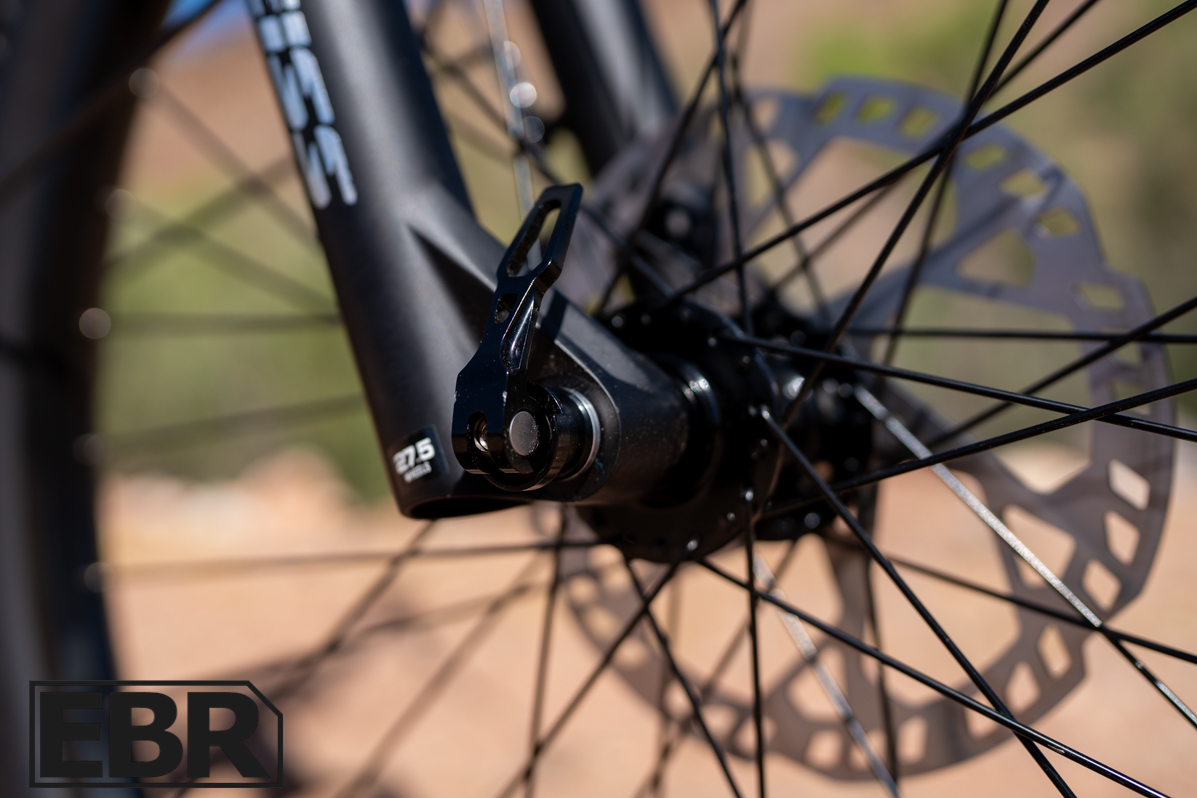
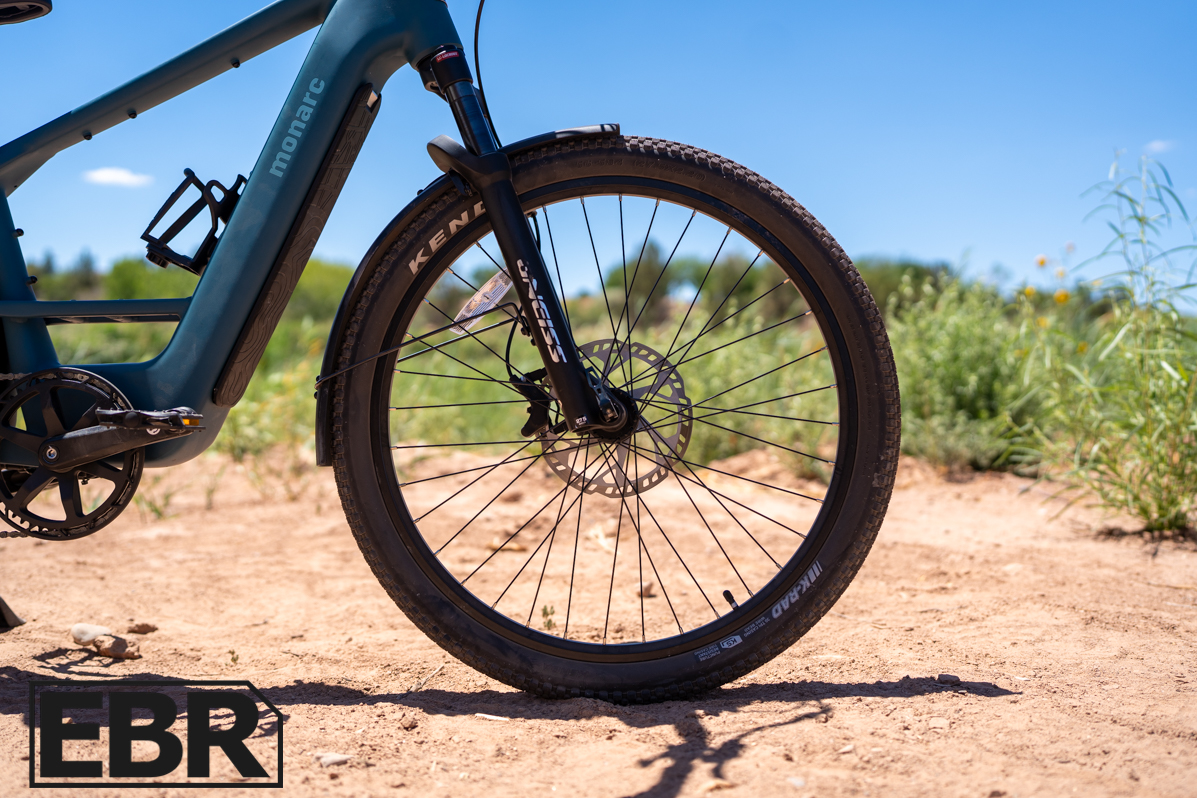
The Gneiss Reverse Arch fork with 34mm stanchions is fantastic. The reverse arch design allows Monarc to build a fork that is stiffer and lighter at the same time. The stiffer stanchions track better, flex less, and yet are still very plush – they both keep your front wheel on the ground for improved traction while also providing great cushioning on bumps. The through-axle with quick-release also gives you the stiffness benefits of a thru-axle without sacrificing easy wheel removal for flat fixes.
The Star Union Talon P4 four-piston hydraulic disc brakes are also better than expected. I know that Star Union is not as name-brand as Tektro, Shimano, or Sram, but we have been very impressed with them. They come with a 203mm front rotor and 180mm rear rotor, both at 2.2mm thick, and showed zero fade in our repeated high-speed brake testing. The lever feel is firm and predictable. And thank you, Monarc, for speccing a four-piston setup when the competition is shipping two.
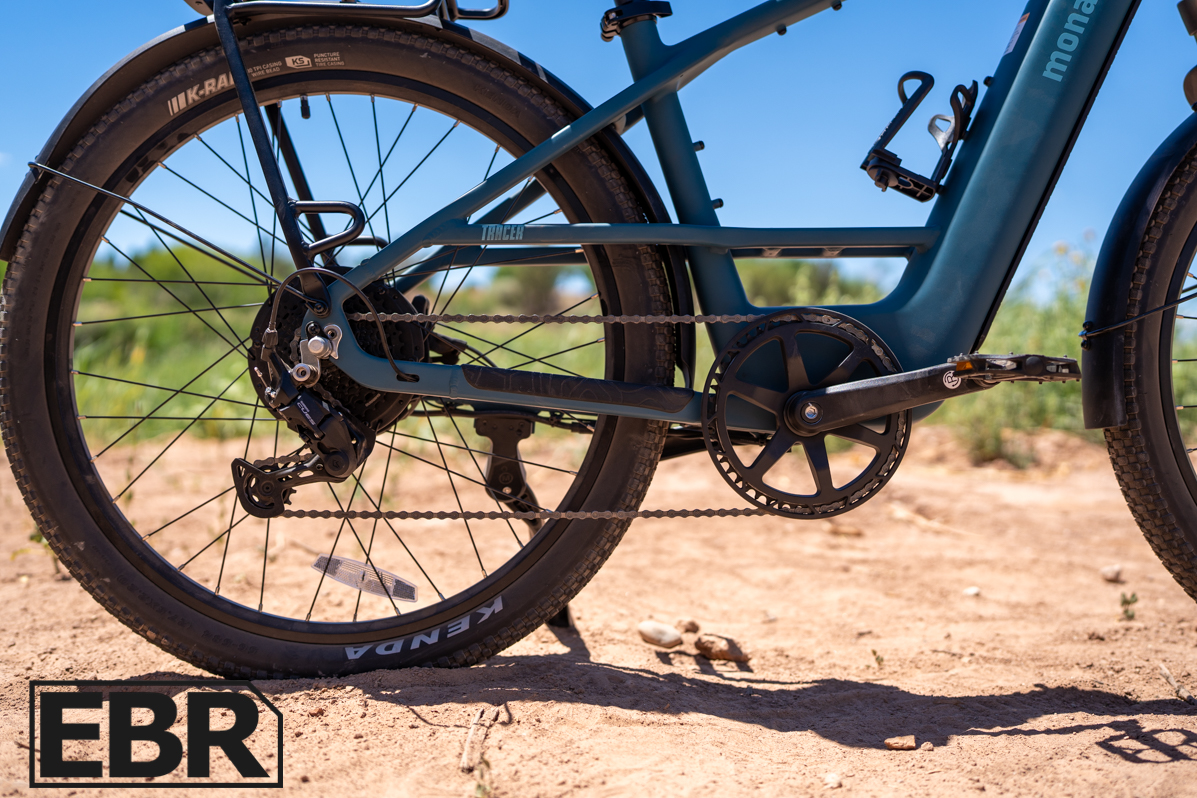
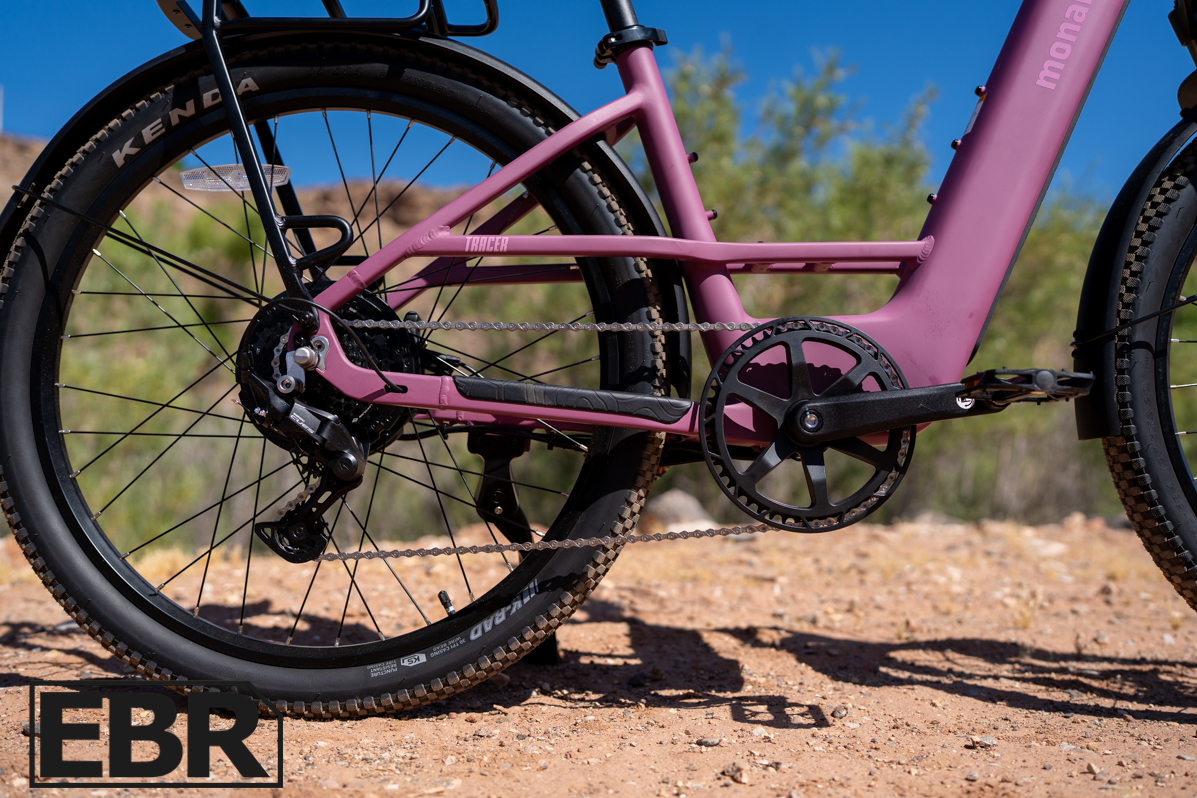
The drivetrain is Shimano Cues 9-speed with a 48T chainring and an 11-36T cassette. Cues sits a tier above the Shimano Acera you typically find on sub-$2,000 commuters. It’s more durable, easier to set up and maintain, and has crisper shifting. The 11-36T cassette gives you enough low-end range to handle even super steep hills, and the 48T chainring means no ghost pedaling at Class 3 speeds. Shifters are rapid-fire trigger style, which I prefer over thumb shifters for the lighter touch and better intuition in traffic.
Rolling on Kenda 27.5″ x 2.1″ tires with a mixed knobby tread, the Tracer has enough grip for packed gravel and light dirt without paying a rolling resistance penalty on pavement — exactly right for a commuter that occasionally wanders off the bike path.
The bike ships fully loaded with a rear rack (59 lb rated), front and rear fenders, and integrated lighting with turn signals, so you’re ready to commute without buying a single accessory. Water bottle mounts are also on the frame. One thing I’d like to see in a future version: a suspension seatpost option. The fork handles bumps well, but a suspension post would improve the overall comfort of the bike and make it feel even more plush than it already does.
My one mechanic’s complaint: Monarc routed the cables internally through the headset, which looks clean but makes fork servicing and cable replacement significantly more involved. For most riders who never touch the mechanics, this won’t matter. For shops doing service work, it’ll add labor time. At least the fork is significantly better than average, meaning you likely won’t need to worry about those cables any time soon.
Overall, the component package punches well above the $1,899 price point. The frame stiffness, fork quality, and brake spec all signal that Monarc is leveraging Lectric’s buying power to deliver something impressive in this segment.
Screen / User Interface / App
Screen / App Score: 7.5 / 10
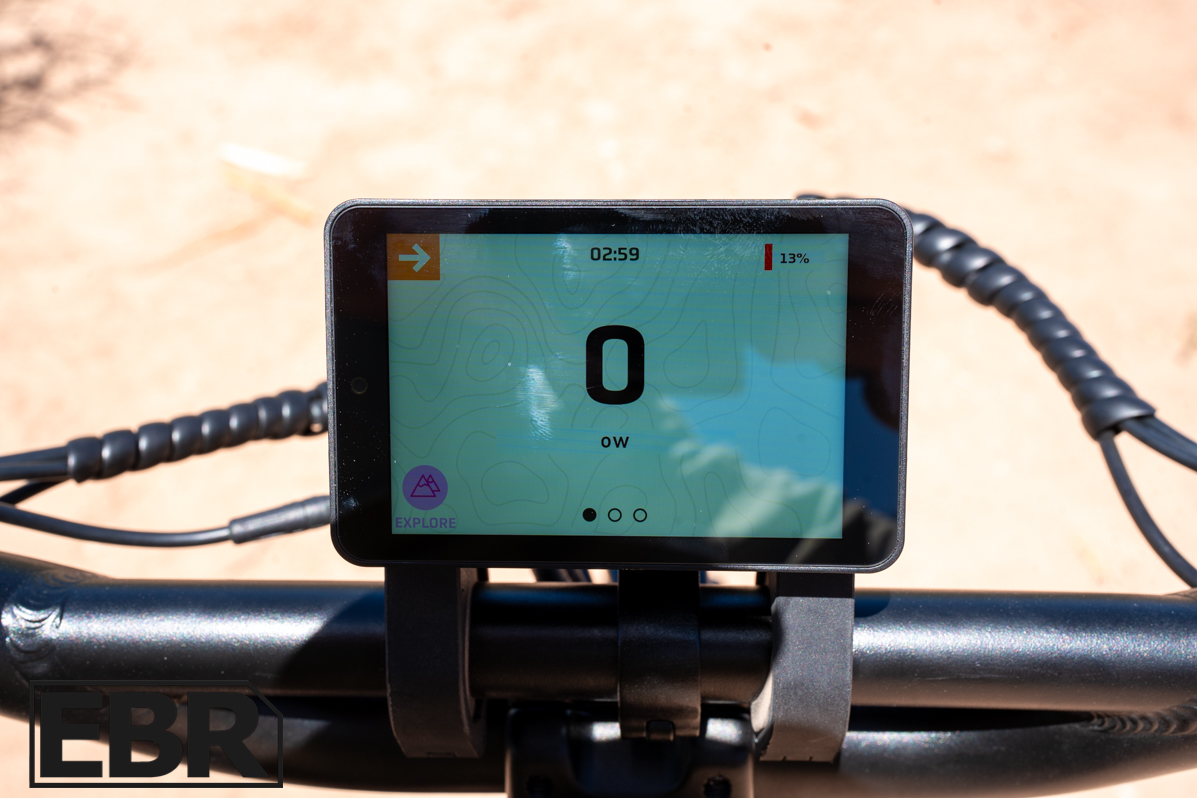
The Tracer’s 3.5″ color touchscreen is also a nice touch (pun intended). The default view shows speed, wattage, battery percentage, and time. Swipe right and you get trip distance, odometer, voltage, cadence, and trip time. There’s also an estimated range readout that updates dynamically as you cycle through assist levels.
The battery readout is a true percentage, not a 10% increment or bar display. You can set the bike to Class 1, 2, or 3 directly from the display menu; exactly how it should work. The turn signals are controlled from the left control pod: push once to activate, push again to deactivate. Integrated front and rear lighting rounds out the safety package.
Dig into the advanced settings and you get motor tuning that most bikes send you to a phone app to access. From the display, you can adjust torque output, assistance level boost, and pedal response per assist level. There’s also a battery charge limit setting that lets you cap charging at 80% or 50% to extend battery cycle life – a smart feature, especially given you have two batteries.
While the Monarc app is still in development at time of launch, it’s nice that the display already includes the motor tuning capabilities, and the firmware infrastructure is in place. When the app arrives, the foundation is there. Check back with us once it’s live.
We also hope to be testing some of the more advanced features like the tire pressure monitoring system (TPMS), the smart helmet, and rear-vehicle alert system.
Bike Model Options
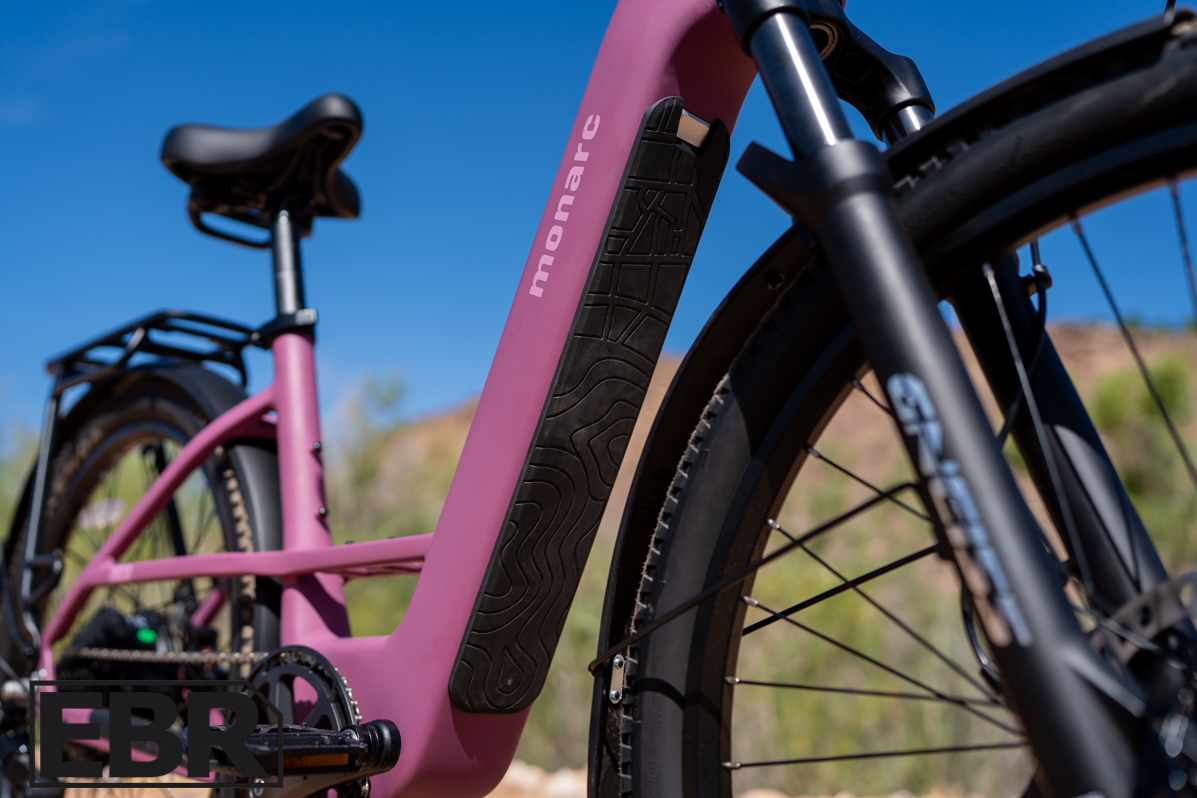
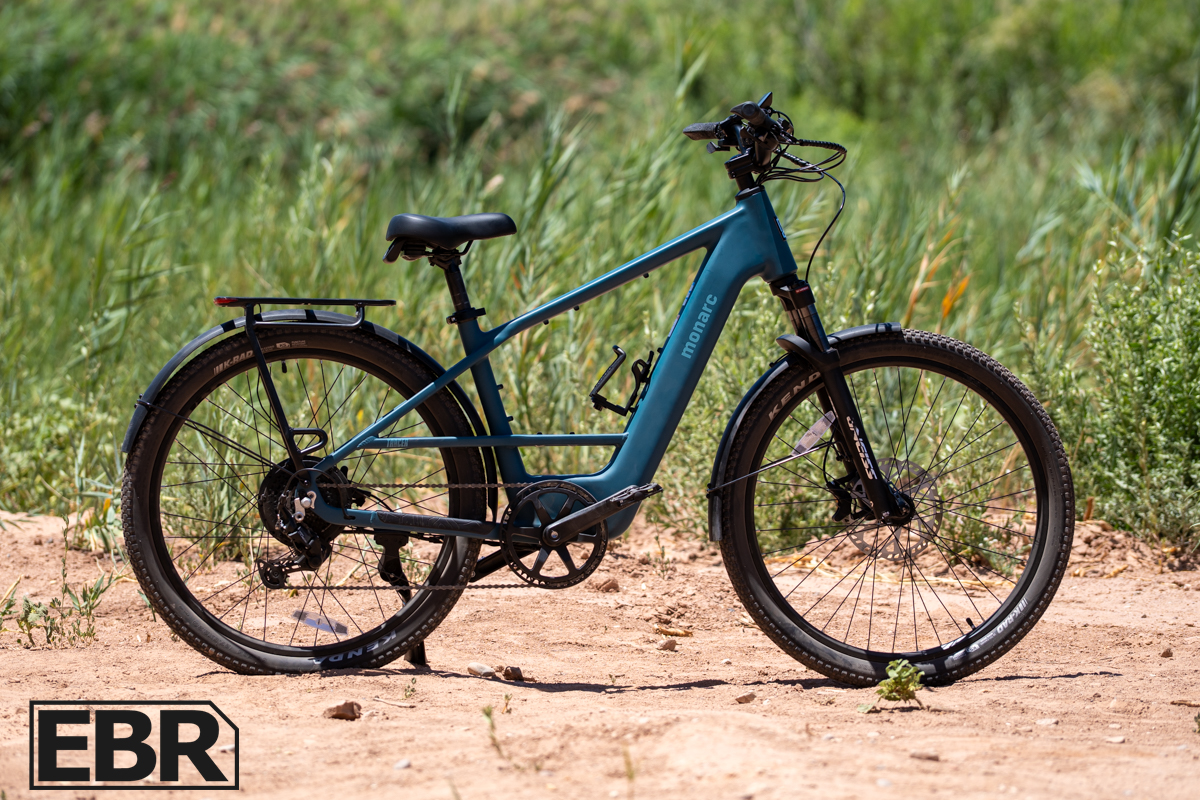
The Tracer has 4 different color options. The Step-Over comes in Taconite (matte black) and Superior (steel blue-grey). The Step-Thru comes in Birchwood (white) and Juneberry (matte purple – my personal favorite). All four finishes have a clean, matte quality that make the bike look expensive and high-quality.
The Tracer is available in two frame styles: Step-Over and Step-Thru. Each comes in one size – Monarc’s deliberate choice to keep costs down. The Step-Over fits riders from 5’4″ to 6’5″ with a 28″ standover height. The Step-Thru fits 5’2″ to 6’3″ with a much lower 20″ standover, making it easier for riders who want easy mount and dismount.
Is the Bike Worth Buying?
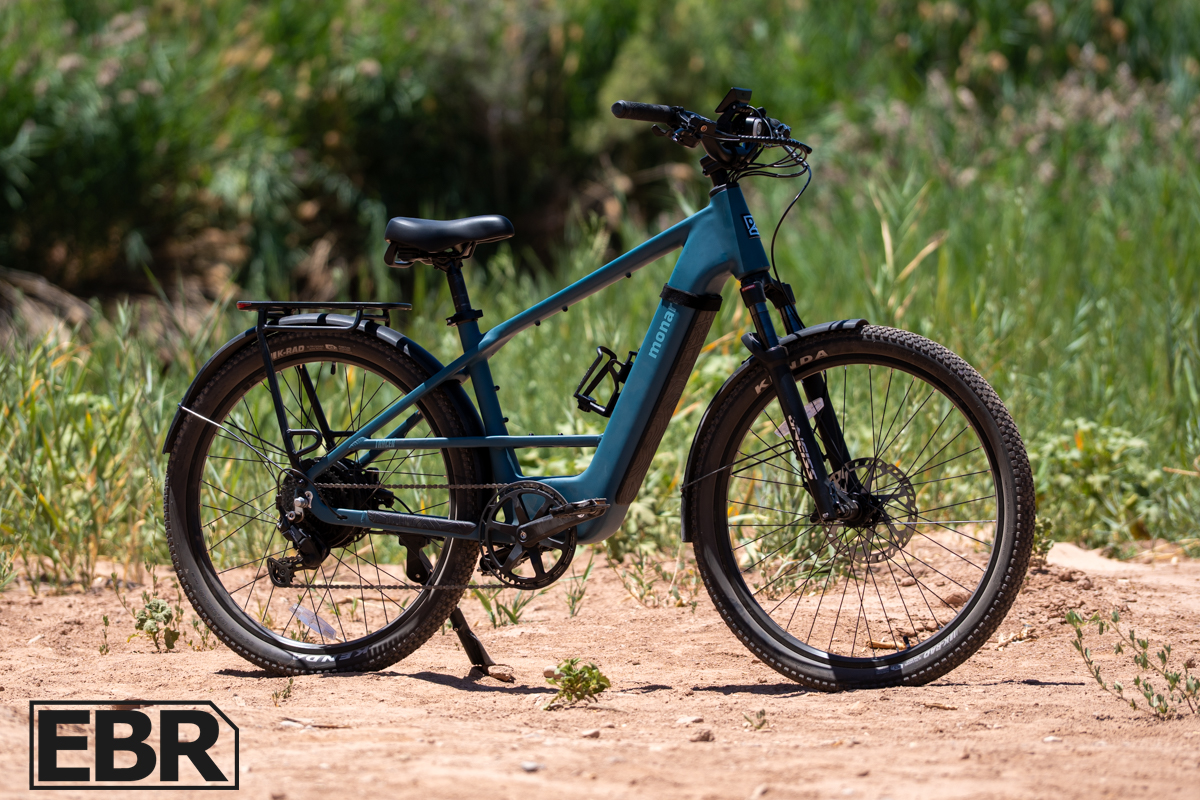
The Tracer walks (rides?) into the sub-$2,000 Class 3 commuter category and immediately earns a spot on our top recommended list, something that we don’t do often (if ever).
Part of that is the fact that Monarc is backed by the ownership of Lectric. They prioritize customer support (Monarc has already hired 30 support staff reps before even selling a single bike), and they leverage the buying power of a much larger brand – meaning you get a great deal on a great bike:
- Shimano Cues drivetrain
- Four-piston brakes with a 203mm rotor
- Reverse-arch fork with 34mm stanchions
- CAN protocol motor system that feels as smooth as the top models in this price range
- Two 720Wh batteries in the box.
At $1,899, this is one of the most impressive value propositions reviewed this year.




Reader Interactions