

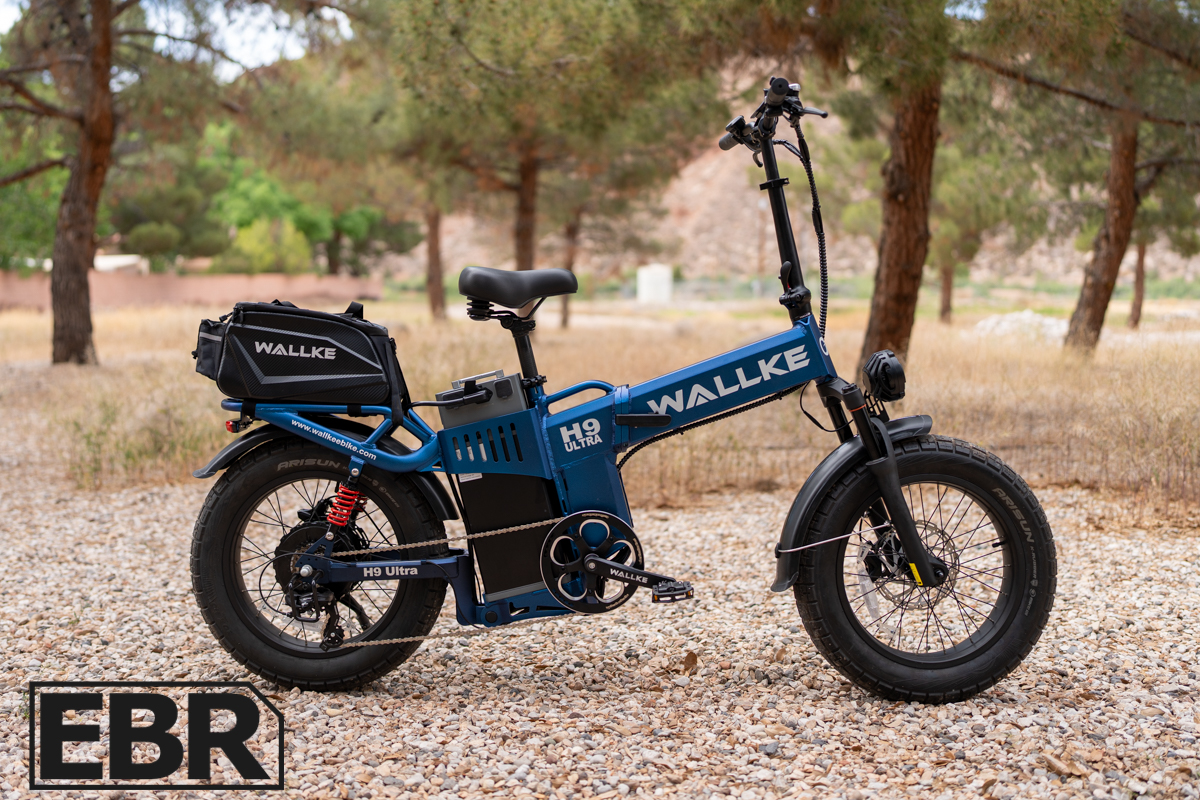
The Wallke H9 Ultra isn’t trying to be another entry in the crowded budget fat tire e-bike arms race, and that alone made me want to ride it. In a market where half the brands are chasing the same spec sheet, 750W nominal motor, 48V 20Ah battery, hydraulic brakes, call it a day, the H9 Ultra shows up with a 2000W rear hub motor peaking at 4000W, a 2640Wh energy storage battery that doubles as a portable power station, and a patented off-grid power system that can run your camp gear, charge your devices, or keep your lights on when the grid goes down. The numbers alone are hard to ignore.
Outside of the Mokwheel Basalt, this is the only other truly dedicated off-grid power station e-bike I’ve tested, and that’s a short list for a reason, it’s a genuinely difficult category to execute well. You’re not just building an e-bike, you’re engineering a mobile power system that also has to ride like something worth taking out every day. That’s a different problem than slapping a big motor on a fat tire frame and calling it an adventure bike.
So when the H9 Ultra showed up, I wasn’t approaching it with the usual checklist. I was curious, genuinely curious, about whether Wallke had actually solved that problem, or just marketed their way around it.
My Experience Riding The Wallke H9 Ultra E-Bike
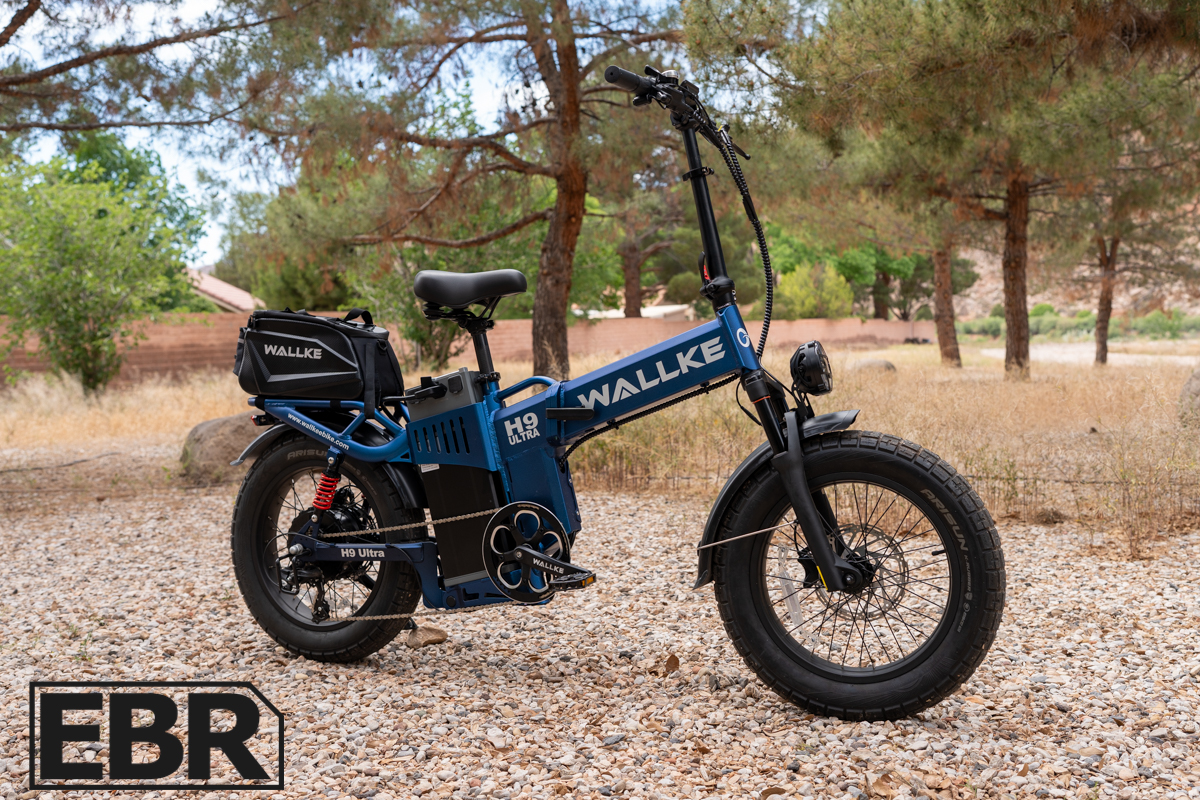
The first thing that hits you with the H9 Ultra is that everything is just more. More battery, more wheelbase at a substantial 53 inches, and more weight. Our test unit came in at 117 lbs, and that figure is immediately felt the moment you try to move it, whether that’s rolling it in and out of the garage or realizing very quickly that your standard bike rack isn’t going to cut it.
On the road, the H9 Ultra is punchy in a way that catches you off guard. Twisting the throttle from a dead stop to 20 mph is genuinely fast, though you can feather it for a more gradual pull if you prefer. Because the bike uses a torque sensor rather than a cadence sensor, pedaling softer and dialing down the assist level gives you a more controlled, natural feel around town. The tradeoff is that above 18-19 mph you’ll find yourself ghost pedaling, which makes sense for a Class 2 setup, the gearing simply can’t provide the resistance the torque sensor needs to deliver power beyond that point, so throttle becomes your only tool past that threshold.
If you want to push further, the display can be unlocked to raise the speed ceiling, and in our testing the H9 Ultra topped out at a real-world 37.5 mph. What surprised me was how composed it felt at that speed. I’d attribute that largely to the sheer weight keeping it planted and that long 53 inch wheelbase doing its job. One small quirk worth mentioning, the bike requires the key to remain in the battery while riding, so you’ll have it dangling as you go, which you’ll be reminded of every time you hit a bump.
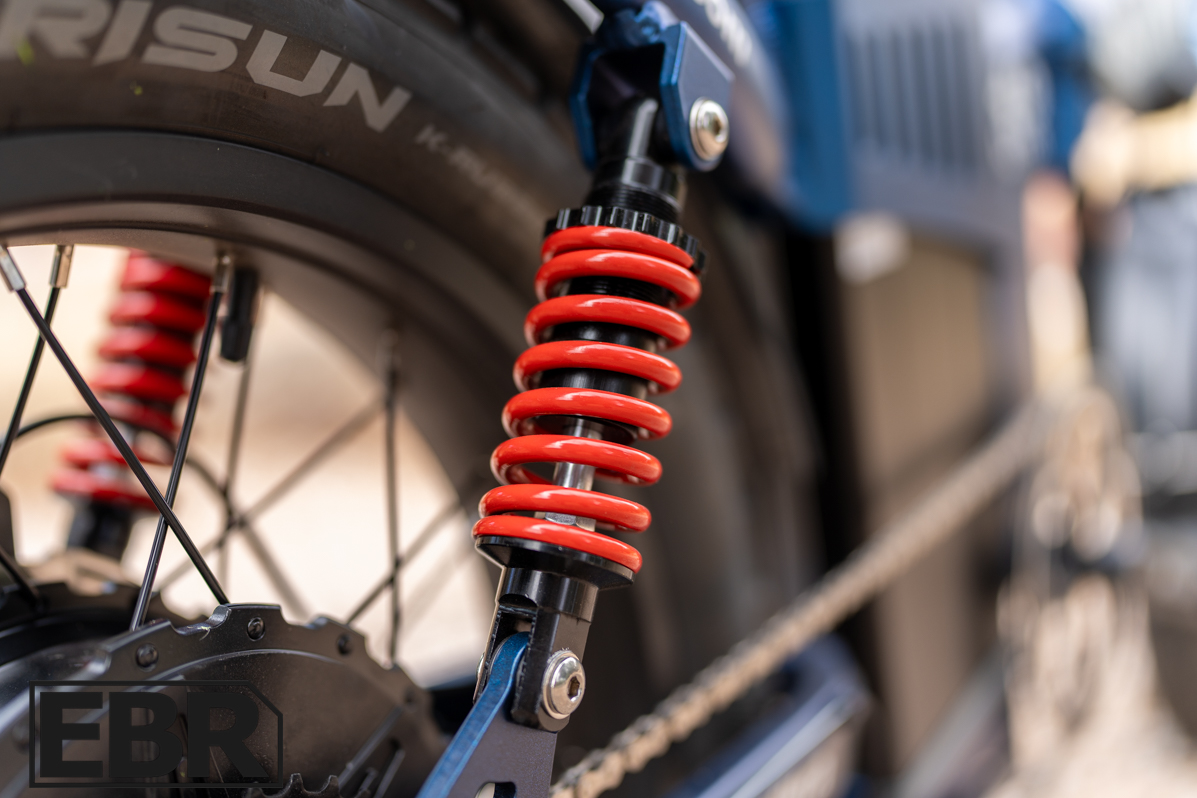
Speaking of bumps, the H9 Ultra has a front air suspension fork, which is a genuinely nice touch at this price point, and coil springs on either side of the rear wheel. On smooth roads and hardpack the bike handles well, but push it onto chunkier off-road terrain and the rear suspension reminds you of its limitations. Slow down for the rough stuff and it’s perfectly manageable, you just wouldn’t want to be hammering over chunky gravel at 35 mph expecting a plush ride.
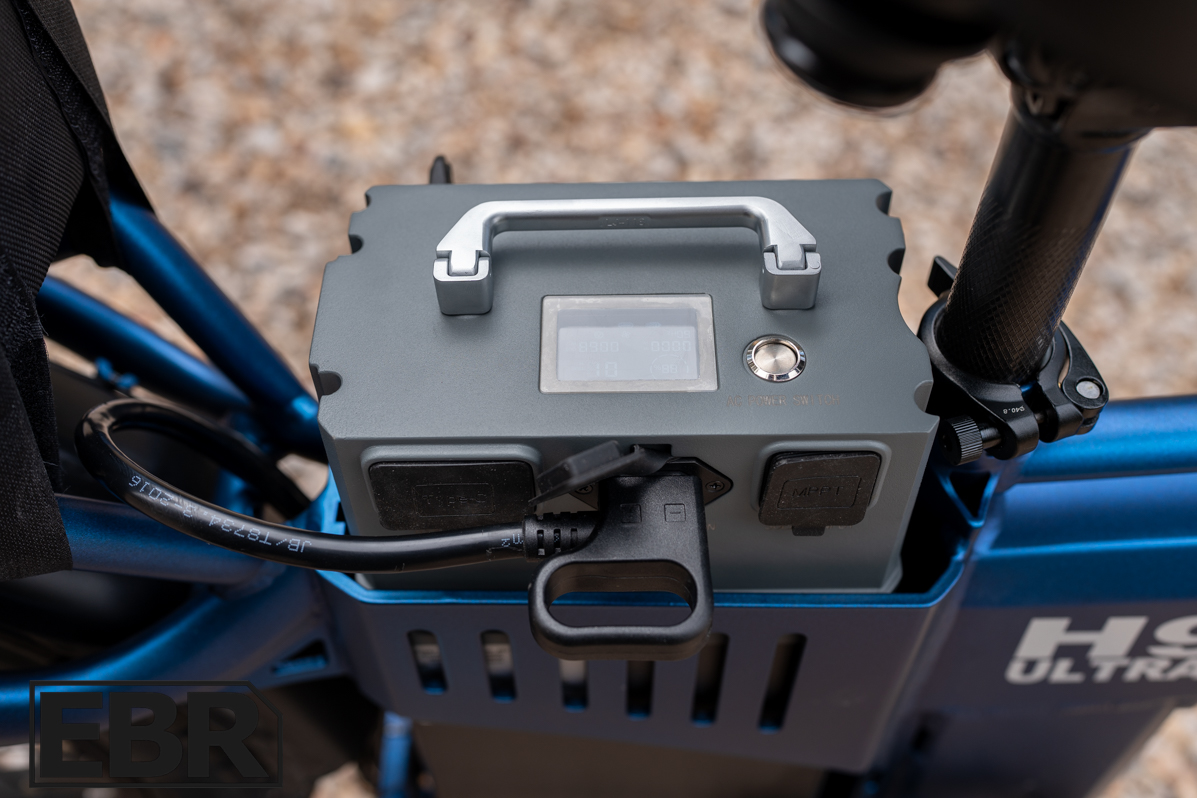
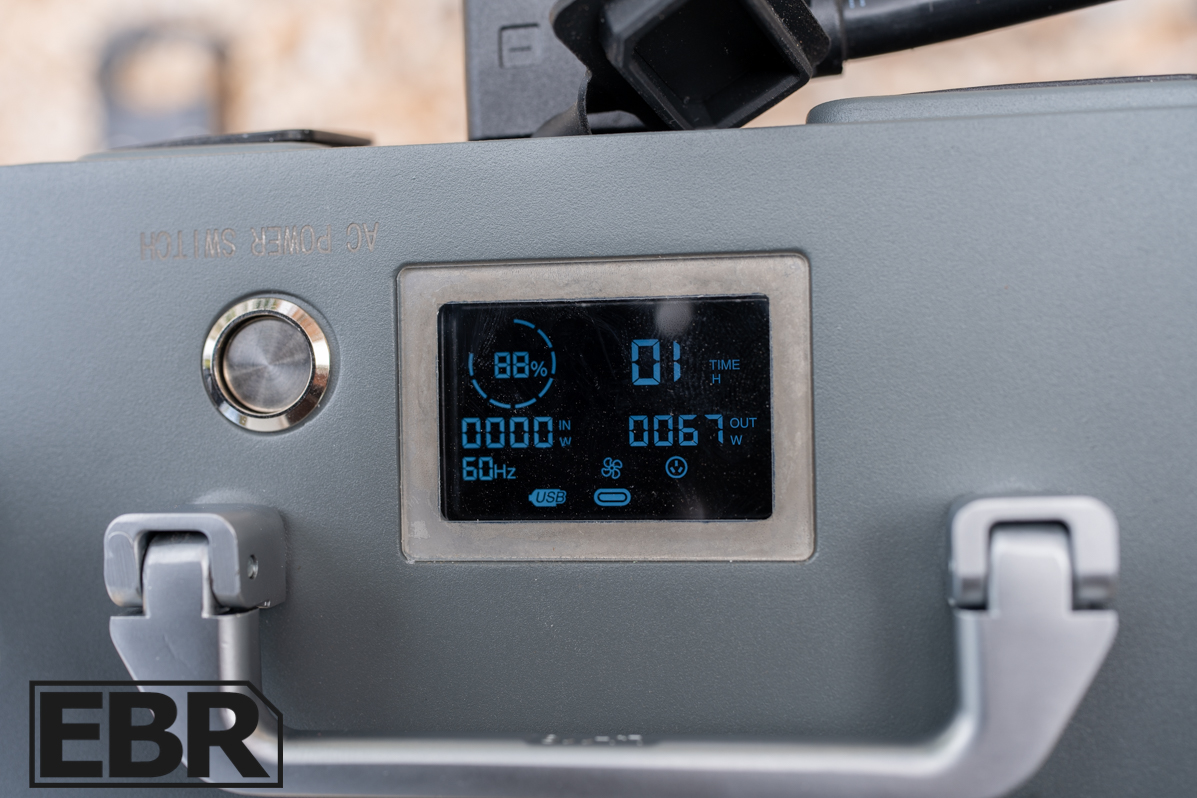
The real headline though is the off-grid power station capability, and it earns the attention. The battery pumps out a rated 600W of continuous power, peaking at 700W, through a standard US 110V outlet, no separate charger or inverter required, just plug straight into the bike.
Out on the wide open public lands of southern Utah, I couldn’t help but think about pairing that with a 130 mile maximum range and a 400 lb payload capacity, the H9 Ultra starts looking less like an e-bike and more like a self-powered base camp. Head 20 miles into the backcountry loaded with gear, shoot photos, edit on a laptop, keep everything charged, and still have plenty of battery to ride home. We’ve seen this concept before with the Mokwheel, but the H9 Ultra pushes the output numbers further and removes the friction of needing extra hardware to make it work.
For riders who want one bike that handles the morning commute and the weekend adventure without needing a generator at camp, the H9 Ultra makes a pretty strong argument, assuming you have somewhere to store 117 lbs of it.
Range
Estimated Range (from Wallke): Up to 130 miles
Wallke rates the H9 Ultra at 80 to 130 miles depending on the configuration you choose. The standard 55Ah battery sits at the lower end of that window, while the 77Ah dual battery setup, combining the 55Ah rear battery with an add-on 22Ah front battery, pushes toward the top of that range. As always, how you actually ride plays a significant role in what you’ll realistically see. Rider weight, terrain, speed, and how aggressively you use the throttle will all pull that number in different directions.
What does help that number is the torque sensor. Because it reads actual pedaling force rather than just detecting rotation, it delivers power more efficiently and only when it’s genuinely needed, which translates to less wasted energy and more miles per charge compared to a cadence sensor setup.
We didn’t conduct a formal range test on the H9 Ultra, but here’s what I can tell you, after two hours of throttling around town at nearly 28 to 35 mph for the majority of that time, I had only burned through about 14% of the battery. So while we’ll let you do the math on that one, it’s safe to say the H9 Ultra is loaded for range in a way that very few e-bikes at any price point can claim.
Power (Motor & Battery)
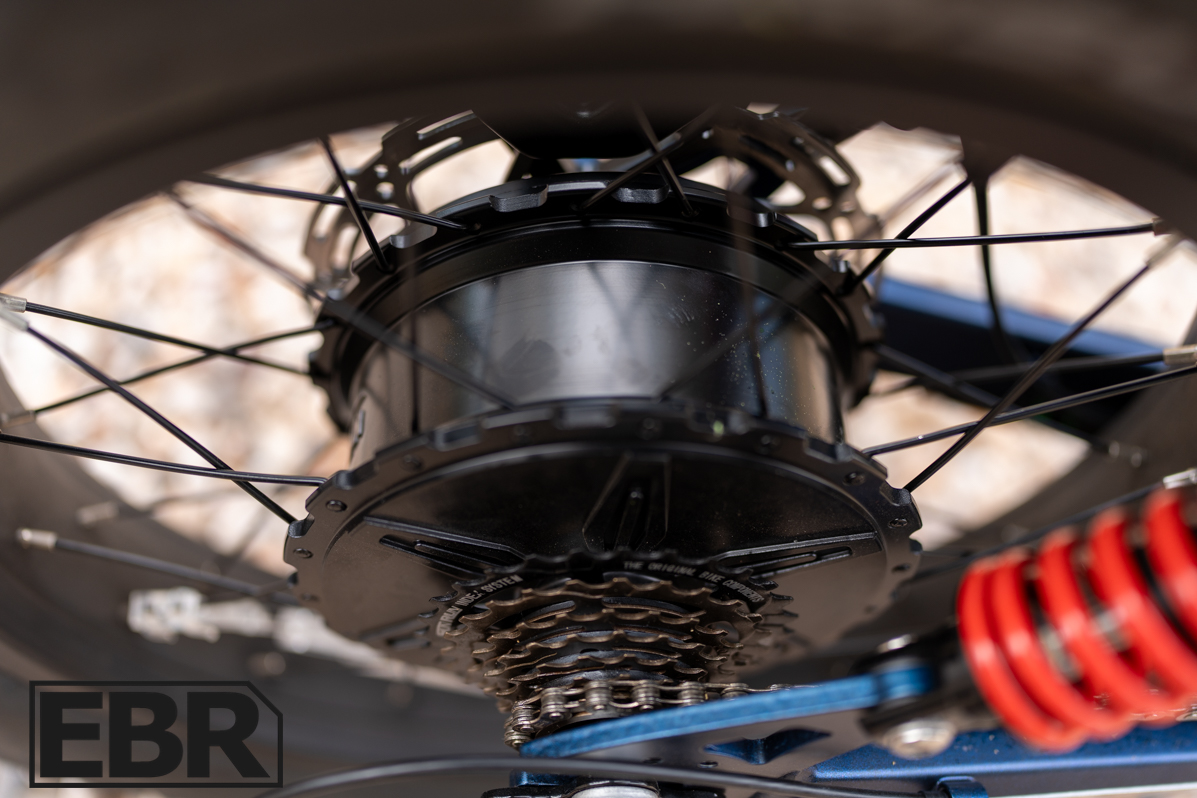
The H9 Ultra is built around a 48V 2000W rear hub motor that peaks at 4000W, produces 105Nm of torque, and is rated to climb gradients of up to 45 degrees.
Oh, and top speed? The top speed sits at 37 mph, though as noted in our ride experience, we confirmed 37.5 mph in real world testing. That is a substantial power package for a single motor setup, and it shows in how the bike accelerates. So, yeah, we are working with some serious muscle here.
The bike ships as a Class 2 e-bike, meaning it’s street legal in most places right out of the box with a 20 mph top speed.
For those who want more, the display allows you to unlock the speed limit incrementally, (21, 22, 23 mph and so on), all the way up to 45 mph, though 37.5 mph was the highest we achieved in testing. It is worth noting that anything beyond roughly 19 mph is throttle territory.The Shimano 7-speed gearing works great in the 0-20 mph range, but past that point you’ll find yourself ghost pedaling without enough resistance to give the torque sensor the feedback it needs to push the motor. Past 19 mph, twist the throttle and let the motor do all the talking.
Power delivery is managed through that torque sensor system, which reads your pedaling force in real time for a more natural and responsive assist feel. Pedal assist runs either a 3 level or 5 level system, switchable directly in the display, giving you meaningful control over how aggressively the motor engages depending on your riding situation.
On the battery side, the H9 Ultra runs a 48V ternary lithium pack in either a 55Ah single battery configuration at 2640Wh, or a 77Ah dual battery setup pairing the 55Ah rear battery with a 22Ah front battery for those who want maximum range and power reserve.
Charging via the dedicated cable takes 8 to 10 hours for a full charge, and the bike also supports solar charging for those using it in a true off-grid capacity. The battery additionally functions as a portable power station with a rated output of 600W, peaking at 700W, through a standard 110V outlet, all without any additional hardware required.
Components
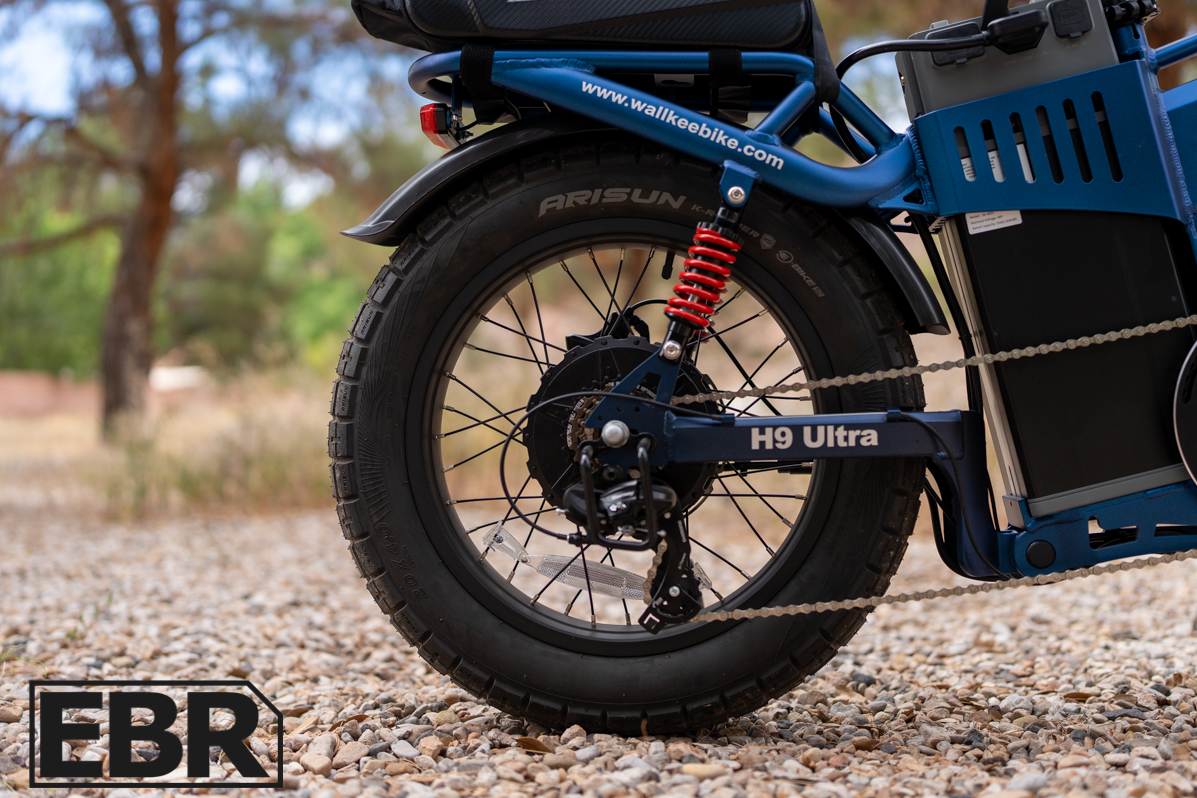
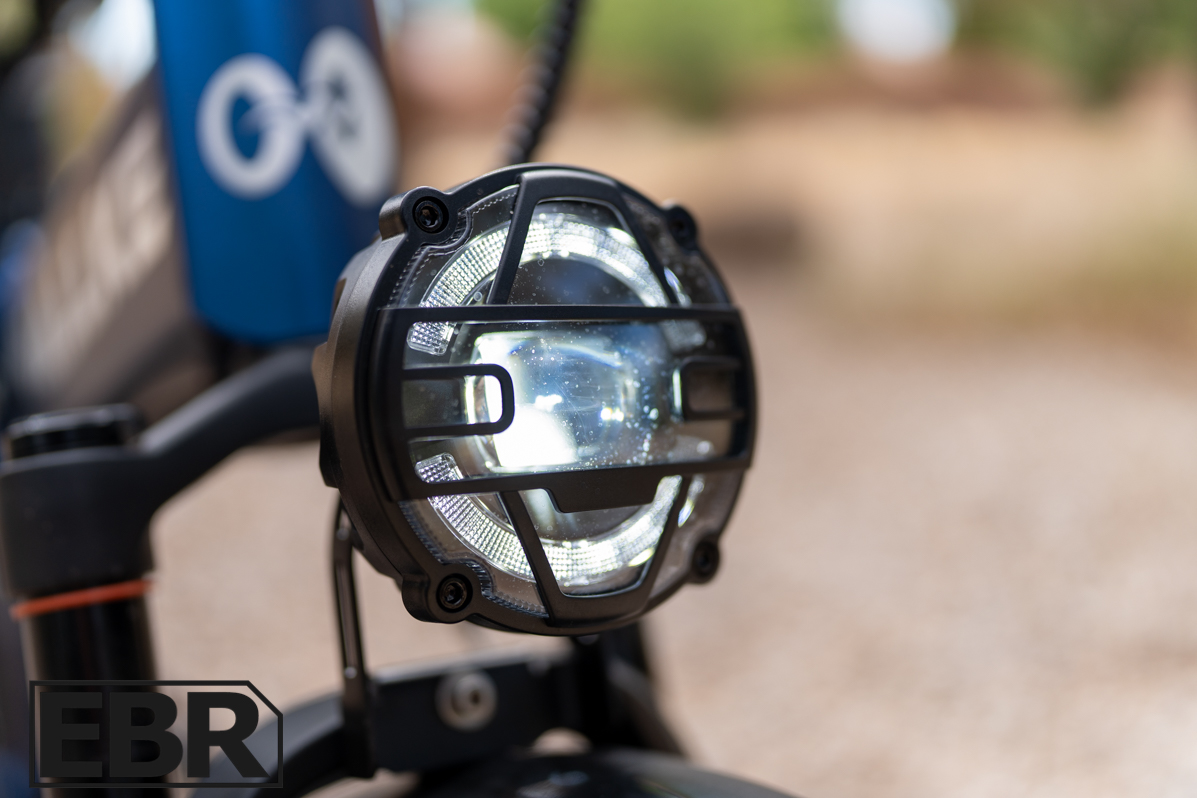
The H9 Ultra arrives with a component list that matches the overall go-big philosophy of the build. Stopping power comes from 4-piston hydraulic disc brakes with 203mm reinforced rotors at 2.7mm thickness, and Wallke made the right call here. Most bikes in this segment are running 180mm rotors at 1.8mm thickness, so the step up in both diameter and thickness makes sense on a 117 lb bike capable of 37 mph. The brakes also feature motor cutoff sensors, so the moment you apply braking pressure the motor disengages immediately for a cleaner, safer stopping experience.
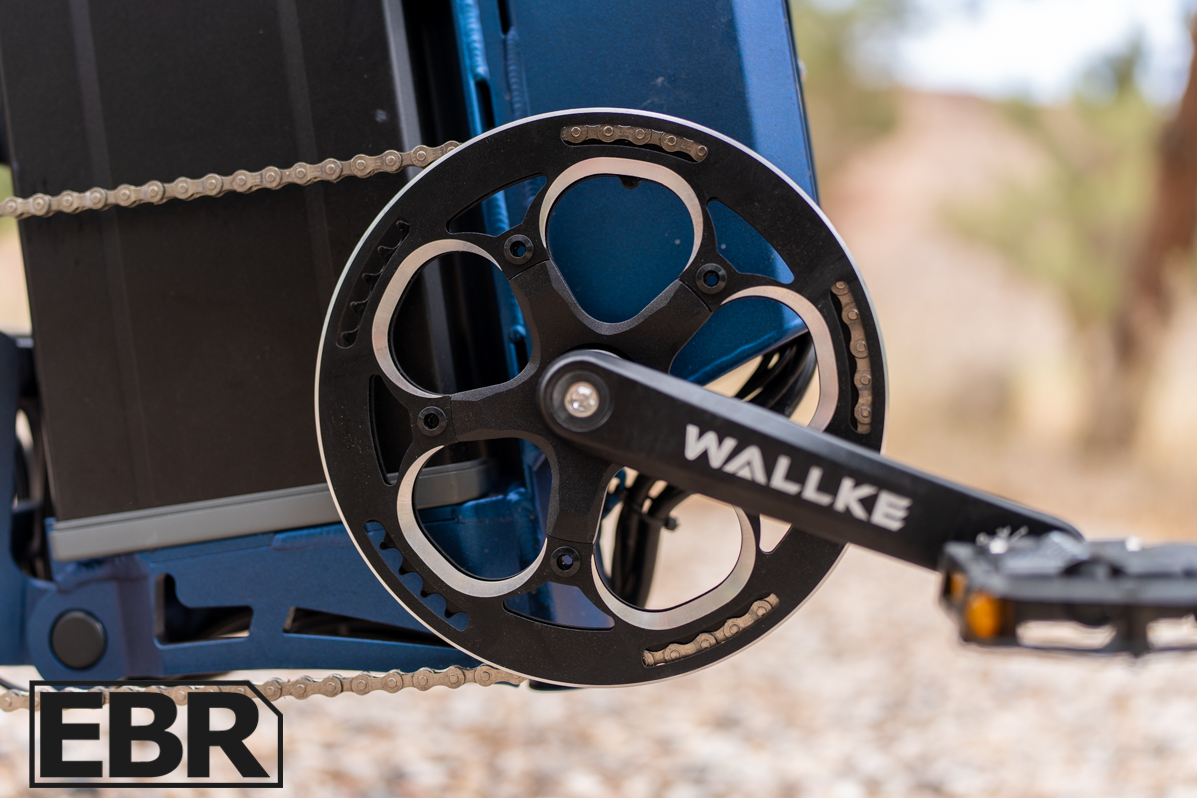
Suspension is handled by a full aluminum alloy air suspension fork up front and aluminum alloy coil spring shock absorbers at the rear. Rolling stock is 20×4.0 inch ARISUN quiet puncture-resistant fat tires with an integrated anti-puncture layer and thickened inner tubes, mounted to full aluminum alloy hubs. Gearing is a Shimano 7-speed system with a rust-resistant freewheel and a 52T aluminum alloy crankset paired with a Dacromet anti-rust coated chain.
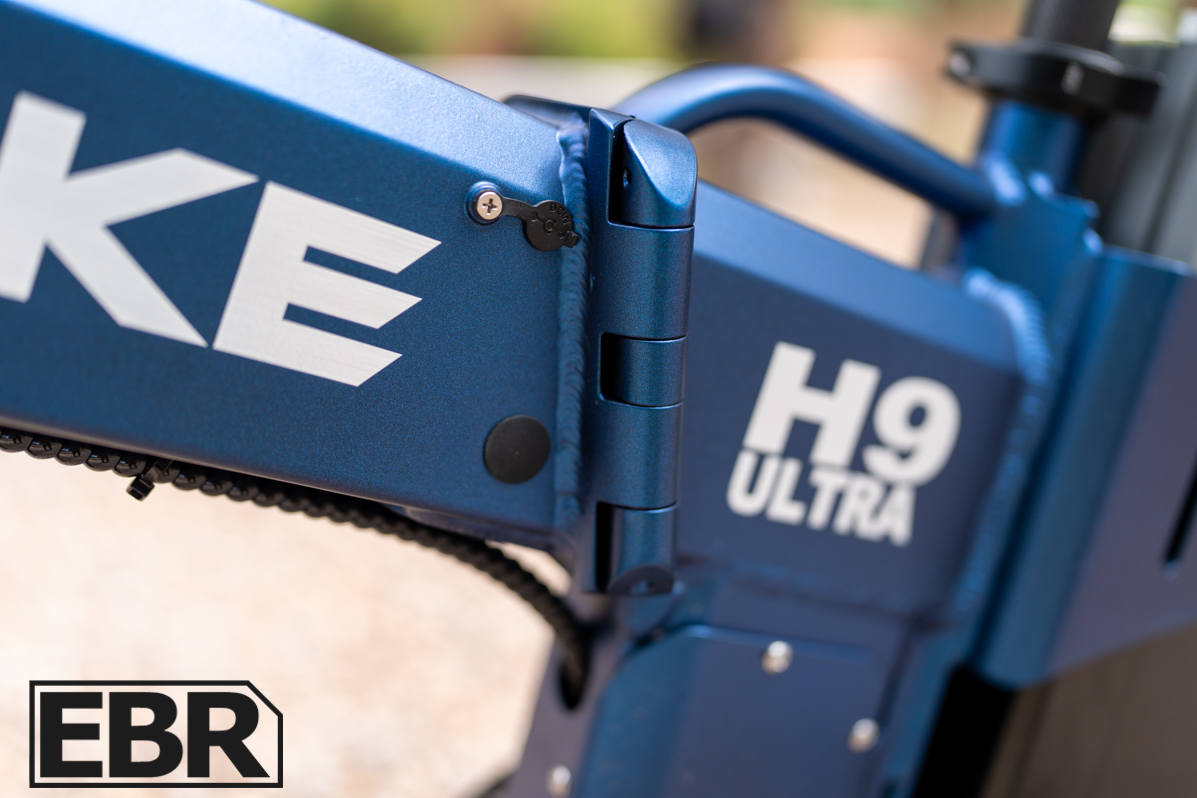
The frame is full aluminum alloy throughout at 3.0mm thickness, front and rear, including the rear rack, seatpost bracket, stem, and kickstand, handlebar, and folding pedals are all aluminum alloy as well. The saddle is a memory foam unit on a full aluminum alloy seatpost.
Fenders are composite, which I prefer because of their ability to take a hit without denting, and the bike comes with an integrated tail light and brake light. A USB port on the battery supports both power input and output, and the whole package tips the scales at 117 lbs with a maximum payload rating of 400 lbs.
Screen / User Interface / App
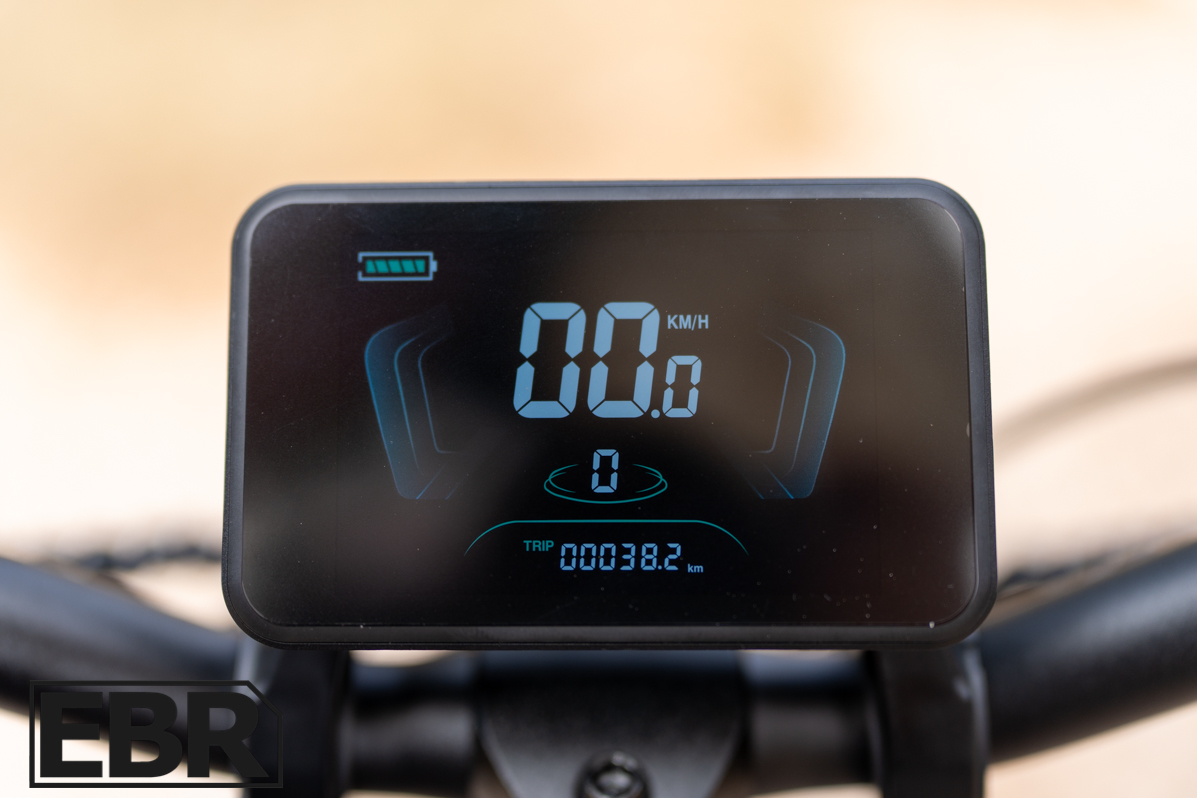
The H9 Ultra runs a 4-inch full-color LCD display under the YL81F-H model designation. It covers the basics well, battery level, pedal assist level, current speed, trip and total odometer, max and average speed, headlight indicator, brake indicator, and error codes. Backlight brightness is adjustable across three levels and the display will auto-shutoff after two minutes of inactivity to preserve battery. The PAS system is switchable between 3-level and 5-level configurations directly in the display settings, and a walk boost mode is available for those moments you’d rather push than pedal.
On the smart side, the display supports Bluetooth connectivity and pairs with the ‘Yolinebike app’, available on iOS. Through the app you can monitor speed, battery voltage, odometer, and current gear, adjust the speed limit, restore factory settings, and access historical fault data. The map interface shows current position, battery voltage, riding mileage and speed, with Wallke citing expanded features are in development. But, fair warning, the reviews are pretty harsh.
It gets the job done without being flashy about it, which honestly feels appropriate on a bike that lets its motor and battery do most of the talking.
Wallke H9 Ultra Model Options
The H9 Ultra comes in one frame size that Wallke rates for riders between 5’3″ and 6’5″, and two color options, blue or black, both wearing the Wallke branding throughout. If you want a little more variety on the color front, the H7 is worth a look as well. It comes in blue, white, and beige, runs $100 less at $1,699, and is a solid option if the single 55Ah battery configuration is all you need.
The bigger decision on the H9 Ultra is the battery. The standard configuration runs the single 55Ah pack at $1,799. If you want to push toward that upper end of the range claim and maximize your off-grid capability, the dual battery setup pairs the 55Ah rear battery with an additional 22Ah front battery for a combined 77Ah, and that bumps the price to $2,199. Whether that extra range and power reserve is worth the jump depends entirely on how you plan to use the bike.
Every H9 Ultra ships with the essentials covered: your battery charge cable, a set of keys, front fender, headlight, mirror, pedals, tool kit, and user manual. The 77Ah configuration also includes a 3A charger in the box. Right now Wallke is also throwing in a promotional rear rack gear bag and a passenger seat as part of the package, which is a nice bonus given the bike’s 400 lb payload capacity.
On the accessories side, Wallke’s catalog goes deeper than most. Beyond the usual helmets, phone mounts, and spare chargers, you can pick up kid and pet-capable trailers, replacement saddles, spare batteries in both the 55Ah and 22Ah configurations, and a surprisingly thorough selection of replacement parts covering the display, kickstand, brake components, suspension, chain, and controllers. They even sell replacement motors, which tells you something about how seriously they’re approaching long-term ownership support.
Is The Wallke H9 Ultra Worth Buying?
The Wallke H9 Ultra is a genuinely difficult bike to put in a box. It’s too heavy and too powerful to call a commuter, too capable to dismiss as a novelty, and too purpose-built to compare cleanly against anything else in the typical fat tire e-bike conversation. If you’re shopping for something to cruise the neighborhood on a Sunday afternoon, this isn’t it.
But if you’re the kind of rider who wants one bike that can haul gear into the backcountry, keep your camp gear powered up, and still get you home with battery to spare, the H9 Ultra makes a compelling case that very few bikes at any price point can match.
The off-grid power station capability is real, the range is legitimately impressive, and the motor has the kind of punch that makes 117 lbs feel almost forgivable once you’re actually moving.
The Wallke H9 Ultra is certainly in a class of its own, I’d argue even within the tiny segment of already available power station (or off-grid) e-bikes, but it brings a new level of use-case for deeper exploration, faster rides and more time doing, with less time charging. And, if the use case fits your life, it’s worth a serious look, and definitely worth a test ride, it’s seriously fun.




Reader Interactions