

Written Review
The first time I went to the Sea Otter Classic (USA’s premier cycling festival and trade-show), Aventon was being repped by a PR agency, didn’t have a dedicated booth, and unless you were an e-bike geek that focused on lifestyle commuter and cruiser ebikes, you didn’t even know Aventon was there.
Every year since, Aventon has steadily grown their presence and improved the quality of their e-bikes. And now they are the headline sponsor for the Sea Otter Classic.
All of that feels like the perfect leadup to Aventon launching their first full-suspension eMTB, where they will be competing head-to-head with the likes of Trek, Specialized, and Giant across the USA.
At their Arizona launch event, Aventon was careful to frame the Current as an bike for riders who want to get into eMTBs without spending $10,000. And that’s true, it’s a great entry point. But after 5 hours on chunky, technical terrain in Arizona and a few more weeks riding the bike here in St. George, Utah I think they’re underselling it.
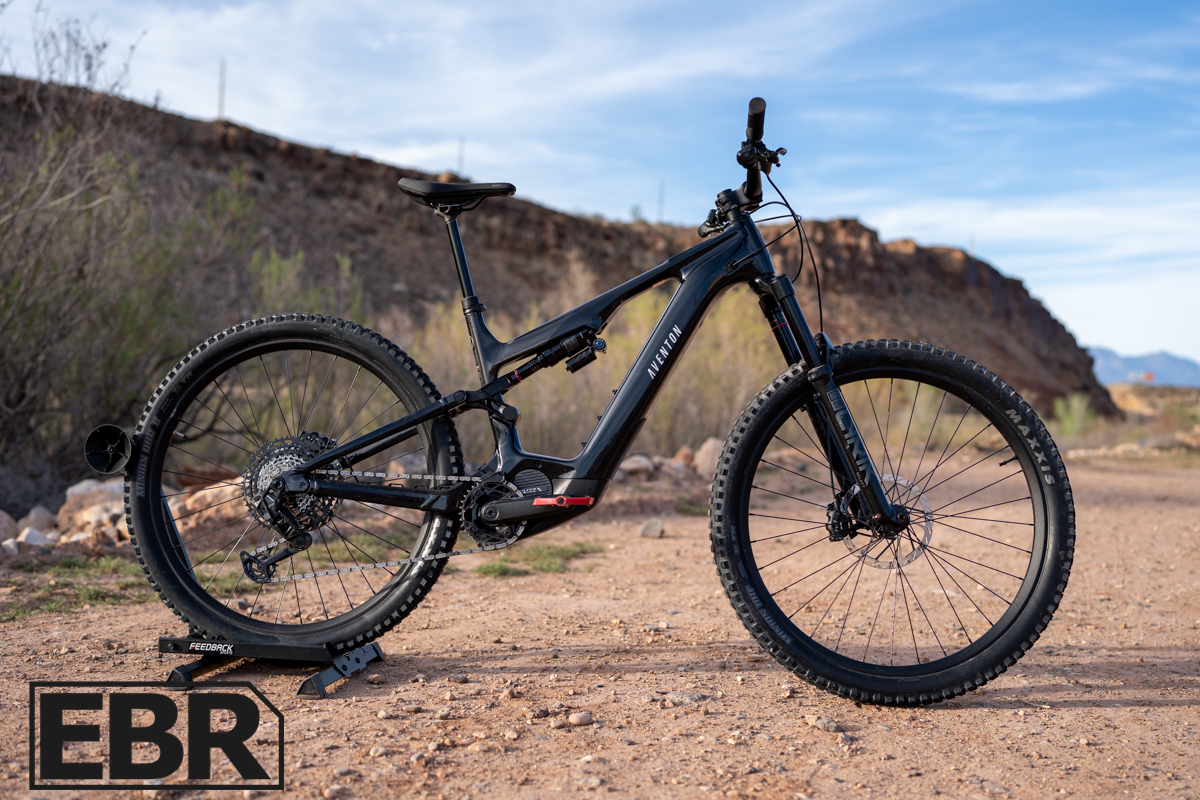
Even experienced riders who’ve been priced out of the full-suspension eMTB market are going to find this bike very hard to ignore. A carbon front triangle, a motor that competes with the Bosch Performance CX, the Specialized 3.1, and Avinox M1, and modern trail geometry – all at $5,999.
That’s not “staying in your lane.” That’s making a statement.
Bike Components
Given that this is Aventon’s first full-suspension eMTB, the component spec deserves a close look. At $5,999, you’re going to have to make some trade-offs somewhere – every brand does. But what Aventon chose to prioritize and where they chose to save money tells you a lot about how seriously they took this bike.
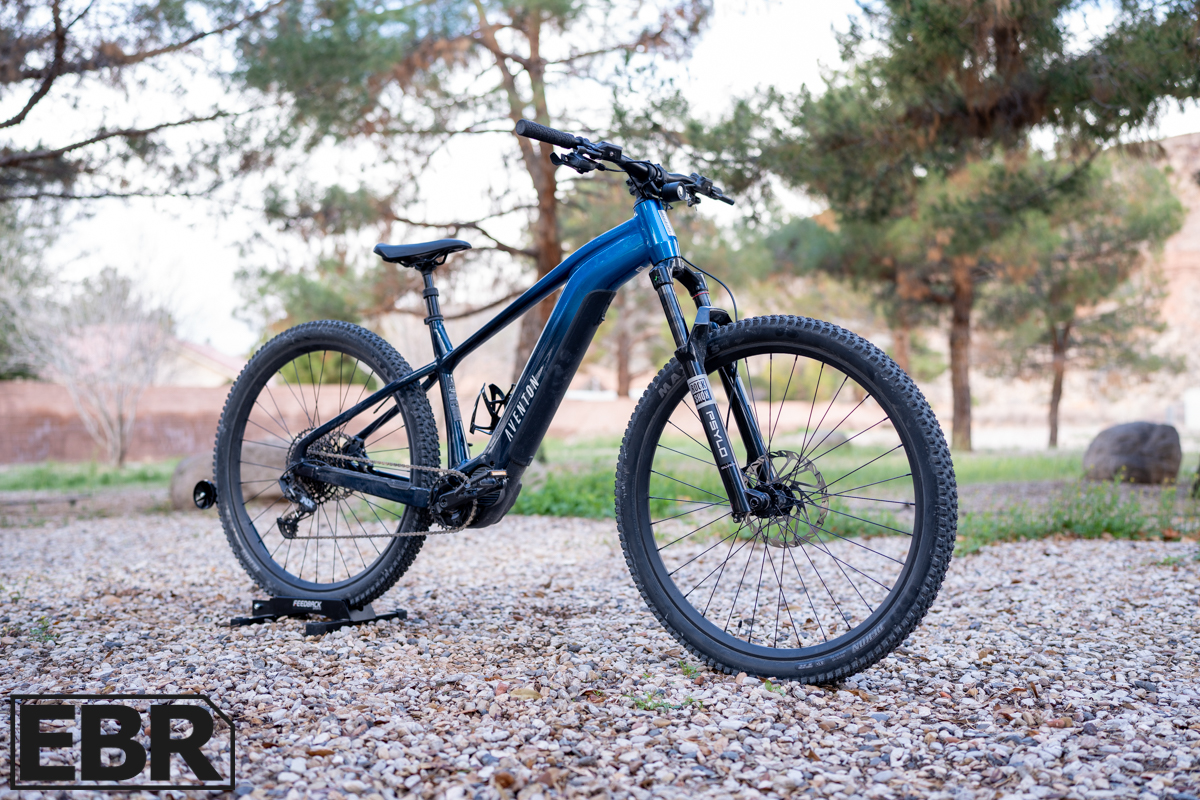
The frame is the first thing worth talking about. The front triangle is carbon fiber, the rear triangle is 6061 aluminum. That combination brings the bike in at just under 53 lbs – noticeably lighter than most aluminum full-suspension eMTBs in this price range, which tend to land closer to 57-58 lbs. That 4-5 lb difference is something you actually feel on the trail.
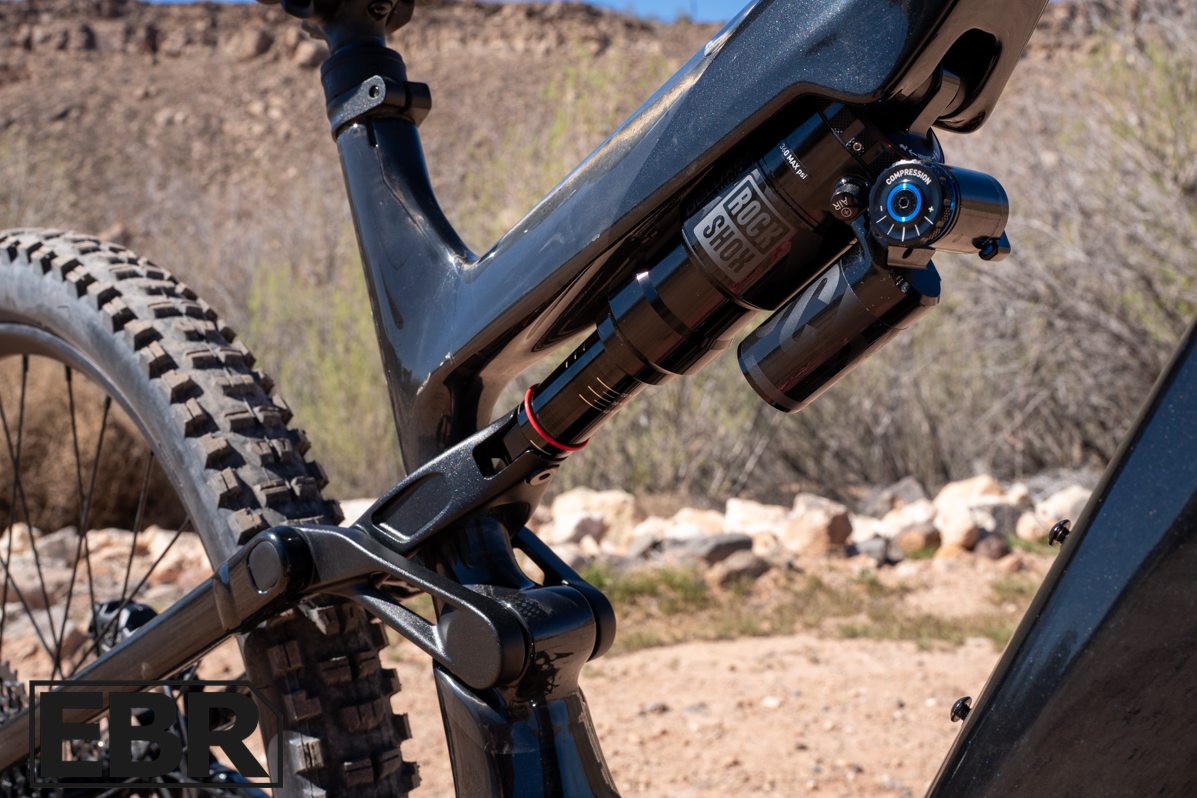
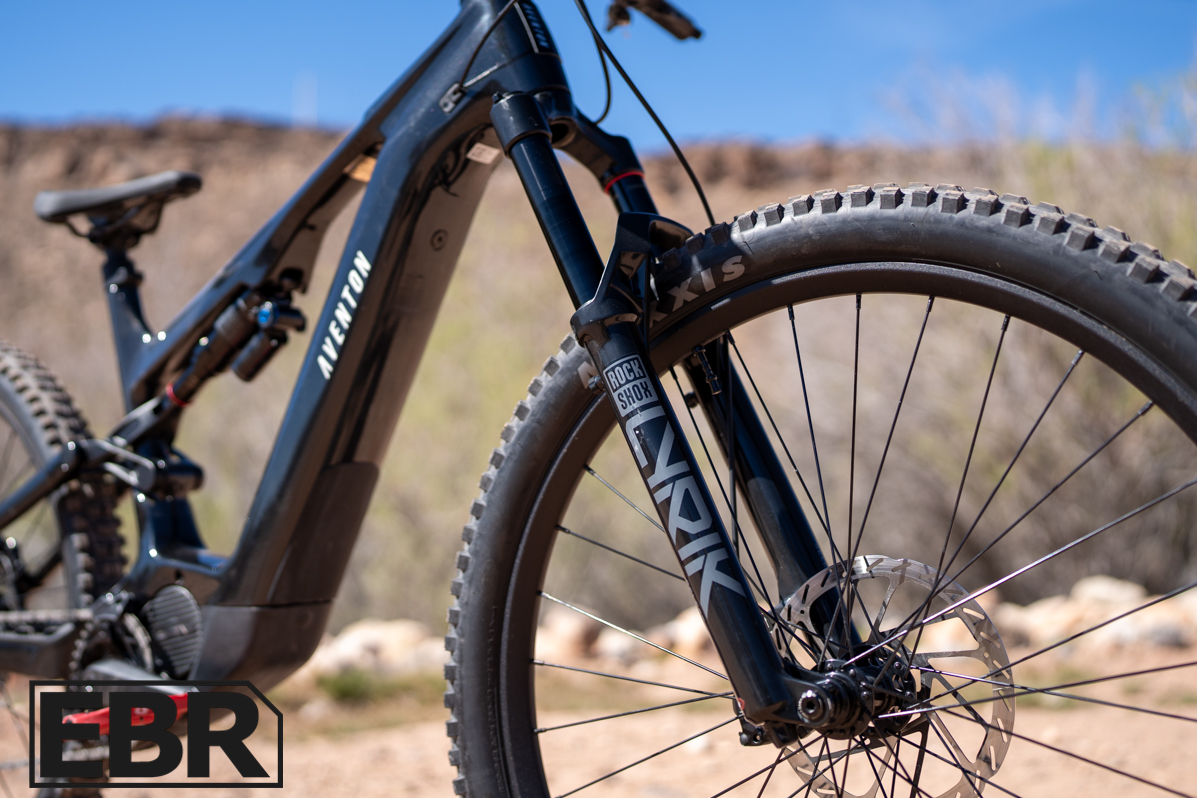
Aventon did a great job with the suspension, which is one reason why the bike was so playful and poppy on the trail. The suspension is RockShox front and rear. Up front you have the Lyrik Select with 150mm of travel, and out back is the Super Deluxe Select+ handling with 140mm of travel. These are a step up from the most entry-level RockShox options, and the Lyrik Select can accept a damper upgrade kit for around $350 after-market that meaningfully improves performance without replacing the whole fork. If you have the budget for it, that’s something I’d actually consider doing.
The drivetrain is another area where Aventon did a great job at this price point. The SRAM S1000 is a wireless 12-speed transmission system and the derailleur pulls power directly from the bike’s main battery, which means no separate battery to charge and forget about. I’ve been on plenty of rides where someone’s wireless derailleur dies mid-trail because they forgot to charge it. That’s not a problem here.
The shifting itself is crisp and confident – it feels a lot like SRAM’s GX to me, and I don’t mind a few extra grams (I believe it’s a 111 gram difference). I actually personally prefer less expensive wireless options from SRAM to keep replacement costs down.
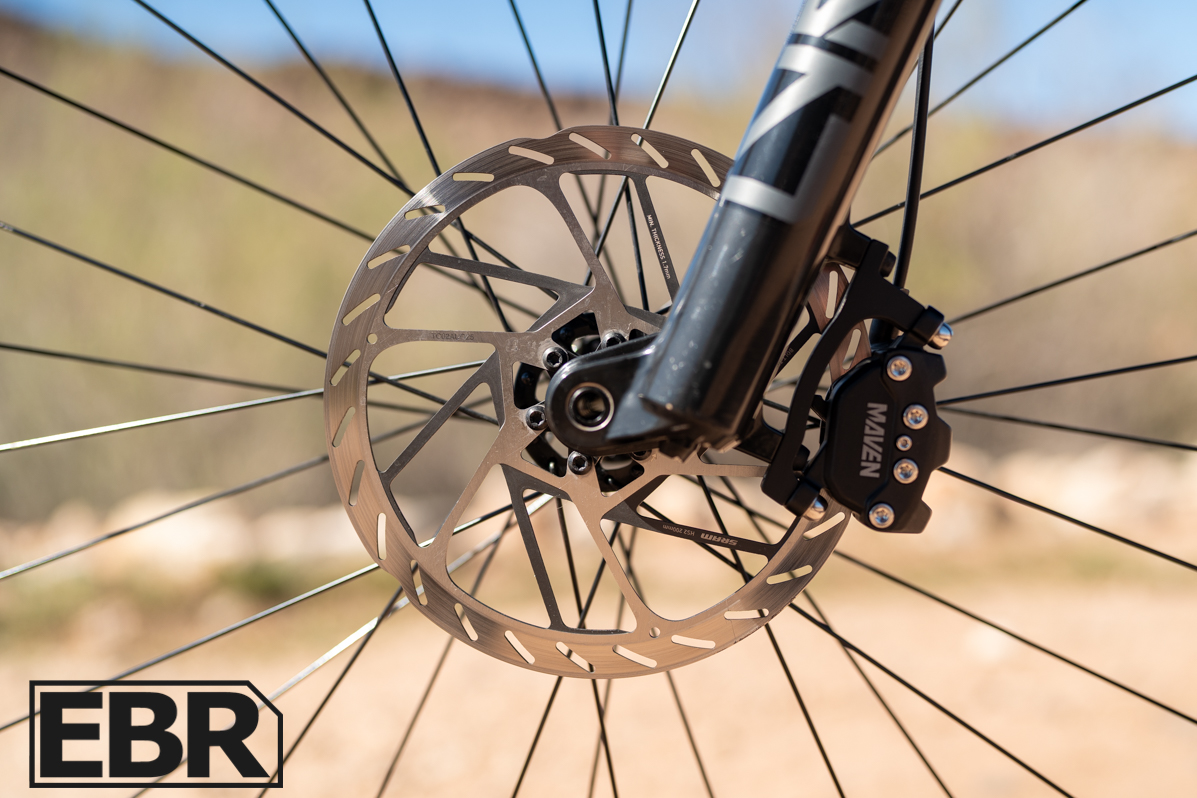
Brakes are the SRAM Maven Base, hydraulic, 4-piston, with 200mm Centerline rotors front and rear. The Maven Base brakes work well – I have no complaints about stopping power. My one nitpick, and it really is a nitpick at this price, is that I’d have preferred HS2 rotors over the Centerline rotors. The Centerlines have a tendency to glaze more than the HS2’s over time under heavy braking. At just under 53 lbs you are putting some heat through those rotors on longer descents. It’s not a problem right now, and braking was fine for me, but when it’s time to replace them, go with the HS2s.
The dropper post is an X-Fusion Manic – 150mm travel on the S/M, 170mm on the L/XL. For most riders the 170mm on the large is going to feel just right. It’s a well-known, easy-to-service post, so if you ever need to take it into a shop you won’t get any blank stares.
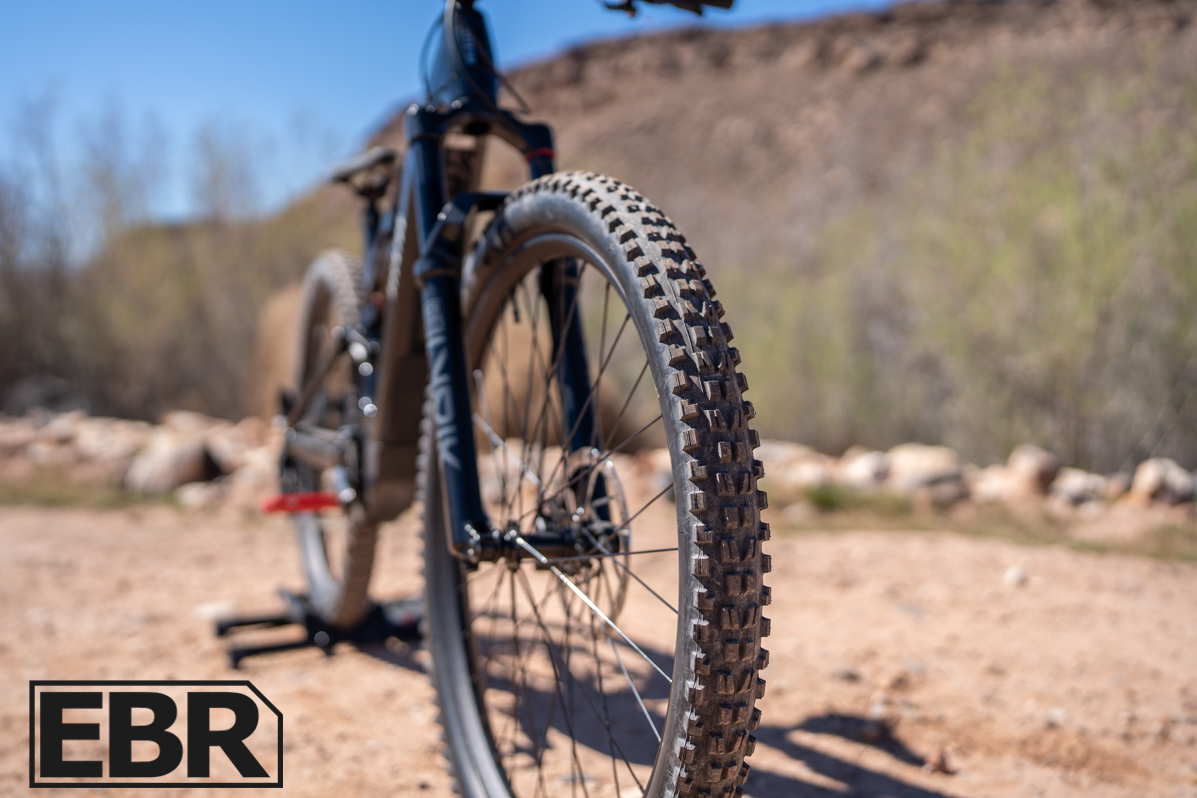
Two things I’d flag as areas to watch. First, the wheels. They’re double-wall aluminum and tubeless compatible, but Aventon hasn’t published a lot of detail on the hubs. At $5,999 that’s one area where they made a cost decision, and it’s fair to acknowledge that. Second, the tires. The Maxxis Minion DHF and DHR2 are great tire choices – Maxxis makes some of the best mountain bike tires out there. But the EXO casing is on the lighter side for an eMTB. We already picked up a couple of rim dings in the rear during testing. Add Tannus Armor inserts when you buy the bike, and when these tires wear out, move to a heavier casing.
Geometry of the Bike
Geometry is one of the most important things to get right on an eMTB. Get it wrong and it doesn’t matter how good the motor is or how nice the components are – the bike is just going to feel off on the trail. I’ve seen a lot of brands come into the eMTB space and completely miss on geometry, and it’s usually because they don’t have enough people on staff who actually ride mountain bikes.
Aventon got it right.
The head tube angle on the Current EXP is 64.6°. That’s nice and slack, which is exactly what you want on a trail bike. It gives you confidence on descents and keeps the front wheel tracking predictably when things get steep and chunky. The seat tube angle is 76.6°, which is steep enough that when you’re climbing you can actually put pressure on the front wheel and maintain traction – something that matters a lot on technical climbs.
The reach on the large is 475.3mm and the stack height is 634mm. That combination puts you in a position that feels like what I would expect from a pure trail bike. Sizing wise, a size large on the Current felt slightly smaller than an S4 from Specialized. For me, at 5’11” and usually on the border of medium or large, the bike fit me great.
One thing worth noting – there’s no flip chip on the Current EXP, so you can’t shorten the 445mm chainstay if you want a more nimble feel, and there’s no way to convert this to a mullet setup. It’s 29×29 front and rear, full stop. For a trail bike at this price point that’s a completely reasonable decision, and honestly the 445mm chainstay already gives the bike a snappy, maneuverable feel without needing to go shorter.
The 29″ wheels front and rear roll fast and feel stable at speed. Some riders (including myself) prefer a mullet setup (29″ front, 27.5″ rear) for extra nimbleness in tight corners, and I would love to see Aventon offer than on the next version – or on an enduro version if they are already working on that (this is a not-so-subtle hint to Aventon, I have NO idea if they are working on a more enduro-ready bike).
When you take a step back and look at the full geometry picture – the slack head angle, the steep seat tube, the reach, the chainstay length – this is genuinely modern trail bike geometry, and it works great on the trail. Aventon didn’t just copy another brand’s numbers, and they also didn’t risk experimenting with something new. However, they clearly did their homework, iterated on the design with people who actually ride, and came up with something that, again, works really well on the trail.
Battery and Motor
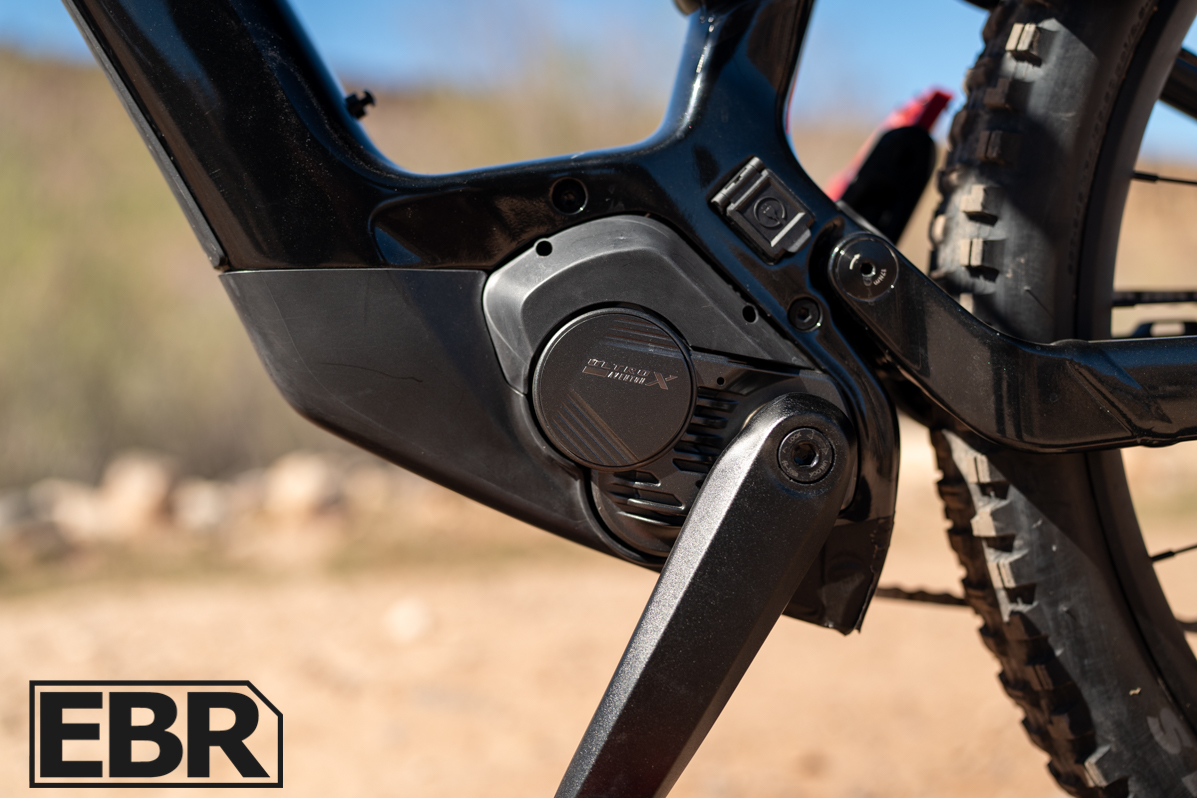
The Ultro X is Aventon’s second proprietary mid-drive motor, developed in partnership with Gobao, and it’s a nice improvement from their first that they specced on the Ramblas.
What stands out is that Aventon was able to make a motor that competes with the industry leaders right out of the gate (side note: where are you, Shimano??). Here is how the Aventon Current’s motor compares with the Specialized 3.1 (post OTA update), Bosch Performance CX BDU38, and the Avinox systems:
| Metric | Aventon Current EXP | Amflow PL Carbon | Specialized Levo 4 | Bosch BDU38 |
|---|---|---|---|---|
| Motor System | Aventon Ultro X | Amflow Avinox | Specialized 3.1 | Performance Line CX |
| Max Torque | 110Nm (120Nm BOOST) | 105Nm (120Nm Boost) | 105Nm (OTA Update) | 85Nm – 100Nm |
| Peak Power | 750W (850W BOOST) | 1000W (Boost Mode) | 810W (OTA Update) | 600W – 750W |
| Battery Options | 800Wh Integrated | 600Wh or 800Wh | 840Wh / 600Wh | 600Wh or 800Wh |
| Charger | 42V/4A Standard | 12A/508W Fast Charger | 4A Standard | 4A Standard |
*Specialized and Bosch data reflect the latest OTA firmware updates. Aventon and Amflow reflect standard press specs.
At least on paper, the Current competes. On the trail, the Current’s motor was much better than I expected. Even though I liked the A100 motor from the Ramblas, I expected the Ultro X to lag the other industry leaders. I was worried that Aventon would overpower the motor just so they can compete and look good on paper.
Yes, Aventon made the motor very powerful, but I didn’t find it overpowering. After 100 miles on the bike, I really like how natural it feels. In my test rides, I spent probably 90% of my time in Auto mode, and that says a lot of positive things about the engineering and programming of the Ultro X.
As expected, Eco mode is where I’d ride if I was keeping pace with a group of analog riders. Trail feels noticeably stronger. Turbo is a lot of fun. And Boost? Boost is fast. I was hitting the 20 mph speed limit on climbs in Boost without much effort, and the motor held that output longer than I expected without any noticeable heat issues.
One thing worth calling out specifically – the motor is quiet but there was some ratting from the motor cover. Not sure if it’s because I received a media bike that was beat up on media day, but that is something I think Aventon could improve on.
The battery is 800Wh, which is a strong capacity for a $5,999 eMTB. Aventon claims up to 105 miles of range, and to be clear about what that means – that estimate is based on ECO mode, flat roads, no wind, and an average rider of around 170 lbs. Real-world trail riding is a different story.
Range Test Results
Our range test was done on mountain bike trails here in St. George, Utah. We rode all in turbo move on a mix of blue and black rated trails. We got just over 30 miles and 3,000 feet of climbing out of a single charge. For context, 30 miles of mountain bike trail riding through blue and black trails is a genuinely long day in the saddle for most people. I’d expect meaningfully more range if you’re riding in Auto or Trail mode, which is how most riders will spend the majority of their time – but you’re still not getting 105 while mountain biking.
The charger is a 4A unit. A year or two ago that would have been considered fast – it’s solid, and noticeably better than the 1A and 2A chargers that used to ship with bikes at this price point. There are faster options out there, like the 12A charger you get with some higher-end systems, but 4A is a reasonable inclusion at $5,999.
Screen / User Interface / App
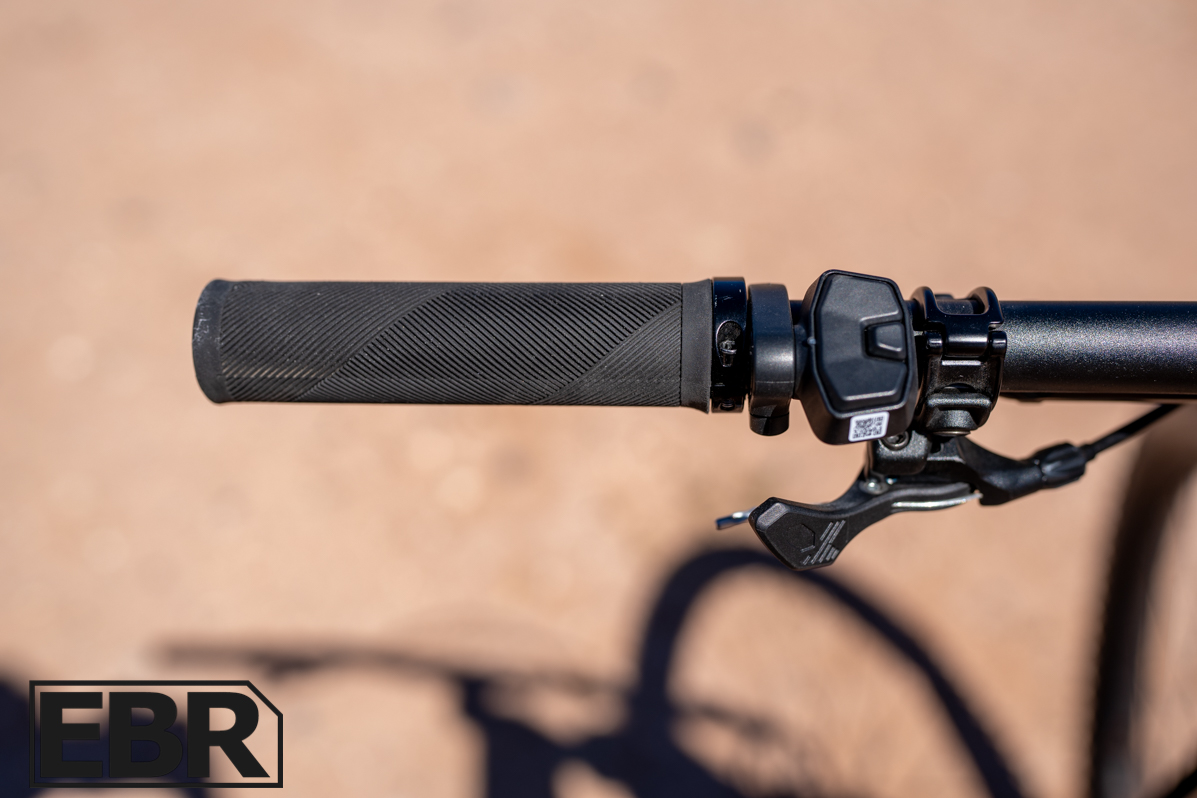
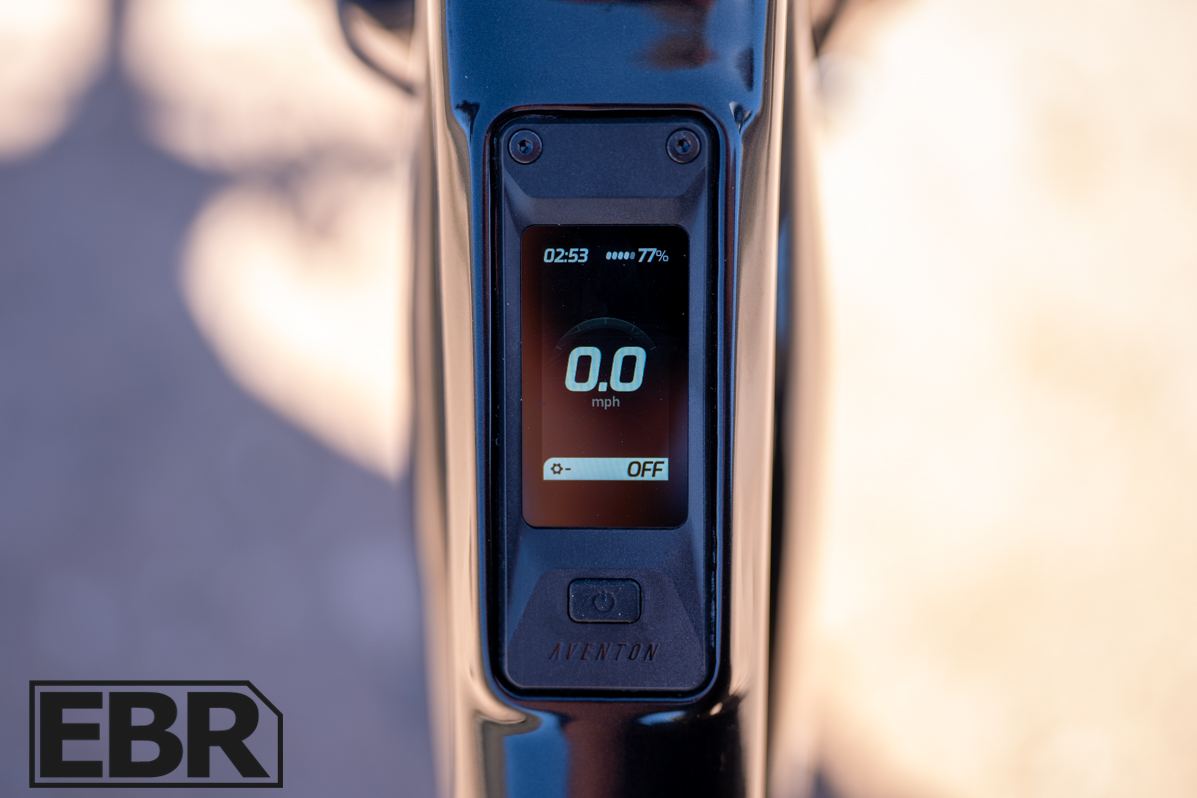
Starting with the control pod (something that a lot of people don’t think about when buying an eMTB), I really like how Aventon’s is set up. It’s simple, with just 3 buttons and the power button on the top tube above the display. It works, it’s intuitive, and you don’t have to think too much about it on the trail.
The display itself is a touchscreen integrated into the top tube, and it’s more responsive than I expected. Out of the box it shows your battery percentage, speed, assist level, and time. The battery readout shows both a bar indicator and a percentage – honestly I’d just focus on the percentage since that’s the more useful number. You can scroll through additional screens for Bluetooth, Wi-Fi, brightness, lights, and screen lock. It all works the way you’d hope it would.
One feature I really like is the ability to reorder your assist modes. Out of the box the order is Auto, Eco, Trail, Turbo. I personally moved Auto in between Trail and Turbo since I mostly ride in Auto and occasionally kick it to Turbo.
The Aventon app is also very well designed. Aventon has been building and improving this app for a few years now, and the work shows. The Ride Tune feature lets you customize the torque output, assistance level, pedal response, and overrun for each assist mode individually. Eco, Trail, and Turbo can all be dialed in to your personal preference. You can’t adjust Auto or Boost, but the three adjustable modes cover most of what you’ll actually use day to day.
The app also has a nice maintenance tracker that reminds you when to check your chain, tires, bolts, and other components based on either mileage or days – whichever interval you set. It’s a small feature but useful for keeping on top of things over time.
On the security side, the bike has built-in GPS tracking, an alarm that triggers if the bike moves unexpectedly, unusual activity detection, geo-fencing, and bike sharing. The geo-fencing alone is something I’d actually use – you can set a radius and get an alert if the bike leaves that area. For a $5,999 bike, having that built in rather than as a paid add-on is a nice touch.
The class switching is handled through the app as well. The Current EXP ships as a Class 1 bike – no throttle, 20 mph assist limit – which is exactly right for trail access. If you want to unlock Class 3 for fire roads or pavement, you can push the assisted speed limit up to 28 mph through the app. You have to actively agree to the change, which I think is the right way to handle it.
Model Options
Aventon offers the Current in two builds: the Current EXP at $5,999 and the Current ADV at $4,599.
Both bikes share the same Ultro X motor, 800Wh battery, and geometry. The differences are mostly frame material, weight, and a handful of components. Also, Aventon doesn’t allow the ADV to be unlocked to class 3. I personally don’t love this and hope that changes with an OTA update – it feels like what Specialized did when they made their new S-works motor better than the standard option.
A couple of things worth noting before we move on.
The ADV steps down from the wireless S1000 to the wired Eagle 70 transmission, and from the Maven Base brakes to the DB8 Stealth. Both of these are good components, and I think it’s a fair tradeoff for the price difference.
The biggest difference is the frame. Going from a carbon front triangle to full aluminum adds 3 lbs, but also $1,400 in savings. While I haven’t ridden the ADV version yet, at $4,599 it’s a great deal for someone who is just starting to get interested in mountain biking and wants a bike that is less expensive but upgradeable.
Both bikes are UL certified and share the same motor and battery, so the heart of the bike is identical regardless of which one you choose.
Is The Bike Worth Buying?
Yes, absolutely. In fact, I think this bike is going to cause some dealers to have some hard conversations with the other brands they carry. Up until now, Aventon hasn’t really competed directly in this category. Yes, they came out with the Ramblas, but there aren’t many hardtail options in the eMTB market – and full suspension is where the real competition is.
If you are a new rider, or an experienced rider on a budget (when did $6,000 become a ‘budget’ bike, btw?), this should be at the top of your list.
One final note – you don’t have to go into a dealer to buy the Aventon Current EXP or ADV. Both can be purchased online and they aren’t hard to put together. The bike comes mostly assembled – you mainly need to install the front wheel and attach the handlebars to the stem. That said, we always recommend having any self-assembly checked by a good local bike shop if you aren’t experienced with bike builds.




Reader Interactions