

While the DTC e-bike market has largely followed a predictable path, good little ants marching single file, each one following the one in front of it, Aventon has quietly carved its own lane and quickly become a genuine force in the industry. The release of the Aventon Current, a true eMTB, earned them all sorts of well-deserved attention.
Well, Aventon must like that attention, because they sent us something we do not get very often: a first. An e-bike with regenerative braking. Yep, we have all wondered why it has taken this long and when it was finally going to happen. There were even rumors floating around CES 2026, but nothing ever got confirmed until we unboxed the new Aventon Level 4 REC.
Now in its fourth generation, Aventon has launched the all-new Level, and they did not just slap a number 4 on the branding and call it a day. They brought two new versions, the REC and the ADV, across four frame sizes, seven total colors, and both high-step and step-thru configurations, along with a wave of new features.
And while larger, legacy brands once looked right past them from the comfort of a perch built on years in the game, that dynamic has shifted. Aventon now finds themselves rubbing shoulders with the very brands they once hustled just to get a sliver of market share from. Now they are feasting at the same table.
So let’s get into it. Does the Level 4 REC actually deliver on the hype, or is regenerative braking just the shiny new thing? Stick around, because this one has a few surprises.
My Experience Riding The Aventon Level 4 REC E-Bike
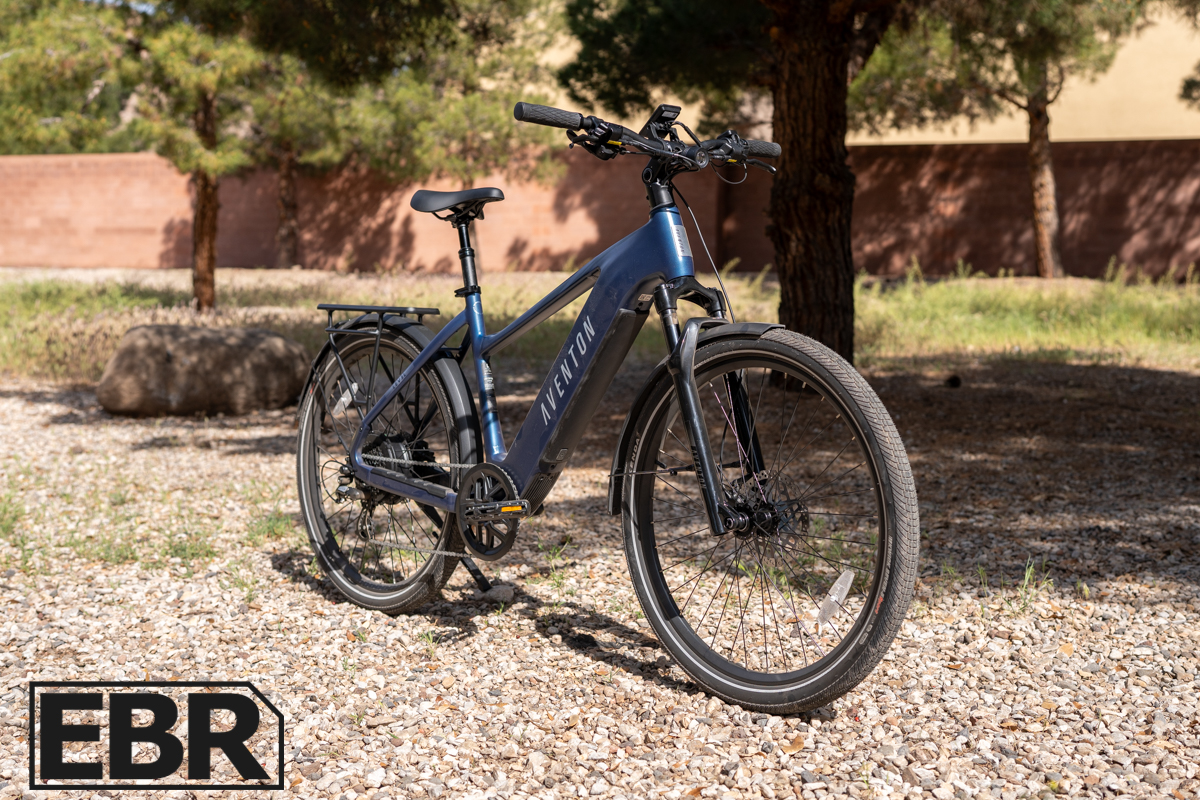
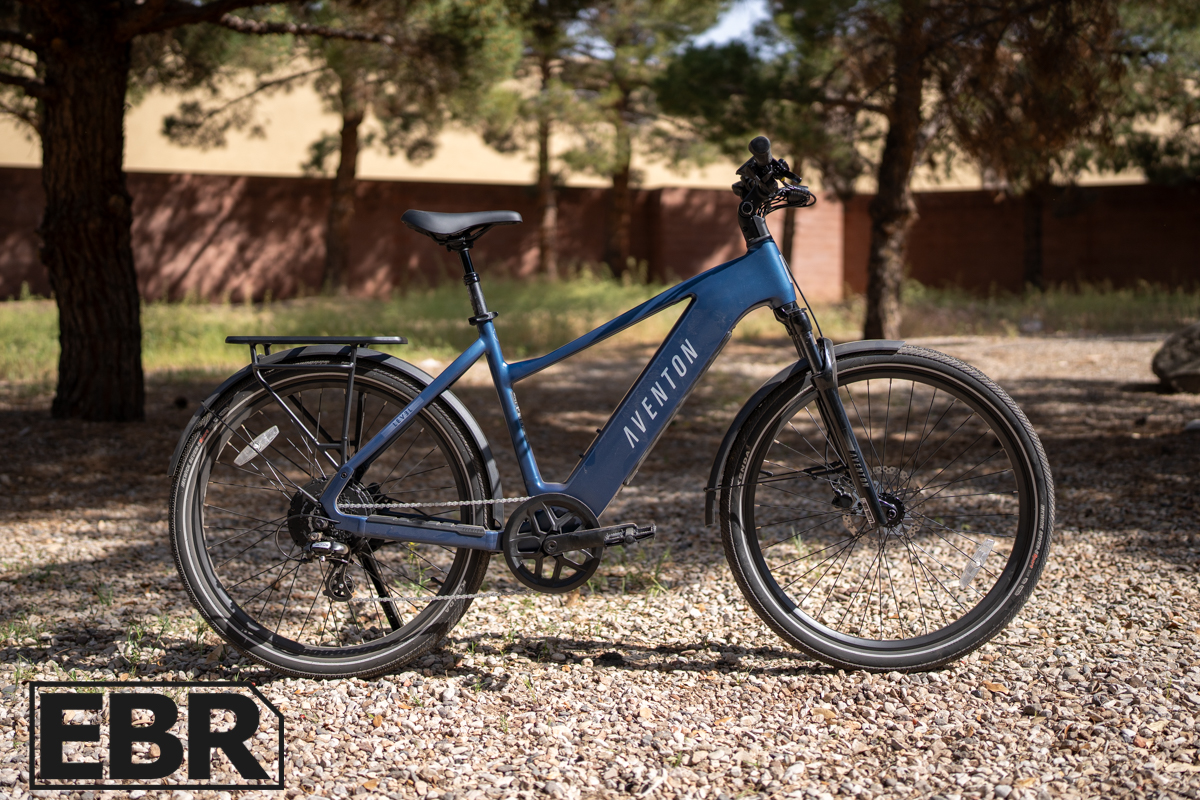
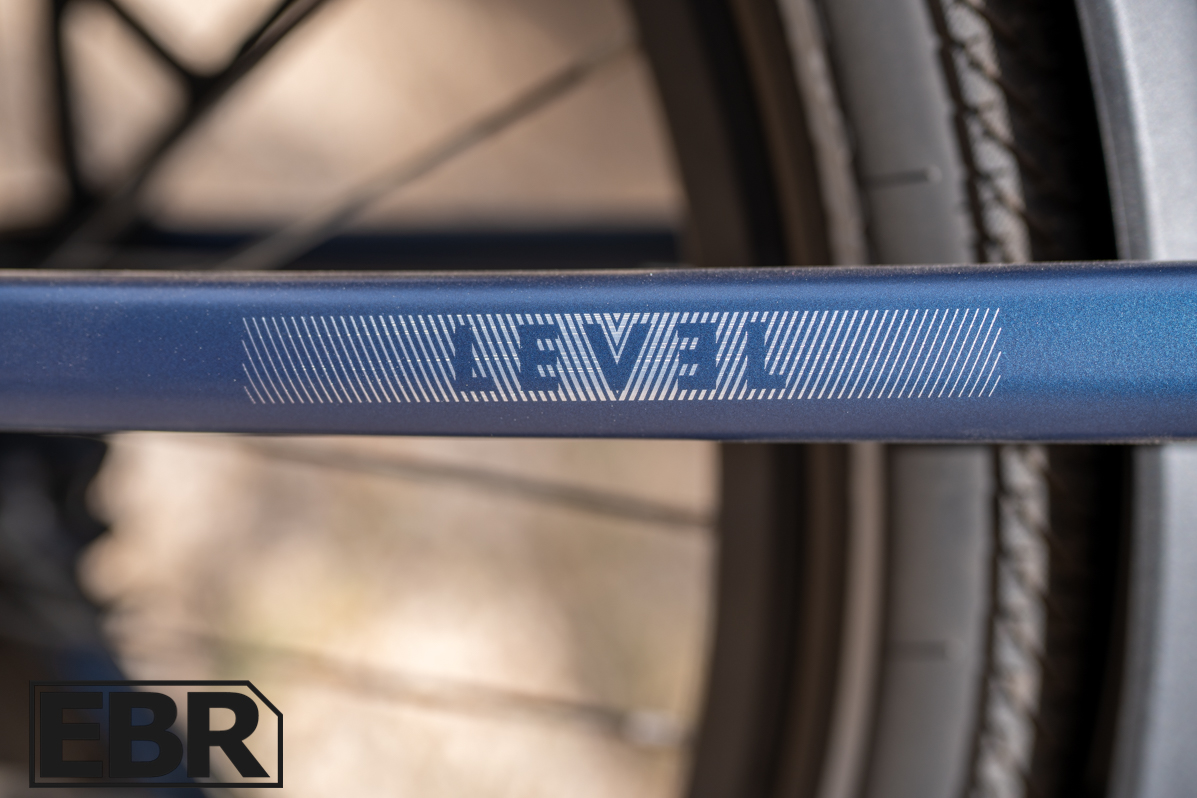
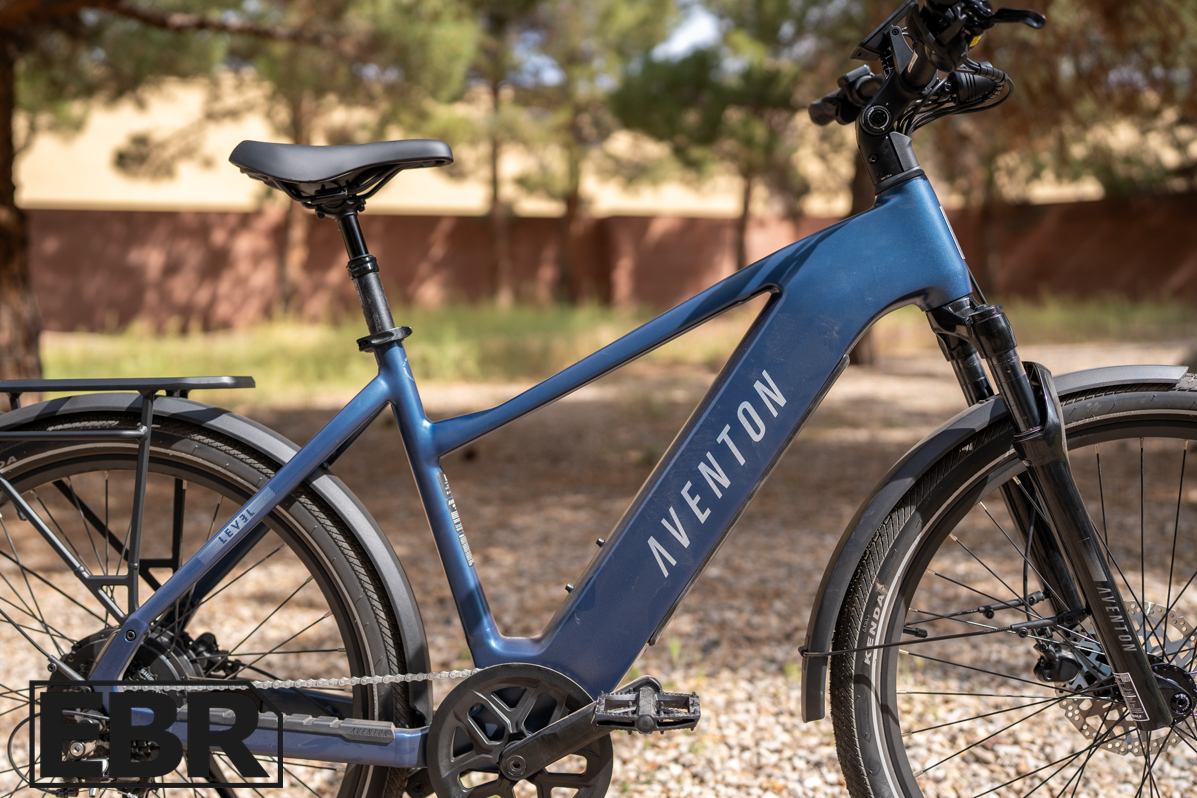
The Aventon Level series has some of the best looks in the commuter segment, and this design language was introduced with the Level 3 last year and they have largely stuck with it. The gravity cast front triangle gives the bike clean, weld-free lines, and the matte paint with minimal branding and all-black accents makes the Level look, well, a level above its peers. Cringe as that might sound, it fits.
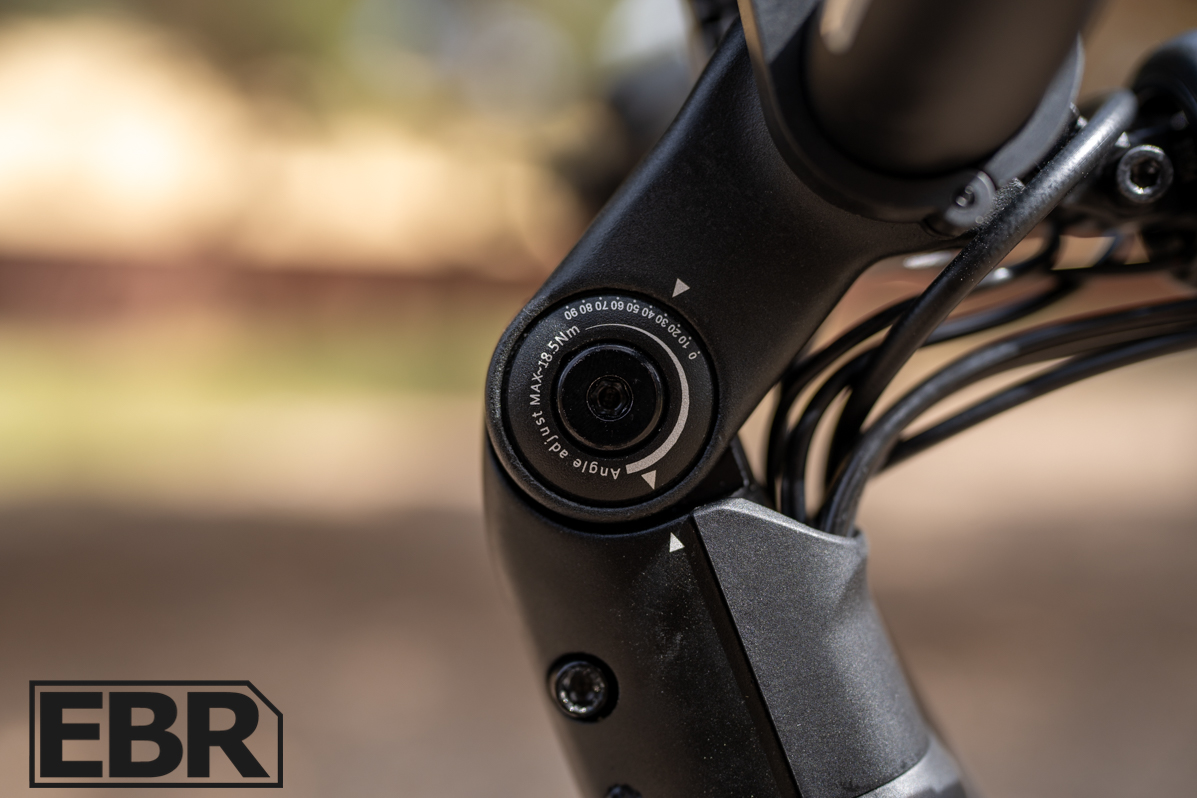
Riding position is relaxed and comfortable, with a 90-degree adjustable stem that lets each rider dial in their fit, whether they prefer a more aggressive forward lean or a relaxed upright posture.
I was sent the large high-step frame in the REC, which carries an advertised fit range of 5’10 to 6’4, and it felt very natural to me. Across the lineup of two frame styles and two sizes each, most riders will find not just a decent fit but likely a genuinely good one. That is a meaningful difference from the one-size-fits-most approach you see more commonly. Sure, offering four frame sizes and styles costs more to develop, but it goes a long way toward making a bike that feels right to the rider rather than asking the rider to adapt to whatever universal fit the brand settled on.
One of the first things I noticed, right alongside the jump in power from the Level 3’s 500W motor to this new 750W system, was that every time I applied the brakes, a green energy bar would pop up on the display over the ride metrics. It looked and behaved a lot like what I see in my Tesla when regenerative braking kicks in, so I went back to the specs to confirm. Sure enough, the Level 4 has regenerative braking, available both when braking and when coasting, using that passive energy to push some charge back into the battery. And if that is not your thing, no pressure. You can use both features, just one of them, or turn the whole thing off entirely through the app.
What I did want to know was how much range I was actually recovering. Since the display does not break that out, I reached out to Aventon directly while working through this review. They told me it is still early data, but a 20-mile ride is looking like a 3 to 5 percent gain in efficiency. That was more than I expected to hear, and once you see the range test results, it starts to make a lot of sense.
The motor itself is a big swing for a bike with a history of 500W systems. The new 750W rear hub motor puts out 80Nm of torque and pairs with a selectable cadence or torque sensor across four levels of pedal assist from Eco up to Turbo. On top of that, there is a limited-use Boost mode that Aventon says maxes out the peak wattage and torque for roughly 30 seconds of continuous use. After that window closes, the bike drops back to Turbo, and if you try to re-enter Boost immediately, you get a warning that you need to wait 260 seconds before it is available again.
That extra power is not just numbers on a spec sheet, you feel it. The Level 4 rides with a muscular confidence that puts any hill climb concerns to rest from the very first ascent. It pulls hard from a dead stop and gets up to 28mph in a quick window. The motor does make some noise, it is not silent, but compared to most 750W motors it comes in relatively quiet.
Parking around town also carries a new layer of confidence thanks to the Aventon Control Unit, or ACU, which is the brain behind a suite of security and tech features. The mechanical rear wheel lock drops a rod into an aluminum receiver that physically prevents the rear wheel from spinning. Beyond that, the unusual activity alarm monitors for any fussing with the bike, sending you a notification if something seems off and escalating to a loud audible alarm if it continues, all while the wheel lock keeps it from being pedaled away.
Then there is the geofencing. You can draw a custom GPS boundary around your home, work, school, wherever, and if the bike physically crosses that line you get real-time notifications and tracking no matter where you or the bike happen to be. The ACU runs on its own 4G SIM card, so data transmission does not depend on you or your phone being anywhere nearby. At that point you just hand the location off to the cops and let them sort it out.
Overall the Level 4 REC glides around town with the power to handle the morning commute, the muscle to eat up hills, and enough security and tech built in to make sure you can track it down no matter where it wanders off to.
Range
Estimated Range (from Aventon):
- Up to 75 Miles
Real World Range Test Results:
- Eco Mode: 96 miles
- Turbo Mode: 44 miles
Aventon advertises up to 75 miles of range on the Level 4 REC, which on paper is 5 miles more than the outgoing Level 3. But we never really know what creative math goes into those numbers, so we ran two range tests: one in Turbo mode and one in Eco mode.
Our riders are all between 180 and 200 pounds, and we run these tests on a local city bike path shared with other riders, walkers and joggers, with rolling elevation mixed in. It is not some controlled ideal scenario designed to squeeze out the best possible number. It is about as close to real-world riding as we can get.
On the first run in Turbo, the highest full-time pedal assist mode available for a range test since Boost is time-limited and cannot be used effectively for this purpose, we covered 44 miles. That is a very solid result, and it had me thinking the Eco run would likely push us north of 80 miles.
After a night of rest and a full recharge for both the bike and myself, we headed out the next day on Eco mode and covered 96 miles on a single charge. Even more impressive, those 96 miles included over 1,600 feet of elevation gain.
So why did it blow past the advertised range by more than 20 miles? I cannot say for certain, but regenerative braking is the most likely explanation. Aventon told us they are seeing 3 to 5 percent efficiency gains on 20-mile rides. Scale that across a 100-mile effort and you are looking at somewhere in the range of 15 to 25 percent back, which lands pretty close to explaining the gap between 75 miles advertised and 96 miles actual.
Either way, a real-world range window of 44 to 96 miles depending on how hard you ride is a strong result, and more than enough for the vast majority of riders.
Power (Motor & Battery)
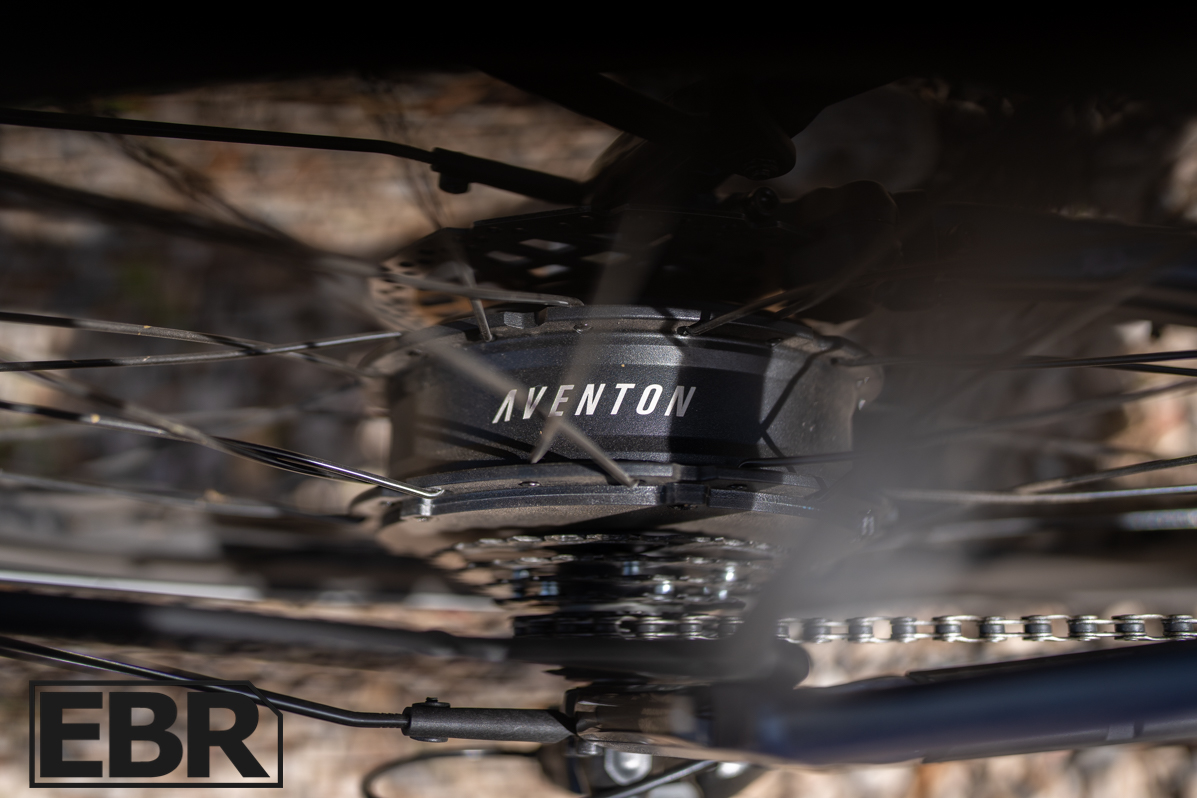
The Level 4 REC runs a rear hub motor rated at a nominal 750W, peaking at 1,188W with 80Nm of torque in standard operation. Kick it into Boost mode and those numbers jump to 1,425W and 96Nm. That is a meaningful step up from the Level 3, which ran a 500W hub motor with 60Nm of torque. The bike also ships with both a torque and cadence sensor on board, and you can switch between the two dynamically right from the Aventon app.
Out of the box the Level 4 comes configured as a Class 2 bike, with pedal assist and throttle both capped at 20mph. For those who want more, switching to Class 3 and unlocking a 28mph top speed is straightforward. And if you want to go deeper, the app lets you build custom power profiles for each pedal assist level so you can really dial in how the motor delivers power.
On the other end of the spectrum, if you are just getting back on a bike after a long break or still finding your footing, you can set specific speed limits beyond just the standard 20 or 28mph options. That lets you ease into it at whatever pace feels right and bump it up gradually as your comfort builds.
Pedal assist runs across four full-time assistance levels of Eco, Tour, Sport and Turbo. On top of that there is a limited-use ‘Boost mode’, which was added to the Level 3 after its initial launch and carries forward here. Boost gives you a short burst of maximum power for about 30 seconds, after which the bike drops back to Turbo and locks you out of Boost again for 260 seconds. It is a sprint button, not a sustained mode, but it is a fun one to have.
The motor feel backs up the specs. This might be the strongest commuter we have tested to date. Whether you are accelerating from a dead stop on flat ground or grinding up a steep climb, the Level 4 handles it without hesitation. If you live somewhere hilly or just like knowing there is extra power on tap, this is the commuter to put at the top of your list.
On the battery side, Aventon went with their flagship 36V system, fully integrated into the downtube with 20 amp-hours and 733Wh of total capacity. This battery is shared across multiple models in Aventon’s lineup, which makes finding a spare or replacement down the road significantly easier than dealing with a proprietary pack. The battery locks electronically into the frame and can be released either through the display or the app.
Overall this bike has the bones of a sleek city commuter but the muscle and tuning depth of something you would expect from a much more performance-focused machine. That combination is not something you come across often in this category, and if power and customization matter to you, you are going to like what Aventon put together here.
Components
The headline component change is the regenerative braking system. Aventon has not released a lot of specifics on it yet, but they did share that in their testing they were seeing roughly 3 to 5 percent efficiency gains over a 20-mile ride, and that it also helps reduce brake pad wear. I would expect more detailed information to come out closer to launch.
Beyond that, the rest of the build is the fairly usual suspects, nothing flashy, but a solid playlist of industry workhorse components that walk the line between performance and value pretty well.
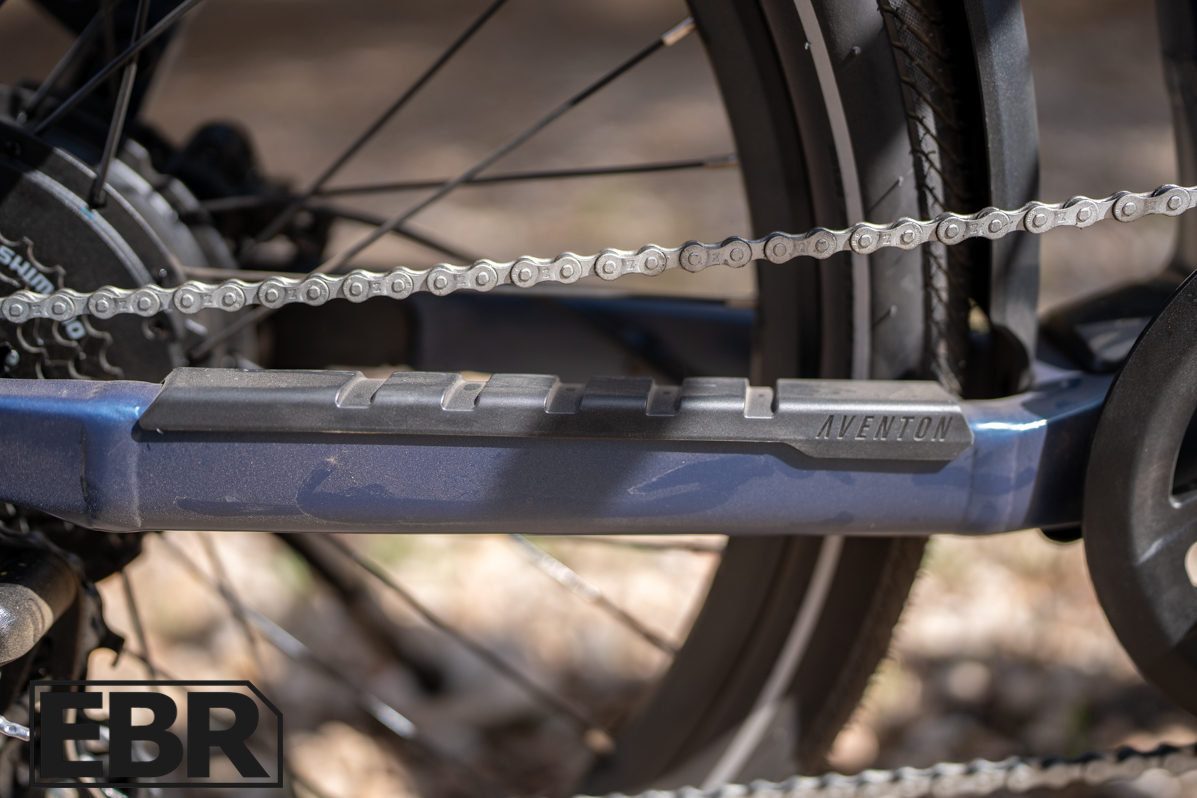
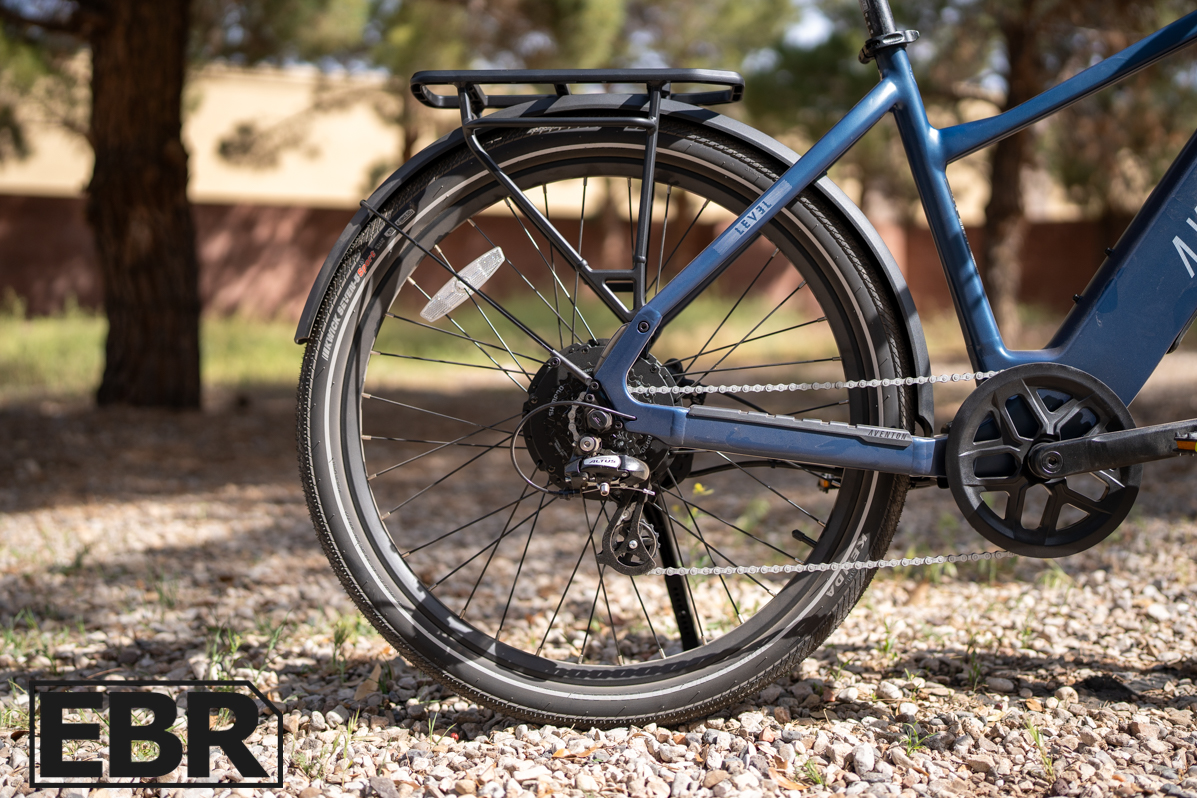
Drivetrain is an 8-speed Shimano setup with an Altus rear derailleur, a 12-32t Hyperglide cassette, a 48T chainring and 165mm alloy cranks.
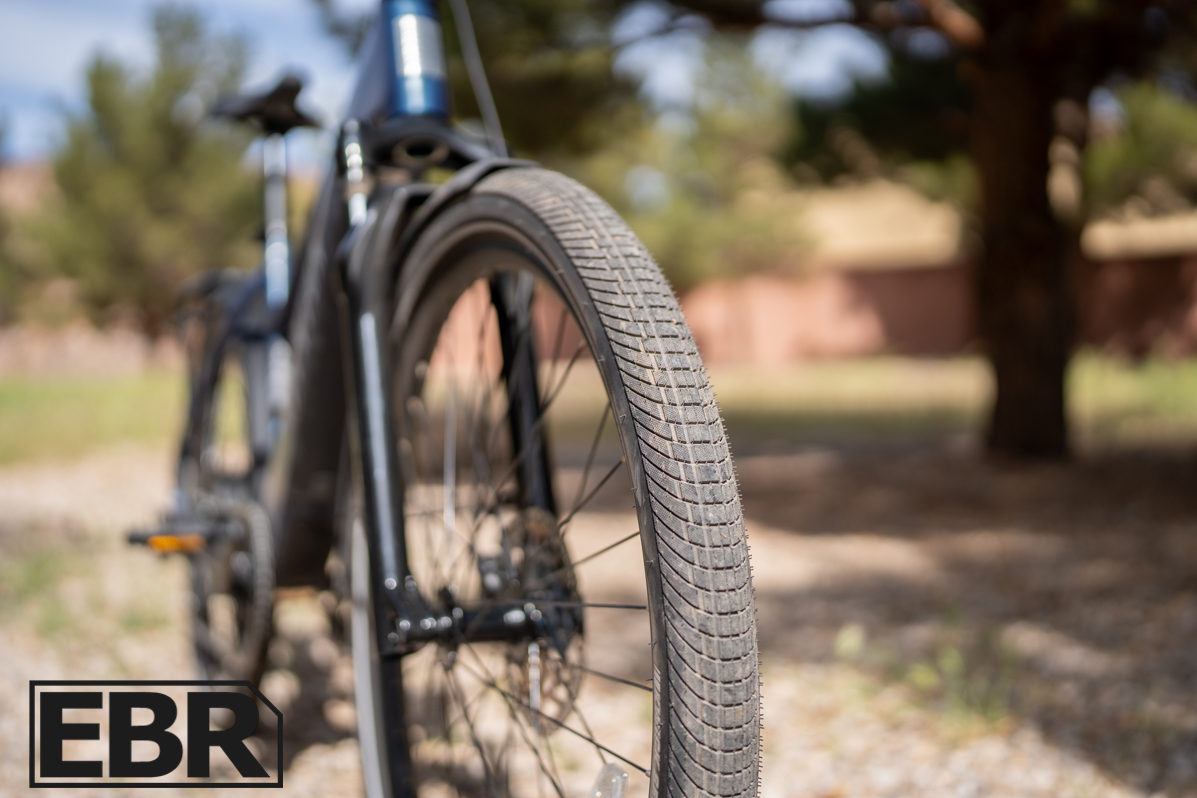
Wheels are 27.5 inch double-walled alloys wrapped in 27.5×2.2 inch Kenda Kwick Seven-5 tires with a commuter tread pattern.
Braking is handled by Tektro HD-E3120 hydraulic disc brakes, 2-piston with 180mm 6-bolt rotors front and rear and a rotor thickness of 1.8mm.
Suspension up front is an 80mm fork with a tapered steerer tube, preload and lockout adjustment and a 15×100 thru-axle. Out back, Aventon went with a suspension seatpost with 50mm of travel, a 30.9mm diameter and a quick release lever for on-the-fly adjustments.
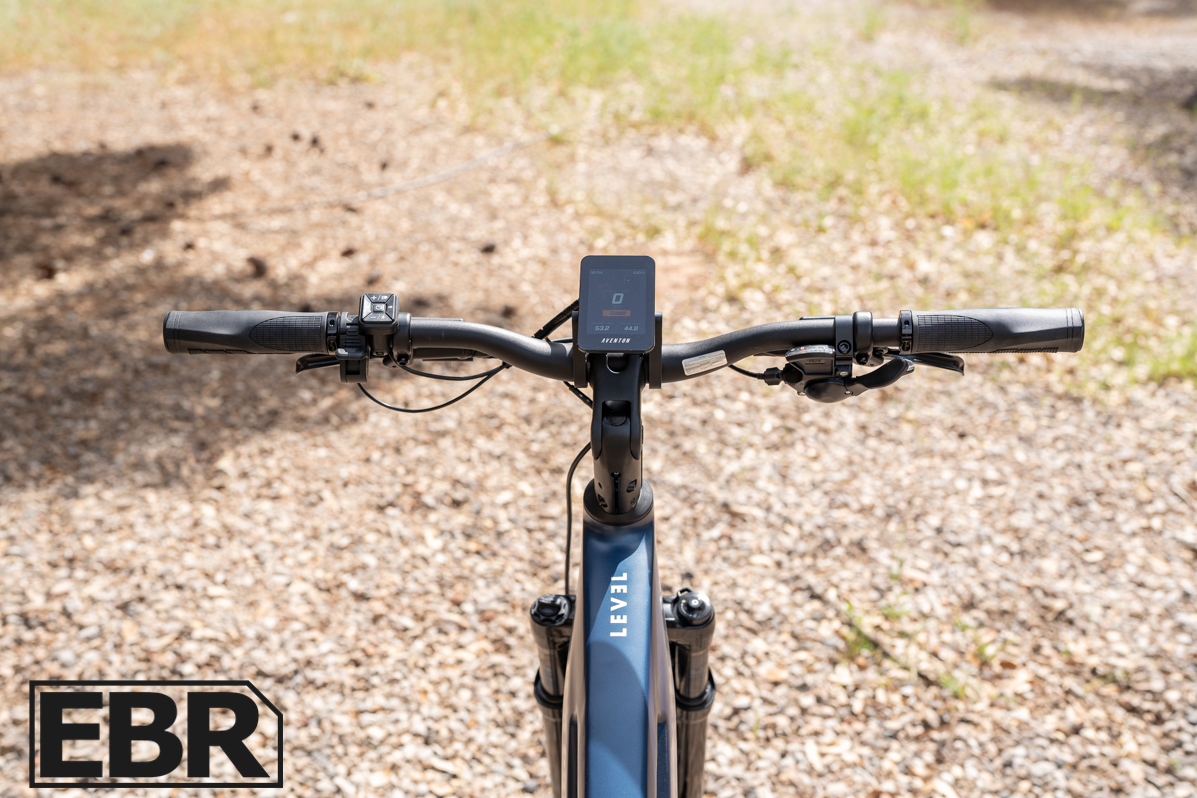
The cockpit runs a 680mm alloy handlebar with a 31.8mm center diameter. Tektro brake levers sit at each end with e-cutoff sensors, the right side has Shimano trigger shifters with a gear indicator window, the left has the throttle and center houses the color display. Lock-on ergonomic rubber grips round out the hand contact points.
Other contact points include an Aventon branded saddle with micro-adjust rails and included platform pedals in a standard 9/16 inch composite construction.
Screen / User Interface / App
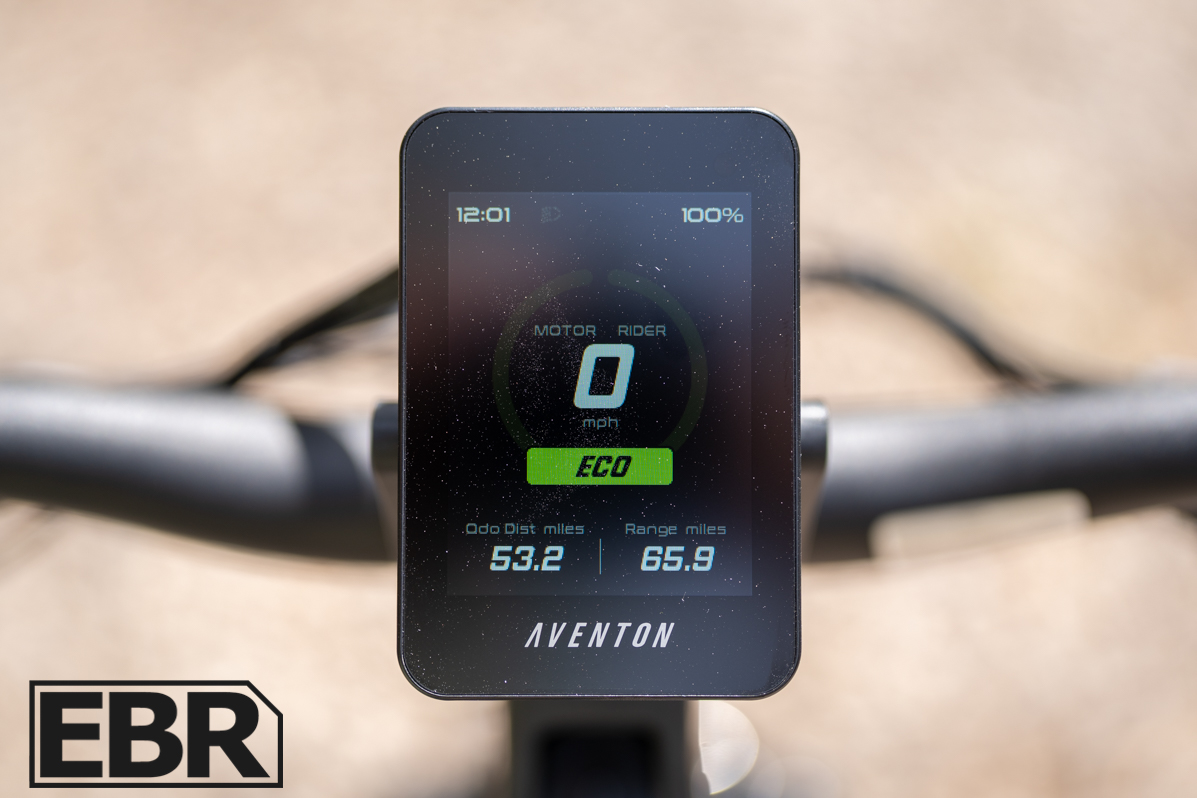
Aventon’s color display, the A280, sits front and center on the Level 4 REC. At first glance it looked familiar, but the data screens and layout have definitely been updated, and for the better. The display includes a USB-C port with a weather-protected cover for charging devices on the go.
The home screen has a cleaner, more refined interface and an expanded set of data screens that go well beyond what you used to get. Beyond the standard odometer and trip meter, you now get a human versus motor power split so you can see exactly how much of the work you are doing versus the motor. Max speed and average speed are still in there too.
App connectivity runs through the Aventon App, available on both iOS and Android, and gives owners a solid range of features and settings to work with. From the app you can access GPS ride tracking, motor tuning, cadence versus torque sensor switching, over-the-air updates and all of the security and tech features tied to the ACU. That includes geofencing, GPS and ride tracking and the rear wheel lock.
There is genuinely a lot you can do inside the Aventon App, and it is one of the more well-built e-bike apps we have come across. If you want to go deep on all of it, check out the full Aventon App User Manual.
Aventon Level 4 REC Model Options
For the first time in the Level lineup, buyers can choose between two distinct versions. The 750W rear hub model we are reviewing here is called the Level 4 REC, and the other is the Level 4 ADV, which runs Aventon’s new Ultra-S mid-drive motor. The differences go beyond just the motor type.
The ADV claims up to 110 miles of range, bumps torque up to 90Nm, comes with an electronic shifting Shimano CUES drivetrain and comes in around 7 pounds lighter. It also comes in at about $800 more at $2,799, so that is worth factoring in depending on what you are looking for.
Both versions are available in either a high-step or step-through frame, so no matter which motor you go with you have the option to pick the frame style that suits you best.
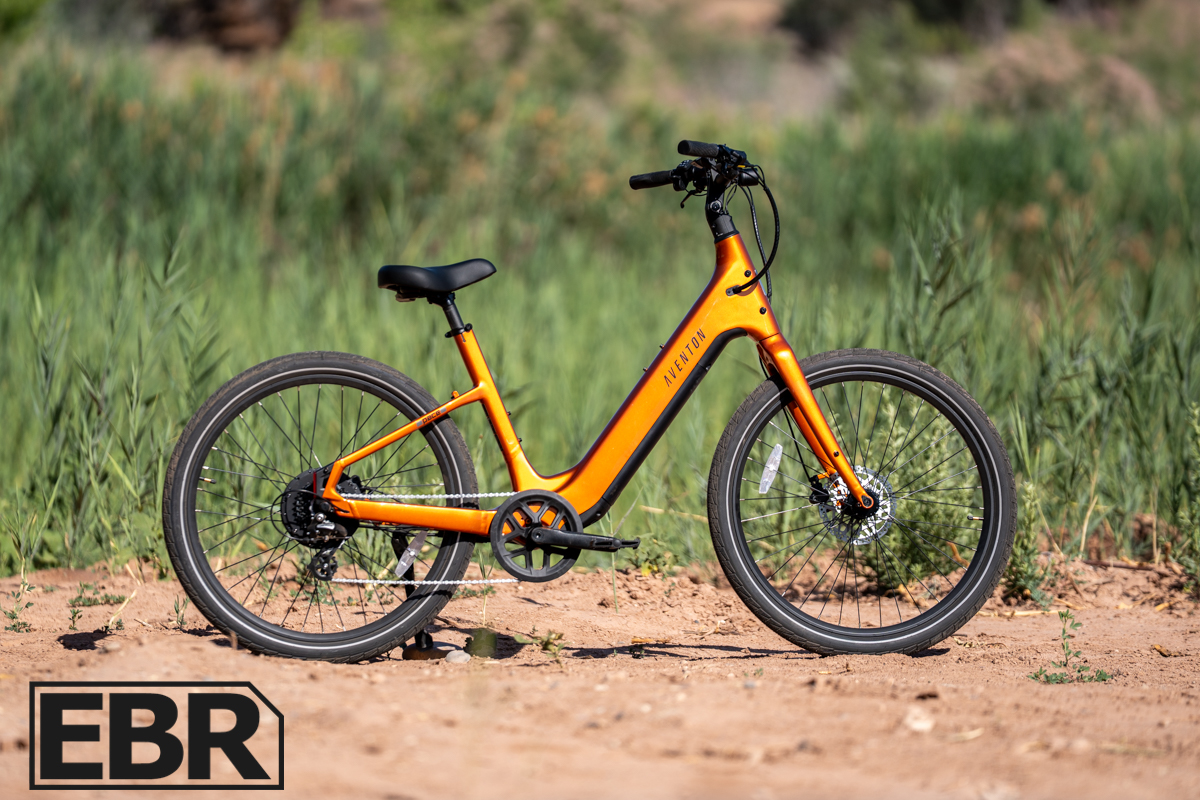
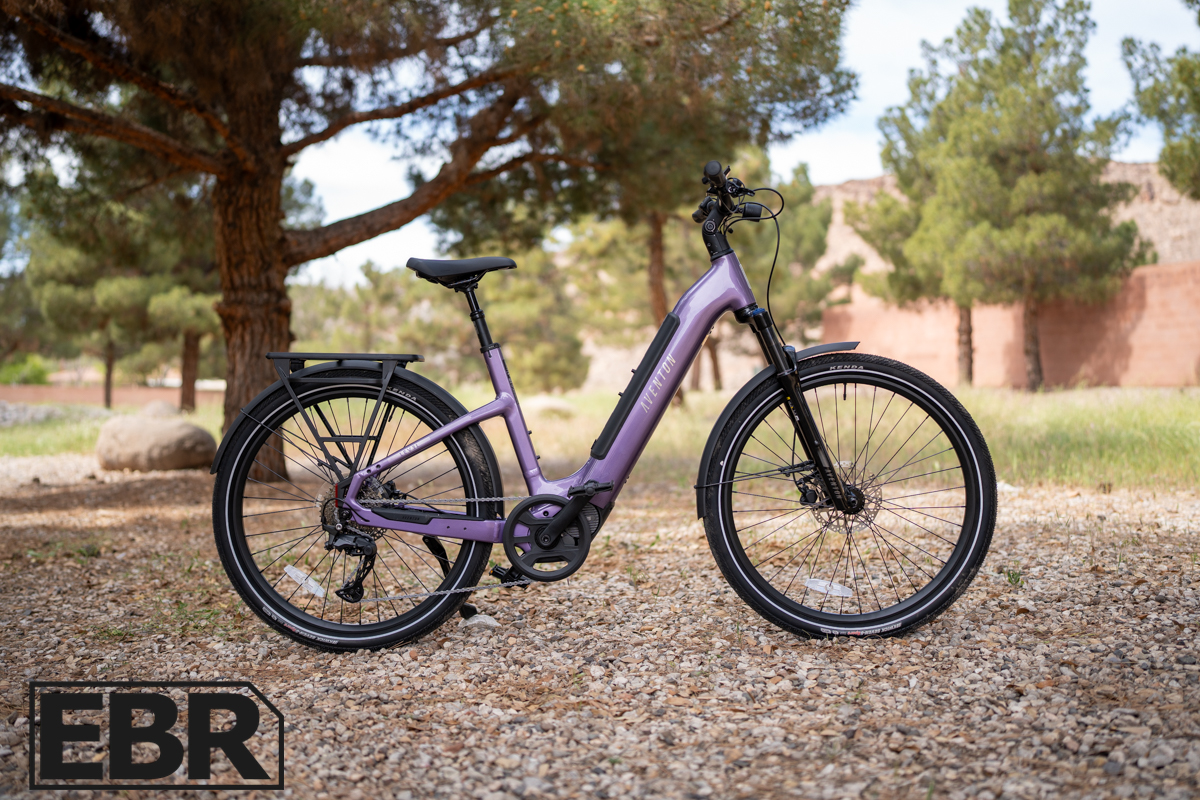
Across the full lineup there are six colorways to choose from, though not every color is available on every configuration, so you will want to pick your frame style first and then see what colors are on the table. All of them are matte finished and with the gravity cast front triangle they genuinely look sharp. The REC comes in matte black and matte storm blue, the latter of which is what I have here, along with lighter options like glacier mint and sandstone if you want something a bit less subdued. The ADV adds two exclusive colors in a matte purple called Haze and a camouflage green, both of which look great in person.
For rider fit, Aventon goes beyond the typical one-size-fits-most approach and offers each frame style in two sizes, a SM/MED and a LG/XL. Across all the combinations that gives you a fit range stretching from 4’11 on the low end of the step-through to 6’4 on the high end of the high-step.
Included in the box you get the usual kickstand and pedals, but also front and rear LED lighting with turn signals and a braking indicator, a rear rack and full front to rear fender coverage.
I received this bike a few weeks ahead of its official launch, so I do not have confirmed details on optional accessories just yet, but knowing Aventon I would expect a few to surface once the bike goes live. And if you are reading this, it already is.
Is The Aventon Level 4 REC Worth Buying?
Is the Aventon Level 4 REC worth buying? Yeah, it is. If you are looking for a strong, tech-forward commuter with serious security built in, it is hard to find much competition at the $1,999 price point. The combination of the new 750W motor, regenerative braking, ACU security suite and deep app customization is not something you typically see bundled together at this price, and that makes it stand out in a segment that tends to play it pretty safe.
Who is it not for? If you are not interested in a tech-heavy setup and theft is not something you lose sleep over, a good chunk of what the Level 4 REC offers might feel like more than you need. There are simpler, more straightforward commuters out there if that is what you are after.
But for most riders who appreciate having that layer of security and welcome the kind of connected, tunable experience that fits right in with everything else in their lives, the Level 4 REC makes a strong case for itself.
And remember, if you find yourself wanting to go even further, bumping your budget up $800 gets you into the Level 4 ADV with the mid-drive motor, electronic shifting and a claimed 110 miles of range. Either way, Aventon has put together a lineup that is genuinely hard to ignore right now.
Pros
- Regenerative braking with both coasting and braking modes, adjustable across sensitivity levels 1 through 5.
- Ride tuning available in the app at each individual pedal assist level.
- Both torque and cadence sensors on board, switchable through the app.
- Real-world range results were impressive, 96 miles in Eco mode and 43 miles in Turbo mode under actual riding conditions.
- Some of the best security in the segment thanks to the ACU, which brings 4G connectivity, geofencing, an electronic rear wheel lock and unusual activity alerts.
- Noticeable power upgrade moving from the Level 3’s 500W rear hub to the new 750W motor, with Boost mode adding an extra burst on top.
- OTA updates keep the bike current with the latest fixes and improvements without a trip to the local bike shop.
Cons
- The electronic battery lock is a cool feature, but a physical key backup would be a welcome addition in case the software ever decides not to cooperate.




Reader Interactions