

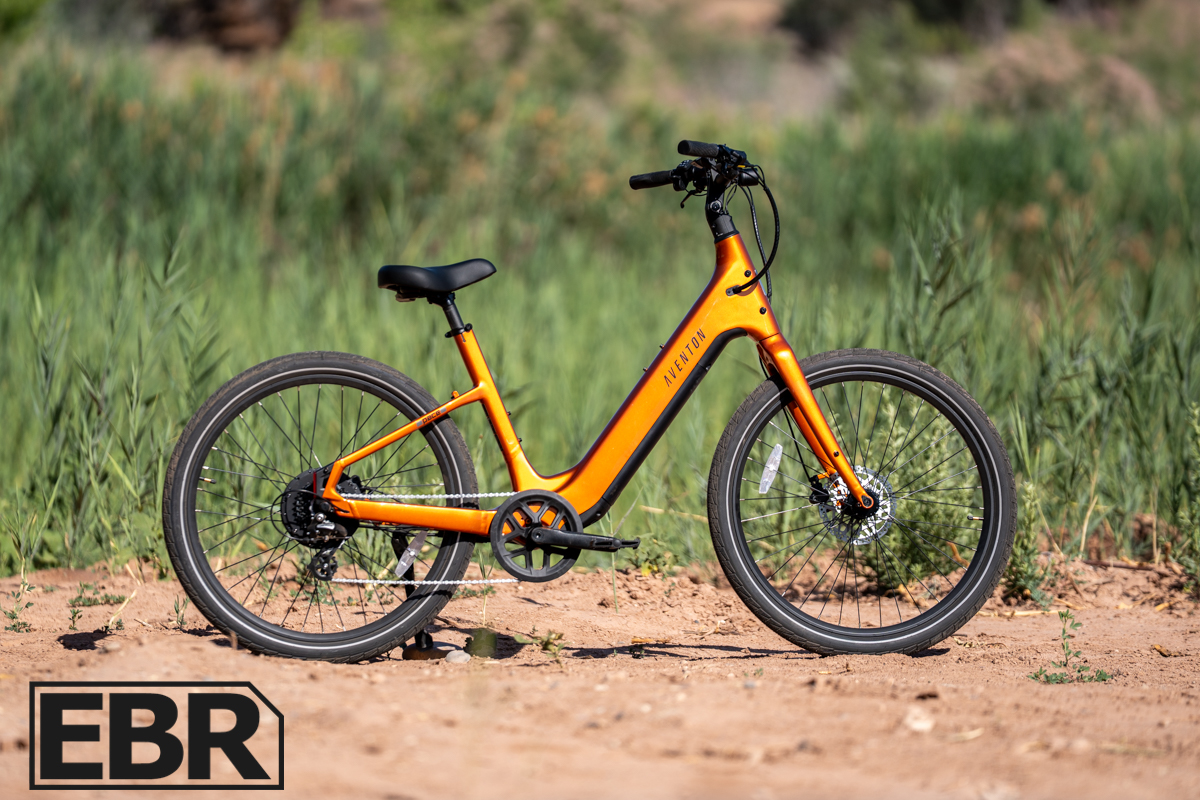
The Aventon Pace lineup has been one of the best-selling and highest-rated cruiser e-bike families in the United States for several years running – and with good reason. The Pace 5 REC is Aventon’s latest model, and comes with a few upgrades and key changes.
After the Pace 4 took a slight step away from the classic comfort-cruiser feel with its BMX-style riser bars, Aventon decided to go back to the original Pace 500 roots, bringing back swept-back Dutch-style handlebars and a slightly more comfort-focused geometry.
They also increased the power on the Pace 5 REC 500 watts to a full 750 watts, and the result is a bike that feels peppy, powerful, yet controlled and nimble. Pair all of that with the Aventon ACU, regenerative braking, and a 733Wh battery, and the Pace 5 REC is a very impressive bike for $1,799.
What’s clear is that Aventon continues to refine and improve with each generation. The build quality, component selection, and overall polish of the Pace 5 REC puts it in conversation with legacy brands like Specialized and Trek – and the price point makes it a genuinely compelling choice for anyone looking for a comfortable, capable, and connected cruiser e-bike.
My Experience Riding The Pace 5 REC
Right out of the gate, Aventon went back to their roots with the Pace 5 REC – and you feel it as soon as you get on the bike. The swept-back Dutch cruiser handlebars are back, and compared to the BMX riser bars on the Pace 4, this immediately puts you in the more relaxed, upright riding position I’d expect from a cruiser e-bike.
Now, if I’m being precise about the geometry, I’d say the Pace 5 is in between a cruiser and a performance-oriented commuter. This is definitely not an ultra-relaxed beach cruiser geo (characterized by a very upright riding position with very short reach); however, it’s a little bit more aggressive than a classic dutch-style e-bike. The reach is just a bit longer than most dutch cruisers, and the stackheight (technical jargon that basically tells you the vertical distance between the pedals and handlebars) is a little shorter than most as well.
For me personally (5’11” riding the large frame Pace 5), I ended up dropping the saddle an inch or two and raising the stem as high as it would go, and that got the fit dialed in fairly well. I’ll be honest, I tend to drop the saddle a bit on cruisers in general, so I don’t think that’s a knock on this bike. Just something to play around with when you first get it and you’ll find what works for you.
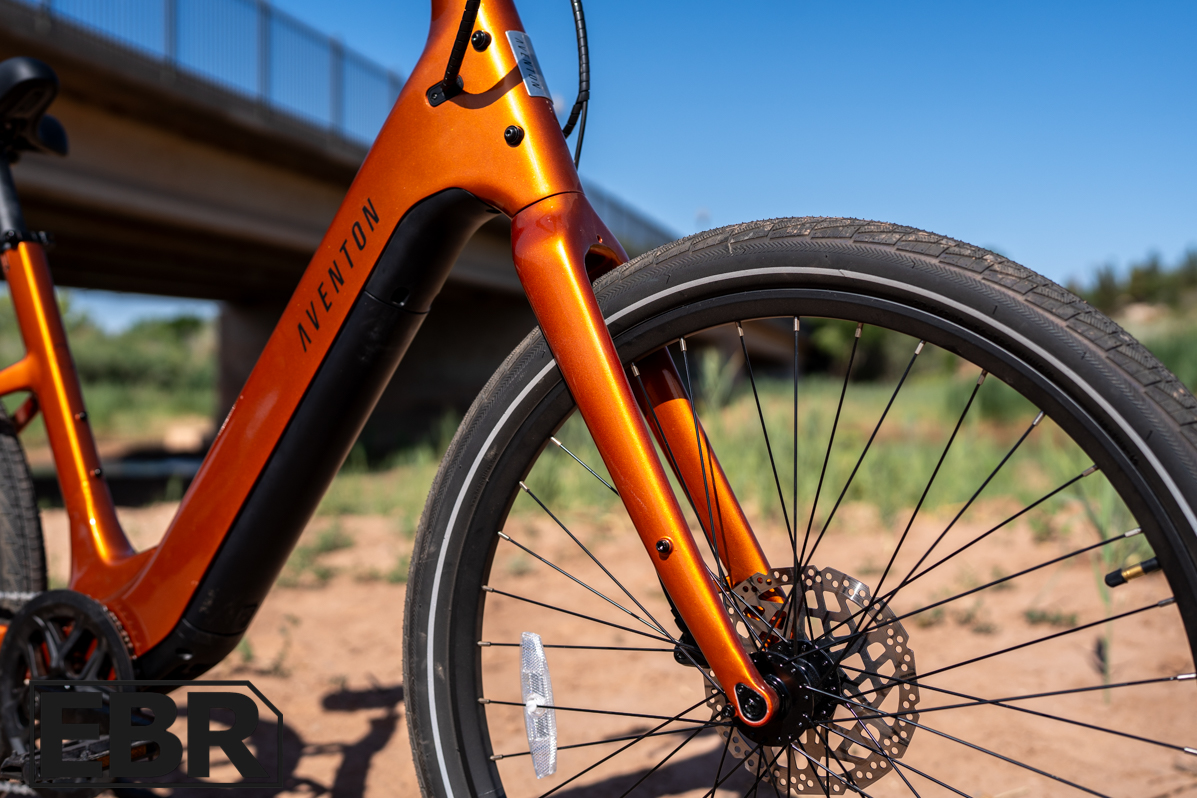
From a handling standpoint, this is one of the better-handling cruisers I’ve ridden. A big part of that is the weight to power ratio. At just over 60 lbs, the Pace 5 REC is lighter than most of Aventon’s other models, and that lightness just makes the bike feel fun and nimble. The step-through frame is very stiff (more so than many other step-throughs), and it gives you a confident, responsive feel when riding. You’re not getting any flex or wobble – it just feels solid.
Combine the lighter weight frame with a more powerful 750W motor (max of 1440 watts), and the bike just feels relaxed and fun to zip around on. It’s one of those bikes where you find yourself just wanting to keep riding.
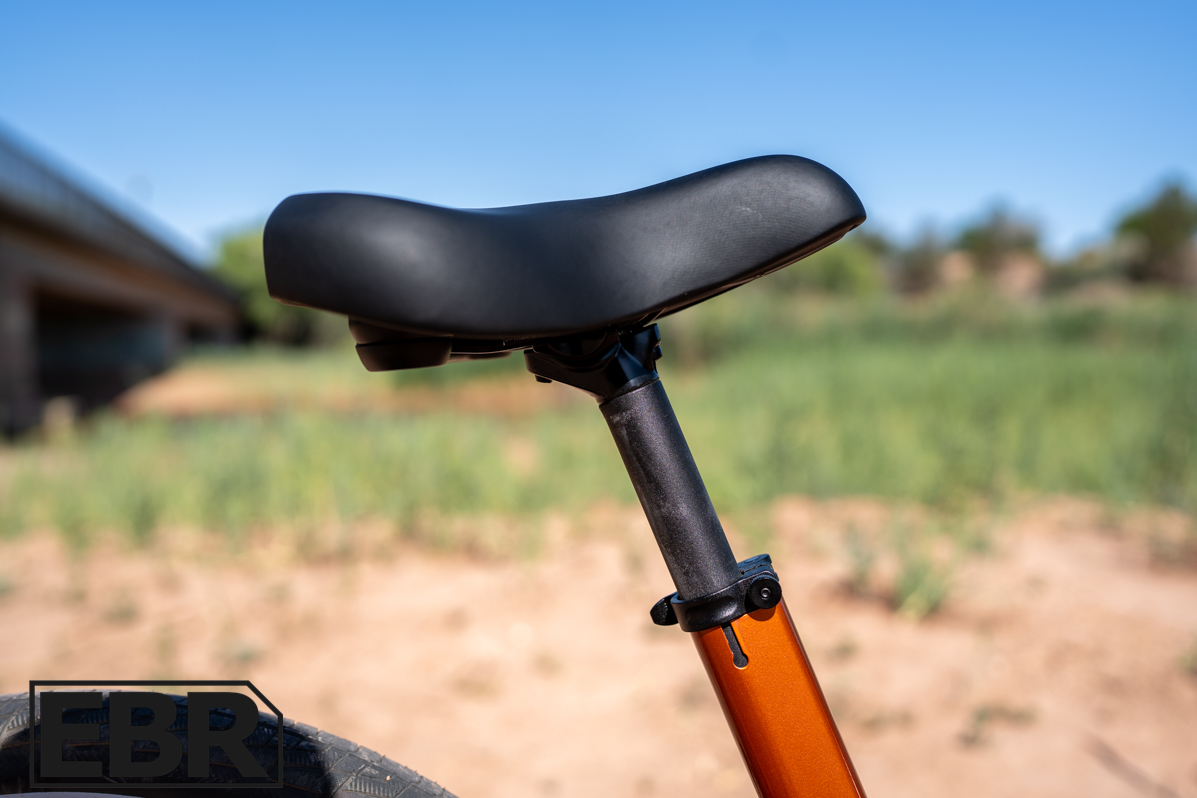
One thing I do want to note is the lack of a suspension seat post. Aventon has included their suspension seat post on pretty much every other bike they’ve released over the last couple years, so its absence here is a little surprising- especially on a bike that’s marketed as their comfort cruiser. If you’re someone who wants a little more seat comfort, then just grab an aftermarket suspension post and you’ll be good to go. But it’s something I would have liked to see Aventon include, and hopefully it’s something they consider adding down the road.
And just to be clear – I’m not saying this bike needs front suspension. A rigid fork is totally appropriate for a lightweight cruiser like this and keeps the weight down. It’s really just that seat post that I think would have been a nice touch.
Power (Motor & Battery)
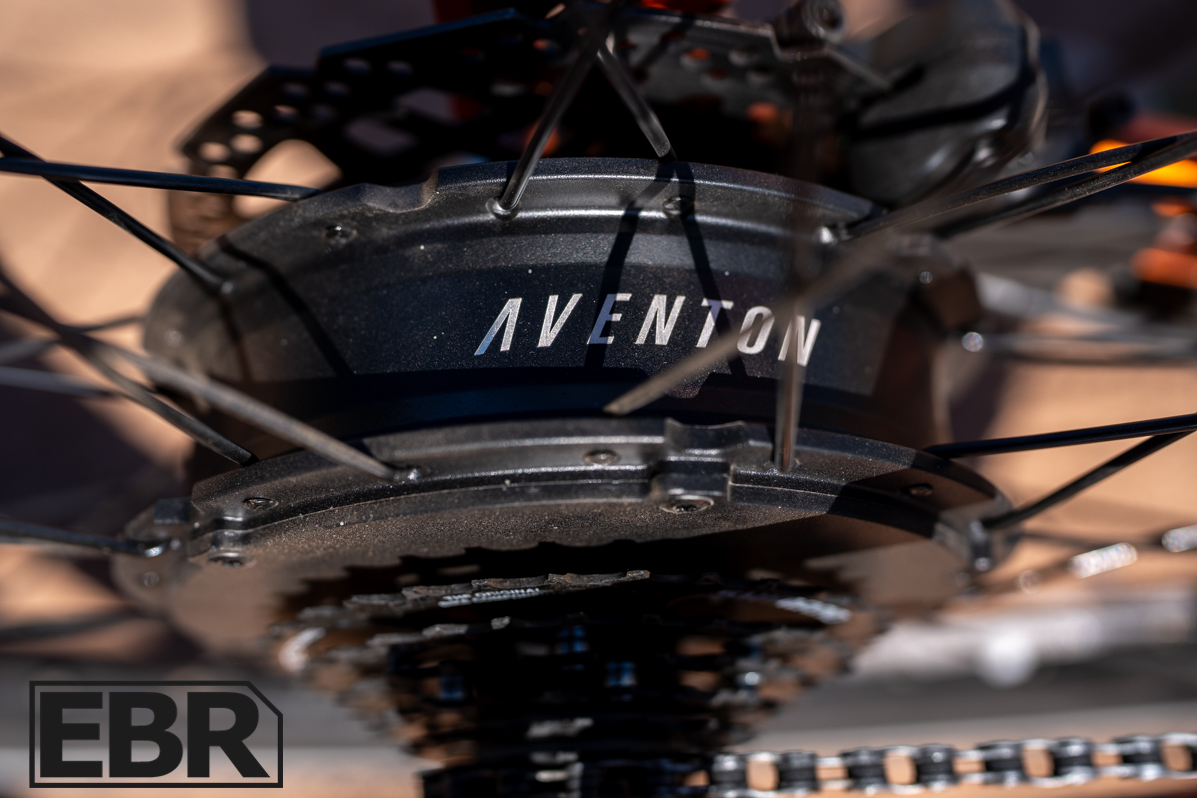
This is where Aventon really stepped things up with the Pace 5 REC. The Pace 4 had a 500W motor that peaked at 864W – which was fine – but the Pace 5 REC jumps to a 750W rear hub motor that peaks at 1,440W in Boost Mode and 1,188W in standard Turbo. On the torque side, you’re looking at 80 Nm in Turbo and 96 Nm in Boost. And honestly, you feel that upgrade the second you start pedaling. This thing is punchy.
What I think is really impressive though isn’t just the raw numbers, it’s how the motor is tuned. For a rear hub motor, the torque sensor on this bike is honestly one of the better ones I’ve tested. The motor engagement is smooth, natural, and it doesn’t jolt you forward if you push down on the throttle or start pedaling in max assist. Instead, the output is predictable in the sense that I was never surprised by the motor. It almost felt like the motor just knew exactly how much power I was expecting.
In our speed tests, throttle got us to 20 mph in about 6 seconds, pedal assist hit 20 mph in around 5 seconds, and 28 mph came in at about 9 seconds. For a comfort cruiser, those are really solid numbers.
It’s also worth noting (and we will go into more depth in the next few sections) that riders can adjust the power output of the motor for each assist level. If you want it as powerful as possible (like I did), you can increase the output from the default 90% to 100%. If you want it more controllable, you can decrease the output to whatever % you feel comfortable with.
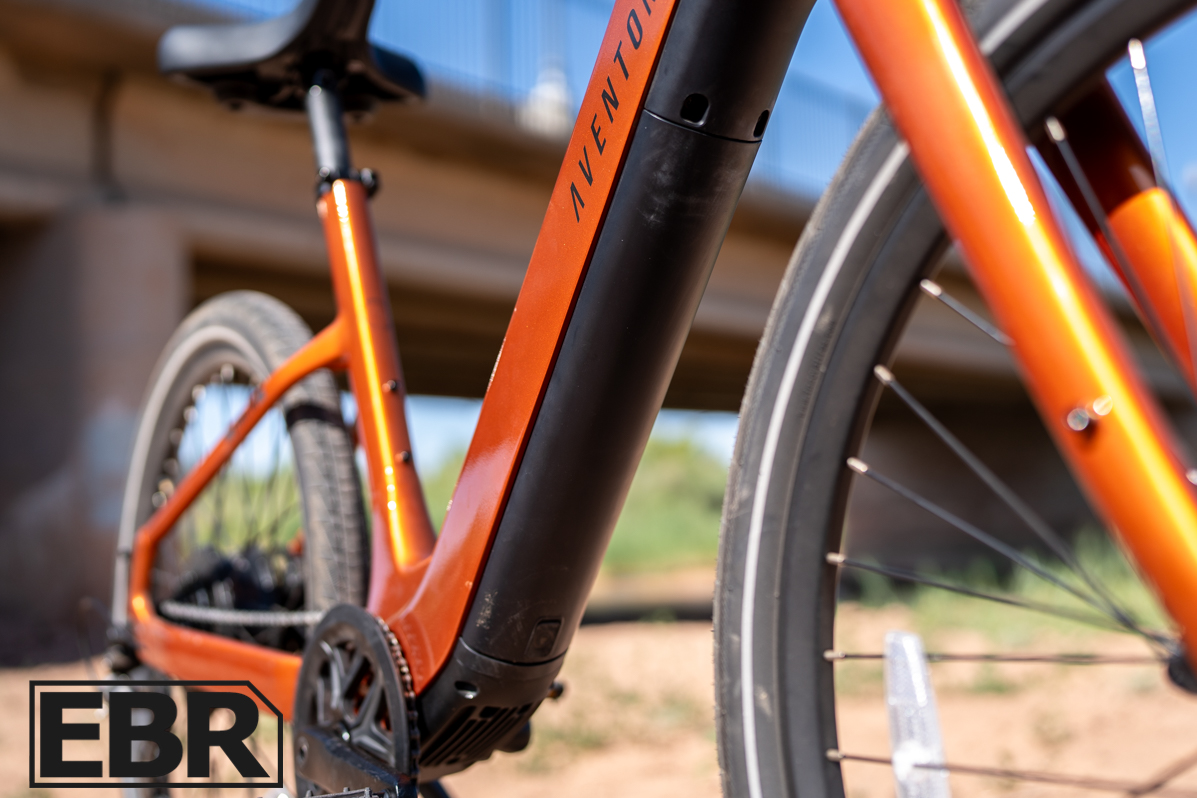
On the battery side, the Pace 5 has a 36V, 20Ah, 733Wh pack using LG 21700 cells. The battery pack is once again stored cleanly in the down tube and is removed without a key. This might throw you off at first, but is a great feature that I love. You just unlock the battery through the display or the app, and it pops out. No more fumbling around for a key, which I appreciate more than I probably should. The battery is also UL 2271 certified, which is something that matters and is worth looking for when you’re shopping for an e-bike at any price point.
Range
Estimated Range (from Brand): 75 miles
Real World Range Test Results: 50 miles (Turbo); just over 75 miles (ECO)
The range on the Pace 5 REC was very impressive – especially on our MAX power test. We were able to get almost 50 miles in Turbo and we got just over 75 miles in ECO, which is right in line with what Aventon advertises.
A standout feature I want to highlight is the regenerative braking system. When you brake or slow down, the motor recaptures energy and feeds it back into the battery instead of dissipating as heat (and being wasted).
We estimate that you’re probably getting an extra five or six miles out of the battery from this. You can also control how aggressive the regenerative braking is in the app, dialing it from 1 to 5. It’s just a really nice feature that adds up over longer rides.
Beyond regen, the 733Wh battery is a good size for this class of bike, the tires are fast, and the fact that this is a lighter bike works in your favor here too. Whether you’re doing a few short trips around town or heading out for a longer ride, range anxiety really isn’t something you’re going to have to worry about with the Pace 5 REC.
Components
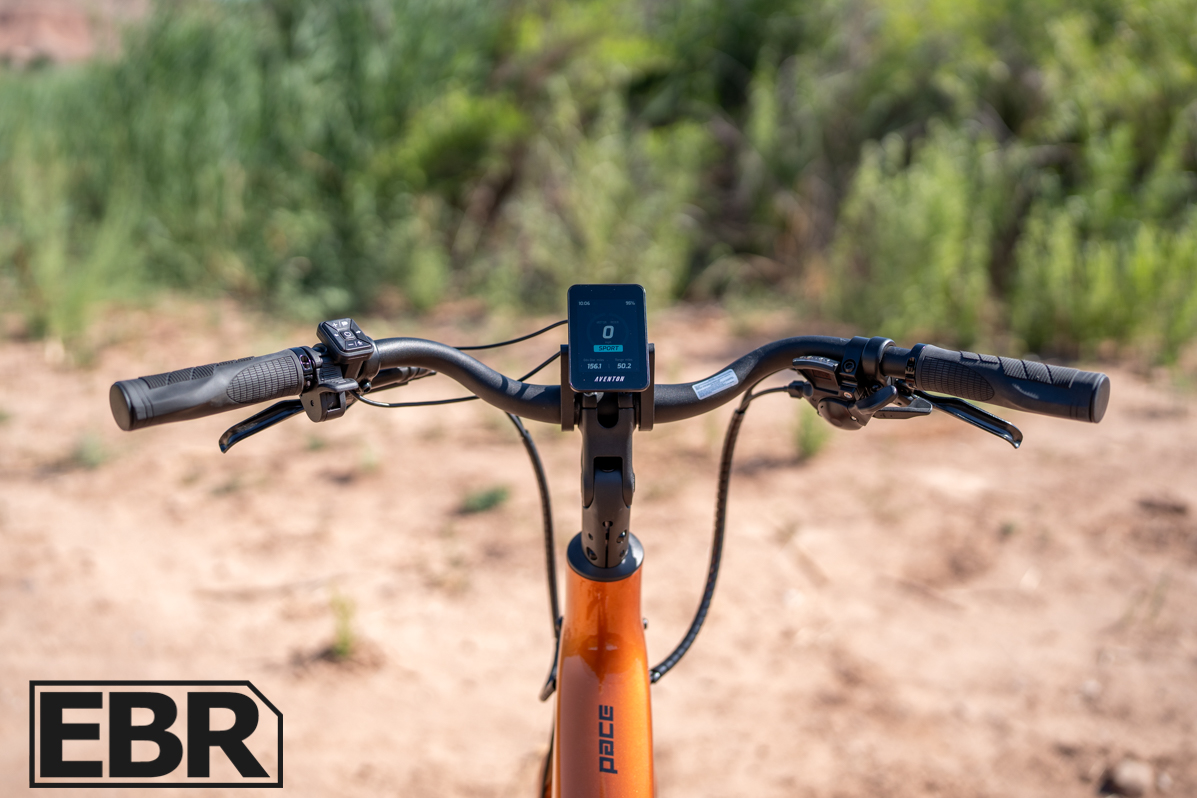
For a $1,799 e-bike, the Pace 5 REC is well-specced – and in several areas, it punches above its price class. The overall build quality reflects how much Aventon has matured as a brand over the past several years, which is probably most evident when you look at the gravity-cast frame and clean cable routing (which I love how they ran the cables along the side of the downtube vs through the steerer tube). From a looks standpoint, I think the bike looks more expensive than it is.
I also like how pretty much all the main components are name-brand and easily serviced at your local bike shop (even if it’s not an Aventon dealer).
 |
 |
 |
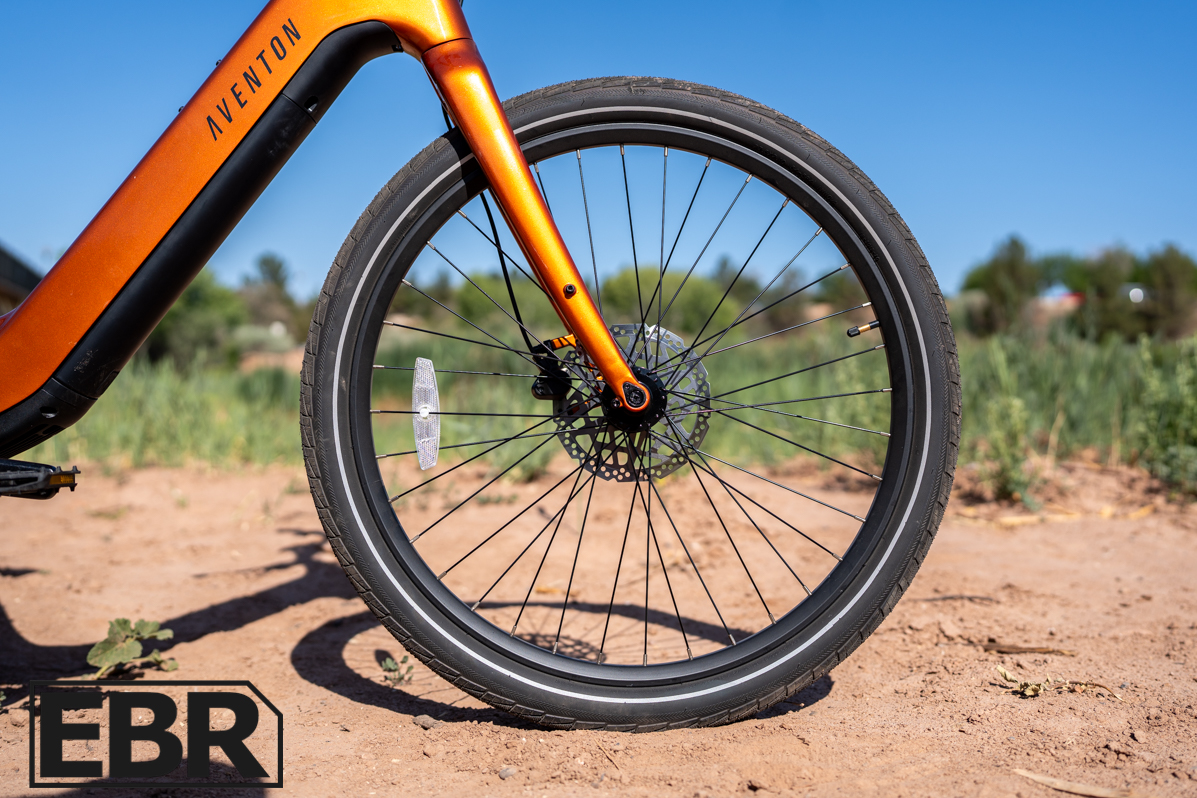 |
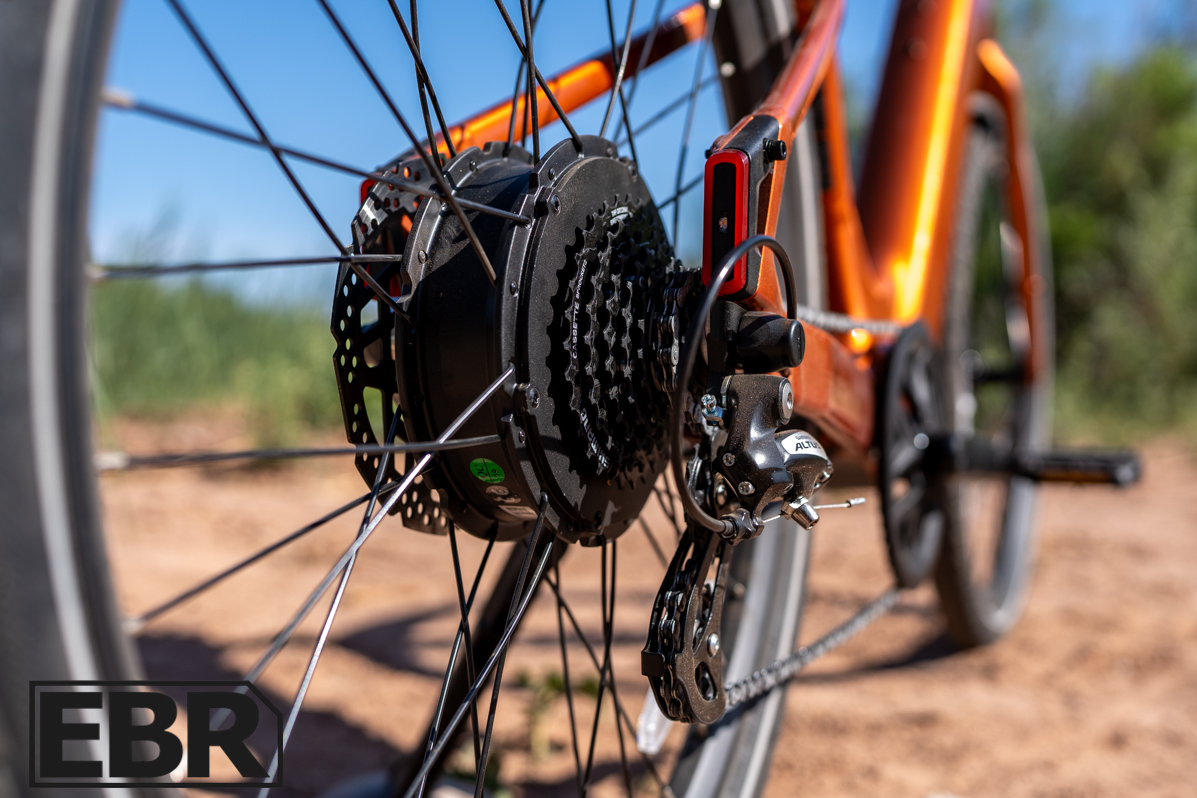
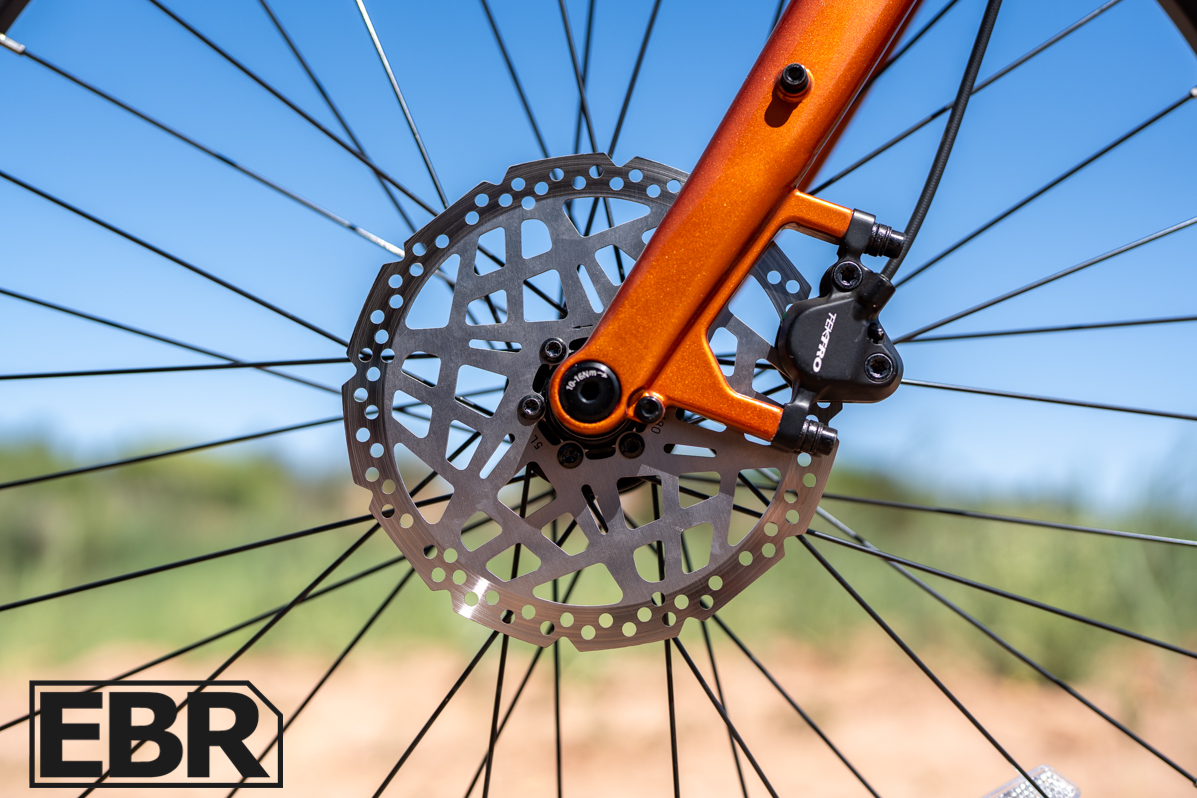
- The Tektro HD-E3120 hydraulic disc brakes have 180mm rotors on the front and rear, and they stop the 62 lb bike easily.
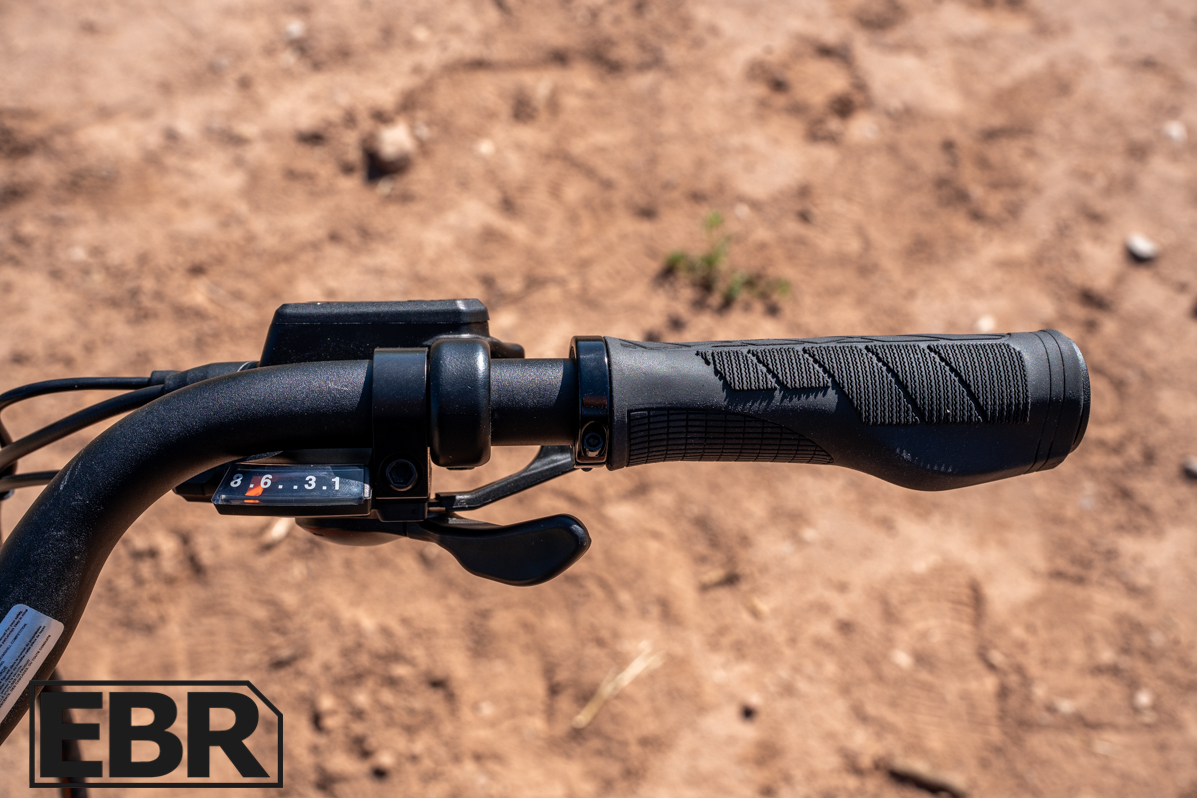
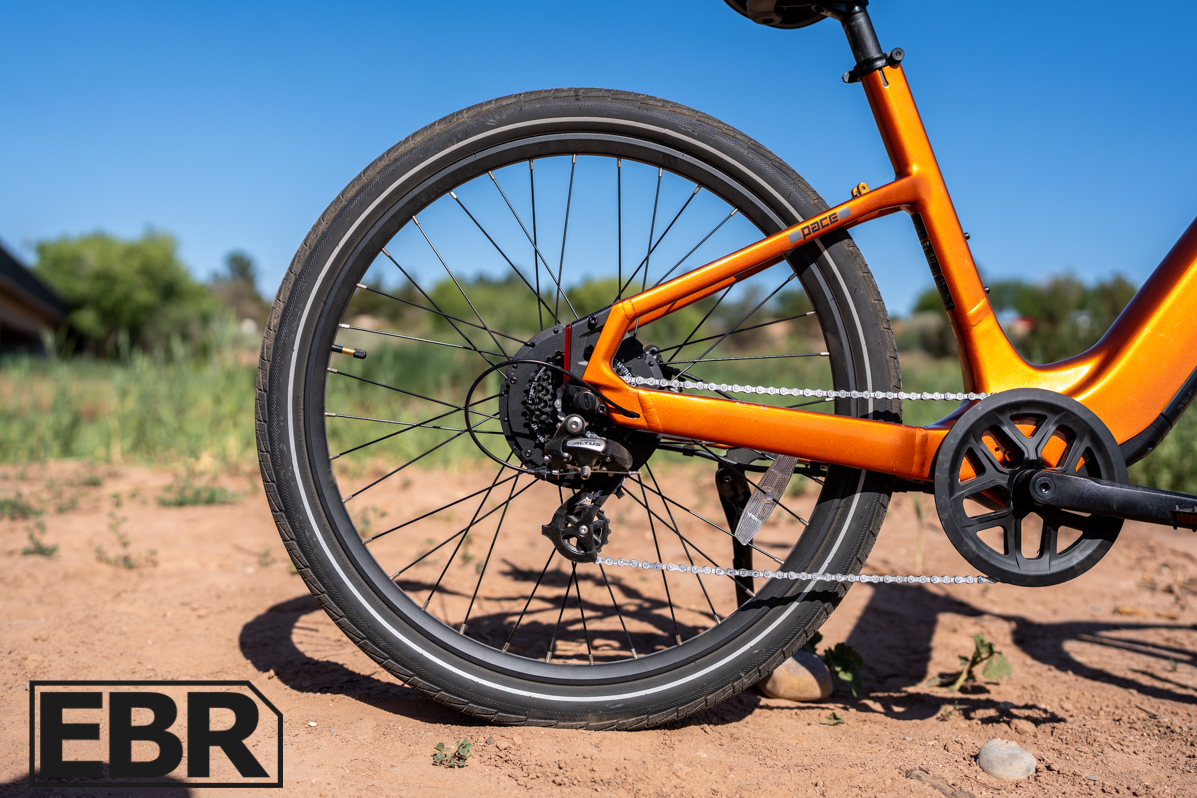
- The Shimano Altus 8-speed drivetrain isn’t one of Shimano’s premium drivetrains, but I’m not sure you need something nicer (and more expensive) than that. The gear range (12-32T) was decent where I wasn’t ever really ghost pedaling until I got close to 28 mph, so having one or two additional gears would be welcome.
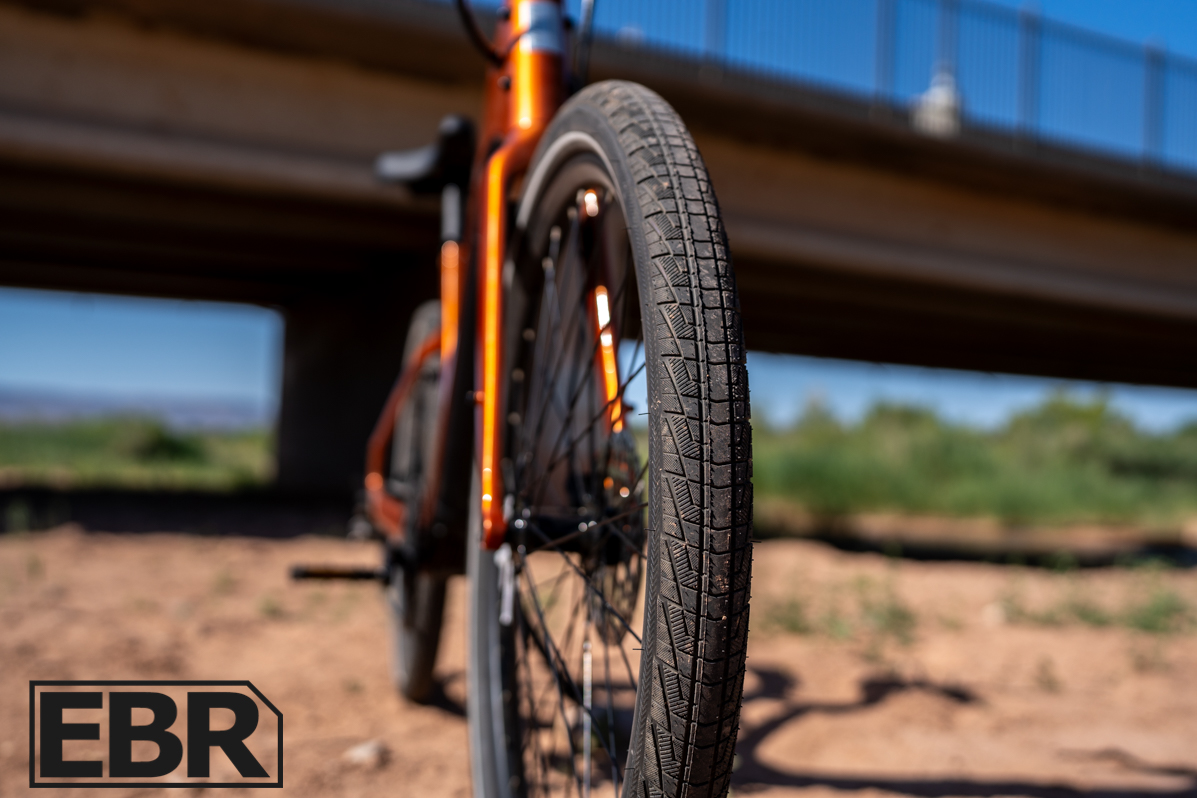
- The 27.5×2.1″ 33TPI tires are a firm-compound commuter-style tire that rolls efficiently on pavement and looks like it will be pretty durable. The trade-off is that the firmer compound provides slightly less braking grip than a softer rubber tire, and riders who prioritize extra grip or stopping power on wet surfaces can always swap tires.
- The wide saddle is plush (I’d say about average) and works well for the upright cruiser position, and the lock-on rubber grips have a slight palm flare that makes it more comfortable on my wrists.
- The adjustable stem makes it easy for riders to adjust the handlebar height and reach. I would like to see a stem that lets you adjust the handlebars even higher though, as that would make the bike even more upright for those who want that.
One notable omission is a suspension seat post – something Aventon has included on most of their other recent models – which would have been a fitting addition to a bike marketed squarely at comfort-first riders.
Assembly, for those buying direct-to-consumer, is straightforward. The main components that require regular servicing – brakes, derailleur, chain – are all from known brands that any bike shop can handle, which adds genuine long-term ownership value.
Screen / User Interface / App
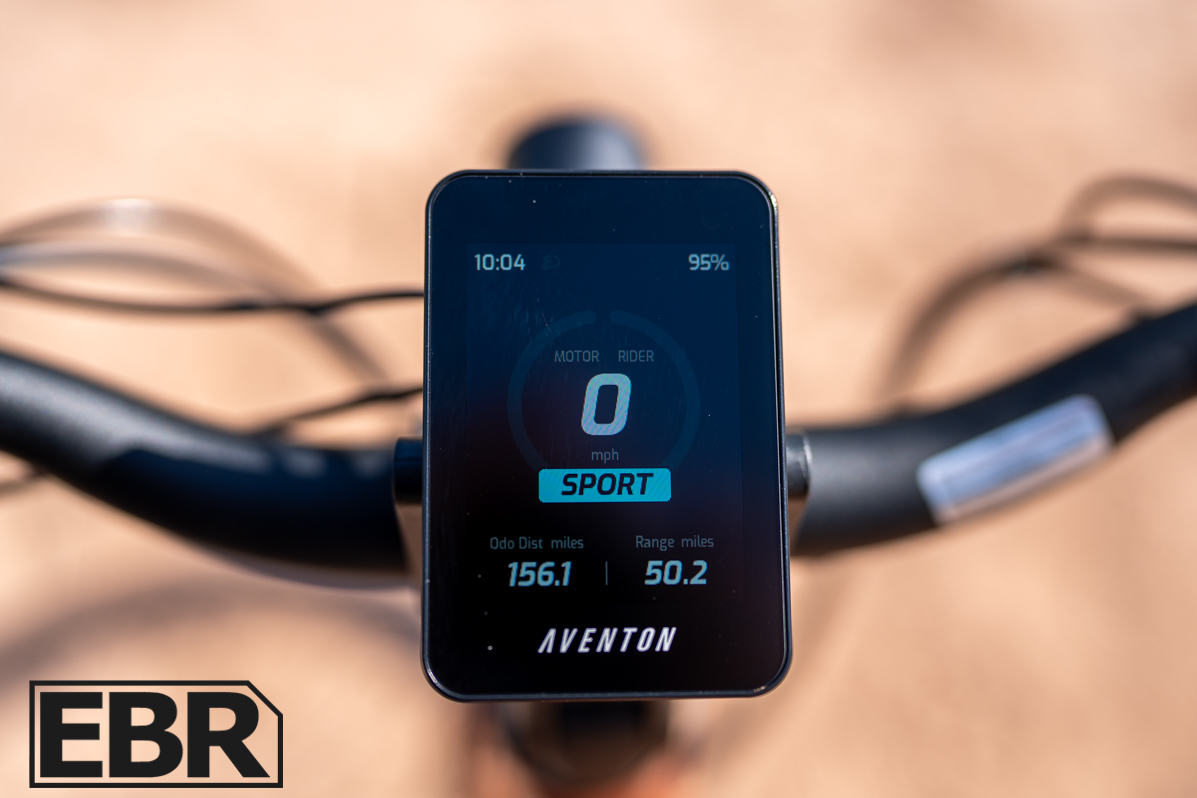
The Aventon Pace 5 REC has the A280 customizable center display, and it’s one of the better display experiences in this price range. Mounted above the handlebars at a slightly elevated angle to reduce the need to look straight down while riding, the A280 is easy to read and logically laid out. Default readouts include battery percentage, time of day, assist level (Off / Eco / Sport / Turbo / Boost), current speed, and estimated range. Riders can cycle through additional screens showing rider power, motor wattage, torque, and cadence – useful data for those who like to optimize their riding – and the display is fully customizable through the Aventon app.
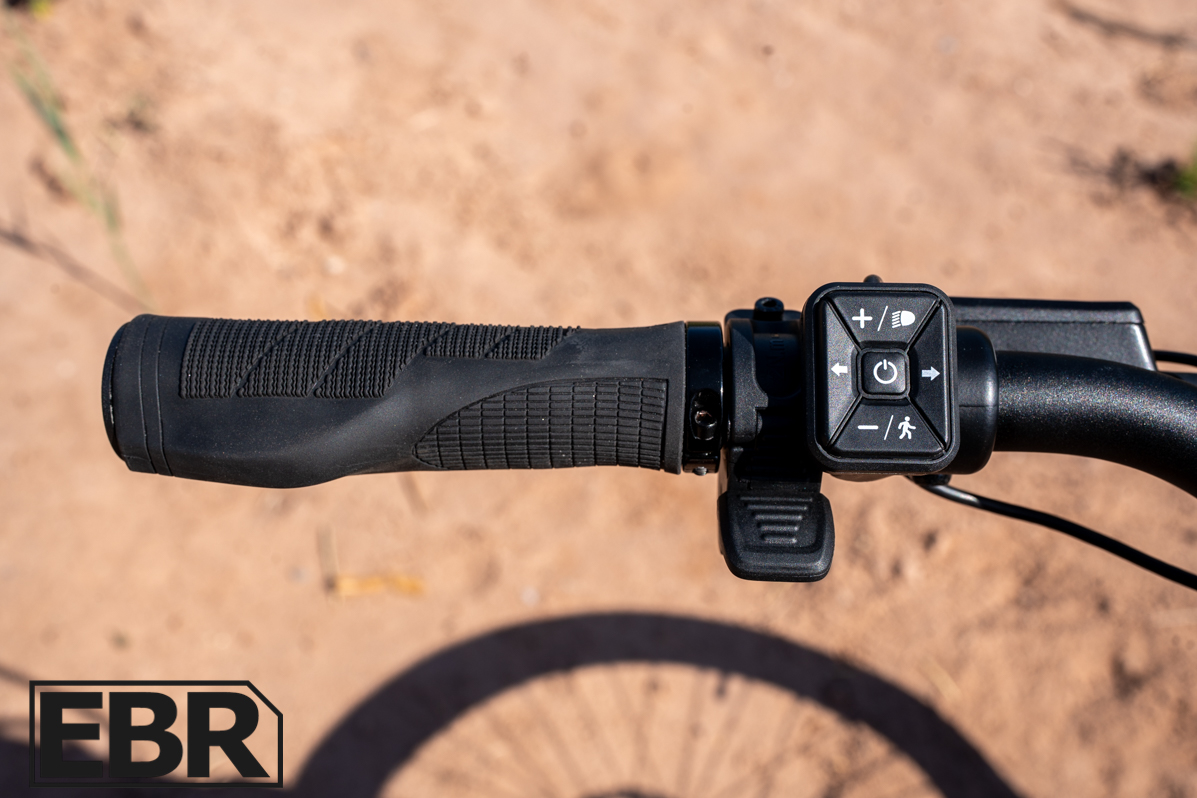
Access to deeper settings is available by holding the plus and minus buttons simultaneously, where riders can configure headlight mode (manual, auto, or always-on daytime running lights), startup assist level, display brightness, battery lock, unit selection, language, and more. Critically, there is no physical key for the battery – it unlocks via the display or app, a design choice that most riders will quickly appreciate.
The Aventon App is where the real depth of the system comes through. Pairing is quick via QR code. Once connected, riders have access to Ride Tune – arguably the most powerful feature on the bike – which allows independent adjustment of max torque, assistance level, and pedal response for Eco, Sport, and Turbo modes. This gives riders an extraordinary range of customization: dial the power down to a gentle assist for new riders or elderly users, or push it all the way up for maximum performance. Boost Mode bypasses customization and pushes everything to 100%.
The app also manages the full ACU (Aventon Control Unit) security and connectivity suite: 4G/GPS tracking (requires IoT subscription – free for one year, then $20/year), integrated e-lock (locks the rear wheel remotely), geo-fencing, motion alerts, Apple Watch connectivity (lock/unlock and ride tracking from your wrist), and over-the-air firmware updates. The app even includes a dealer/service locator and in-app Aventon support access. It’s a remarkably full-featured ecosystem for a $1,799 bike, and the interface is clean enough that even non-tech-savvy riders will find it approachable.
Aventon Pace 5 REC Model Options
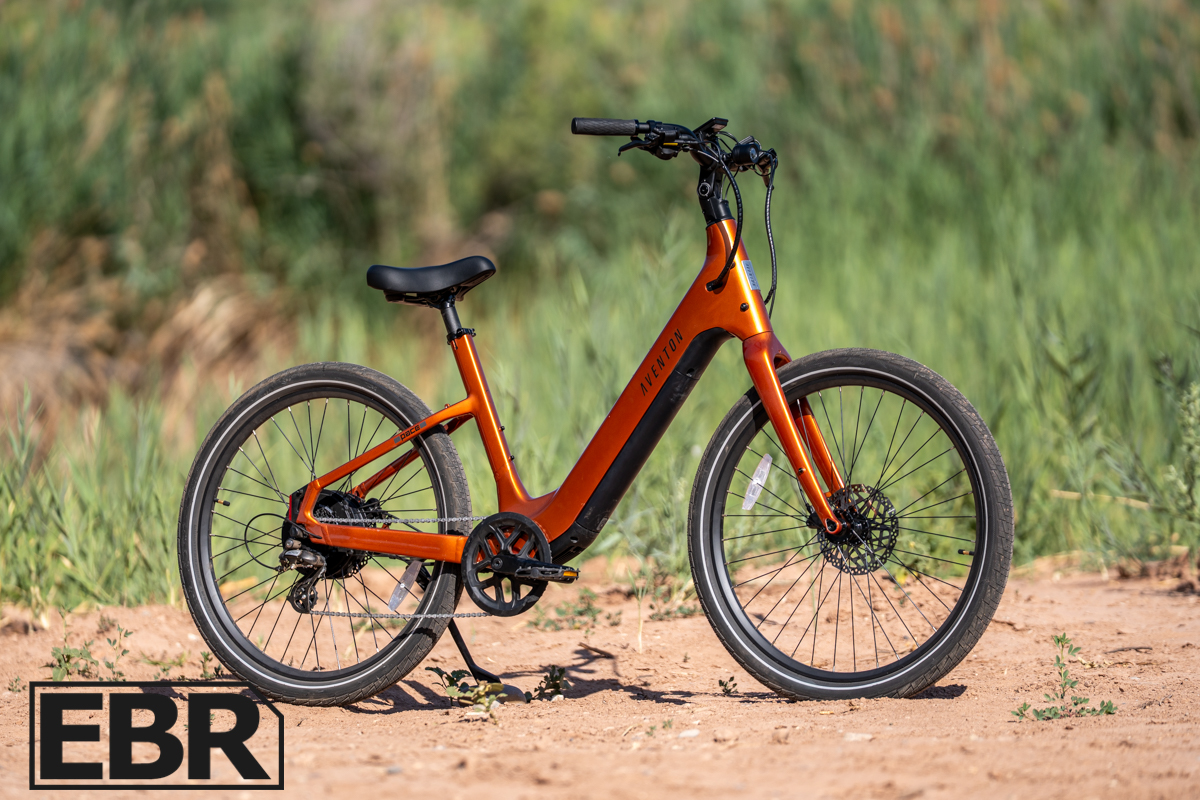
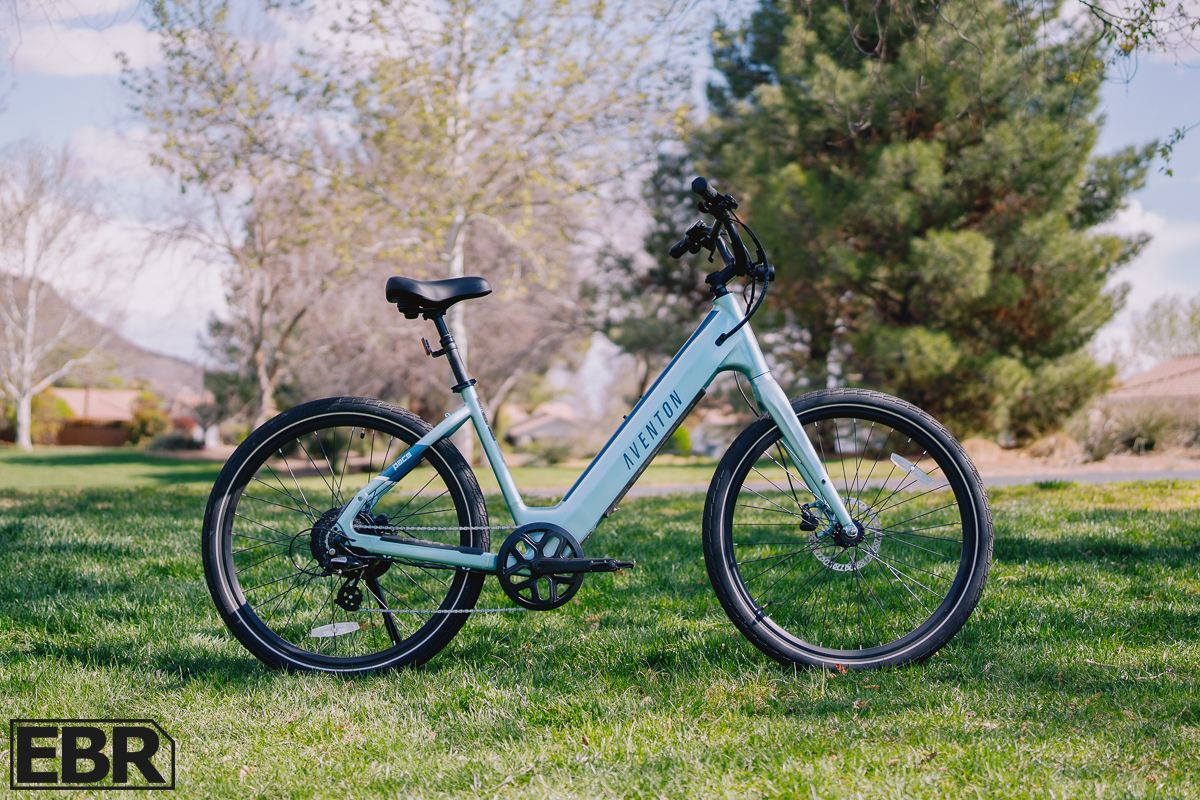
Aventon keeps the model lineup for the Pace 5 REC focused and clean. The bike is available in a step-through frame only – there is no high-step option – which aligns perfectly with the bike’s comfort-cruiser identity and its target riders. The step-through design makes getting on and off easy regardless of age, flexibility, or inseam length, and it’s the right call for this category.
Frame sizes come in two options: Size R (fits riders 5’0″–5’9″) and Size L (fits riders 5’9″–6’3″), with a standover height of 400mm in both. While two sizes isn’t the widest selection in the industry, the step-through frame’s low standover and the bike’s adjustable stem mean that riders can find a comfortable fit across a wider height range than a traditional frame would allow.
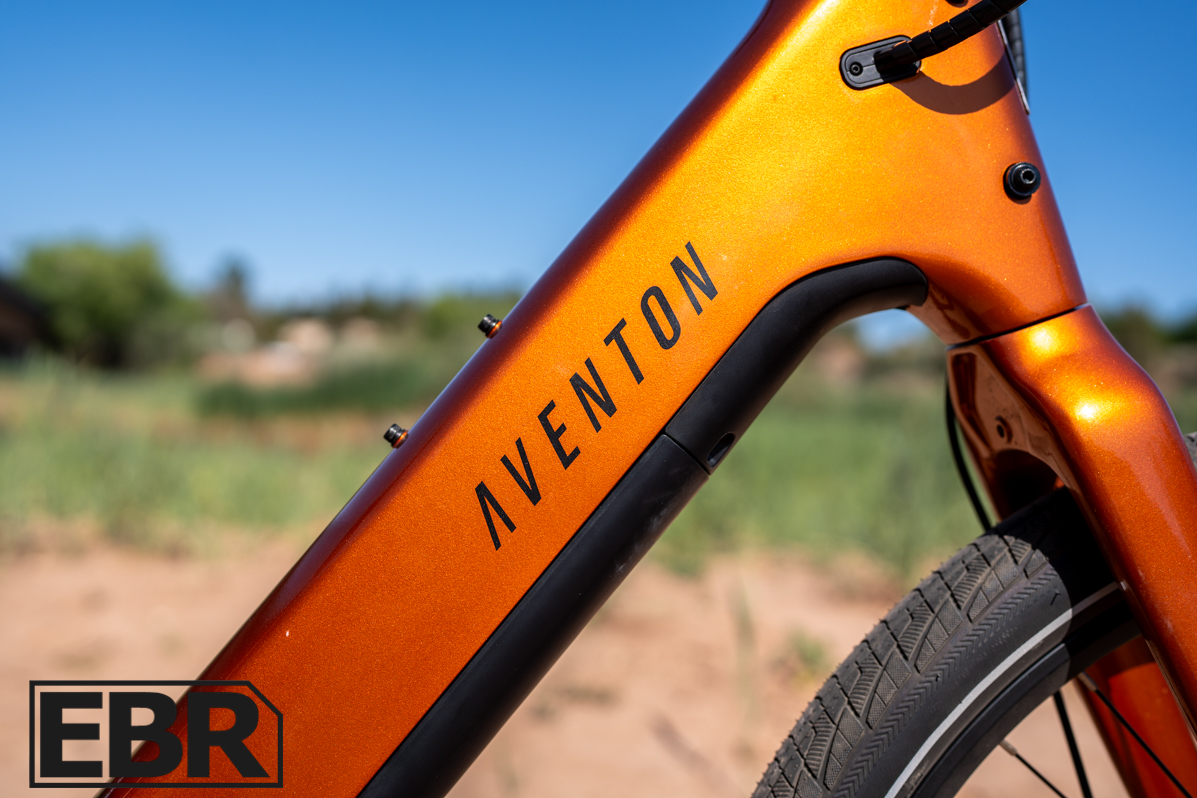
Aventon also did a great job with color options. Five colorways are available: Anvil (dark charcoal/black), Lagoon (deep teal green), Sakura (blush pink), Glacier Mint (soft sage green), and Koi (a warm copper-orange, which is my personal favorite of the bunch).
Is The 5th Generation Pace Worth Buying?
So there you have it – the Aventon Pace 5 REC. And I think you can tell from this review that I really do like this bike quite a bit.
For me, this bike is going to be best for someone who wants that Dutch-style cruiser with a step-through frame, but doesn’t want to give up power. Because this thing is punchy. It’s peppy. It climbs really well. And the best part is, it does all of that in a very relaxed, controlled, confidence-inspiring way.
If you’re someone who hasn’t ridden in 30 years and you want a bike that’s going to feel predictable and easy to ride, this is it. And if you’re someone who wants to go fast and dial up the power, this is also it – because Ride Tune lets you customize the motor output at every assist level to be exactly what you want.
At $1,799, this bike is honestly packed with features and quality tech that I think make it a really good value. The Aventon ACU alone – with the 4G/GPS tracking, integrated e-lock, geo-fencing, Apple Watch connectivity, regenerative braking, and OTA firmware updates – is tech you’d typically see on bikes that cost significantly more. And what I keep coming back to is just how much Aventon has improved the overall quality and refinement of their bikes over the past several years. We’re now at a point where people are comparing Aventon to legacy brands like Specialized and Trek – and honestly, I think that’s warranted. The build quality, the component selection, the app experience – it all reflects a brand that has put in the work.




Reader Interactions