

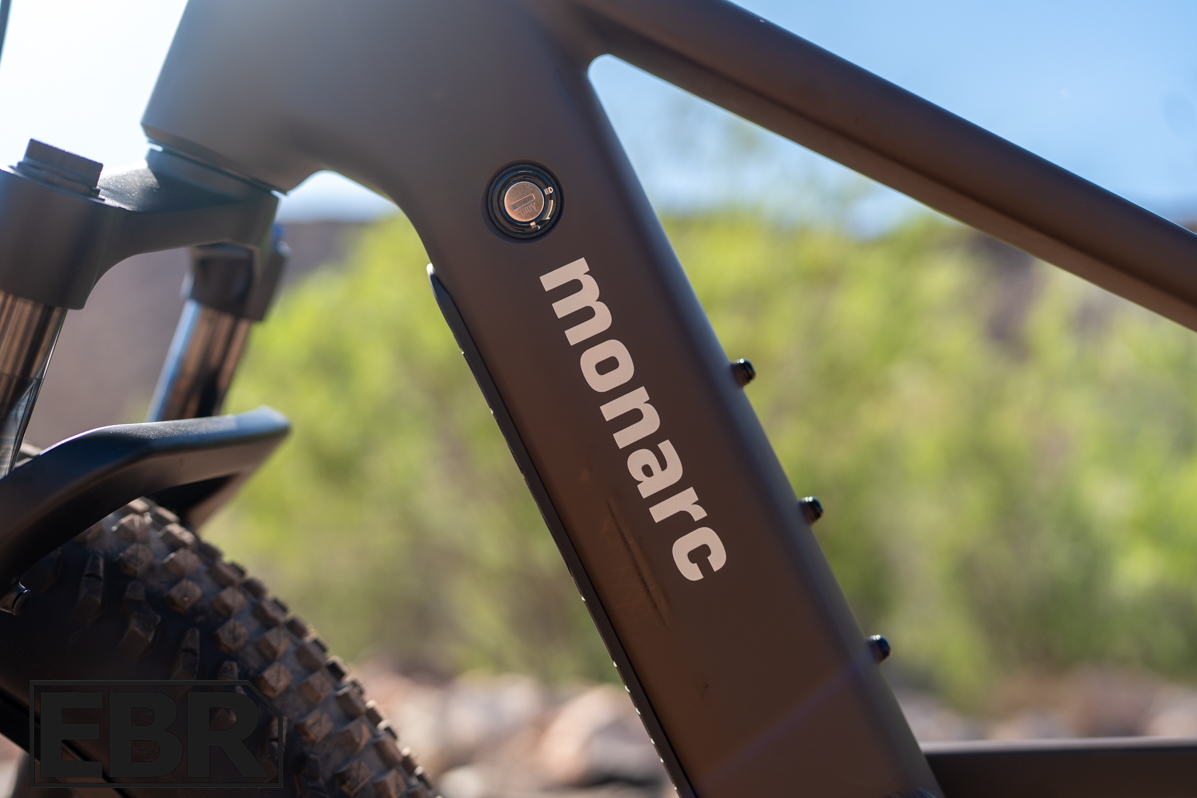
When I first heard that Lectric eBikes’ parent company was launching a new bike brand I was intrigued. Letric is the brand that’s become synonymous with value-packed e-bikes at accessible (around $1,000) price points. Lectric now owns Juiced as well, so you’ve got a parent company with serious buying power that now offers bikes to three different segments of the market.
Lectric had serious manufacturing buying power before adding Juiced and now Monarc brands to their portfolio. Now, I’m not sure anyone is going to be able to keep up – at least price-wise.
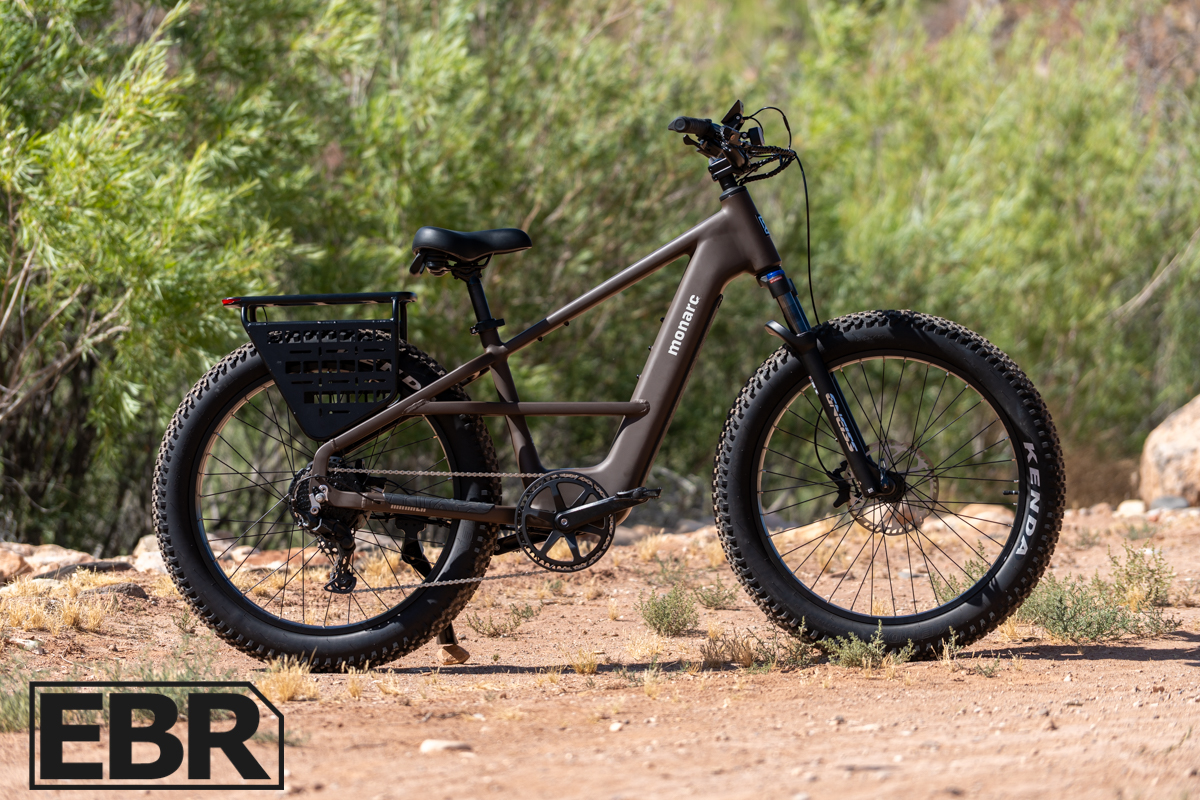
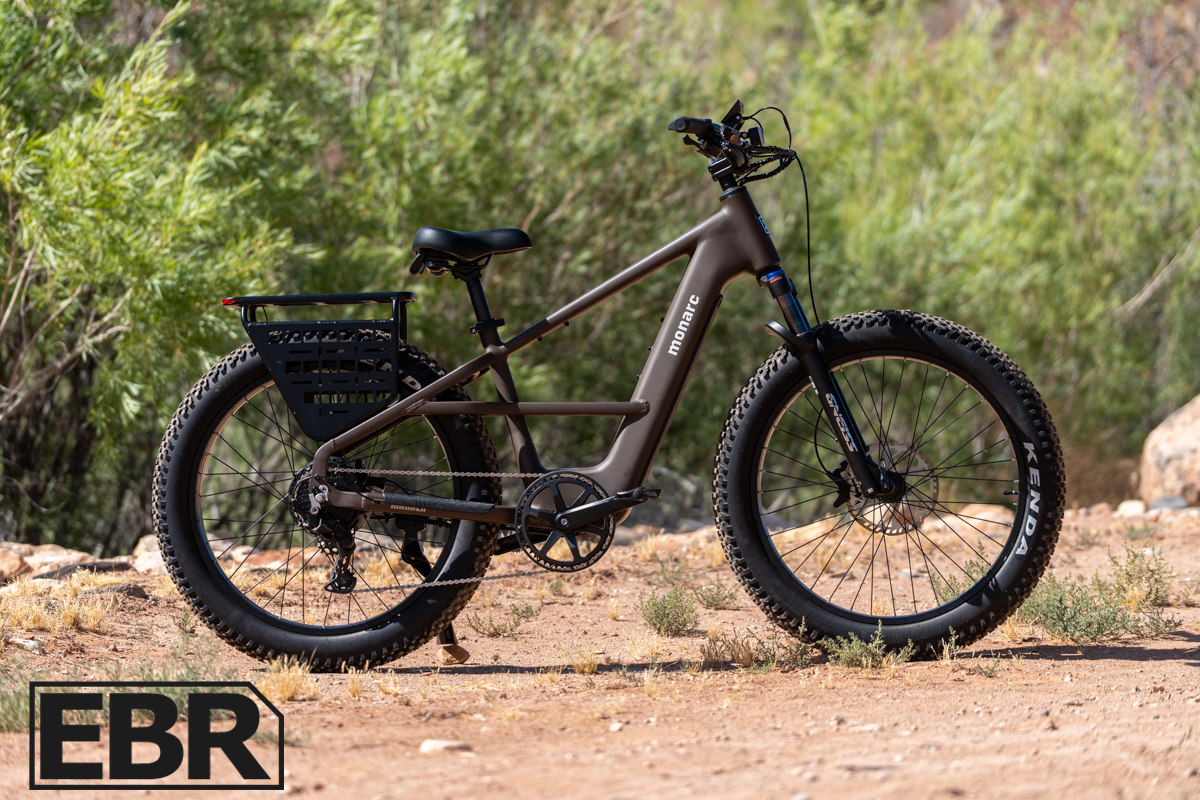
The Monarc Marker is the brand’s first bike. It’s a 26×4-inch fat tire e-bike priced at $1,999, and it ships with two full-power 720Wh batteries. Not as an upgrade, not as a bundle deal. Just standard. That alone deserves a headline. But when you start working through everything else Monarc has done with the Marker’s component package, the story gets even more interesting.
Short summary: this is a very strong debut for Monarc, and the fat tire e-bike market just got a new competitor that’s going to make some noise.
My Experience Riding the Monarc Marker
Ride Quality Score: 8 / 10
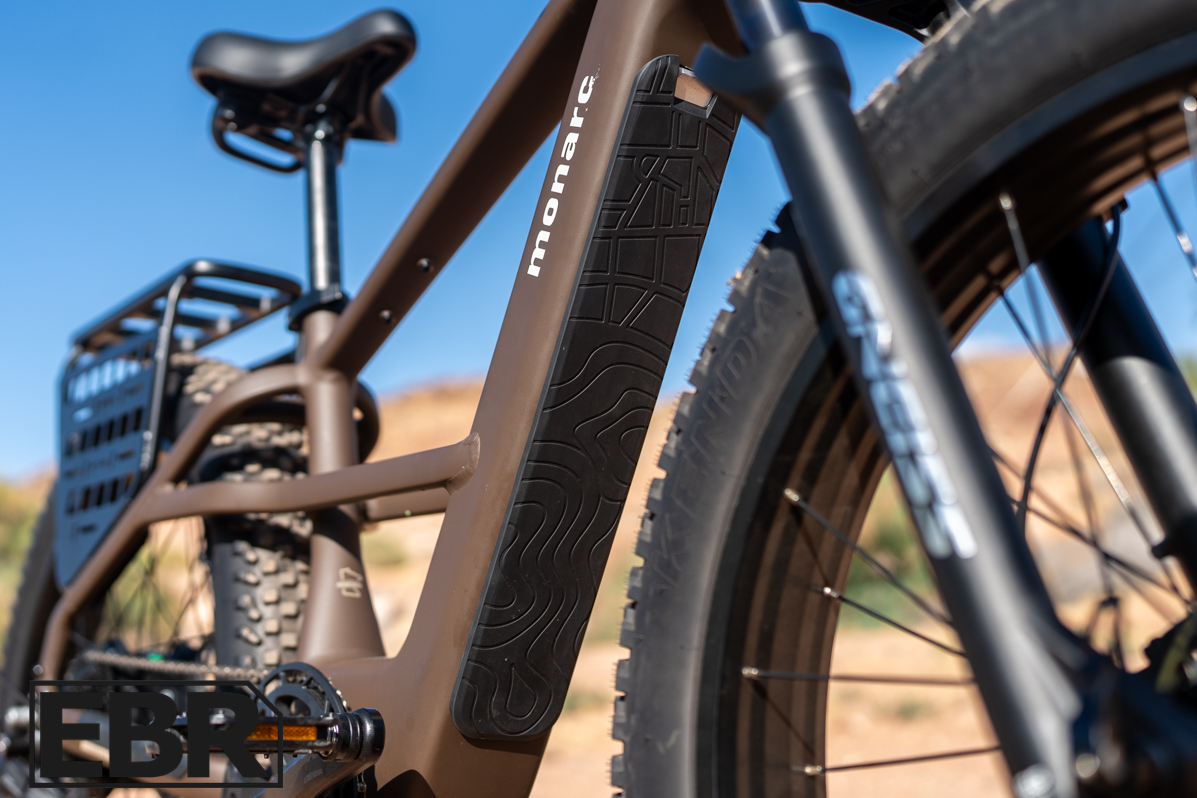
Before I talk about what it feels like to ride the Marker, I want to set expectations correctly for who this bike is built for. The Marker is not trying to be a gravity-focused mountain bike. It’s not chasing aggressive geometry or trying to be a bike to launch across 20 ft wide caps. What it’s going for is a fat tire e-bike that feels confident, powerful, and comfortable, suited for a wide range of riders on a wide range of surfaces. And I have to say, it nails that brief.
The geometry leans upright, which is exactly right for a 26×4 fat tire bike aimed at recreational riders, trail explorers, and adventure-seekers. I’m 5’11” and I found myself in a comfortable, slightly forward position on the Step-Over. Not cramped, not stretched out, just right for two hours-plus of riding without fighting the bike. For those who want something even more relaxed, the Step-Thru variant comes with a swept-back Dutch-style handlebar that opens up the position a bit further (note: the step-through version we had to test was a pre-production model that didn’t have the dutch-style handlebars, so I can’t comment too much as to how that will ride yet).
 |
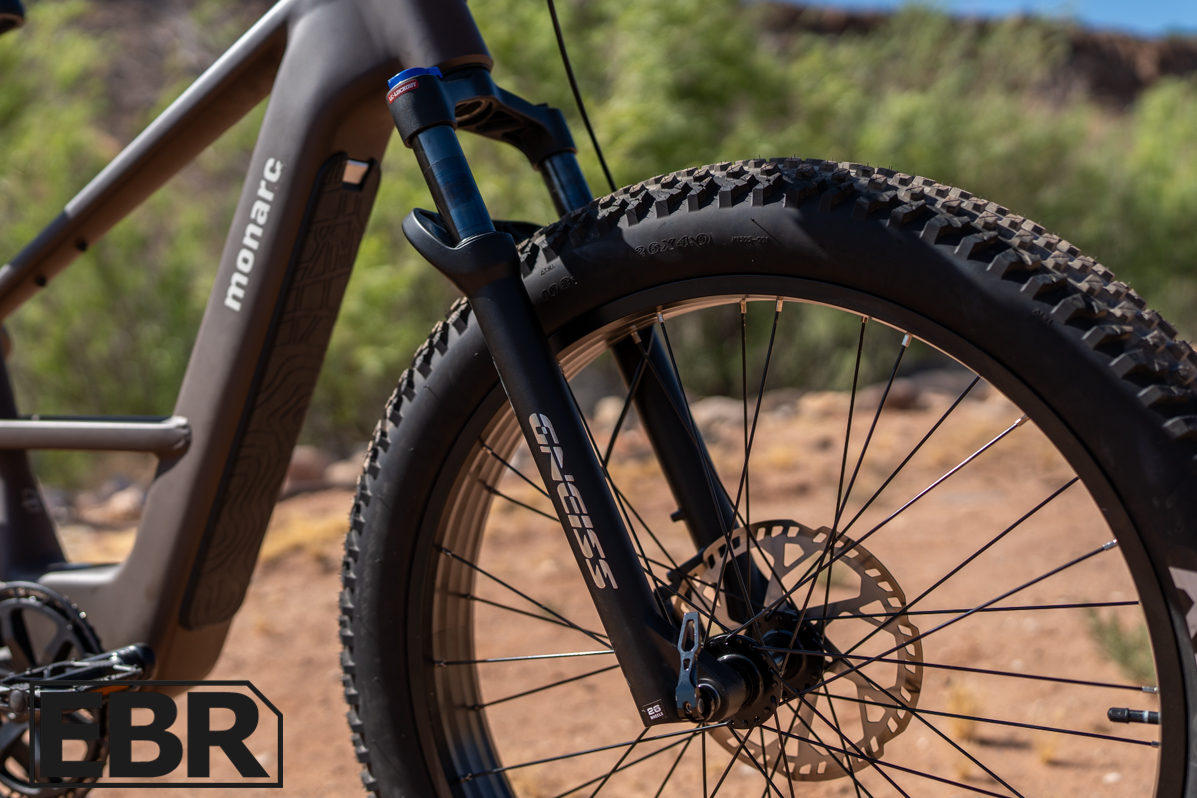 |
What surprised me most about the handling, and this isn’t usually the first thing I lead with on a fat tire bike, is the front fork. This is the Gneiss fork with a reverse-arch design, preload adjustment, and a lockout. The reverse arch fork design used to be patented by Manitou, and the design lets the fork be built stiffer but also lighter at the same time. The result is a fork that feels noticeably more precise and responsive than what I’d typically expect at this price point. I hit some rocky, loose sections during my ride, put the bike through a small jump, and in every scenario, the fork tracked well, absorbed impact cleanly, and kept the front end planted. This is the best fork I’ve seen on a 26×4 fat tire bike. Full stop.
The rear of the bike has no suspension, and while you feel it a bit on super rocky trails, the fat tires do a decent job of soaking up small bumps and chunky terrain. If you want additional cushion, then you can always add a suspension seat post.
At ~85 lbs, you do feel the weight while riding, but not in a bad way. The Marker doesn’t feel sluggish or overly-heavy. It feels stable, balanced, and confident. The weight is distributed well, and the front end in particular feels great when you’re picking up speed or navigating technical ground thanks to the higher-than-expected quality fork. What the weight does affect is logistics: loading this onto a hitch rack or into a truck bed can be a decent workout. Pop the battery off first, and seriously consider having a second person nearby (or at least a bike ramp) when loading this up.
Range
Range Score: 7 / 10
Given this review had to be live before launch date, we didn’t have quite enough time to do both a MIN and a MAX range test. We also ran into some weather problems (high winds). However, even in the windy conditions we were able to get 32 miles on MAX assist on one battery – which is right in line with what we would expect from the 720Wh pack. We do think we could have gotten a few more miles without the wind, and we’ll retest when Monarc sends us full production bikes for long-term testing.
Check back soon — updated range figures will be posted when full ECO and MAX assist testing is complete.
Power (Motor & Battery)
Power Score: 7 / 10
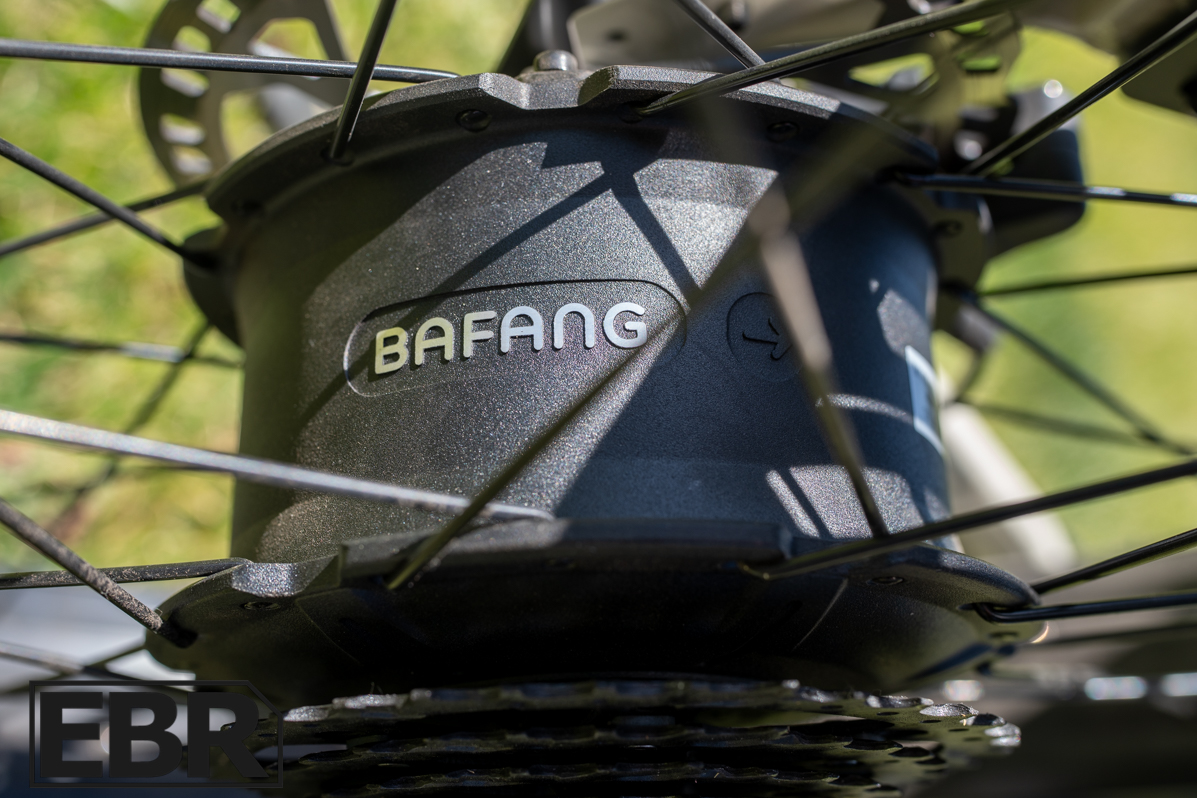
The Monarc Marker has a 750W Bafang rear hub motor with 85Nm of torque that peaks at 1,638W.
Bafang is one of the most experienced and respected hub motor makers in the industry, and a lot of brands have to find cheaper alternatives in order to hit their budgets. Seeing a Bafang motor gives us some confidence in the new brand. From a performance perspective, the motor is smooth, quiet, and powerful.
(Note: Monarc calculated the peak wattage using the battery’s max voltage, which is technically 54.6V. For other e-bike nerds, that’s why the math doesn’t math if you’re using 48V in the equation.)
The Marker uses a 30A controller, which can draw more current from the battery than a standard 24A controller, unlocking higher peak wattage and stronger acceleration.
An e-bike geek fact worth noting: Monarc is running this system on a CAN bus protocol rather than the older UART standard. This is the same communication network used in cars and premium systems like Bosch. It handles data much faster and allows the battery, controller, and display to constantly communicate and run diagnostics between each other, resulting in a more responsive and precise motor.
The battery is a 48V, 15Ah unit with LG cells, so a total of 720Wh. You’ll notice if you read the specs from Monarc closely that they claim 1440Wh for the battery capacity – that’s because you get two batteries with each bike. Just know that you will get 720Wh from a single battery, not 1,440Wh.
The battery is also UL 2271 certified and rated IPX7 for water resistance (the bike itself is IPX6), and the whole electrical system carries UL 2849 certification.
Another really impressive feature of the battery is the ability for you to set a charge limit from the display menu. The battery is rated for 500 cycles (meaning that after 500 cycles the battery health will be 80% or greater); however, by utilizing the charging limits you can potentially extend your battery life significantly.
For example, below outlines three potential scenarios. As you can see, you can potentially double the lifespan of your battery. Of course, that means you give up 20% of your range so this won’t work for everyone, nor will it work for every ride. However, with 2 batteries, it does make it significantly more possible.
| Maximum Charge Limit | Estimated Cycle Life (to 80% Health) | Multiplier (vs Baseline) |
|---|---|---|
| 100% (Baseline) | ~500 Cycles | 1.0x |
| 80% | ~1,000 to 1,250 Cycles | 2.0x – 2.5x |
Notes: 1) These are purely mathematical/theoretical and actual performance will vary greatly depending on many factors. However, this shows the potential if you manage your battery charging in a more optimal manner. 2) You will need to charge to 100% every few weeks in order to allow the BMS to properly balance the battery cells.
Components
Components Score: 9 / 10
For a $1,999 fat tire e-bike, the Monarc Marker’s component package is exceptional. Where brands often treat the component spec as a place to cut costs, Monarc has done the opposite, and it shows on every main component.
It also shows how the Lectric ‘family’ of brands looks at things: they take their competition, put the specs in a spreadsheet, and then set out to win in as many categories as possible.
|
 |
 |
 |
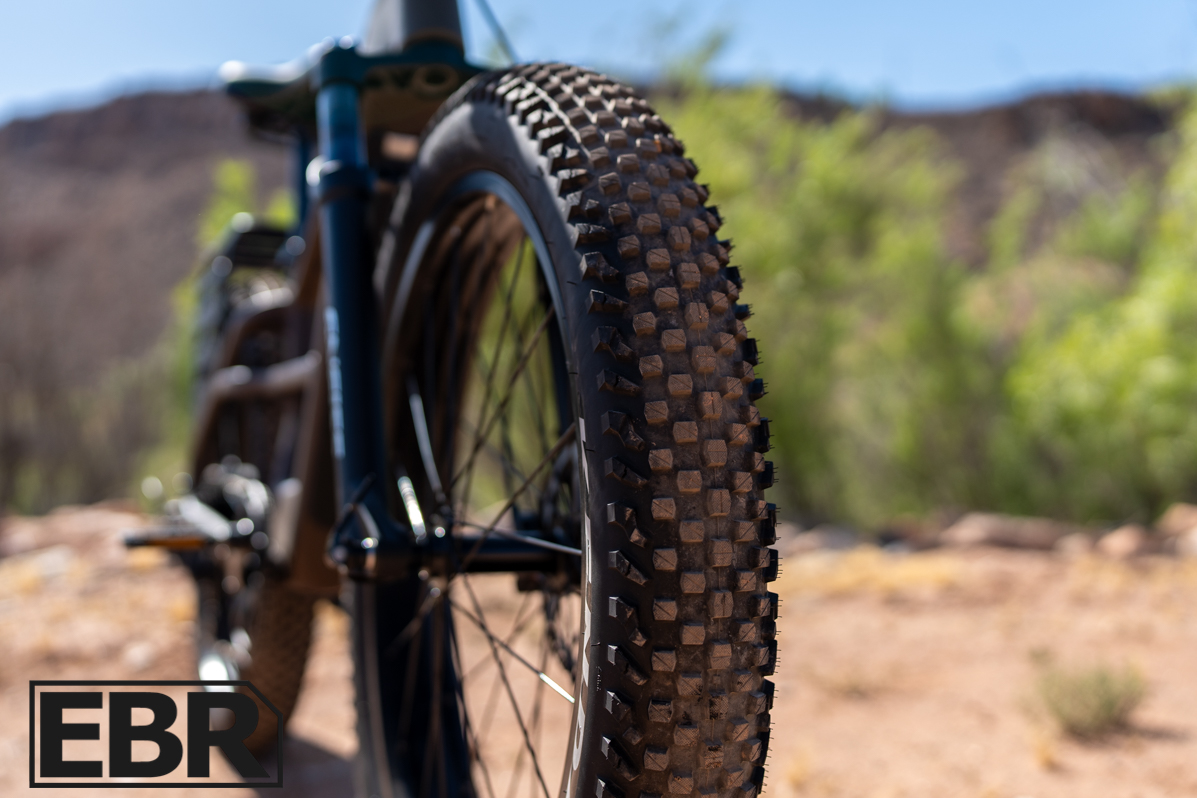
Start with the drivetrain. The Marker runs a Shimano Cues 1×9 system with a rapid-fire shifter and an 11-36T cassette. Shimano Cues is a step above what you’d typically find at this price point, with crisper shifting and a wider gear range than the 11-32T cassette you get with the more common Shimano Acera grouposet.
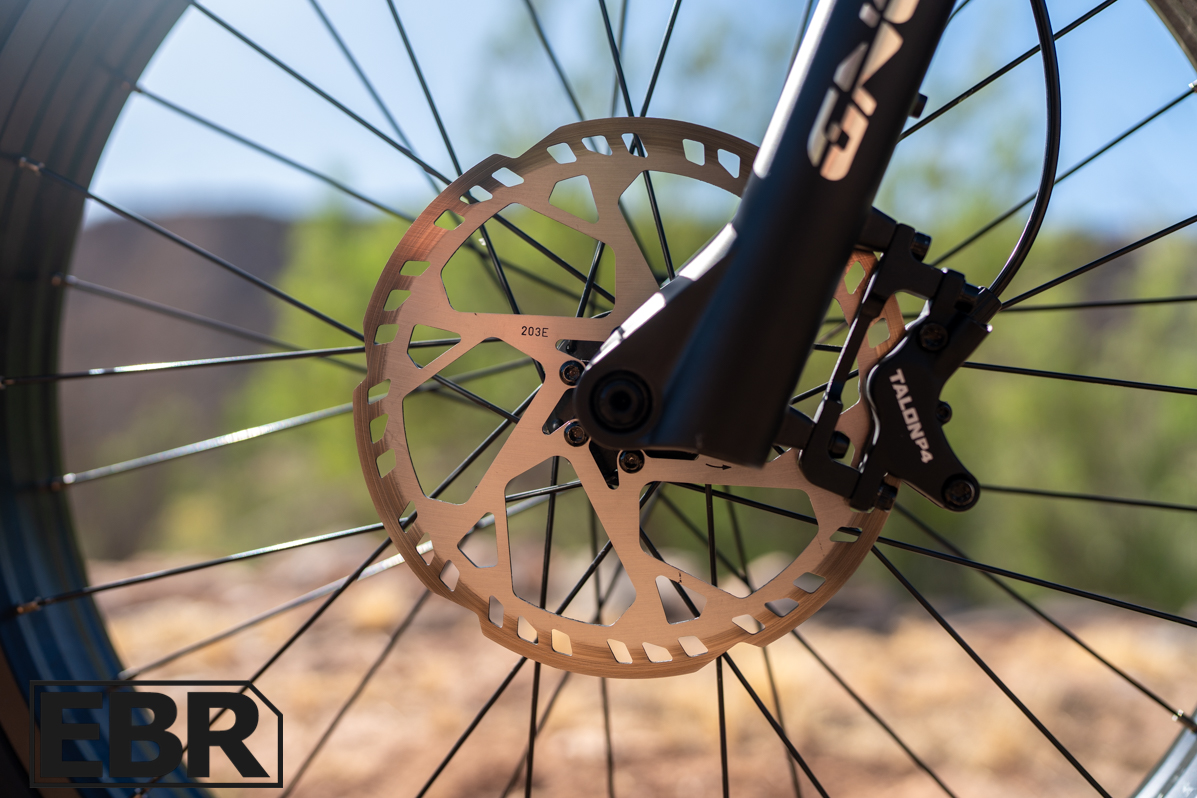
The brakes are from Star Union, the Talon P4: a four-piston hydraulic disc brake system running mineral oil, with a 203mm front rotor and a 180mm rear rotor. These are the same brakes you’ll find on the Juiced Scrambler, and Monarc was able to leverage the parent company’s relationship with Star Union to put them on this bike.
Four pistons versus the two-piston setups you’ll find on competing fat tire bikes is a legitimate upgrade, not a spec-sheet footnote. Fat tire bikes are heavy, and having that extra braking power translates to more controllable, confident stopping.
The reverse-arch fork comes with 80mm of travel, a preload adjustment, and and adjustable lockout that actually lets you modulate the compression. It’s not as good as an air fork, but it’s probably the best fork I’ve seen on a 26×4, rear-hub, fat tire e-bike. Manitou held the patent on the reverse-arch design for years; now that it’s expired, Monarc has used it to build something better than a standard coil fork at this price. The fork is stiffer and lighter than forks on comparable bikes, and the stiffness improves how the bike feels on the trail or road.
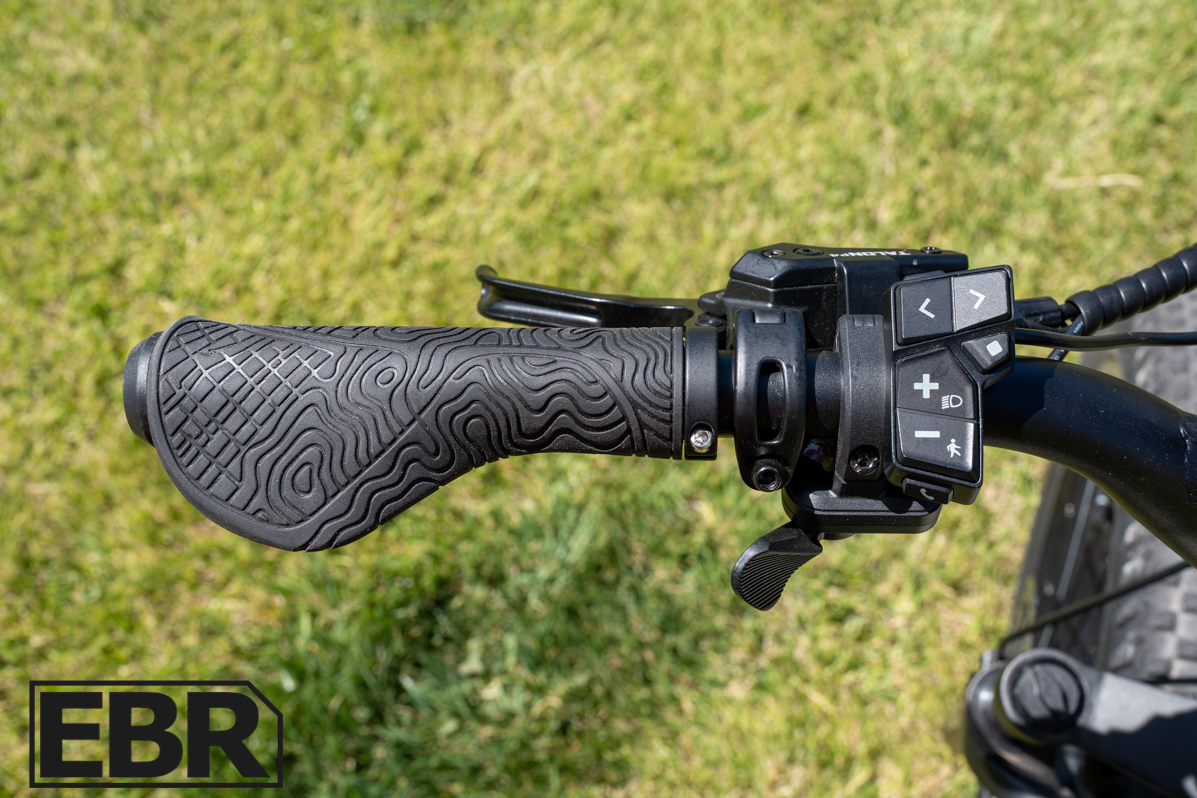
The cockpit comes with ergonomic lock-on grips featuring a butterfly-style palm rest with a subtle easter egg: a topographic map texture that I think refers to their home state of Minnesota (you’ll actually find a few different easter eggs throughout the bike if you look hard enough – and no, we aren’t going to take away your joy by telling where they all are).
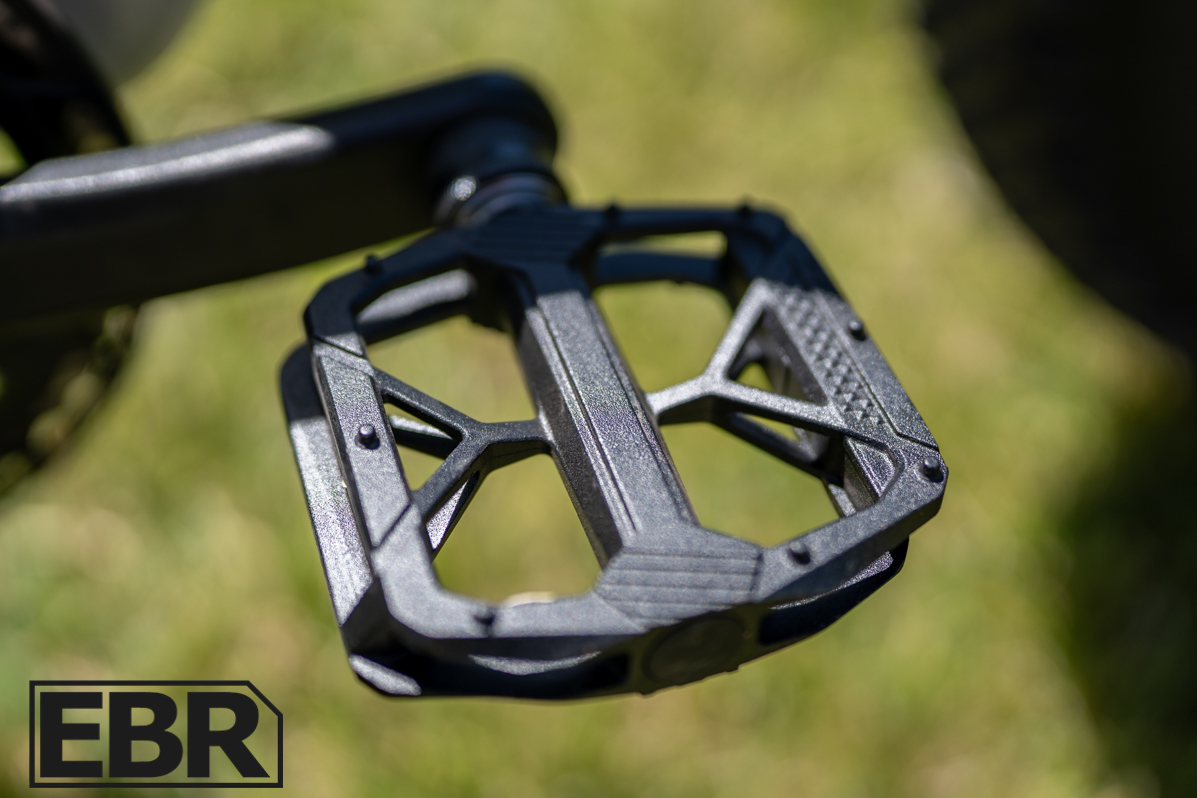
The saddle has a good range of height adjustment and a rear hard-plastic carry handle, which is a small detail that’s helpful on an 85-lb bike. The quick-release aluminum pedals are easy to pop on and off for transport, with more spindle coverage than older versions of this style. The extra spindles help keep the pedals locked in place so they don’t fall out (a common complaint on the first version).
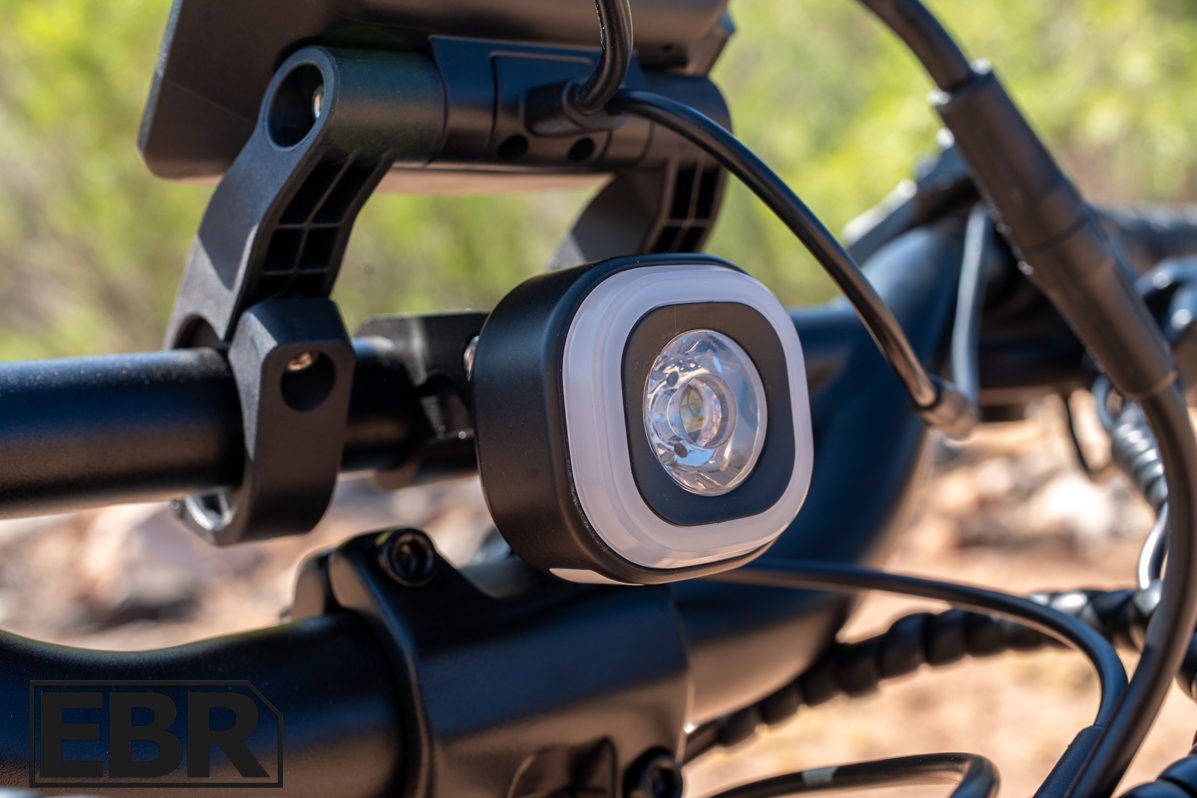
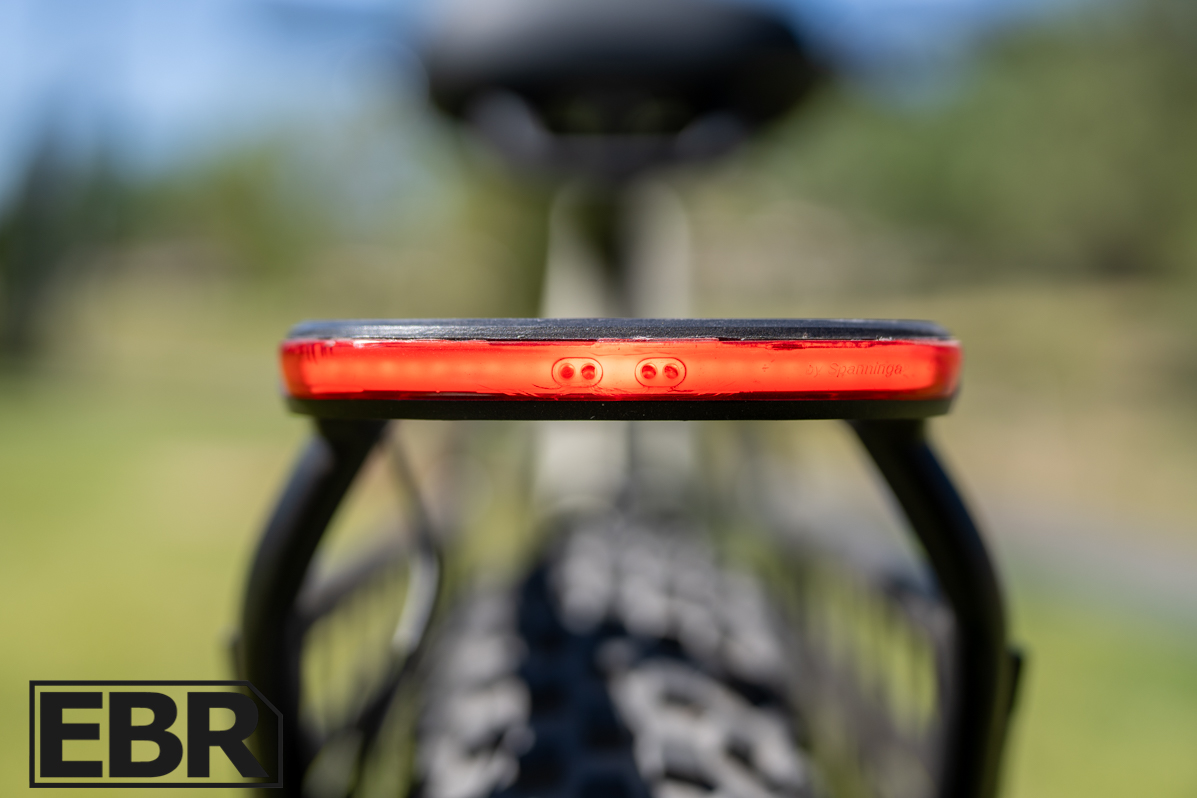
Integrated front and rear lighting with turn signals, a rear rack rated to 60 lbs, and front and rear fenders all come standard. Monarc is also launching with a free smart helmet that connects via Bluetooth, and an optional rear traffic radar accessory. These are features I love to see, especially the radar. Cars coming up behind you on the road are one of the biggest safety concerns in cycling, and having an alert system for that is something I hope to see on all e-bikes in the near future.
Overall, I don’t know how to give Monarc anything less than an A+ on the component package for this price point. They’ve clearly used the buying power of the parent company well, and have set the curve pretty high for the classroom.
I think the only complaint I have on the component / build side of the Monarc Maker is with the wiring running through the headset assembly. For some reason, the nicer a bike gets, the more likely that the company is going to try to make the bike look cleaner and they decide to stuff everything down the headset instead of running the cables through the downtube. Just know that this will end up costing you more if you ever do need to change one of those cables, headset, stem, or fork.
Screen / User Interface / App
Screen / App Score: 8 / 10
 |
 |
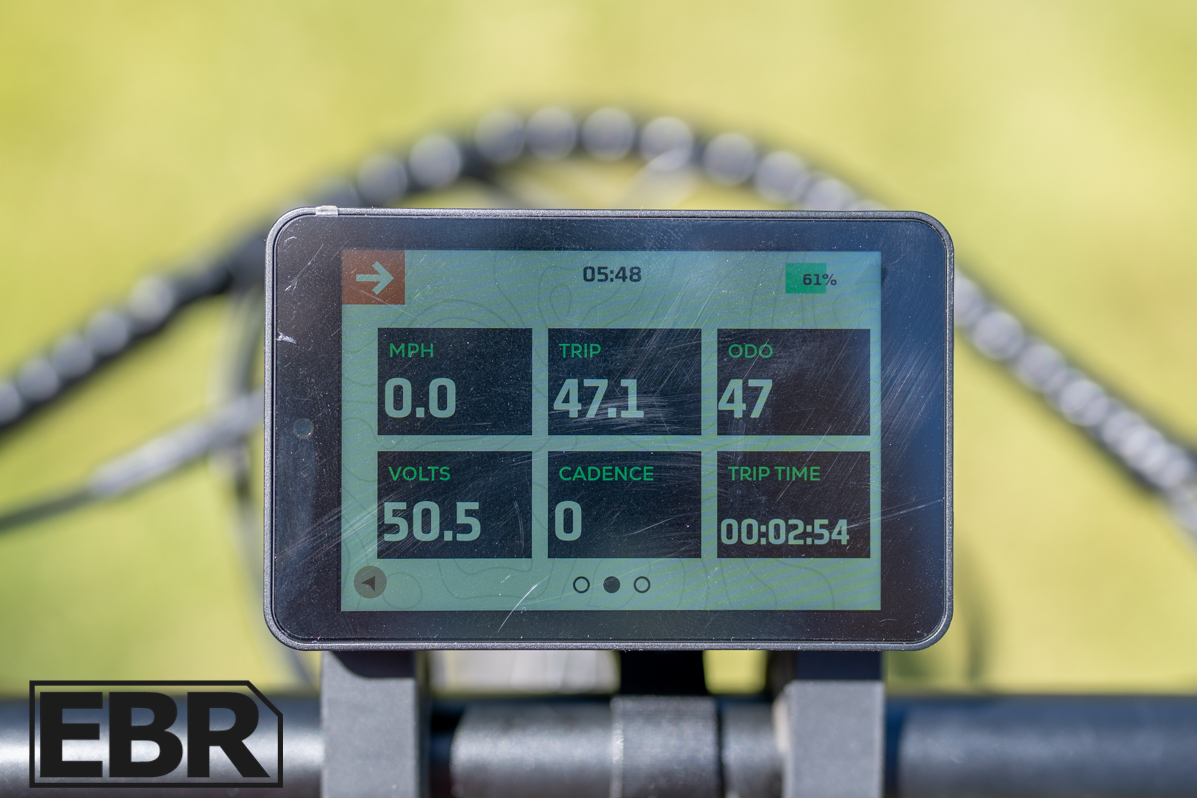
The Marker’s 3.5-inch color touchscreen is bright, readable, and supports both touch input and control via the pod buttons on the left side of the handlebar. You can swipe through screens or button-navigate, whichever you prefer.
The default screen shows battery percentage, speed, time, and output wattage. Swipe to screen two and you get trip data, odometer, volts, cadence, total trip time, and the feature I find most useful while riding: estimated range based on your current assist level.
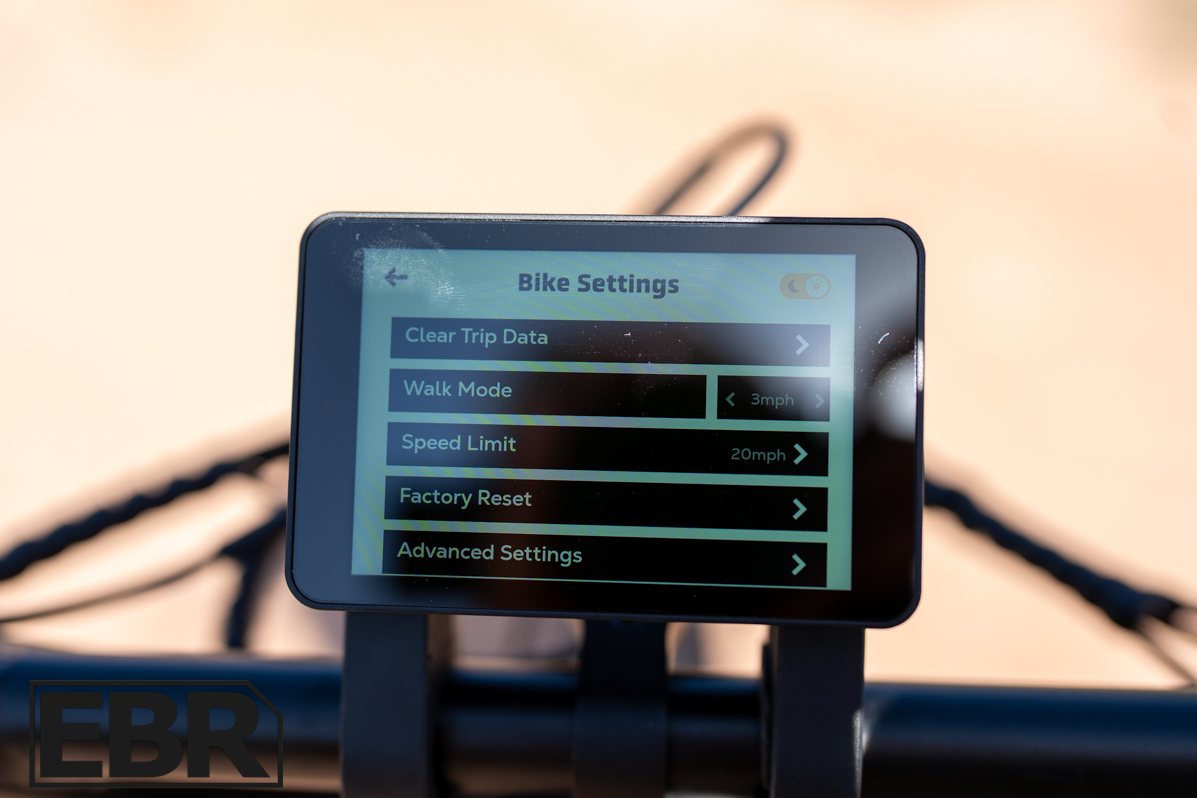
Speaking of settings: the Marker’s display menus are impressively deep. You can change assist level display preferences, screen brightness, homepage themes, enable or disable the touchscreen, set turn signal behavior, and access the TPMS tire pressure warning, which can alert you when your tires are running low. Given how many riders I see rolling on underinflated fat tires, this is a feature more brands should adopt.
In the bike settings, you can adjust the speed limit, turn the throttle on or off, switch between torque and cadence sensor modes, enable cruise control, and then there’s the highlight: access motor tuning. You can set your own max torque, assistance level, and pedal response for Sport and Boost modes independently. While the display and options are not quite as refined (yet) as the Aventon ACU or Velotric App, I expect Monarc to cover that ground when their app releases. We’ll update this review at that time.
Bike Model Options
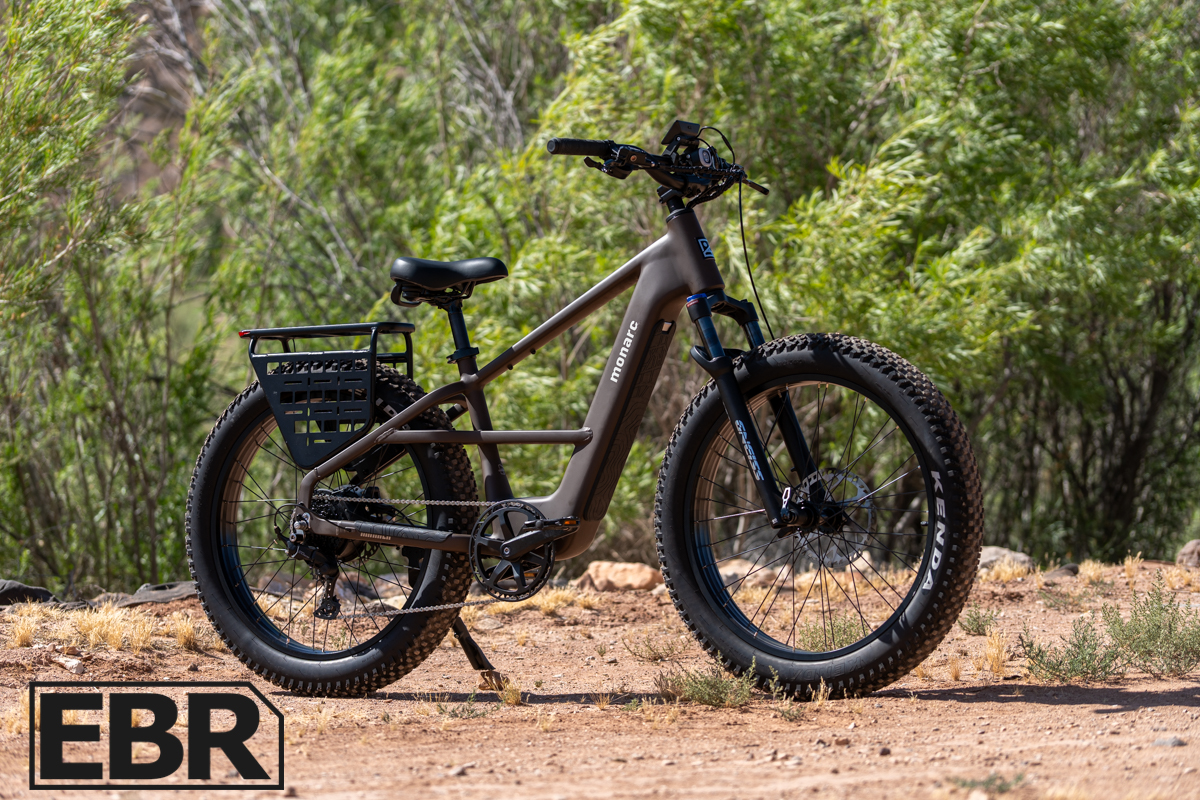
Monarc is launching the Marker in two frame styles, a step-over and a high-step (which is technically more like a mid-step, which I like).
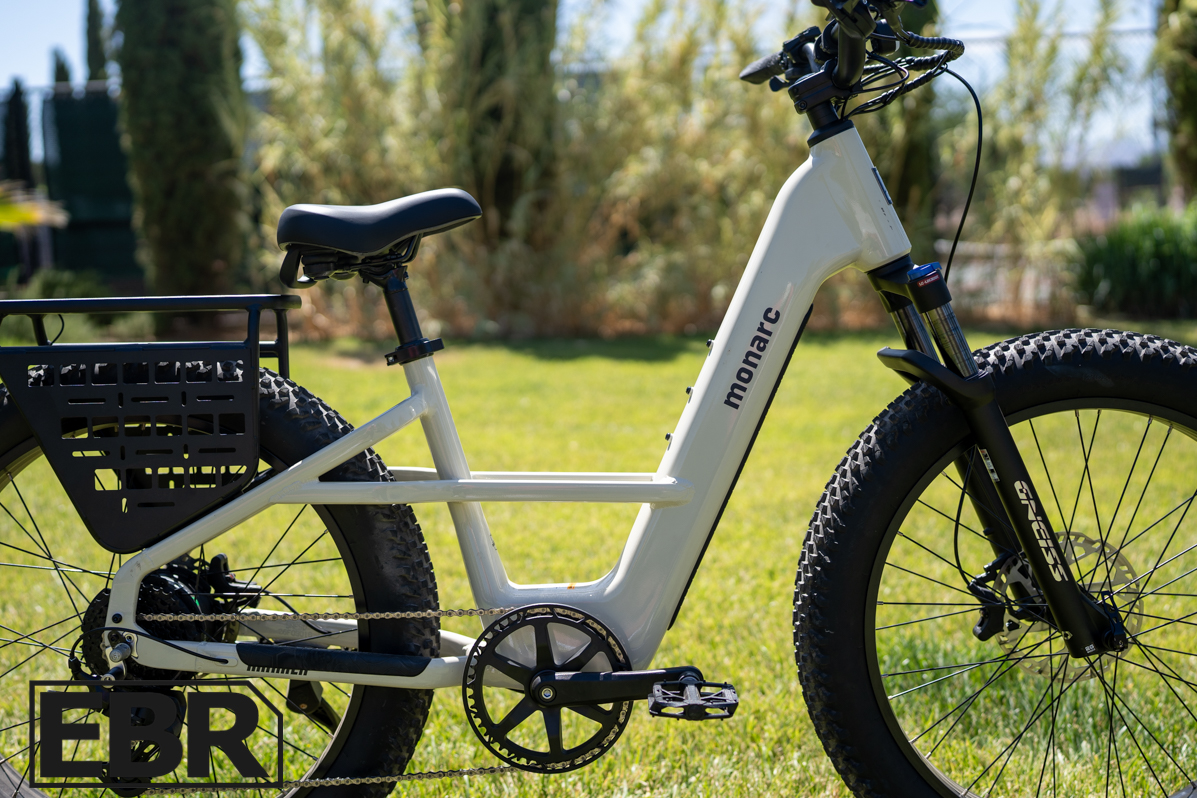
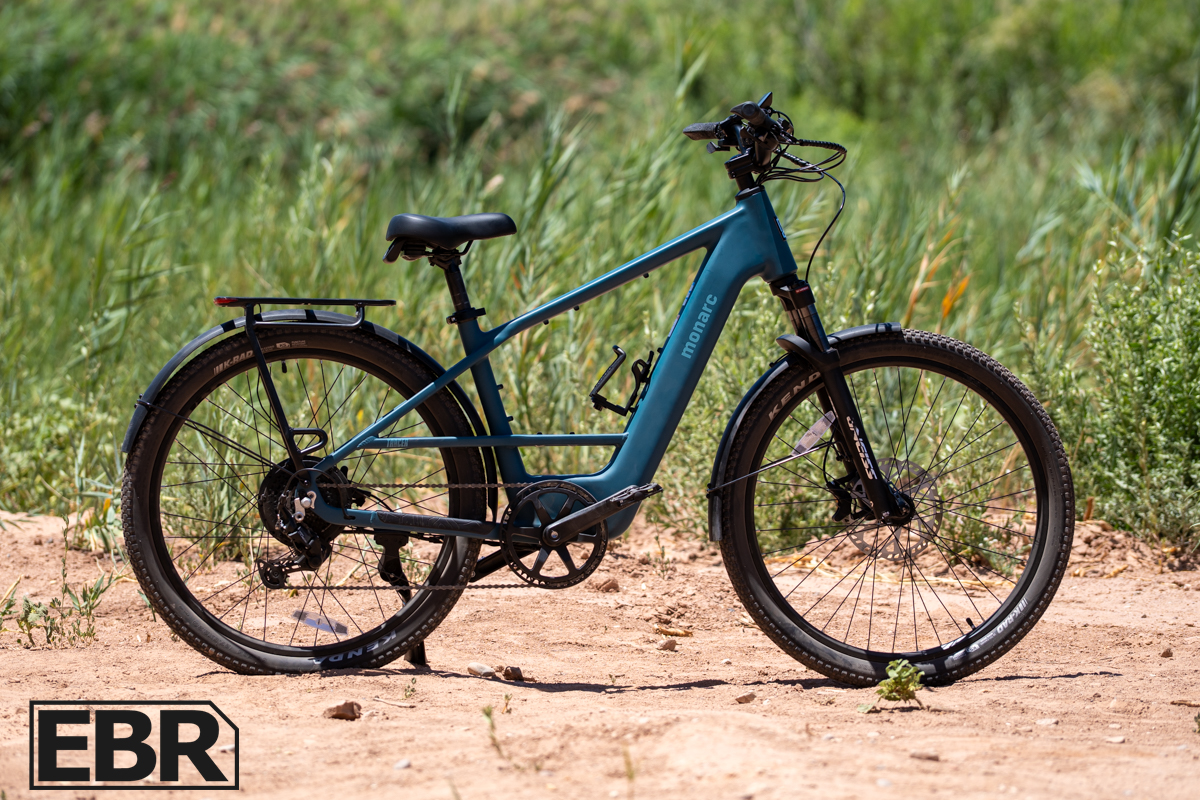
The Step-Over (mid-step) fits riders approximately 5’4″ to 6’5″ with a stand-over height of 768mm, and features a flat-bar cockpit with a slightly more forward-leaning riding position. This is the version I tested. It’s not aggressive by any mountain bike standard, but it has a more athletic feel compared to the Step-Thru. The Step-Thru fits a similar range, 5’4″ to 6’4″, with a stand-over height of 757mm and comes with a swept-back Dutch-style handlebar for a more upright, relaxed riding position. Both versions carry the same 330-lb max payload.
Both models come in multiple colorways:
- Taconite (Black)
- Cedar (Brown)
- Greenway (Green)
- Birchwood (White)
The High-Step we tested was the Cedar brown color; the Step-Thru was the Birchwood white – and I personally loved them both. Overall, I think Monarc nailed the look, making the Marker one of the best-looking fat tire e-bikes of 2026.
Is the Monarc Marker Worth Buying?
The short answer is yes, and the long answer is absolutely yes.
At $1,999 with two 720Wh batteries included, the Monarc Marker is immediately one of the most compelling values in the fat tire e-bike segment. A second battery alone would run you $500–$600. That means the effective cost of the bike and its components is really closer to $1,400–$1,500 when you account for what you’re getting.
At that number, the Talon P4 four-piston brakes, the Shimano Cues drivetrain, the reverse-arch fork with lockout, the Bafang 750W motor, and the CAN protocol controller start to make me question how Monarc was able to put all that together for that price.




Reader Interactions