

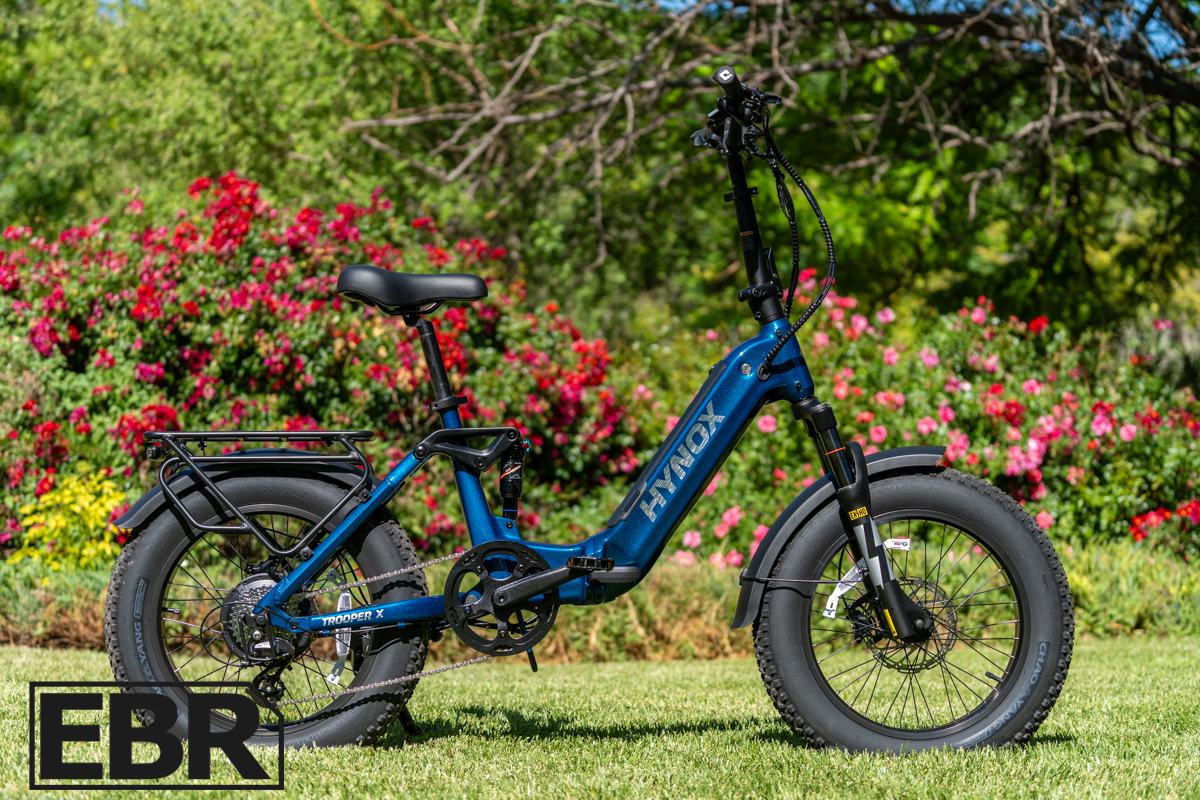
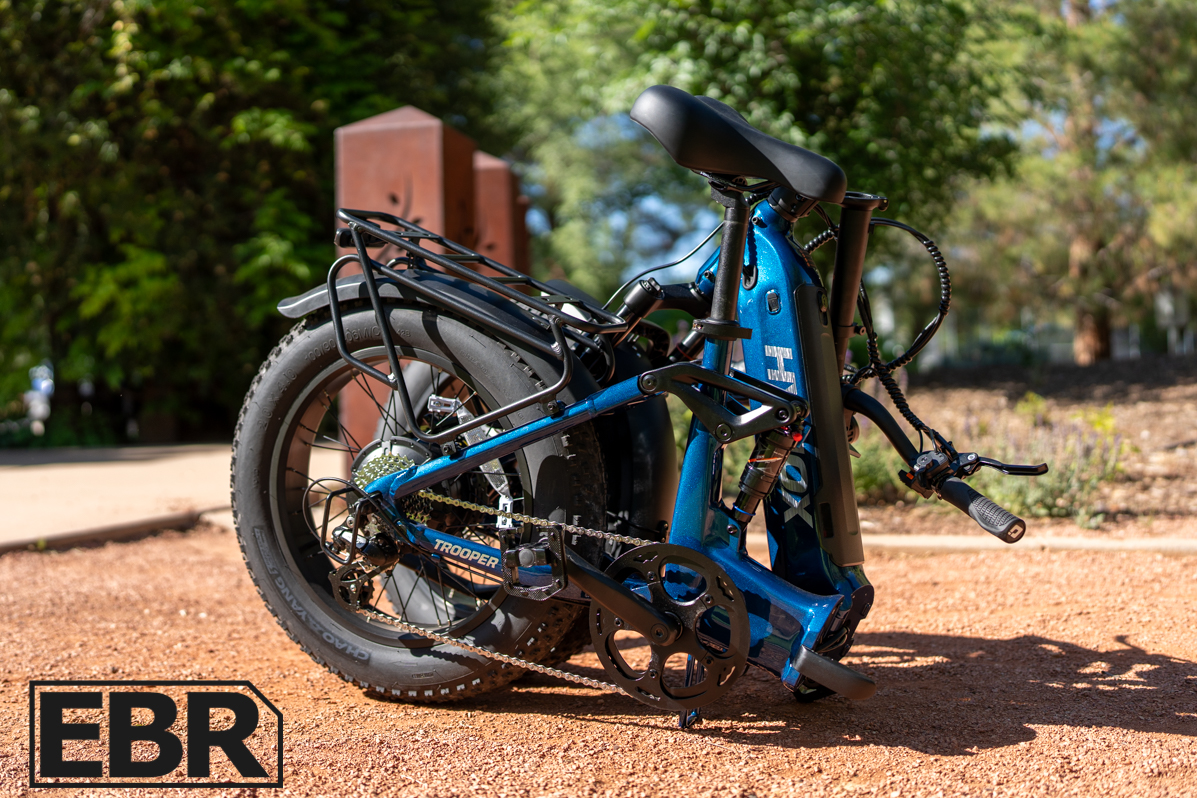
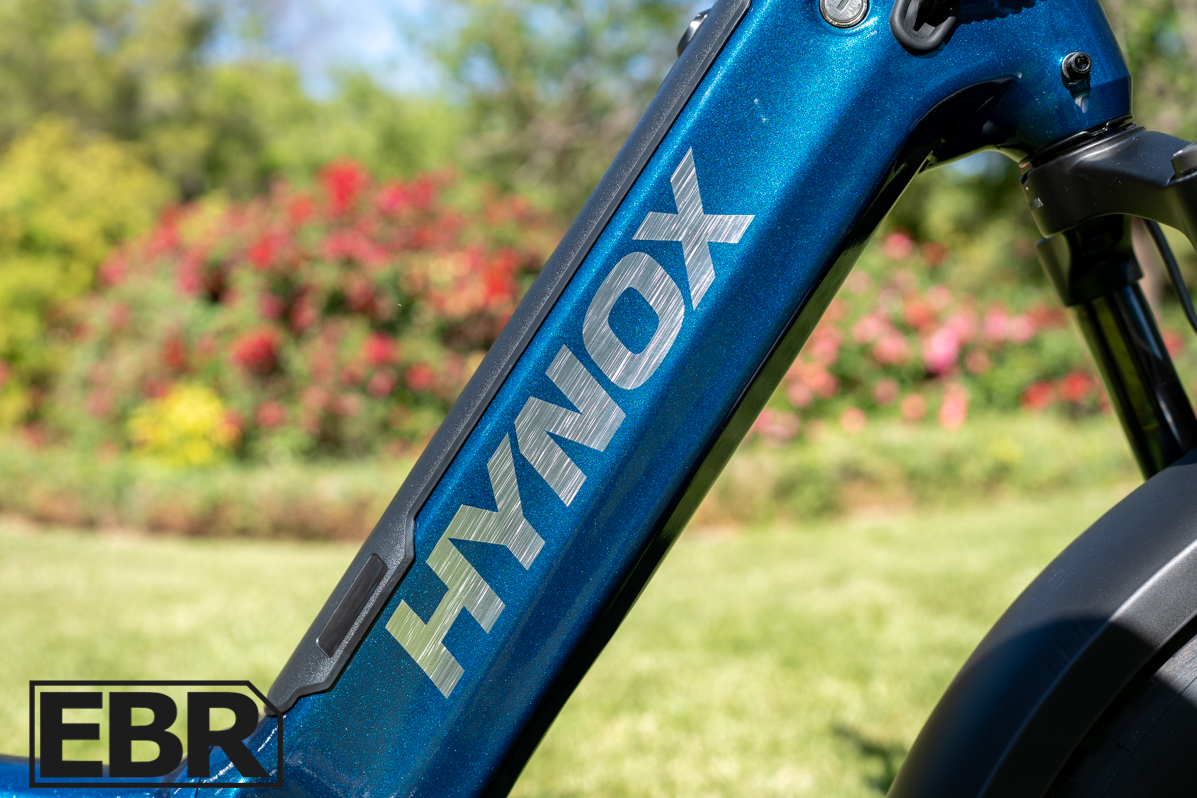
Hynox is new to us. This is the first time the brand has reached out, and the Trooper X is the first bike of theirs we have put through our testing. The pitch is loud: their marketing calls it a beast with violent, unpredictable power.
If you’ve followed us for very long, you won’t be surprised that we usually (as in almost every single time) pass on bikes that talk like that.
However, Hynox earned a look because the “noise” here is about torque, not illegal speeds (wattage numbers are stated as 1600W Peak on the website, but the motor is still a 750W nominal motor – so also legal). On paper this is a street-legal Class 2 folding fat-tire bike carrying a 750W hub motor rated at 100Nm.
Short answer after my time on it: there is a good bike here with a very solid base. The build quality and suspension surprised me, and the power is strong but not crazy illegal strong.
The one thing holding it back? Throttle programming that ships outside the Class 2 line. Fix that, and this is a strong buy at $1,399.
My Experience Riding the Hynox Trooper X
Ride Quality Score: 7 / 10
The first thing I noticed when pedaling the Trooper X is that this frame is stiffer than I expected from a folder. Build quality feels firm and solid throughout, and that carries into how it handles. The Trooper X is a one-size step-through fit listed for riders from 5’1″ to 6’5″, and it uses an adjustable stem with about 2 and 3/4 inches of range, so you can dial in your reach and bar height (within reason – 6’5 is pushing it by about 2 inches IMO).
At my riding weight of about 185 lbs, and height of 5’11” the bike just felt solid and stable – and surprisingly comfortable.
The touch points work for me, the grips have extra padding under the palm, and the dual suspension is much better than expected at this price point. You have 80mm up front and 80mm of air-sprung travel in the rear, and together they take the edge off bumps and keep the tires on the ground when you drift off pavement. The rear DNM air shock is more plush than I expected at this price, and it held up under heavier riders in our office without feeling too soft and ‘walloyee’.
The motor is where the Trooper X shows its personality. Hynox calls the sensor a torque sensor, and technically it is, but it is an incredibly light, sensitive one. Soft-pedal and it hands you power; press just a little harder and it gives you everything. It rides more like a cadence sensor, so you are not putting in much work. Plenty of riders will love that. If you want a bike that makes you earn the assist and get a workout in, this is not it.
Off pavement, I settled into PAS 2 or 3 in Class 3 mode without the throttle, cruising around 14 to 15 mph. In that window the bike is a lot of fun and easy to control. Push it to PAS 5 in sand or a tight corner and it starts to feel like it wants to slide out from under you, and the throttle will happily lift the front wheel.
In other words, this is a higher-skill bike when you turn it all the way up. It handled a quick drop on the trail nice and easy, but I would keep it off single track. Fire roads, double track, and camping loops are its happy place.
Note: Hynox is offering EBR readers $100 off with coupon code: EBR100
Power / Motor
Hill Score: 7 / 10
 |
 |
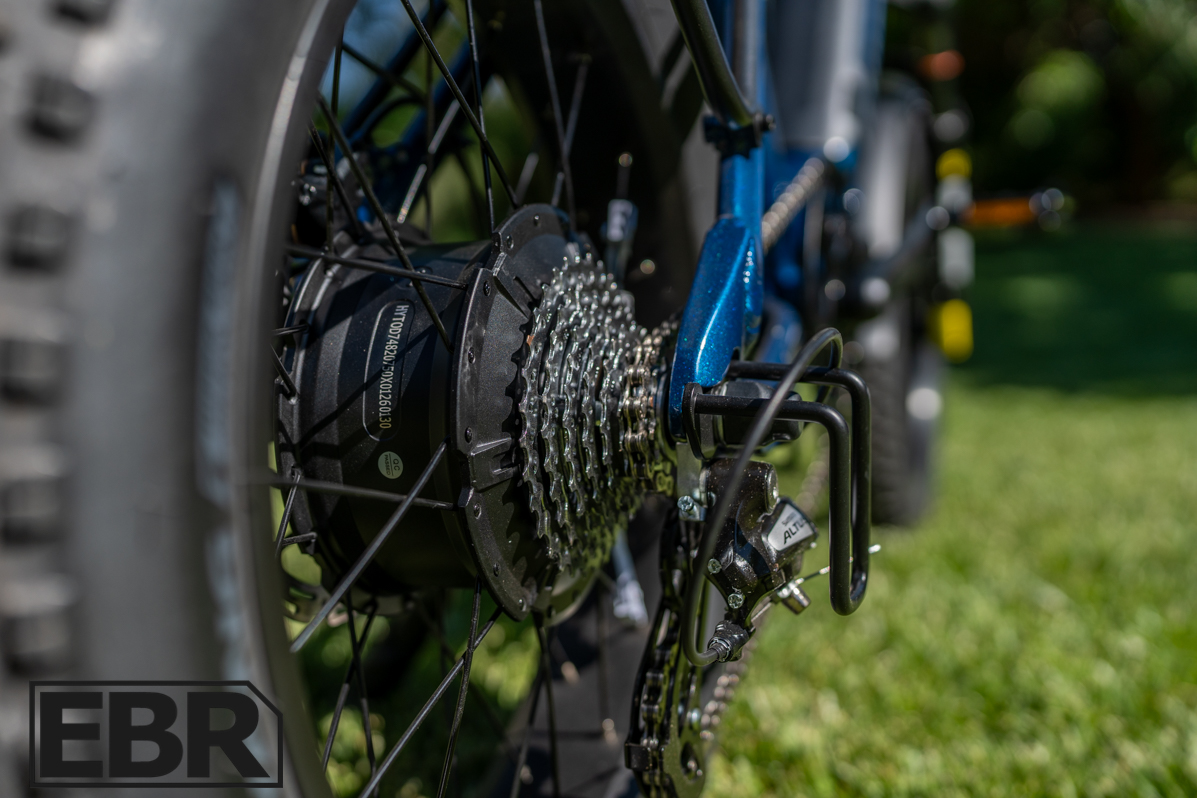
The Trooper X comes with a 750W rear hub motor that peaks at 1,600W, rated at 100Nm of torque.
For a folding fat-tire bike, that is a lot of muscle, and you feel it right out of the gate, especially when you’re on flat ground. Hit the throttle from a stop and it pushes you back in the saddle and even lifts the front tire up a little bit (i.e. make sure you’re leaning forward and expecting that lurch off the line).
On our Black Hill climb, done in Class 2 settings on a 105-degree day, it went up on throttle in 85 seconds at a 14.7 mph average and on pedal in 83 seconds at 15.1 mph, bottoming out around 12.5 mph on the steepest pitch. That puts it near the top of the folders we have run through the hill test so far, and it never felt out of control in Class 2.
The hill test numbers are in line with what we would expect from a powerful 750 W motor, and maybe a little slower than expected from a motor that peaks at 1,600 watts. Given the heat, I didn’t set the bike to Class 3 and run it up the hill again (2 runs up that hill is already a lot of stress on a motor, let alone in 105 degree weather). However, I do think it would have been faster in Class 3, even though the speed wouldn’t have gone over 20 mph, as the Trooper X feels extra peppy when it’s max speed is set to 28mph, indicating to me that the programming unlocks more of the torque in addition to unlocking more wattage.
The torque sensor is quick to engage with little to no overrun; when you stop pedaling, the motor backs off fast, which I like – especially for a bike claiming to be a “Beast”. If a bike this peppy took 1/4 to 1/2 turns of the crank to stop producing power then it could end up being very hard to control.
Fortunately, that’s not the case with the Trooper X. It’s powerful, but still controlled and precise.
Power delivery increases steadily and predictably between assist levels, and ghost pedaling was not an issue at 28 mph thanks in part to the 48T chainring, so the gearing matches the motor’s output well.
The one knock on the motor is noise. It is louder than average, and you will hear it working on a climb or when pedaling at high speeds.
Range / Battery
Range Score: 7 / 10
Min Assist: ~56 miles
Max Assist: ~34 miles
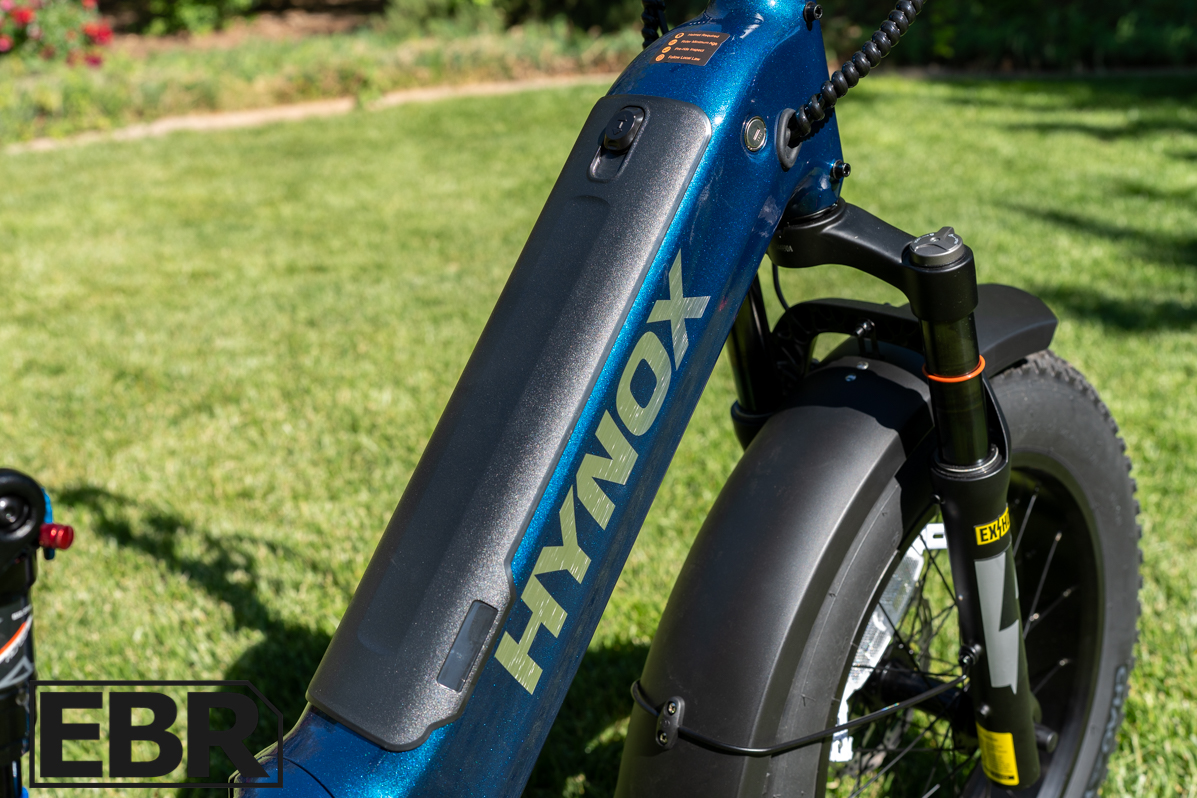
The battery is a removable 48V 15Ah pack, so 720Wh, built on 21700 5000mAh cells sourced from TENPOWER (note that TENPOWER does not make the battery pack, they are just the battery cells). I could not find a UL mark on the bike or the battery. We have reached out to Hynox and are still waiting to hear back, but based on the lack of any markings, I would not expect it to be certified. If that matters where you live, keep it in mind.
Hynox claims up to 65 miles. We came in under that, which is not a shock given how much power this bike likes to use, but the results are respectable. On max assist, PAS 5 capped at 20 mph in Class 2, we logged 33.63 miles. Dropping to PAS 1 in Class 2, we recorded just under 57 miles at 56.26. So the 65-mile claim is a little optimistic, the kind of number built for a light rider on flat ground at the lowest assist, but 56-plus miles in our test is a good result for a fat-tire folder.
The 720Wh pack is a good size for this class, but two things bring the range numbers down a little bit:
- The motor has a big appetite (1,600 max wattage)
- The sensitive torque sensor feeds power at the lightest pedal pressure, so you use more than you might on a bike that makes you work for it.
Hynox offers a spare battery separately, and that is a reasonable add for longer camping or trail days.
One more spec note worth flagging: Hynox lists the bike at IPX5 in their media kit but IPX6 on the live product page, so I would treat the water-resistance rating as unconfirmed until they square that up.
It ships with a 48V 3A charger, and, doing the math, that means it will take around 5 hrs to recharge the battery from 0% to 100%. Normally we find 2A chargers in sub $1,500 e-bikes, so we are very happy with the faster charger that knocks off 2 1/2 hrs of charge time.
Components
Components Score: 7 / 10
 |
 |
 |
 |
For any folding fat-tire bike, I want parts a local shop can service and that hold up to the extra load an e-bike puts through the drivetrain. The Trooper X mostly delivers, with a few things I would flag.
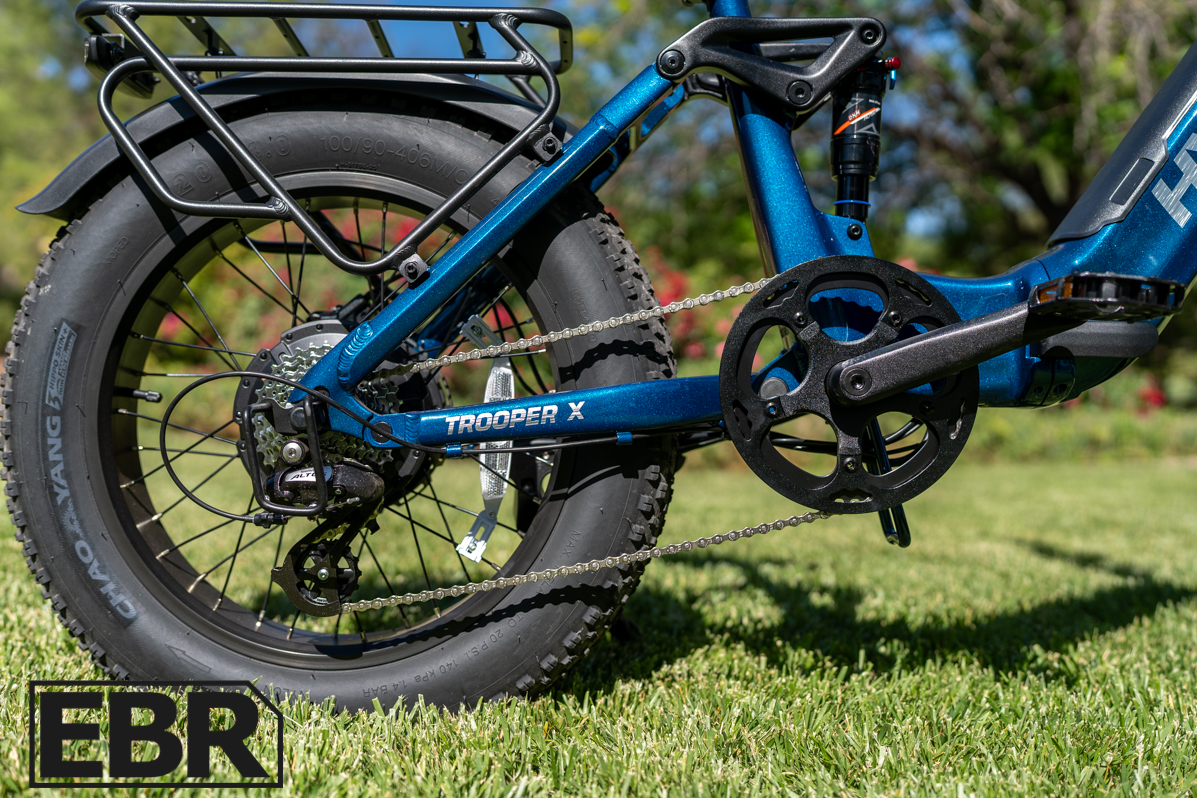
The step-thru, folding frame is 6061 hydroformed aluminum, and as I said, it is stiffer than most folders I have ridden. Cable routing runs cleanly through the top tube instead of the headset, wrapped into two tidy strands, which I appreciate.
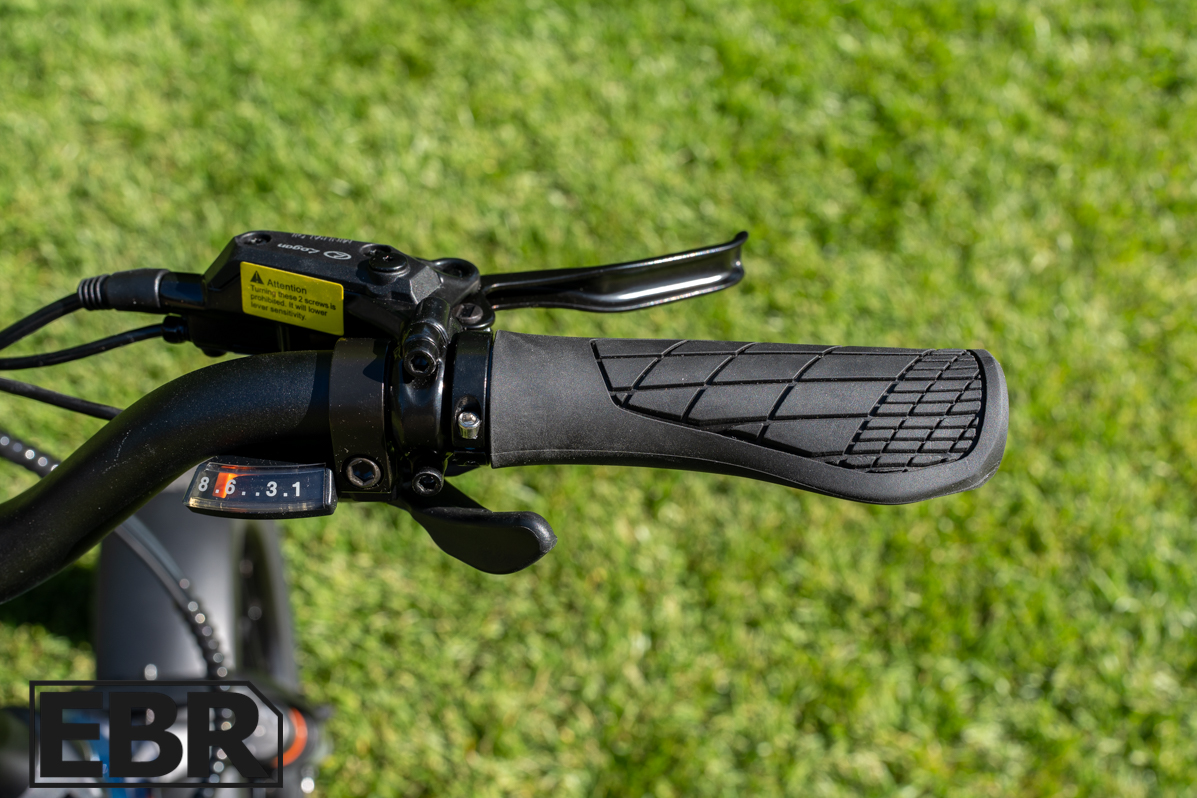
The drivetrain is a Shimano Altus 8-speed with an 11-32T freewheel and a 48T chainring up front. Altus is the floor I want to see on a quality value bike, and it is here with a rapid-fire trigger shifter that sits neatly under the bar and is easy to use. The large 48T ring also helps keep ghost pedaling in check at 28 mph.
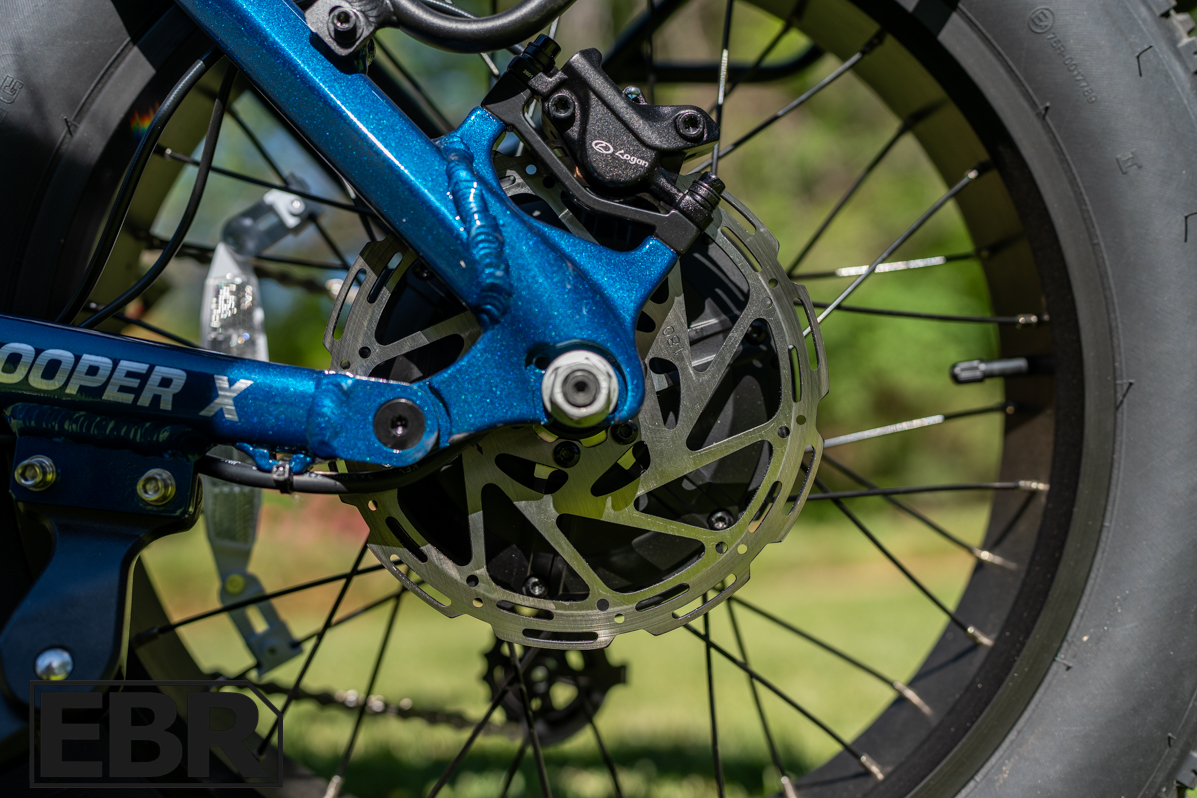
Brakes are Logan hydraulic discs, dual-piston, with 180mm rotors front and rear. They are listed at 2.3mm thick but measured 2.25mm on our scale, which is splitting hairs. Logan is not as common as Shimano or Tektro, but the brakes run mineral oil, so most shops can bleed and service them, and they held strong through our long, hot brake test down the steep Black Hill with zero fade. They also felt good riding around in normal scenarios (the brake test down the Black Hill is a bit dramatic, for obvious reasons).
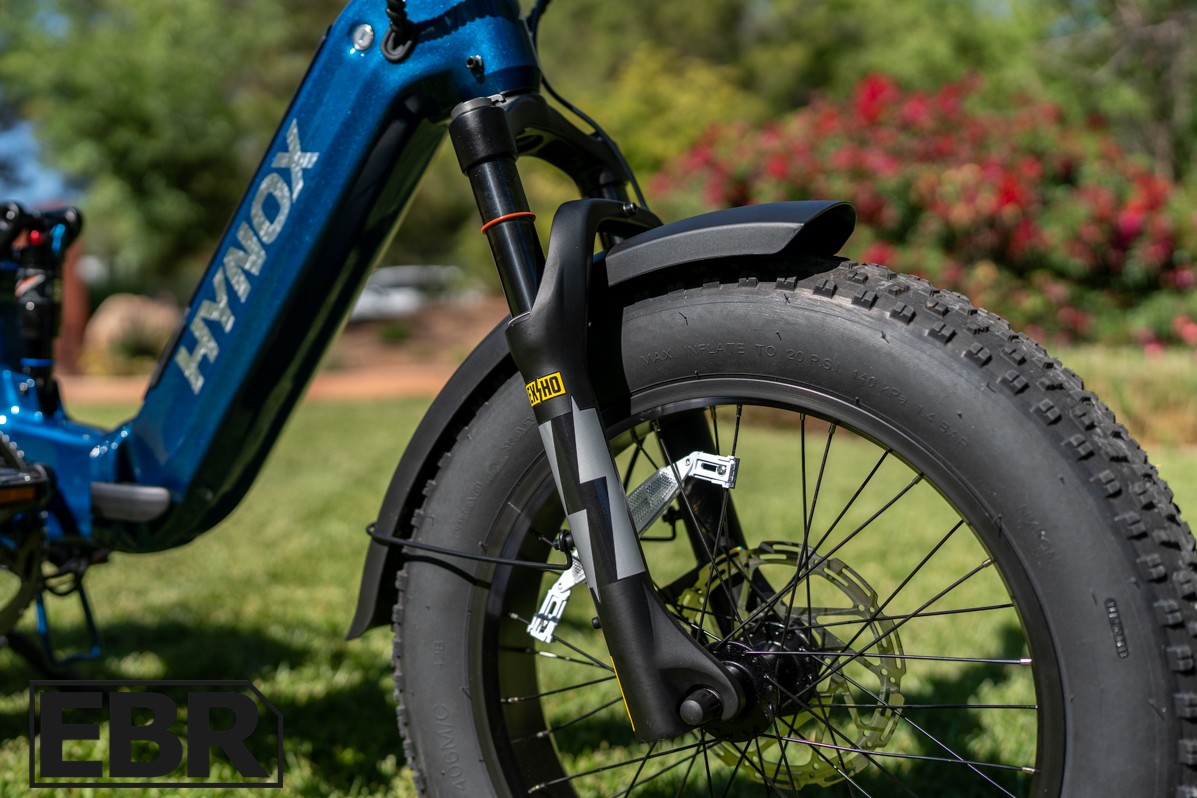
The suspension surprised us – in a good way. The EXSHO 80mm fork is hydraulic, not air, but its lockout has actual distinct preload adjustments and even a half-lock position, and the stanchions are 34mm. My one wish is a thru-axle instead of the dropout setup, which would stiffen the front end a bit more and improve the ride quality a little bit.
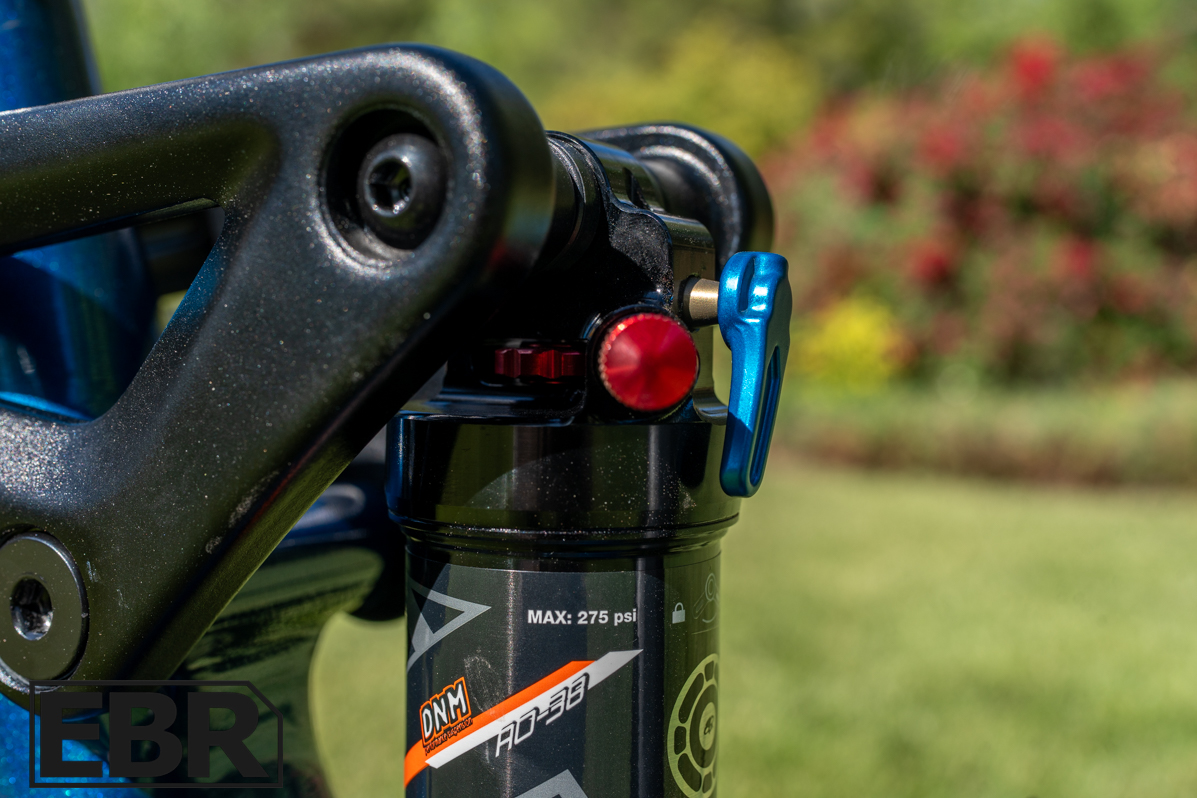
The rear DNM air shock gives you 80mm of travel with 3-way adjustment for rebound, lockout, and preload, and it is the part of the package that you shouldn’t expect to see at under $1,500.
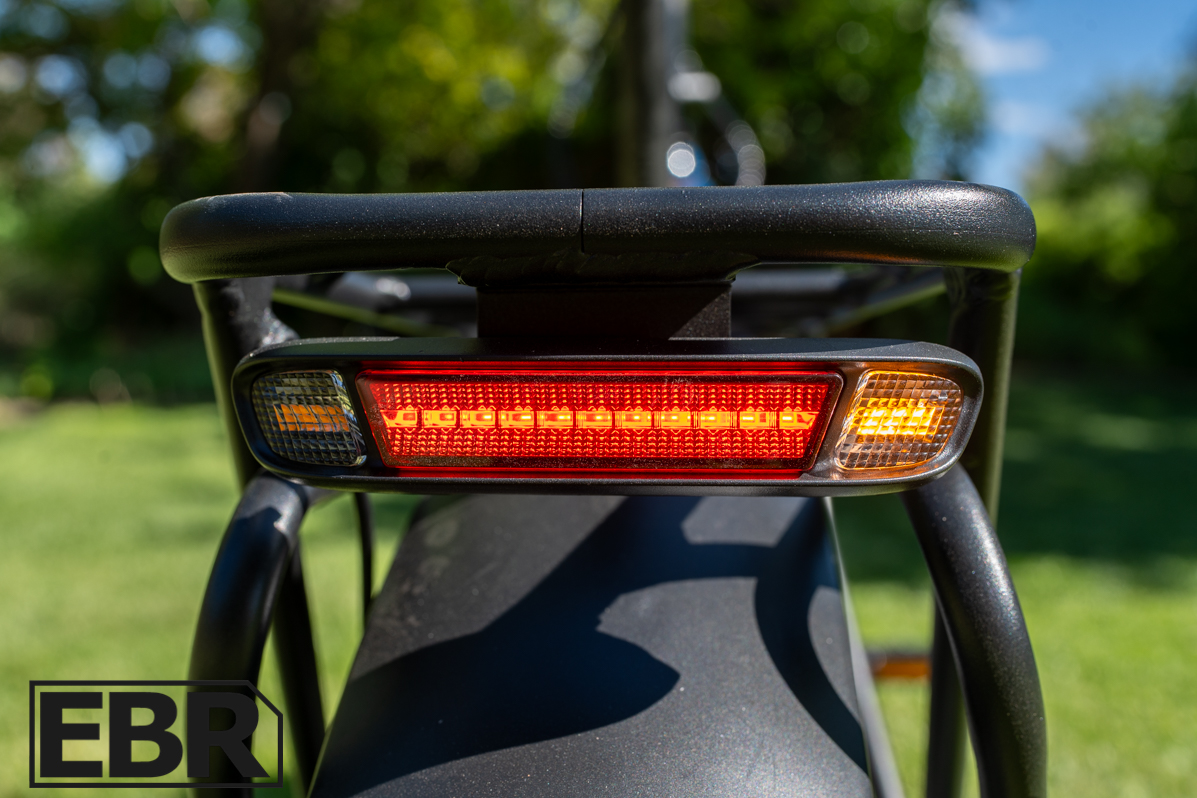
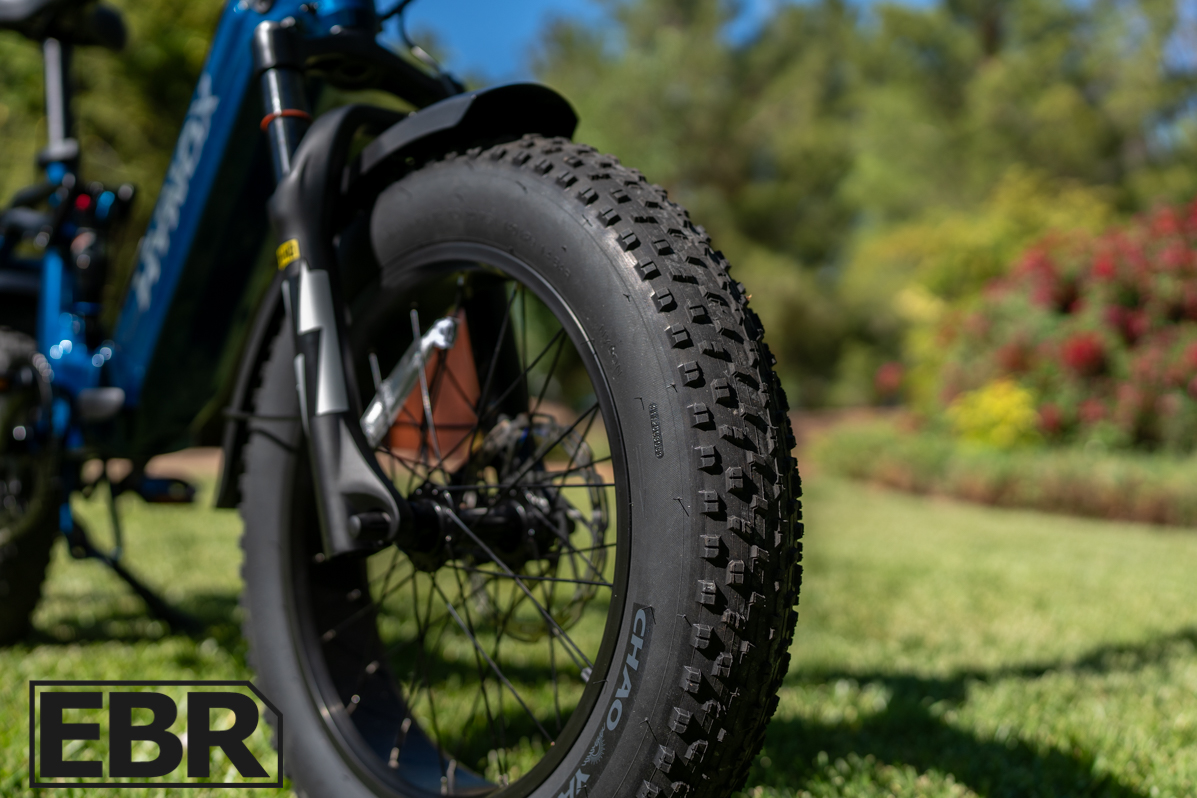
Rounding out the build: Chaoyang 20×4.0 puncture-resistant fat tires, ODI lock-on grips with palm padding, plastic fenders (which I prefer over metal), a 66-lb rear rack, and turn signals on both sides.
Almost everything was perfect for a fat-tire, folding e-bike in this price range. However, our unit’s seatpost was too wide for the seat tube, so we had to swap it, and the battery charging-port flap feels loose.
For the money, though, this is a strong, serviceable component package.
Note: Hynox is offering EBR readers $100 off with coupon code: EBR100
Screen / User Interface / App
Screen / App Score: 6.5 / 10
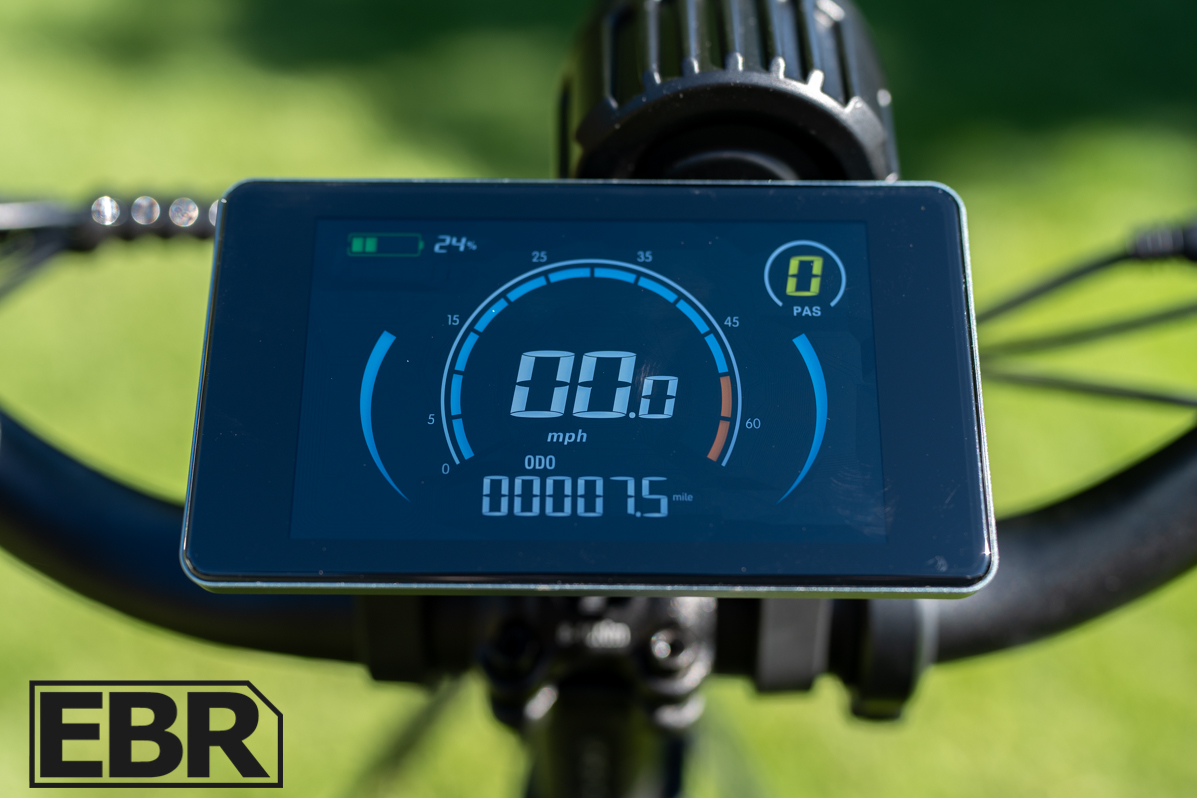
The display is another component that we were impressed with.
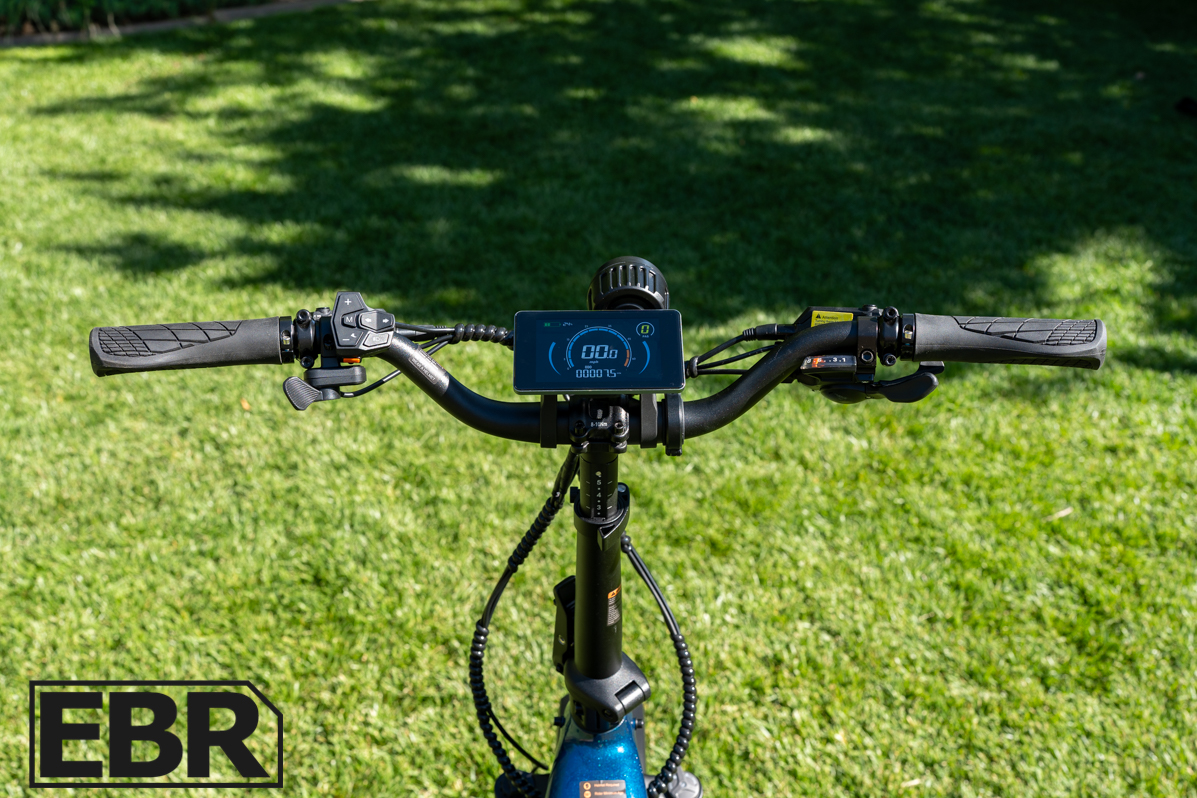
It is a roughly 4-inch full-color screen mounted front and center, bright and easy to read, showing:
- Battery percentage and bar readout
- Bluetooth status
- Your assist level from 0 to 5
- Speed
- Cycling data line for trip, max speed, average speed, voltage, and ride time.
For a $1,399 bike, that is a nice panel.
Where it gets dated is the on-screen settings. Dig into the display menus and you are met with old-school codes like P00 and P0, so you will not be making changes there without a deep dive into the manual.
Everything meaningful happens in the Hynox app, which is basic but useful. You can nickname the bike, check battery, toggle the light, set a display sleep timer, link throttle speed to PAS, and set the speed limit for each assist level, which is how you unlock the bike to 28 mph. There is also a ride-tracking screen showing speed, assist, motor power, and mileage.
Two things stand out here. First, adjustments are made in the app, not the display, so you will need your phone to change how the bike behaves. Second, and this is the good news, the bike is OTA update capable. That is the reason I keep coming back to the throttle programming: Hynox has the means to fix it remotely. They could easily push out an update to make the bike a Class 2, street-legal bike; they also could add a bit more app depth to the app’s capabilities. Right now it is a strong display paired with a simple app.
Bike Model Options
Hynox keeps the Trooper X simple. There is one frame, a folding step-through, in one size that Hynox claims to fit riders from 5’1″ to 6’5″ using the adjustable stem and seatpost. Again, we think that is a little aggressive on the tall side, but one of our 6’3″ team mates helped in the range test and was comfortable for the 4 hrs he was riding the bike.
Color is where you get some choice: Sapphire Blue, Ruby Red, and Mountain Gray, all at the same $1,399 sale price. I will say it, the Sapphire Blue looks really good in person. At the time of writing, Mountain Gray was sold out on the site.
For context, the Trooper X sits at the top of Hynox’s small lineup. The standard Trooper has less torque and doesn’t have a rear shock, while the Flex sits below both in terms of capabilities and components. If you want the full-suspension, high-torque version, with the best specs, the X is the one we’d recommend.
Is the Hynox Trooper X Worth Buying?
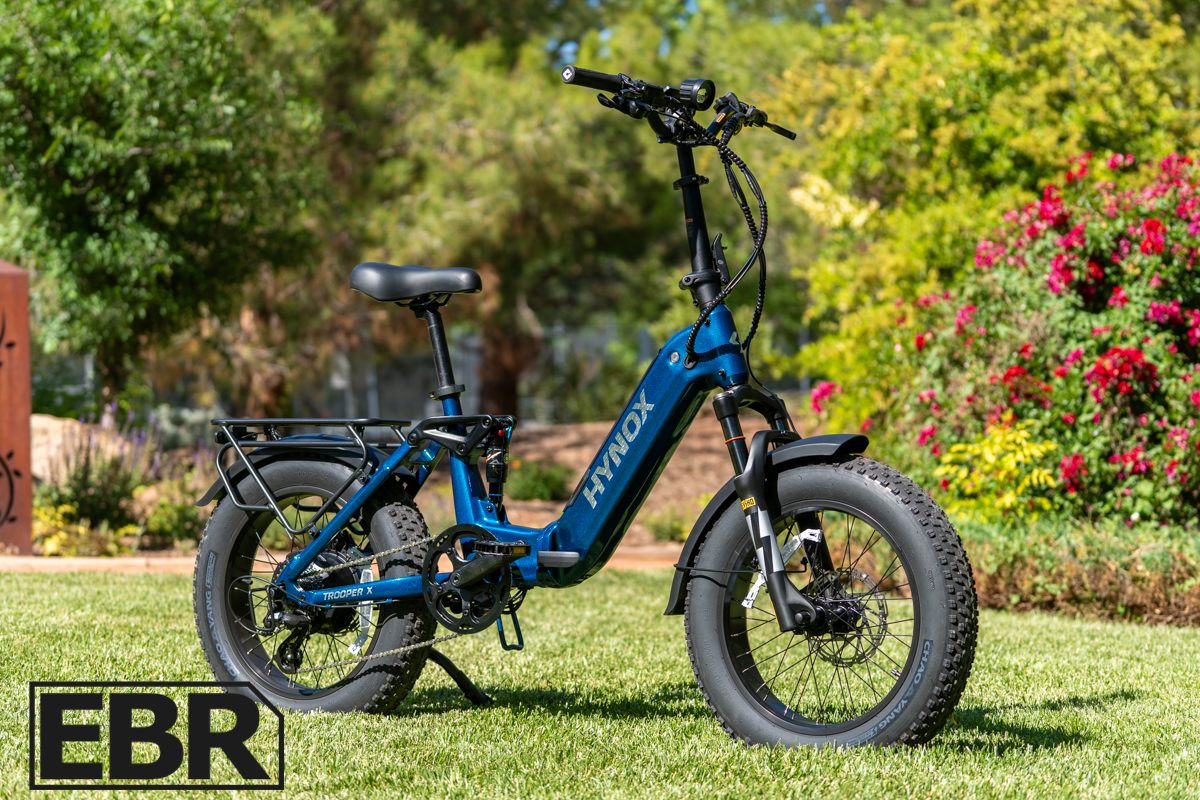
So, is the Hynox Trooper X worth buying? I will be honest, I am a little torn, but I land on yes for the right rider. There is a good bike here with a solid base. The build quality caught me off guard for a brand I had not touched before, the suspension is great, and the power is fun once you learn to handle it.
I think it fits the rider who wants a full-suspension folding fat-tire bike for RV trips, camping, fire roads, and double track, and who likes a strong, torquey motor that does most of the work – and takes some practice controlling. This is a higher-skill bike when you turn it up, so it’s best for someone comfortable managing that power.
And please, please, please, please: don’t take this on a mountain bike single track trail. The bike can absolutely go off the paved path, just not mountain biking trails.
However….the throttle programming!
Shipping with a throttle that runs to 28 mph, past Class 2 speeds is going to get a bike brand in trouble with the CPSC at some point.
When bikes step outside the three-class system that People for Bikes laid out, they invite the kind of restrictive laws we have already seen in places like California and New Jersey, and that ends up hurting every rider and brand in the space.
The good news is this is a software fix, not a hardware flaw. I would love to see Hynox push an OTA update that keeps the bike fully within the class system right out of the box. The hardware already supports it. Thank you, Hynox, for building OTA capability in; now use it here.
A couple of small items, the dropout fork, the loose battery-port flap, and our seatpost fit hiccup, are worth cleaning up too, but none of them break the deal at this price.
Bottom line: at $1,399, even at the $1,499 MSRP, this is a good full-suspension, high-torque folding bike for the money. Hynox has been responsive with riders online asking questions on YouTube videos and in forums, which tells me they are paying attention (and that they care). Sort out the programming and tidy the small stuff, and the Trooper X goes from a good buy with a caveat to an easy recommendation.
I am looking forward to seeing what they do next.




Reader Interactions