

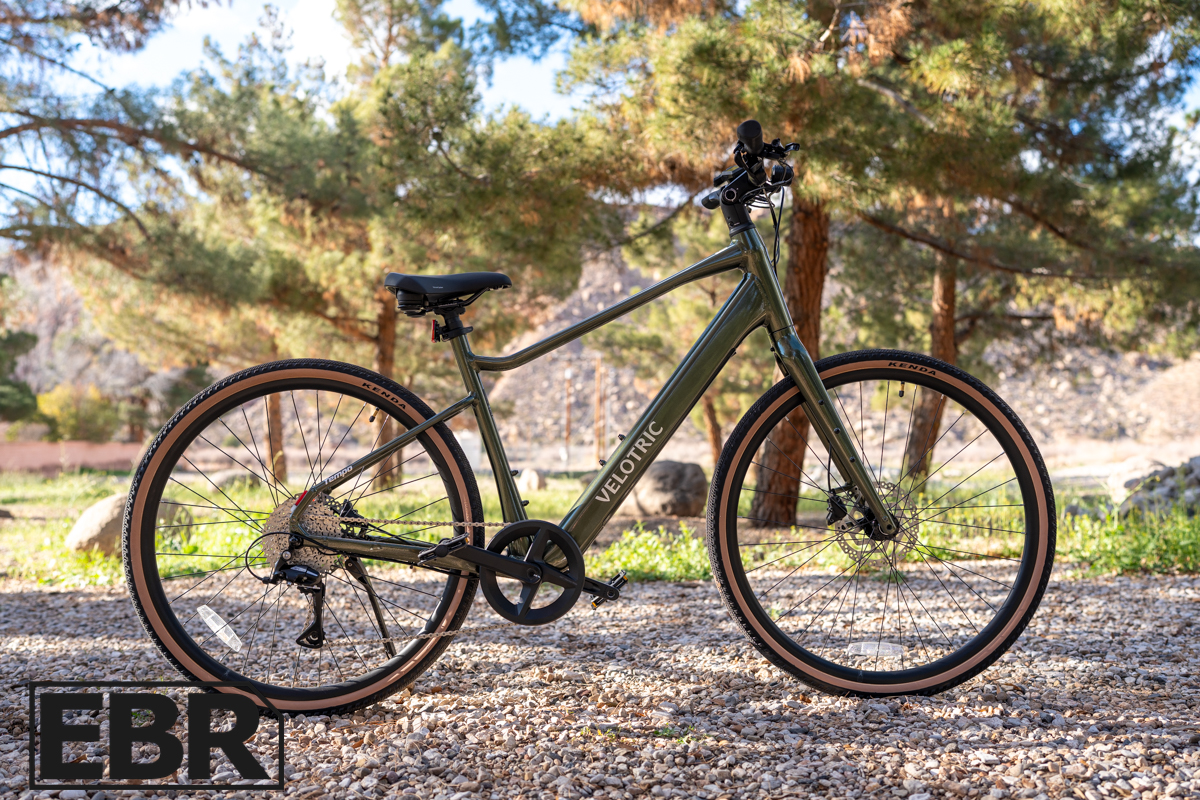
Velotric is back with a new lightweight contender, and this one takes the crown as the lightest ebike in their lineup at a claimed 39 lbs. If you remember the T1, think of the Tempo as its much better successor. The silhouette is sleeker, the tech is deeper, and the ride is more refined in nearly every way.
On the tech side, Velotric loaded the Tempo with motor tuning, their SensorSwap system giving you both torque and cadence sensors to choose from, and a new Pulse Mode that uses an included heart rate monitor to automatically adjust motor assistance and keep you in your target heart rate zone while you ride.
Security got an upgrade too, with a key fob and support for both Apple Find My and Google Find Hub for GPS tag tracking. Range comes in north of 70 miles in real world testing, and with a new 60mm adjustable stem, two frame styles, two frame sizes, and four new color options, there is a Tempo configuration that should fit just about any rider.
So is it worth your $1,499? We spent time putting it through its paces to find out.
My Experience Riding The Velotric Tempo E-Bike
While this isn’t officially the relaunch of the Velotric T1 I reviewed a couple years back, it kind of feels like it. It’s the same fitness-themed ebike that comes in at the same claimed 39 lbs and has that look with a stripped-down city bike, flat bar feel. But, once I started riding and browsing the specs, the differences are pretty massive.
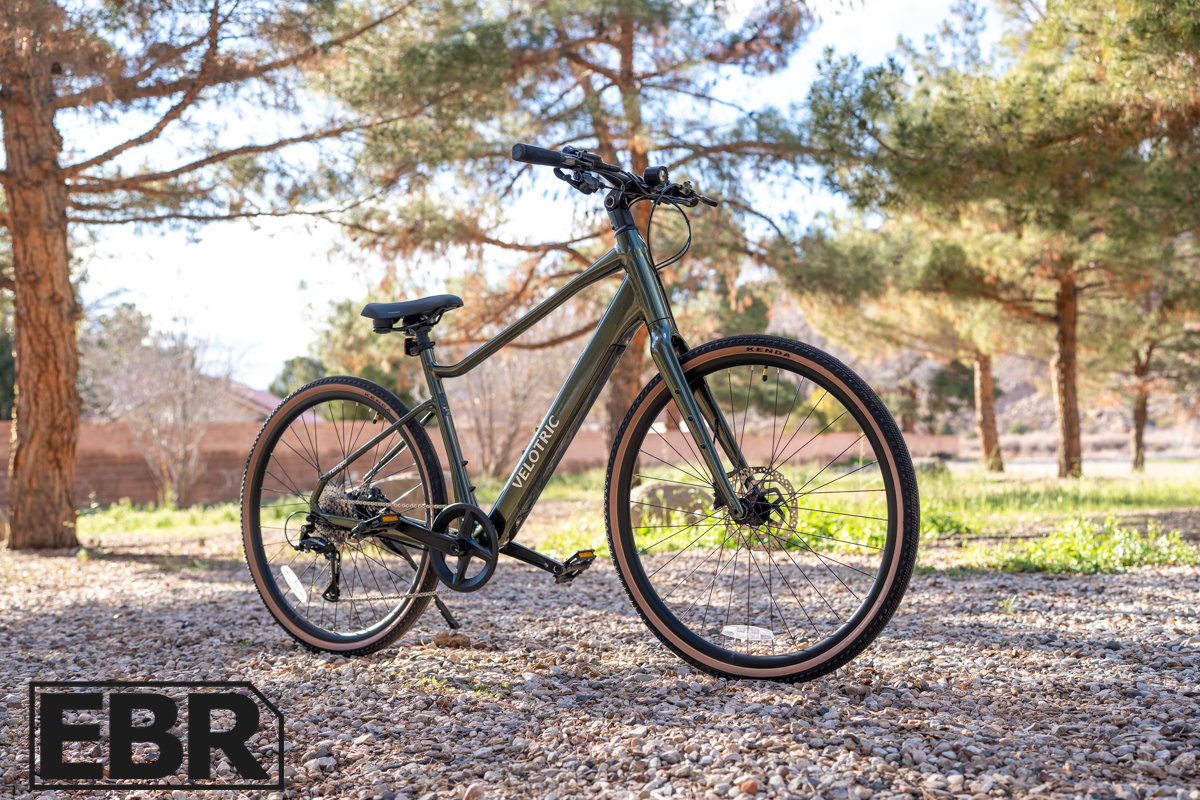
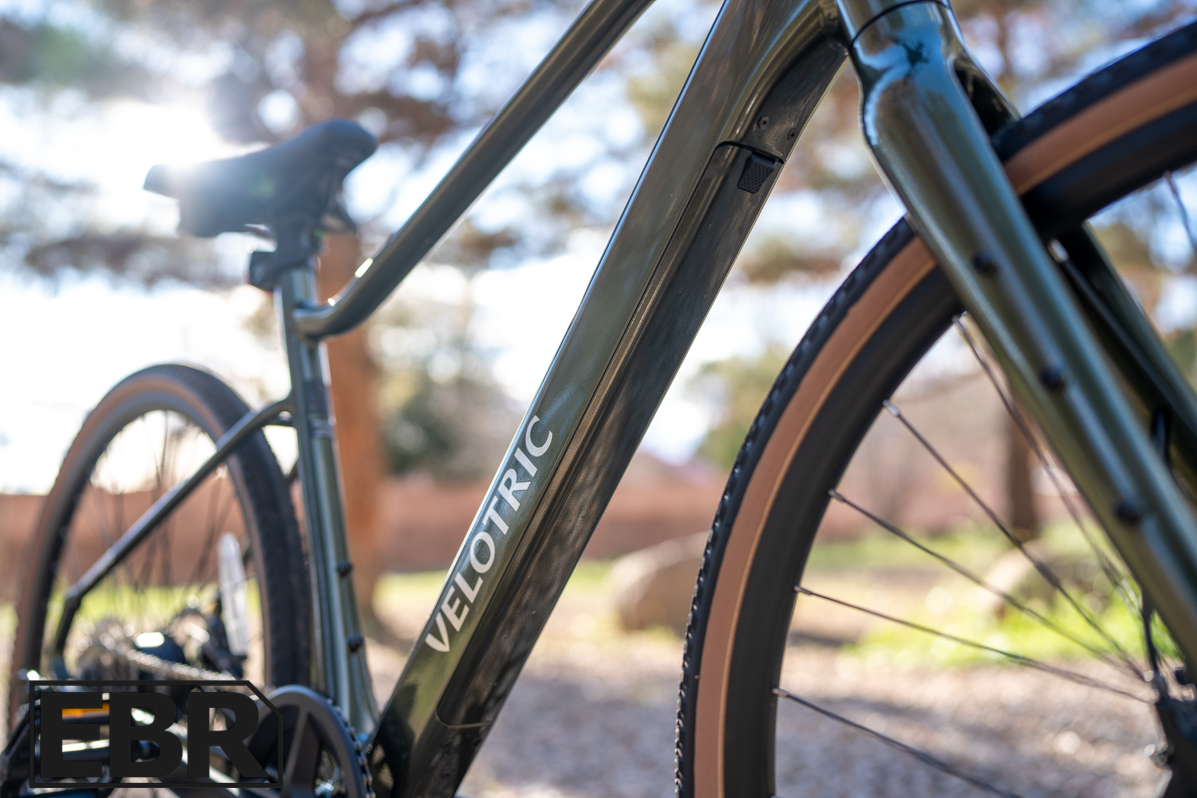
I’m a fan of the new Forest Evergreen colorway with fairly minimal branding on the downtube in a nice silverish accent. The black rubber and tan sidewalls are a really good complementary color. As an outdoorsy guy, this color fits me well, but there are other colors to pick from if these aren’t your style, and we’ll cover those a bit later.
Probably the most noticeable and fun aspect of the Tempo is the lightweight build. At a claimed 39 lbs (my test unit weighed in at 41 lbs fully dressed, and I added Slime to each tube for the goatheads we deal with down here in southern Utah), it’s just easy to do everything. Easy to lift, easy to take up a flight of stairs, and easy to move from one area to another.
Best of all, it works with nearly any bike rack you already have. No need to buy some gargantuan ebike-rated monster rack built for 80 lb fat tire bikes. It just works on whatever rack you’ve got, and that’s a massive point of relief for daily life with the bike. I was able to use my Thule ReVert hanging rack just like any of my non-e mountain bikes, and that makes life just a little easier, for me and my back.
I was sent the size large in a high step frame setup. The top tube sits at 28 inches off the ground, which is a bit lower than the more typical 30 to 32 inches I usually see. That’s largely due to a slight downward angle it slopes at. It’s not so low that it feels like a mid-step, which they do offer, but it’s enough to take the edge off if tall top tubes aren’t your thing. Velotric says the large fits riders 5 ‘7 to 6’ 5, and at 5 ’11, the fit felt great to me.
For dialing in the fit, they give you a few options. First are the micro-adjust rails on the saddle for forward and backward positioning based on leg length and reach. But this time around they also went with an adjustable stem, a 60mm unit that keeps the reach nice and short at around 14 to 15 inches. That makes the ride more comfortable and I don’t feel stretched out. It’s a good hybrid riding position that can get more upright or more aggressively forward depending on what you want, and the adjustable angle stem makes that easy.
The one area I was a bit skeptical about was the 350W rear hub motor. On one hand, a 39 lb bike doesn’t need massive power, but that sub-500W number kept creeping into my head as a potential weak spot. Fortunately, that power anxiety was a false flag. The rear hub motor peaks at 650W and pushes 45Nm of torque, and with some smart programming behind it, the Tempo is surprisingly capable.
I took it up some local minor hills using max power with the Experience Mode set to Turbo, and it got up gradients exceeding 20%. To be fair, that was with pedal assist, not throttle only. Throttle-only up a 20% grade seems like a failure waiting to happen. But it’s nice to know that power is on tap to help you climb nearly anything in pedal assist, because that’s not always the case. I also did some more mild hills on throttle only and it handled the day-to-day inclines most towns throw at you just fine.
One of Velotric’s staples has been what they call SensorSwap, which ships the bike with both a torque sensor and a cadence sensor and lets you switch between them to see what you like. To me, this is the right answer. Despite all the online debate, both are actually good. It just depends on your use case, and I don’t want to have to pick one and live with it forever. You get both, and that’s exactly how it should be.
On the tech and customization side, you get all three class levels plus a custom motor tuning profile for both throttle and pedal assist, speed controls you can set anywhere from 12 to 28 mph, and Experience modes called Slow, Smooth, and Turbo that act as global moods for the bike, exactly like they sound. On top of that you still have four levels of pedal assist. From front to back, you can tune the Tempo to ride how you want, not the other way around, and that’s always a good thing.
Being a fitness-themed ebike, you really can get a solid workout on the Tempo by managing how much assistance you use, making your rides as hard or as easy as you want. But now there’s a new included heart rate monitor and a riding mode called Pulse Mode where you enter your bio data like age, height, and weight, and the bike factors in heart rate zones. Then while you’re out riding with the monitor on your forearm, you just pedal and the bike dynamically increases or decreases motor assistance to keep you in a specific zone. It’s genuinely smart tech, and for anyone looking for a fitness-focused riding experience on an ebike, this makes a pretty compelling case.
One small issue I encountered in my time with the bike, when I applied a lot of torque to the pedals, like climbing or pedaling hard, there was a consistent ‘creaking’ sound that went away when I backed off. I found that placing my hand on the battery cover during those moments made the sound stop, which leads me to believe there’s a small amount of lateral flex in the downtube and battery cover area. I took it to the workshop to try to track down a fix, but didn’t have any meaningful success as I wasn’t able to pinpoint it. Hopefully, it was a one-off issue with my pre-production bike for testing and this review was dealt with already.
All the daily-use perks are there too. There’s a 500-lumen headlight, a rear taillight with a braking indicator and three flashing modes, and turn signals. One of the more premium touches on the Tempo is how those tail lights and turn signals are integrated directly into the seat stays of the frame rather than clamped on like you usually see. It looks great and it’s practical too since a frame-integrated light isn’t going to snap off if you bump it into something.
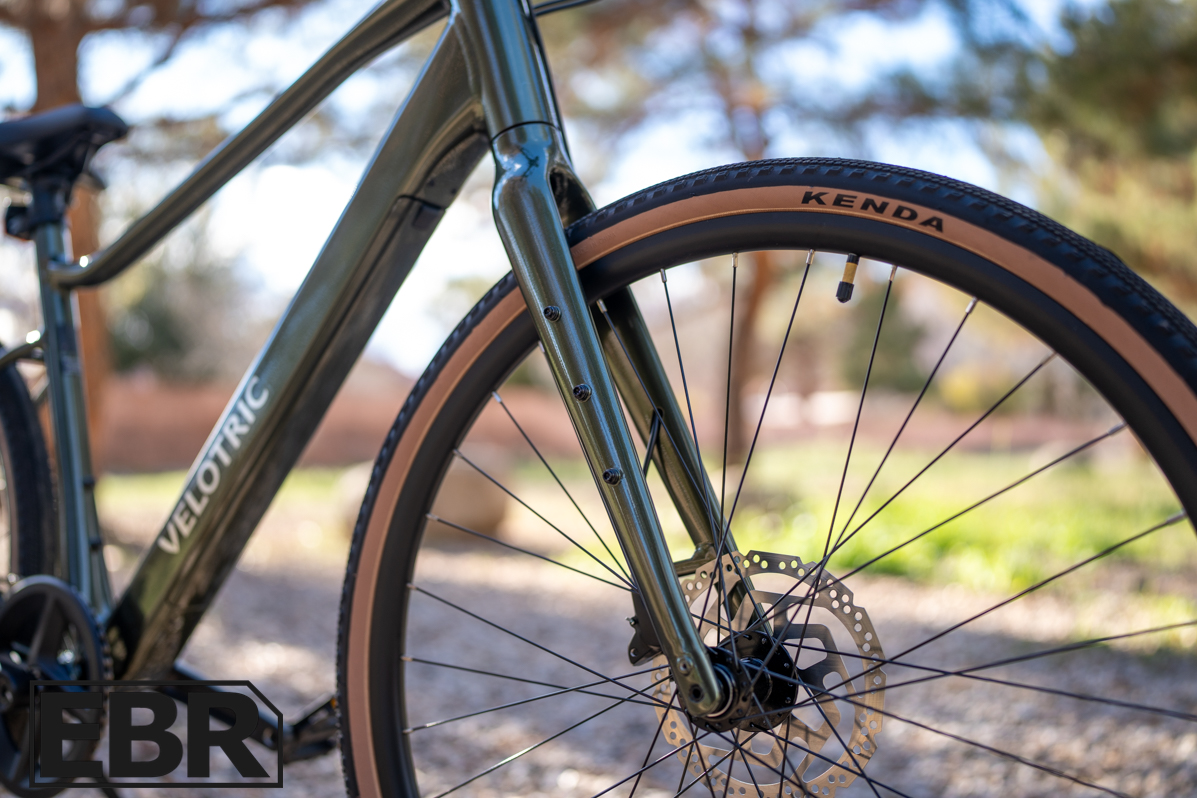
There are no fenders or a rear rack included, but the frame is clearly ready for them with several tapped mounting holes in the rear for a rack and at the top of the wheel areas where fenders would go. I got my unit pre-release so I can’t confirm those accessories are coming, but based on those strategically placed holes I’d bet on it. Beyond that, there are more mounting points than I usually see on a bike like this: two on the downtube, two on the seat tube, and three on each leg of the front fork. To me that signals this bike is a legitimate contender for bikepacking and gravel adventures with actual room to carry gear.
The security setup is solid too. There’s a handy credit card or hotel key style proximity key fob you can tap and go with, there is also a startup PIN code, and the Tempo also supports Apple Find My and Google Find Hub, so if you tuck a GPS tag inside the frame you’ve got 24/7 tracking should the bike decide to go for a ride without you.
Bottom line, the Velotric Tempo nailed what it set out to be,\ a lightweight, fitness-themed ebike that’s surprisingly capable at any speed, climbs hills well, and is loaded with customization options. It’s easy to live with, easy to travel with, and easy to like. Add in the bikepacking and gravel potential, and at $1,499, the Tempo makes a strong case for itself.
Range
Estimated Range (from Velotric):
- Throttle Range: 40 miles
- Pedal Assist Range: 60 miles
Real World Range Test Results:
- Eco Mode Range Test Results: 24 miles
- Turbo (or Boost?) Mode Range Test Results: 71 miles
Brand range estimations are one thing, kind of like car MPG advertising. In reality there are a lot of unknowns baked into those numbers, and we believe they reflect best case scenarios: lightweight rider, closed flat course, Experience Mode set to Slow, pedal assist in Eco, and so on.
For our real world testing, we had a 190 lb rider on a city bike path with normal slowdowns and stops for other people or to grab a drink, 1,350 feet of elevation on the Eco mode test and 500 feet on the Max mode test, Experience Mode set to Smooth, and pedal assist in torque sensor mode for better efficiency over the cadence sensor.
With that, we got 71 miles on Eco and 24 miles on Max. Those are obviously the two extremes of the spectrum, and most riders are going to live somewhere in the Tour or Sport pedal assist levels. Based on what we saw, that should land you consistently in the 45 to 60 mile range with typical mixed usage, which is a very usable number for long fitness rides or a full day of weekend fun. Especially when you consider how small the battery is tucked into that downtube.
Bottomline, for an e-bike that doesn’t even look like an ebike, it can take you a surprisingly long way.
Power (Motor & Battery)
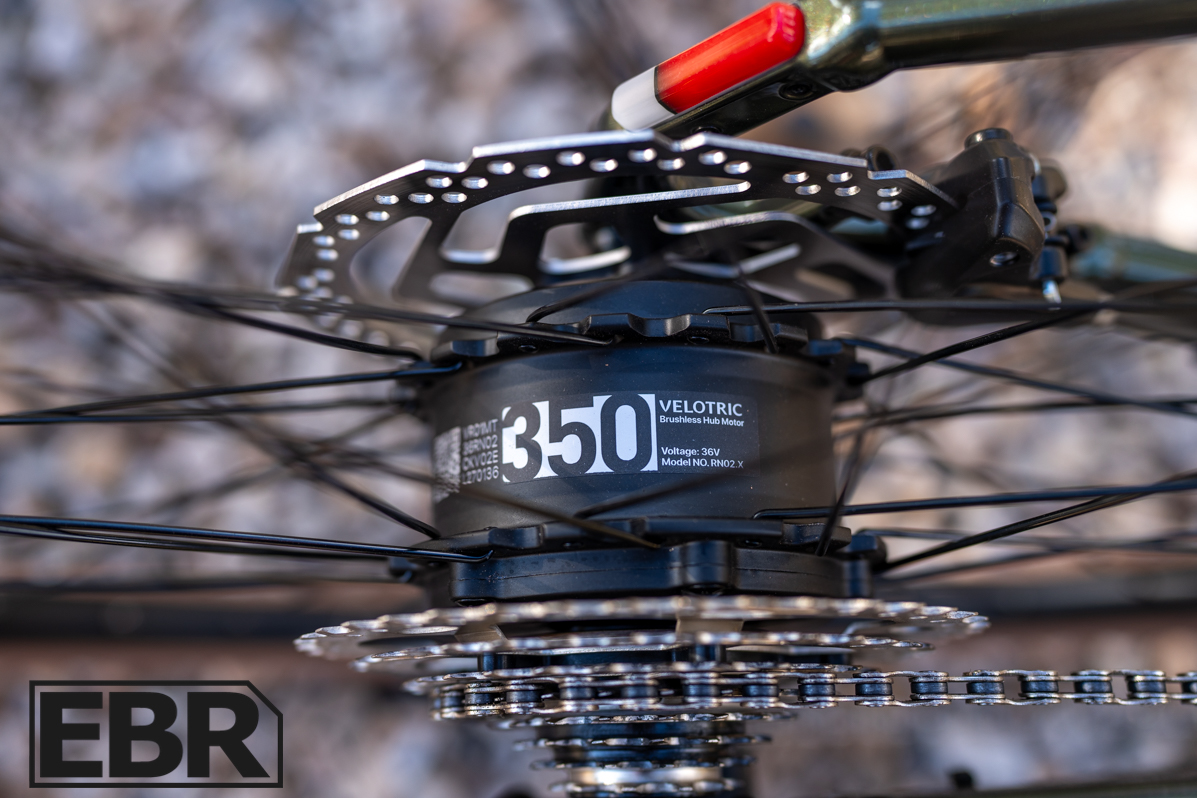
The Tempo runs a rear hub motor rated at 350W nominally, peaking at 650W with 45Nm of torque. Not massive numbers, but on a lightweight bike like this they don’t need to be, and as covered in the ride section, it gets the job done.
The SensorSwap setup giving you both torque and cadence sensors is still here, and it’s still one of my favorite things Velotric does. You don’t have to commit to one or the other, just ride both and decide for yourself.
Pedal assist comes in four levels: Eco, Tour, Sport, and Boost. Layered on top of that are the Experience Modes, Slow, Smooth, and Turbo, which act as a global mood setting for the bike that shapes the tone of how each pedal assist level behaves. Beyond that, there’s motor tuning at the individual pedal assist level with custom profiles that go outside the standard Class 1, 2, and 3 settings. You can tune each level of pedal assist and set top speeds based on where and how you actually ride, rather than being locked into the class system.
The battery is a 36V, 10.4Ah, 374.4Wh unit that is UL 2271 certified. It locks into the downtube cleanly and you genuinely cannot tell it’s there. It comes with keys for off-bike charging or storage, and charges with the included 2A charger.
One feature I didn’t expect to appreciate as much as I did, was how the display now shows a time remaining indicator while charging, giving you a real countdown to when the battery is ready, like 2 hours and 14 minutes. And it’s shockingly accurate. I checked in on it throughout a charge cycle and it finished within two minutes of the original estimate. Small thing, but a genuinely useful addition.
Components
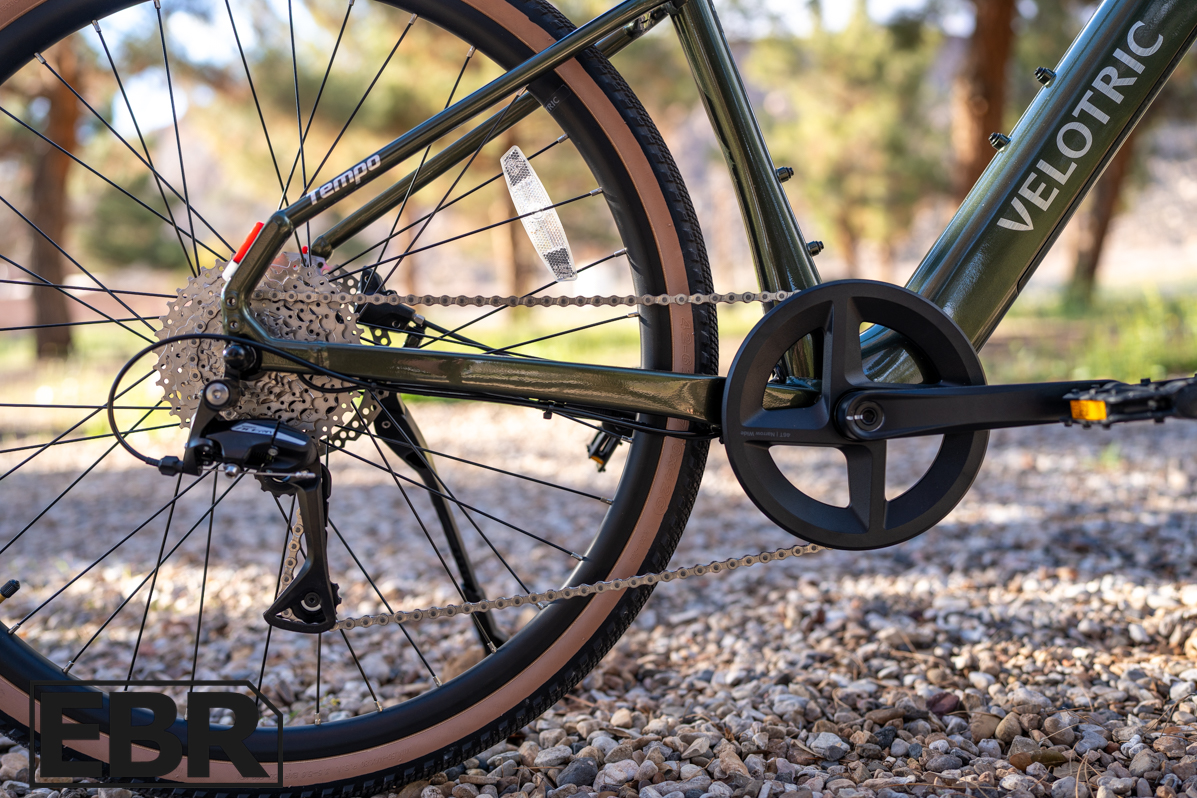
Kicking off components, the frame is the backbone and deserves a mention here. Velotric went with a triple-butted aluminum alloy 6061 frame and fork with thru-axle support on the fork to wheel integration. The battery is fully enclosed into the frame and it has a color-matched painted cover permanently affixed to the battery inside.
The wheel and tire setup is what first caught my eye on the Tempo. A proper 700c alloy wheel wrapped in gumwall Kenda gravel tires sized at 700x42c. These tires roll smooth and quiet but in true gravel tire fashion, have nice tread knobs to bite in loose or wet conditions. The wheels are a tube setup with schrader valves and don’t appear to be tubeless compatible, but check with Velotric for final confirmation.
The drivetrain is pretty straight-forward and in-line with what we see often at this price point. A 1×8 Shimano system with a Shimano Acera rear derailleur, 12–40T cassette, 46T chain ring and 170mm alloy cranks with a single sided chain guard.
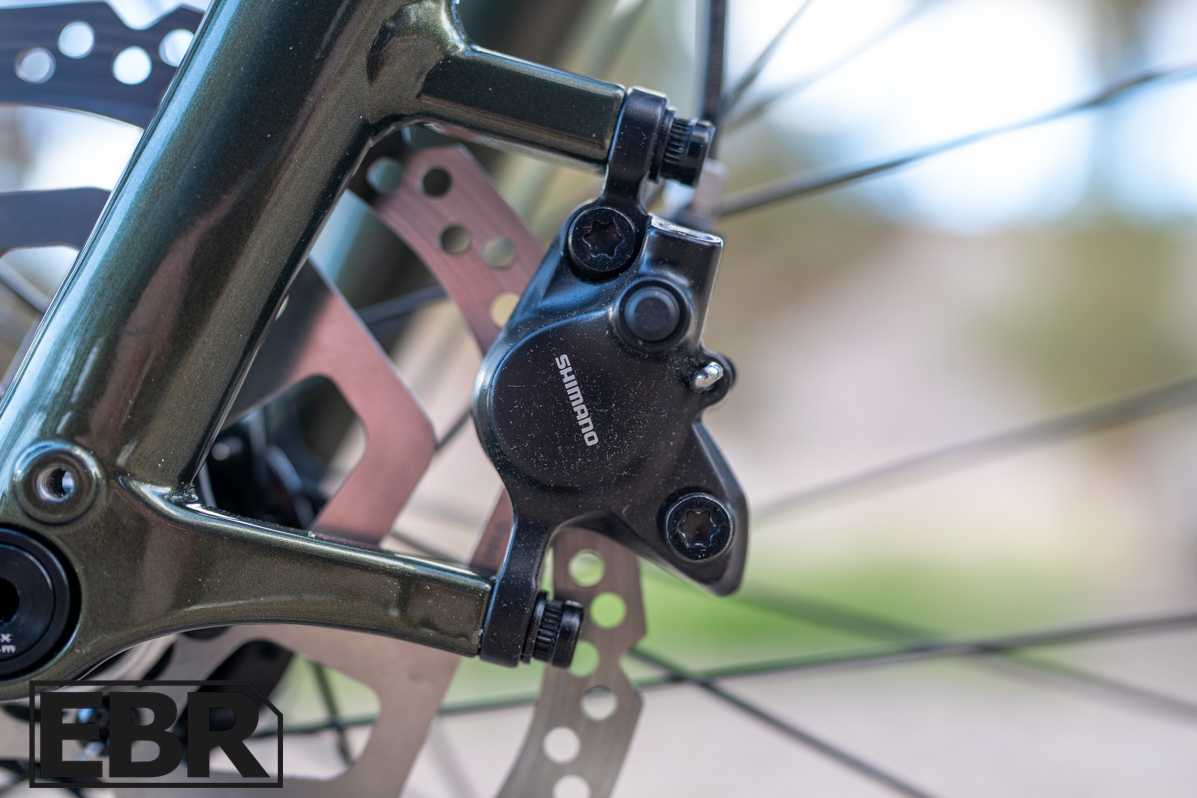
Stopping power comes in the form of hydraulic disc brakes. We have Shimano MT200’s with 180mm rotors and 2-Piston calipers. While there are no e-cutoff sensors for e-bike specific use-case, these brakes are known for their workhorse reputation and excellent stopping power.
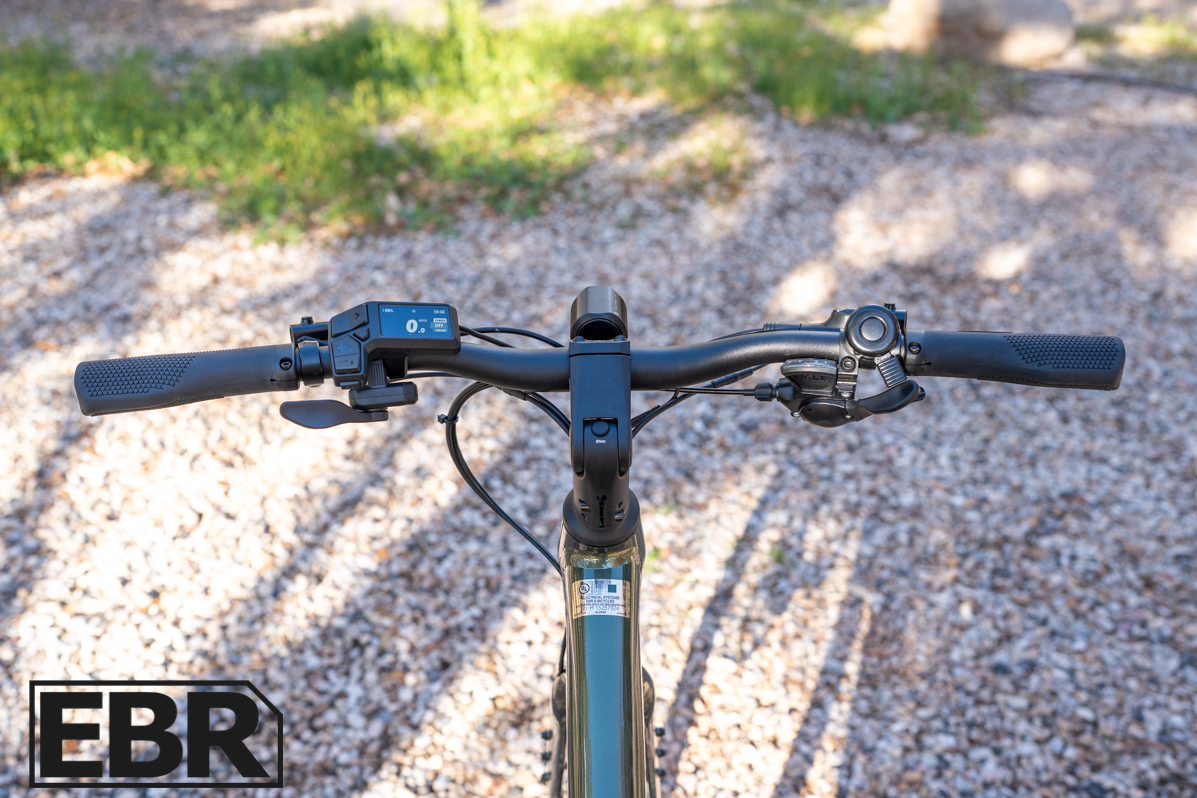
The cockpit has a 660mm alloy handlebar with slight rise and an adjustable angle alloy stem with a 60mm length and a 31.8mm bite. On both ends are ergo lock-on grips, and Shimano alloy brake levers. Over on the right side there are Shimano trigger shifters with a window to see what gear you are in at a glance, a bell, and over on the left is the push throttle and the display.
The seat post is aluminum alloy with a diameter of 30.9mm, length of 350mm, and a quick release collar for toolless seat height adjustments on the fly.
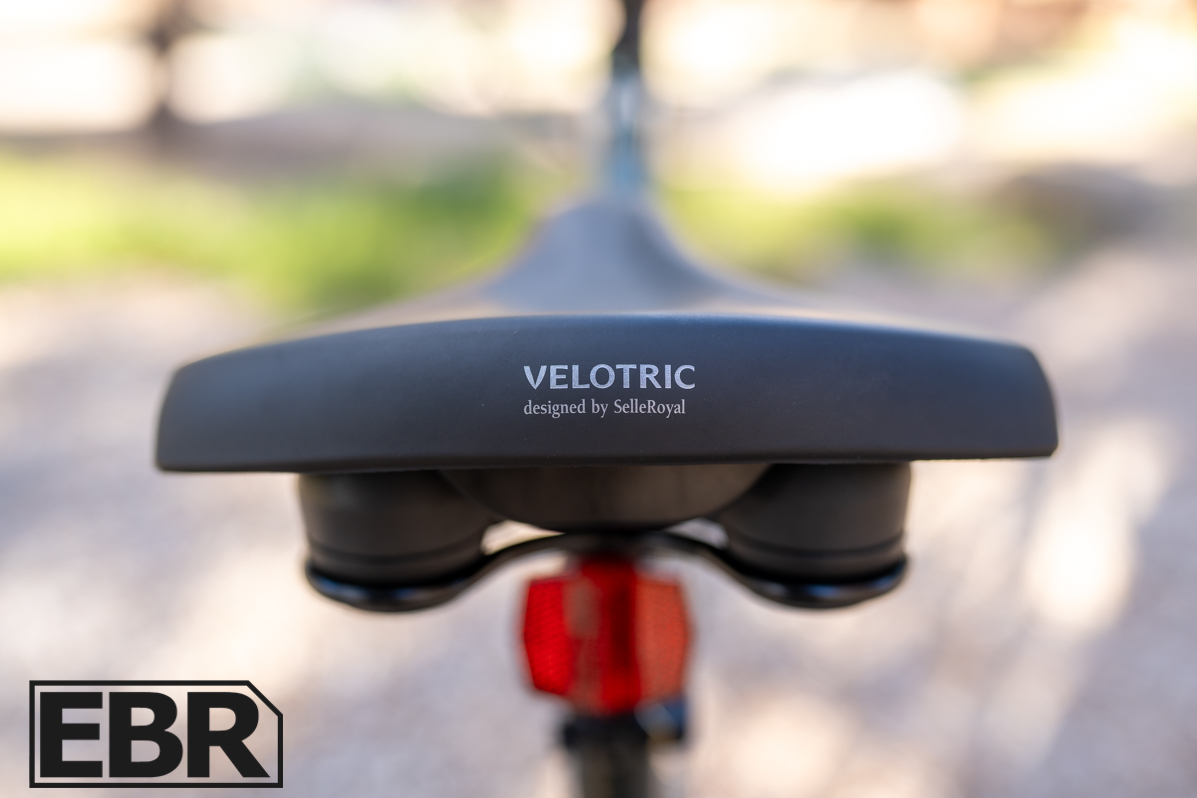
The saddle is a collaboration with Velotric and Selle Royal that is wide enough for a lot of comfort but not so wide it interferes with pedaling, it’s a good balance. The saddle has micro-adjust rails on the underside for forward and backward adjustments when dialing-in your fit.
Overall, the components are well-picked and considered to be reliable over time. In addition, the Shimano ecosystem of MT200 brakes and the 8-Speed Acera drivetrain is a series of parts any local bike shop in town is familiar with and likely keeps parts on hand which is always a nice perk.
Screen / User Interface / App
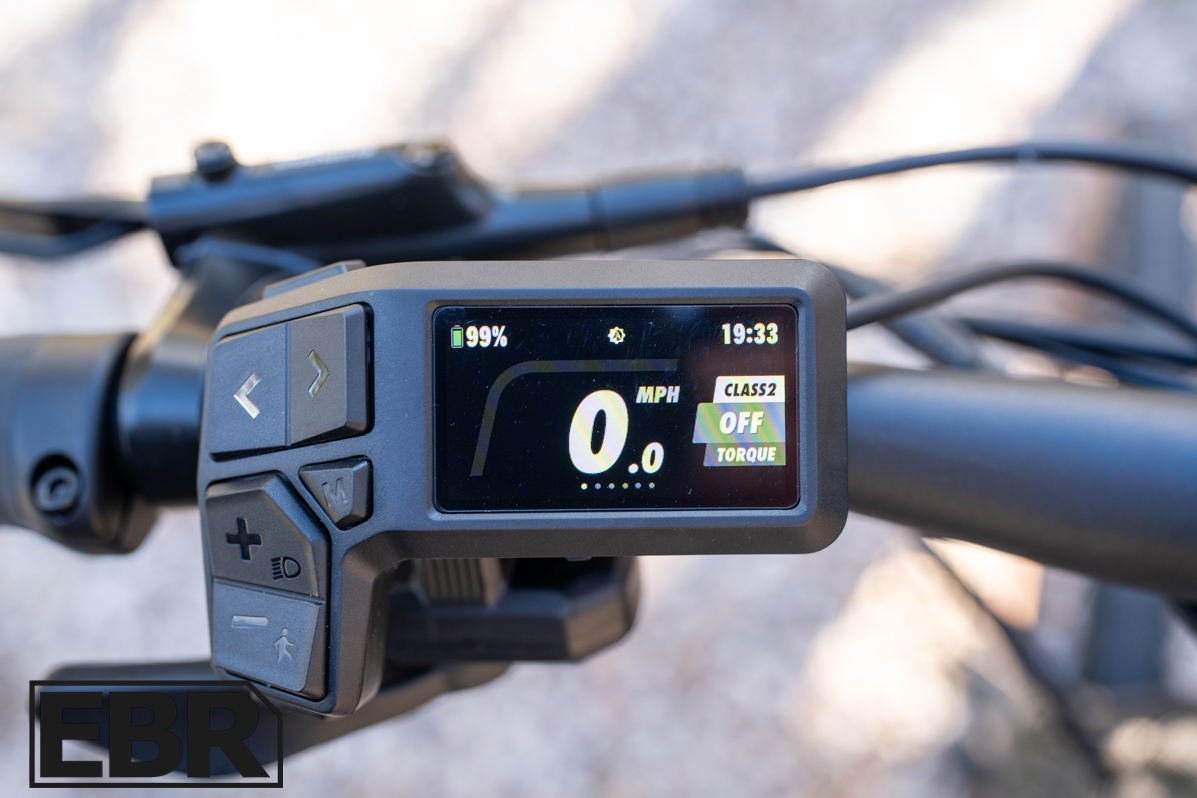
There is a 2” color display mounting on the left side of the handlebar. While compact in size, it has great visibility in all lighting conditions including direct sunlight. Mounted on the control pad is a covered port for USB type-C device charging, and then the usual layout of buttons for all your functions for the bike:
Button Layout:
- Left/Right Turn Signals
- Up/Down Pedal assist
- ‘M’ button
- Power Button (top side)
- Back button (bottom side)
Extra Button Duties:
- Holding up – Headlight
- Holding Down: Walk Mode 2.9mph
- Holding ‘Back’: Sets Cruise Control Speed
- Tapping ‘M’ scrolls data screens
- CO2
- Motor and COntroller Temps (color coded for quick status)
- Motor Power Usage Vs Human Power Split breakdown
Holding the ‘M’ button for a few seconds will place the display into ‘Advanced Settings’ where you can tweak all sorts of things, nearly everything you can change in the Velotric App you can also adjust in the display (available in both Apple and Google Play app stores). I like this for a few reasons, but mostly that means I can get all the benefits of the customizations without being forced to use the app on my phone.
Some people love using apps, some people hate it, and just like giving us both motor sensors and letting us figure it out, they did the same with the display letting us use what works for us and not forcing us one way or the other.
Velotric Tempo Model Options
You have quite a few options for the frame, which I’ve come to appreciate over the one-size-fits most setup most brands go with to save cash.
You have either a high-step version with a 28” top tube or a Mid-Step version that while I don’t have my hands on it to measure, does have a lower top tube for even easier access to riders who lack the height, flexibility, or even desire to toss a leg over a higher top tube.
Fit ranges depend on both choices with frame size and style, the Tempos frame fit ranges are broken down like this:
Velotric Tempo High-Step Frame (HS):
- Regular: 5’1” to 5’9”
- Large: 5’7” to 6’5”
Velotric Tempo Mid-Step Frame (MS):
- Regular: 4’10” to 5’5”
- Large: 5’3” to 5’ 11”
Having more specific frame sizes and top tube styles allow for a better fit at the individual level. Plus, toss in the adjustable stem and you really should be able to find a fit that works for you on the Tempo.
When it comes to frame colors, it largely also depends on the frame style you picked. If you get the High-Step frame, your color choices are either ‘Lightning Silver’, or ‘Forest Evergreen’ as pictured in this review. On the other hand, if you pick the Mid-Step frame, you can choose between either ‘Sunset Tangerine’ I can only assume is some shade of Orange, or an Aqua color they call ‘Flash Aqua’.
Included accessories are pretty straight-forward, you get a kickstand, pedals, reflectors, a 2A charger, the heart rate monitor and the security key fob.
While at the time of writing this, they have not released the official optional accessories, the frames pre-tapped holes near the fender mount and rear rack areas lead me to believe they will likely be available at launch, or, in simpler terms, if you’re reading this, they are likely there now.
As far as protecting your investment, Velotric ships each Tempo with a 2-Year warranty and has built a substantial partner network of bike shops across the US. As of today, Velotrics partner network now spans over 1,200 local bike shops, meaning, it should be no trouble at all finding a bike shop near you, they even have a handy dealer locator map on the Velotric site.
Is The Velotric Tempo Worth Buying?
Yes, it genuinely is, with of course a few caveats I’ll sort out below.
The Velotric Tempo excels at being a lightweight e-bike with a focus on fitness, ease of portability, and some industry-leading customization tech. The rear hub motor is surprisingly capable for its form factor. The choice of 700x42c tires was a nice balance of fast rolling efficiency with room to air down a bit for more comfort on a rigid frame and the overall package feels ready for a range of tasks besides just ‘fitness’.
It climbs hills well, has class 3 speeds and frankly is the e-bike that doesn’t look like an e-bike. If that appeals to you, the Tempo is certainly worth a serious look.
But, remember, I did have the battery ‘creaking’ sound I never could quiet down, and that may or may not be production wide, or just limited to my test bike, I genuinely don’t know but it’s only fair to call out. It’s also not going to be the off-road shredder where many of its fat tire and SUV e-bike counterparts do fit the bill.
With all that said, it’s ultimately up to you.
I test a lot of e-bikes, from mild to wild, and from sketchy setups, to premium $10k+ rigs and everything in between. I walked away feeling like the Velotric Tempo is a very good option once you factor in the features, specs, great range and overall appearance. I had a blast riding it around town, it ascended hills it likely shouldn’t have been able to, and genuinely appreciated just how easy it was to get up on a bike rack or a flight of stairs.
Pros
- Lightweight! At just 39 lbs makes life so much easier from finding a bike rack, to lifting and moving, or even going up a flight of stairs, everything is just easier on a lightweight e-bike.
- This is a fitness-focused e-bike that now comes with ‘Pulse mode’ and a heart rate monitor, allowing riders to get customized pedal assistance that dynamically changes to keep the riders heart rate in the zone of their choice.
- Front to back LED lighting with an adjustable angle 500-lumen headlight, and frame-integrated lighting that covers the tail light, braking indicator and turn signals.
- In terms of customization, the Velotric Tempo has more options than the majority of bikes on the market. From motor power and sensor type, to custom profiles, classes 1, 2 and 3 capable as well as experience modes.
- Excellent security features like custom pin codes, Apple Find My and Google Find Hub integration for offline GPS-tracking as well as a keyfob you can simply tap on the display to lock and unlock your bike.
- Plenty of mounting points for bottle cages and fork leg bags, and the frame has pre-tapped holes for what looks like fenders and a rear rack.
- Nice tire clearance for the 700x42c gravel tires, with a little more room in the frame should you want to get creative with tire options.
Cons
- A mysterious ‘creaking’ noise in the battery/down tube area when putting a lot of torquer on the cranks (when sprinting or climbing), likely some sort of lateral flex with the battery cover? Hopefully, it was limited to my pre-release test model and already taken care of before launch.




Reader Interactions