

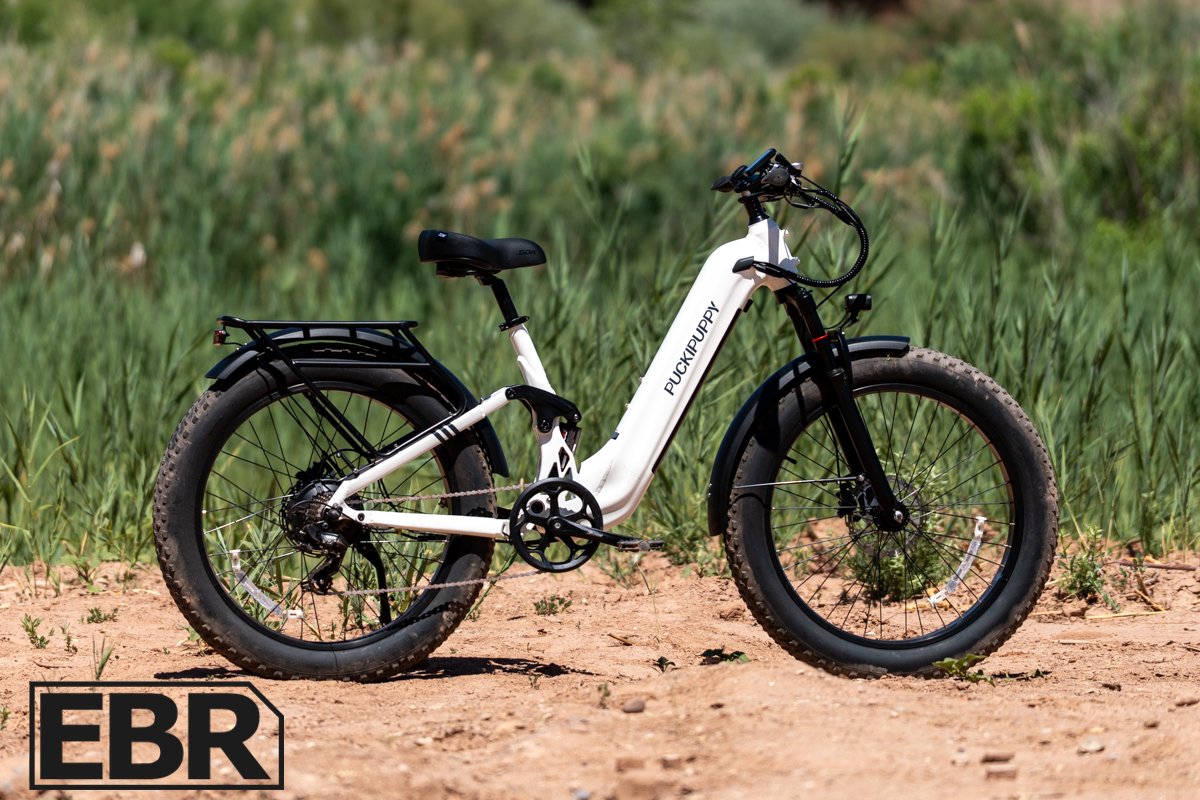
Puckipuppy is making a pretty bold move with the Boxer ST:
- Full suspension.
- Fat tire.
- Under $1,500.
That is a combination that usually will cost you around $2,000.
Whenever I see bikes priced hundreds of dollars lower than most all other bikes in a category, my caution antenna immediately goes up. I don’t want to see anyone riding a bike that isn’t specc’d with proper components or cheap batteries and motors just so they can save a few bucks.
That’s the mindset I took into my review of the Puckipuppy Boxer ST when I asked this question:
“Can a brand make a dual-suspension, fat-tire e-bike that is good at this price point, or did they have to make so many compromises on component quality that the bike isn’t even worth the value price?”
Short answer on the Puckipuppy Boxer ST (in case you are not wanting to read the entire review): Puckipuppy did better than I expected, and the Boxer ST is a genuinely interesting bike for anyone who wants the comfort benefits of full suspension without the premium price tag.
It’s not perfect – there are real trade-offs, and I’ll walk you through all of them – but riding performance is better than I thought it would be going in, as was the quality of the bike.
My Experience Riding the Puckipuppy Boxer ST
Ride Quality Score: 7 / 10
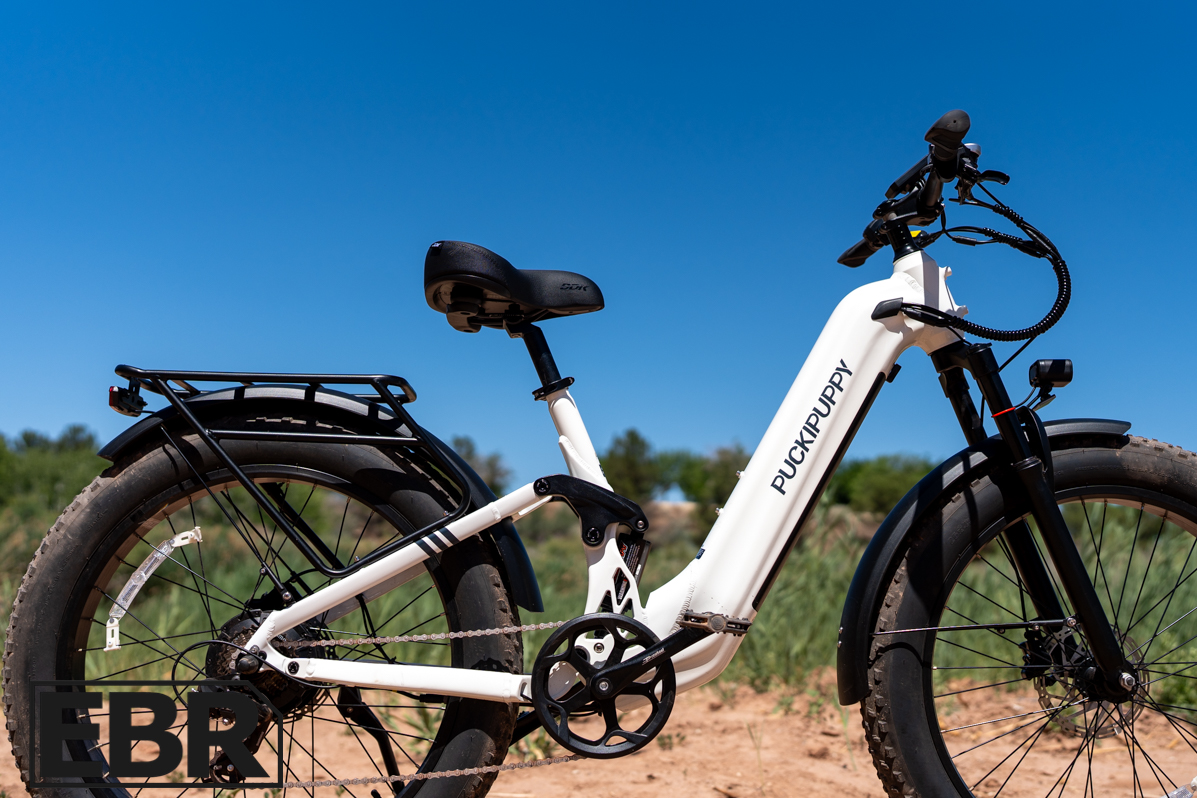
Before I got on the Boxer ST, I was asking myself a few questions.
- Does full suspension at this price point actually feel like full suspension, or does it just bounce you along the trail (suspension is first and foremost supposed to keep your tires on the ground)?
- Does the geometry make sense for a step-through fat-tire e-bike?
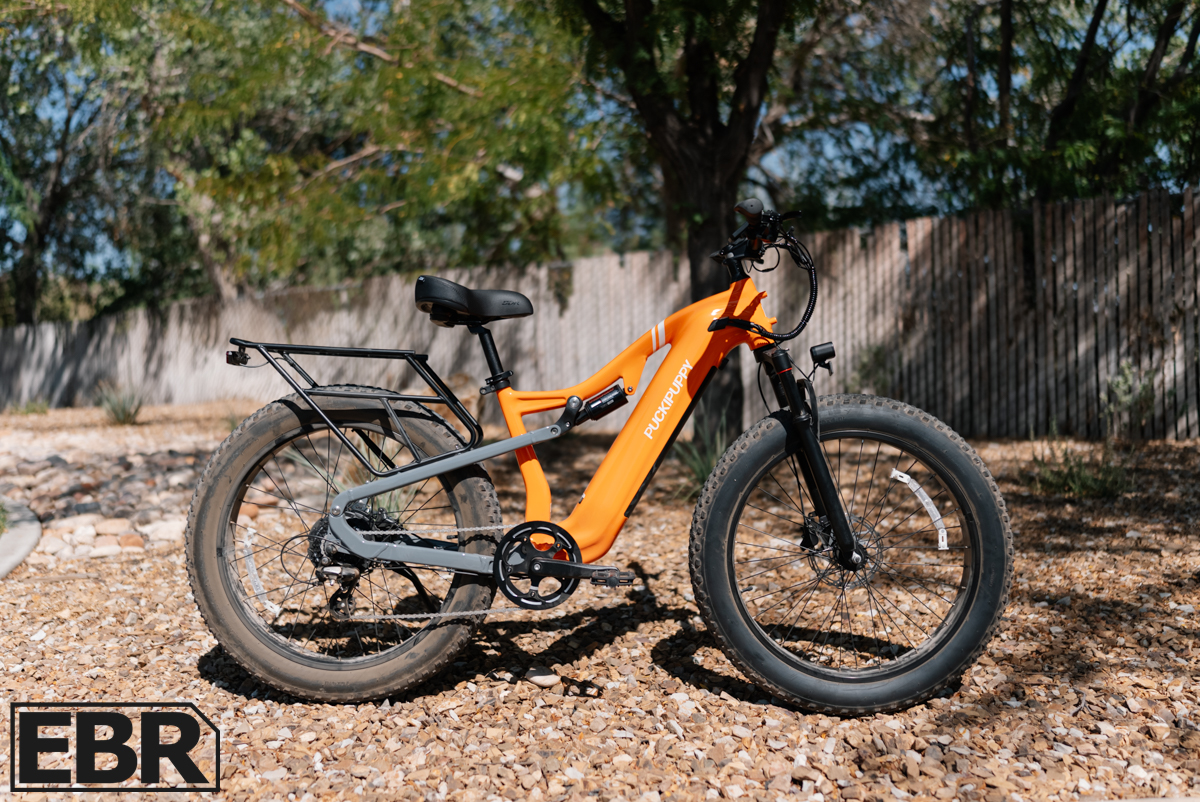
The answer to the suspension question is a mostly yes. This is not fake suspension. The 130mm front fork with 32mm stanchions and the rear shock combine to take a good amount of road chatter and trail roughness out of the ride.
I took it off-road on some rocky, uneven dirt roads – the kind of double-track dirt that would rattle your fillings on a rigid bike – and the Boxer ST handled it better than expected. Is it premium suspension? No. It’s non-branded, entry-level stuff. But it works, and at 180 lbs I found the rear shock comfortable, maybe even slightly stiff, which actually tells me it’s probably tuned well for the majority of riders who are going to be 200 to 220 lbs or more.
As far as geometry goes, the Boxer ST is a one-size frame that Puckipuppy claims fits riders from 5’3″ to 6’4″. I’m 5’11” and I had the saddle raised to its highest position to get comfortable leg extension, which gives me some pause about how 6’2″ or 6’3″ riders are going to feel – they’re probably not going to get quite as much extension as you’d want. However, at the lower end of the spectrum (for example: 5’3″), you should be fine.
In terms of riding position, this isn’t an upright Dutch cruiser like you see on most step-through e-bikes. It’s a bit more aggressive than that, with fairly straight handlebars putting you in a more aggressive position. While I actually appreciate this since I mountain bike a lot, I wanted to point it out since most people buying a step-through bike prefer a more up-right riding position. For future updates, I’d recommend that Puckipuppy add a little more reach or a slightly more cruiser-oriented bar setup.
Overall, I found the bike to ride fairly well. At the risk of sounding like a broken record, once again the Boxer ST pedaled better than the price point would suggest.
Range
Range Score: 9 / 10
Min Assist: 80 Miles
Max Assist: 40 Miles
We were able to get over 80 miles on minimum assist and over 40 miles on maximum assist on the Boxer ST. Those are impressive numbers, especially for an 81 lb fat-tire bike.
To put that in perspective: the general rule of thumb we recommend is to have your battery capacity in watt-hours roughly equal or be larger than your motor size in watts (i.e. 750W motor should be paired with at least a 750Wh battery).
The Boxer ST passes this test easily, pairing the 750W motor with an extra large 960Wh battery. The 26″ x 4″ knobby fat tires do create more rolling resistance than a narrower tire but even with that drag factored in, the range held up well.
Charge time from the 2.0 Amp standard charger is 5 to 6 hours, which is reasonable at this price point. The battery is removable from the downtube, so apartment dwellers and urban commuters can bring it inside to charge. Note: Puckipuppy labels their charger as a 2.0A fast-charger on their website. We only consider 3.0A+ as fast charging (I mention this in case you are comparing vs other bikes).
Power (Motor & Battery)
Power Score: 6 / 10
 |
 |
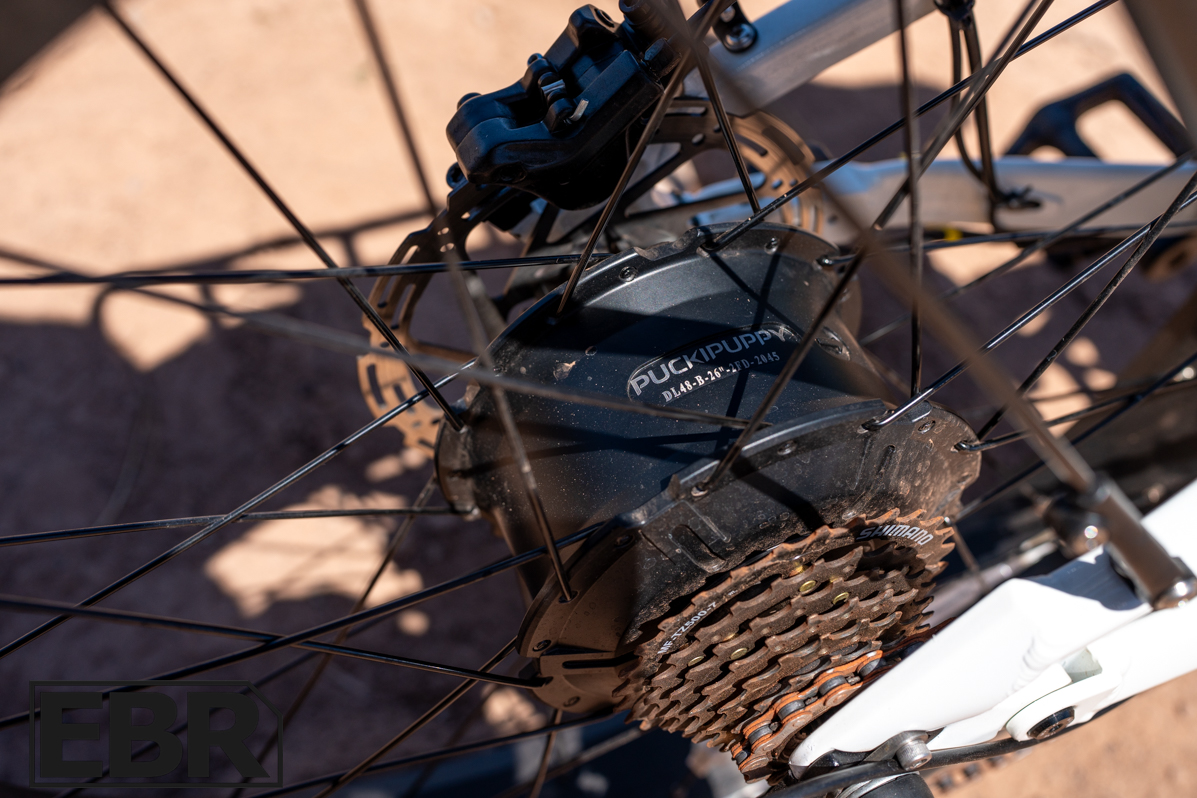
The Boxer ST has a 750W rear hub motor that peaks at 960W, and a 20-amp controller. Torque comes in at 65 Nm. I want to be transparent about something here: when Puckipuppy originally sent us the bike, they told us it was a 500W motor. Based on our testing, I’m fairly confident it’s in the 750W range – and the spec is now listed as 750W on their site. I’ll be reaching out to them to confirm whether they’ve updated the hardware configuration.
For a 81-lb, 26″ fat tire bike, a 750W nominal motor is the right call. You’d want to see at least 1,000W peak for a bike this heavy doing real work, and the 960W peak gets you close. The 65 Nm of torque is mid-range. It’s not the 80–90 Nm you’d see on the top-performing hub motors, which is why this isn’t going to be setting any personal records on our Black Hill test, but it’s sufficient to get up steep grades without feeling like the motor is straining.
We think the Boxer ST’s power is more than enough for most riders, but we recommend heavier riders who want to simply throttle up a steep hill to consider something more powerful.
The sensor on this bike is a cadence sensor, not a torque sensor. That’s clearly one of the areas where Puckipuppy made a deliberate trade-off to hit the sub-$1,500 price point, and honestly, I get it. The cadence sensor here is reasonably well-tuned but not perfect. The engagement delay at startup is noticeable but acceptable (it takes about ¼-½ turn of the crank before the motor engages), and the cutoff when you stop pedaling is fairly prompt. It’s not going to feel like a torque-sensor bike, but for casual riders doing recreational laps and neighborhood commuting, it’s going to be fine.
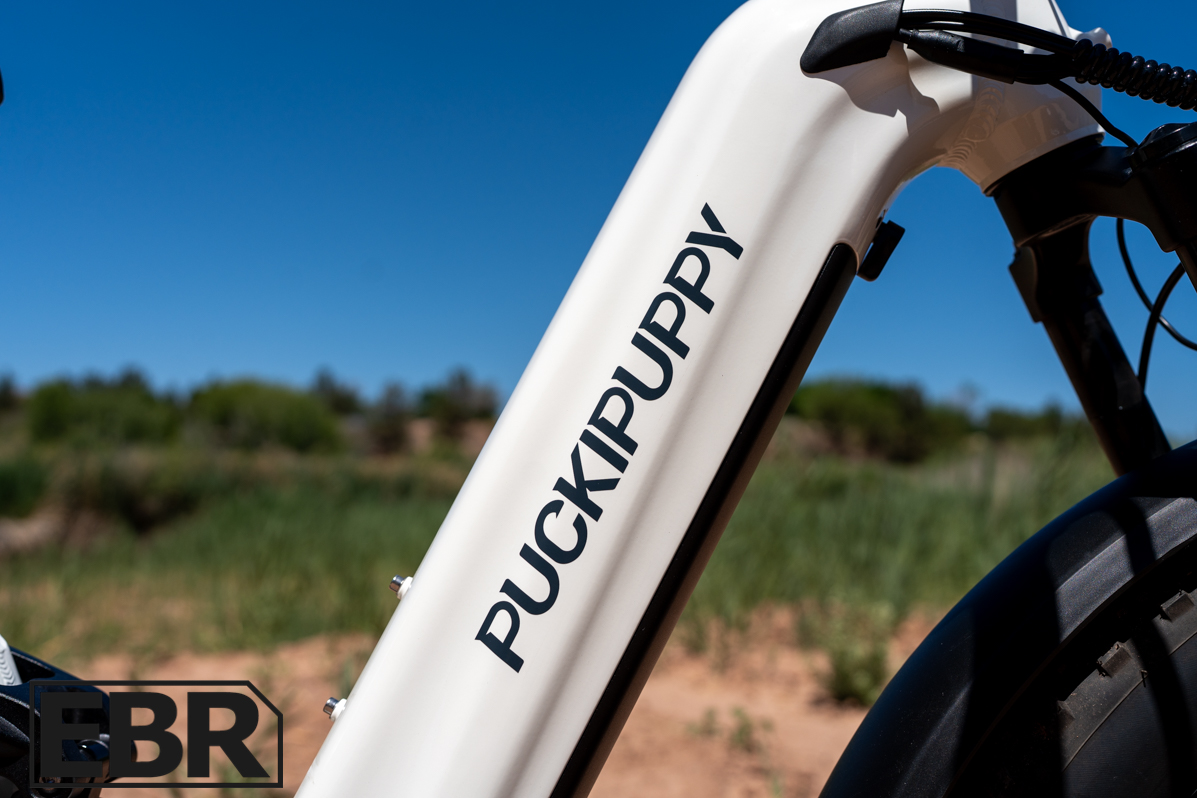
The 48V, 960Wh battery is integrated into the downtube and is removable with a key lock. The battery is UL 2271 certified, and the bike stays within the 3 class system in terms of nominal power and speed (max 20mph on throttle, max 28 mph pedaling, and max of 750 watt output).
Components
Components Score: 6 / 10
 |
 |
 |
 |
For a bike under $1,499, the Boxer ST’s component package is surprisingly good.
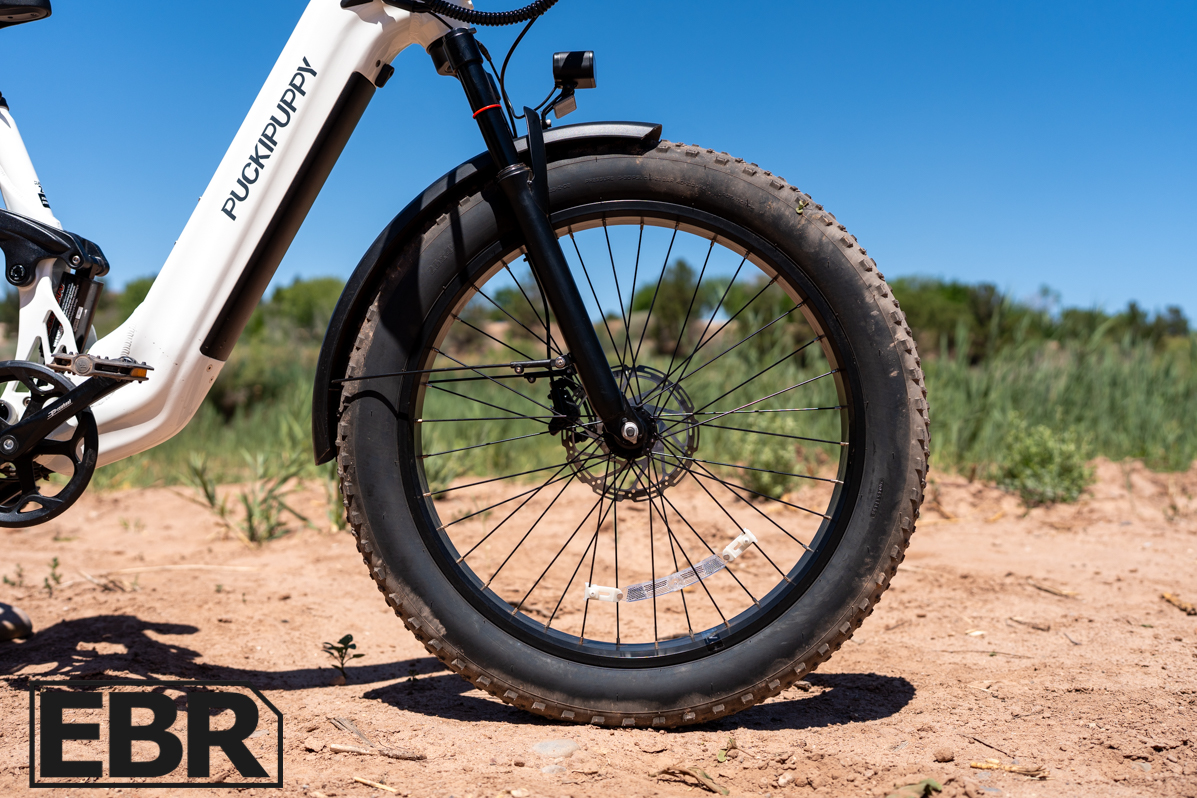
Starting with suspension: up front you get a 130mm travel fork with 32mm stanchions. That’s entry-level territory stanchion-wise. I’d want to see at least 34mm on a performance bike, but for the comfort-oriented use case this bike is built around, it works. The rear shock is non-adjustable and non-branded, which means you’re not going to be able to tune it and eventually you’ll be looking at a full swap rather than a service. That said, for the price, having any rear shock at all is a win.
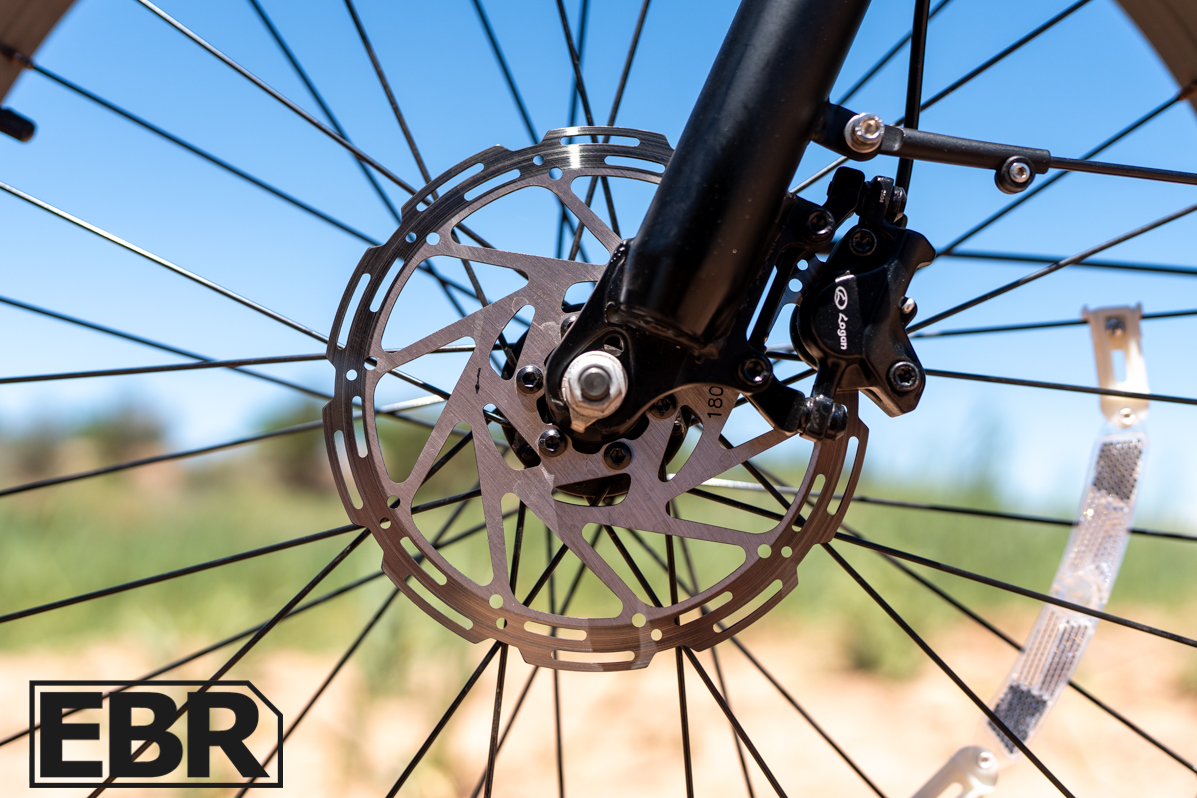
The brakes are Logan-branded, hydraulic disc, 2-piston, 180mm rotors front and rear, 1.8mm thick. On an 81-pound fat tire bike, I’d ideally want to see 4-piston calipers and maybe 203mm rotors up front. But, the brakes still performed well at high speeds, and on hard descents they did not overheat nor experience brake fade.
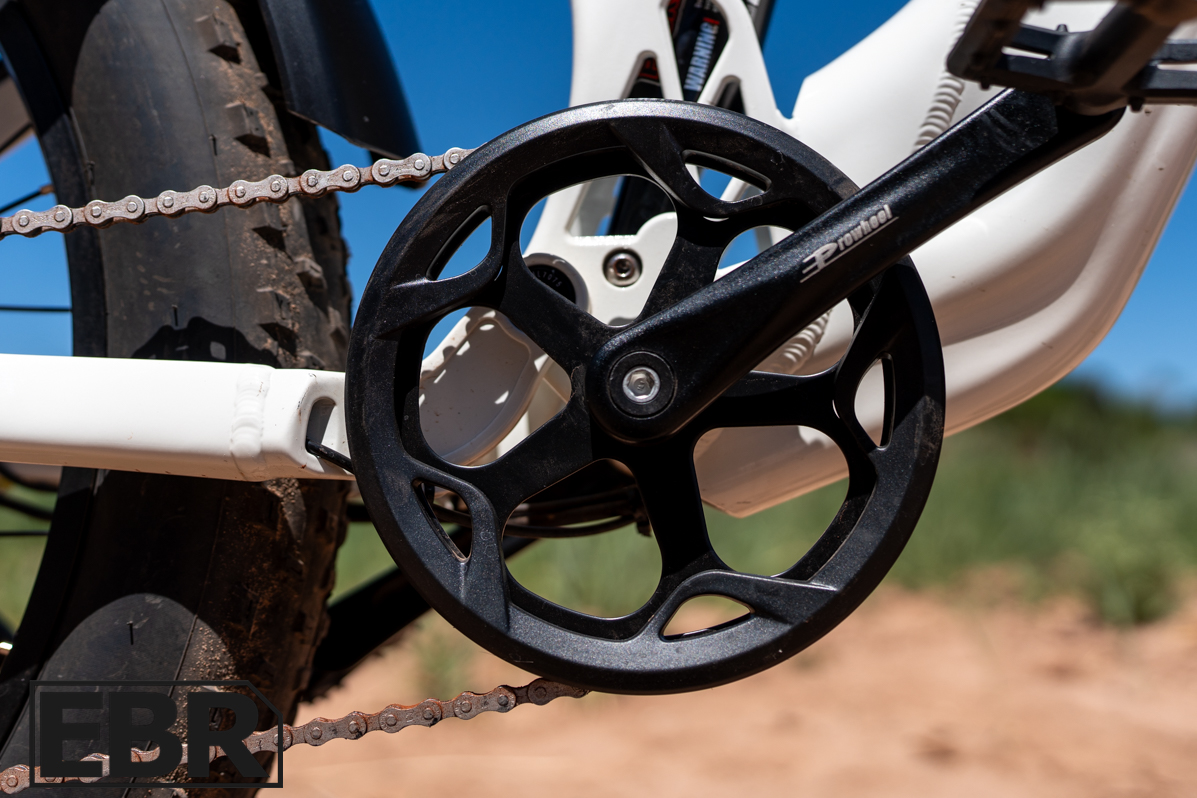
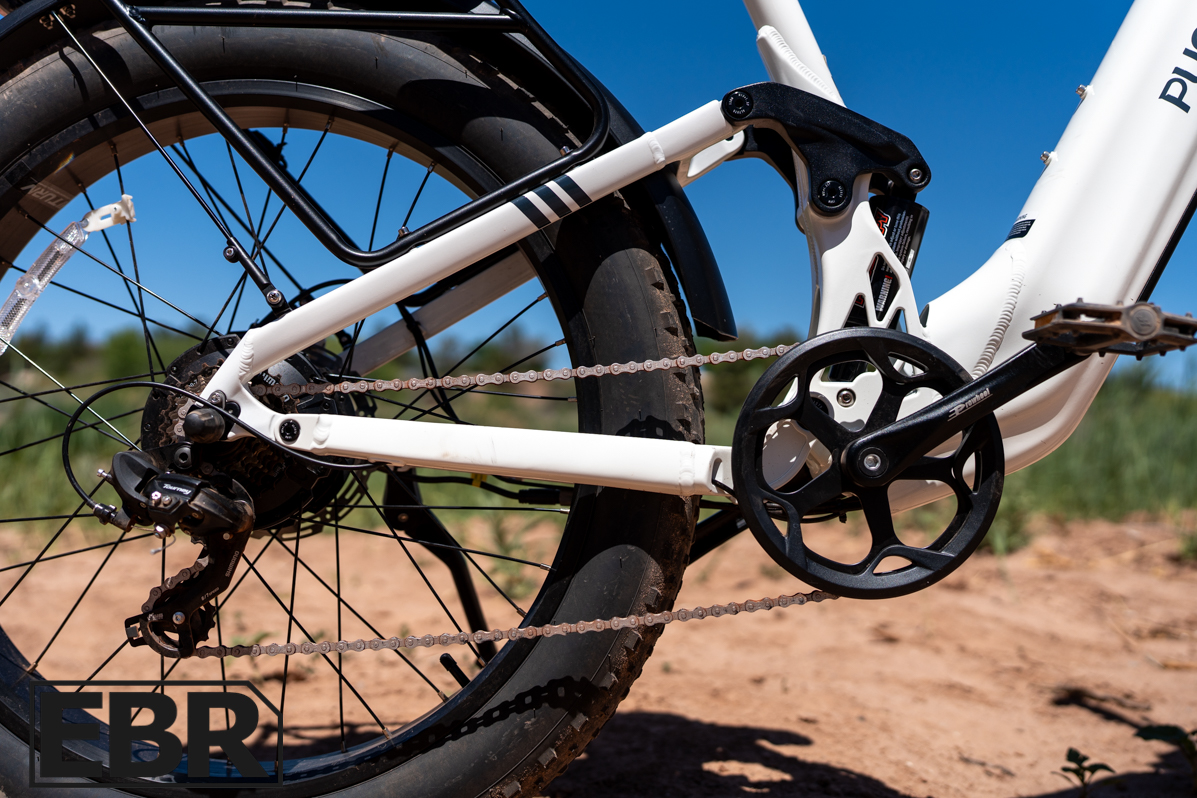
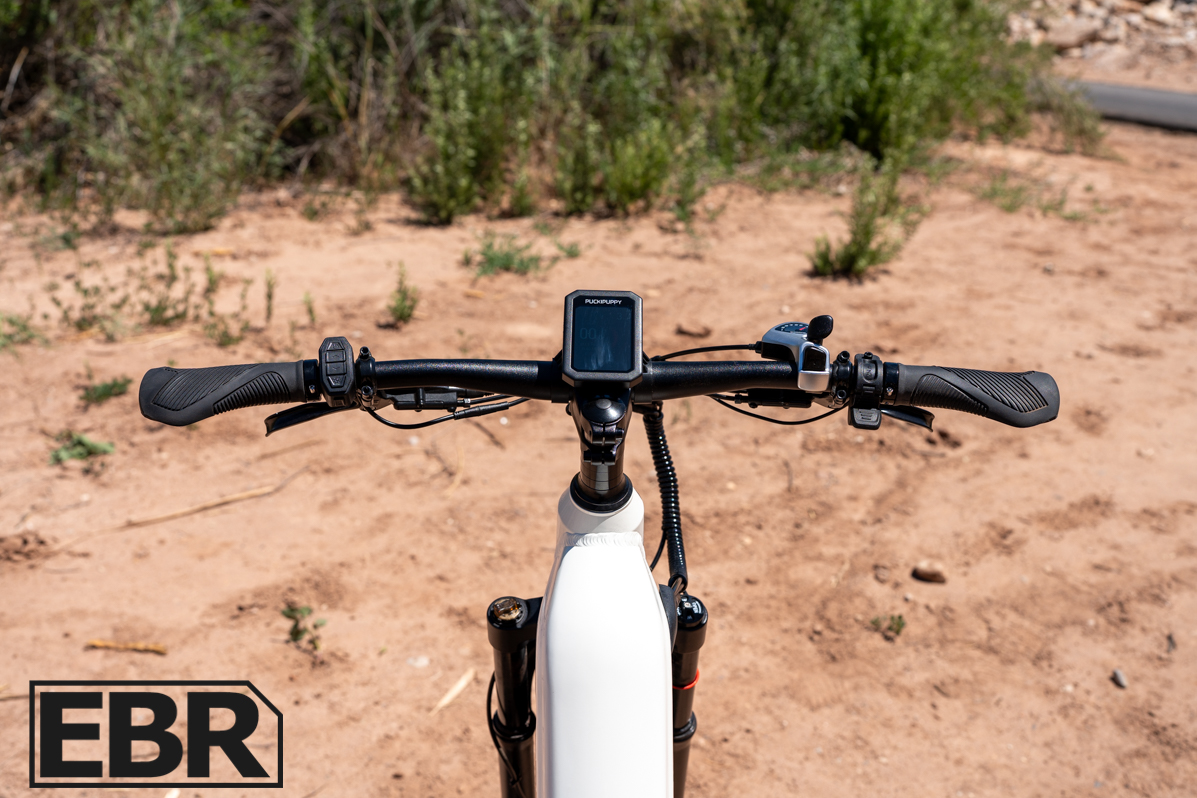
The drivetrain is a 7-speed Shimano with a 14–28T rear cassette and 46T chainring up front. Shimano 7-speed is entry-level, and for a bike marketed as capable of light trail use, I’d push Puckipuppy toward an upgrade in future revisions. That said, the 46T chainring is a reasonable choice – I tested ghost pedaling at Class 3 speeds (28 mph) and it was minimal. Not zero, but not bad. My personal pet peeve here is the over-the-bar thumb shifter. It works. Shimano makes it reliably. But I strongly prefer rapid-fire trigger shifters.
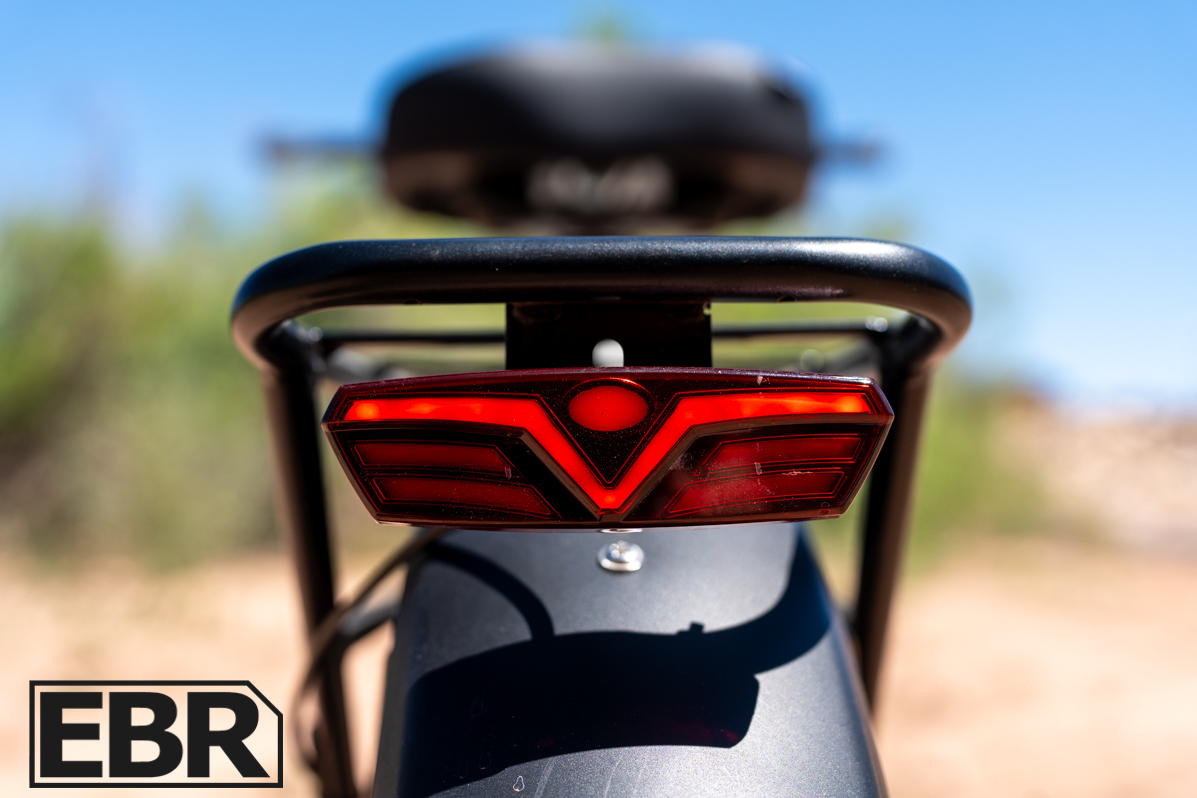
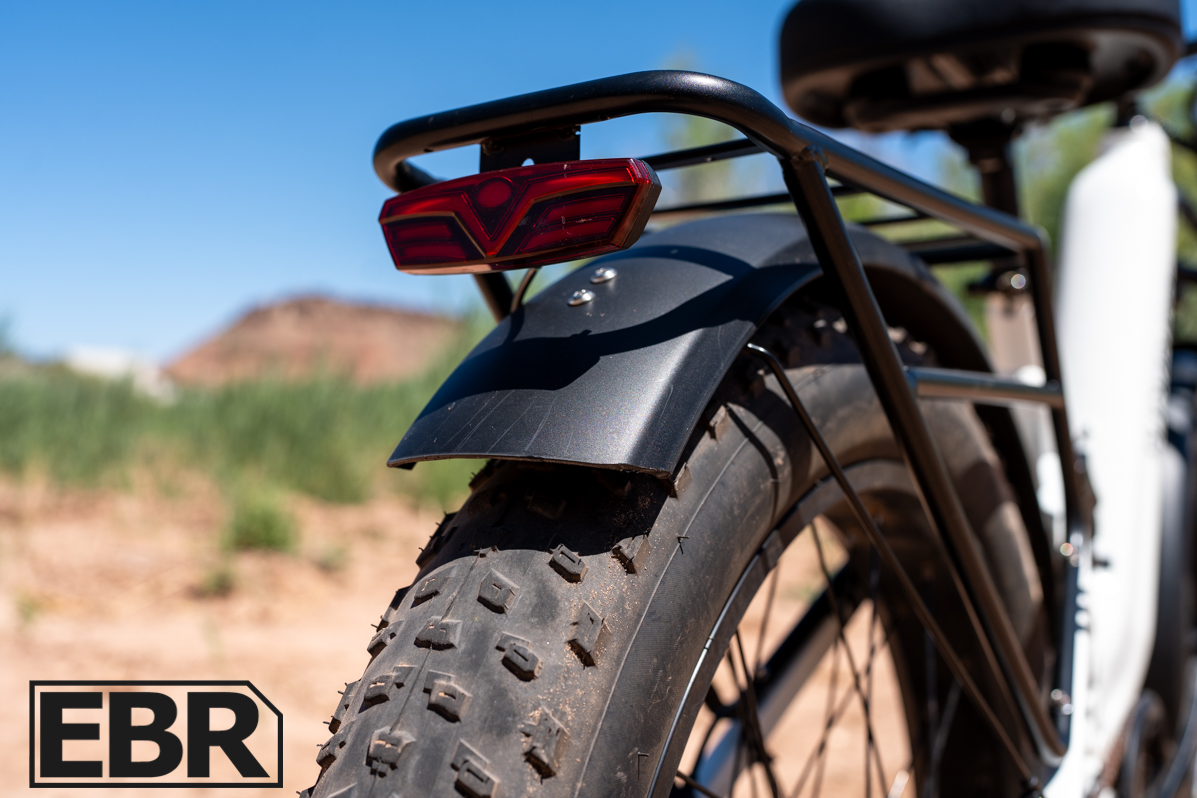
The grips are locking butterfly/ergonomic style. Lock-on is the standard we look for, and they checked that box while also adding the wrist support with the ergonomic shape. The saddle is wide, plush, and comfort-focused. I’m not picky about saddles, but I think most people are going to find this one comfortable out of the box. Puckipuppy also throws in front and rear fenders, a rear rack, and a bike cover – that’s a generous accessory package that adds real value without adding to the sticker price.
A couple of mechanical things worth knowing: the front axle is bolt-on rather than through-axle. On a bike that weighs 81 lbs with 4-inch fat tires, I’d prefer to see a thru-axle for added stiffness and security. It’s something that most riders won’t notice, but it’s the kind of thing that differentiates a truly polished build from a value build. The wiring is also a bit untidy where it exits the downtube, and I’d suggest throwing some electrical tape on that section to protect against road debris wear.
Screen / User Interface / App
Screen / App Score: 5 / 10
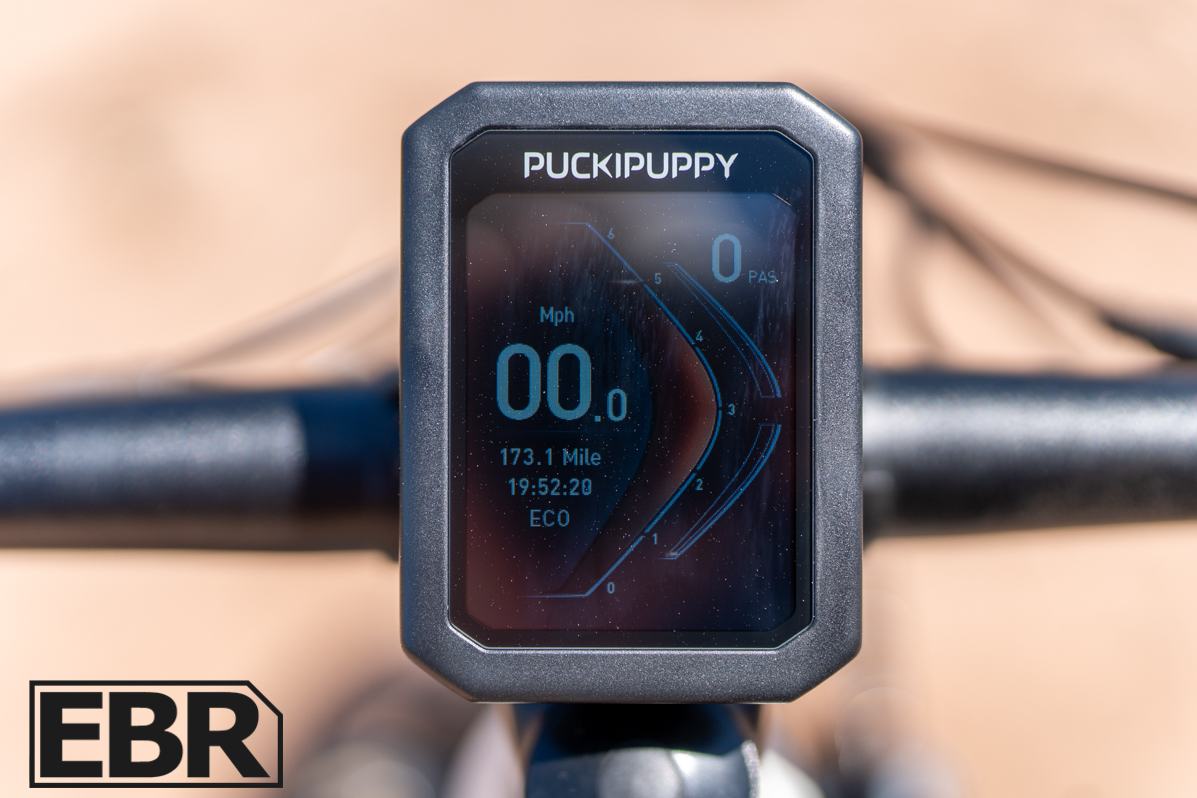
The Boxer ST comes with a color LCD display, which is a nice touch at this price. It shows your current speed, pedal assist level (0–5), trip distance, trip time, and the current ride mode – ECO or POWER. There’s also a speedbar that fills as you ride faster.
The main limitation is what it doesn’t show you. There’s no battery percentage readout as the display shows only estimated battery levels. That makes range planning more of a guessing game than I’d like, especially on longer rides. I prefer a granular percentage readout, but that would likely require an upgrade to the BMS – which might be hard at this price point.
Getting into the advanced settings menu requires holding the up, down, and light buttons on the control pod simultaneously. It’s a little awkward at first, but you get used to it. Once inside, you can adjust the speed limit (up to 28 mph for Class 3), the number of power assist levels (3 or 5), voltage setting (36V or 48V), and riding modes.
There is no companion smartphone app. At this price point that’s not shocking, but as the e-bike market continues to evolve, even some entry-level brands are starting to add app connectivity.
Bike Model Options
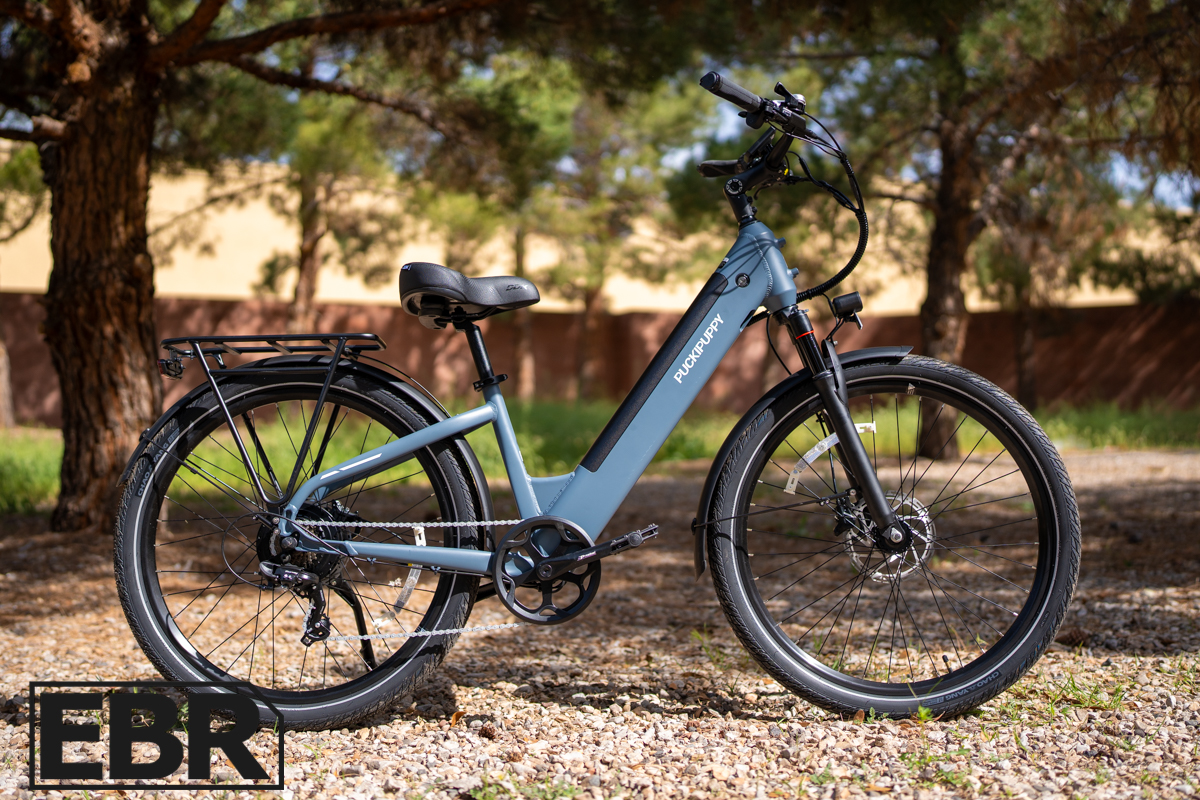
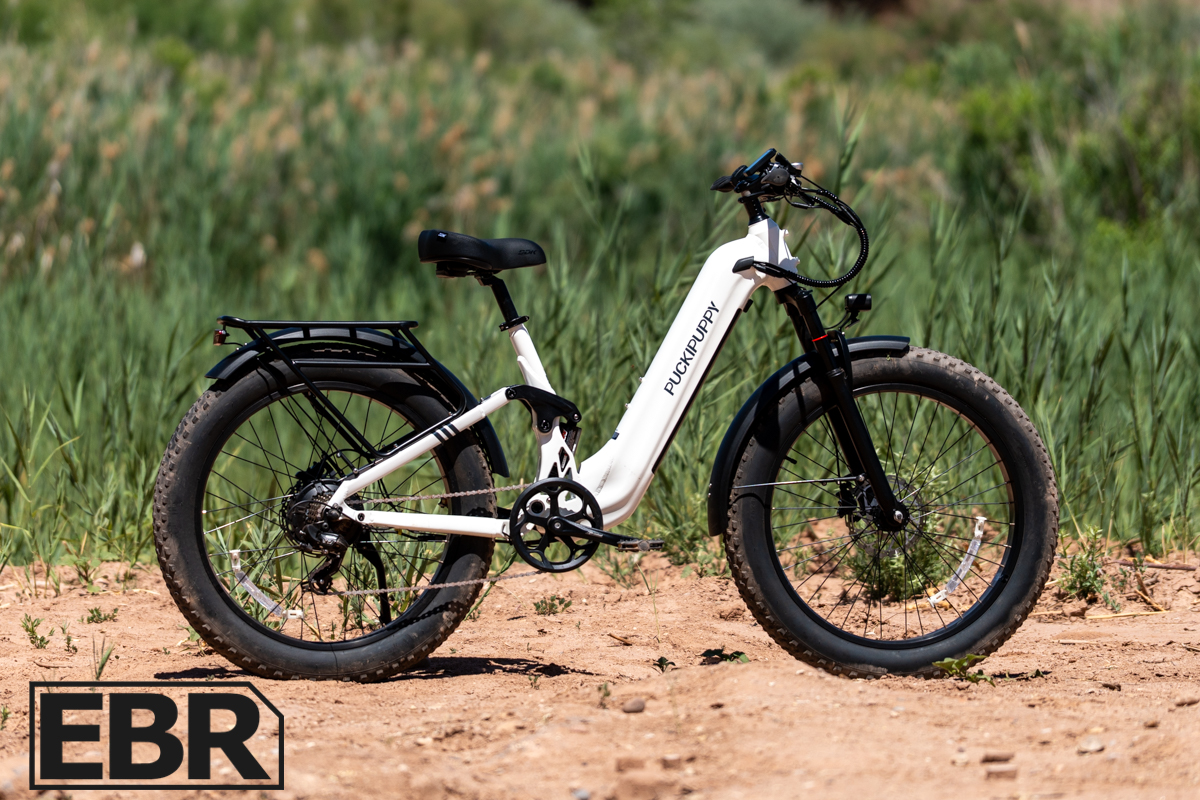
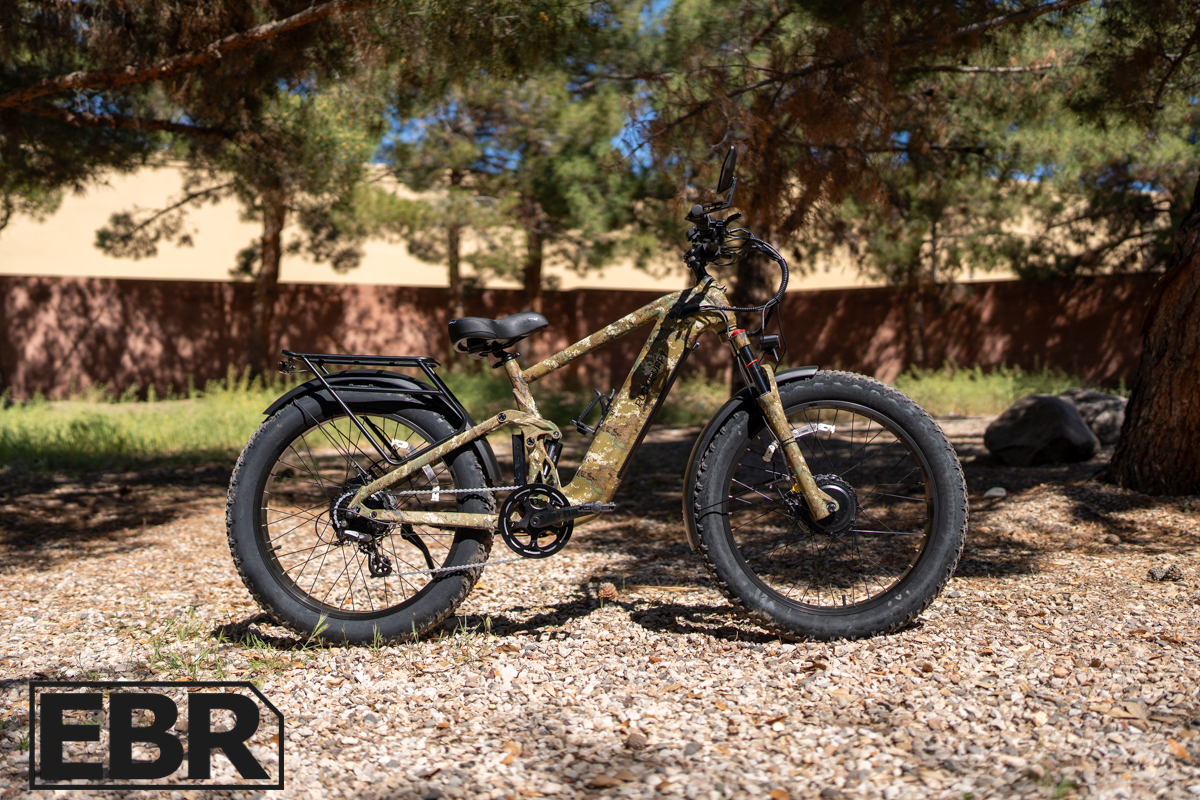
The Puckipuppy Boxer ST is offered as the step-through we reviewed here, or as a traditional high-step model. There is a single frame size, which Puckipuppy claims fits riders from 5’3″ to 6’4″.
That range feels a bit generous on the tall end. At 5’11” I had the saddle at its maximum height for comfortable leg extension. Riders in the 6’2″ to 6’4″ range may find they’re not getting quite the leg extension they’d want, though with a cadence sensor you have a little more flexibility since you don’t need perfect pedaling efficiency (you just need to spin the cranks) to get the most out of the motor.
Given that this is a budget-focused bike at under $1,500, offering a single frame size helps to keep those costs down. It keeps the manufacturing streamlined and allows Puckipuppy to put the savings into the parts that matter most – like that 960Wh battery and the hydraulic disc brakes. If you’re on the fence about fit, I’d recommend visiting the link below for the full geometry table, or reaching out to Puckipuppy directly before purchasing.
Is the Puckipuppy Boxer ST Worth Buying?
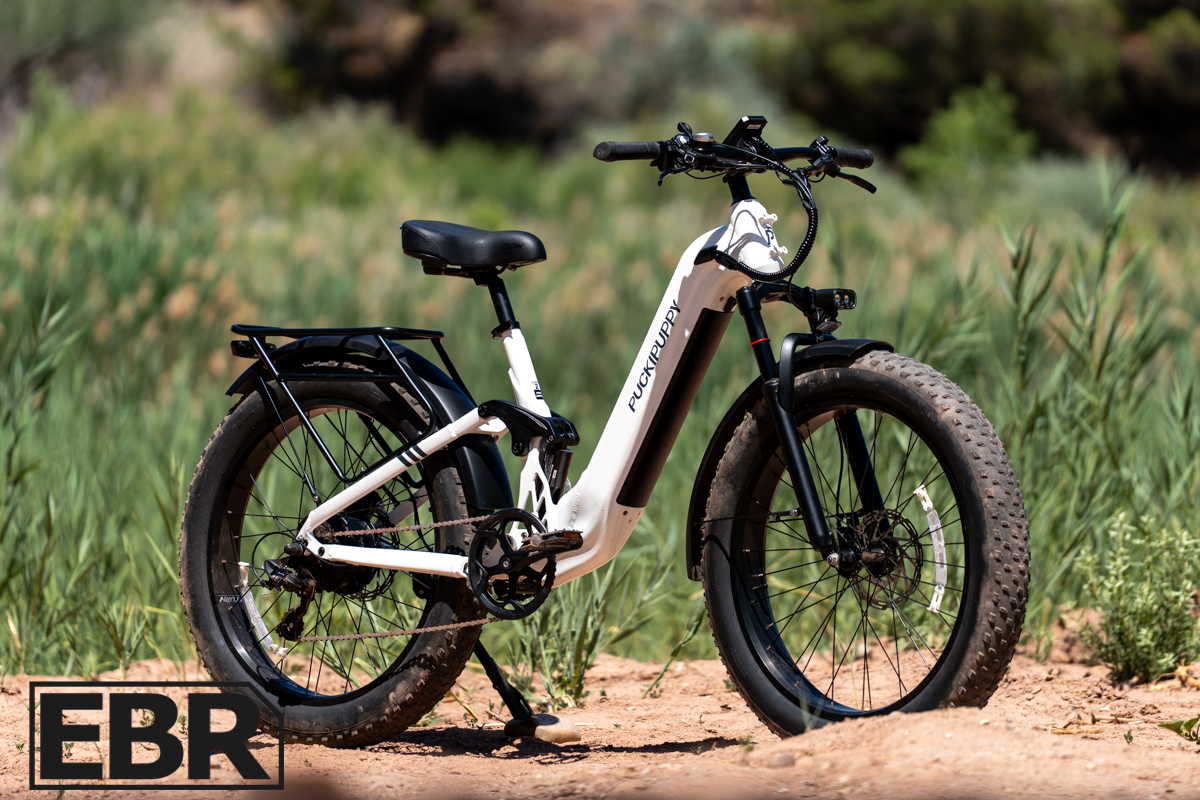
So, does this pup have some bite (sorry, it’s a lame pun but it’s hard to write a full, in-depth review on a brand and bike model named after a dog without at least one related pun)?
I’d say the bite is stronger than I expected, and I think a lot of people are going to be very intrigued by the Boxer ST given its value price point.
The 960Wh battery and 80-plus miles of range on minimum assist alone make the bike interesting. Add in the dual suspension, hydraulic disc brakes, UL certifications, and the full accessory kit, and you’ve got a bike that punches above its price.
The trade-offs are real and worth naming: cadence sensor over torque sensor, thumb shifter over rapid-fire, bolt-on axle over thru-axle, non-serviceable suspension, and no companion app. These are the compromises that get you to sub-$1,500 with full suspension. None of them are deal-breakers for the right rider – they’re just honest constraints.
Who is the Boxer ST for? The casual rider who wants to explore paved trails, light gravel, and neighborhood roads in maximum comfort. The person who looked at the Aventon Aventure 3 or Velotric Nomad 2x and wanted something at a lower price. The weekend warrior who values range and comfort over technical performance.
If that sounds like you, the Boxer ST deserves a serious look.




Reader Interactions