

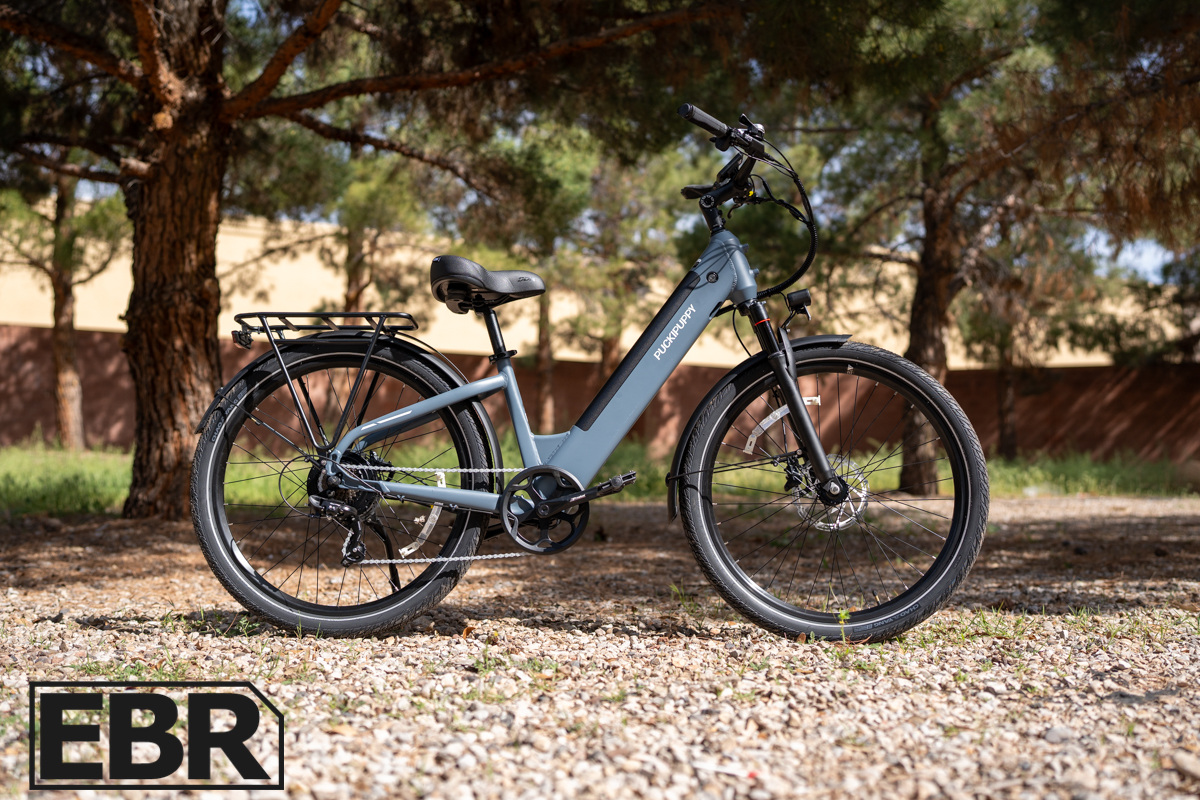
The Poodle is a Dutch-style step-through commuter that Puckipuppy is selling for right around $999, and they’ve loaded it with more features than you’d expect at that price point.
The bike is aimed squarely at casual commuters and cruiser riders who want a Class 3-capable e-bike without spending over a grand. It ships with hydraulic disc brakes, a 750W rear hub motor, a 720Wh battery, and an accessory package that could save you $300–$500 in add-on purchases.
There are trade-offs to hit that price, and we’ll get into all of them, but Puckipuppy has done the research on what this category of rider needs.
My Experience Riding the Puckipuppy Poodle
Ride Quality Score: 6 / 10
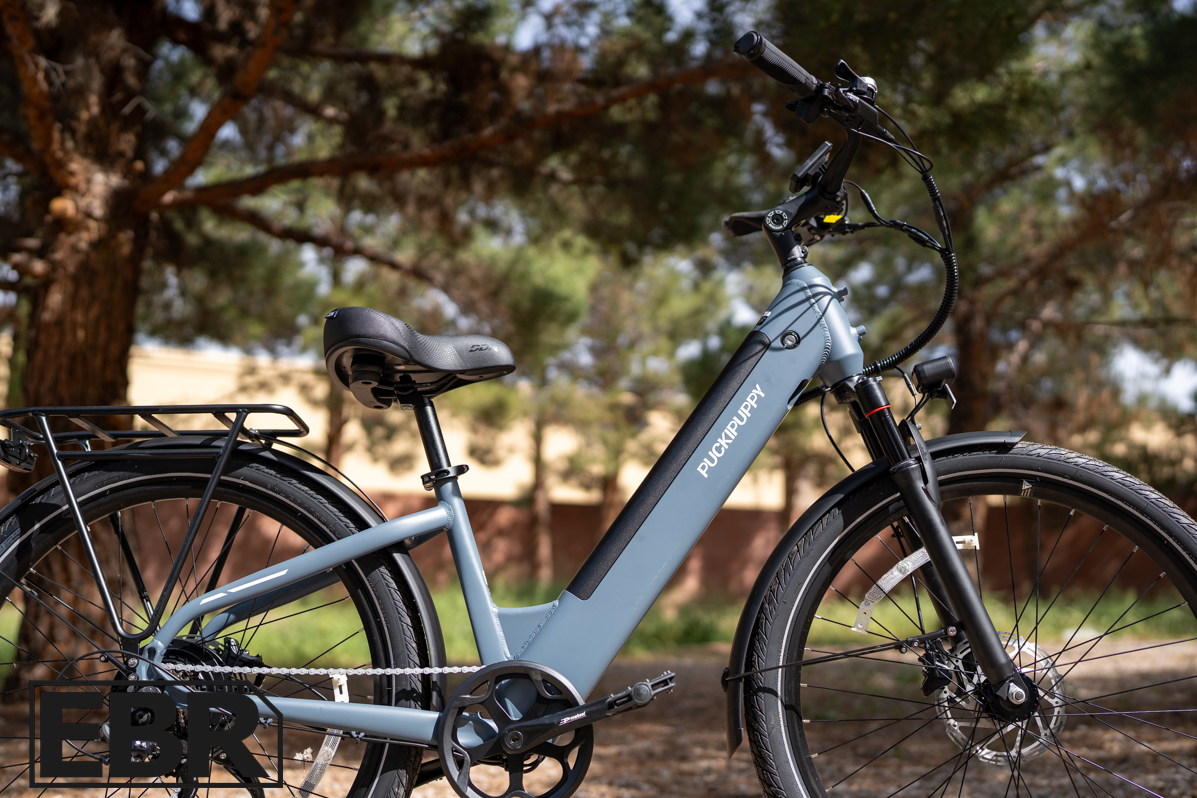
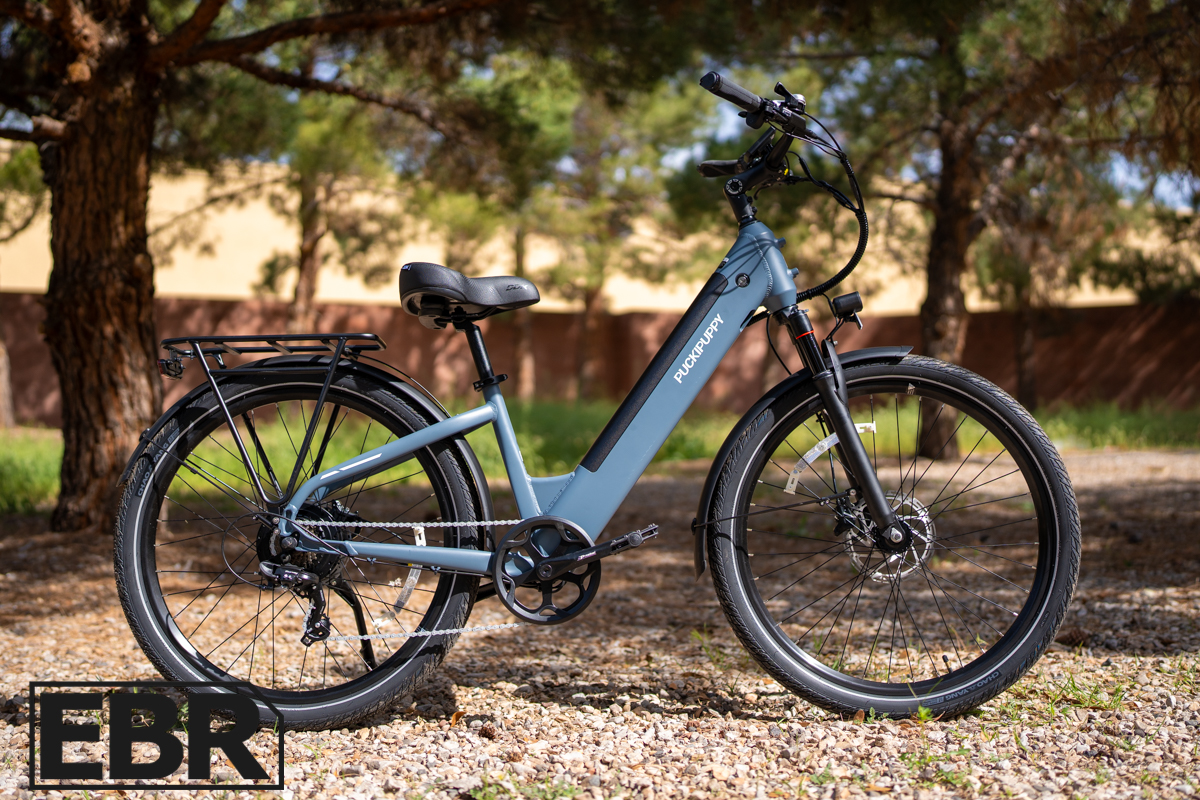
At 5’11” and 185 lbs, the Poodle fit me well, and I think that’s a direct result of Puckipuppy paying attention to what their competitors are doing and borrowing the right lessons. The geometry on this bike is well thought out for what it is. The Dutch-style step-through frame puts you in an upright, comfortable position that falls right in that sweet spot between a traditional laid-back cruiser and a more forward-leaning commuter.
I find a lot of bikes in this style tend to swing too far in one direction: either you’re sitting so upright you feel like you’re on a beach cruiser, or you’re hunched over like you’re on a road bike. The Poodle sits in a middle ground that I think a lot of riders will appreciate.
The real standout for me from a geometry and fit perspective is the adjustable stem. It’s a 0–90° adjustable design, which gives you a wide range of positions. When our mechanic Thomas (6’1″ and has a slightly longer reach) was putting the bike together, he had the handlebars pushed forward. I raised it up to shorten the reach a bit for my shorter arms, and it felt great.
For riders at the top of the stated 5’3″–6’4″ range, you may find you can’t get full leg extension even at maximum saddle height. However, I do think the bike would fit a 5’3 rider fairly well.
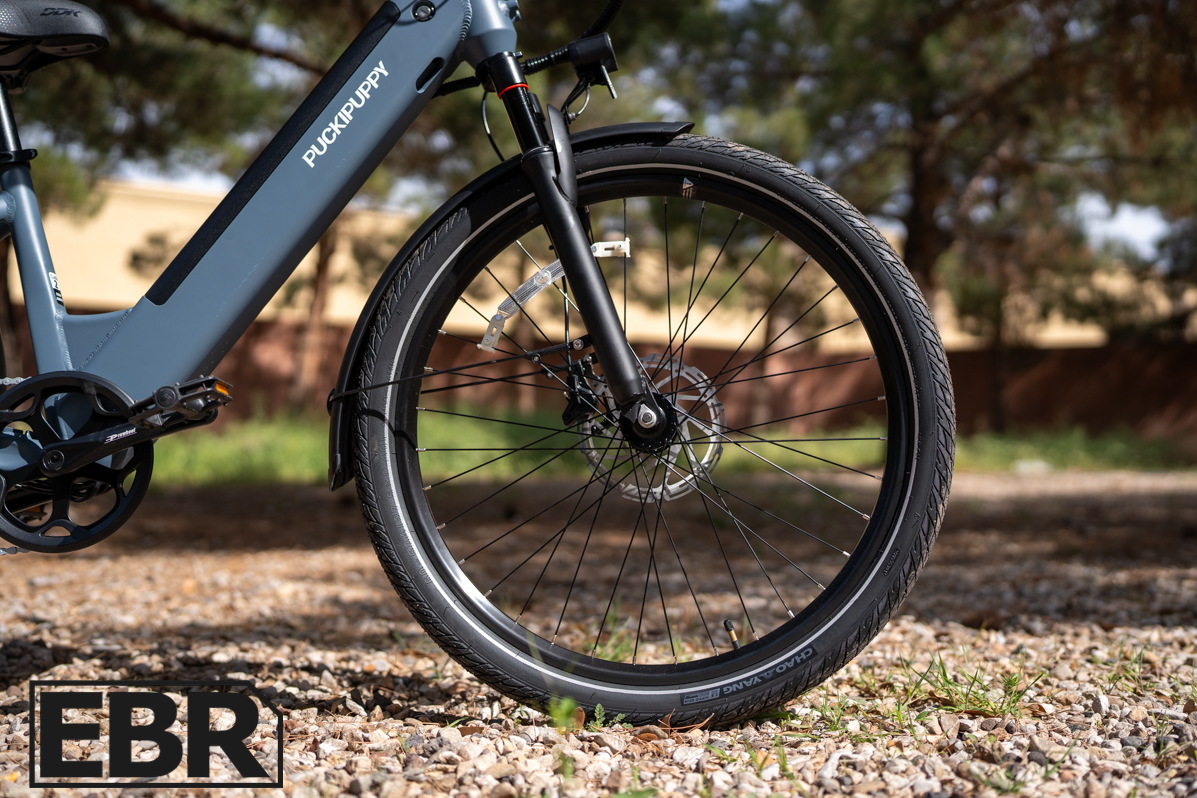
The 80mm front suspension fork did its job within its limits. It’s a basic coil unit with a lockout and preload, but no thru-axle, so it’s a dropout design with basic stanchions that feel softer than what I’d want on a more demanding bike. For urban riding and light paths, it’s fine. It takes the edge off bumps and road vibration the way you’d expect an 80mm fork to at this price. Just don’t expect it to inspire confidence the way an air fork with rebound adjustment would. The 27.5″ × 2.4″ fishbone tread tires roll well and offer noticeably better grip than slicks. If you ride over damp pavement, light gravel, or catch a patch of dirt, you’re not going to be white-knuckling it.
Motor feel is where the cadence sensor setup shows its personality. There’s roughly half a pedal revolution of lag before it engages, and you’ll notice a slight overrun when you stop pedaling, with the motor carrying for a quarter to half second longer than your actual cadence. You get used to it quickly, but I’d encourage new riders to be especially careful during dismounting: keep a hand on the brake, because that cadence sensor will catch accidental pedal movement and can surge the motor. It’s standard behavior for this sensor type and this price category. Just know that going in. Once I found a good rhythm, especially in PAS 4 at commuter speeds, it felt reasonably smooth. I ended up spending most of my time in PAS 4, where it felt natural and comfortable at Class 2 speeds.
Range
Range Score: 6 / 10
Min Assist: In testing
Max Assist: In testing
One of the stronger specs on the Poodle is the battery. At 720Wh (48V × 15Ah), it’s larger than what you typically find at this price – most competitors in the sub-$1,000 range come in at 499Wh or 540Wh. That extra capacity gives the Poodle more range potential than most bikes it’s competing against, and it’s one of the reasons this bike makes sense even at the entry-level price point.
We’re still completing our range test, so check back to the written review for the final result. What I can tell you now is that Puckipuppy’s claimed 75 miles looks high based on what we’ve seen so far. My early estimate is around 25-30 miles on maximum assist, and somewhere in the 55–60 mile range on eco. I’d treat those as working numbers, not final results – but I don’t expect the final test to get 75 miles.
It’s UL 2271 certified (by SGS), and Puckipuppy tells us UL 2849 system-level certification is currently in progress but certification is not complete. The battery also carries an IPX7 waterproof rating.
The standard 2A charger gets you fully topped up in about 7 hours, which is reasonable for a bike you’re charging overnight.
Power (Motor & Battery)
Power Score: 6 / 10
 |
 |
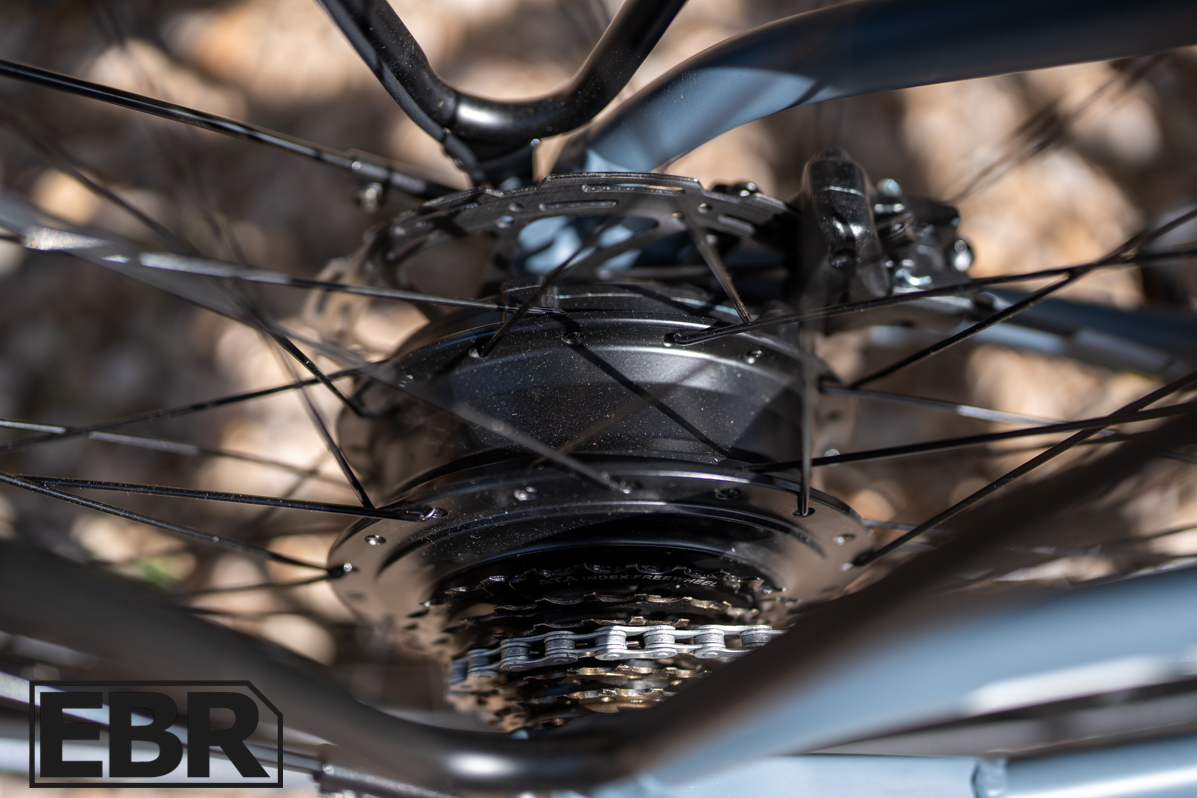
The Poodle has a 750W nominal rear hub motor with a 960W peak output. Puckipuppy doesn’t publish a torque figure, but based on the hill test performance and overall ride feel, my best estimate puts it in the 60Nm range, which would put it at the lighter end of the 750W hub motor segment. That doesn’t mean it’s underpowered for casual commuting; it’s not. But riders expecting the kind of low-end grunt you’d get from a 85Nm hub motor will feel the difference.
On the Black Hill climb, which is .34 miles long, has 185ft of elevation gain, and a 10.1% average grade, I was able to pedal the Poodle up to the top of the hill in 1:57. While we haven’t done a ton of hill tests yet, the bike was a bit slower than the other 2 commuters/cruisers we have tested on the hill so far (Lectric XPress2 and Aventon Pace 5 REC).
The throttle test from 0 to 20 mph took about 10–11 seconds, and there’s a slight startup pause when you hit the throttle from a dead stop. I actually don’t mind a little hesitation there. A throttle that lurches you off the back of the bike on first contact is worse than one that eases in. Under pedal assist, the 0 to 20 mph test took about 9–10 seconds with a slight headwind. Getting to 28 mph in Class 3 required effort from me on the pedals and felt like it was working at its ceiling. The motor ran louder than what I’ve gotten used to hearing on newer-generation motors, but it’s about where the category was 2–3 years ago, so not a dealbreaker, just worth noting.
Components
Components Score: 6 / 10
 |
 |
 |
 |
Let me frame this up front: the Poodle is a sub-$1,000 bike, and I’m going to evaluate it as such.
There are going to be compromises.
The question isn’t whether the spec sheet looks like a $2,000 bike (it doesn’t), but whether the compromises they made did not push the bike into ‘Don’t Buy’ territory.
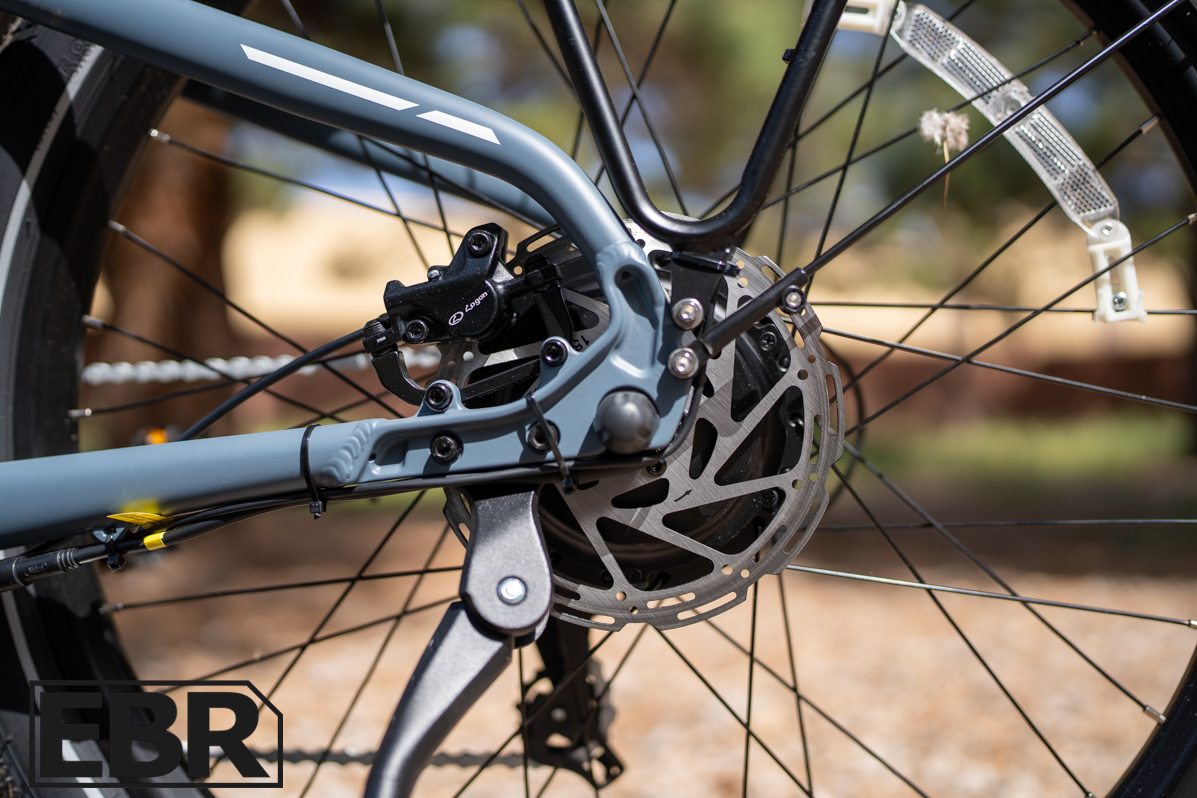
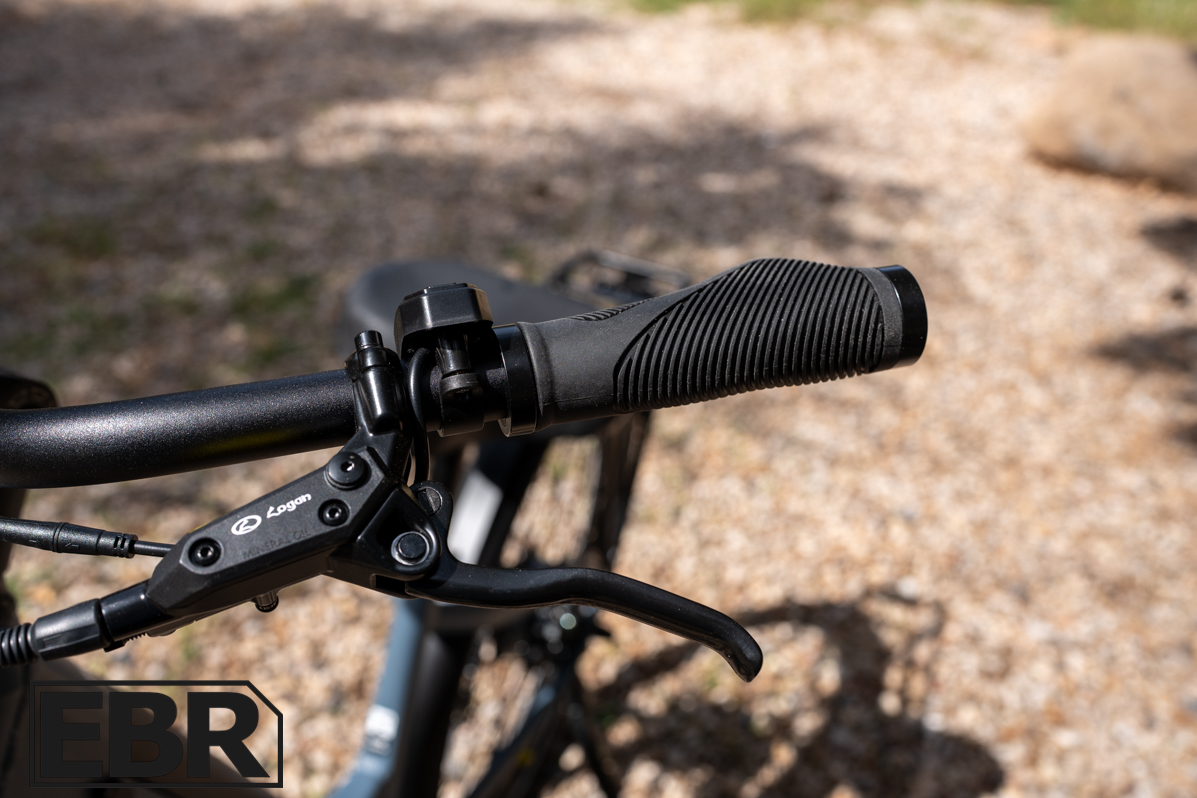
Let’s start with the highlight: the Logan hydraulic disc brakes. These are probably the single best spec on this bike relative to price. 180mm rotors front and rear, 1.85mm rotor thickness, and mineral oil fluid, which make servicing the brakes easy. I ran a sustained brake test going down the Black Hill: six to seven repeated stops from 20–25 mph. These brakes performed better than I honestly expected. Lever feel was consistent from the first stop to the last, with no sponge, no fade, no drama. Great job, Puckipuppy. At this price, cutting corners on the brakes is a common sin, and they didn’t do it.
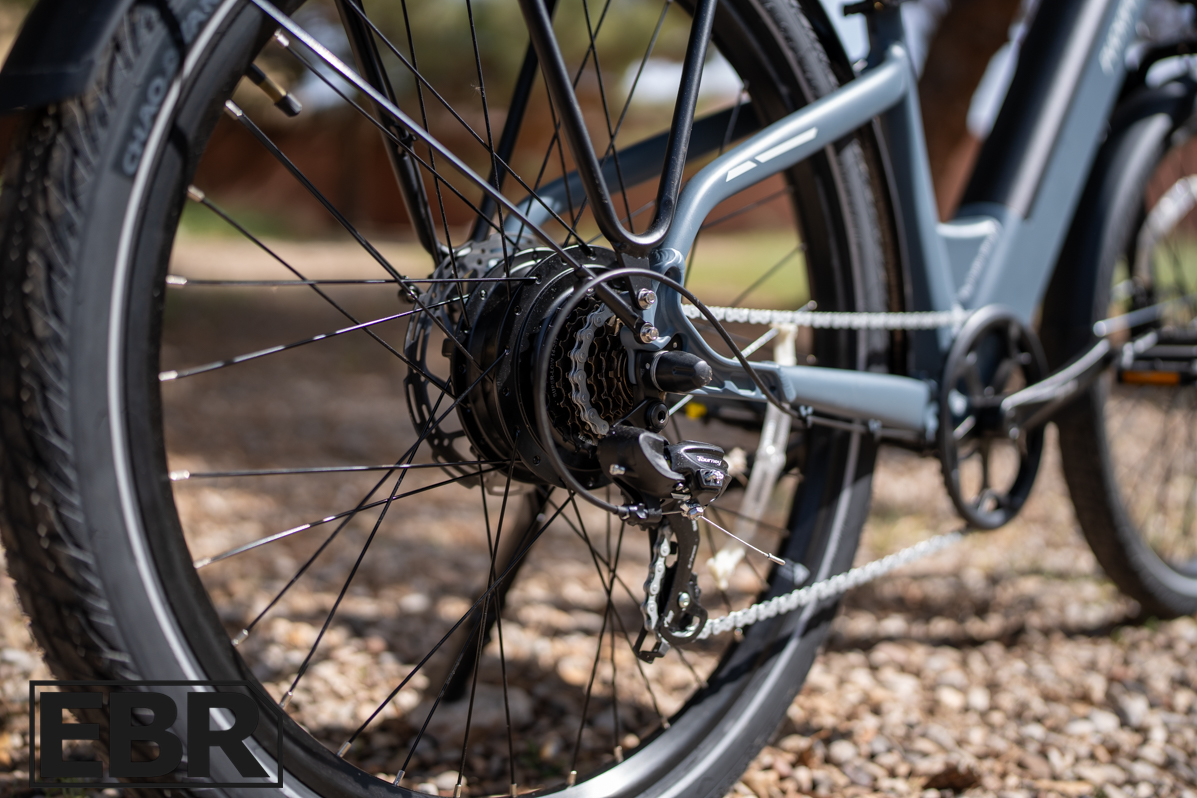
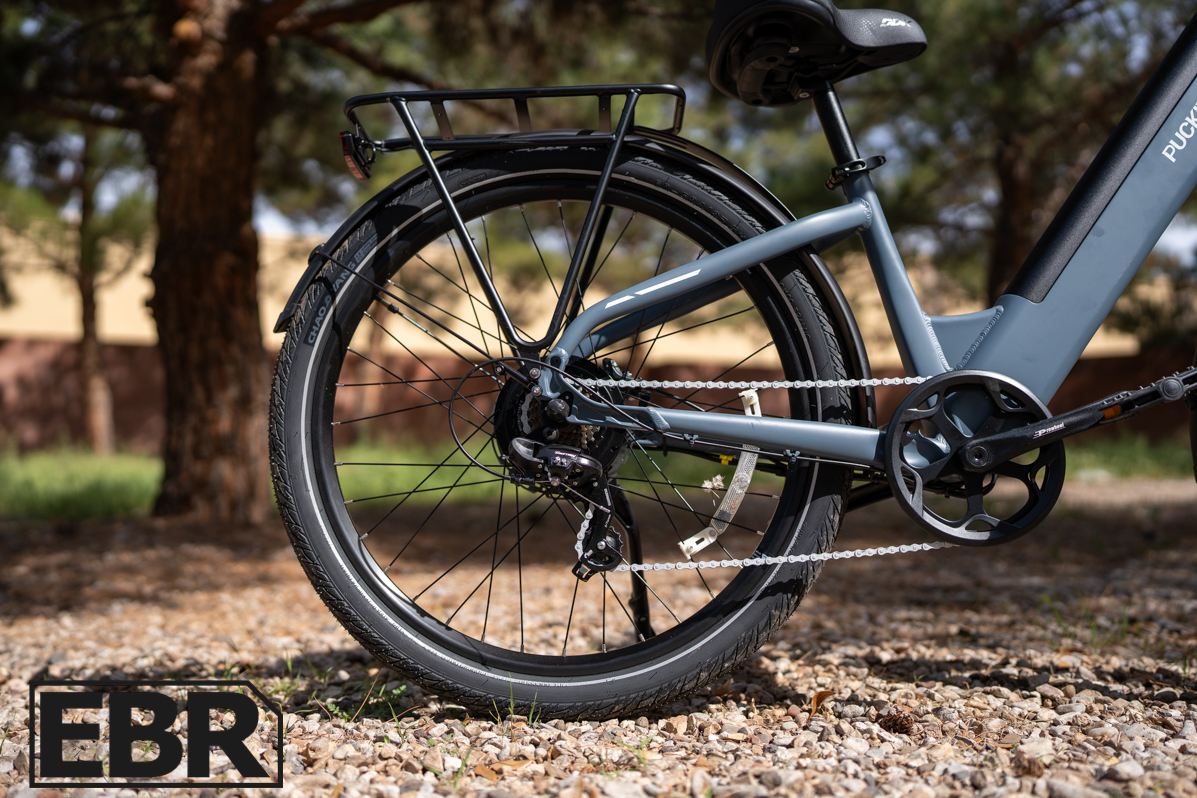
The Shimano 7-speed drivetrain is a more nuanced story. Shimano is obviously a well-known brand, and it’s serviceable at virtually any bike shop in the country. It’s reliable, and it’ll do its job for a casual commuter. The over-handlebar thumb shifter is a personal gripe of mine; I’d rather see under-bar rapid-fire style shifters, but that’s my preference and probably not a dealbreaker at this price.
The bigger mechanical issue is the cassette range. The 14–28T spread is narrow, and I felt it both at the top end (some ghost pedaling in Class 3 territory) and on the hill test, where I was wishing for a lower low gear on the steepest section.
The suspension fork is a basic fork with 80mm travel, a coil spring, basic lockout, no thru-axle. Overall, the fork feels a little soft and not as firm as I’d like. For riders over 220 lbs, I’d expect it to feel noticeably underdamped. But the fact that it has a suspension fork at all on a $999 bike is a nice feature, and for the target use case of smooth urban pavement and paved paths, it does what you need.
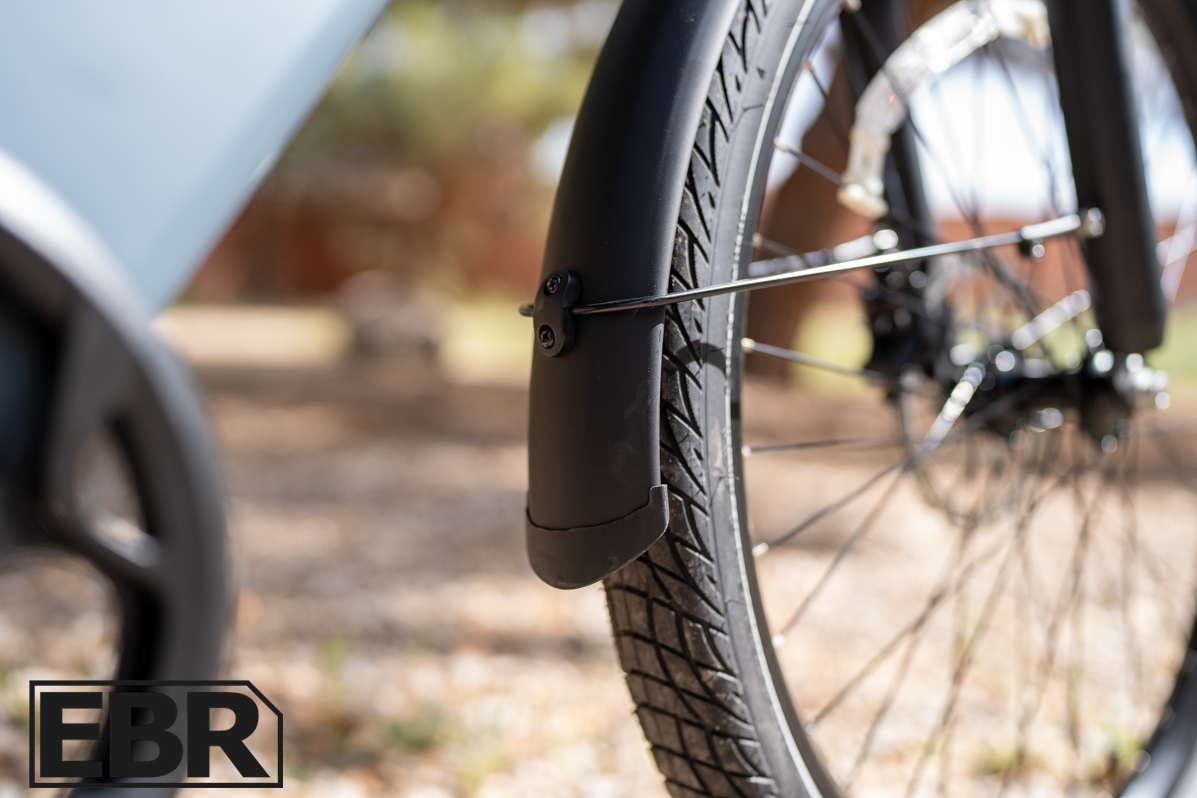
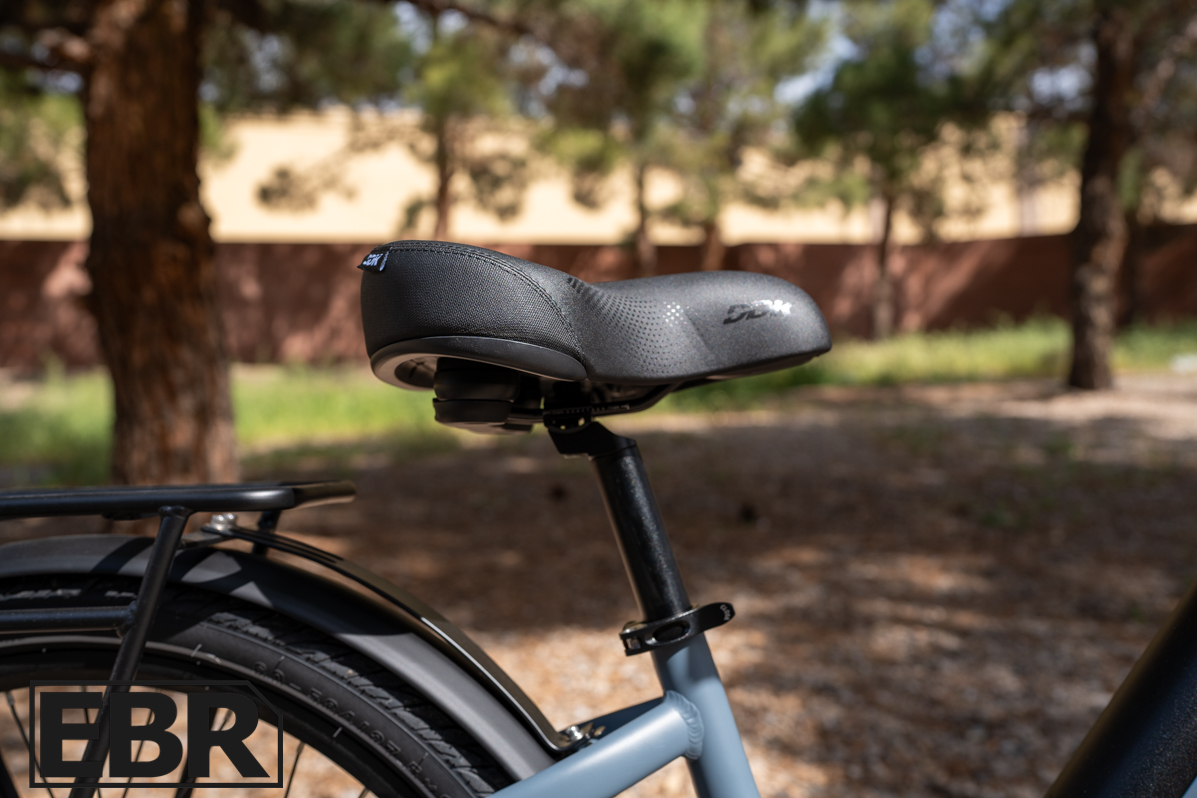
The tires are a 27.5″ × 2.4″ fishbone tread pattern. They roll well and the tread design gives ok grip on wet pavement and light dirt without the rolling resistance penalty of a knobby. I liked the choice. The butterfly lock-on grips are a win: nice palm padding, good grip, and they won’t rotate on you. The leather cushion saddle is slightly wider and more padded than average, which I found to be more comfortable than I typically expect at this price point. At 5’11”, I’d drop it an inch or two from maximum height; riders at 6’3″–6’4″ won’t get ideal leg extension and sadly that is something taller people are used to.
One note for buyers on assembly: lower-quality bolts are common on sub-$1,000 bikes, and the Poodle is no exception. Use the correct Allen or Torx key for each bolt, don’t overtighten, and double-check your spoke tension before that first ride; we found a few that were loose on the test unit.
The frame is 6061 aluminum alloy, a reliable choice. And the overall component package, given the $999 price point, makes sense and is going to be good enough for the vast majority of riders (if you’re a lycra roadie, then this probably wasn’t your bike to begin with). They spent the money where it matters most (brakes, battery, frame) and made the compromises on drivetrain and suspension.
Screen / User Interface / App
Screen / App Score: 6 / 10
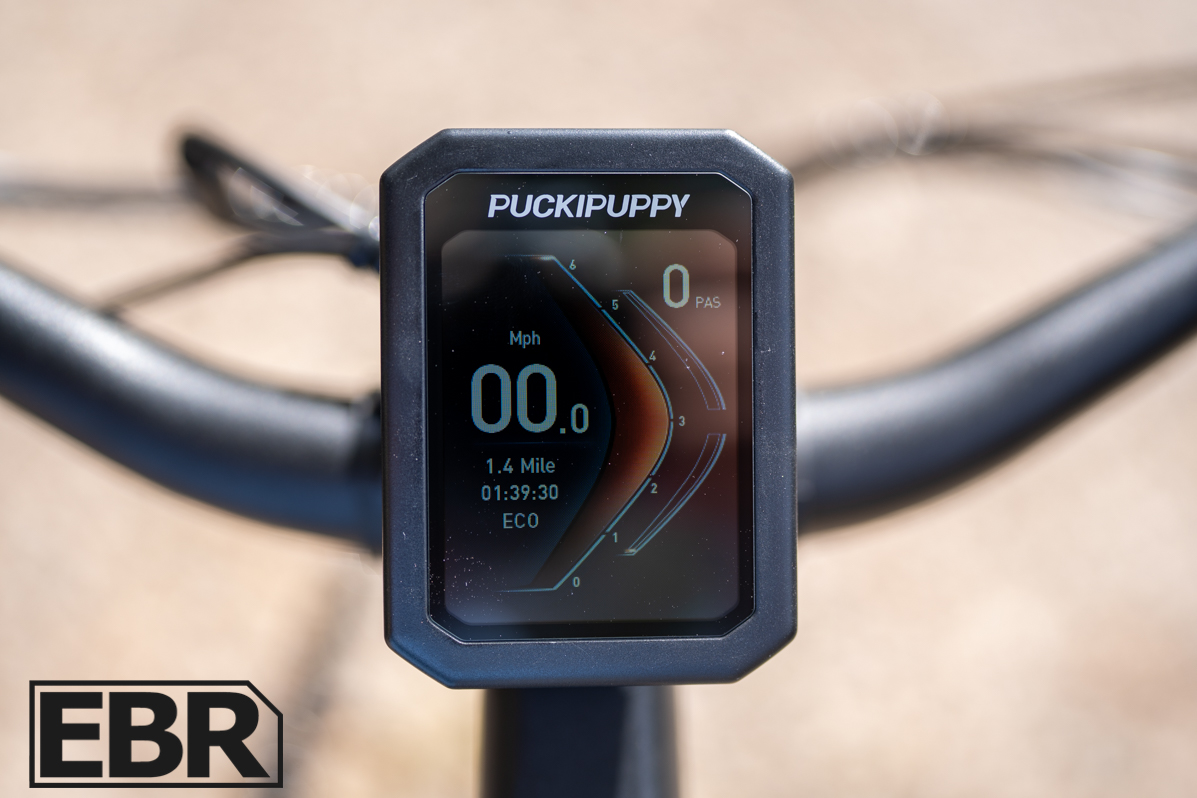
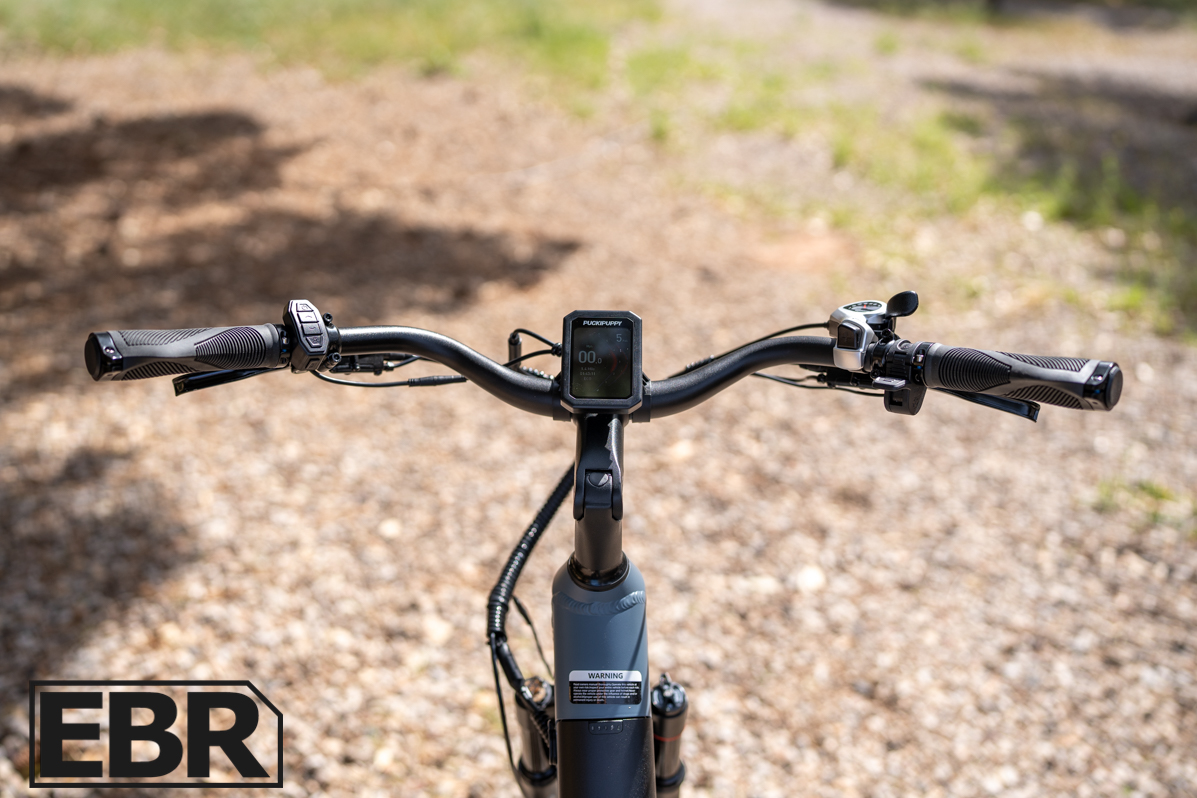
The Poodle comes with a color LCD display mounted at the center of the handlebar, easy to see while riding and well positioned. On a bright day, I’ll be honest, it’s a little dimmer than I’d ideally want. You’ll find yourself tilting it to reduce glare. It’s not a dealbreaker, but a higher-brightness display would be an upgrade I’d welcome.
The standard readout gives you speed, distance, PAS level (1–5), and a battery indicator, which is done via bars instead of a percentage readout. Its bar system shows 0 through 6 segments in a boomerang-style indicator, which I think looks cool but is harder to read than necessary. Below 30% charge, this kind of readout makes range planning harder. For a casual commuter who charges after every ride, it’s manageable. For anyone trying to strategically manage their battery on longer rides, we recommend doing some of your own range tests so you become familiar with the system and know what to expect.
Holding the up and down buttons together gets you into the basic settings: brightness (three levels), units (miles/km), startup mode (free or safe), and trip reset. If you want more customization, hold up, down, and the light button simultaneously. There, you can set your speed limit, choose 5-level or 3-level PAS, adjust voltage setting (36V or 48V), set wheel diameter, and switch between riding modes: motor only (throttle), pedal only (Class 1), and pedal + motor. The intensity setting goes from 1–5 as well.
There is no companion app, which I’ll note as a gap but won’t hold against the bike too harshly at this price. App-based motor tuning and OTA updates are features you won’t get unless you step up in price – at least for now. I think in the future we’ll likely see even budget bikes come with apps that allow for higher levels of customization, but we aren’t there yet.
Bike Model Options
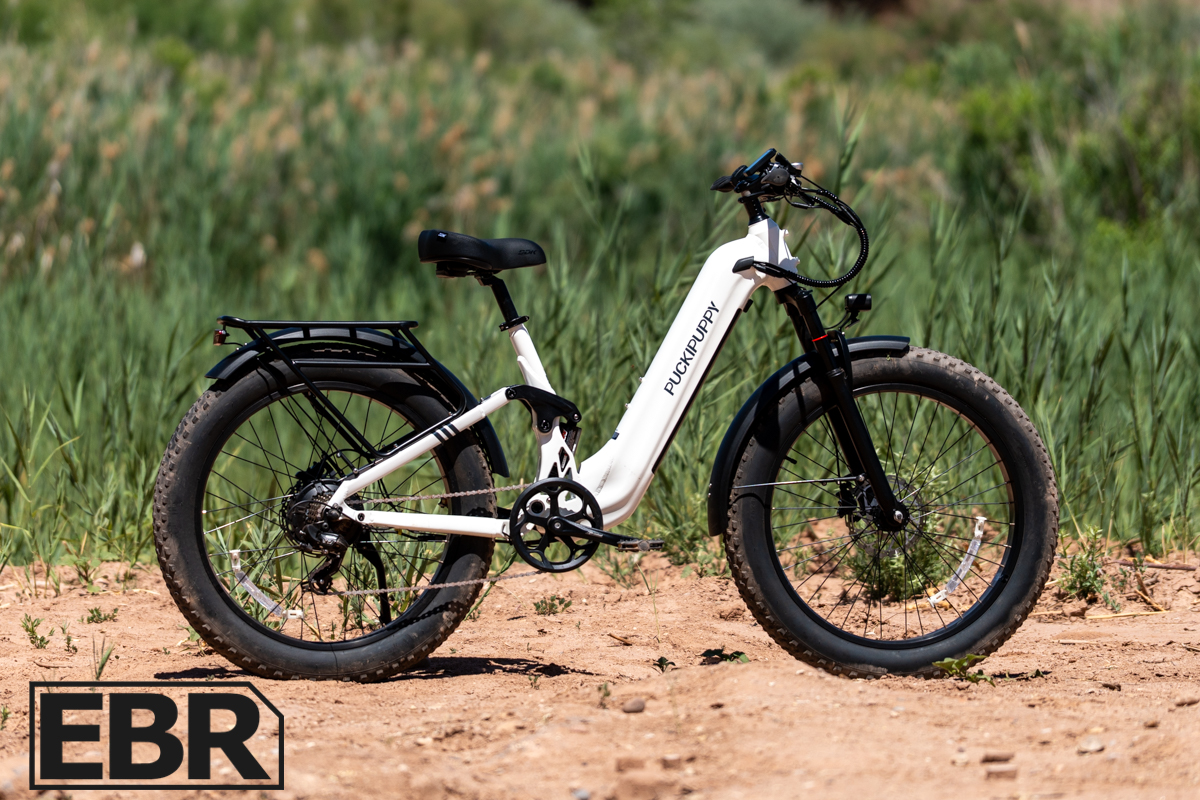
The Puckipuppy Poodle is available in one size and one frame style: a step-through only design. If you want a high-step version, you’ll need to look at their Doberman e-bike.
Puckipuppy positions the single size as a “fits most adults” solution, with a stated rider height range of 5’3″ to 6’4″. I think they’ve done a reasonable job of making the adjustable stem and saddle work within that range, but as I noted in the ride section, riders at the very top of that window won’t get ideal leg extension.
The four color options (Sage Green, White, Dusty Purple, and Blue) give buyers a range of colors that have a decent mix of bold and straight-down-the-middle. Offering four colors on a sub-$1,000 bike while keeping a single size and single frame style likely helps to keep costs down while giving buyers enough visual variety to feel the bike is theirs.
There is currently no long-range battery upgrade option listed, and no fast charger upgrade. For most casual commuters, none of those are dealbreakers. But if you have a longer commute or regularly ride in hilly terrain, the lack of an extended battery option is something to factor in.
Is the Puckipuppy Poodle Worth Buying?
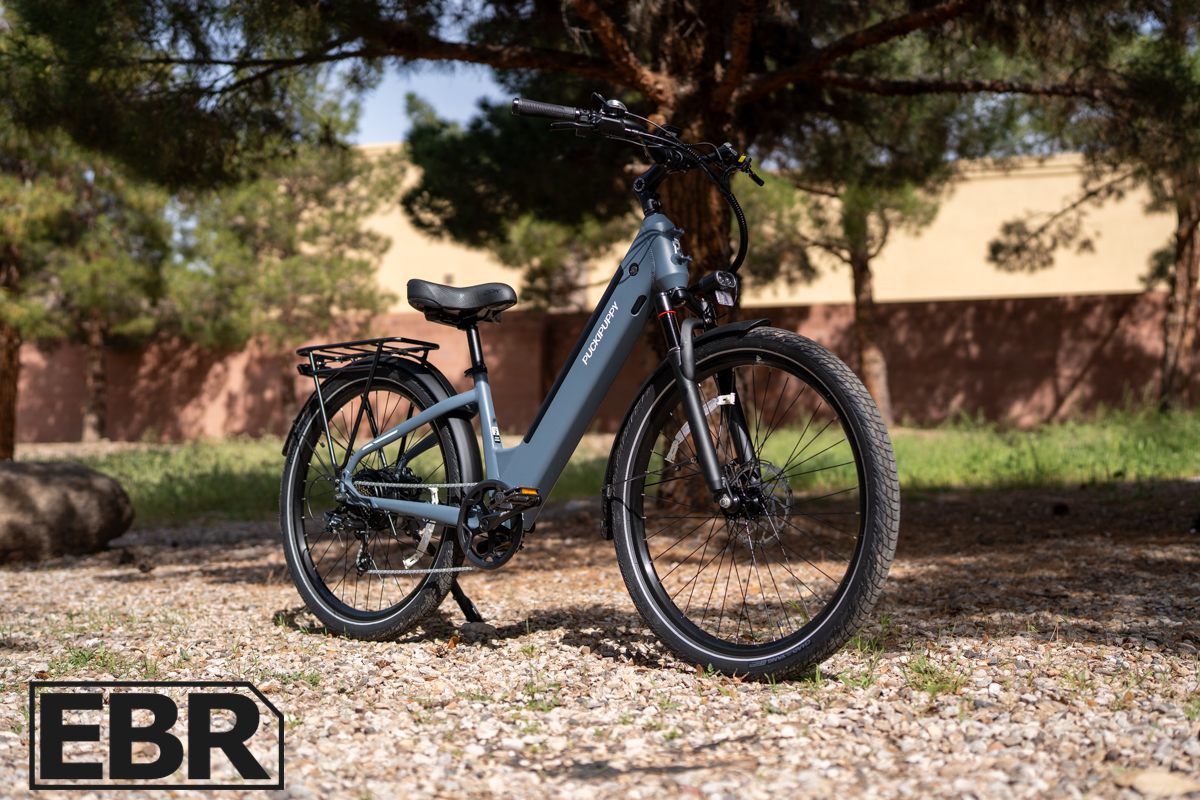
For the right rider, yes. The Puckipuppy Poodle is a decently specc’d, sub-$1,000 commuter and casual cruiser that gets the most important things right. The brakes are good, better than I expected at this price, and that matters more for daily commuting safety than whether the derailleur is Tourney or Altus.
The 720Wh battery gives you decent range, the adjustable geometry makes the bike comfortable to ride, and the accessory bundle is one of the most generous in the category: helmet, mirror, lock, phone mount, and more, all included. If your neighborhood bike shop will be servicing this thing, Shimano components are a practical choice that any mechanic can work on.
I wouldn’t recommend this bike to a heavier rider who needs to climb serious hills regularly, or someone who’s done a lot of riding on torque-sensor bikes and wants that same natural, proportional motor feel. The narrow 14–28T cassette is a limitation for climbing, and the cadence sensor means you’re managing your rhythm more consciously than you would on a torque-sensor system.
But for the person who hasn’t ridden in a decade and wants to get back out on the road, or the more casual city commuter who needs to get from point A to B without breaking the bank, or the weekend rider who wants a fun e-bike to cruise the neighborhood or the boardwalk, the Puckipuppy Poodle is a good option to consider.




Reader Interactions