

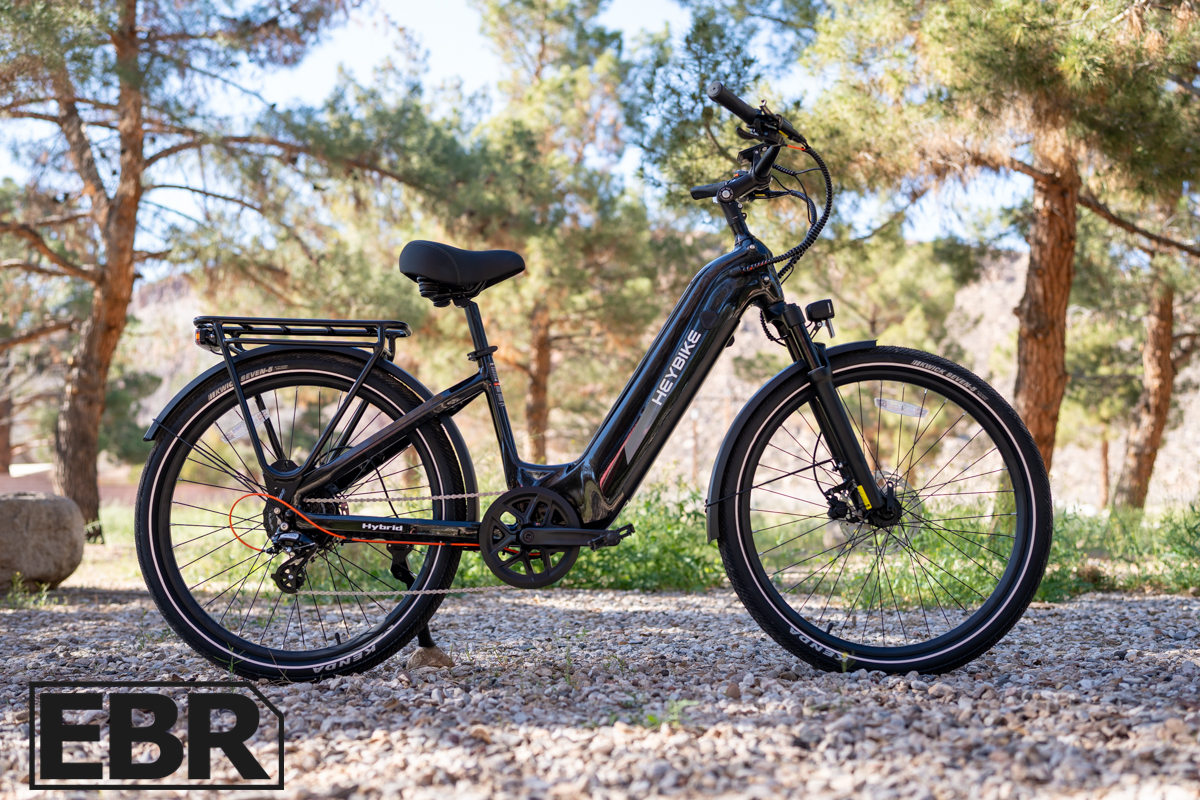
Heybike has released an all-new series of bikes they call the Omega Series, and while we don’t have many specifics, the first bike from that series has been released, the Heybike Hybrid, a city cruiser that they claim is their ‘Longest Range Commuter,’ getting owners ‘up to 100 miles’ of range on a single charge.
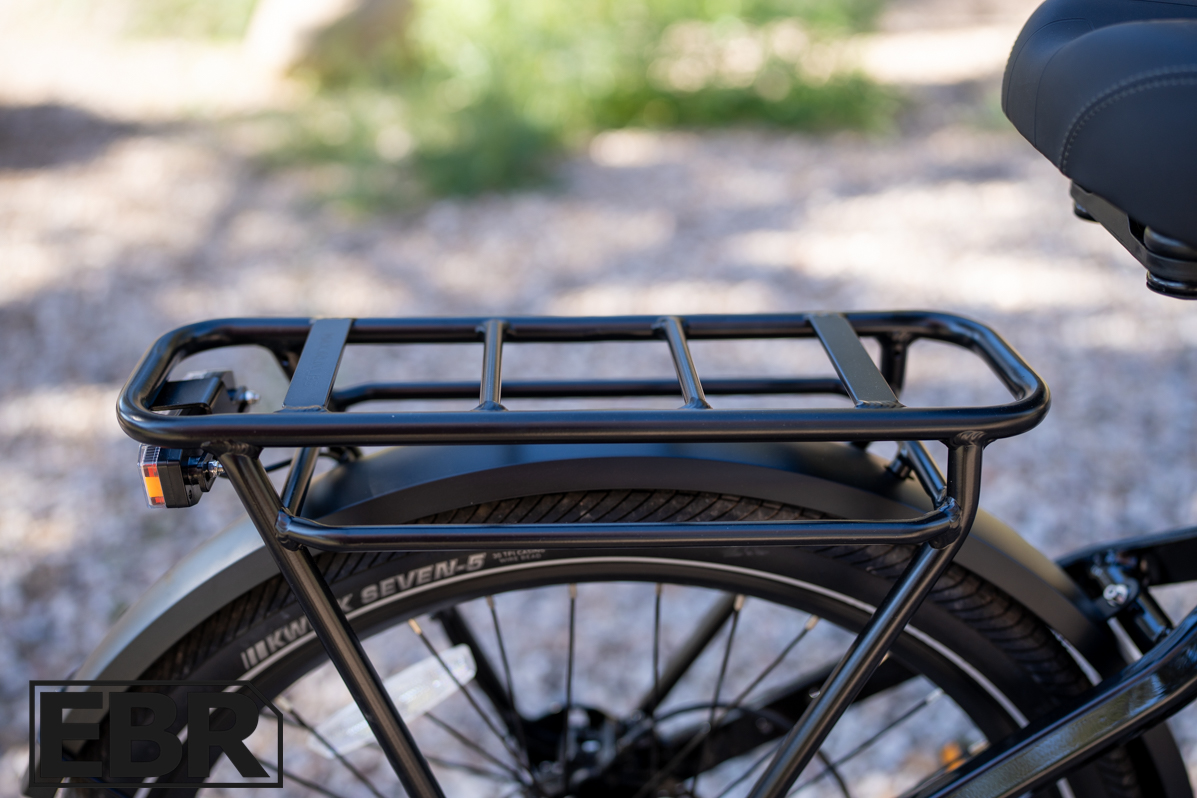
This Dutch-inspired utility cruiser comes complete with a massive 864Wh battery, a powerful 750W hub motor that pushes 75Nm of torque, and a suite of daily essentials that make life commuting much easier, like front to back lighting with turn signals, full fender coverage, and a rear rack rated for 60 lbs.
I’ve spent the past week living with the Heybike Hybrid where I’ve run all around town, climbed our local steep hills, checked the speeds, and have some overall thoughts on how the new Heybike Hybrid stacks up. Does it live up to its ‘ride more, worry less’ moniker? Or does it fall short? This review will answer those questions.
My Experience Riding The Heybike Hybrid E-Bike
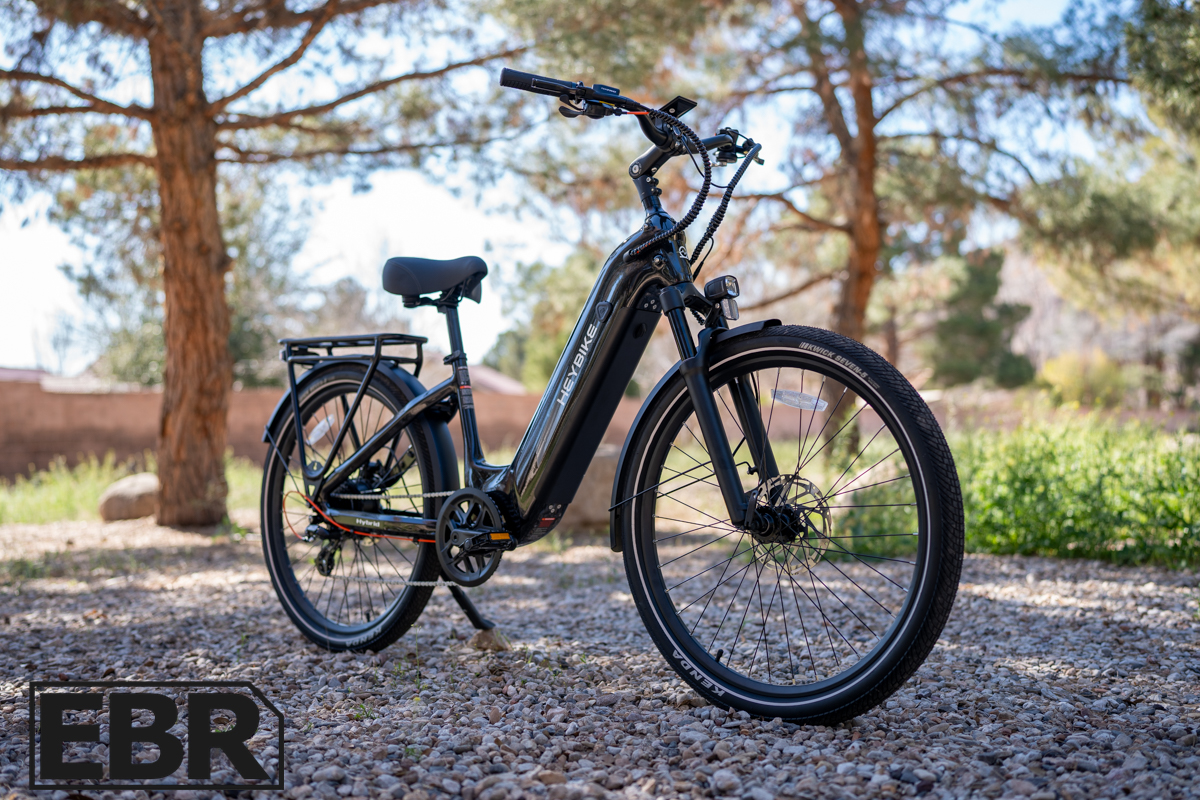
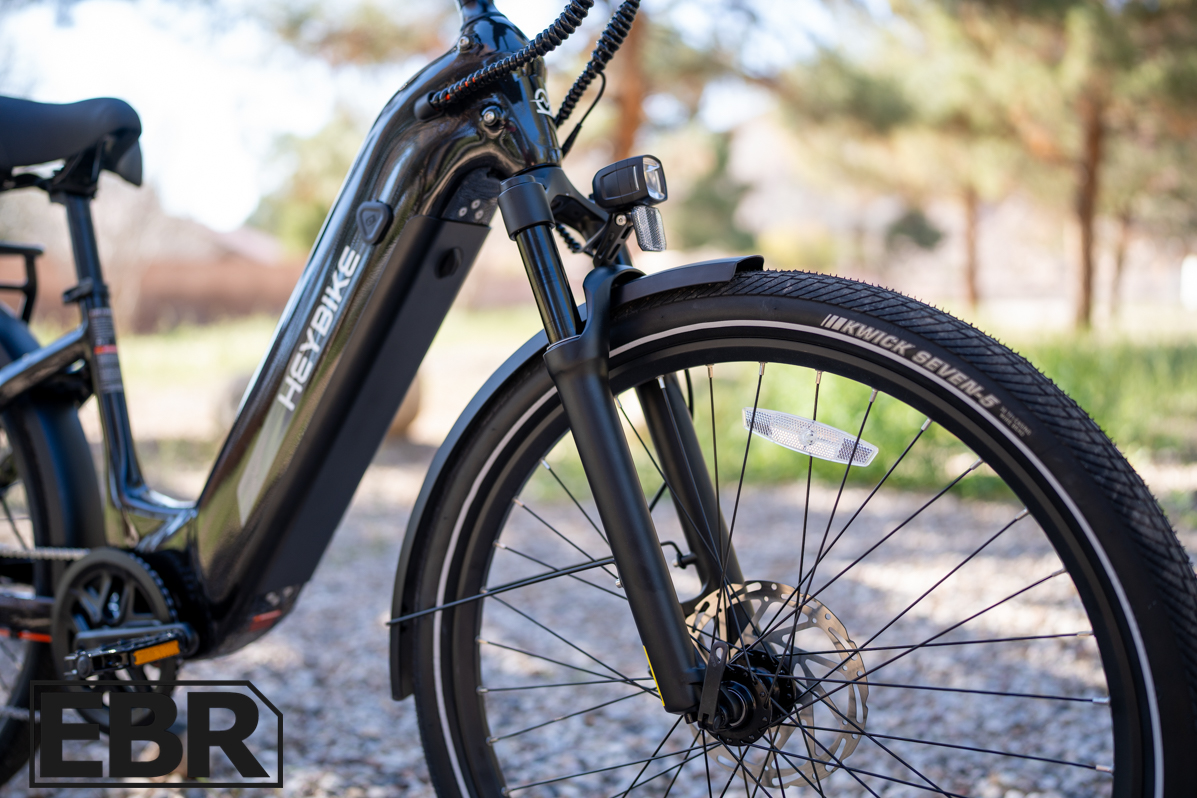
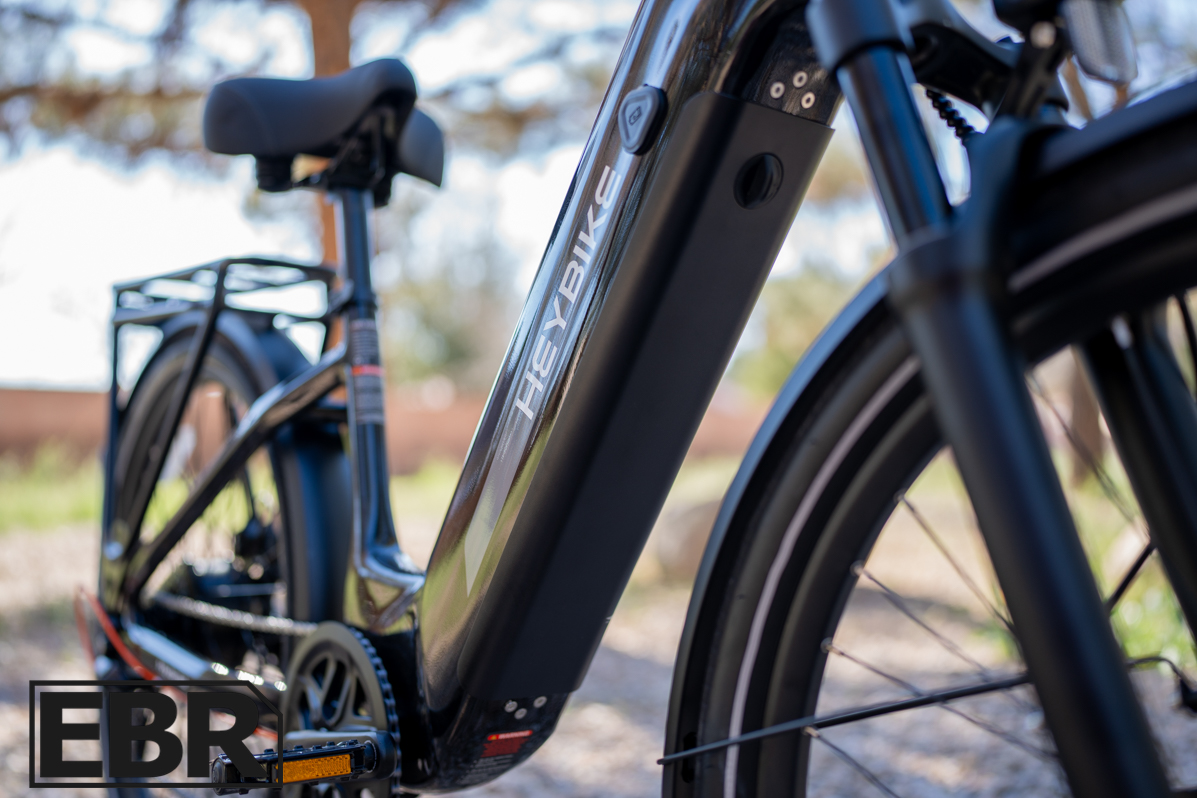
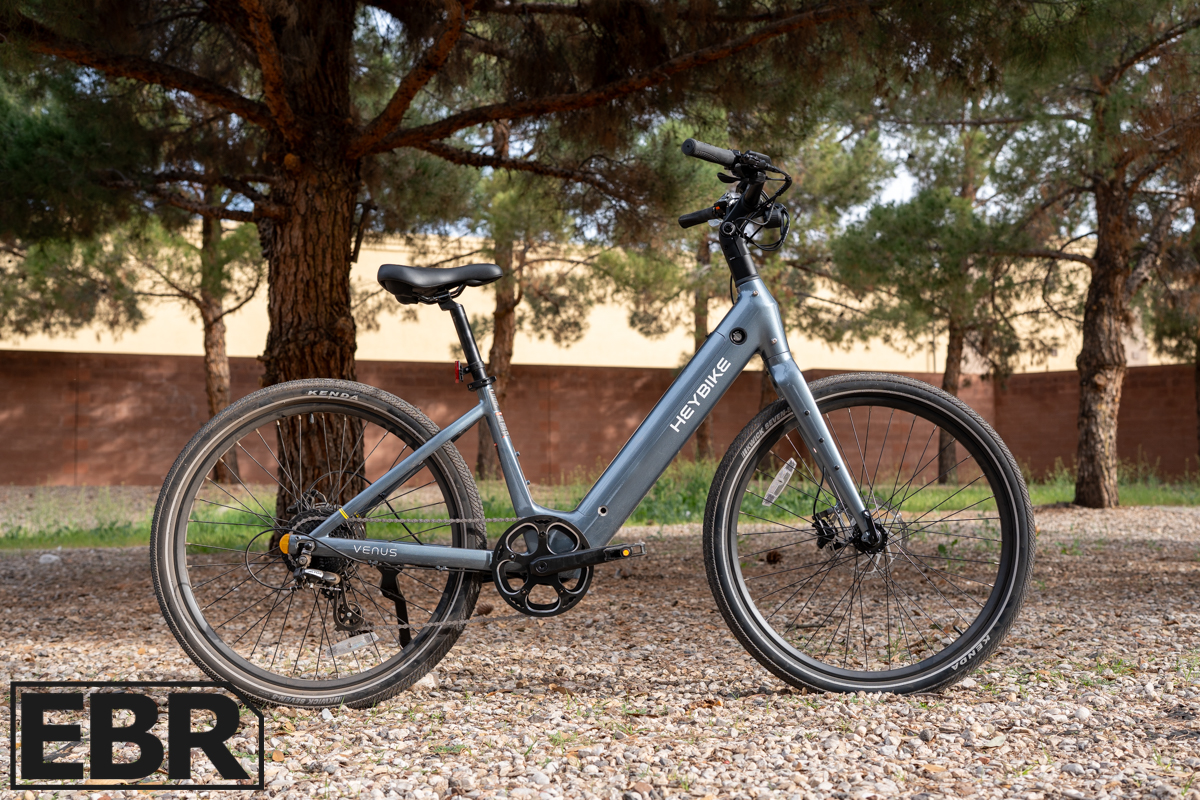
Nice looking bike with a new thicker downtube for that massive 864Wh battery fully integrated into the downtube. I couldn’t help but notice the reinforced area at the lowest point of the step-through frame that looks to increase rigidity and reduce any frame flex.
Riding position is upright and relaxed, largely due to the frame’s geometry and that Dutch city style handlebar and its 90-degree adjustable stem, letting riders of all sizes find a fit that works for them across the 5′ 3″ to 6′ 3″ advertised height range for its one-size-fits-most setup.
Riding around town a few things make themselves clear. The ride is very smooth thanks to the comfort of the contact points with the suspension fork and commuter slick tires. And the motor, despite its up to 1,200W of peak power, is surprisingly very, very quiet. Not something that’s seen often on the bigger motors, but certainly a welcomed surprise.
Acceleration on flats and hill-climbing are both better than I expected, with the Hybrid giving strong performances in both areas. The 1,200W peak watts with 75Nm of torque and smoother, lighter 2.4″ wide tires all team up for a very capable ride. It makes sense though, with a 440 lb payload capacity, you need a bike with extra muscle on tap, but when you don’t have any extra weight on board, you get the benefit of all that extra muscle, and it’s always there to carry the large loads of gear when you want it.
The power of the Hybrid lies in its motor tuning. You can choose modes like “Boost” or “Standard” that set a global tone for the bike’s performance, and each mode does exactly what you’d think. Boost mode steps up the power and acceleration, while Standard mode keeps things at the default power levels.
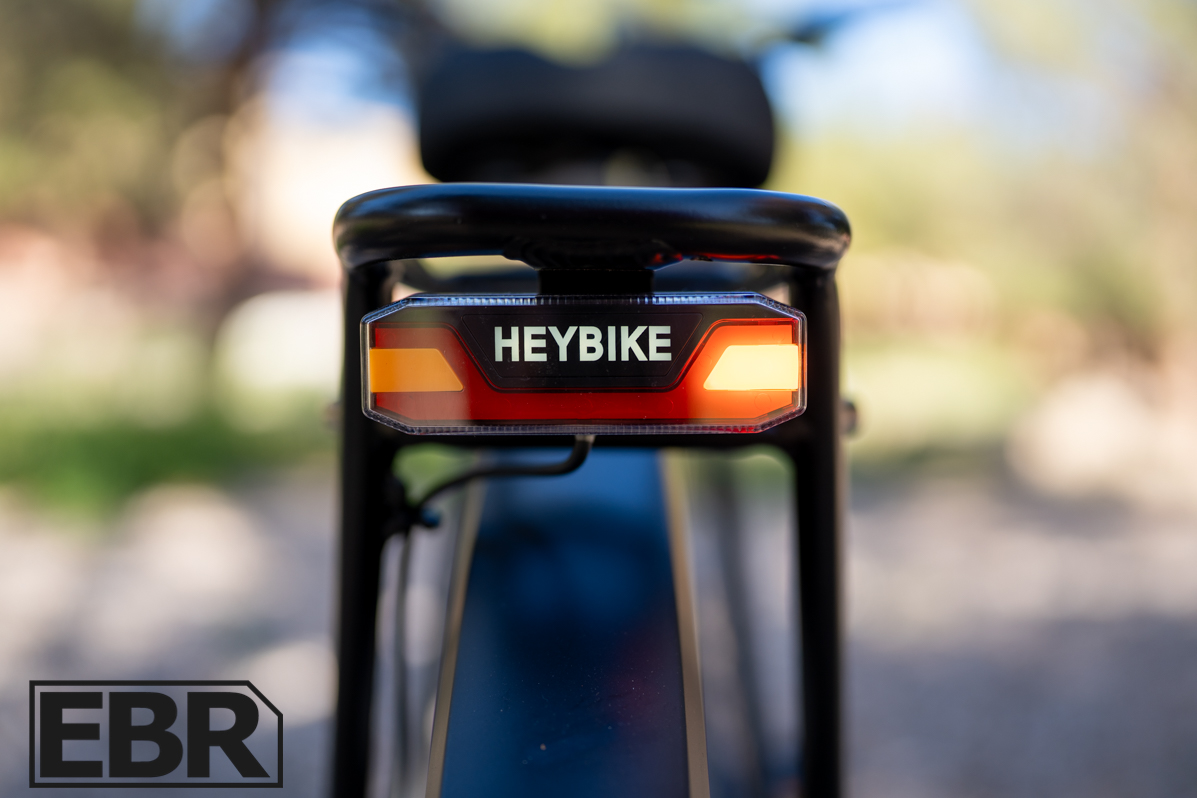
Despite the marketing angle from Heybike of “Our Longest Range Commuter,” the other huge perks that really stand out are the front-to-back fenders with a 60 lb capacity rear rack, full alloy fenders, and front-to-back LED lighting with braking indicators and turn signals. Plus, toss in the tires that have reflective sidewalls and pedals, and you get nearly 360-degree visibility aids when riding in low light conditions.
As far as learning the Heybike Hybrid quirks along the way in my time testing it, the only real oddity, to me was a bike designed to hit the 100 miles of range mark, but then having zero bottle cage mounting points.
Overall, the Omega Series Hybrid nails its role as a long-range commuter, but it does so in a way that the impressive 100+ mile range we got is nearly overshadowed by the suite of perks for commuting. Having both a torque and cadence sensor as well as motor tuning, suspension, and OTA updates from the app to the bike. Package it all up and the value proposition for all of this priced at $1,699 starts to raise some eyebrows, in a good way.
Range
Estimated Range (from Heybike): ‘Up to 100 miles’
Real World Range Test Results:
- Real-World Range Test in PAS 2 Mode: 103 miles
- Real World Range Test in PAS 5 Mode: 41 miles
Range test estimations of 100 miles and marketing that says both ‘ride more, worry less’ and ‘Our Longest Range Commuter’ is a big, bold claim that I haven’t seen many bikes live up to. It has happened, but not often, and certainly not on 70lb ebikes. We dug into the details of Heybike’s testing and the only caveat we could find was that the rider weighed 155 lbs, and that certainly matters. So, we set out on a real world test with rolling elevation changes on a public bike path that requires the occasional slow down or stop for others. So, you know, the real world.
In the PAS Max assistance range test, we covered 41 miles going full blast, which on its own is pretty impressive, but it’s a far cry from 100 miles. So, we let it rest, recharged, and headed out again, this time in PAS 2 (level 1 was a bit too slow for real world riding, so we bumped it up by one). Will that change kill the potential 100 miles? Maybe, but we’re going for a realistic scenario here, not a perfect one with the wind at our back on a closed course.
In that minimum assistance test in PAS 2, we managed to cover 103 miles, and that’s pretty awesome considering we also climbed over 1,700ft of elevation over about 9 hours. So yeah, this rig has some seriously impressive staying power that most people will get a lot of use out of without needing nightly charges.
Power (Motor & Battery)
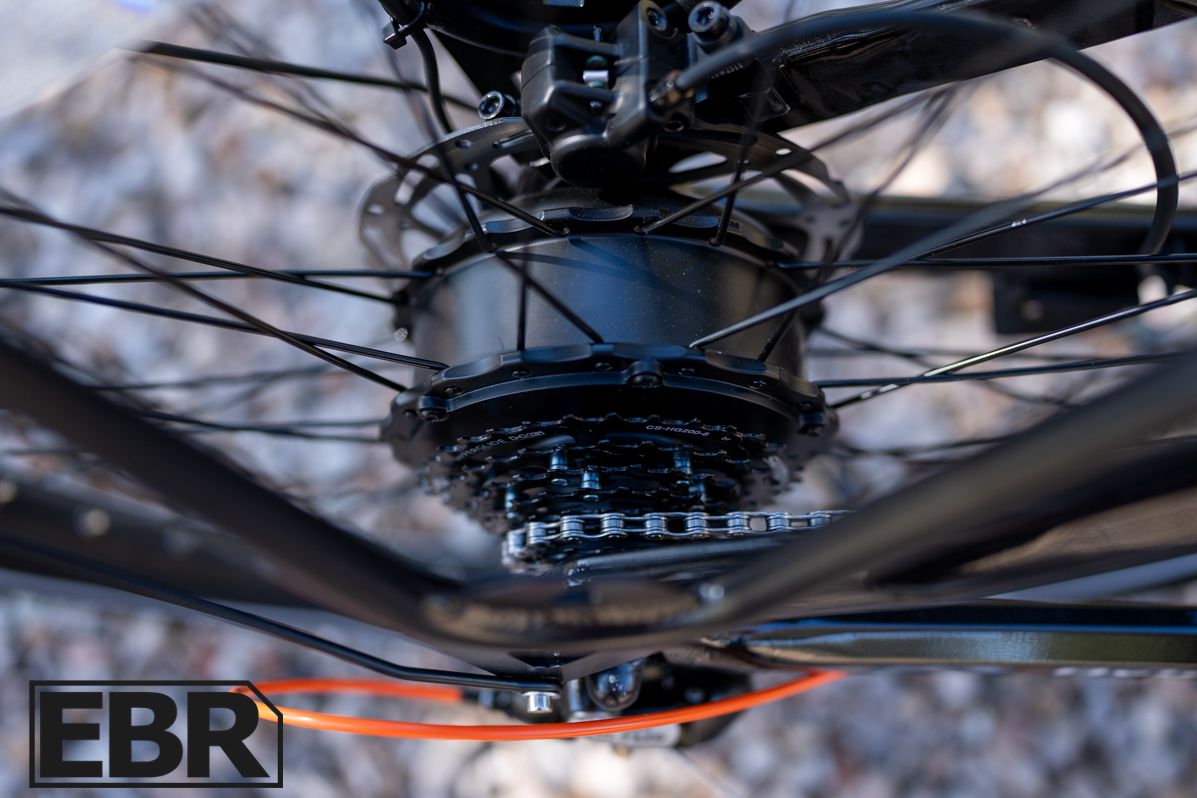
The Heybike Hybrid runs a rear hub motor rated at 750W with a 1200W peak, pushing 75Nm of torque, and one thing that sets it apart from a lot of bikes in this class is that it has both cadence and torque sensors, and both are selectable right from the handlebar. To switch between them you just hold the ‘M’ button until the bike icon appears on the screen, which indicates the cadence sensor is active. Hold it again until the bike icon disappears and you’re in torque sensor mode. Simple.
For a 750W motor that can peak at 1200W, it’s surprisingly quiet, and both sensors feel great. The torque sensor gives you nice, fluid assistance that reacts to how hard you’re pedaling, while the cadence sensor delivers a punchier, more noticeable burst of power once the cranks start spinning. I prefer having both options on a bike because they genuinely have different use cases, it just depends on the ride.
On the assist side, you can run either 3 or 5 levels of pedal assist, and that’s something you toggle in the app. The bike also supports both Class 2 and Class 3 modes, and the app gives you a global speed setting they call a ‘mood,’ with ‘Standard’ and ‘Boost’ options that change the overall feel of the motor across all assist levels. You can also tune each individual pedal assist level in the app, which is a nice touch for dialing in exactly how you want the bike to respond at each step.
Components
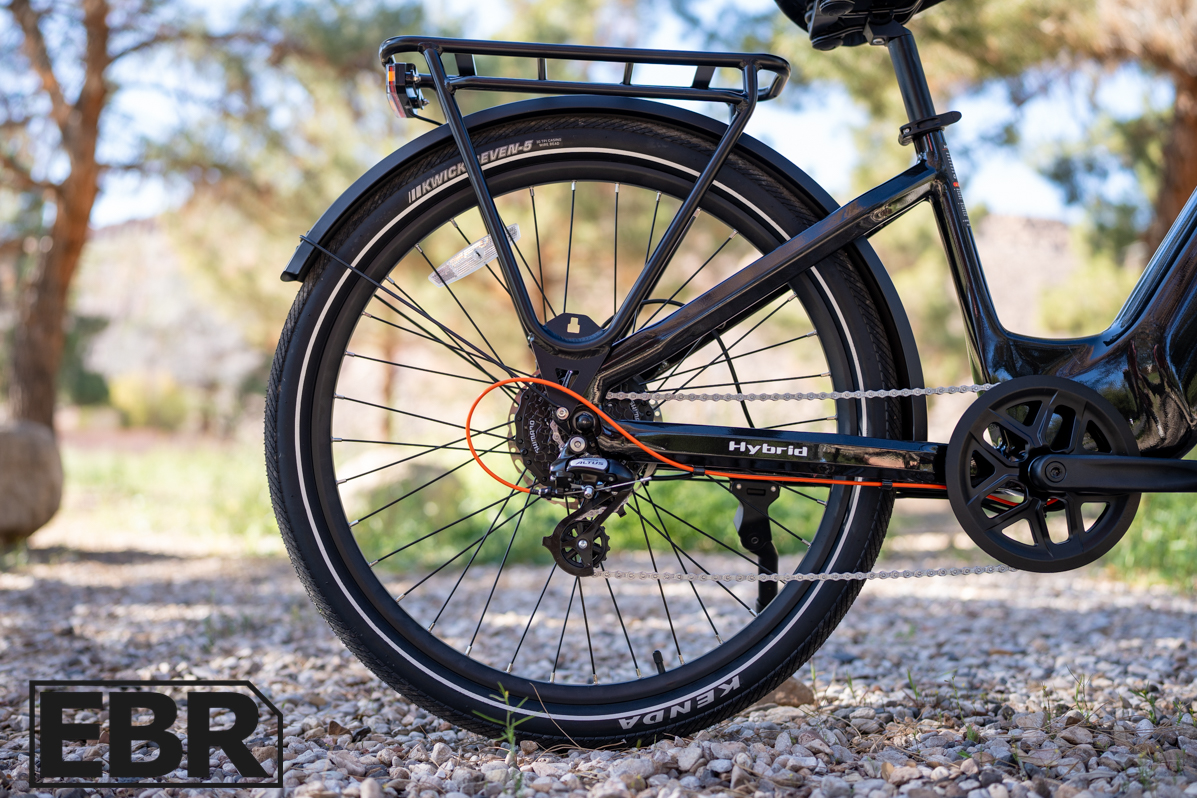
On the drivetrain you get a Shimano Altus 8-speed setup with a 12-32t cassette and 48T chainring, paired with Tektro hydraulic disc brakes, specifically the HD-3520s, with 2-piston calipers and 180mm rotors front and back. Stopping power is solid.
The tires are Kenda commuter rubber sized at 27.5×2.4″, and they roll quietly and smooth with reflective sidewalls which is a nice bonus for visibility on early morning or evening rides.
Up front you get a 100mm coil spring suspension fork with 32mm stanchions, preload adjustment and a lockout, so you can stiffen things up when you’re on smooth pavement and open it back up when the road gets rough.
The saddle is a wide, spring-supported comfort seat and it’s genuinely comfortable for most rides around town, though it’s a touch wide for longer multi-hour sessions in the saddle.
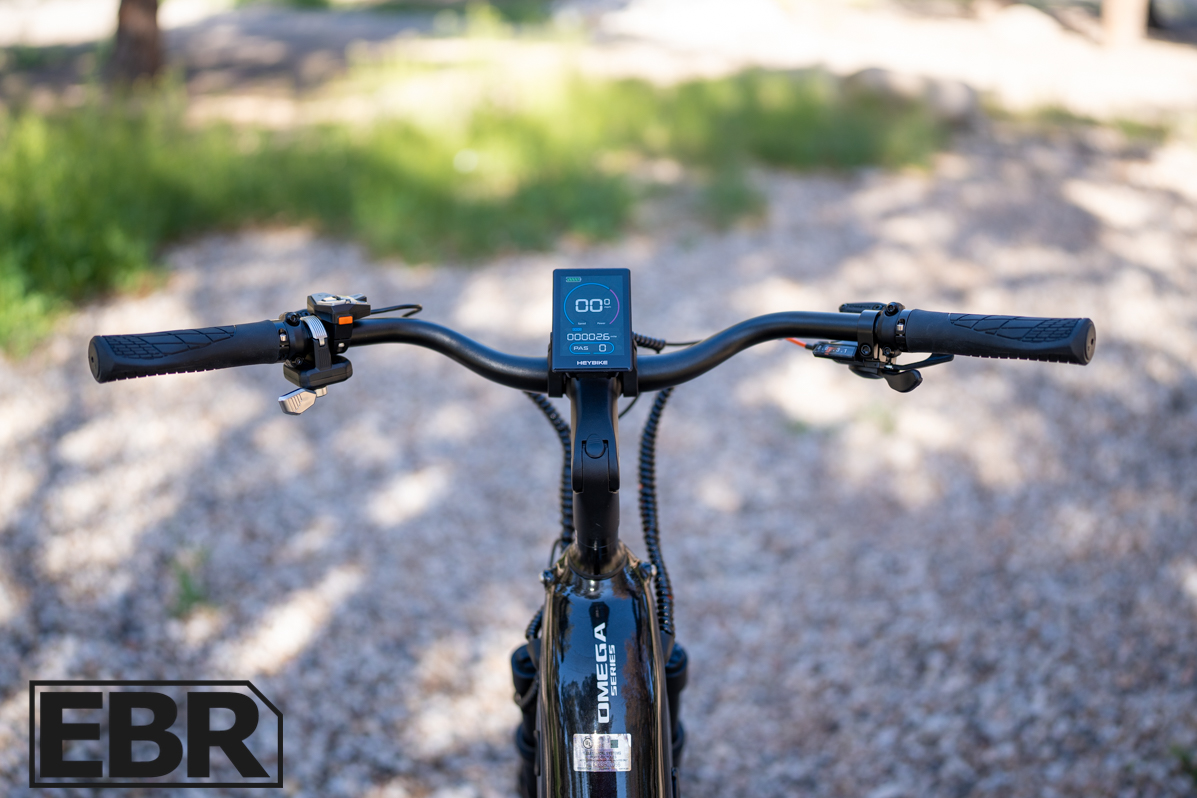
The handlebar is a Dutch-style cruiser bar at 27.5″ wide with a nice rise and rearward sweep that adds to the overall comfort. It sits on an adjustable 90-degree stem with a 31.8mm clamp and lock-on ergo grips on either end. On the right you’ve got the Shimano trigger shifter with a gear window, and on the left the throttle and pedal assist controls with the display sitting center. Combined with the upright, relaxed geometry of the bike, it’s just a comfortable place to be.
Mounting points are well used here with full front and rear fenders and a rear rack already installed. There’s also a front rack or basket mount on the head tube if you want to add cargo up front. One odd omission though, there are no bottle cage mounts anywhere on the bike.
Screen / User Interface / App
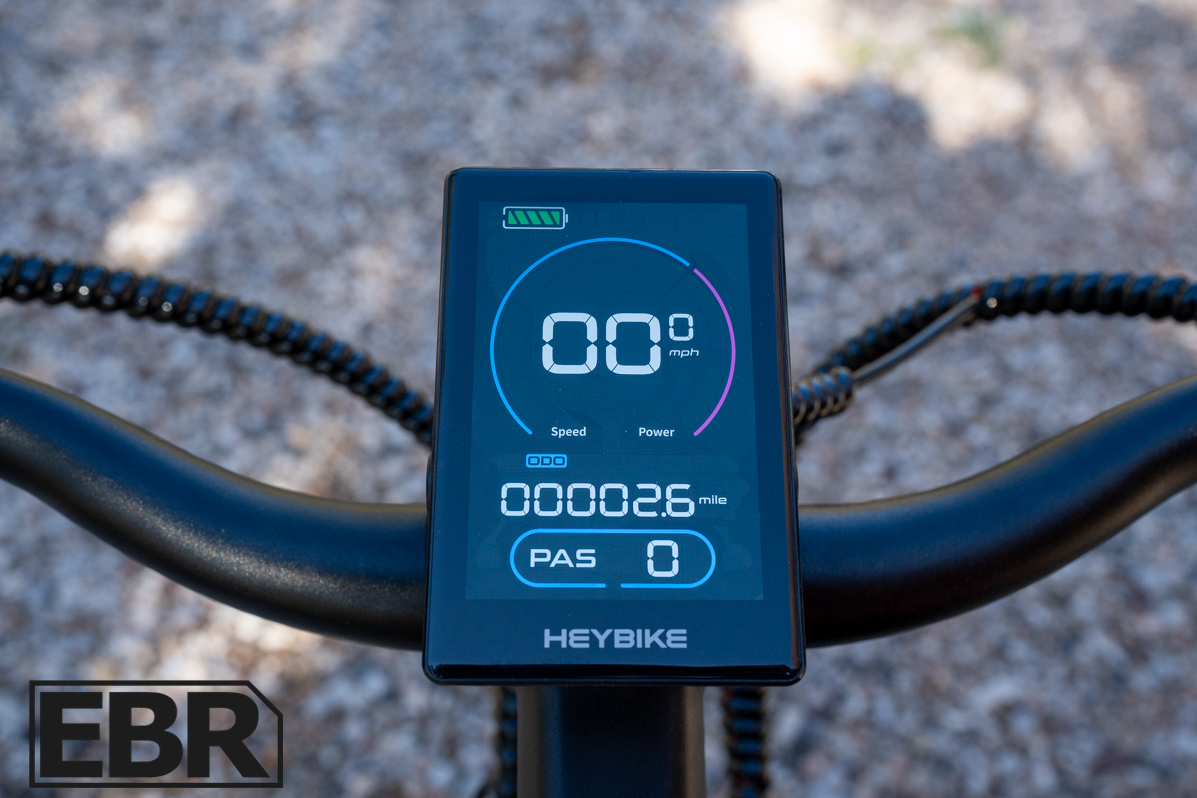
The display is a center mounted 3″ color LCD and it holds up well in direct sunlight. On the bottom of the control pad there’s a USB-C charging port which is a handy little detail. Your basics are all on the main screen: speed, battery level, power output, odometer, trip meter, your current pedal assist level and which motor sensor you’re running, plus a bluetooth icon when the app is paired. Tapping the ‘M’ button cycles through some additional data like max speed and average speed.
There are also advanced settings buried in there, accessible by holding the plus and minus buttons together for a few seconds. Fair warning though, once you’re in there the codes aren’t exactly self-explanatory and you’ll want to have the Heybike Hybrid manual handy to know what you’re looking at. Once you’ve got it figured out you can adjust things like display brightness, units, wheel diameter, speed limit, auto headlight settings, light sensor sensitivity, an auto off timer, startup pin code, settings password and even a factory reset if needed.
The Heybike app lets you assign multiple bikes to your profile and covers the usual bases like GPS ride tracking and speed limit settings for both throttle and PAS, but it goes a bit further than most. You can do motor tuning, tie throttle speeds to your PAS levels, and even social share your bike and rides in the ‘Moments’ tab where you can see other owners and their rides too. Best of all, you can push OTA updates to the bike straight from the app, which is always a welcome feature.
Heybike Hybrid Model Options
The Heybike Hybrid comes in one frame size that Heybike says fits riders from 5’3″ to 6’3″, and it’s available in three colors: Emerald Green, Onyx Black and Ruby Red.
Every bike comes loaded with a kickstand, front to back lighting with turn signals, a rear rack rated for 60 lbs and a 3A charger right out of the box.
On the accessories side, details are still a little limited at the time of writing, but Heybike’s marketing material hints at an optional suspension seatpost coming down the line, which would be a nice addition. The usual suspects like rack bags, a front basket and bike locks are also in the mix.
As for the warranty, you get a solid 2 years standard, with optional extensions of 1, 2 or 3 additional years available, meaning you can potentially stretch your coverage out to 5 years total if you want that extra peace of mind.
Is The Heybike Hybrid Worth Buying?
At its price point, the Heybike Hybrid has a lot going for it: 100 miles of real world range, OTA app updates, an extendable warranty, both motor sensors, and a genuinely comfortable ride backed by a beefier motor that somehow stays as quiet as most 250 and 350W motors out there.
The gripes are real but small. The display feels a bit dated and you’ll want a cheat sheet handy if you’re diving into the advanced menus, and the app could use another polish pass as it’s still a little clunky in spots.
But small gripes aside, the all-new Heybike Hybrid is off to a strong start as the first bike out of the emerging Omega Series. If you’re in the market for a comfy city cruiser with a solid list of perks without a huge price tag, it’s absolutely worth a look. And if range anxiety is something that’s kept you on the fence about ebikes, well, Heybike put their money where their mouth is on this one. Worry less, ride more.
Pros
- Long range that genuinely delivers on the claim as we got 103 miles in pedal assist level 2!
- When you step back and look at the specs, it’s a surprisingly strong feature set for the asking price.
- The motor has plenty of power on tap but stays remarkably quiet, which isn’t something you see often at this output level.
- Having both torque and cadence sensors is a nice touch that not many bikes at this price bother to include.
- Being able to tune the motor output through the app adds a layer of personalization that most riders will appreciate.
- OTA updates mean the bike can improve over time without you having to do anything.
Cons
- No water bottle cage mounts on a bike marketed as covering 100 miles seems like an odd choice.




Reader Interactions