

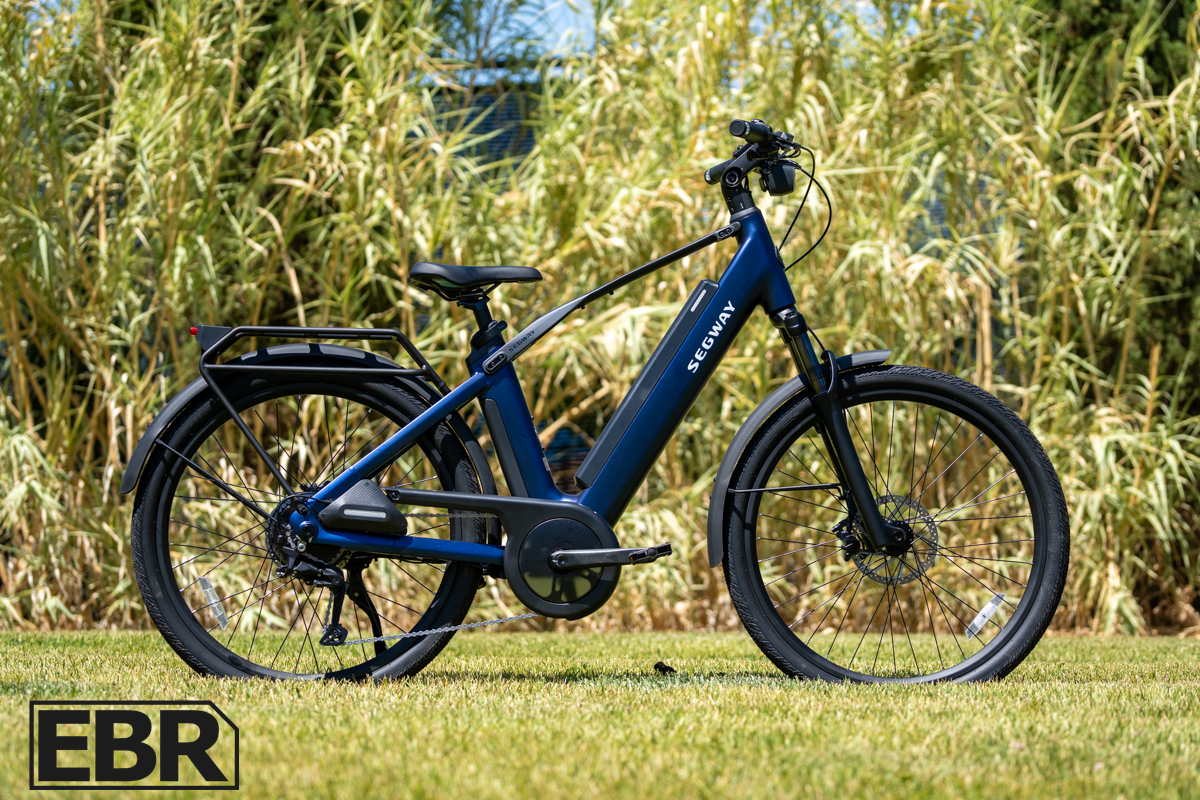
Segway did not come up through the bicycle industry. They’re known for electric scooters and those self-balancing mobility ‘vehicles’ I first saw about 20 years ago, so when they sent us the Myon, I wanted to peel back all the technology and find out whether there’s still a bicycle underneath it. Short answer: yes, and a better one than I expected.
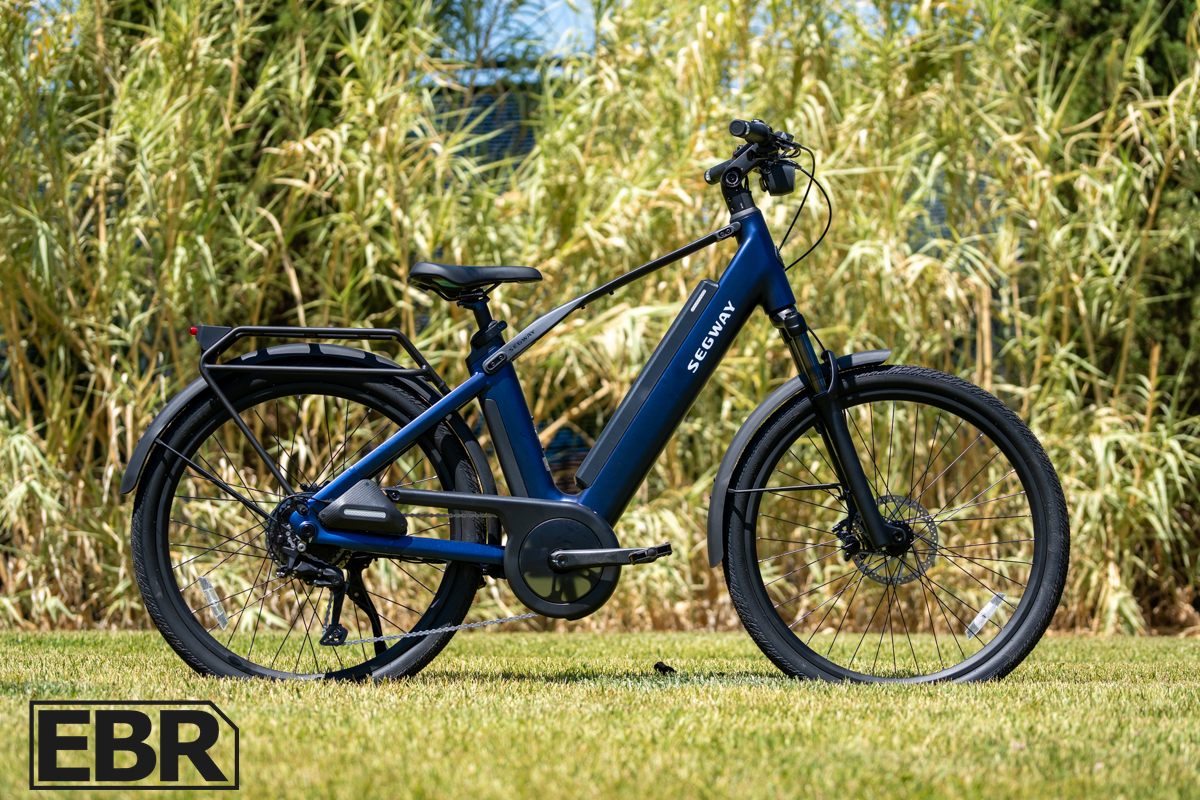
The Myon is a $1,999 class 3 commuter that pedals fast and rolls smooth, with more built-in tech than expected at this price point. Electronic shifting, turn signals, GPS, Apple Find My, over-the-air updates, an optional rearview radar. All of that could have come at the expense of the bike itself, and it didn’t.
There are a few things I’d change, most of them at the handlebars, but I’m a pretty big fan of this one.
My Experience Riding the Segway Myon
Ride Quality Score: 7.5 / 10
If I had to describe how the Myon rides in two words, they’d be smooth and fast. This is a technology-forward bike with a lot of settings and features, but the technology doesn’t get in the way of the Myon pedaling how I want a Class 3 commuter to pedal – at least after I got familiar with the slightly unorthodox cockpit.
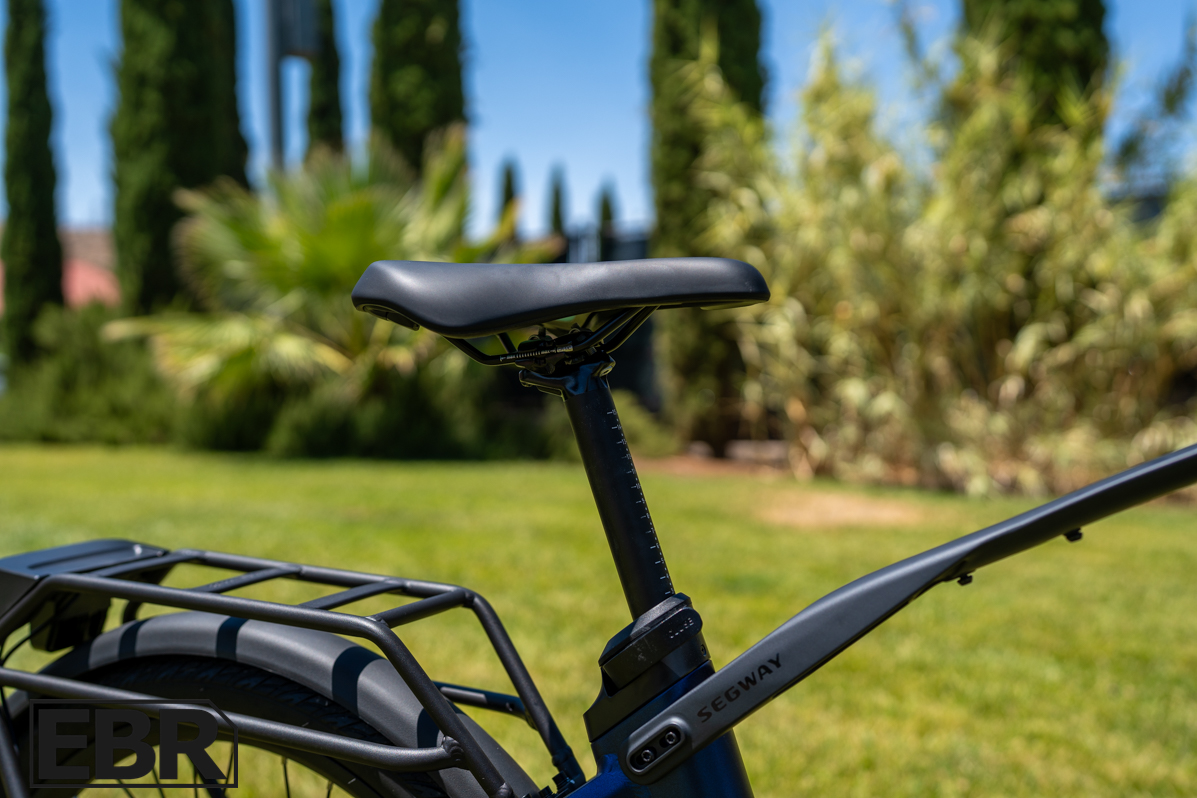
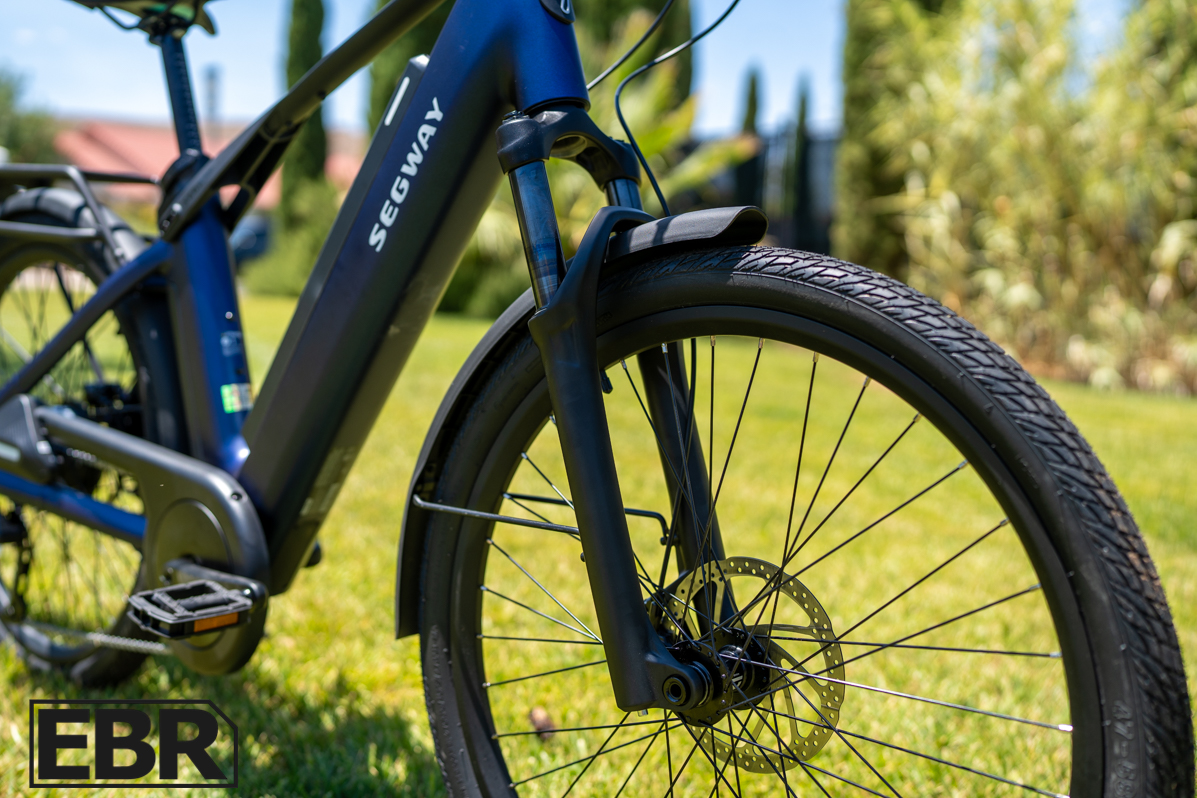
The geometry and the stiffness of the frame are top notch. I’m 5’11” at 185 lbs and I rode the M/L, and the position is slightly forward and athletic the way a class 3 commuter should be, not upright Dutch-style. We put a 6’3″ rider on it and it worked for them, though above that the seatpost runs out of travel before you get full leg extension. The stem adjusts through about 60 degrees, so you can bring the bar up if you want a more relaxed reach. The 80mm fork has 32mm stanchions and are thinner than the 34mm you sometimes see, but it’s plush and it soaks up more than I expected, and the thru-axle keeps the front end nice and stiff.
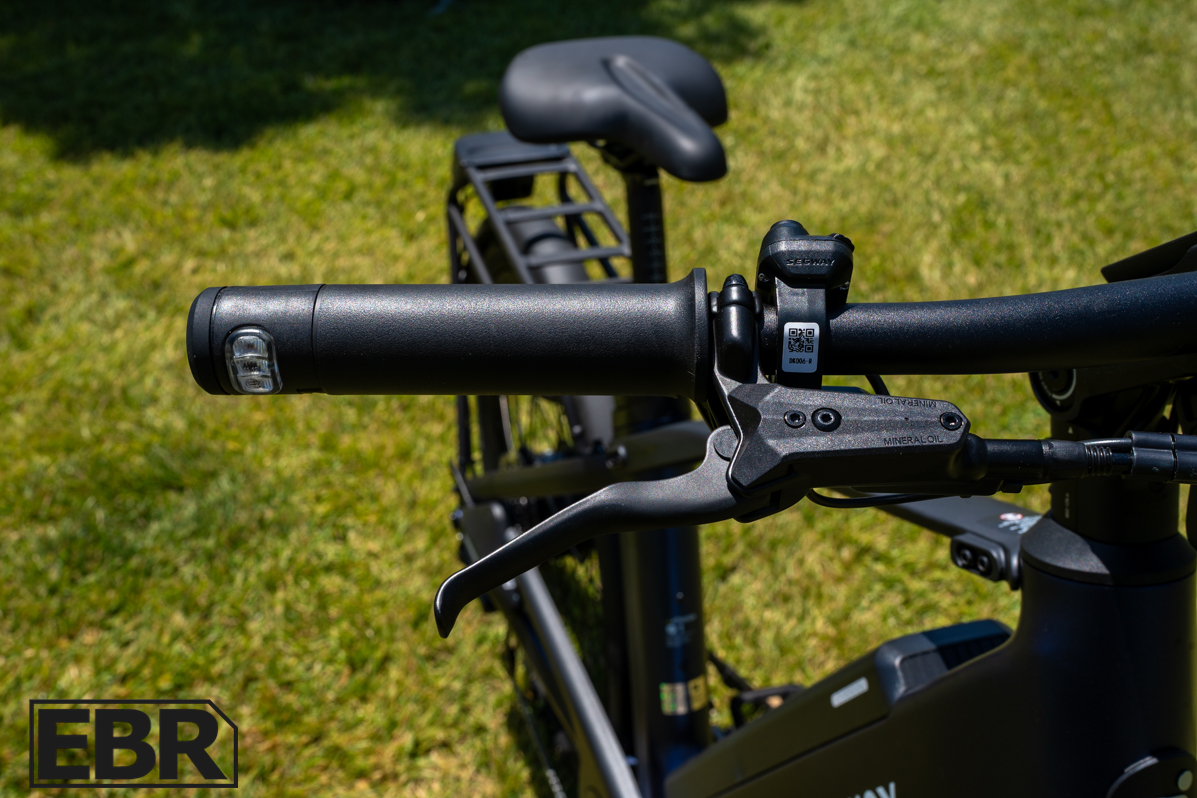
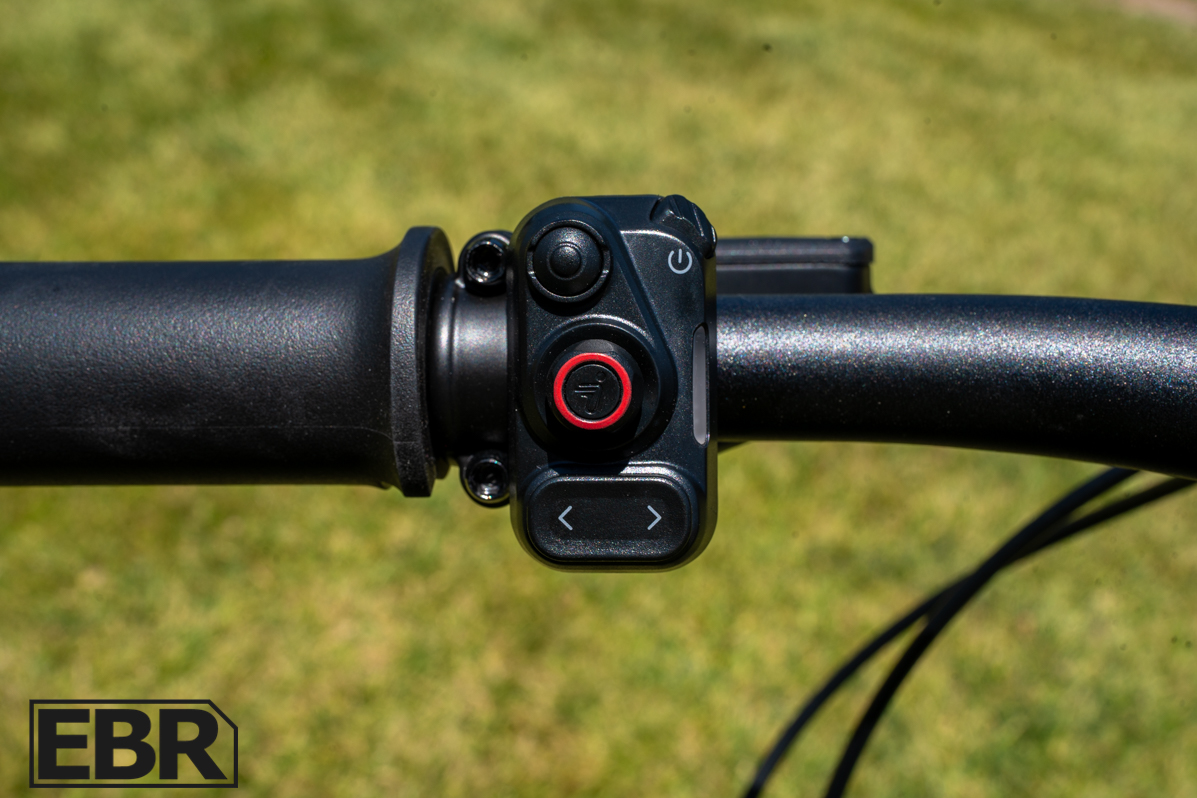
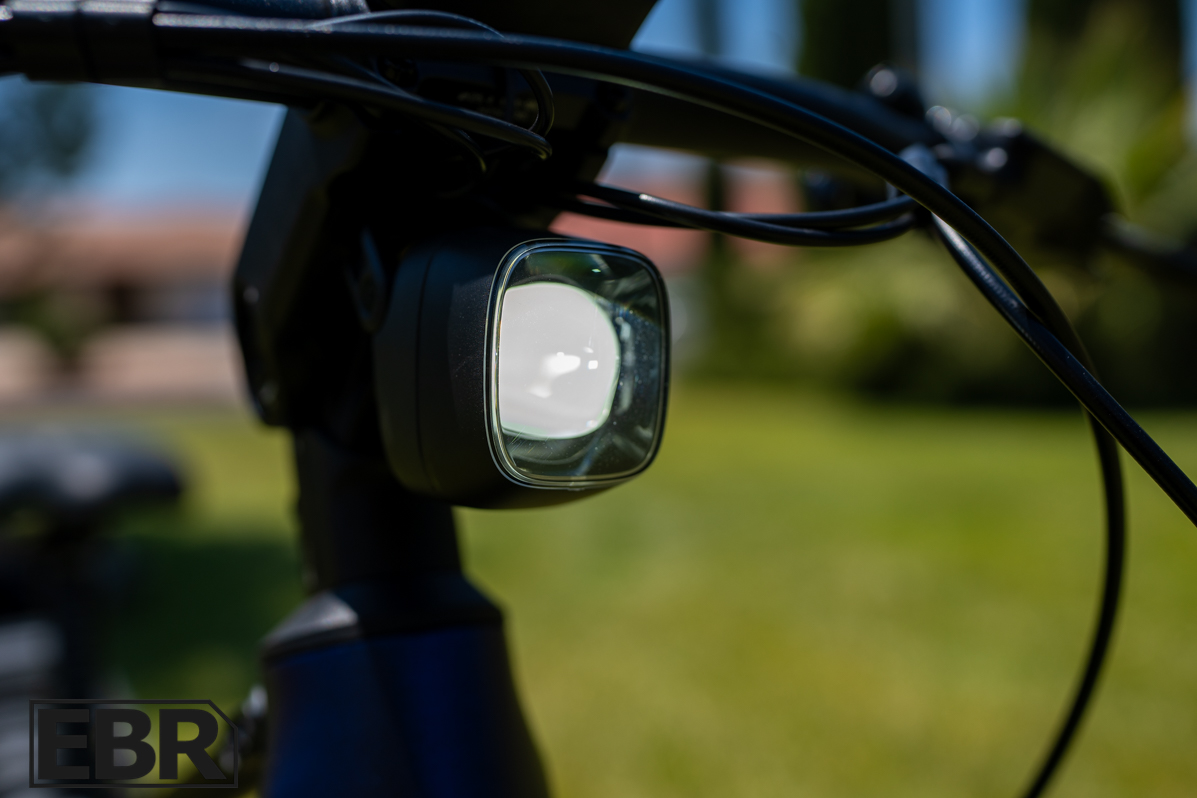
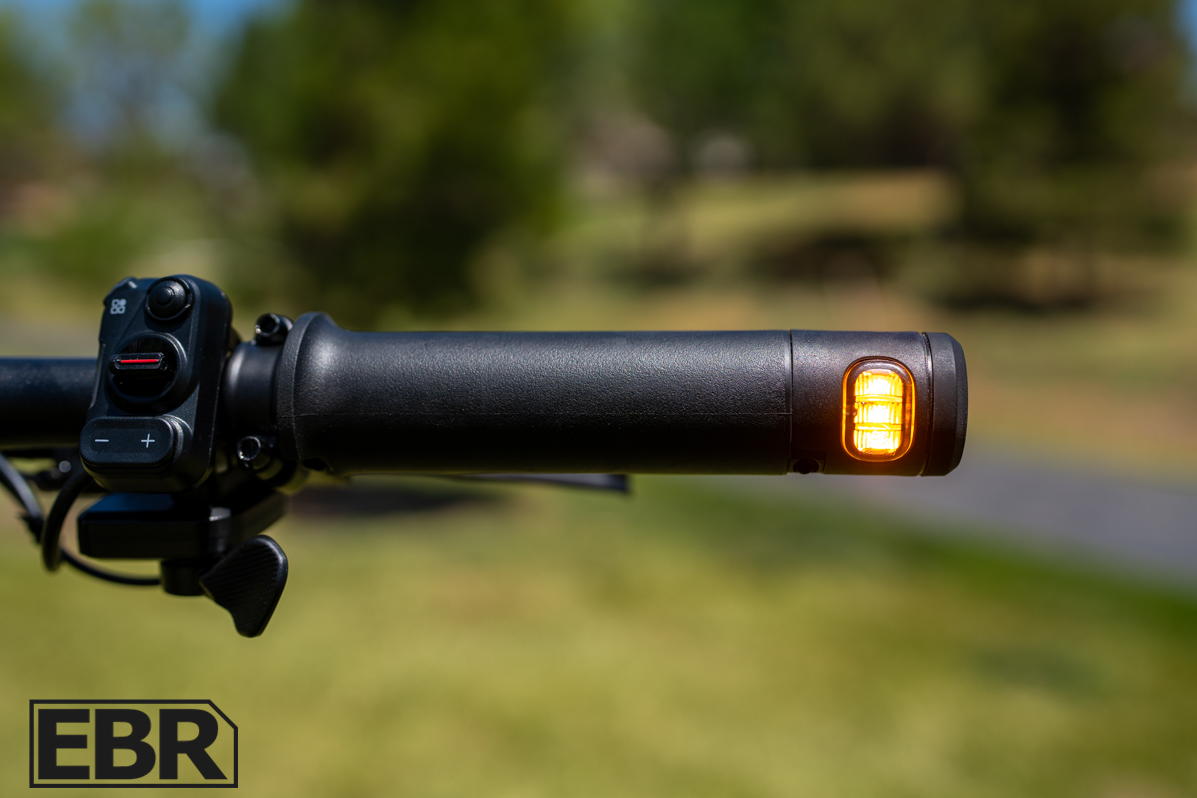
The cockpit is the part that will feel foreign if you’ve been riding bicycles your whole life. There’s no traditional shifter. Gears, target cadence, and assist levels all live on buttons on the right control pod, the thumb throttle sits where I usually find a twist throttle, and the left pod handles the horn, the turn signals, and a five-way navigation button. It took me about 20 minutes of riding to get it down, and I still catch myself flipping on a turn signal when I meant to change assist levels. However, once I got used to it, I can see why everything was organized the way it was.
My complaints are at the ends of the handlebar. The grips are a plain rubber bar with nothing to support your palms, and they got slippery when they were wet or when my hands were sweaty. They’re also extra long because the turn signals are built into the ends. I love that the signals face forward as well as back, and they’re bright, but I don’t ride with my hands tucked in and when I ride wider I’m covering the light somewhat. I kept adjusting so a driver behind me could still see it. Thank you Segway for putting signals up front, now give us a rear-mounted pair too.
The drivetrain (a Shimano Cues nine-speed) shifts crisply and the clutch derailleur keeps the chain from bouncing around underneath you. I’m normally not an auto-shift guy because I like to pick my own gears, but on this bike I’d ride in auto. It handles a start from a stop well, and I found no ghost pedaling in ninth gear at 26 and 27 mph with the target cadence at 40 RPM, the lowest setting available. The only time the auto shift underperformed was on steeper hills, where it was a little slow to drop gears and I preferred to adjust the cadence myself up to 60-70 RPM.
Power (Motor & Battery)
Power Score: 7 / 10
 |
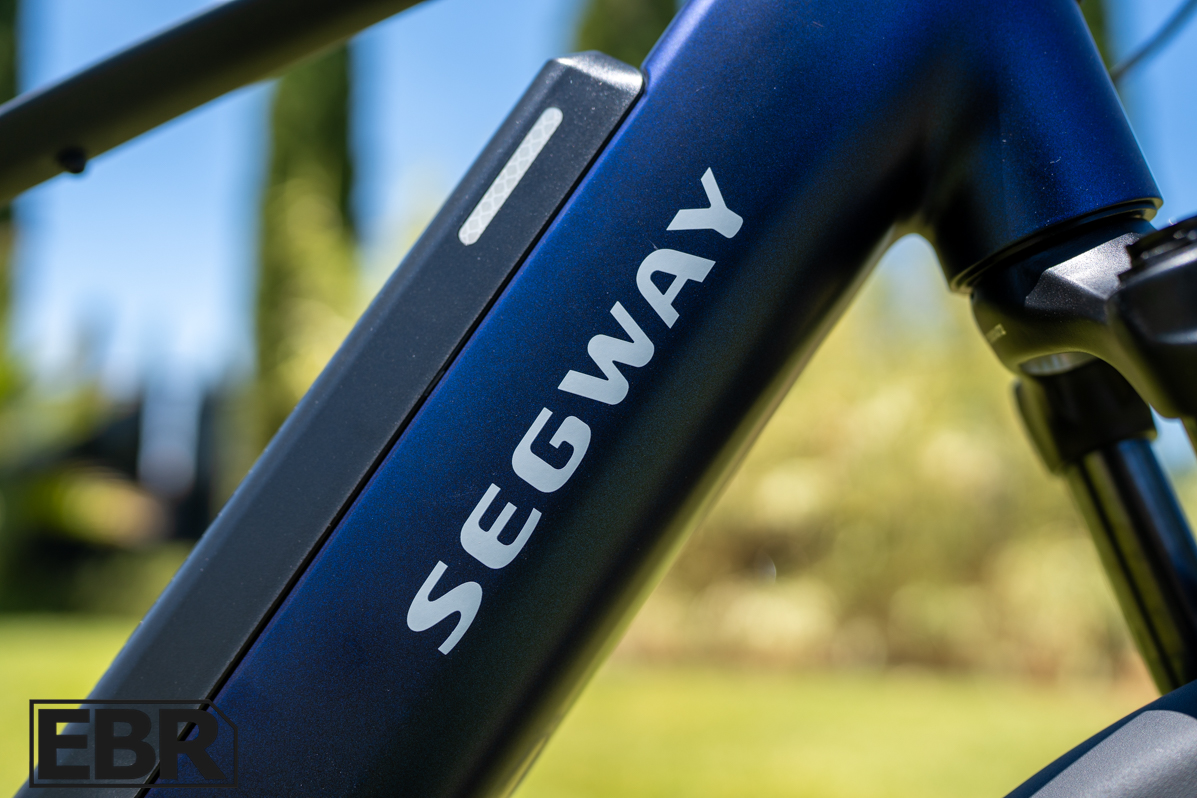 |
The Myon has a 500W nominal rear hub motor that peaks at 1,500W with 85 Nm of torque. On paper that raised my eyebrows. Most class 3 commuters in this weight range come with 750W nominal motors, and I almost always tell people to always go up to 750W on a class 3 bike.
Our hill test is a 0.35-mile climb up Black Hill, and the Myon made it on throttle in 103 seconds, a minute and 43 seconds, at an average of 12.1 mph. On pedal assist it did the same climb in 1:27 at an average of 14.4 mph.
That’s the most powerful 500W motor we’ve taken up that hill. I’ve only put about 20 to 25 bikes through that specific comparison so far, so the data set will keep getting better, but it’s on the strong side of the 500W group.
Widen the comparison and the picture is more middle-of-the-road. Against the strongest class 3 bikes with 750W rear hubs, the Myon comes in behind, and that’s what you’d expect from a motor with a third less nominal output. That’s where the hill score lands. It climbs better than its rating says it should, and it will handle the hills most commuters ride, but if you live somewhere steep or you’re carrying more weight than I am, a 750W bike will get you up faster. I’d like to see Segway offer a 750W version, even though technically the 500W motor did the job nicely.
Where this motor earns its keep is delivery. The Myon is a torque sensor bike, and Segway pairs that sensor with speed, cadence, and incline sensors feeding their own algorithm. When I push down on the pedals the motor is there right away, with no delay, and when I stop pedaling it stops. There’s no over-run to ride around. There are six assist levels, which is more than I think anybody needs, but the steps between them are smooth and the power increases predictably as you climb through them. Segway isn’t a bike company, but they know electronics, and it shows in the power delivery.
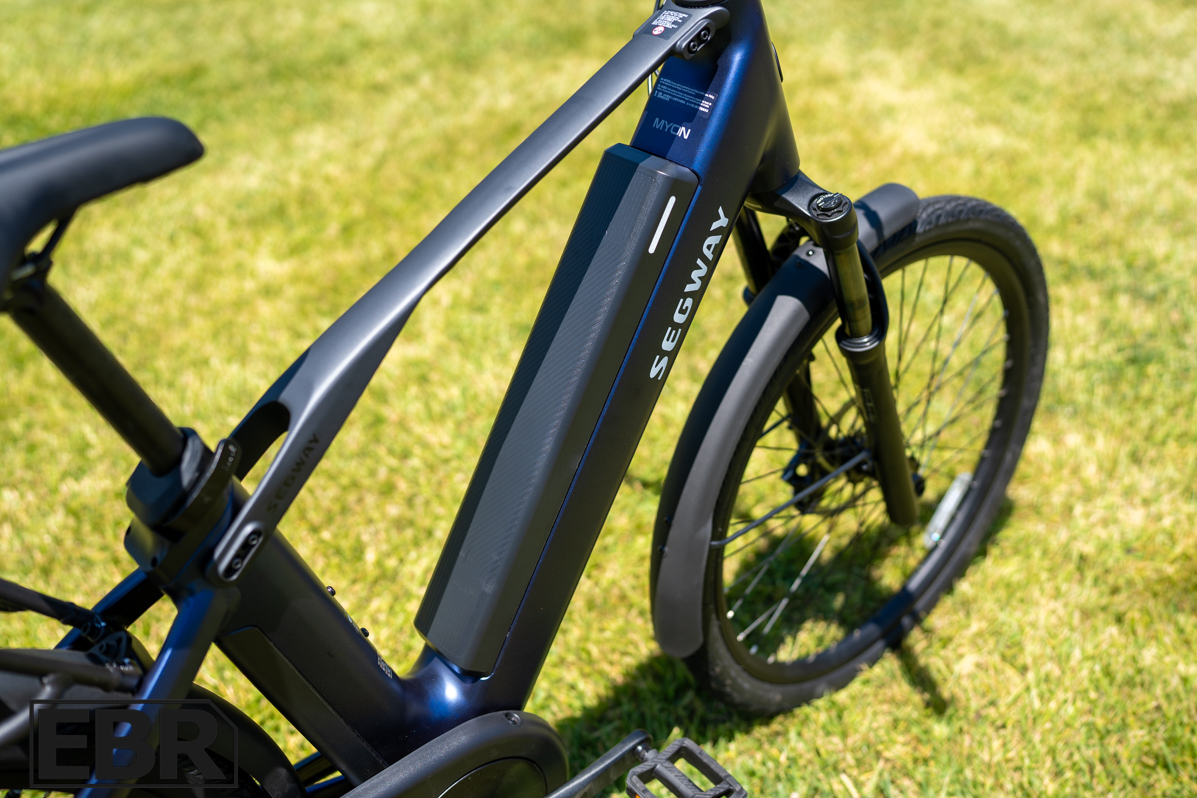
The battery is a 48V, 15Ah pack which works out to 720Wh. It’s removable, UL 2271 certified, IPX7 water resistant, and it monitors temperature and voltage at the cell level. There’s also a small secondary battery in the bike that keeps Bluetooth, GPS, and Find My alive if the main pack goes flat, which matters on a bike this dependent on connectivity. The charger is rated at 1.3A and maxes out at 3.9A, and it took about five and a half hours to go from zero to 100% after our range test, right in line with Segway’s estimate. With this much technology on board I’m a little surprised it isn’t just a 4A fast charger.
Range / Battery
Range Score: 9 / 10
Min Assist: 82.1 Miles
Max Assist: 41.26 Miles
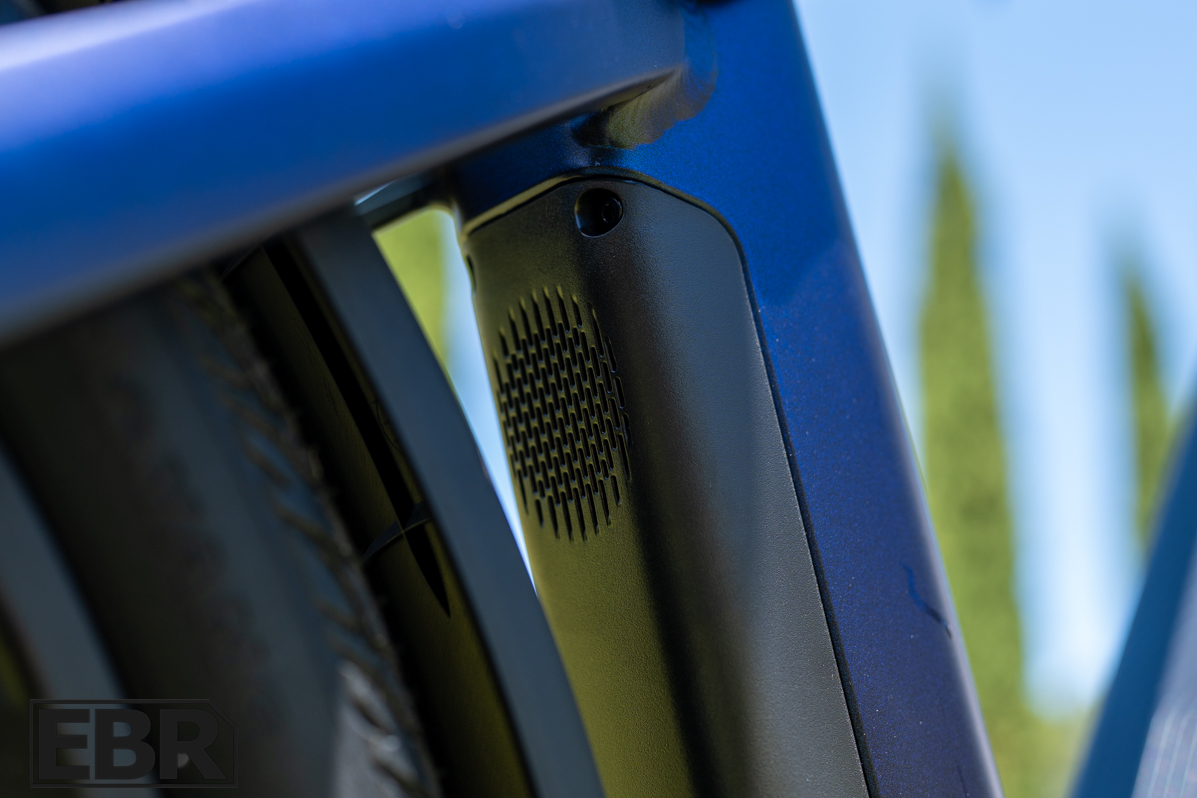
Segway estimates up to 80 miles, and that’s pretty much exactly what we got. On minimum assist we rode 82.1 miles with just under 2,000 feet of elevation gain (so that wasn’t a flat lap around a parking lot). Then we turned around, put it on full power, and still got 41.26 miles.
That’s a strong number for maximum assist on a bike that will hold 28 mph.
Two things are working together here. The first is the smaller motor. A 500W hub draws less power than the 750W motors this bike competes against, and pairing it with a 720Wh battery puts the Myon well ahead of the rule of thumb I use, where motor watts should roughly equal battery watt hours. The second is that this bike pedals well. The 27.5 x 1.95-inch tires roll fast, the frame is stiff, and the torque sensor and drivetrain work together instead of surging and cutting. You’re not fighting the bike, so you’re not spending battery to make up for it.
For a commuter with a 20-mile round trip, you have more than enough battery even if you want to turbo it to and from the office at 28 mph.
Components
Components Score: 8.5 / 10
 |
 |
 |
|
At $1,999 I expect hydraulic disc brakes, a drivetrain at Shimano Altus level or better, a decent suspension fork, and a full set of fenders, lights, and a rack. The Myon clears that bar, and in a couple of spots it clears it by a wide margin.
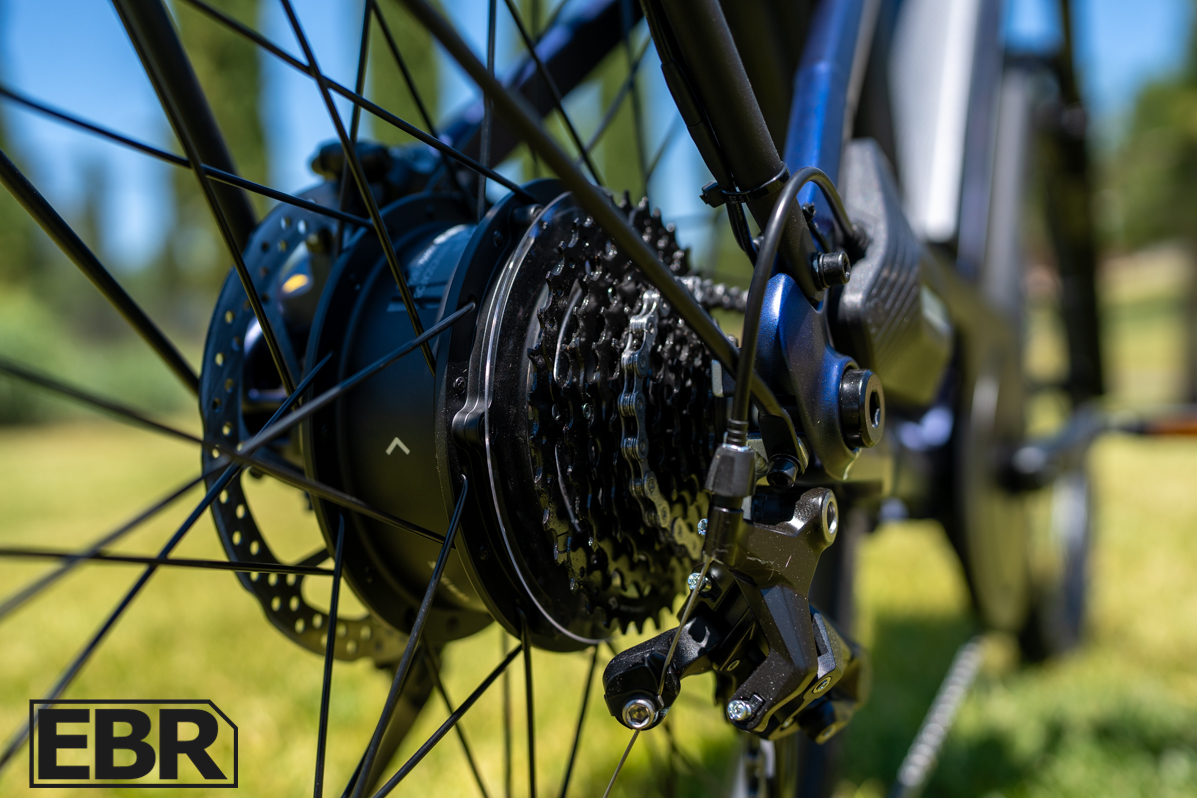
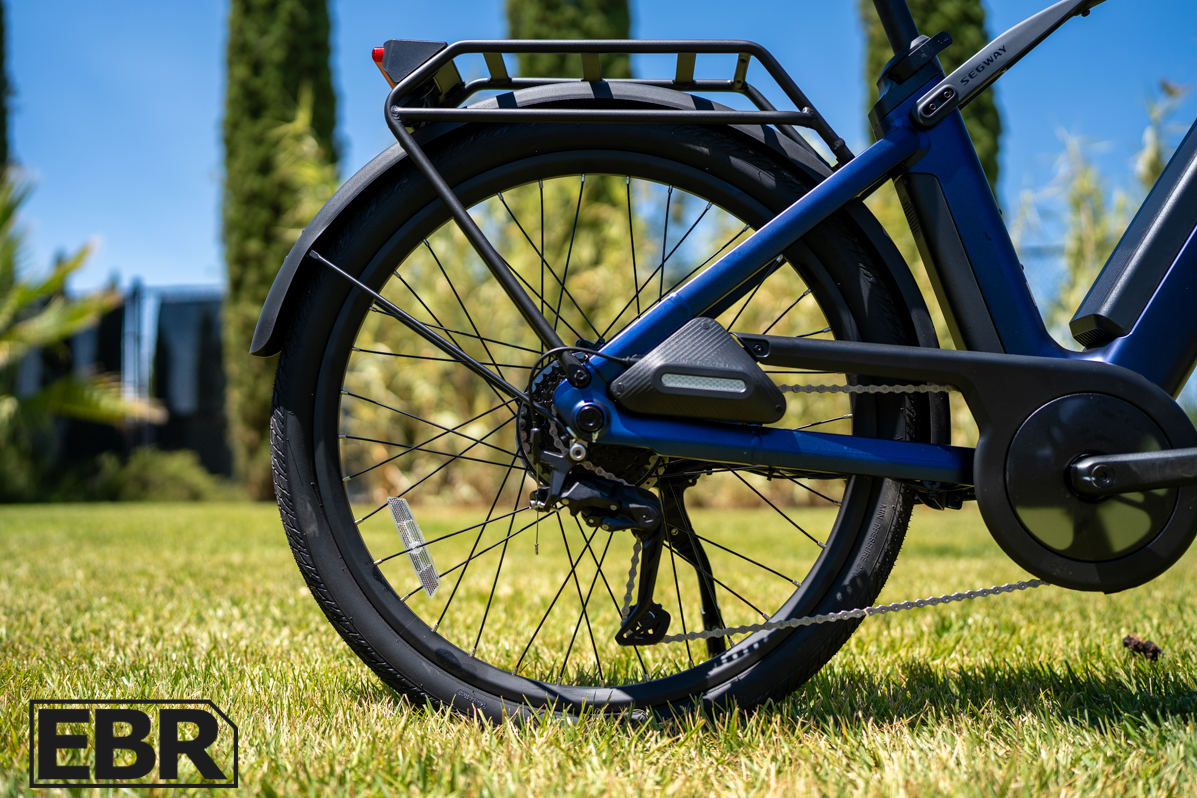
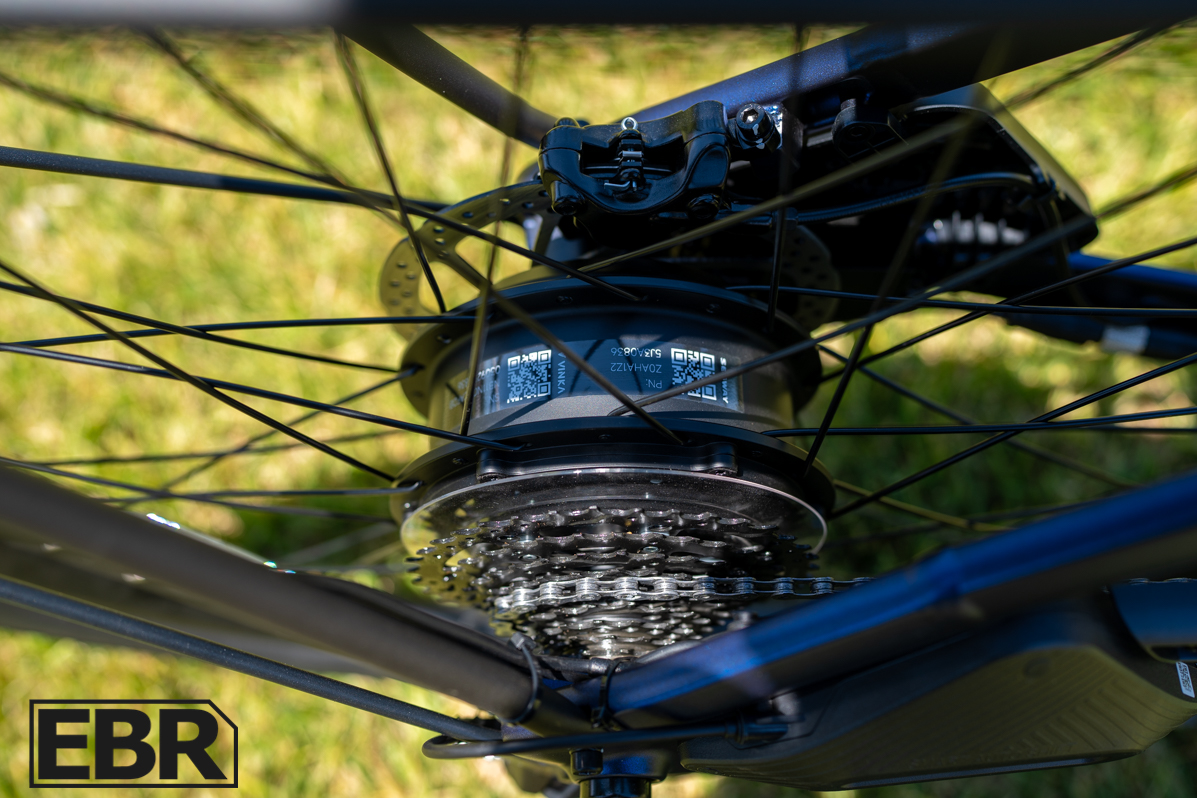
The Shimano Cues nine-speed drivetrain is the part I like most from a mechanic’s standpoint. It’s paired with Segway’s own electronic shifting module, housed in a triangular case that sits on top of the seat stay, with a 46T chainring up front and an 11-36T cassette out back. Segway did not use Shimano’s Di2 system here.
They wrote their own algorithm, added their own sensors, and paired all of it with a standard cable-actuated Cues derailleur. There’s a practical upside to that: if you break it, it’s easier and a lot cheaper to replace than Di2. Electronic shifting with both manual and automatic modes at this price is not something I see often.
The brakes are two-piston hydraulic discs with 180mm rotors front and rear at 1.8mm thick. Segway lists them as their own, and on the bike they’re unbranded. They look like off-brand Tektro to me. Our brake test is rough on a system, seven or eight hard stops from speed with the levers dragging for 30-plus seconds, and they held up well. There was a slight amount of fade at the very end and a bit of fishtailing that I corrected with more front brake, and that’s about what I’d expect from this setup. I feel safe on them and I wouldn’t swap them out. If Segway wants to make a good system better, go to a larger front rotor or move to 2.3mm rotors.
The fork is 80mm of travel on 32mm stanchions with a thru-axle, and going thinner on the stanchions saves weight without costing much stiffness. The tires are 27.5 x 1.95-inch Chaoyang units built for Segway with an urban commuter tread that still has enough bite for slick pavement. The fenders are hard nylon front and rear, sturdy without rattling, and they fade into the background the way fenders should. The rear rack comes standard and is rated to 55 lbs.
A few smaller things worth calling out. The chainring guard up front will keep grease off your pants, and I say that as someone who used to ride to an office and tuck his slacks into his socks.
The cable management is clean for a bike with this many electronics, and with the battery out you can reach the connectors without fishing around, which will matter the first time somebody needs to swap a control pod.
The one omission is a chainstay guard. I touched the chainstay and came away with grease, and you’ll get some chain slap and paint chipping there over time. The clutch derailleur cuts that down, but it’s an easy addition.
At 74.9 lbs on my scale, with slime in the tires, against Segway’s listed 72.75 lbs, this is still a heavy bicycle. It’s a big improvement over Segway’s first bikes, which were heavy enough that they didn’t really feel like bikes to me, and it lands right in line with the other class 3 commuters we’ve been testing lately. It goes up into the stand without a fight and the battery comes out easily.
Standing back from it, Segway specced this bike well, and I can take it into a shop and have it serviced with parts a mechanic recognizes. Component-wise at $2,000, there’s a lot of value here.
Screen / User Interface / App
Screen / App Score: 8.5 / 10
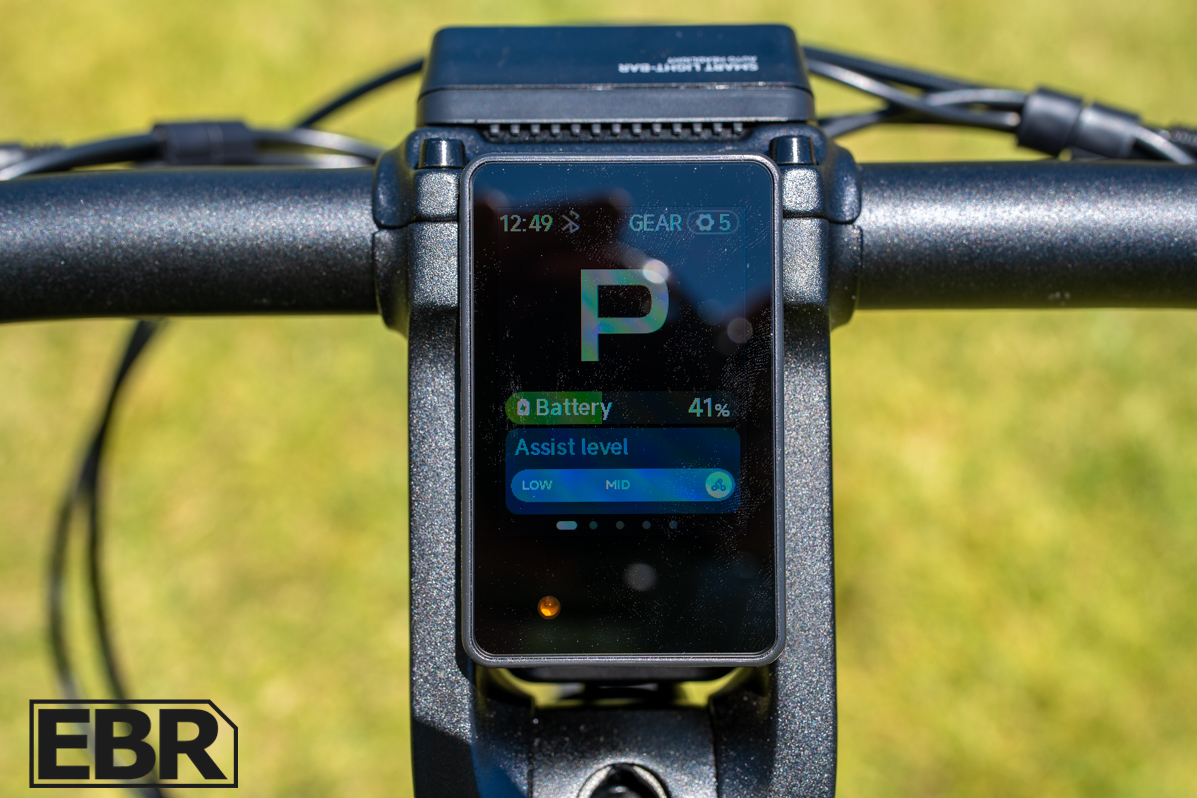
When it comes to the display and app, Segway built something closer to what you’d expect out of a car, and the features are ones I’d use rather than ones that sound good in a spec sheet.
The screen is a 2.4-inch full-color HD display that gives you speed, battery percentage, assist level, and whether you’re in manual or auto shifting along with the gear you’re in. Arrow over with the five-way pod and you get turn-by-turn navigation right on the dashboard, which I love on a commuter. You can also switch between Class 1, Class 2, Class 3, and Hybrid from the menu, so you can set the bike to match your local laws without opening your phone.
The app is where it gets deep. GPS and Apple Find My are both in there, along with a loss mode that locks the bike down remotely, and AirLock, which unlocks the bike when I walk up and press the power button because my phone is paired.
Battery settings show voltage, temperature, and full discharge cycles, and you get an alert if the pack drops below 10% while the bike is sitting. You can micro-adjust the derailleur from your phone, pair the rearview radar, and run over-the-air firmware updates. There’s also a beta section called the Segway Mobility Lab, which tells me this bike will keep picking up features after you buy it.
Two honest notes. You can set the Myon up once and then get on and ride, but you have to spend the time up front, and if a phone app is the last thing you want between you and a bicycle, this isn’t your bike. Segway also notes that the GPS and remote security features require a subscription (which is hard to get around since they are using telecom’s networks to provide that service).
Bike Model Options
There’s one Myon, offered in two sizes and three colors. The XS/S and the M/L cover a claimed fit range of 5’3″ to 6’2″, and I appreciate that Segway kept the top end honest. Plenty of brands would have called this a 6’5″ bike. We had a 6’3″ rider on the M/L and it worked, but above that the seatpost runs out of travel before you get full leg extension.
The colors are Skyscraper Grey, Shoe Suede Blue, and Minty Fresh, and I like that Segway had a little fun with the names instead of just listing grey, blue, and green.
The frame ships as a step-through, and this is the part I haven’t seen anybody else do:
For $100, Segway sells a removable top tube that turns the same frame into a high-step. I’ve talked to a lot of riders who won’t buy a step-through because of how it looks, and this lets one frame serve both of them. It adds a bit of frame stiffness, it gives you extra boss mounts for a bottle or gear, and if you decide later that you’d rather have the step-through, you take it back off.
The other $100 option is the rearview radar, and I’d add both. At the $1,799 sale price it’s going for right now, that’s an easy call. However, if you’re only buying one, buy the radar.
Is the Segway Myon Worth Buying?
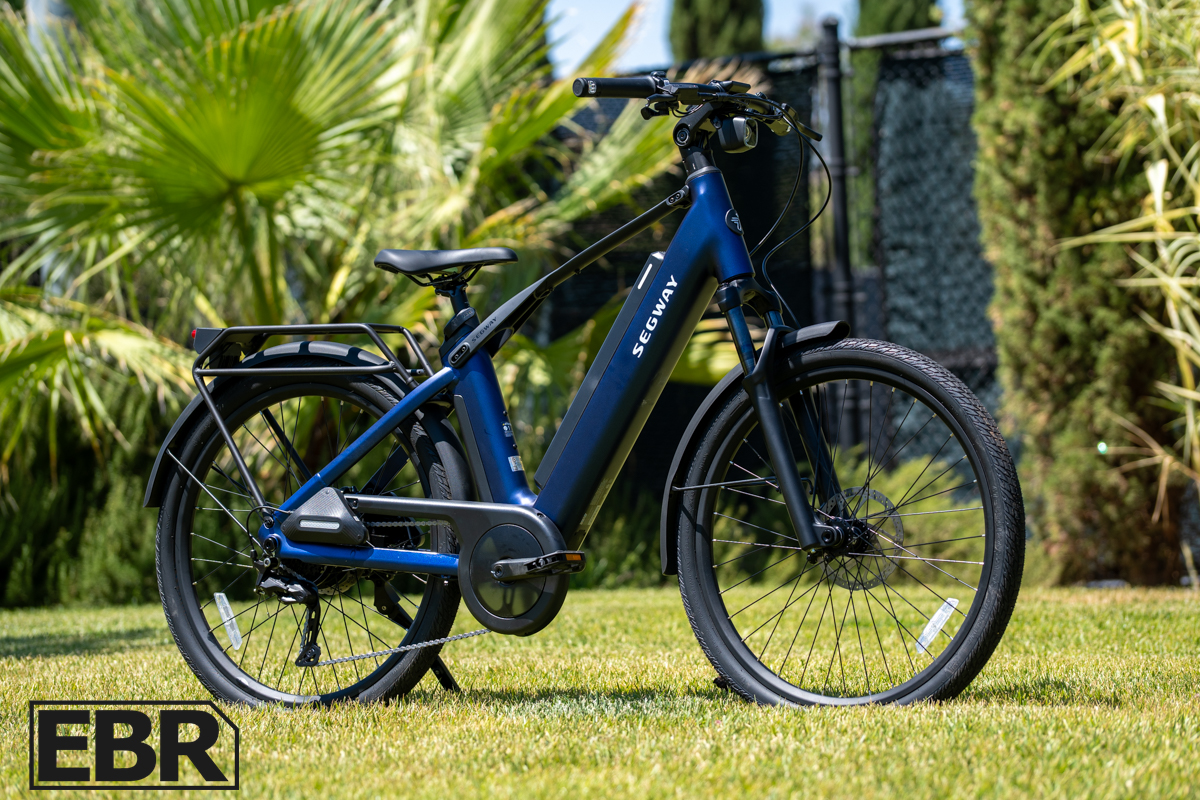
I went into this review expecting a technology demo with pedals, and what I got is a fun-riding bicycle loaded with tech.
It pedals fast, it rides smooth, and the frame and geometry are what a class 3 commuter should be. The 500W motor climbs better than its rating says it should, it has great range, and the Shimano Cues drivetrain with electronic shifting is something I’d expect to find on a more expensive bike. At $1,999, or $1,799 as it’s selling right now, that’s a lot of bicycle.
This one is for the technology-minded commuter, for anybody with a longer ride who needs the range to hold up at speed, and for the person who hasn’t been on a bike in a decade and would rather let auto shift pick the gears. If the turn signals, the radar, and Find My sound like features you’d use, you will. It’s not for the rider who wants to buy a bicycle and never open an app. You can set the Myon up and forget it, but you have to set it up first.
I’d still like better grips and a second set of turn signals on the rear, and riders in steep terrain would want a 750W version if Segway builds one. None of that changes my recommendation. I’m a pretty big fan of this bike, and hope that other brands take note of some of the features and technology that Segway has built here.




Reader Interactions