

The e-bike market often feels flooded with limited choices, forcing riders to accept trade-offs they’d rather avoid. Want a fat tire bike? Cool, just be okay with 85+ pounds of heft. Looking for a sleek, lightweight commuter? No problem, just be okay with small batteries and weaker motors. It just always feels like you have to give up something you want.
While there’s no magic bullet for the perfect “do-it-all” bike, there is one segment of e-bikes that does its best to give you it all without sacrificing too much.
That sweet spot has a name in e-bikes: the SUV. Why SUV? Much like the popular Sport Utility Vehicles, this category bridges the gap between a mild-mannered city commuter and a smile-inducing off-road trail bike, letting you extend beyond your city limits when you’re feeling frisky.
Meet the Magnum Peak 2.0, an SUV-style ebike that balances the delicate line separating the cruisers that struggle off-road, the fat tires that feel too heavy to have any real fun, and the outrageously priced, hardcore eMTBs that need a 2nd mortgage just to get your hands on them.
My Experience Riding The Magnum Peak 2.0 E-Bike
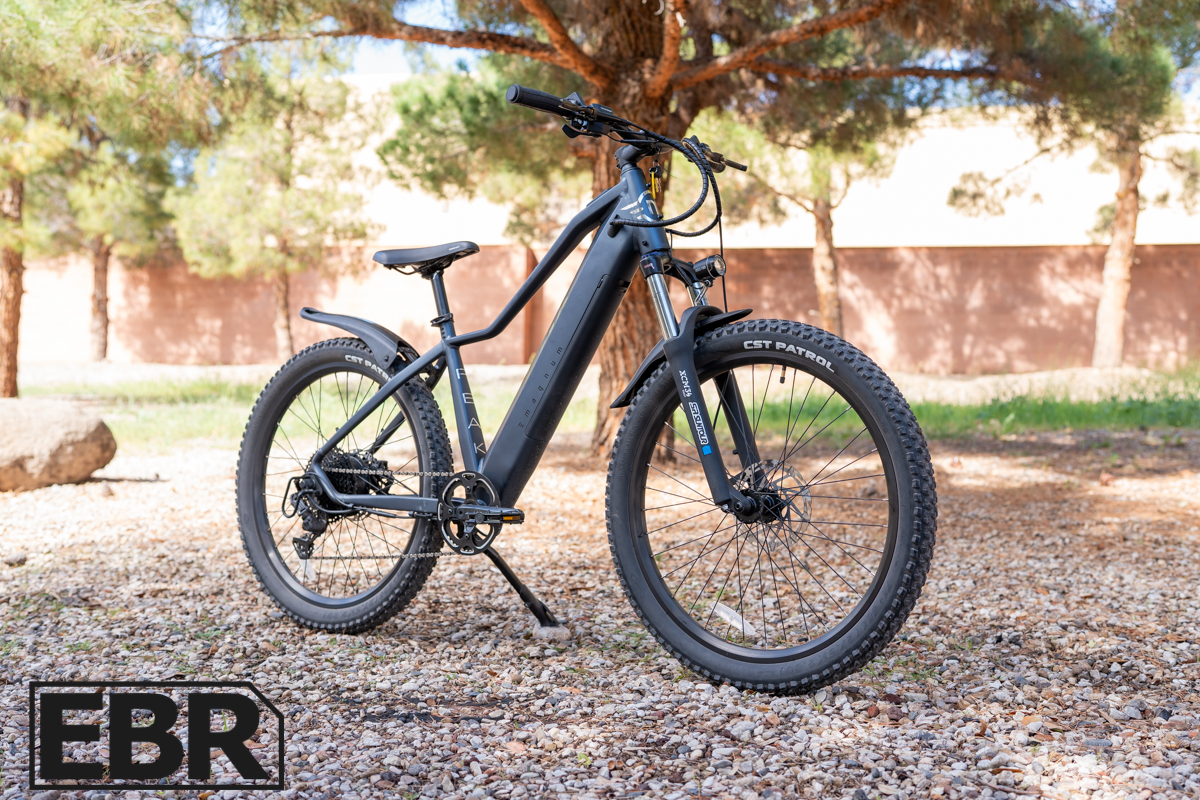
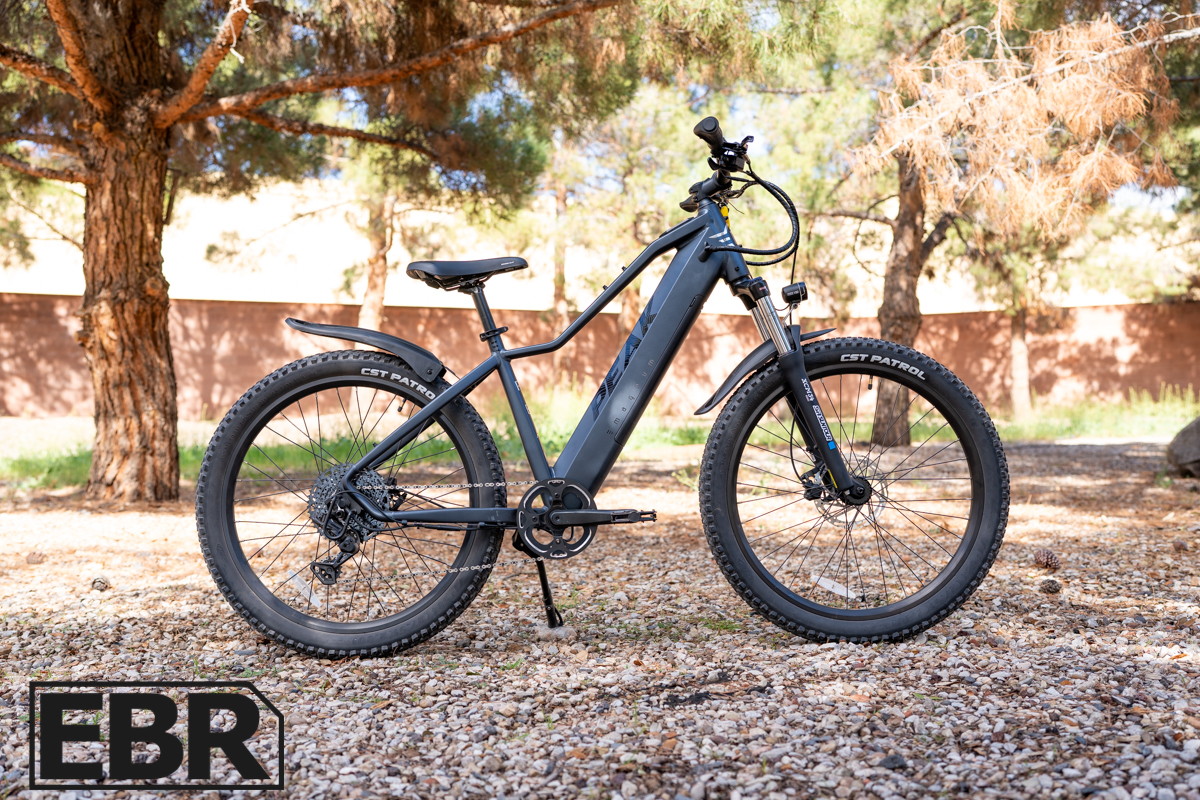
The Magnum Peak 2.0 has a bold stance that can’t be ignored. Between the chunky 2.8” off-road tires, the 140mm front suspension fork, and the beefy 720Wh battery tucked neatly into the downtube, it looks ready for business. The sleek Velofox DM13 color display is integrated right into the top tube, complementing the no-nonsense graphite colorway and black accents. If that’s too grim for your taste, they offer a few other colors, but personally, this one fits my style perfectly.
Hopping on the Peak, you’ll notice the mid-step frame has a slanted downward tube to help you get a leg over. The riding position is exactly what you’d expect from a bike with off-road chops: a slight forward lean that balances your weight between the saddle and the ergonomic lock-on grips.
After dialing in my tire pressure and adjusting the fork’s preload and compression, I spent several weeks testing it in every scenario imaginable, from the daily commute to off-road escapades on Southern Utah’s beautiful (but unforgiving) gravel roads and green-line MTB singletracks. If you’re ever in Southern Utah and want a mild but insanely fun green line that’ll make any rider smile, check out the Bearclaw Poppy Navajo Trailhead.
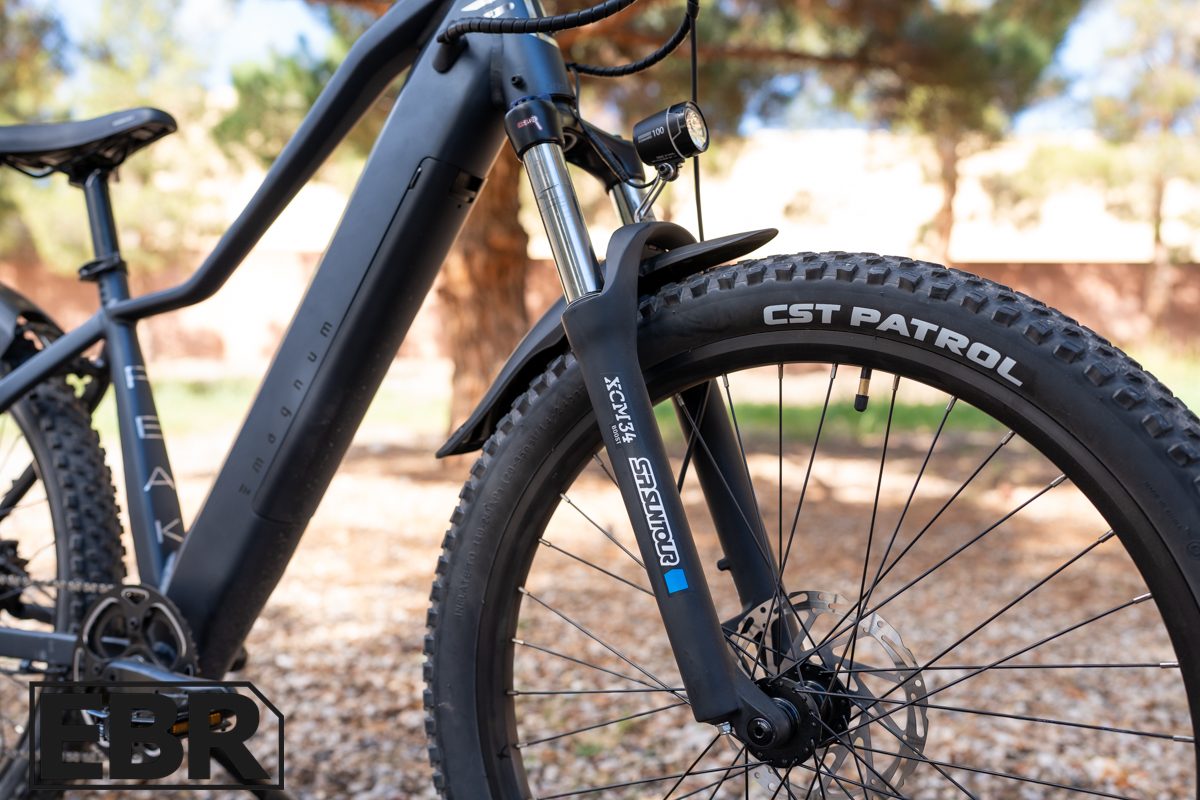
While the Peak 2.0 isn’t a dedicated “eMTB,” it holds its own on beginner singletrack. You’ll feel that weight in the rear hub motor, sure, that’s expected, but the frame geometry, CST Patrol tires, and 140mm of forgiveness from the SR Suntour fork team up for some serious fun on tamer trails. The motor power is something you notice early on.
The Peak 2.0 features a 500W rear hub motor (peaking at 750W) that pushes 65Nm of torque. While those numbers might look modest on paper, the real-world feel is surprisingly capable. Acceleration is solid and peppy, and it handles hills with ease using six levels of pedal assist. The only time I felt it hunting for more power was on sustained climbs with gradients over 10-12%; it still climbed, just not “arrogantly.” On those steeper climbs, the motor works harder and becomes more audible. It’s not loud, but it’s not silent like a 250W city bike motor, either. It’s a typical e-bike hum you’re likely used to.
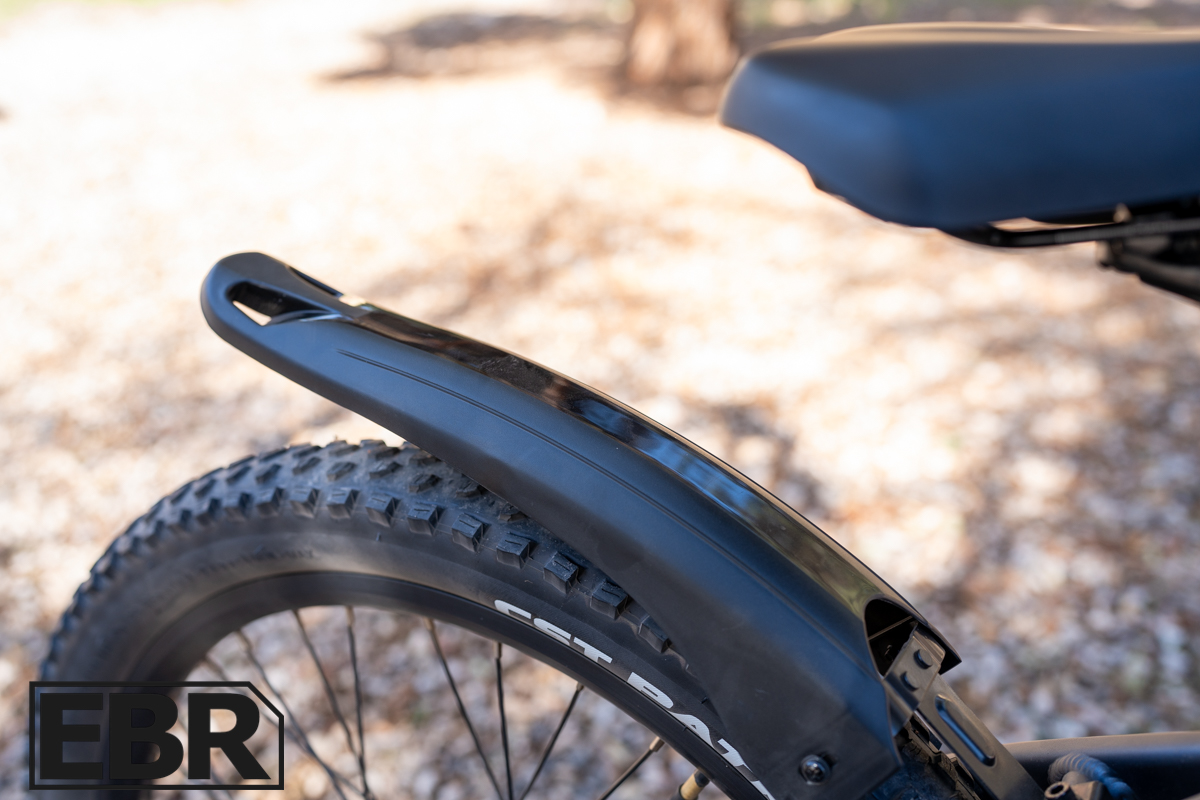
The integrated top-tube LCD keeps the handlebars clutter-free and looks premium. You can quickly jump into settings to switch from Class 2 to Class 3 (unlocking 28 MPH speeds). It comes “SUV-ready” with front and back “lite” fenders (off-road focused), a 100-lumen adjustable headlight, and plenty of mounting points for a rear rack or bottle cages. Overall, the Magnum Peak 2.0 hits that “sweet spot” in the affordable e-bike segment. It lets owners be mild or go wild, and that’s exactly what a good SUV e-bike should do.
Range
Estimated Range (from Magnum): Up to 50 miles
Real World Range Test Results:
- Eco Mode Range Test: 68 miles
- Hyper Mode Range Test: 35 miles
The advertised range from Magnum is a vague “up to 50 miles,” and that’s not a knock to them; nearly all bike brands do the same. The reason is that the number of variables affecting an e-bike’s battery performance and range is much higher than you might think. From how many times you stop and start on a ride to elevation changes, rider weight, ambient temperature, riding style, and even wind direction and speed, it’s tough to call out a single number for everyone.
The big frustration isn’t the estimations from brands themselves, but rather the overly-optimistic numbers that look great on paper only to annoy an owner who can never actually reach them. Entering the range test, our question was whether Magnum kept it conservative or over-played their hand, and we aimed to find out.
Because of those variables, we opted to run two range tests. The first was on the lowest level of assistance in Eco mode, and the second was on the maximum assistance level, which, in the Peak’s case, is the affectionately named Hyper mode. Ironically, that’s the same mode I must have been in as a kid; at least, that’s what teachers told my parents. I digress.
Our test conditions were fairly typical of what most folks encounter in day-to-day rides, starting with a rider weight of around 190 lbs on a relatively flat course with typical rolling gradients. We conducted the test on a city bike path complete with walkers, joggers, other cyclists, and a few stops along the way to reflect real-life conditions.
In the first run using Eco mode, we covered a pretty massive 68 miles, which ended up being a pleasant surprise. After a night of rest and recharge, we headed out the next day for the second range test in Hyper mode using the same conditions. On this test, we kept the power at its maximum, going as fast as we legally could for the entire run for a true stress test of the range capabilities. After a couple of hours of riding, we had covered 35 miles before the battery finally waved the white flag and gave up.
When we step back and look at the numbers, the range and overall battery efficiency of the Peak 2.0 left us feeling thankful for Magnum’s conservative estimation. It shows that even off-road bikes can cover some serious distance before needing a recharge. It is worth noting that both tests were conducted using the torque sensor mode, as the gradual power delivery definitely helps provide better range. Had we used the cadence sensor, we certainly wouldn’t have gone as far.
Power (Motor & Battery)
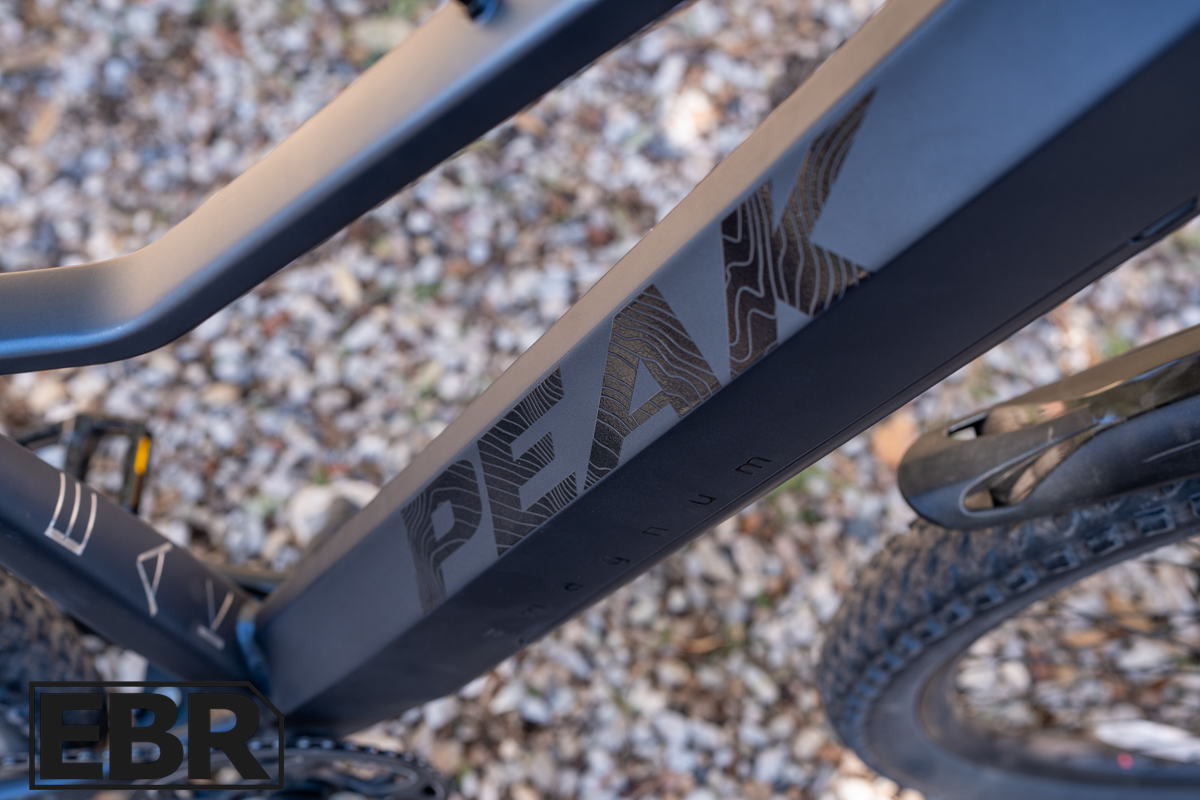
The power delivery of the Magnum Peak 2.0 is handled by a 500W rear hub motor that peaks at 750W and pushes 65 Nm of torque. As I mentioned earlier, these aren’t numbers that dropped my jaw when I read them on paper, but the actual felt power and execution does feel like it’s punching above its weight class.
One of the best features here is the inclusion of both a torque sensor and a cadence sensor. You can toggle between them in the display settings with just a few taps. If you aren’t too sure about the difference or why it matters, don’t get too caught up in my e-bike nerdiness, just look at it like this: torque sensors are great for commuting when you want the motor to feel fluid and match your natural pedaling effort, while cadence sensors are what you want when you need immediate, punchy power to pop over a log across the trail.
Are these rules set in stone? Nope. You can use each however you wish; those are just the most typical use cases. But hey, the world is yours, kid, go wild, you’ve got both! Most brands make you choose one or the other; I love it when brands give you both.
The battery is a 48V system with 15 amp-hours and a total of 720 watt-hours. This battery is UL 2271 compliant, as tested by Advanced Compliance & Testing (ACT). It packs Samsung cells, and the entire battery fits securely in the downtube for a nice look. The battery can be easily removed or secured in place with the provided keys. This is a nice feature for those who work downtown and might worry about it “growing legs” and running away when no one is looking, or those who live up north and want to keep their battery indoors to extend its life in brutally cold conditions.
The battery itself weighs about 9 lbs and has two little features I’ve grown to appreciate: a flip-down handle for easy carrying and a small button that, when pushed, illuminates a 5-bar meter letting you know the bike’s remaining charge.
Components
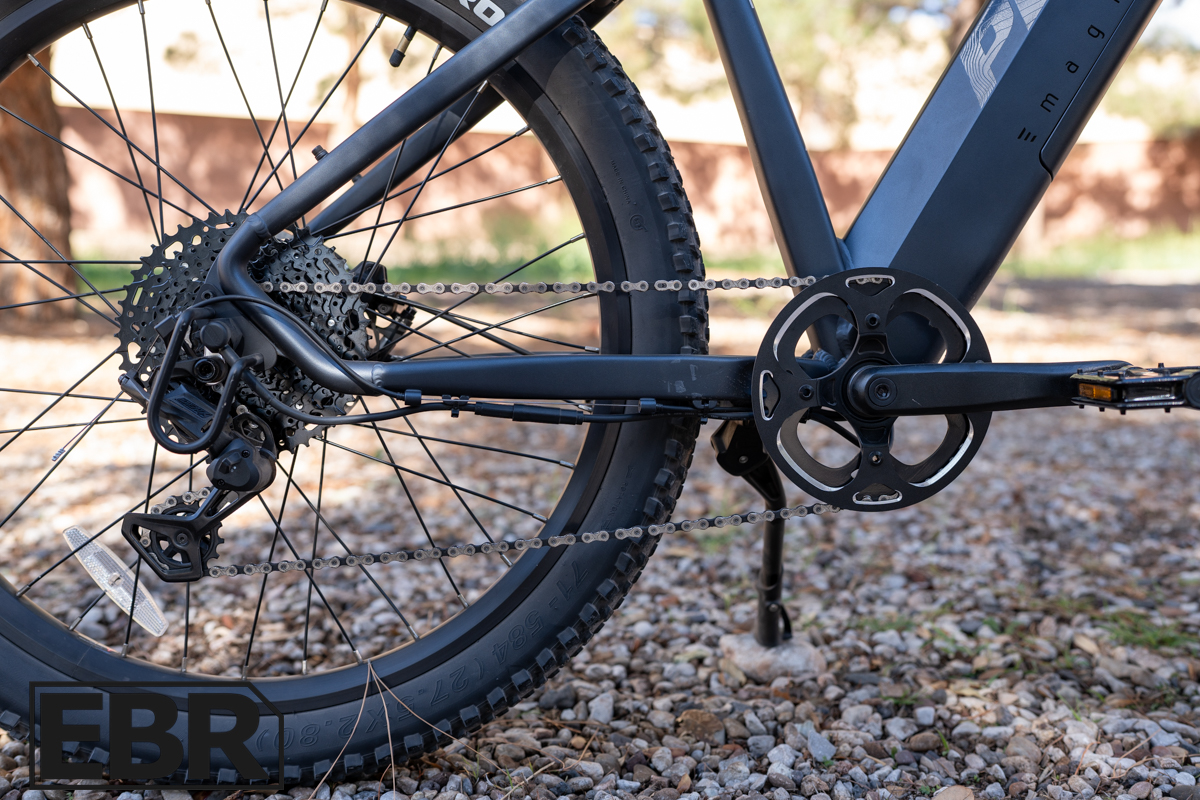
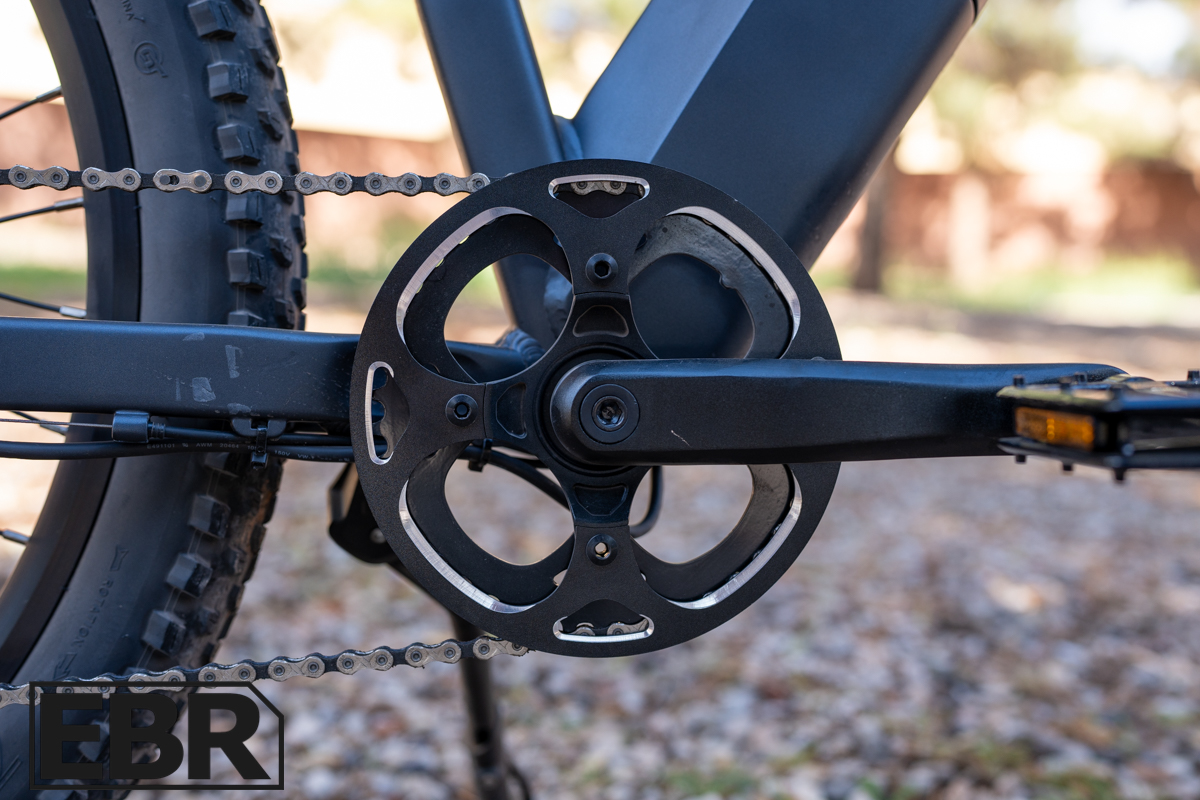
The components on the Magnum Peak 2.0 are a nice mix of value and performance. Up first is the heart of the components, the drivetrain. The MicroShift Advent 1×10 is a solid pick. It’s not a flimsy, “bottom of the parts barrel” derailleur. Because it’s clutched, you get better spring tension, crisper shifts, and a massive reduction in chain slap, meaning that pretty graphite paint on your chainstays stays intact.
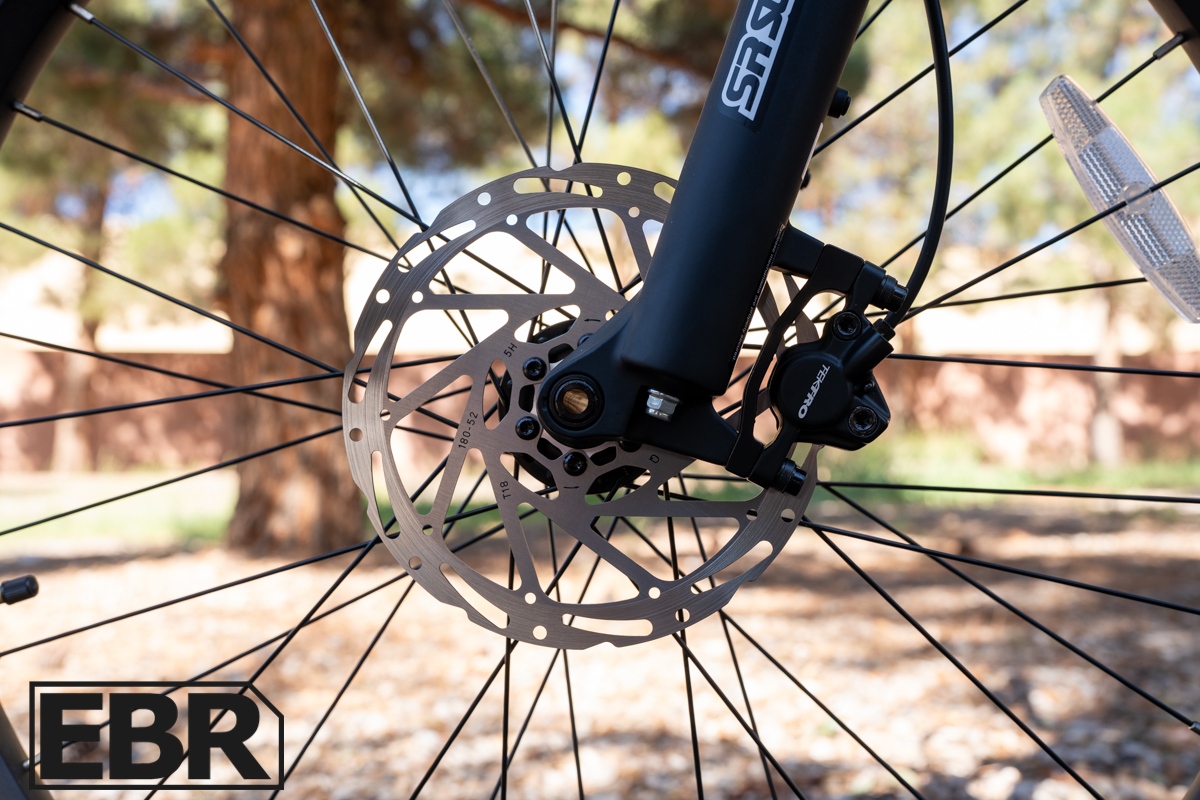
Braking is covered by the trusty Tektro HD3520 hydraulic disc brakes. These are seen pretty often in e-bikes and for good reason: they have excellent stopping power, they aren’t overpriced, local bike shops know them, and they are equipped with a safety feature referred to as “e-cutoff” sensors. This is a signal sent from the brake lever to the motor as soon as you start to brake to cut any pedal assist or throttle so you can focus on a safe stop, not fighting your motor along the way.
The wheels are 27.5-inch alloy wheels wrapped in CST Patrol 2.8-inch wide mountain bike tires. These use standard tubes with Schrader valves, and the setup is not tubeless compatible. Up front, there’s an SR Suntour suspension fork, the XCM 34 with BOOST hub spacing, 34mm stanchions, a thru-axle, and a generous trail-ready 140mm of coil spring travel to smooth out the route, whether that’s city curbs or backroad bumps.
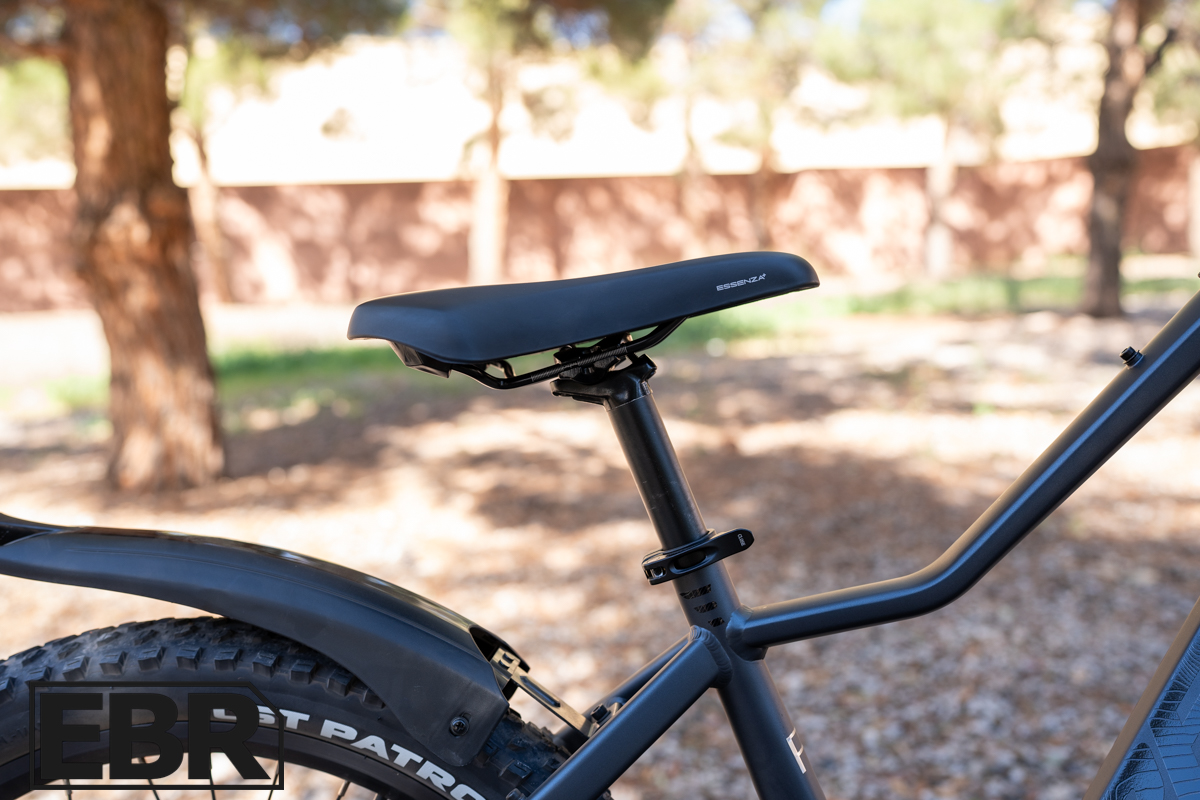
Contact points are all straightforward and properly picked. The saddle is a Selle Royal Essenza + GEL; it has micro-adjust rails to move the saddle back and forth to dial in a better fit. The seatpost is a 30.9mm alloy post with roughly 6 inches of adjustability via the quick-release lever. The pedals are alloy flats with a standard 9/16-inch spindle, and the grips are lock-on ergonomic platform rubber grips.
Finally, up in the cockpit, you have a Promax alloy handlebar that’s 29 inches in length with a center diameter of 31.8mm. The handlebar has a slight rise of roughly 15-20 degrees for a bit more upright comfort. Finishing off the cockpit are the push throttle and MicroShift Advent trigger shifters on the right, and over on the left is the 4-button control pad for the display.
Screen / User Interface / App
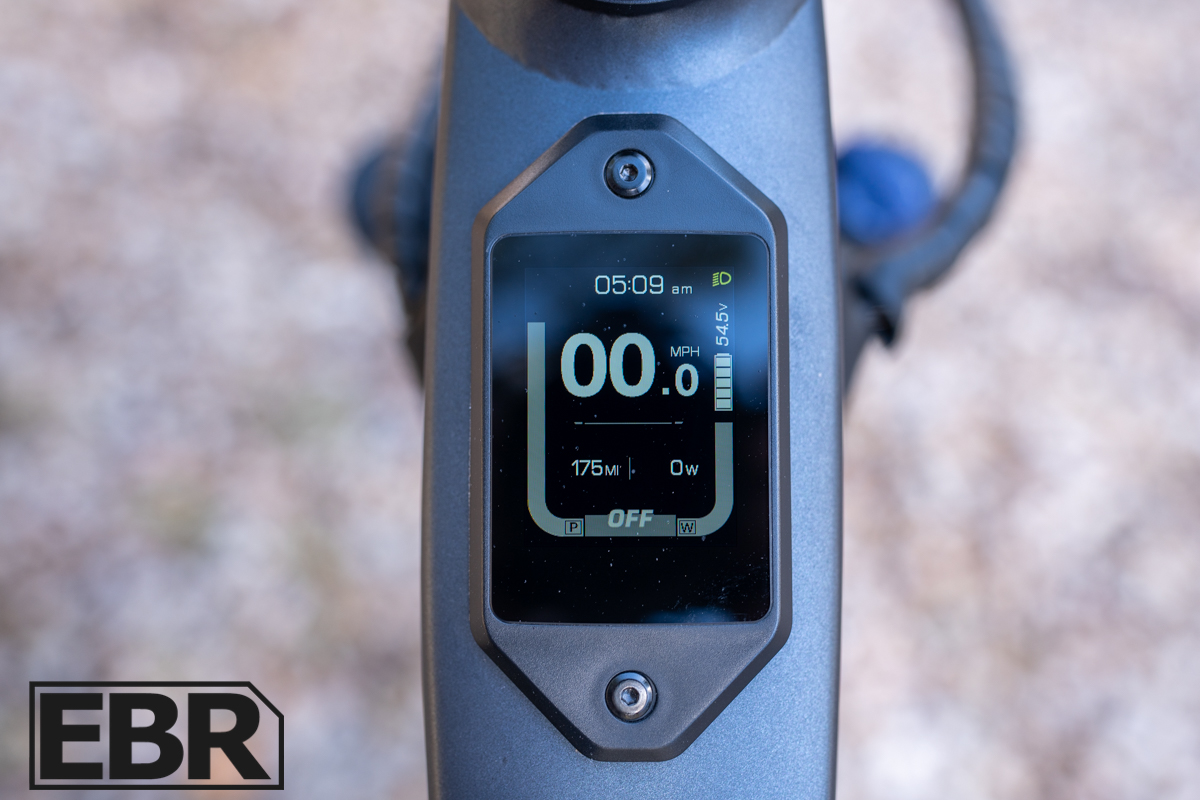
The display on the Magnum Peak 2.0 is the Velofox DM13 LCD color display with about a 2-inch screen size. Mounted into the top tube of the frame, it gives the Peak a more premium look and keeps things cleaner overall up front.
The data on the screen is straightforward, yet plentiful, where you have time, speed, voltage, a battery indicator, wattage in numbers, wattage in a dynamic bar graph, power in a dynamic bar graph, an odometer, and the pedal assist level in use. Scrolling to the next data screen by tapping the centered ‘M’ button on the control pad, you can see other useful metrics like your average speed, max speed, trip meter, and odometer.
If you head into the settings menu of the display, you can change the class of the bike from Class 2 to Class 3. In Class 3, you get the pedal assistance up to 28 mph and the throttle caps at 20 mph, whereas in Class 2 mode, they both cap at 20 mph. Just remember you must long-press the ‘M’ within 2-3 seconds of powering on the bike; otherwise, you might go crazy thinking it’s not working… ask me how I know.
While there is no app for Magnum e-bikes, I found the Velofox display to be easy to read in all light conditions, neatly integrated into the frame, and it offered all the settings and adjustments I would want on any given day of a trip out on the Peak 2.0.
Magnum Peak 2.0 Model Options
Model options on the Magnum Peak 2.0 are pretty straightforward, but there are a few choices to make when you order one.
First up, there is only one frame size. While that fit range is not advertised (at least in its pre-production status at the time of writing this), I can say the frame sizing is in the medium-to-large range for most riders. I’m 5’11” and feel that anyone from the low end of around 5’2” to the high end of about 6’2” would likely feel just fine. Keep in mind there is no adjustable stem; you have the seat post and saddle rails to adjust for dialing in a fit, but the 15” reach keeps it accessible for most folks.
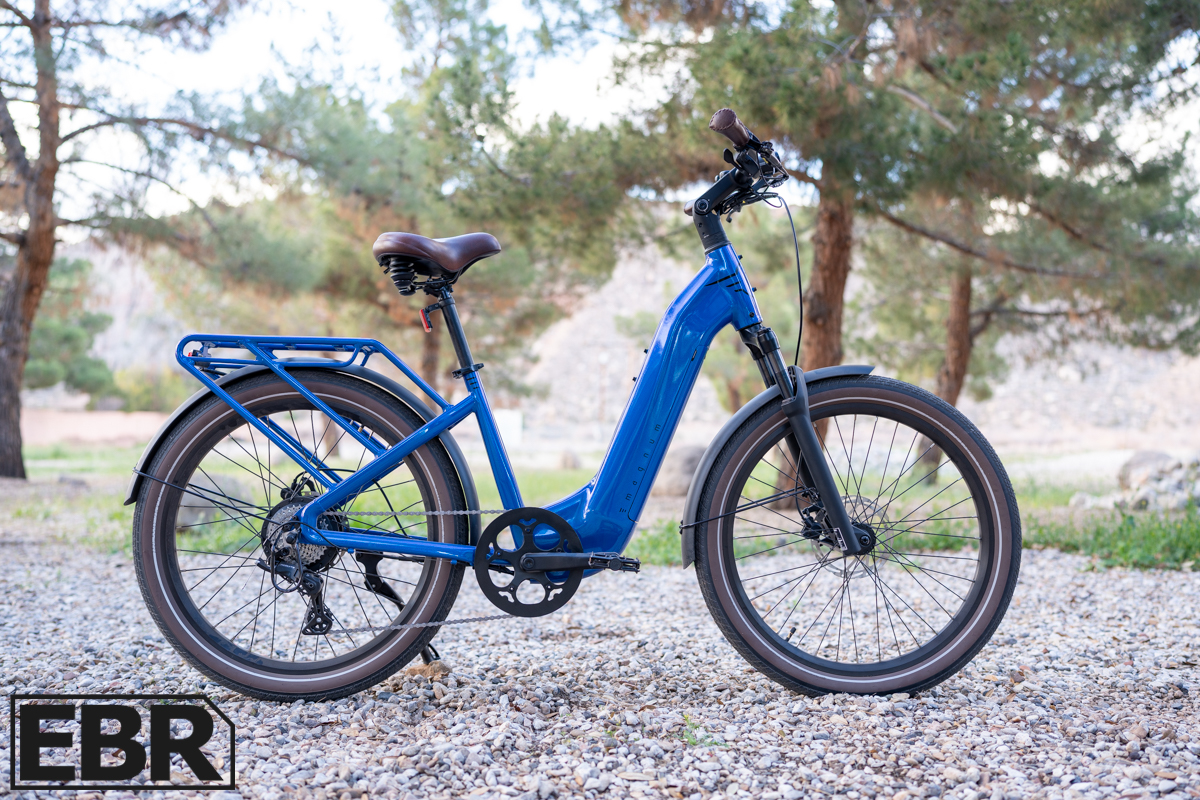
While frame sizes are limited, you have three different colors to pick from: a Blue option, a Graphite (dark grey) as pictured in this review, and a “Stone Blue” option that looks like a light blue mix of graphite and a traditional blue.
When it comes to included accessories, the Magnum Peak 2.0 comes with enough to get you rolling and a few more to sweeten the deal. You get light fenders for both front and back tires, which have a smaller footprint over the wheel and lean more toward mudguards for off-road use, a kickstand, a 2A charger, and an adjustable-angle LED headlight with a 100-lumen rating.
Should you want to expand on those accessories, the Peak 2.0 has optional add-ons like a rear rack. The Peak has pre-fabricated frame mounting points for the rack, which also comes with a tail light that is pre-wired to be installed for use with the headlight. Additionally, if you’re not a fan of the light off-road fenders included with the Peak, you can opt for full-coverage fenders for more traditional rain and puddle protection in town. The Peak 2.0 also has a mounting point on the down tube for a water bottle cage or other accessories.
Finally, the Magnum Peak 2.0 comes with a two-year warranty covering the frame, electronics, and key components for some extra peace of mind.
Is The Magnum Peak 2.0 Worth Buying?
When it’s all said and done, the Magnum Peak 2.0 falls into the “sweet spot” for those who don’t want to fully commit in three areas: you don’t want an 85+ pound fat tire bike due to the sheer heft and overall footprint; you don’t want a strictly lightweight, sleek city commuter or cruiser because you want a little off-road fun from time to time; and the idea of spending over $3k–$5k on a genuine, singletrack-focused eMTB just seems silly. That’s where a bike like the Peak 2.0 really shines.
The SUV category balances that sweet spot very well and doesn’t fall short in its ability to handle nearly any task you need (within reason).
So, who is Magnum Peak 2.0 not for? I would caution those who are looking to get into serious singletrack mountain biking with aggressive downhill handling, jumps, and technical ascents. In those cases, save your pennies for an eMTB that is specifically made to handle those tasks.
However, if you’ve been looking for that “unicorn” e-bike that will let you commute all week and then explore gravel backroads or the occasional beginner MTB trail, the Magnum Peak 2.0 is certainly worth a look. It fills that gap nicely and, at $1,899, does so at a very approachable price in today’s inflated market.
Pros
- An SUV style e-bike that bridges the gap between a bike made for city commutes and daily grinds with the grit needed for weekend adventures past the city limits.
- Having a switchable torque and cadence sensor that users can switch between lets owners have the best of both worlds without sacrificing one for the other.
- A frame-Integrated color display gives it a premium feel and reduces clutter on the handlebar.
- UL 2849 and UL 2271 Compliance as certified by ACT to both the bikes electrical system and the batteries internals.
- A MicroShift Advent 1X10 drivetrain that has a clutched derailleur means better shifting and less dropped chains.
- Three colors to pick from with several included accessories and optional accessories allow the Peak 2.0 to be whatever type of ride you need it to be.
Cons
- One Frame size and no adjustable stem might leave some riders left out in terms of getting the right fit.
- While the Peak 2.0 certainly has the ability to hold its own offroad, this should not be used on technical or advanced MTB trails.




Reader Interactions