
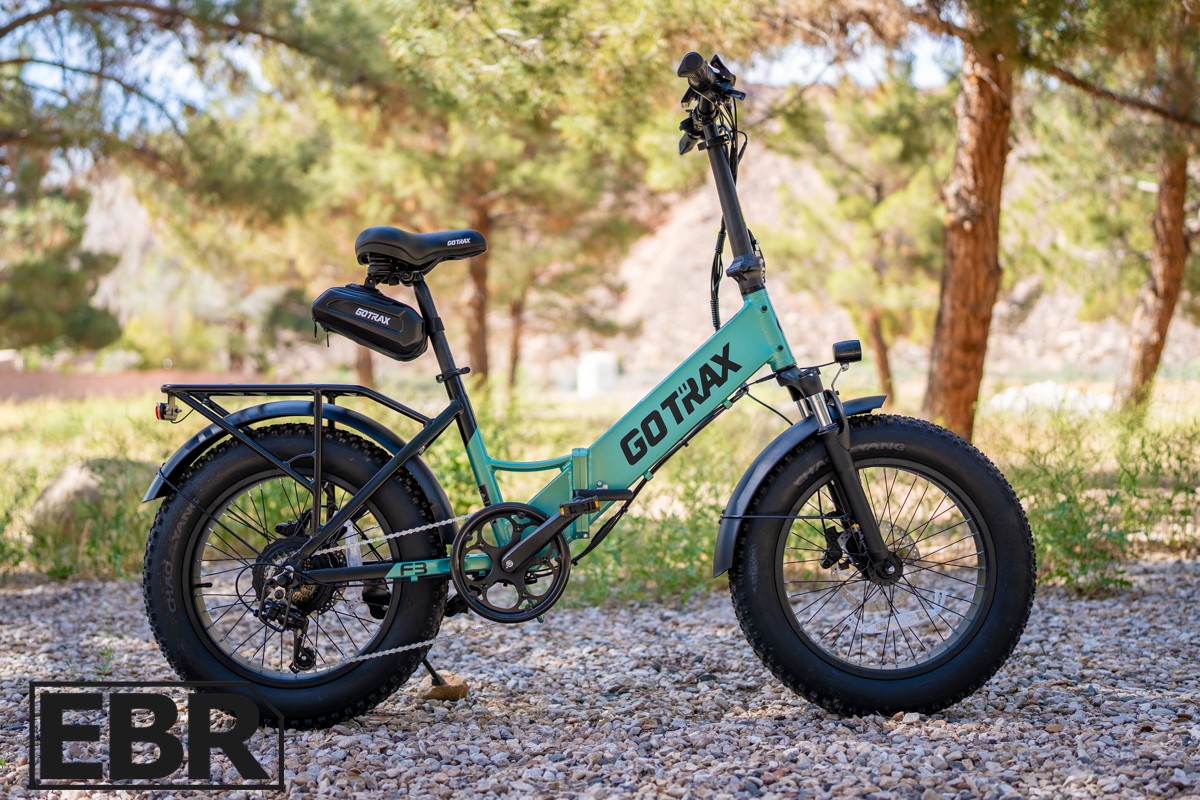
The GoTrax F3 is not trying to reinvent the folding e-bike, and I mean that as a compliment. Fat tires, front suspension, hydraulic disc brakes, and a big battery, at a price that leaves money in your wallet. The question I had going in was whether GoTrax cut corners on build quality, ride comfort, or motor tuning to keep the bike priced under $1,000.
My Experience Riding the GoTrax F3
Ride Quality Score: 6 / 10
Fitwise, I came away impressed with the GoTrax F3. The reach is a little shorter than average, so I sit a bit more upright than I do on most folders. I like that, and if you want a relaxed position, this bike gives it to you.
The quill stem has about four inches of height adjustment and the seat post gives you around ten inches, which is a lot of room to work with. At 5’11” I had full leg extension without going anywhere near the minimum insertion line. Our range tester is 6’3″ with a fairly long torso, and he even got full leg extension and raised the bars enough that he was not crouched over and uncomfortable.
GoTrax does not publish a fit range, but based on our testers I would put it at roughly 5’2″ to 6’3″. The one change I would make is the stem angle. Draw a line up from the fork and the stem still cants forward slightly. Straightening that out would help the handling.
Comfort surprised me too. The butterfly grips let me rest my palms flat and I never got any numbing in my hands. My problem with them is that they rotate. They are not locked down, and about every mile I would feel them sink and have to twist them back into position. Not a dealbreaker, but I would like to see lock-on collars on the next version. The saddle is more padded than average and more comfortable than I expected, and paired with the coil fork and 4″ fat tires, the F3 is comfortable on pavement and paved paths.
It is a folding bike, but it does not feel loose or floppy while pedaling. It does not handle like a dedicated commuter, but it feels solid, which is what I care about most in a folder.
On the flats it is peppier than I expected. From a dead stop it took 10 seconds to reach 20 mph on throttle, 7 seconds to reach 20 mph pedaling in PAS 5, and 14.5 seconds to reach 28 mph. Stepping up through the assist levels one at a time, the speed increase between each level is even, which tells me the controller is tuned well and the power will feel predictable out on the path. I found myself settling into PAS 2 or 3, partly because that puts me between 15 and 20 mph where I like to cruise, and partly because the drivetrain runs out of gear around 19 to 21 mph and I start ghost pedaling.
(Way-too-in-the-weeds note: On a 20-inch wheel with a 52T front chainring, a 14T cog requires an uncomfortable ~115 RPM cadence to sustain 28 mph speeds.)
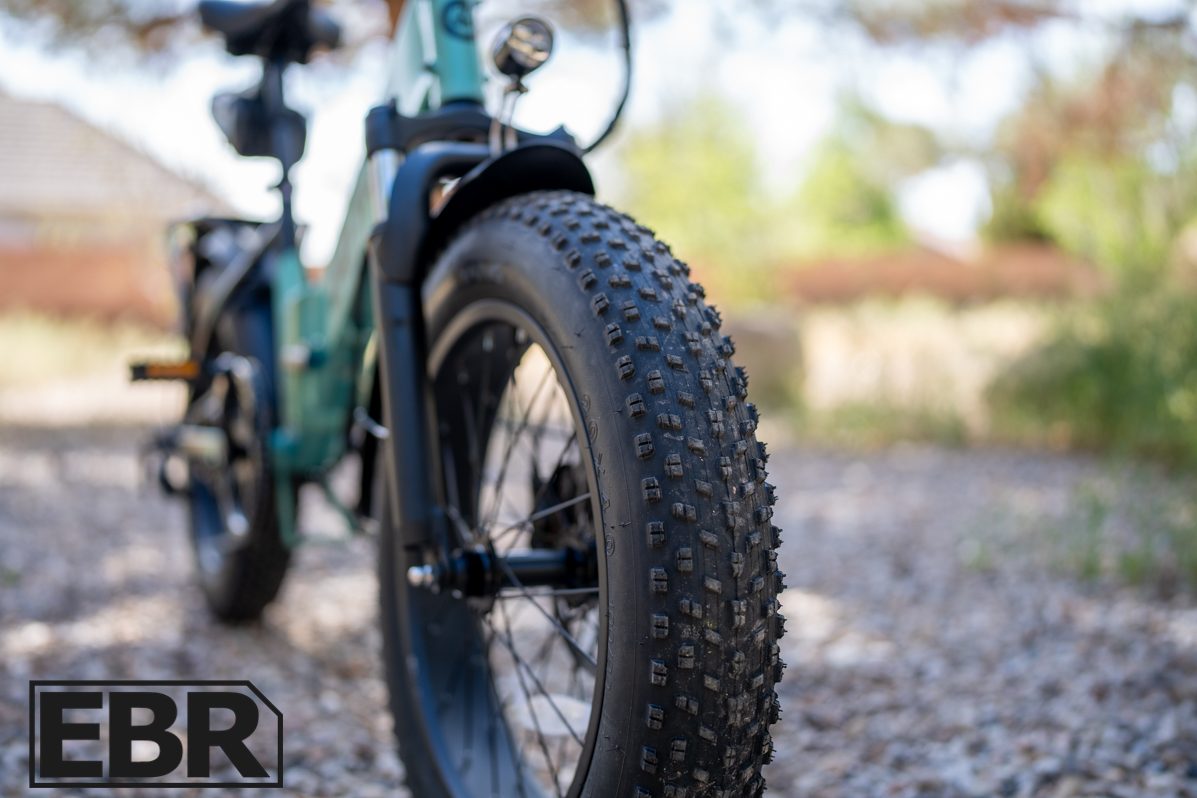
Off road it does better than I expected as well. Rolling over bumps on a dirt two-track, the front tire stayed planted and the fork took the edge off. I bounced around less than I normally do on a bike with no seat post suspension. The tires are balanced nicely, with enough grip to get through loose sandy sections without washing out and not so much tread that you are giving up miles on pavement.
If you want a bike to ride around town, do a little grocery shopping, get to and from the office, and then go exploring on a dirt road on the weekend, the F3 handles all of that.
Power (Motor & Battery)
Power Score: 7.5 / 10
 |
 |
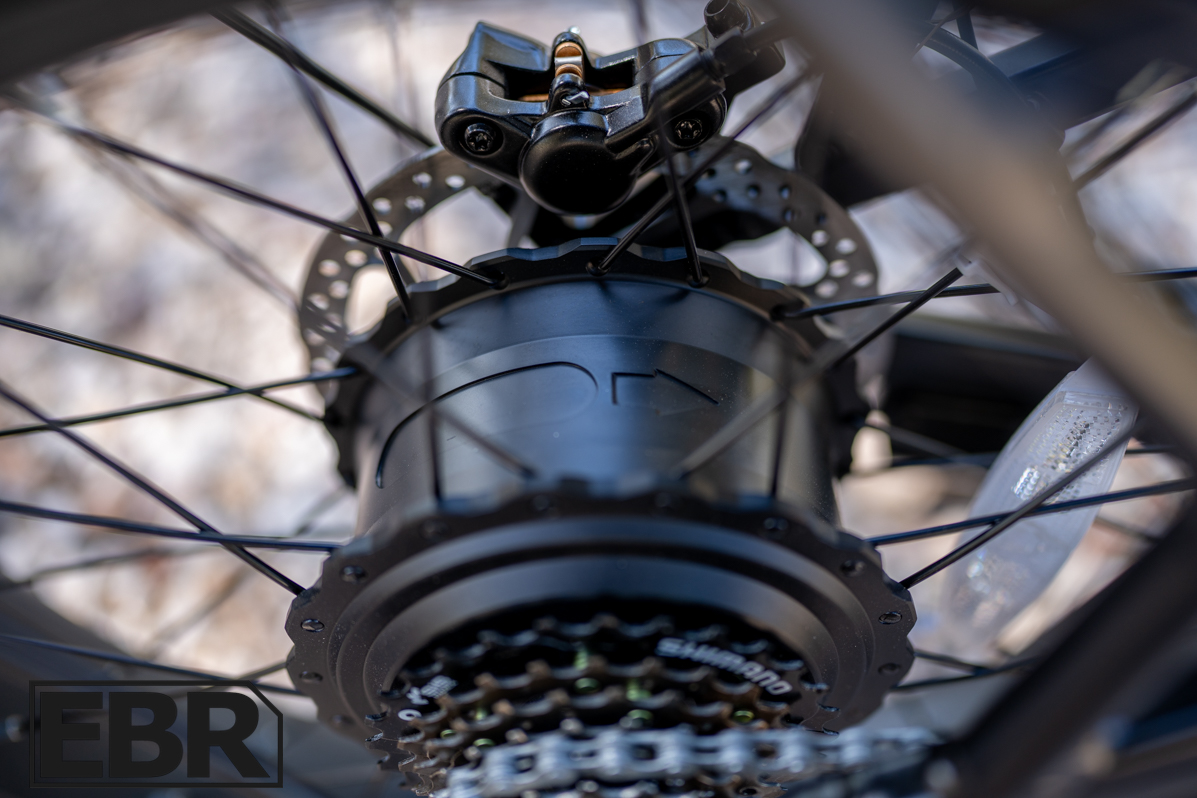
The F3 has a 500W rear hub motor. GoTrax has not published a peak wattage or a torque figure, and I have reached out to get both and will update this review when I have them. Based on what the bike did on our hill test, my guess is peak output lands somewhere around 1,000 watts.
Our Black Hill test is a 0.35 mile climb that finishes with a 50 to 175 foot section steep enough that a large percentage of 500W bikes fail to climb on throttle power alone. In general, the F3 climbed better than I expected:
- Throttle: 1:50 | 11.4 mph (average speed)
- Pedal: 1:30 | 13.9 mph (average speed)
Out of the six or seven folding bikes we have run up that hill, this puts the F3 right in the middle of the pack. It is also 10 seconds quicker on throttle than the GoTrax F2, 11 seconds quicker than the eFold, and about 7 seconds quicker than both on the pedal test, which is roughly what I would expect given the motor differences between those bikes.
The bigger upgrade is the sensor. GoTrax upgraded the F3 to a torque sensor, which makes the bike pedaling feel a bit more natural than the other GoTrax folders with cadence sensors. However, the torque sensor isn’t as natural feeling as other, more expensive, sensors.
The motor kicks in after about an eighth to a quarter of a pedal turn and the motor also has a bit of overrun. The motor keeps pushing you forward for about a half a second after normal pedaling, and closer to a full second if you push down hard on the pedals.
Climbing, I liked how the power was delivered. The motor never felt lurchy, and the power output stayed consistent. I put down less pedal pressure than I do on the average torque sensor bike, which will suit riders who want the motor doing more of the work (which I think is likely what most riders want in this price range).
The motor is also louder than average, which I expect at this price, but I would not call it bad or annoyingly loud.
Range / Battery
Range Score: 7 / 10
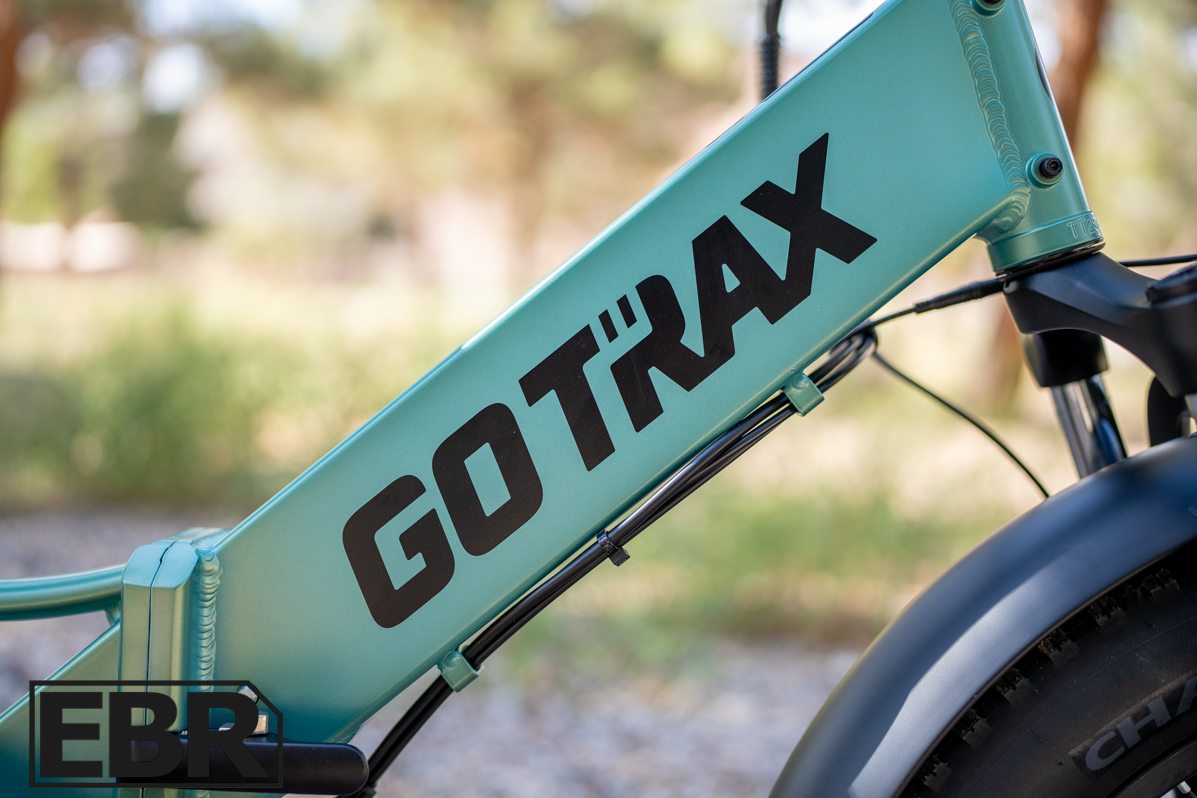
We were pretty happy with the range test results we got on the F3:
Min Assist (PAS 1): 74.02 Miles
Max Assist (PAS 5): 32.26 Miles
GoTrax claims up to 60 miles, so our minimum assist result clears their number by a wide margin.
The catch with that 74 mile figure is speed. Our average on the minimum assist test was under 7.5 mph, because PAS 1 stops providing assist around 8 mph. Stay under that speed and you get decent power and a lot of miles – you just will not be moving quickly.
You can go far, or you can go fast. I do not think many people will ride around in PAS 1, but the ceiling is there if you want it.
Getting 32 miles on max assist is also impressive. The battery capacity is larger than average for a bike in this price range, and when paired with a 500W instead of a 750W motor, it’s not surprising that the bike had good results.
The battery is a 48V 14Ah pack, giving it a total 672Wh capacity, and it weighs about 7 pounds. It comes out for charging, though you need the key in the lock to release it and you have to hold the pack steady while you pull the key back out. However, my biggest complaint is that you have to leave the key inserted on the underside of the downtube while riding. It makes me nervous that it will get bent when riding off-road and I also tend to forget to remove the key when I park the bike to run into the gas station or grocery store quickly.
GoTrax ships a 3 amp charger with the bike, which is better than the average 2 amp unit I see with most sub-$1000 e-bikes. At a 3amp rate, the battery takes between 4.5 – 5 hrs to be charged from 0% to 100%.
Also, it’s important to note that while the bike carries UL 2849 certification, the battery is not UL 2271 certified.
Components
Components Score: 6.5 / 10
 |
 |
 |
 |
At $899 to $999, what I want to see on a fat tire folder is hydraulic disc brakes, a frame and fold joint that do not flex, a battery big enough to be useful, and a drivetrain that can keep up with how fast the bike goes. The F3 gets three of those four.
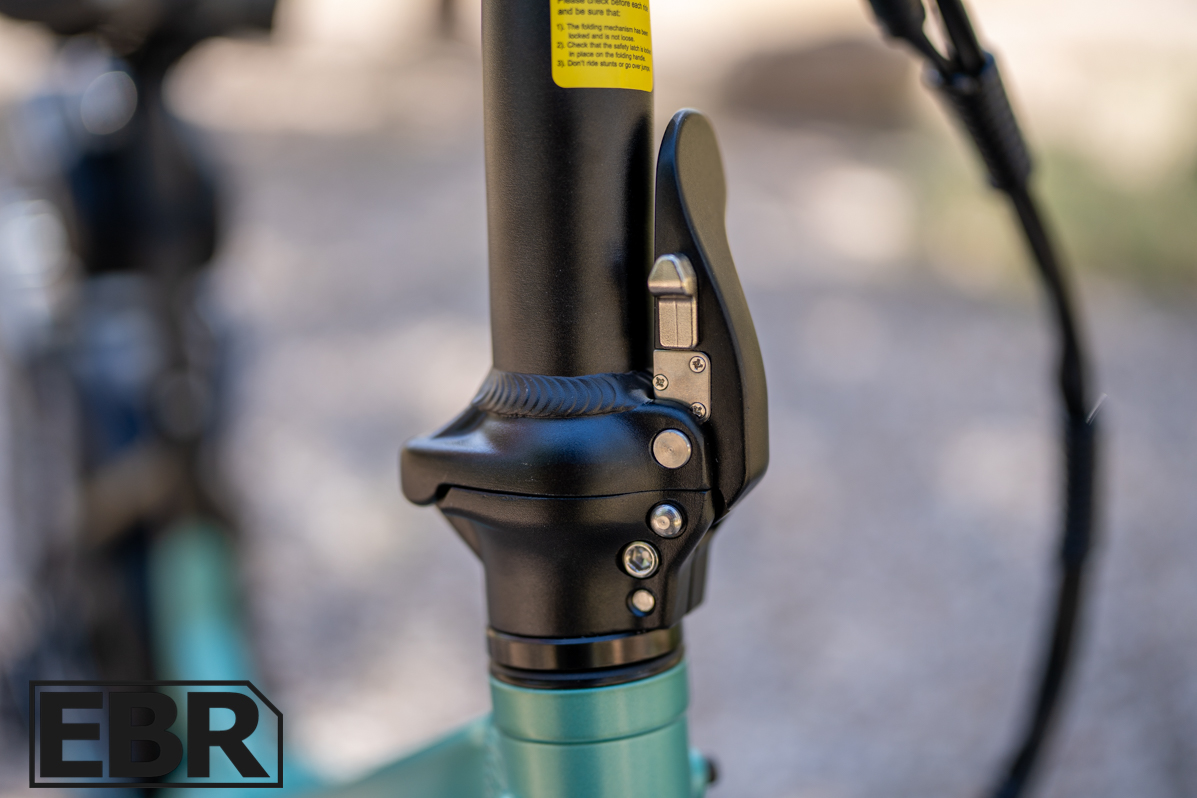
Build quality out of the box was better than I expected for this spec at this price. GoTrax shipped it to us the same way they ship to any customer, we pulled it out and assembled it, and the frame is stiff, the folding mechanism is stiff, and nothing feels cheap under load. That’s the first thing I check when reviewing a folding e-bike, especially budget-priced folders.
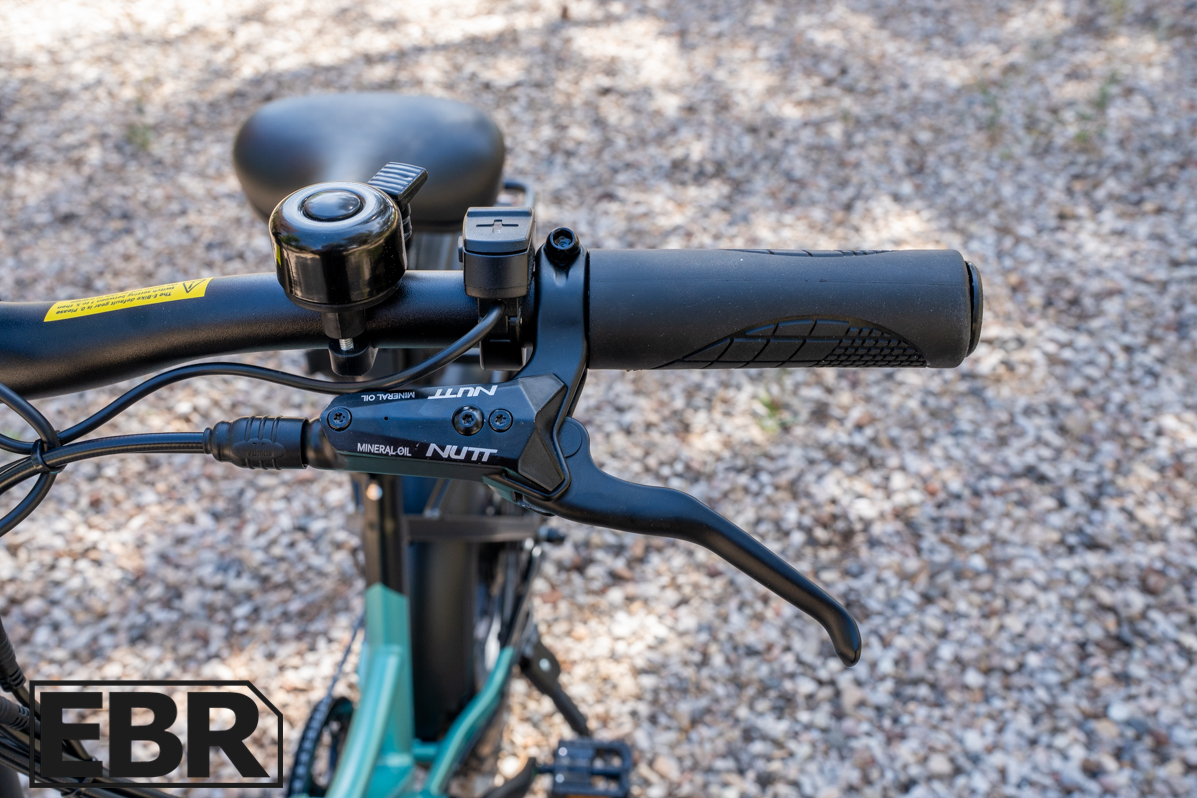
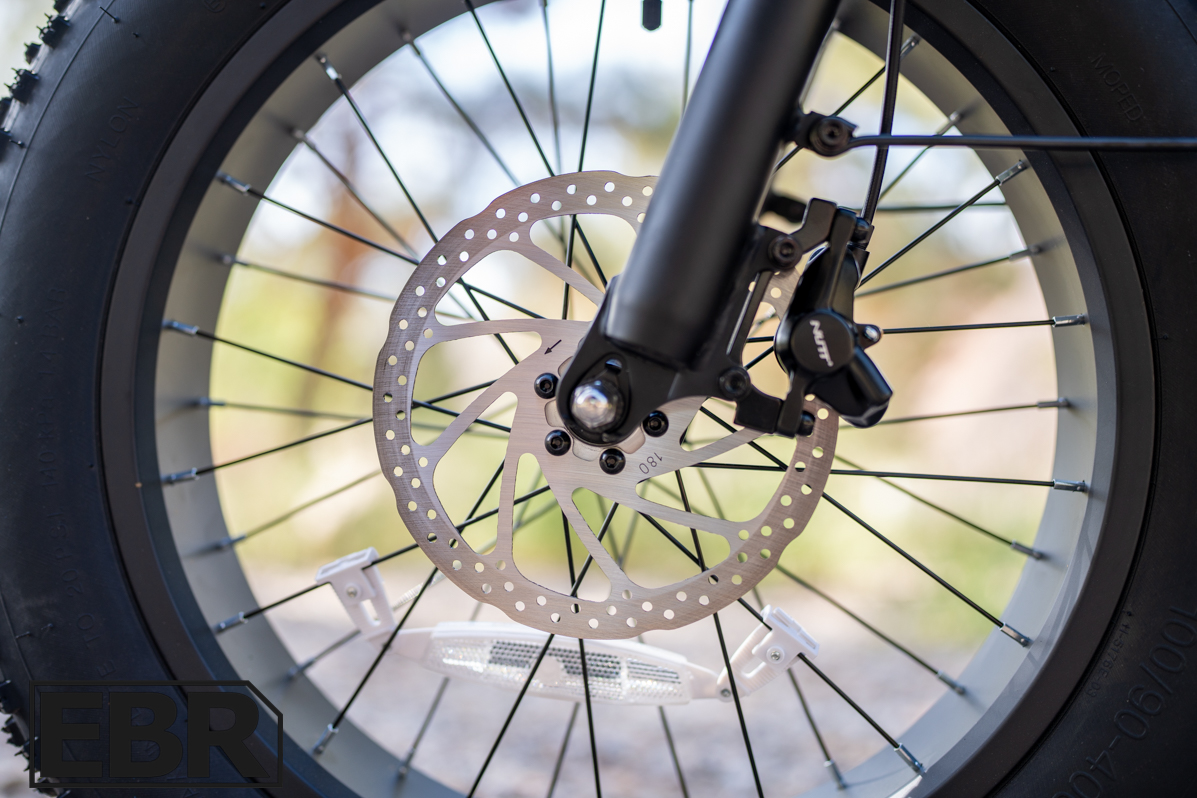
The NUTT hydraulic disc brakes performed better than I expected. You get 180mm rotors front and rear at 1.8mm thickness, and we put them through six-plus hard consecutive stops coming down a very steep descent that was wet with red dirt washed onto the trail, plus a long 30-second drag at around 10 mph. There was a little squeal at the beginning that went away, and no fade at all. NUTT is not a household name like Shimano or SRAM, but we have had good luck with them so far.
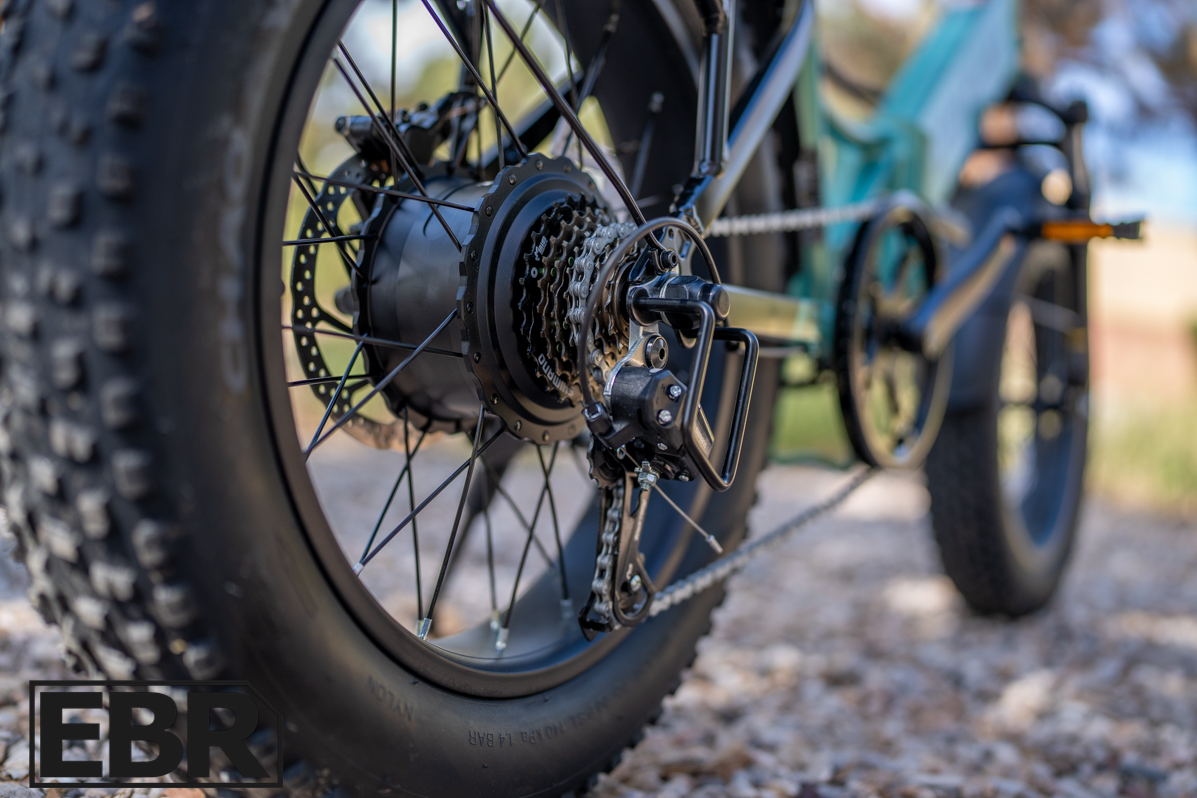
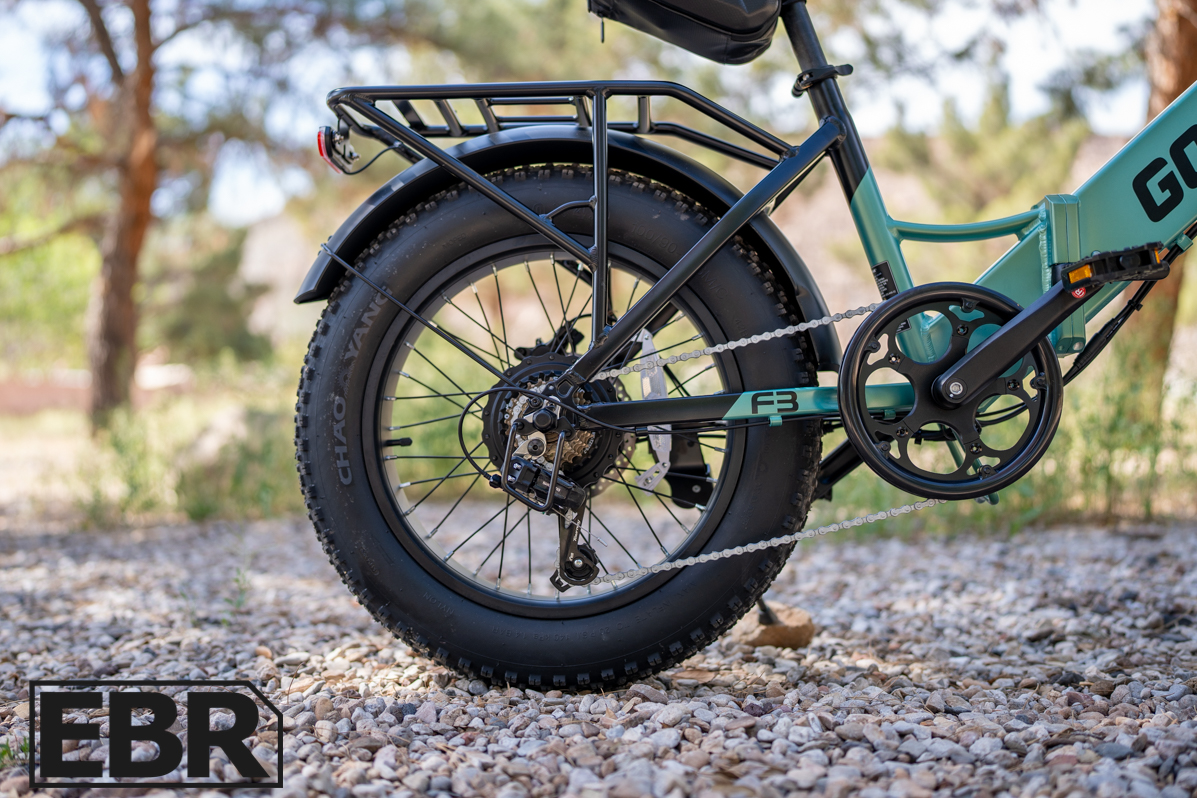
The Shimano Tourney 7-speed drivetrain is where I would recommend GoTrax improve a little. You get a 52T chainring up front and a 14-28T cassette in the rear, and on a bike that can hit 28 mph, that is not enough range at the top end. Past about 19 mph you are spinning faster than you want to. Adding a gear or two, or moving to an 8-speed, would take care of it and make this a more capable Class 3 bike.
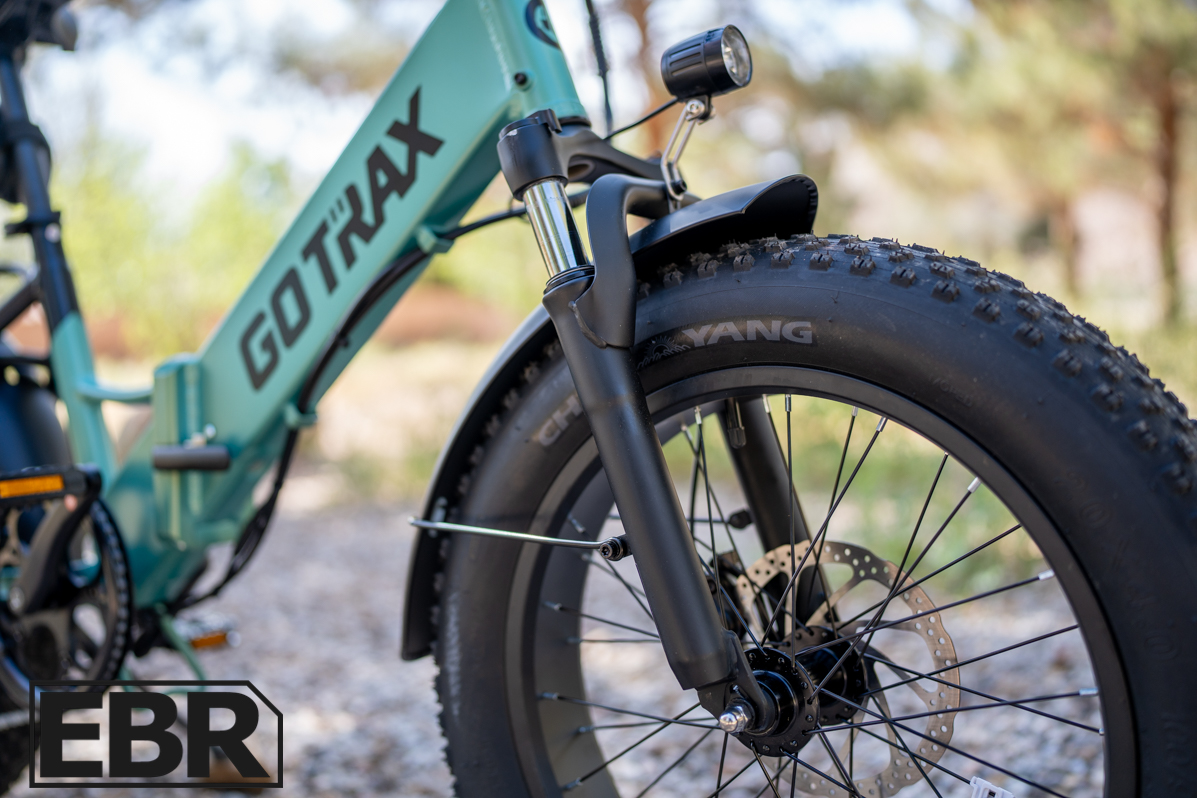
Suspension is a coil fork with lockout on 28mm stanchions, using a dropout rather than a thru-axle. GoTrax has not published a travel figure, so I am going off our own measurement, which puts it somewhere in the 30 to 40mm range. A thru-axle would stiffen up the front end, and that is something I bring up constantly on bikes at this price. The dropout is fine, it is just an area they could improve.
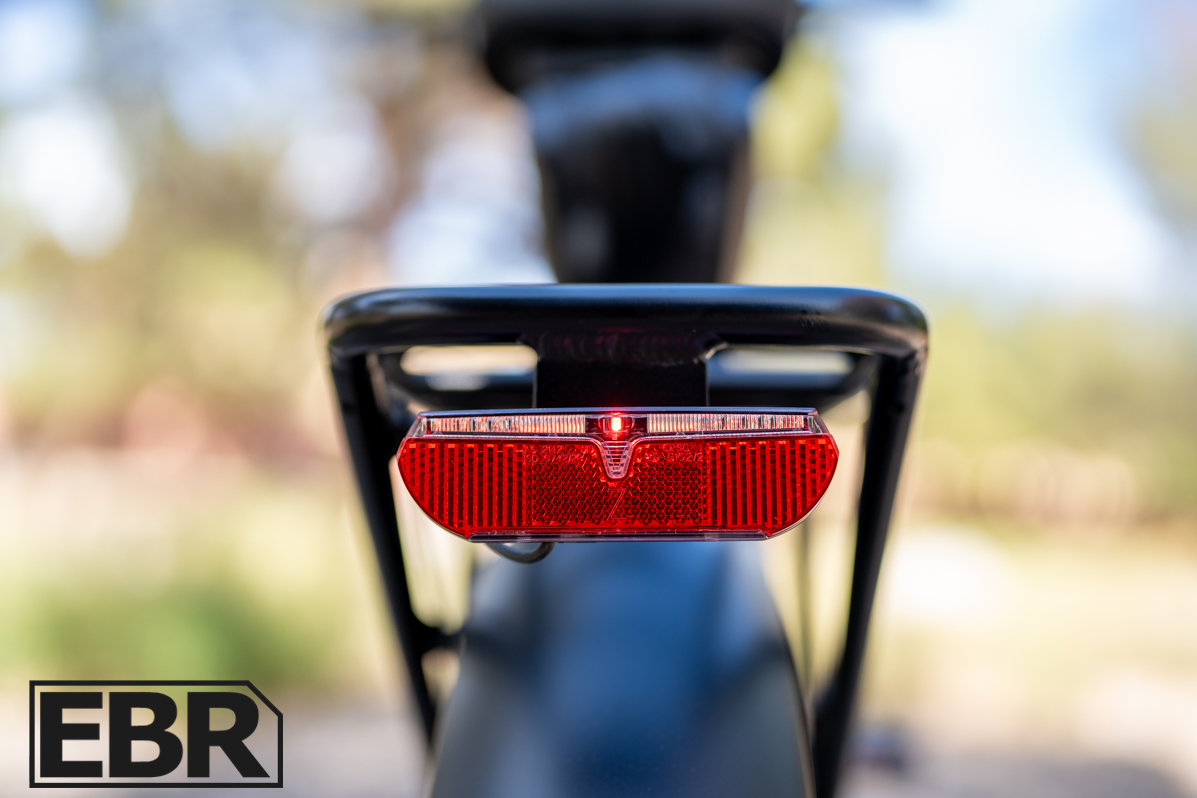
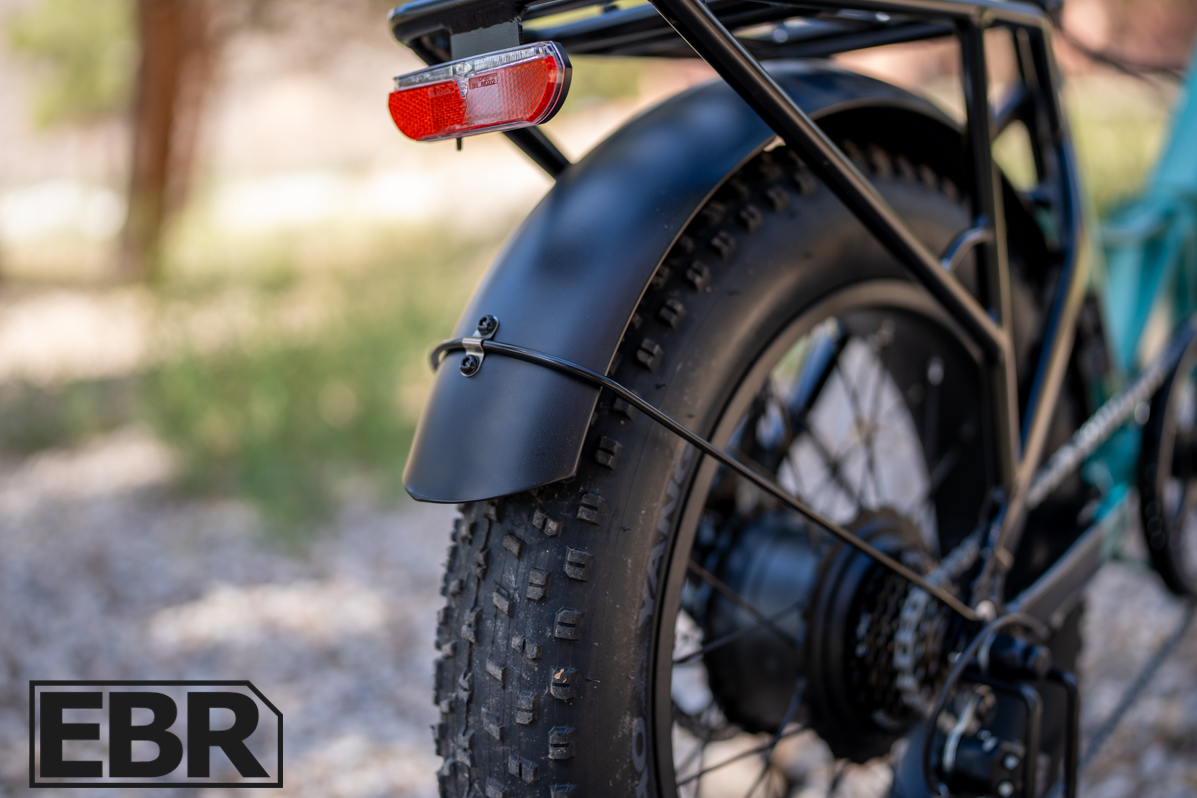
The 20″ x 4″ knobby tires split the difference between off-road grip and pavement rolling better than I expected. You also get metal fenders front and rear, which do their job but make the bike noisier when something hits them, a frame-welded rear rack rated at 25kg or about 55 lbs, and front and rear integrated lights. No turn signals.
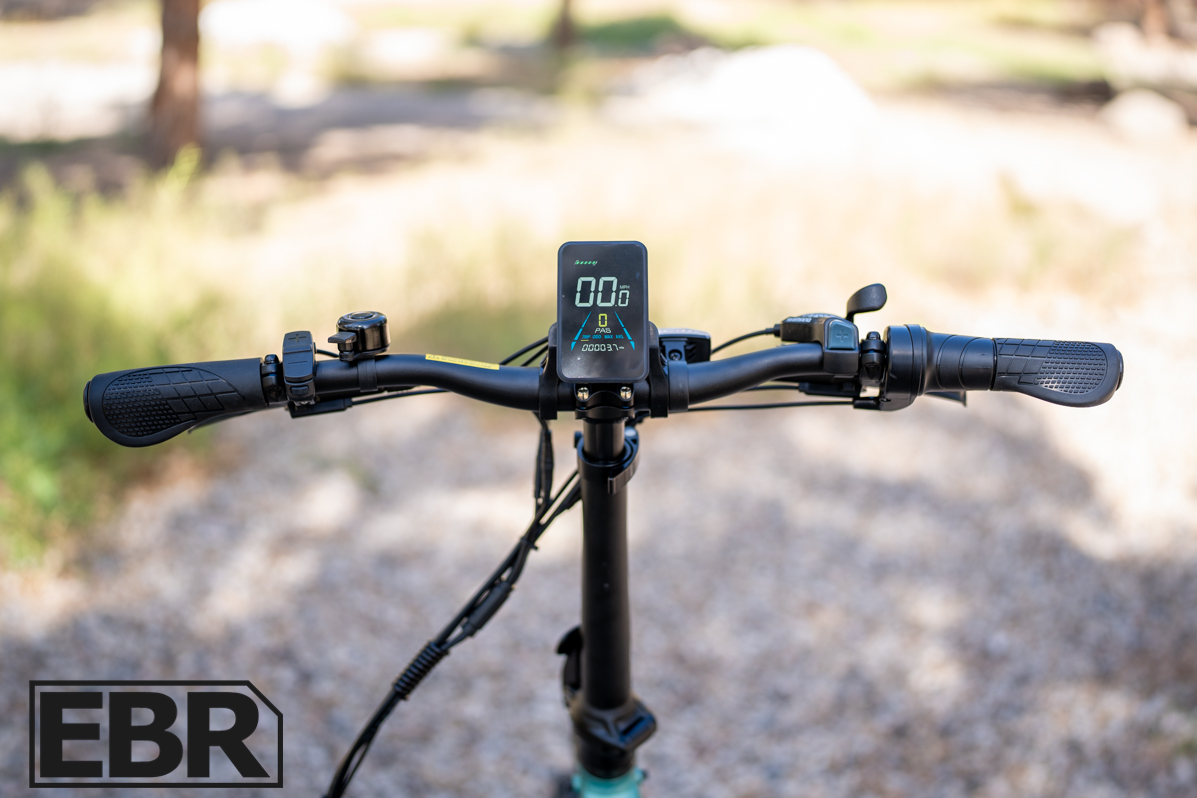
Up top you have a 26.25 inch flat aluminum bar, a quill stem with about four inches of height adjustment, ergonomic butterfly grips that need lock-on collars, an over-the-bar Shimano 7-speed thumb shifter, and a control pod on the left with a bell. The throttle is a twist. I tend to prefer a thumb throttle on a bike like this, and that is a preference rather than a knock.
One detail I like from a mechanic’s standpoint: the cables run along the bottom of the down tube instead of through the frame. It does not look as clean, but I can get to all of it without fishing anything through a tube, making repairs on sensors, motor, or cables much easier.
Our bike weighed 66.12 lbs on our scale with the battery in and just under 60 lbs with it out. Pull the pack before you lift it into a truck or an RV, and if 66 pounds is a problem for you, plan on two people for the folded bike.
For the money, the parts package holds together well. The drivetrain is the weak link, but everything else is at or above what I expect at this price.
Screen / User Interface / App
Screen / App Score: 5.5 / 10
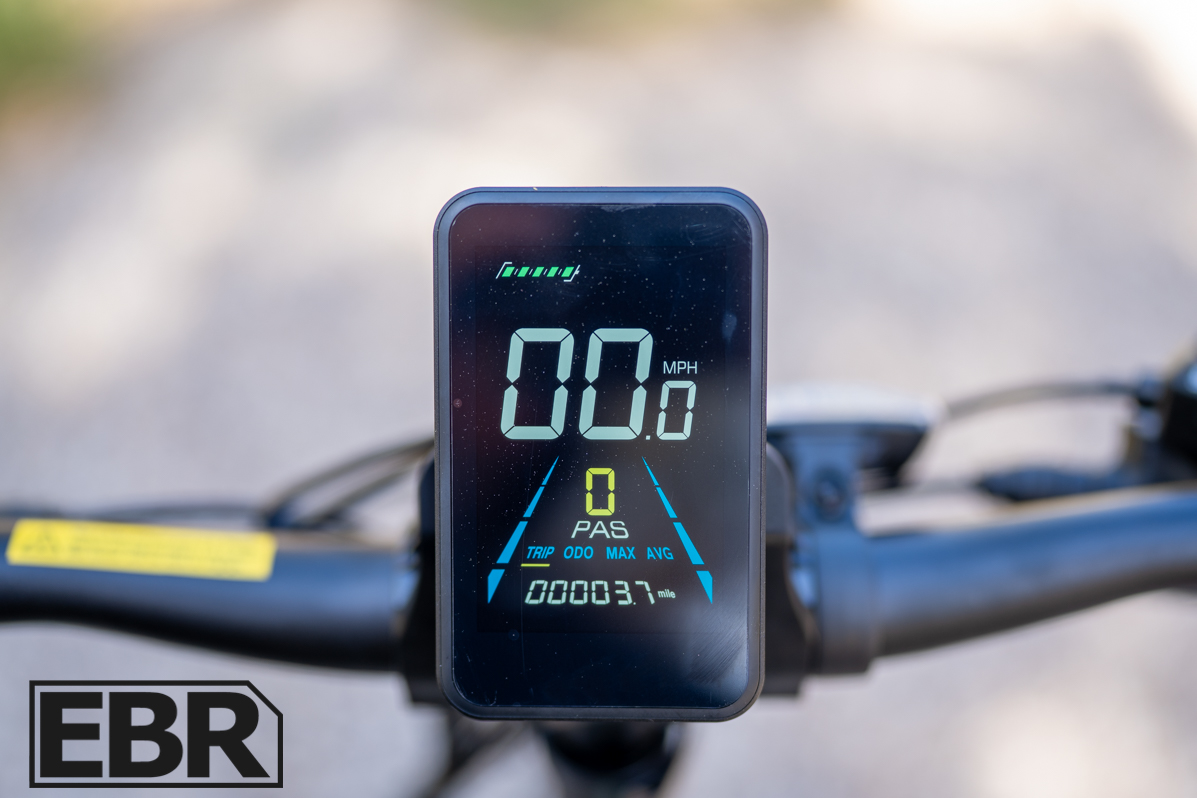
The F3 has a full-color display of about 3 inches, and it is a good size and easy to read. You get speed, your assist level, and a set of readouts along the bottom for trip, odometer, max speed, and average speed that you scroll through with the inner button on the control pod. Our test bike had 175 miles on the odometer by the time we finished, so we spent a fair amount of time with it.
The battery readout is where the display could be improved. It is a five bar readout, not a percentage. Five bars means each one covers 20 percent of the pack, and once you are down to the last bar you are guessing. On a bike with a 672Wh battery and a 74 mile ceiling, that is a lot of range to guess at. I would rather have a true percentage, even though that means GoTrax would need to spend a little more to upgrade from a square-wave to a sinewave controller.
The other thing I would change is the light button. Turning the lights on dims the screen. I like running lights during the day for visibility, and I do not want to trade screen brightness for that.
Advanced settings live behind holding the plus and minus buttons on the control pod. Most of what is in there should be left alone: units, system voltage, the number of assist levels, and wheel diameter. The one you will use is setting number five, the speed limit. It is set to 20 mph out of the box and goes up to 28. That is your Class 3 unlock, and it takes about five seconds. There is no app, so everything happens on the screen. At $899 to $999 I am fine with no app, but I would trade a lot of app features for a percentage battery readout.
Bike Model Options
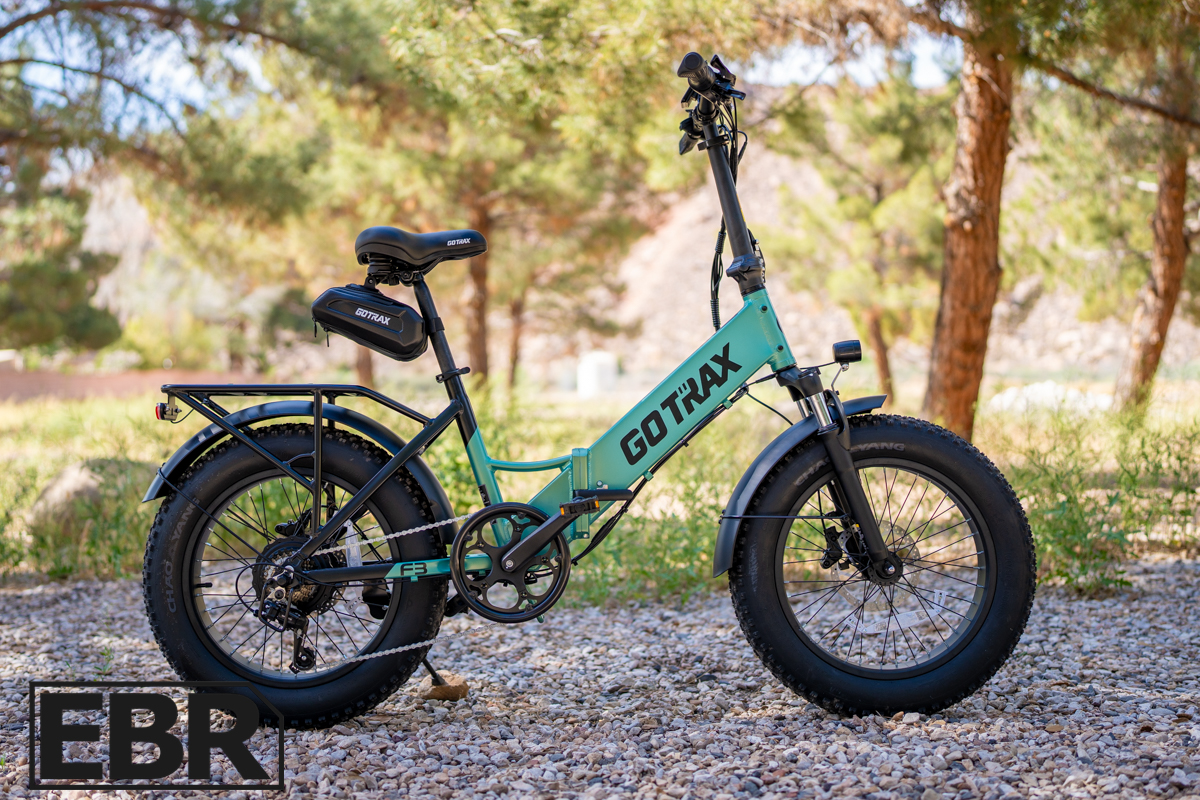
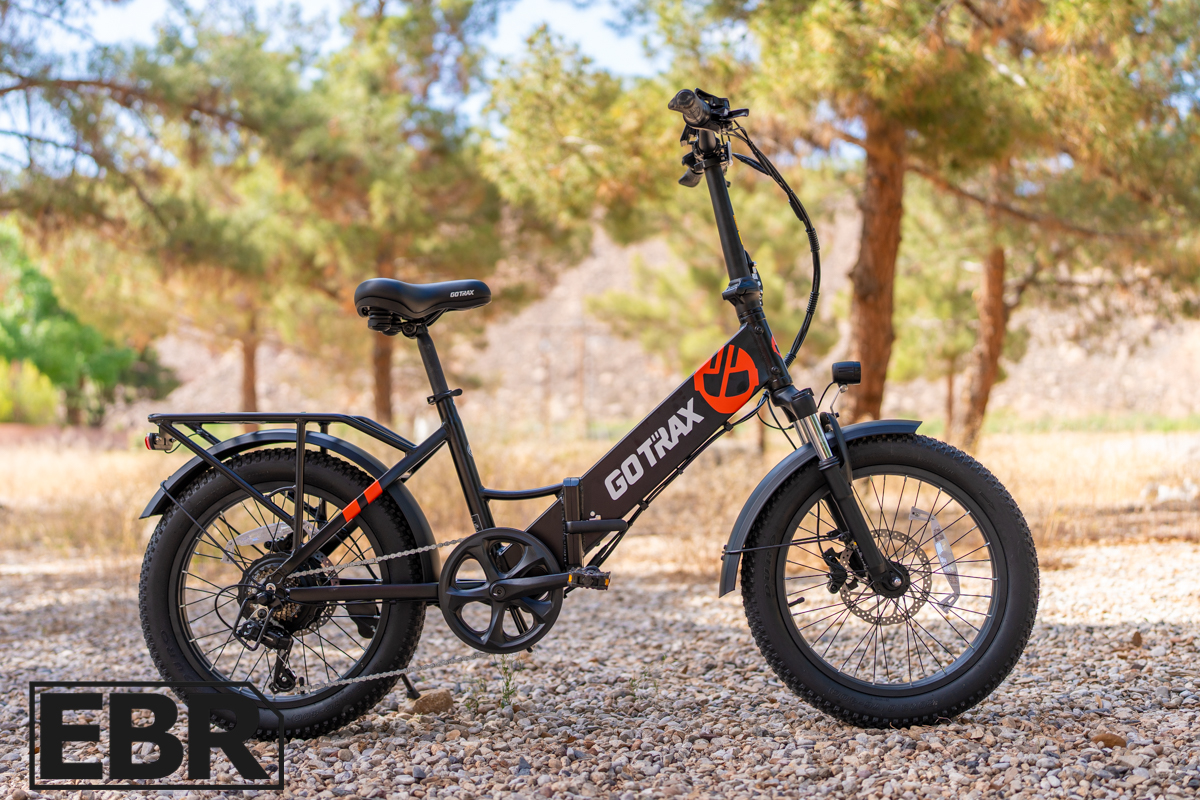
There is one frame size, one frame style, and one motor and battery configuration on the F3, so the only decision you are making is color. GoTrax offers five: Navy Blue, Seafoam Green, R3 White, Graphite, and R3 Black. Five color choices at this price is more than most brands hand you, and GoTrax deserves credit for it.
Pricing splits by color. MSRP is listed at $1,499, and I have never seen it anywhere close to that. Navy Blue and Seafoam Green currently sell for $999. R3 White, Graphite, and R3 Black are $899. Same bike, same spec, $100 apart. If a specific color is not a priority for you, take the $899 option and put the savings toward a spare tube, some slim to prevent flats, and a good lock.
One frame size does mean you are leaning on adjustability to get your fit, and there is plenty of it here. Ten inches of seat post range and four inches at the quill stem covered our testers from 5’2″ to 6’3″. Riders at the shorter end will sit with their hands a bit high, and riders at the taller end will have the post and stem near the top of their range, but both ends work better than expected.
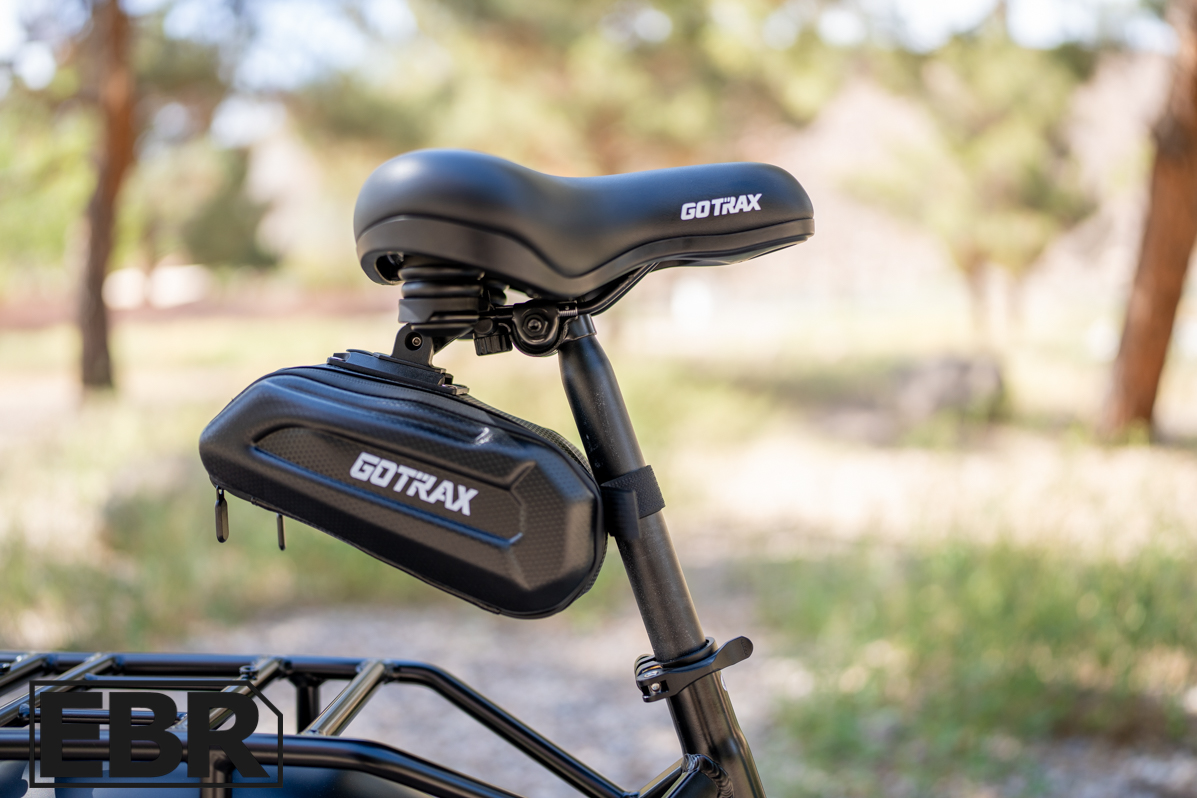
GoTrax also lists a phone holder, seat bag, folding lock, rear view mirrors, and tire levers as included accessories with the bike.
Is the GoTrax F3 Worth Buying?
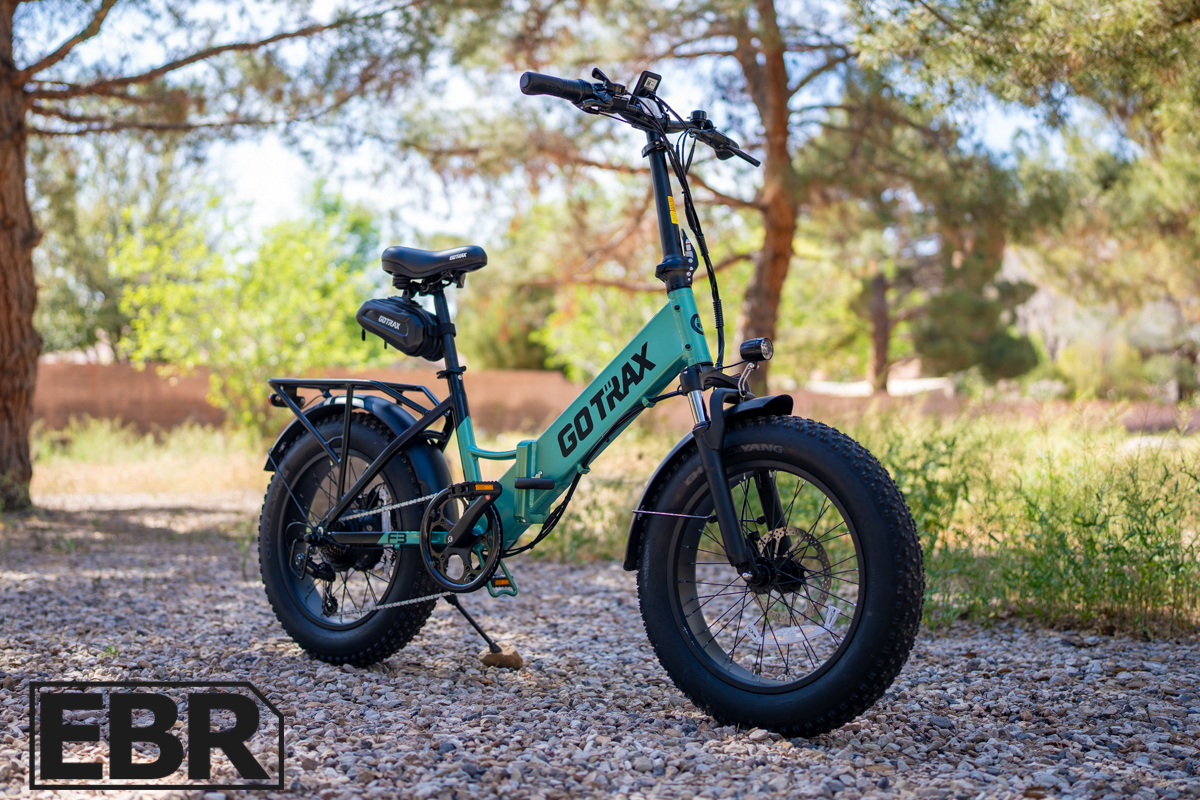
The GoTrax F3 is a very good budget-level folding e-bike trying to compete with the uber-popular Lectric XP4 and the newly-updated Ride1Up Portola 02.
GoTrax set out to make a fat tire folder with the components most people shopping in this range want, at a price a lot of shoppers are comfortable with. They pulled it off. The frame and fold joint are stiff, the brakes are better than the price suggests, the torque sensor is a real step up from the F2 and the eFold, the battery is large, and the bike climbs hills well.
This is a good fit for the casual rider, the person who has not been on a bike in ten years, and anybody throwing a bike in the back of a truck or an RV. If you are commuting to work, riding paved paths on the weekend, and taking the occasional dirt road adventure, the F3 covers all of it.
At 66 pounds you will want to pull the battery before you lift it, and you may want a second set of hands to load it – but that’s par for the course with pretty much all fat-tire folding e-bikes.
Who I would point somewhere else: if you plan to pedal at 22 to 28 mph on a regular basis, the 7-speed drivetrain will frustrate you, and I would look for a bike with more gear range at the top. If you are in New York City or another jurisdiction that requires UL 2271 battery certification, wait until GoTrax confirms that certification so you don’t have problems.
At an MSRP of $1,499 but actual selling price of around $999, GoTrax has built a folder that does what most riders in this price range need it to do, and it does it without feeling cheap. That is a good bike that provides solid value.
Review Unit Disclosure
Thank you to GoTrax for sending us the F3 for us to review, and for covering our production costs so we can provide this review to our readers.
Our F3 arrived in the same box and packaging any customer receives, and we pulled it out and assembled it ourselves rather than getting a pre-built bike. All testing was done on our own roads, paths, and the EBR Black Hill course, not at a brand media event, and we put 175 miles on the bike before publishing.
Notes to readers: We charge a review fee to cover our costs, but that fee does not guarantee a positive review. We also may earn an affiliate commission if you purchase the bike using the links provided in this review.




Reader Interactions