
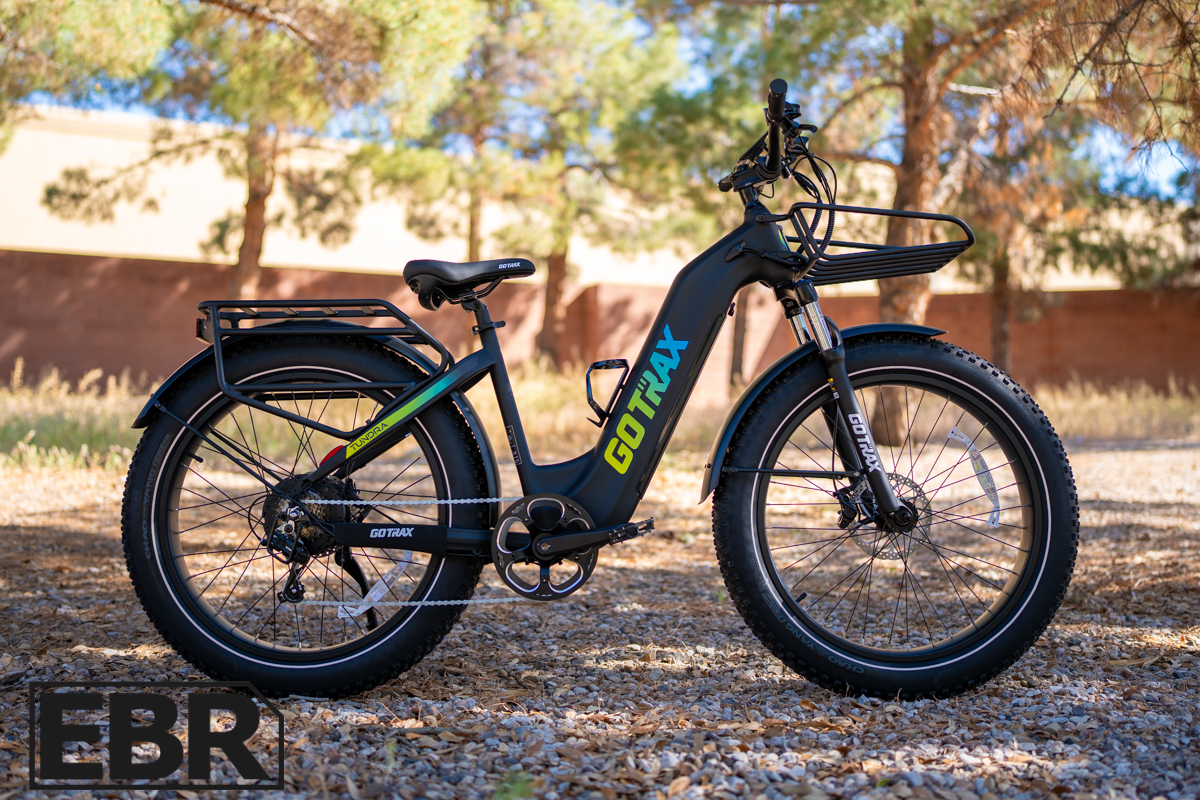
The GoTrax Tundra V2 is a solid budget fat-tire e-bike that exceeded my expectations. It is not trying to reinvent the fat-tire e-bike category, and I mean that as a compliment. GoTrax went after a bike that can do a bit of everything, from commuting during the week to hitting dirt roads on the weekend, and priced it low enough that most riders shopping in this category can afford it.
Go Trax has been around for quite a time, but they’ve mainly been doing scooters and budget folding e-bikes. The Tundra V2 is their move into fat-tire e-bikes, and the V2 in the name tells you that this isn’t their first try. I think they’re doing very well right off the bat, and will only get better.
There are a few spots where it shows its budget price point, which I will get into below, but the Tundra V2 delivers where it counts: ride feel, range, hill climbing, and build quality that feels better than what I usually see at under $1,300.
My Experience Riding the Bike
Ride Quality Score: 6 / 10
Riding the Tundra V2 impressed me beyond my expectations. The bike feels much firmer and more reassuring than I expected at this price point. I’ve ridden plenty of fat-tire bikes in the $1,200 to $1,300 range where I just don’t feel very comfortable and get a bit nervous, especially when I’m pushing 28 mph. On this one, the frame and handling are solid, and when I speed up I’m not worried.
For my height (5’11”), the fit and geometry are perfect. GoTrax claims the Tundra V2 works for riders from 5′ to 6’4″, but I’d narrow that. On this bike, a 5ft rider isn’t able to reach the pedals easily. My realistic recommendation is 5’3″ or 5’4″ on the low end, up to around 6’3″ or 6’4″ on the high end. With the seat all the way down, it sits mid-thigh on me; all the way up, it’s right at my hips. One thing to flag: the stem isn’t adjustable, making it a little harder to fit a wide range of riders, but this also makes the bike more rigid and improves handling.
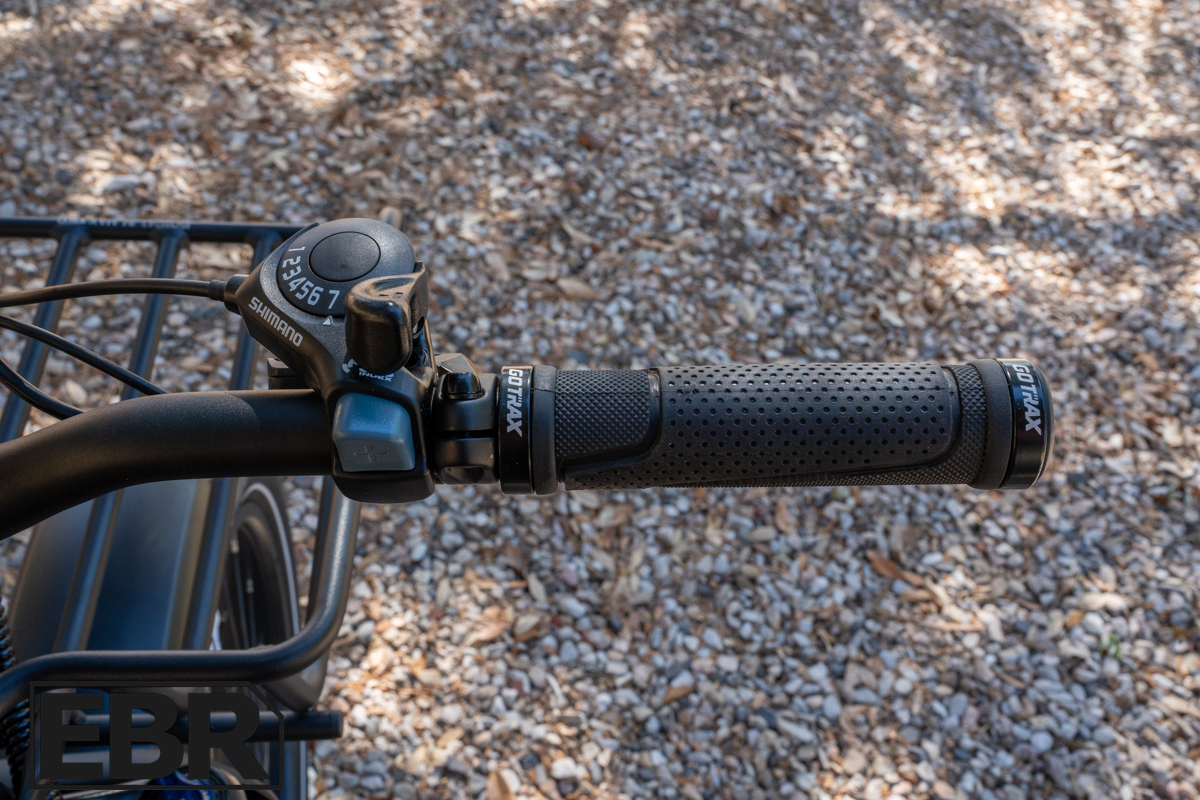
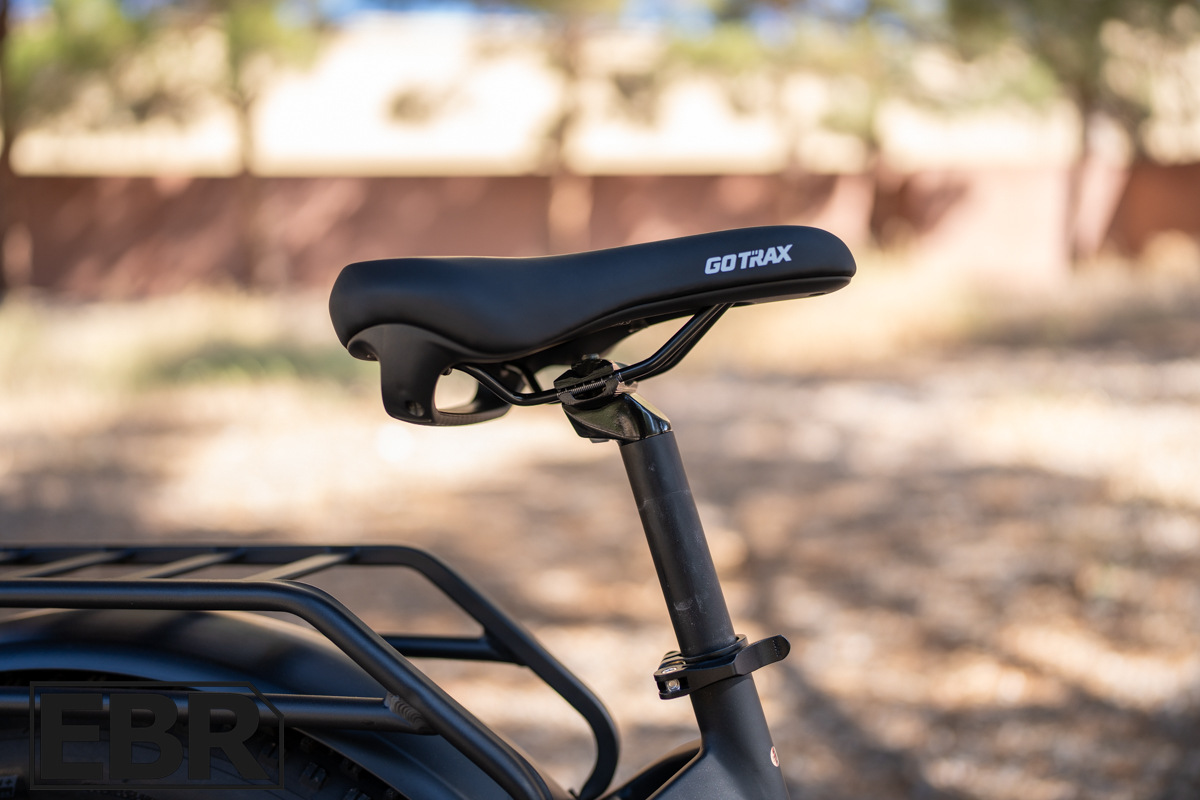
The 27.75-inch handlebars have about 20mm of rise, which keeps you a little more upright instead of hunched forward. The lockable rubber grips remind me of the ones on the mountain bikes I ride, and I like them a lot. The saddle is pretty standard. If you don’t like it, swap it out. I’ve put miles on this e-bike, and I don’t have any complaints about the saddle.
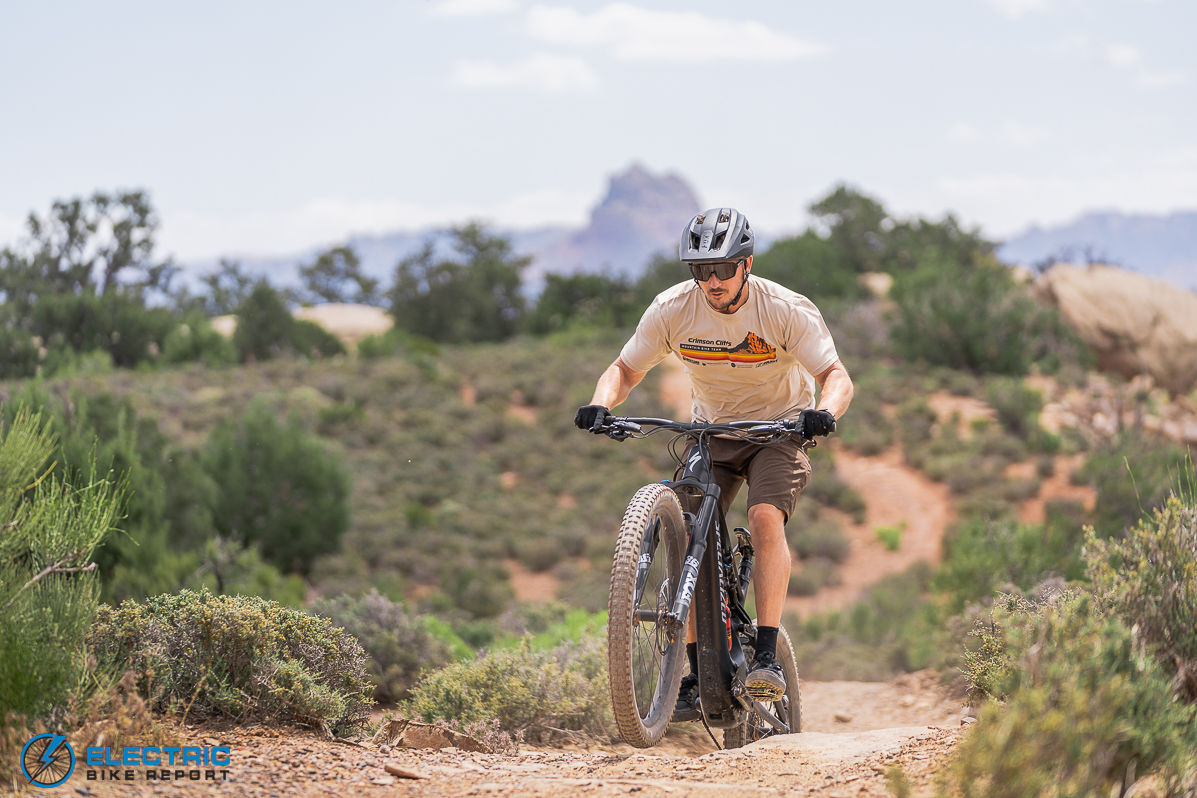
On paved roads and bike paths, the front fork does a really nice job soaking up bumps. It’s a smooth ride. But if you’re buying a 4-inch fat tire e-bike, chances are you want to take it off-road, and that’s where this bike possibly surprised me the most. Yes, there’s some bouncing on the rear since there’s no rear suspension or suspension seatpost, but it’s a lot smoother than I expected. The 70mm of front fork travel feels like exactly the right amount of travel. It absorbs the bumps and keeps the tires planted on the ground. One complaint I have when riding off-road is with the motor programming. PAS levels 1-4 use a torque sensor, where the bike feels controlled yet slightly underpowered. When I put the bike into PAS 5 (i.e. turbo), the bike switches to a cadence sensor and becomes a little overpowered. It’s an interesting torque/cadence combo that takes a little bit to get used to – especially when pedaling off-road. My recommendation would be that GoTrax increase that output on Assist Level 1 through 4, and tune down the power output in PAS 5.
Power / Motor
Power Score: 8.5 / 10
 |
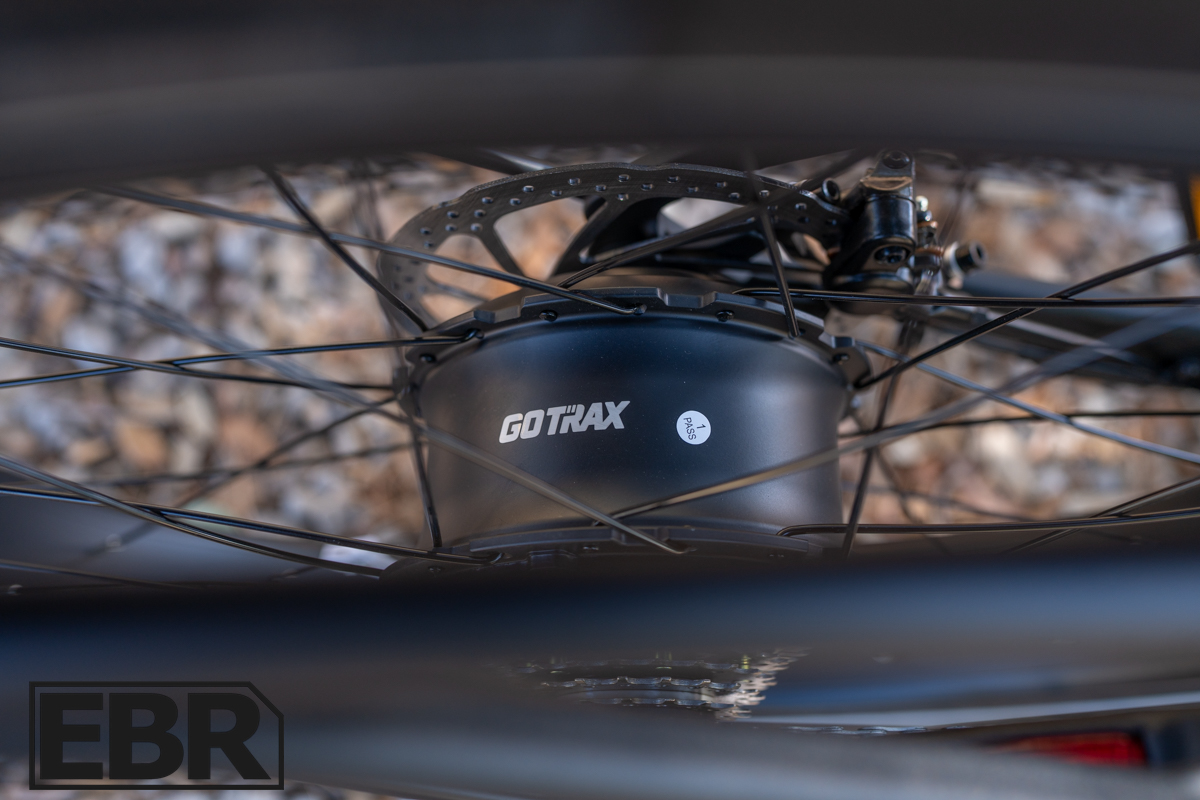 |
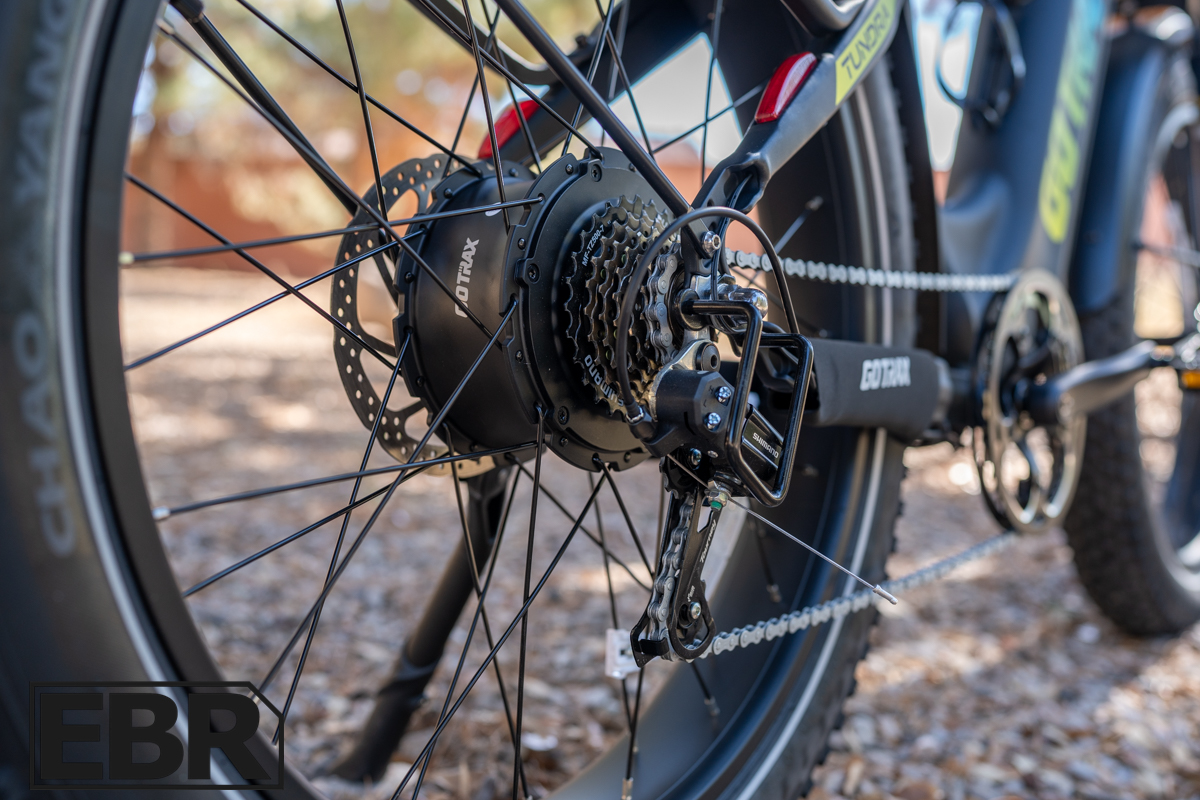
The Tundra V2 has a 750W Bafang rear hub motor. It peaks at 1,250W and puts out 85Nm of torque. For a 83 lb Class 3 fat-tire bike, that’s about what I would want to see at this price. The motor is a touch louder than average, but it never bothered me on my rides.
The Tundra V2 ships as a Class 2 bike with a 20 mph cap, but you can jump into the display and unlock Class 3 for up to 28 mph. I like that it’s built into the settings and you don’t need to dive into an app to make that switch.
Here’s where things get interesting. PAS 1 through 4 uses a torque sensor, and PAS 5 switches to a cadence sensor. I don’t see that combo often. Each pedal assist level caps at a different speed, running from about 7mph on PAS 1 up to 28 mph on PAS 5. At the torque sensor levels, the ride feels natural but a bit soft. I had to push a little to really get the motor to help me out; this was no rocketship. Then, I kicked it into PAS 5, and the cadence sensor took over, throwing me forward with just a little turn of the cranks.
You’re looking at about 2 cranks before the motor really kicks in, for both the torque sensor levels and when you’re up on PAS 5. This isn’t instant or slow, it comes somewhere in the middle, which feels pretty natural to me. There’s also throttle pep there too, without it being grabby. Even at the top of Class 3, I never felt out of control on it.
The whole thing feels bookended. Soft on 1 through 4, almost too much of a powerful kick on 5. Motor overrun on the back end is minimal. Even ghost pedaling in PAS 5 at 28 mph, the Shimano 7-speed drivetrain held up better than I expected.
The Black Hill test went well. It is a steep climb that gives me a consistent way to compare how different motors handle real-world hill grades.
- Throttle: 1:51 | 11.3 mph (average speed)
- Pedal: 1:28 | 14.2 mph (average speed)
That lands right at average for a 750 fat-tire bike, which I think is respectable given the weight and the sub-$1,300 price. And, most importantly, it shows that it will get you up the hills fairly easily.
Range / Battery
Range Score: 9.5 / 10
Min Assist: 99.6 Miles
Max Assist: 44 Miles
On my range test, the Tundra V2 delivered:
- Min Assist (PAS 1): 99.6 miles
- Max Assist (PAS 5): 44 miles
This was very impressive. The Tundra V2 comfortably exceeded GoTrax’s advertised 74 mile max, which I appreciate. Many brands tend to overstate range on their product pages, so it’s nice to see the opposite here.
One caveat on the min assist: PAS 1 caps motor assistance at around 8 mph, so while 99.6 is impressive, it’s a very slow 99.6 miles.
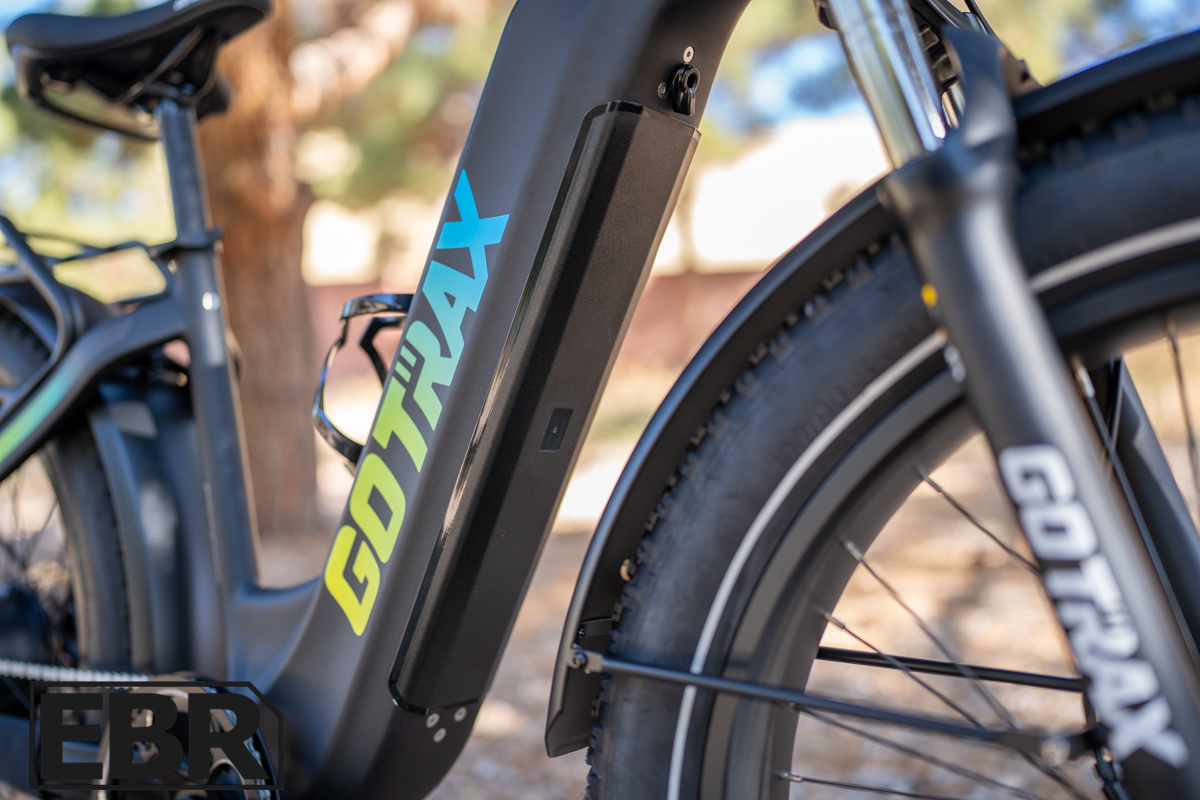
A lot of credit goes to its oversized removable battery, a 48V, 20Ah lithium-ion pack that totals 960Wh. That’s about 33% larger than the category average, and makes it so you can easily get around for a few days of long riding without having to charge the bike.
I also want to highlight the 3 amp charger. I like it, especially given the battery size. It brings a full charge down to about 6 to 7 hours, a lot faster than the 2A chargers.
Components
Components Score: 6.5 / 10
 |
 |
 |
 |
At $1,399, what I want on a fat-tire e-bike is hydraulic disc brakes, a stiff frame, a battery and a motor matched to the bike’s weight, and a drivetrain that keeps up with its top speed. The Tundra V2 hits all four, with a few spots where GoTrax could do better.
Out-of-the-box build quality impressed me. Assembly was easy, which is not always the case on fat-tire bikes. The step-through frame on a fat-tire bike is usually wobbly, but the Tundra V2 felt better than expected at this price. Nothing feels overly cheap under load. That is the first thing I check on this type of budget e-bike.
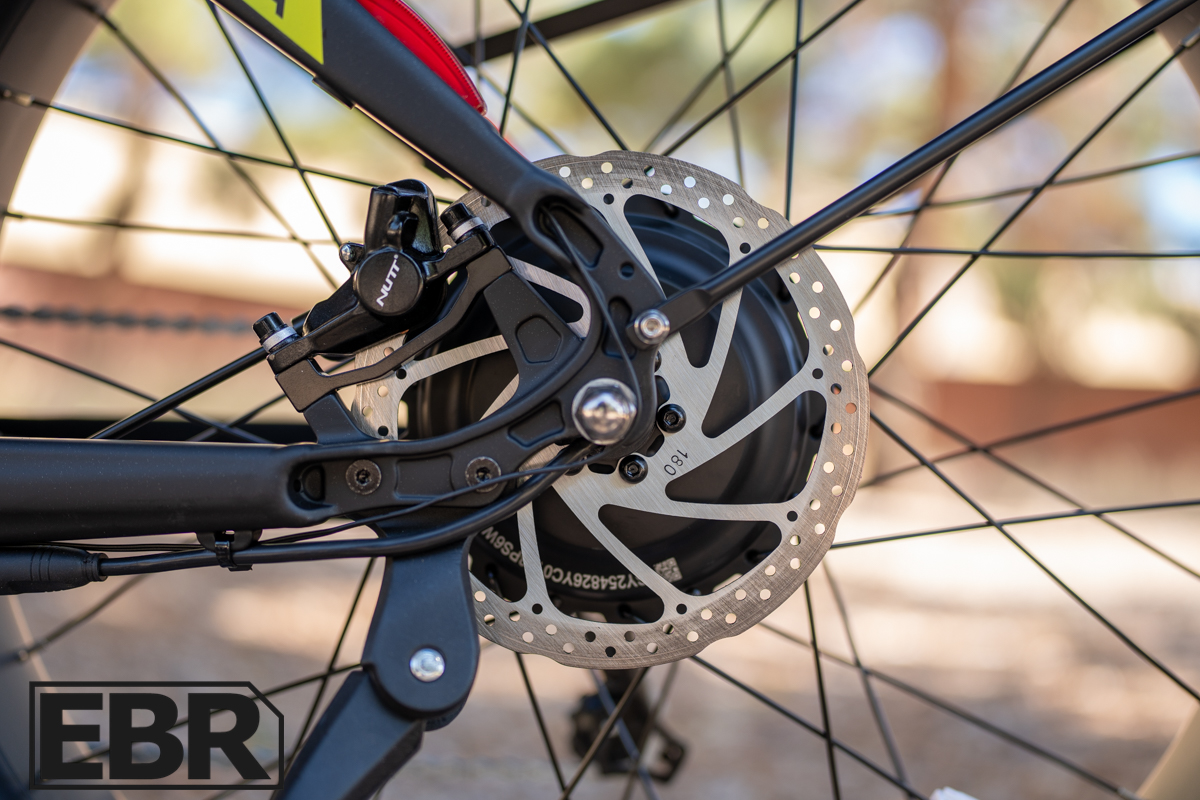
The NUTT hydraulic disc brakes are where I would push for improvement. This was the weak link of the parts package. You get 180mm rotors front and rear at 1.8mm thickness, and we put them through seven hard consecutive stops down a steep descent plus a long 30 second drag. No fade from the top of the hill to the bottom, which I liked. They stopped me safely, but I had to squeeze harder than I would like about 15 mph, and they take longer to stop than average. Still safe, but when it comes time to service them, I would upgrade. Two changes from GoTrax would go a long way: a 203mm front rotor instead of 180mm, and bumping thickness from 1.8mm to 2.3mm. Bigger rotors give more stopping power, and thicker rotors dissipate heat better.
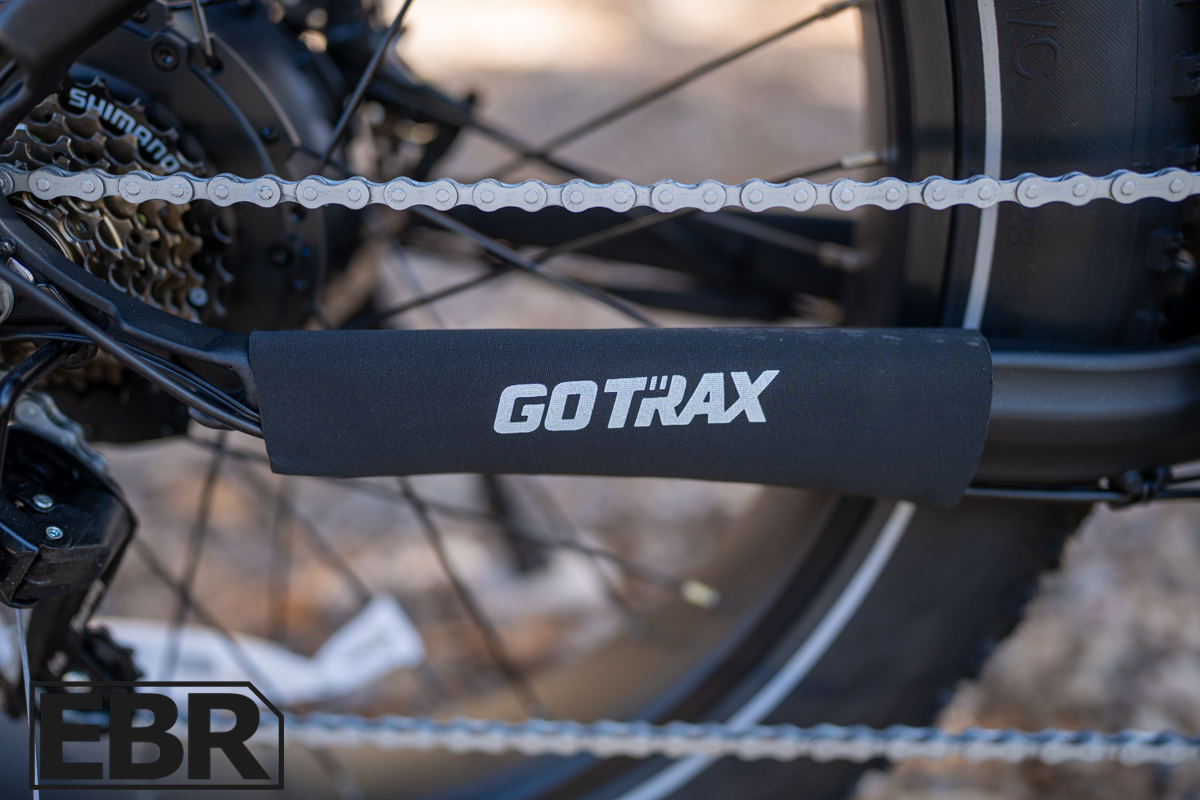
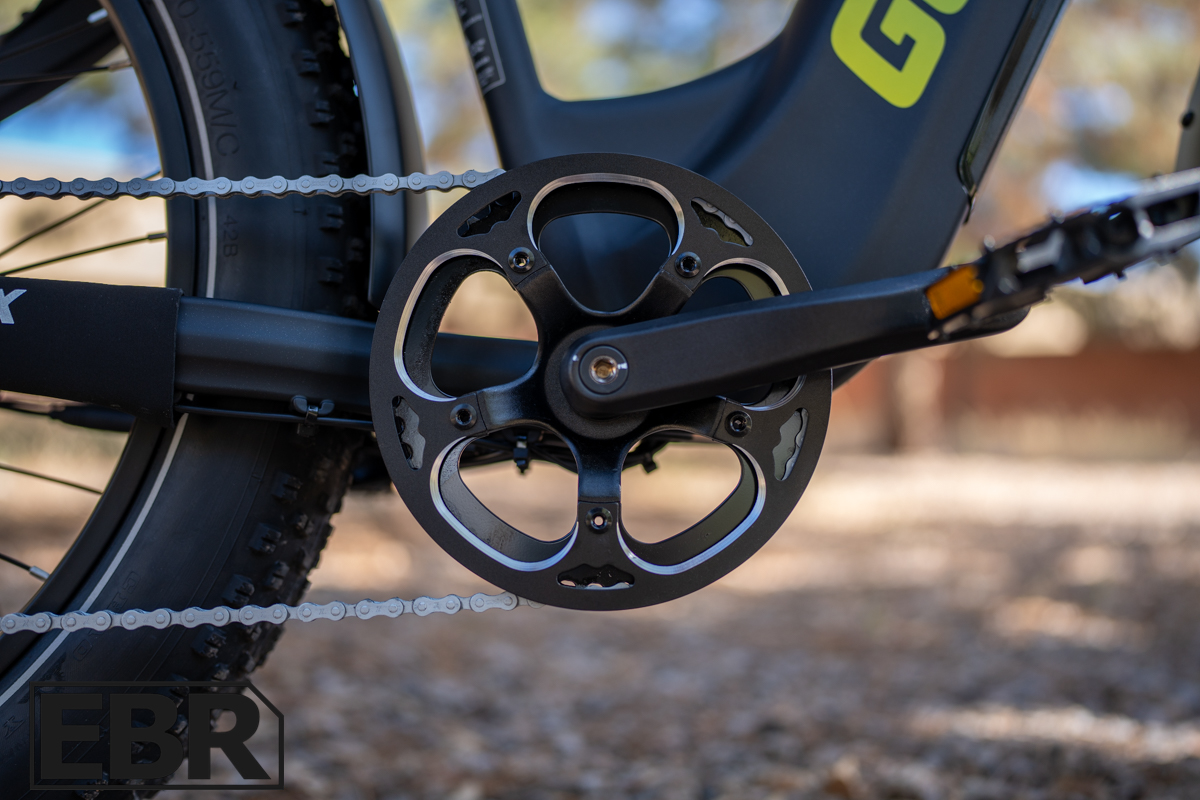
The Shimano 7-speed drivetrain with a 48T chainring and 14-28T rear cassette shifts well and handles the speed range better than I expected for 7 gears. The derailleur is not clutched, so you can get some chain slap off-road, though GoTrax includes a neoprene chainstay sleeve to help with the noise.
Suspension is a coil fork with 70mm of travel on 32mm stanchions with preload adjustment. The fork uses a dropout rather than a through axle. A through axle would stiffen the front end, which is something I bring up constantly on bikes at this price. The dropout is fine; it is just an area GoTrax could improve.
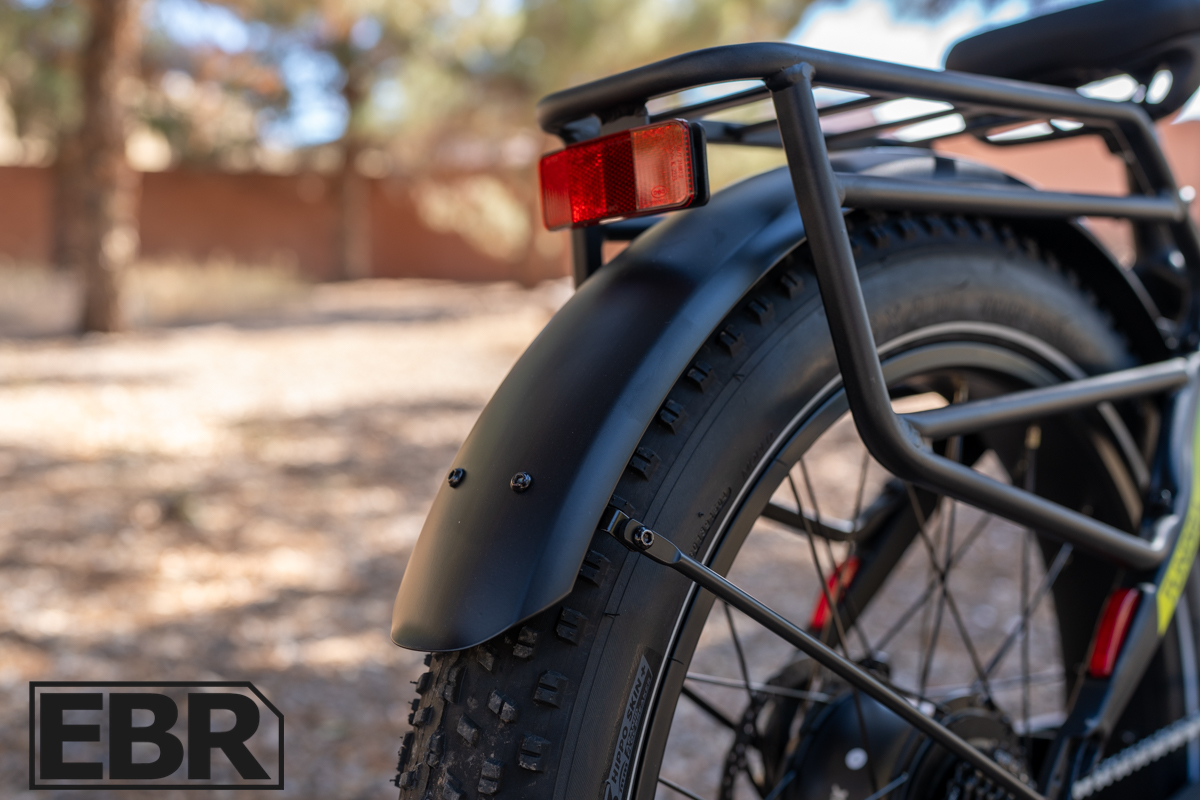
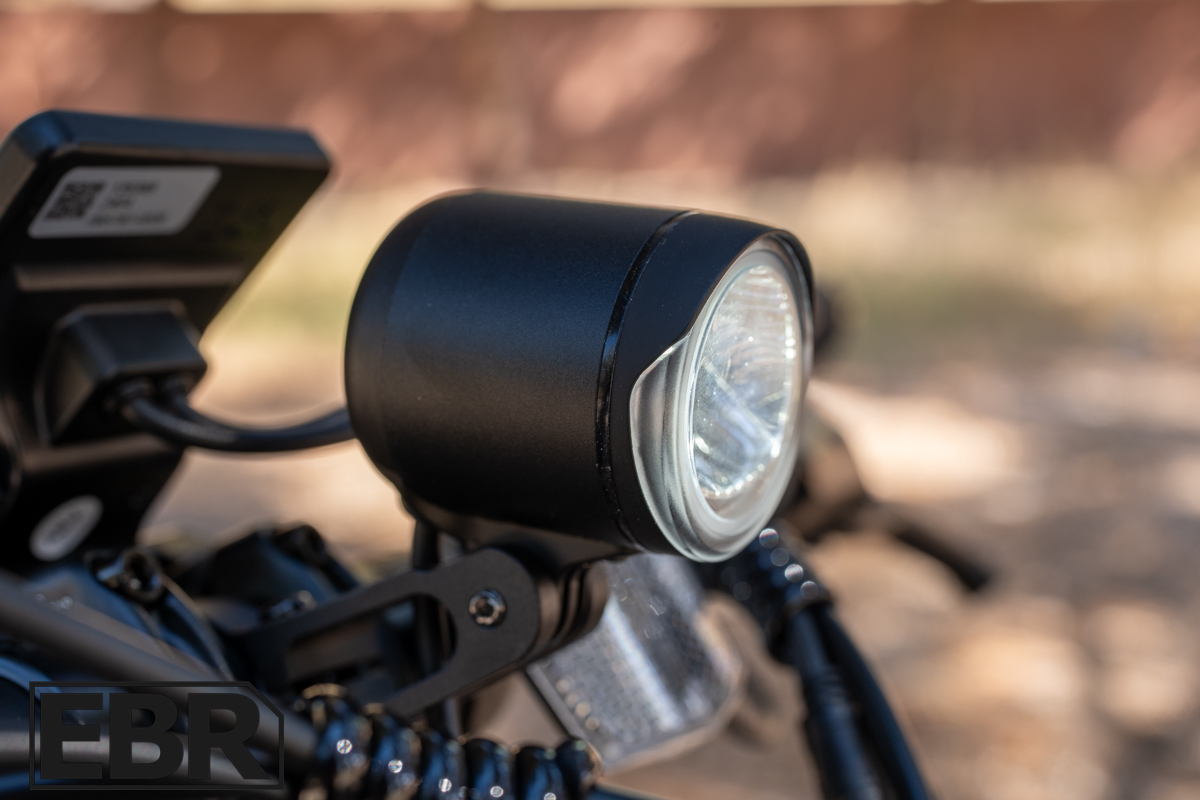
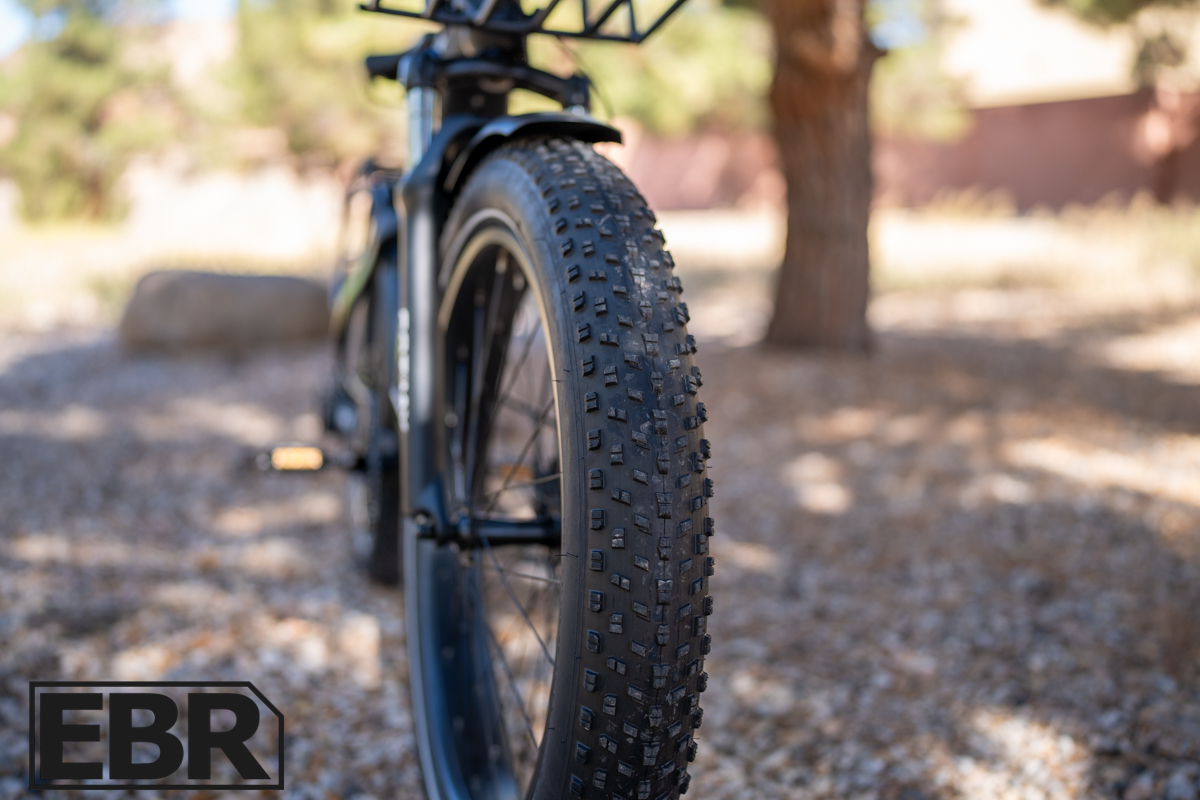
The 26×4-inch Chaoyang all-terrain fat-tires balance off-road grip with pavement rolling nicely. You also get metal fenders front and rear, a rear rack, baskets front and rear, a headlight, and reactive LED taillights that brighten when you brake. No turn signals.
One thing I like about this parts package from a service standpoint: The Shimano drivetrain and mineral oil disc brakes are the components you are most likely to need serviced, and any bike shop should be able to take care of them. Motor, battery, controller, and display issues go back to the brand under warranty. GoTrax is an older, larger brand that has been around for many years, which says a lot when compared to a lot of e-bike brands in this space. Therefore, I trust them to be around when you need them.
Screen / User Interface / App
Screen / App Score: 5.5 / 10
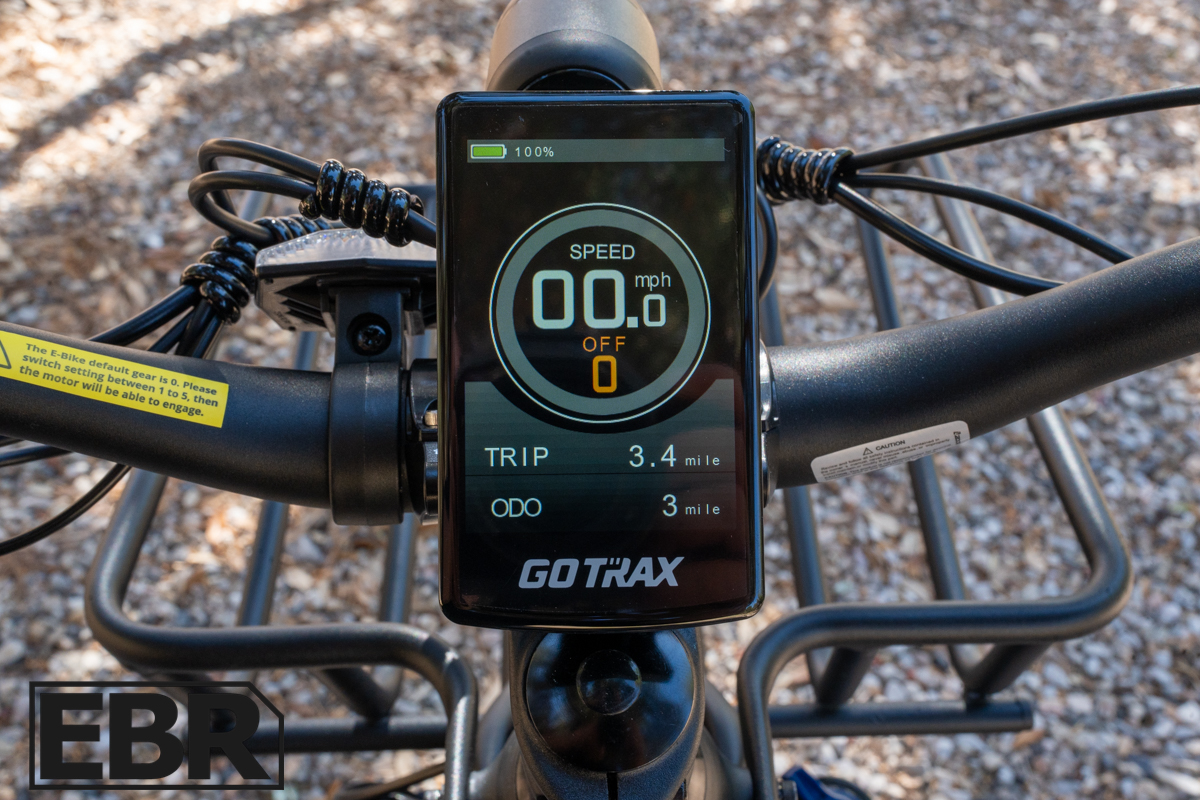
The Tundra V2 has a 3-inch full color LCD display mounted in the middle of the handlebar. It is a good size and easy to read, even in bright sunlight.
The main screen shows your speed, battery percentage, assist level (eco through PAS 5), trip, and odometer. I appreciate the battery readout being a true percentage rather than a bar graph on a bike with a 960Wh pack, where you can be out for hours. Holding the up and power buttons together brings up a second screen with max speed, average speed, total mileage, calories burned, CO2 reduced, and fat reduced. The calories and CO2 readouts feel like filler to me, but I will take extra data over less.
Advanced settings live behind holding the up and down arrows at the same time. There are three settings worth knowing. The first is a password you can enable to lock the bike. I did not set one up because it is a pain to deal with every ride, but it is there if you want it. The second is backlight brightness. There are three levels, and I keep mine on 3. Anything lower is hard to see in the bright Utah sun. The third is the speed limit setting, which comes out of the box at Class 2 (20 mph) and goes up to Class 3 (28 mph). That is your Class 3 unlock, and it takes just a couple seconds.
There is no app, which is standard at this level. I am fine with no app here.
Bike Model Options
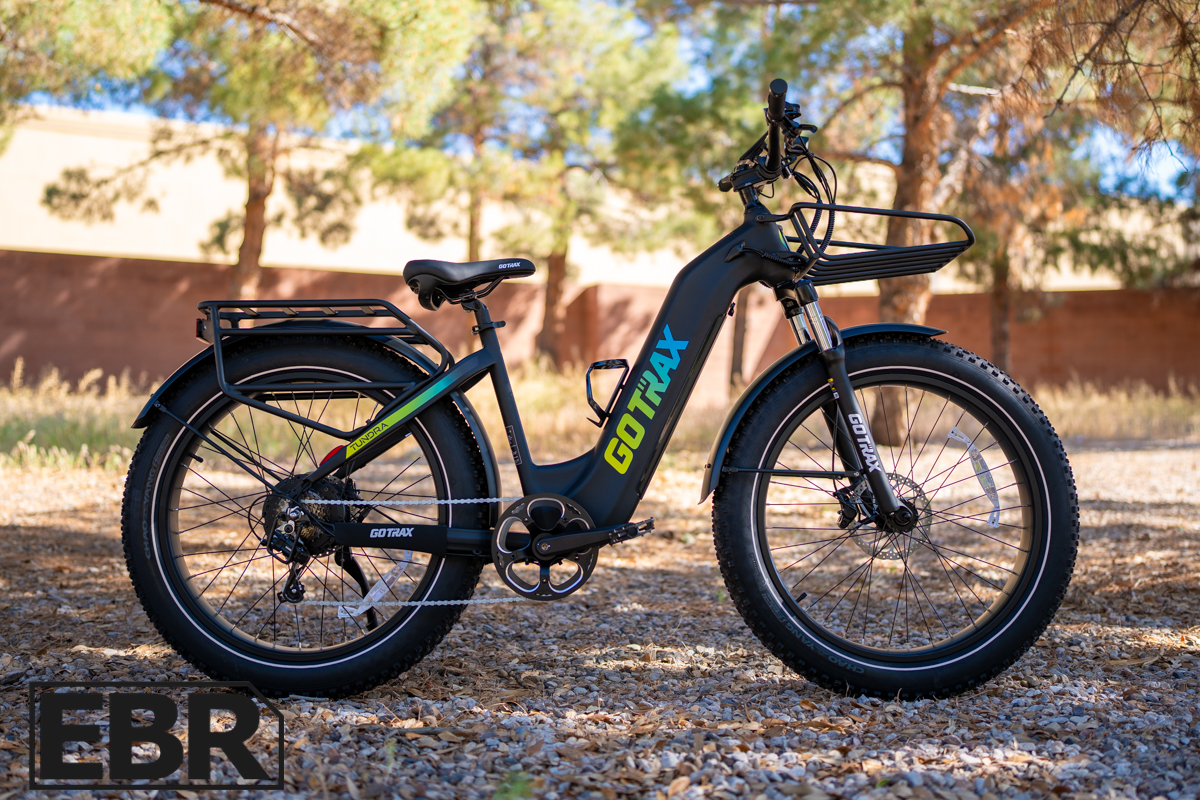
The Tundra V2 comes in one frame size, two frame styles, and two color options. The two frame styles are step-over and a step-through, and both come in Gray with Rack or Black with Rack, which are perfect colors of simplicity and class.
GoTrax sent us the step-through, so this review covers that frame. As I mentioned before, step-through frames on a fat-tire bike are usually a bit wobbly, so I was ready to flag that going in. The Tundra V2’s step-through surprised me. It felt so solid in a way I do not usually get at this price. If GoTrax sends over the step-over down the line, we will cover it in a separate review.
Is the Bike Worth Buying?
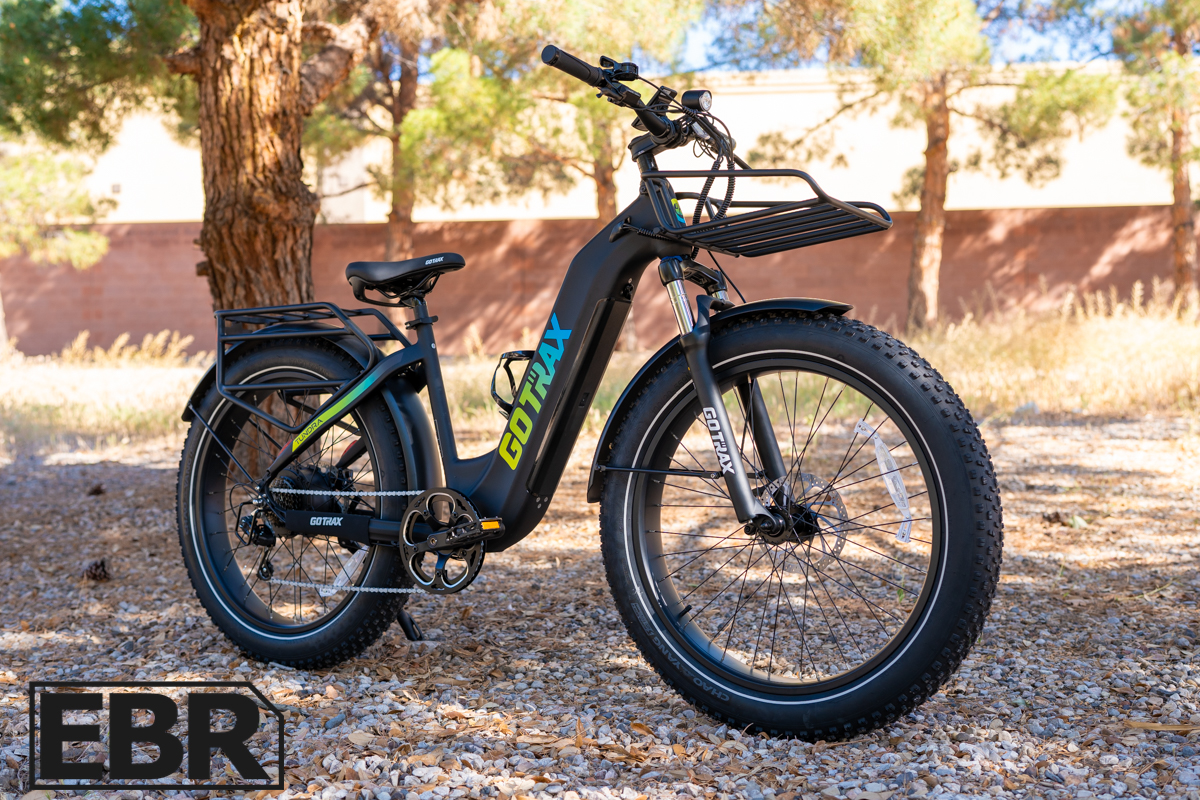
The Tundra V2 is a solid budget fat-tire e-bike that exceeded my expectations, a friendly-budget beast, if you will.
GoTrax set out to build a fat-tire bike with the components most people in this range want, at a price most shoppers are comfortable with. They pulled it off. The frame feels solid and confident, the torque sensor delivers a natural ride feel on PAS 1 through 4, the 960Wh battery is oversized for the category and backed by a 3 amp charger, and the Tundra V2 climbs hills well. The dual class setup lets you ride as a Class 2 bike out of the box and unlock Class 3 through the display whenever you want.
This is a good fit for riders who want a do-it-all, SUV-type bike. If you want to commute during the week, ride around town, head out on weekend adventures, hit a few dirt roads, or go on campouts, the Tundra V2 covers it all.
If brake performance is a priority for you, I would point you somewhere else. The brakes in this e-bike are the clearest area for improvement. Also worth noting that the battery is not UL 2271 certified, so depending on where you live, that could matter.




Reader Interactions